


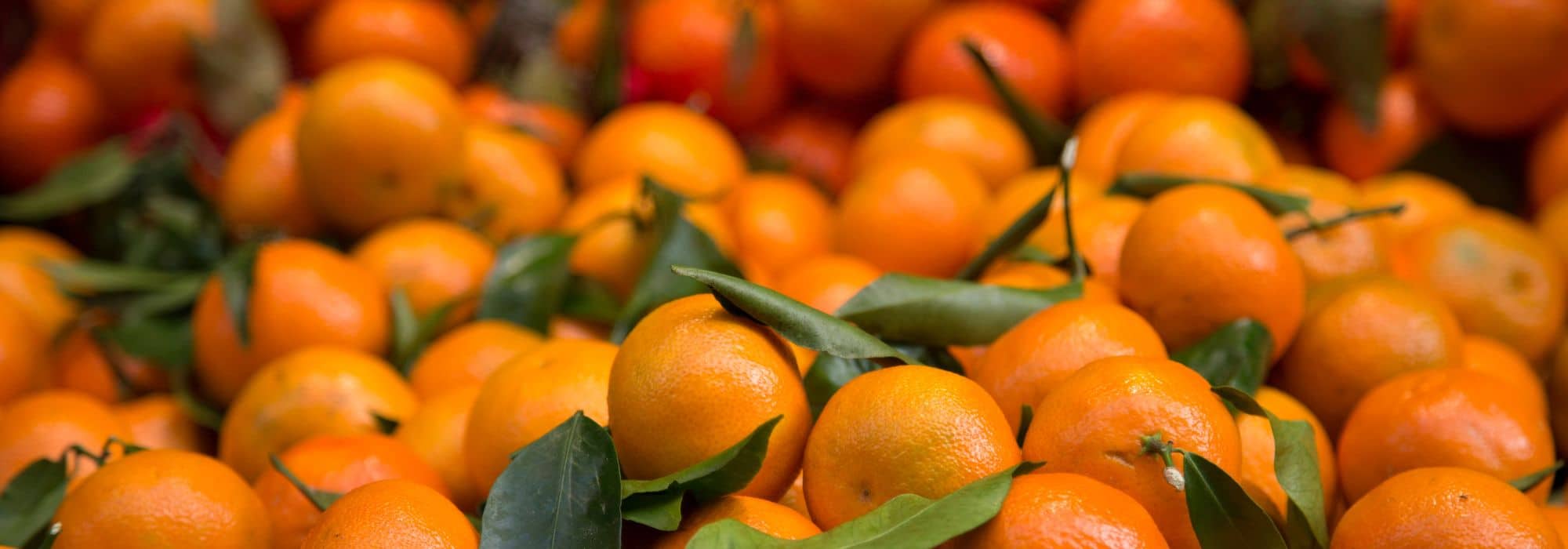
What are the differences between mandarin and clementine?
Our tips to stop confusing them
Contents
Tangerine, clementine… In the stalls of vendors, you may find it a bit difficult to tell the difference (even though the clementine tends to overshadow the tangerine, which is less commonly available!). And if you’re asked what distinguishes them in terms of flavour, it gets even more confusing! Rest assured, you’re not alone in struggling to differentiate between tangerines and clementines. This is simply because the mandarin tree and the clementine tree are two citrus trees that can easily be confused by their appearance, size, colour, taste, and cultivation methods... However, they are two distinct fruits!
Let’s explore together all the clues that will help you become an expert on tangerines and clementines.

A very different origin and history
Small etymology lesson to open this page of history! Often, in terms of botany, the etymology of names attributed to plants is very valuable for understanding their origin.
Thus, the word “mandarin tree” comes from the term “mandarin”, which referred to the high-ranking, educated officials of the Chinese empire in the tradition of Confucius. Meanwhile, the word “clementine tree” derives its name from Brother Clément Rodier. An explanation is in order…
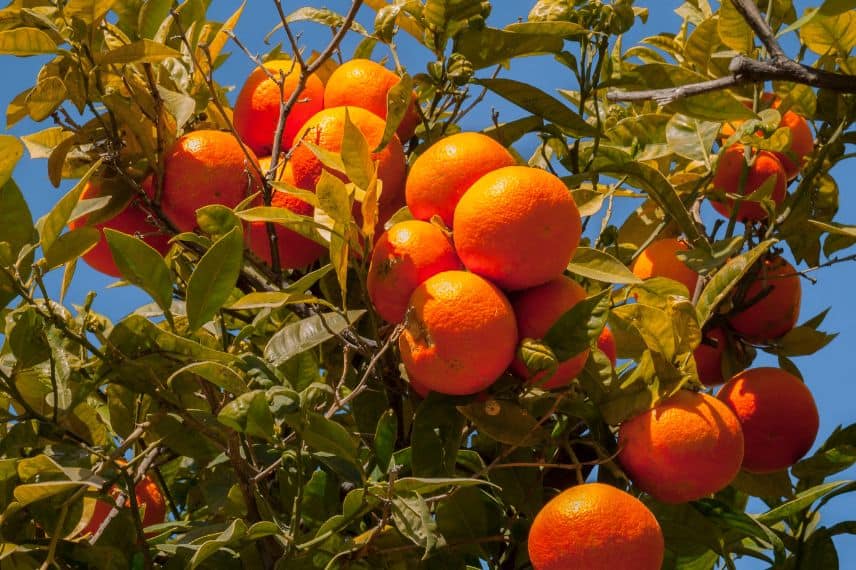
Thus, the mandarin is linked to the mandarins. According to some sources, the mandarins greatly appreciated this citrus fruit, which is native to Asia, particularly China. Other sources make a connection between the colour of the robes worn by the mandarins and that of the mandarin fruit (Citrus reticulata syn Citrus deliciosa).
As for the story surrounding the clementine, it is quite atypical. The time travel is significantly less distant. We are in 1902 in Misserghin, Algeria. Louis Trabut, a recognised physician and botanist, visits the nurseries of Brother Clément Rodier, a monk and member of the Brothers of the Annunciation, who lives within the orphanage of Misserghin. Brother Clément Rodier developed a true orchard dedicated to citrus fruits that he cultivates with passion. He presents to him, among other things, a tree that produces small fruits he calls “mandarinettes”, similar to the mandarin, with fewer pips and a different flavour. The tree is the result of a cross-breeding between an orange tree (Citrus sinensis) and a mandarin tree. Whether this cross-breeding was accidental or intentional, history does not say! Nevertheless, upon returning to France, Louis Trabut names these citrus fruits “clementines” in honour of Brother Clément Rodier.
Mandarin and clementine, different fruits in appearance and flavour
Beyond their origin, mandarin and clementine differ in taste. Visually, both fruits are orange, spherical, and slightly flattened at the poles, with a diameter ranging from 5 to 9-10 cm. The mandarin may be slightly larger than the clementine.
In terms of aroma, the mandarin is generally more fragrant than the clementine.
After the initial visual and olfactory impression comes the peeling. Undeniably, the epidermis of the mandarin is significantly thicker than that of the clementine, which can make it easier to peel. The skin of the clementine, on the other hand, is usually much thinner and smoother, adhering more to the segments of the fruit. Peeling can therefore be more challenging.
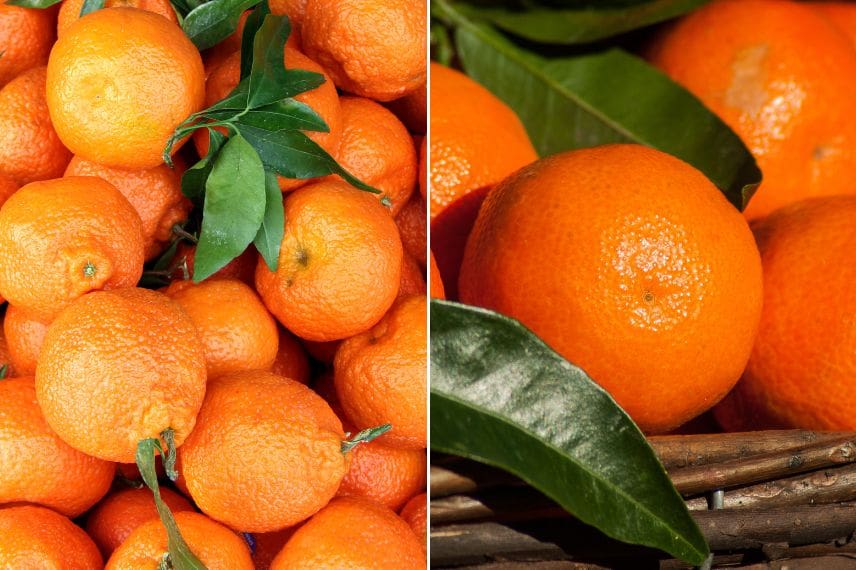
Mandarin on the right, clementine on the left
Now for the tasting!
Once again, the mandarin vs clementine match is marked by some clear differences:
- The mandarin has a significantly higher number of pips than the clementine
- The mandarin has a sweeter and milder flavour than the clementine
- The mandarin is less acidic than the clementine.
However, in terms of flavour, no winner emerges as it all comes down to personal taste!
Two distinct citrus trees
After examining the fruits, let’s turn our attention to the trees. The mandarin tree and the clementine tree both belong to the Rutaceae family, which includes all citrus trees of the Citrus genus, the Kumquat (Fortunella japonica) and the thorny orange (Poncirus trifoliata).
The mandarin tree is a small tree with a spreading, rounded habit, naturally forming a ball shape. It can reach 4 to 5 m in all directions when mature, but will not exceed 2 m if grown in a pot. It has very dense foliage, consisting of narrow, glossy leaves of a rich dark green. They are fragrant, just like the flowering. The mandarin tree is literally covered in very fragrant white flowers, ranging from white to cream, in March-April. The mandarins reach ripeness in November-December. It is hardy down to -4 to -5 °C. It is a self-fertile bush, so there is no need to plant two trees.
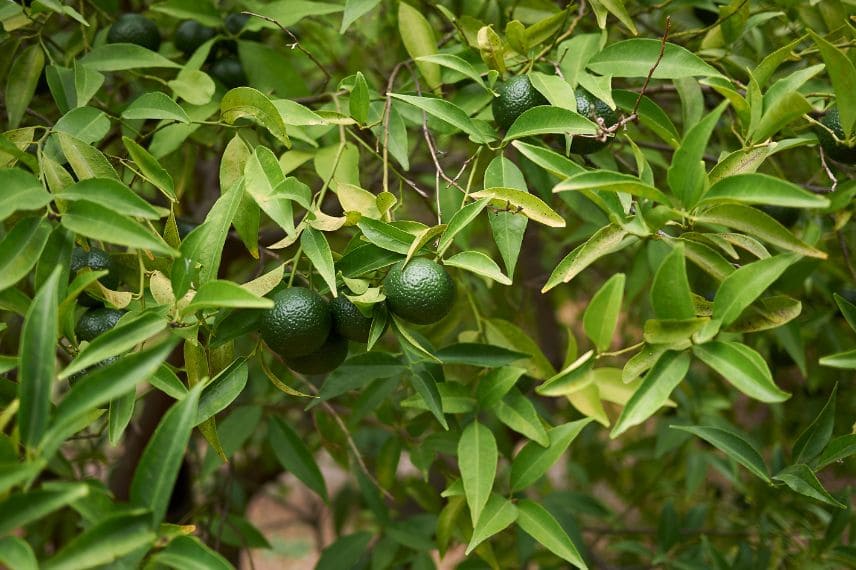
The mandarin tree
If Citrus deliciosa is the type species, the mandarin tree has a few other varieties such as Citrus satsuma, a more hardy mandarin tree (down to -10 °C) and Citrus myrtifolia, a Chinese mandarin tree with the same hardiness as its predecessor.
As for the clementine tree, it is also a decorative tree that can reach 3 to 4 m in height. Its leaves are similar to those of the mandarin tree, as are its flowers. They bloom from February to April, a little earlier than those of the mandarin tree. Consequently, the clementine tree fruits a bit earlier, starting in October.
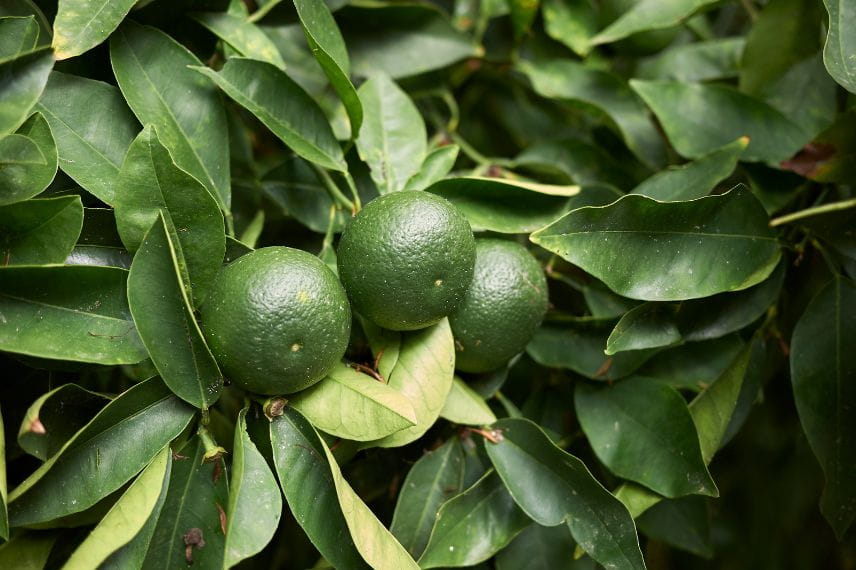
The clementine tree
Both the clementine tree and the mandarin tree can be grown in pots. They will be brought indoors to a conservatory during winter. In the Mediterranean region, they thrive in the ground.
- Subscribe!
- Contents

Comments