





























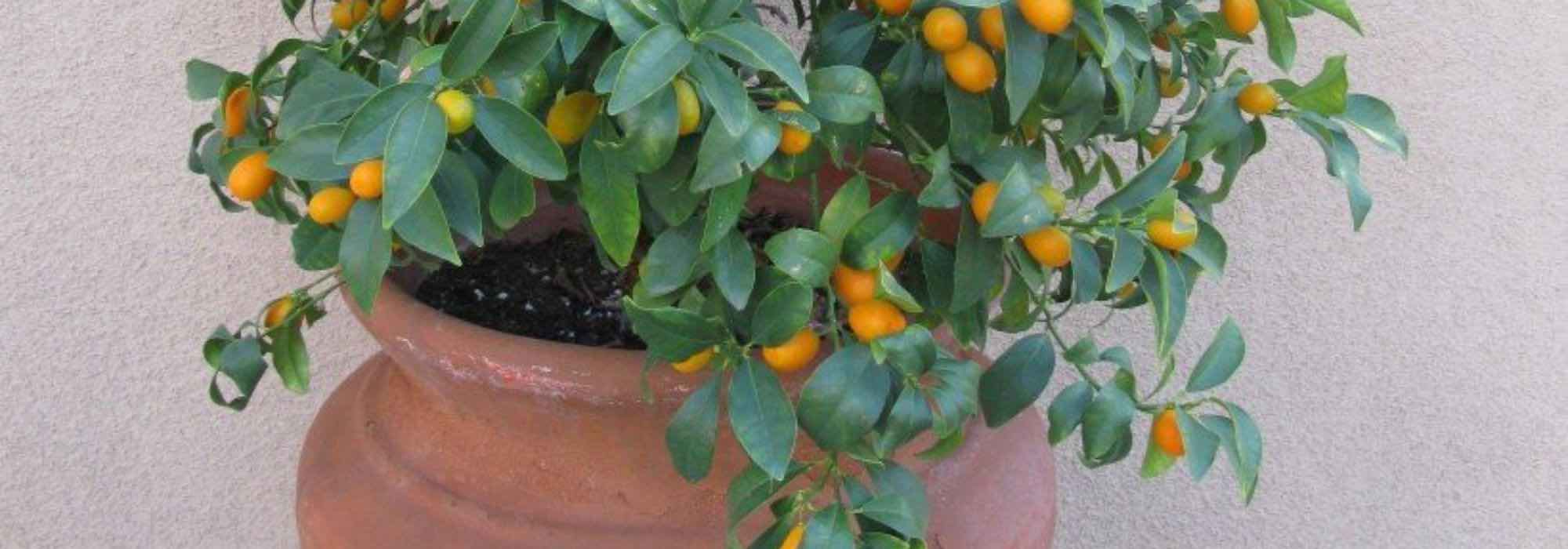
Which citrus trees to grow in pots on a terrace?
Different varieties that can be grown effortlessly in containers
Contents
We love of course citrus trees (Citrus in Latin) for their edible fruits, but also for their fragrant flowering and exotic-looking foliage. Outside of Mediterranean regions with mild winters, they are often grown in pots. These tender plants will generally need to be protected from frost, brought into a cold greenhouse or conservatory. On a terrace or balcony for the rest of the year, provide them with a sunny position, sheltered from prevailing winds.
Pot cultivation is not particularly difficult, but will require some regular care. As the substrate quickly depletes its nutrient reserves, frequent applications of fertiliser or well-matured compost will be essential for good fruiting. Similarly, as the soil dries out more quickly, watering will need to be more consistent.
Here is therefore our selection of 6 citrus trees to grow in pots, to enjoy on your terrace or balcony.

Kumquat ‘Nagami’: fruits that can be eaten with the skin
‘Nagami’ is one of the most common varieties of kumquat (Fortunella margarita) and is as beautiful as it is delicious! Throughout the summer, from June to August, it reveals its flowering: small, waxy white flowers that fill the air with their powerful orange blossom fragrance.
This is followed by small, oval fruits, about 2 cm in diameter and 3 cm long. Kumquats have the unique characteristic of being edible with their skin, which is thin enough to be pleasant to eat. These bright orange fruits have a tangy, slightly sweet taste. They can be used in jams or pastries, but they also pair very well with savoury dishes. The harvest takes place between January and March.
The kumquat reaches a height of 2.5 metres and a spread of 1.5 metres at maturity. It thrives in a pot that is not too narrow, in a sunny position on the terrace. Watering should be regular throughout the growth period, then reduced in winter. Remember to fertilise it with a special citrus fertiliser or another fertiliser rich in potash to encourage fruiting. Quite hardy for a citrus tree, the kumquat can withstand temperatures down to -10°C, even -12°C. However, its fruits are generally damaged at -4°C, and it would be a shame not to enjoy them.
Notes: the kumquat is undoubtedly one of my favourite citrus trees. It is very easy to grow in a pot and quickly produces a large quantity of tangy, vitamin-rich fruits. As soon as they are ripe at the end of winter, I will enjoy them as they are or incorporated into desserts, sweet and savoury dishes, or Asian-inspired recipes.
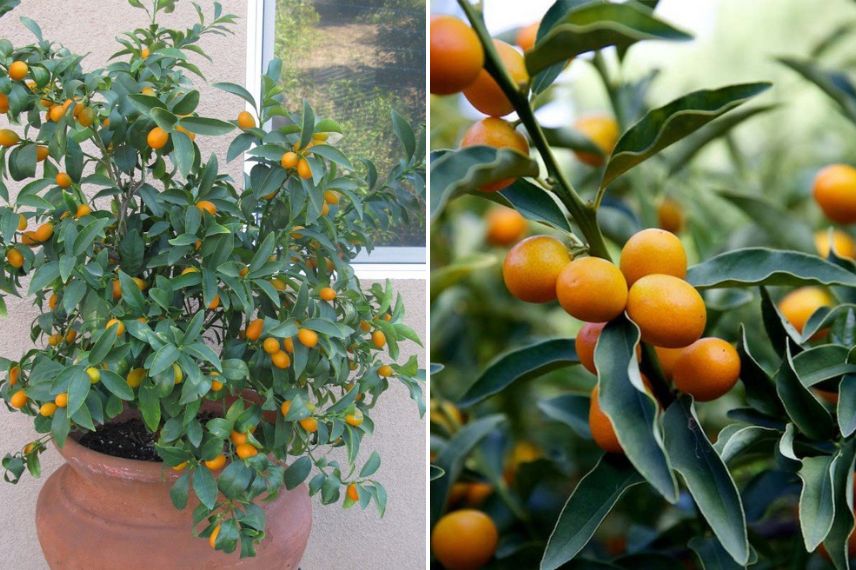
Kumquat Nagami
The ‘Keraji’ mandarin tree: a small citrus perfect for balconies or small terraces
‘Keraji’ is a variety of mandarin tree (Citrus reticulata) that originates from Japan. It is interesting in many ways. Firstly, it is a citrus tree with a compact stature, ideal for pot cultivation in limited spaces. At maturity, it reaches only 1.5 metres in height and 1.2 metres in spread.
This citrus tree is also quite hardy, tolerating temperatures down to -10 to -12°C on average. This resilience allows it to be left outdoors on the terrace in many regions, provided you are not growing it for its fruit (which cannot withstand frost). In this case, always ensure it is sheltered from prevailing winds and do not hesitate to provide additional protection with winter covers. To enjoy its fruit, winter it in a bright, unheated location.
Flowering occurs in spring, between April and March, releasing a neroli fragrance. This citrus tree then produces slightly flattened yellow-orange fruits, measuring 6 cm in diameter. Their taste combines acidity and sweetness at ripeness. The skin peels off easily, as with all mandarins. The flesh is juicy but may contain pips. If picked young and still green, these fruits can also be used as a lemon alternative in cooking. The harvest takes place between November and March.
Like most citrus trees, the ‘Keraji’ mandarin has evergreen foliage, which remains in place all year round, adding extra ornamental interest.
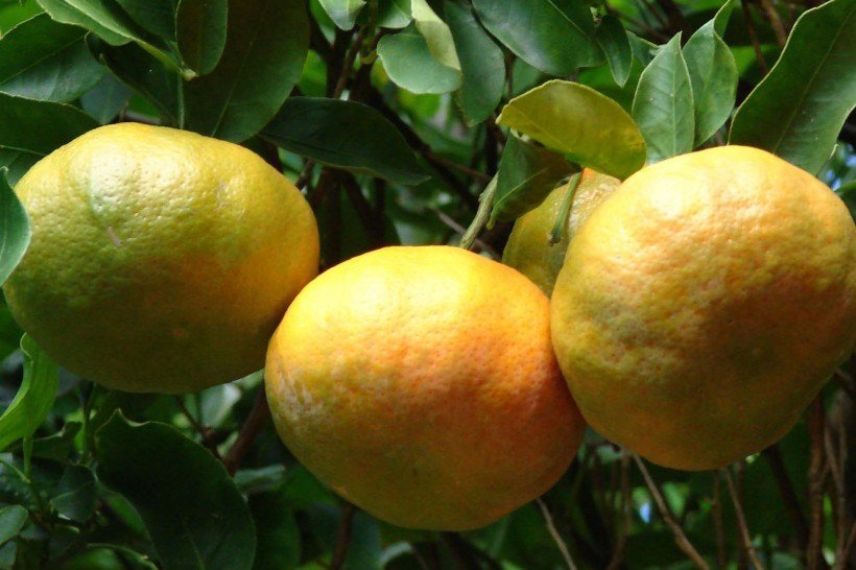
Citrus reticulata Keraji
Discover other Citrus trees
View all →
Available in 0 sizes
Available in 0 sizes
Available in 1 sizes
Available in 2 sizes
Available in 3 sizes
Available in 3 sizes
Available in 1 sizes
Available in 1 sizes
Available in 2 sizes
Available in 3 sizes
Calamondin: one of the few citrus trees that thrives in our interiors
This citrus tree is a hybrid, resulting from the cross-breeding between a kumquat and a mandarin tree. It has a modest size, not exceeding 2 metres in all directions, which makes it easy to grow in a pot on the terrace.
Most citrus trees do not tolerate the hot and dry air of our interiors. calamondin (Citrus madurensis) is an exception, as it is one of the few that can be grown in an apartment or house. It is often referred to as the “apartment orange tree.” This advantage allows for easy wintering, as it does not tolerate severe frosts (its hardiness barely exceeding -5°C). For its care, ensure regular watering to keep its soil fresh (moist), as well as misting its foliage to prevent attacks from red spider mites. You can then bring your potted citrus tree back out onto the terrace once the nice weather returns, allowing it to enjoy the sun and enabling its pollination by insects.
A very decorative bush, this fruit tree can flower and bear fruit almost all year round, between March and September. Its small fragrant white flowers fill the space with scent before giving way to small fruits. These green, yellow, or orange mandarins measure 2 to 4 cm in diameter and generally reach ripeness during the winter. They offer a rather tangy taste reminiscent of bitter orange, but with a more floral and aromatic note. Cooking can soften these particular flavours, which may not appeal to everyone.
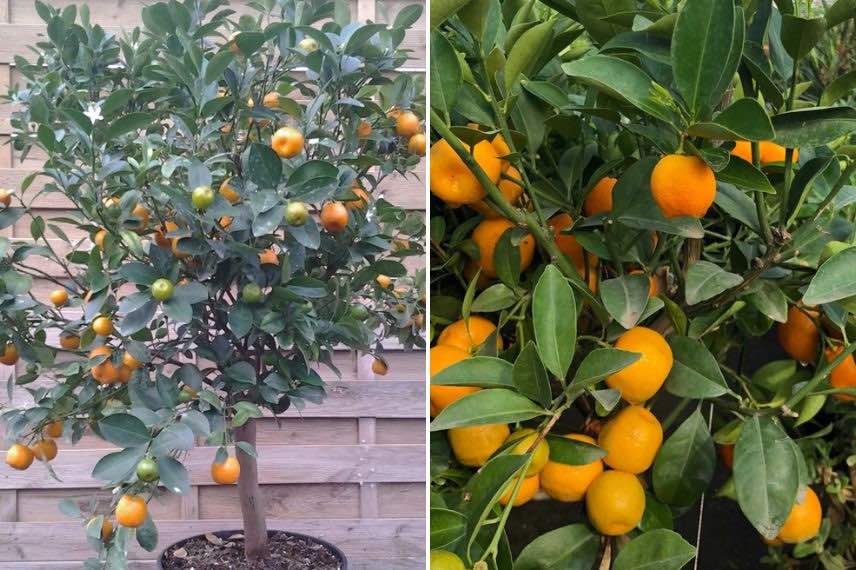
Calamondin, Citrus madurensis or Citrus mitis
The ‘Meyer’ lemon tree: a very floriferous variety with low-acid fruits
This lemon tree (Citrus limon) graces us in winter with good-sized fruits, reaching about 5 cm in diameter. They have a fine, smooth yellow-orange skin. Their juicy flesh is tangy, but less acidic than that of the traditional lemon we know. It can be used in the same way in cooking, whether in pastries, desserts, or marmalades, as well as to enhance savoury dishes. Flowering mainly occurs in spring and autumn. Just as fragrant as other citrus trees, it exudes powerful floral notes.
The fruits are present on the bush almost all year round, giving it a lovely exotic appearance. They generally reach ripeness in winter, during which they can be harvested.
Its bushy silhouette reaches 2.5 metres in height and 1.5 metres in spread, making it easy to grow in a pot. Provide it with a sunny spot on the terrace, sheltered from cold, drying winds. Hardy down to about -10°C, it should be wintered in a non-heated but bright location.
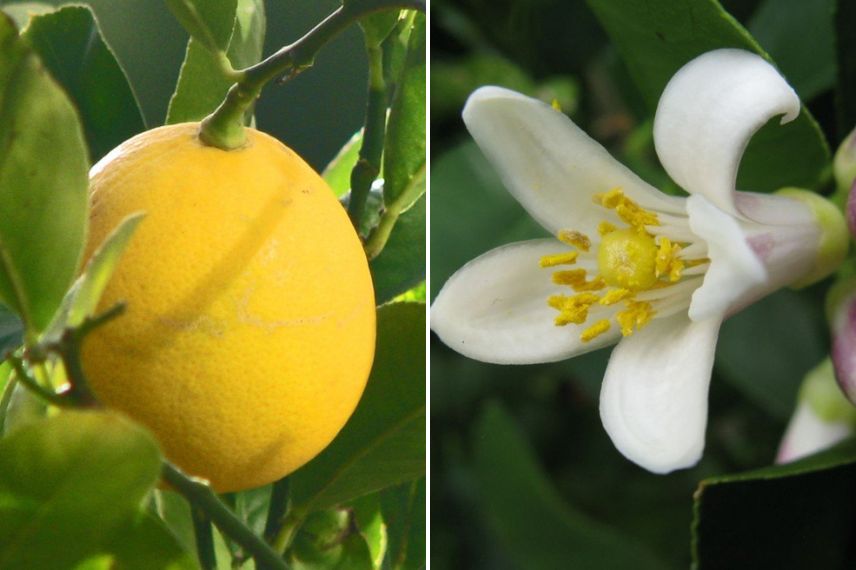
Citrus x meyeri
The 'Washington Navel' orange tree: a reliable choice
The orange tree (Citrus sinensis) ‘Washington Navel’ is one of the most popular varieties, with its fruits commonly found in stores. This highly productive bush offers us large, brightly coloured oranges, reaching up to 10 cm in diameter. They have the advantage of being seedless and easy to peel. The flesh is juicy, slightly crunchy, and very succulent. Sweet and slightly tangy, these fruits can be enjoyed fresh or cooked. The harvest occurs in winter, between December and March, once the fruits are ripe.
Flowering takes place in spring, revealing adorable little white flowers that are highly fragrant. Our citrus tree reaches a height of 2.5 metres and a spread of 1.5 metres at maturity. Its growth is rapid, and our orange tree has a very attractive rounded habit.
For its cultivation, choose a container that is large enough, 2 to 3 times the size of the root ball, as citrus trees do not like to feel cramped. To facilitate moving your potted orange tree from the terrace to its wintering location, consider choosing a container on wheels. This citrus tree will need to be protected from winter cold, as it cannot tolerate temperatures below approximately -8°C.
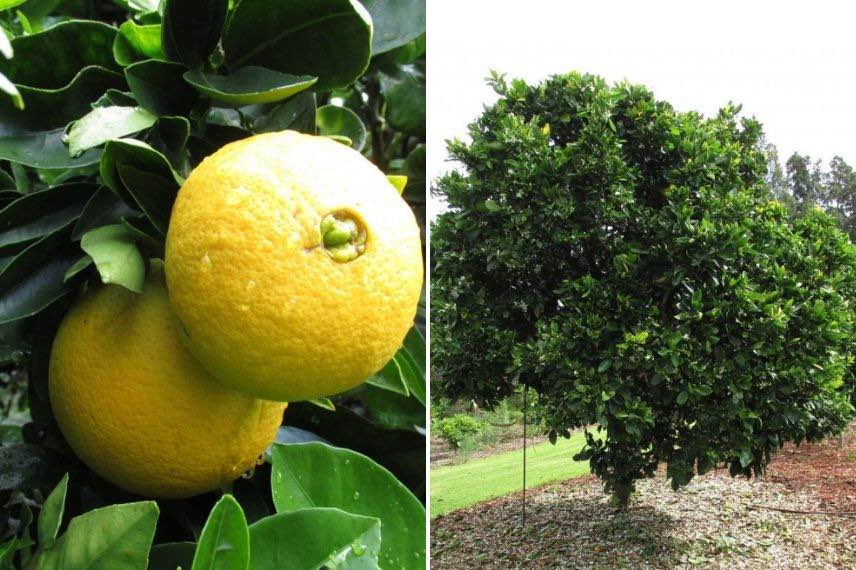
Citrus sinensis Washington Navel
The hybrid citron ‘Pigmentata’: a rare variety with blood-red fruits
Cedrat is the ancestor of the lemon tree. Here, the variety ‘Pigmentata’ results from a hybridization between these two citrus trees. This vigorous bush will reach about 2 metres in height and 1.5 metres in spread.
It flowers in spring between April and June, revealing fragrant white flowers. The flowering is sometimes repeat flowering in summer. Then, very ornamental and original fruits appear, reaching nearly 8 cm in diameter. These are lemons with thick, bumpy skin, generously tinged with yellow and red, turning blood red at ripeness. The pulp is rather acidic and not very juicy, but well scented. The fruits are used like lemons: juice and zest will enhance both sweet and savoury dishes. It is also ideal for candied peel. Harvest the fruits at the end of the year, between October and December.
This red cedrat is a rare variety, making it a sought-after citrus tree among specialists. However, it is one of the least hardy, hardly tolerating frost (hardiness around -3°C). Like others, it needs sunlight to thrive. In terms of size, our cedrat reaches 2 metres in height and 1.5 metres in spread, with a rather spreading habit. It should be grown in a pot and brought indoors during the cold season.
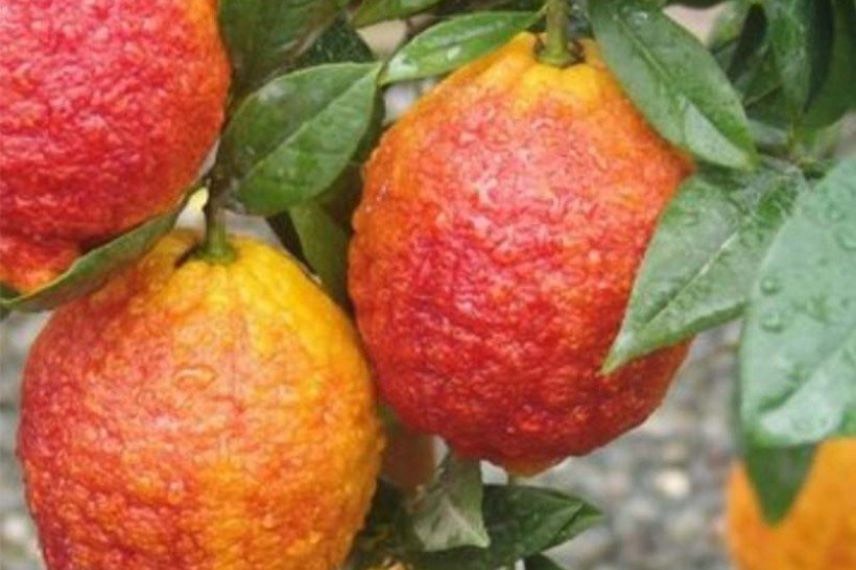
Citrus medica Pigmentata
Note that it is a very thorny citrus tree. Therefore, avoid placing it too close to pathways on your terrace or balcony.
- Subscribe!
- Contents

Comments