





























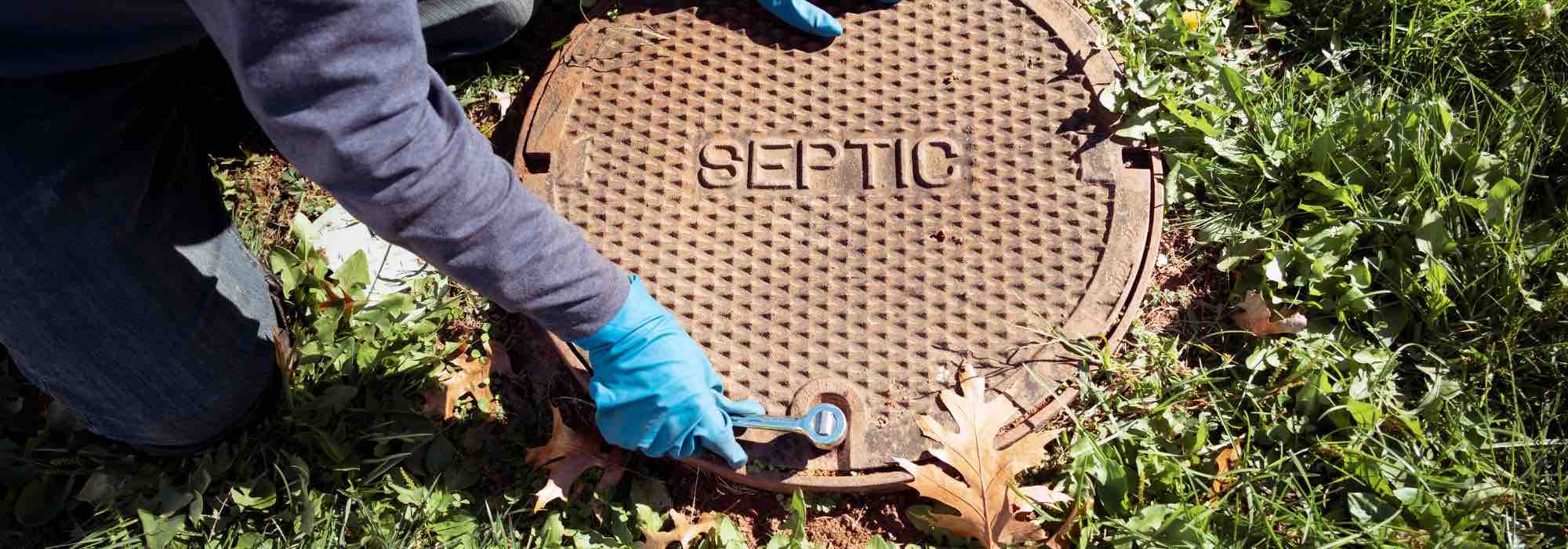
Which plants to avoid near a septic tank?
Trees and shrubs that can damage your individual sanitation system
Contents
Planting vegetation in the garden has many advantages: it adds an aesthetic touch, of course, but also provides shade, food and helps promote biodiversity.
If you do not have mains sewerage (or “connection to the public sewer”), you almost certainly have a septic tank on your property. You must therefore be cautious before you start planting vegetation. The roots of certain trees or bushes can indeed cause significant damage to drainage systems. So let’s look at which species should not be planted near a septic system, so you can plan your landscaping safely.

What risks can result from inappropriate plantings?
The septic tank consists of a pipe that carries wastewater, a buried tank (an underground reservoir that receives this wastewater and retains solids), and a second pipe that conveys the liquids to a drainage field. This on-site sanitation system can take up a fairly large volume on a plot of land, proportional to the number of rooms in the house. For example, for a 3-room house, the minimum recommended size is 3m3, i.e. a 3,000-litre tank. Also allow space for possible replacement of the system in case of a problem. If you want to plant vegetation in this area, it is important not to make mistakes.
The roots of certain plants are particularly vigorous: they will spread easily underground, sometimes travelling long distances of up to several tens of metres. They can therefore grow quite quickly and strongly enough to block, or even damage, your septic tank system. Moreover, some plants will naturally be attracted to the moisture present in the area, particularly during periods of drought.
Planted too close to your individual sanitation system, these trees or bushes may then cause significant material damage. This can result in wastewater backing up into the house, causing bad odours. The presence of sludge that overflows and comes out of the drainage field can also lead to moisture problems and puddles of water. These are harmful to the surrounding plants and encourage the development of mosquitoes.
To simplify, three types of trees and bushes must be strictly avoided near your septic tank:
- those with very rapid growth;
- those that have an expansive root system, even running horizontally;
- those with high water requirements and that will seek water deep in the soil.
Bamboos
We love them because they are easy to grow, and they bring architectural interest and a touch of the exotic to the garden. But the bamboos have the unfortunate tendency to spread rapidly, due to a particularly running root system. Their rootstocks develop vertically as well as horizontally in the soil. They also multiply by producing numerous suckers, these offshoots creating new shoots. Among the running species, for example Phyllostachys aurea, Phyllostachys nigra or Phyllostachys vivax.
If you really want to grow bamboos close to your septic tank, several options are available to you.
- Opt for the non-running bamboos of the genus Fargesia, which are less expansive than their cousins.
- Install a solid rhizome or root barrier to a minimum depth of 60 cm in the soil.
- Opt for growing in a large container, which will constrain the root system (but this may still, in time, damage your pot or planter).
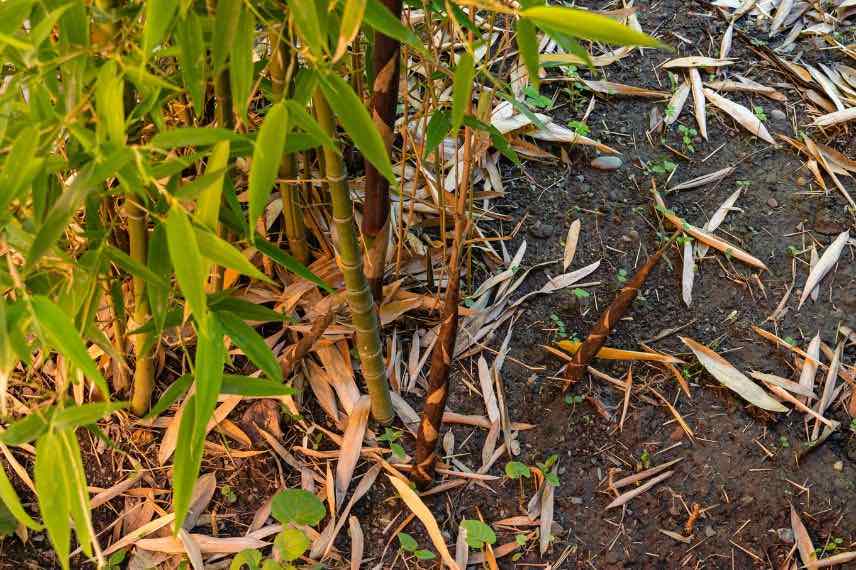
Phyllostachys have running rootstocks that can travel far and are attracted to moisture
Weeping willows
The weeping willow (Salix alba ‘Tristis’) has a particularly recognisable, supple trailing silhouette, which is part of its charm. This tree, capable of reaching nearly 20 metres in height at maturity with a similar spread, never goes unnoticed. With rapid growth, it needs water to grow, which makes it overly expansive and dangerous near a septic tank. Its roots can indeed destroy pipes, which is why it is recommended to always grow it at a distance from infrastructure (at least 15 metres).
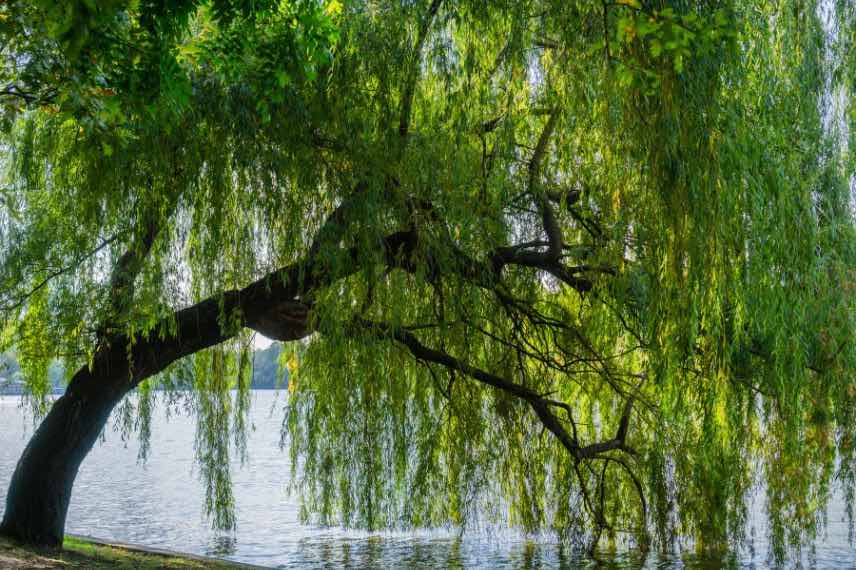
Weeping willows always seek out moisture nearby
Fig trees
The fig tree (Ficus carica) is one of those trees that are as ornamental as they are delicious. It has a twisted silhouette and very ornamental lobed foliage. Above all, it produces delicious, sweet, melt-in-the-mouth fruits. But this emblematic bush of the Mediterranean regions has a powerful root system, capable of spreading in all directions. The roots thus seek water deep underground and can weaken walls and damage pipes.
If you still want to grow one, favour dwarf varieties, naturally more compact and less sprawling, such as ‘Figality’ or ‘Gustis Ficcolino’.
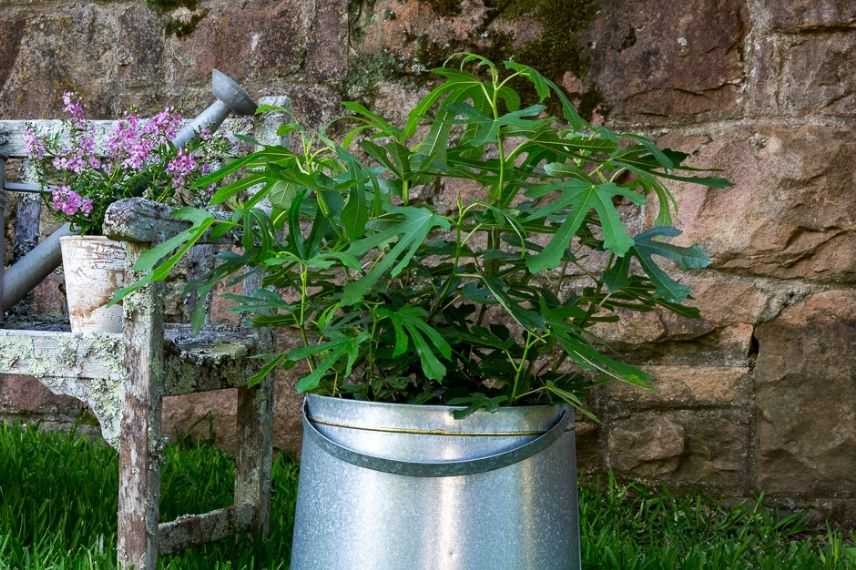
Ficus carica ‘Figality’
Poplars
The poplars (Populus) are large trees with an imposing silhouette, characterised by rapid growth. They can reach up to 40 metres in height, which limits them to large open spaces. The roots of the poplar are of the running type, capable of damaging pipes and foundations up to several dozen metres around the tree. They also have the capacity to produce suckers from this extensive root system.
It is therefore advisable to keep a distance of at least 30 metres between any infrastructure and these giant trees.
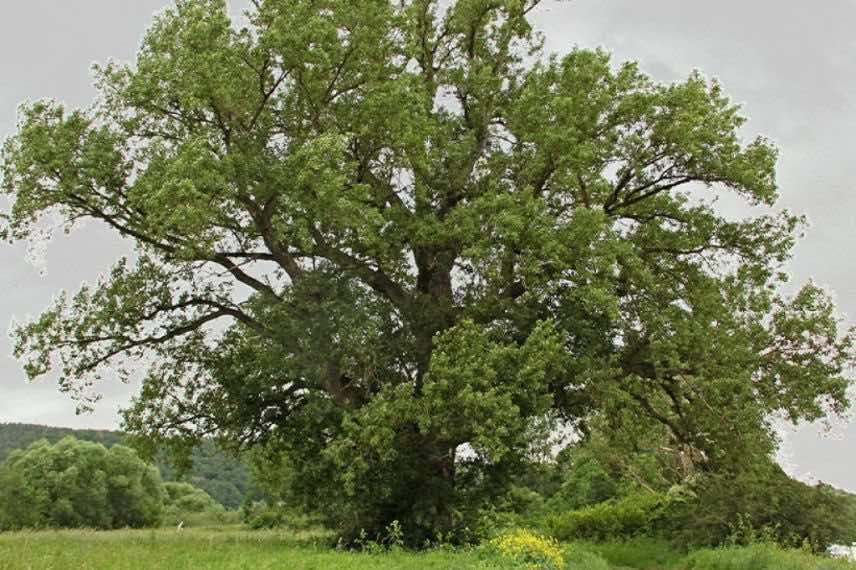
Poplar roots are running and the tree grows vigorously
Wattle
Wattle delight us with their adorable pompom-like flowering, often fragrant, and with their finely divided foliage. A true symbol of the French Riviera, they have the advantage of flowering in winter, at a time when many plants are in dormancy. But among these fast-growing bushes, some species, such as Acacia dealbata, are considered invasive and overly expansive. They can spread excessively and outcompete other plants. For this reason, mimosas in fact have an imposing and vigorous root system, capable of damaging pipes, foundations and surface coverings. They tend to produce suckers, especially after a period of frost or a fire, and multiply rapidly by producing shoots.
If you still wish to grow a mimosa near your septic tank, be sure to choose species less prone to producing suckers, such as those grafted onto Acacia retinodes.
For more information: Invasive plant… Should we be afraid of wattle?
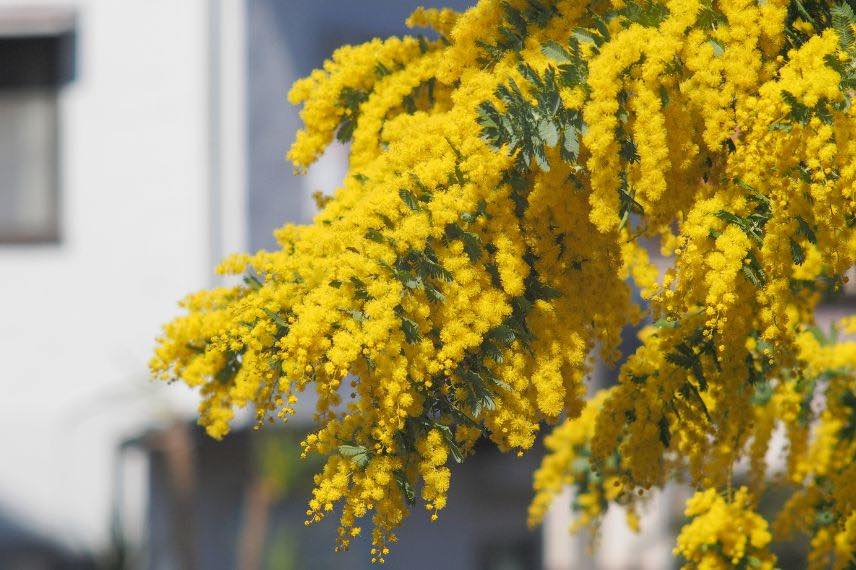
Do not plant an Acacia dealbata near a pipe
Sorbaria sorbifolia
The Sorbaria sorbifolia or ‘false spirea with rowan-like leaves’ has very decorative foliage, reminiscent of fern fronds. It rewards us with beautiful colours in spring and a light summer flowering of white panicles. But this bush is often considered invasive. It grows quickly and has a powerful root system, which makes it difficult to move once established. It also produces numerous suckers from its stump, which allow it to multiply and further invade the area. Above all, it finds its best growing conditions in moist substrates, which is why planting it near pipework should be avoided.
If you still want to enjoy the ornamental qualities of Sorbaria, opt for more compact varieties, such as ‘Matcha Ball’ or ‘Pink Hopi’.
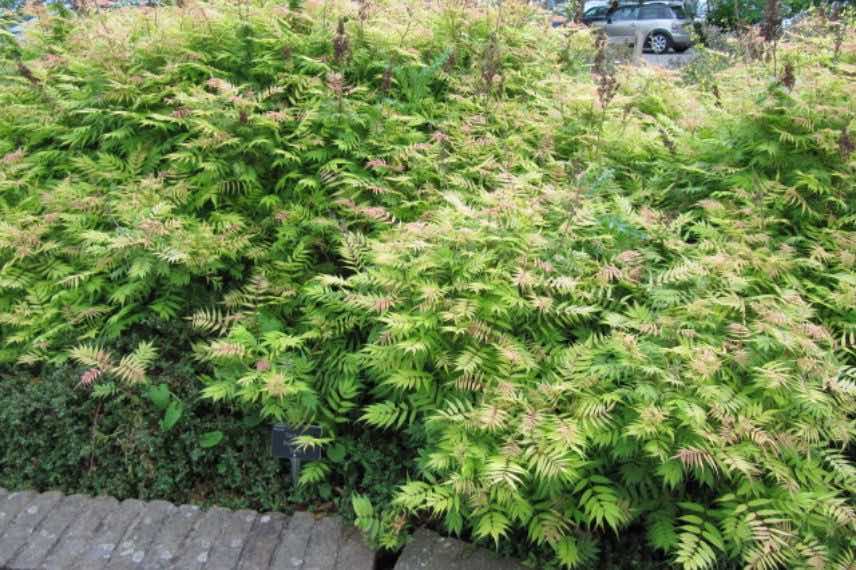
The sorbaria sorbifolia produces suckers and tends to invade
Wisterias
Wisterias (Wisteria) are prized for their generous flowering in scented clusters, with a particularly romantic look. These climbers can become spectacular over time and quickly transform a space into a lush jungle.
While we know that this vigorous plant can twist the supports on which it grows, we do not always realise that its root system is just as powerful. Its roots spread out at the surface, but also go deep into the soil, potentially causing damage to an individual sewage system.
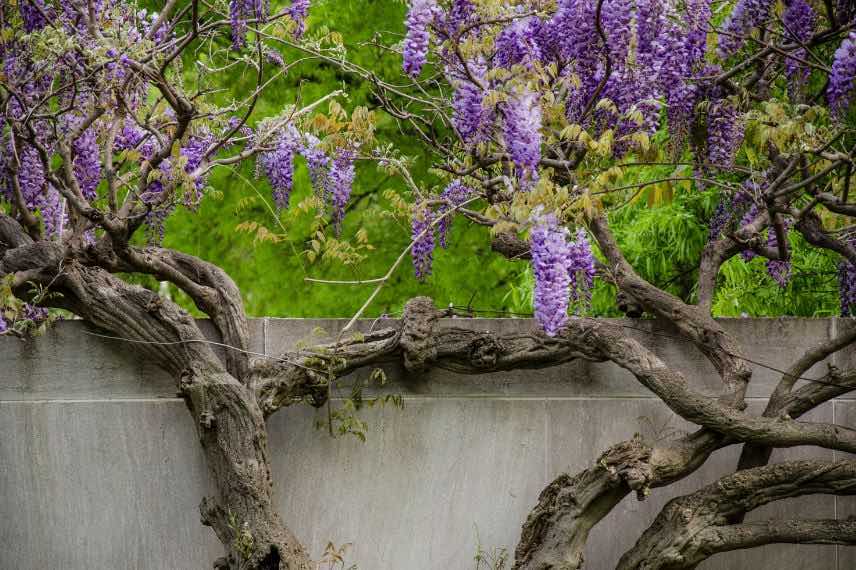
The taproot of the wisteria is as vigorous as its branches
Other trees or shrubs not to plant near underground pipes
This list is not exhaustive. Also worth mentioning is the Virginia sumac (Rhus tiphina), which can quickly become invasive as it sends out many suckers, or even the white mulberry (Morus alba), with a powerful root system, taprooted and running. The same applies to the silver maple (Acer saccharinum), which also has powerful, deep roots.
If oaks have slow growth, as with the holm oak (Quercus ilex), they are nonetheless among those trees with a deep root system, which seeks water far down in the soil. They are therefore not recommended near pipes in the long term.
Some plants to grow safely near a septic tank
You have many possible alternatives for planting around your septic tank, using plants with shallow, non‑extensive roots. They will be safe for your pipes and your tank, while allowing you to dress the area. These plants can even help absorb excess moisture and minerals, thus supporting the role of the drainage field.
The lawn is often presented as the simplest option, but you can just as well cultivate more varied and colourful plants. Create a bed of annual flowers (Cosmos, nasturtiums, marigolds, Zinnia…), spring bulbs (Crocus, hyacinths…) or summer (alstroemerias, Crocosmia…), and perennials that are not very expansive (echinaceas, poppies…), etc. The ornamental grasses are also good candidates.
As for bushes, try for example citrus trees, whose root system is fairly shallow. Most heather soil bushes, such as rhododendrons, hydrangeas and camellias, also have shallow roots that are unlikely to damage a septic system.
And if your plot is large enough to plant trees, keep a distance of at least 5 metres from your septic tank. Also take into account the size of the species chosen at ripeness: if it is greater than 5 metres, allow an even larger spacing.
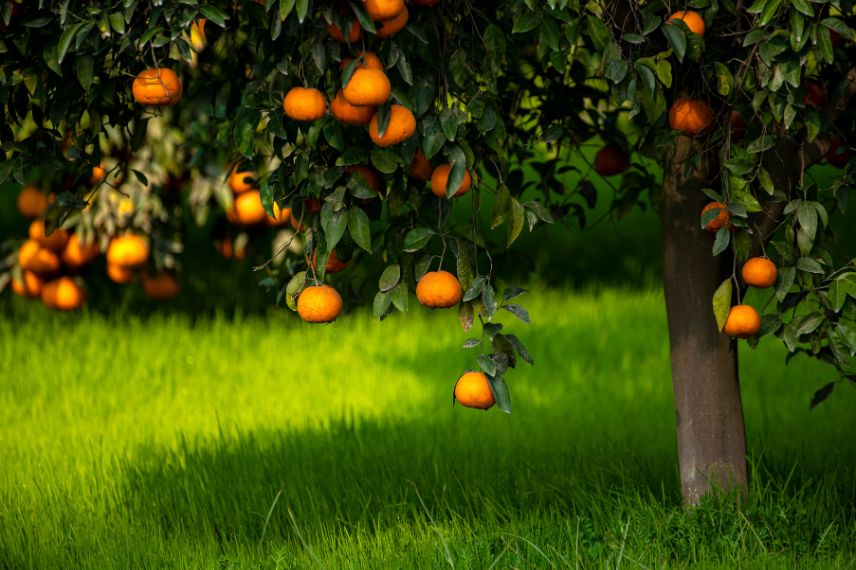
Citrus trees form small trees with shallow roots
- Subscribe!
- Contents
Comments