





























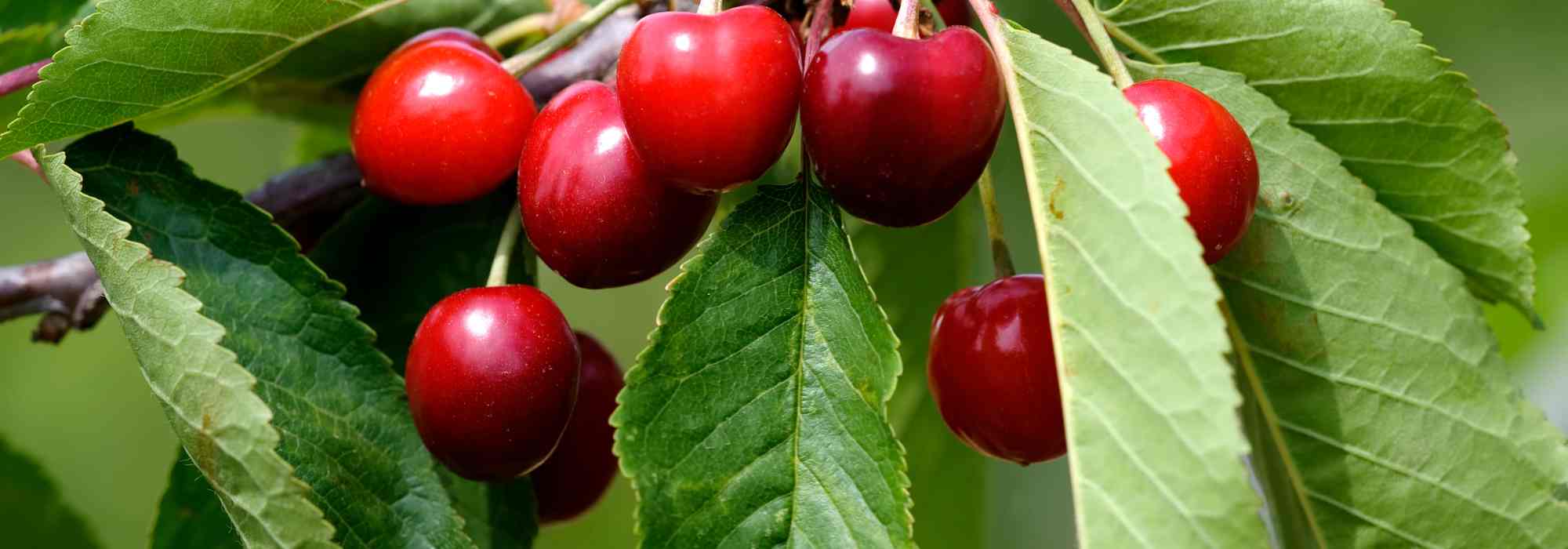
Why isn't my cherry tree bearing fruit?
Understanding the reasons and finding solutions to grow beautiful cherries
Contents
Cherry trees (Prunus avium or Prunus cerasus) are productive fruit trees in all regions. That is why you will find them in many gardens. Hardy down to -20°C, relatively resistant to diseases, requiring little maintenance, the cherry tree is therefore the ideal fruit tree for beginners. Moreover, it is not particularly fussy about soil type and can be planted in an orchard, or in a garden, as a specimen in the middle of a lawn. That is also the ideal location to enjoy its handsome ramure, its upright and spreading habit, and its immaculate white flowering from late March to May, depending on the varieties. And above all, its scarlet-red fruiting in early summer.
All these reasons have led you to plant a cherry tree in your garden. You have carefully chosen the variety and are eagerly anticipating harvesting beautiful, bright red, juicy and crunchy cherries. But frustration has overtaken indulgence in the face of a cherry tree that refuses to yield these long-awaited fruits… And one question haunts you: why isn’t my cherry tree bearing fruit? The reasons are many.
Let’s explore together the causes that prevent fruiting in a cherry tree. And above all, let’s discuss the simplest solutions to remedy this problem.
To learn more: Cherry tree: planting, pruning, maintenance.

Is your cherry tree not old enough to bear fruit?
Like all fruit trees, the cherry tree needs some time to establish itself. It uses this time to develop its root system and its branches. Then it begins to bear fruit. In cherry trees, fruiting usually occurs after about 3 to 4 years, but fruiting will be optimal after about 6 to 8 years. Depending on the vigour of the rootstock, this fruiting can even be delayed for up to 10 years! So, if you planted your cherry tree only 1 or 2 years ago, patience is required.
Only dwarf fruit trees bear fruit more quickly, often after one or two years. Thus, the variety ‘Cherry Baby’ bears fruit from the first year.
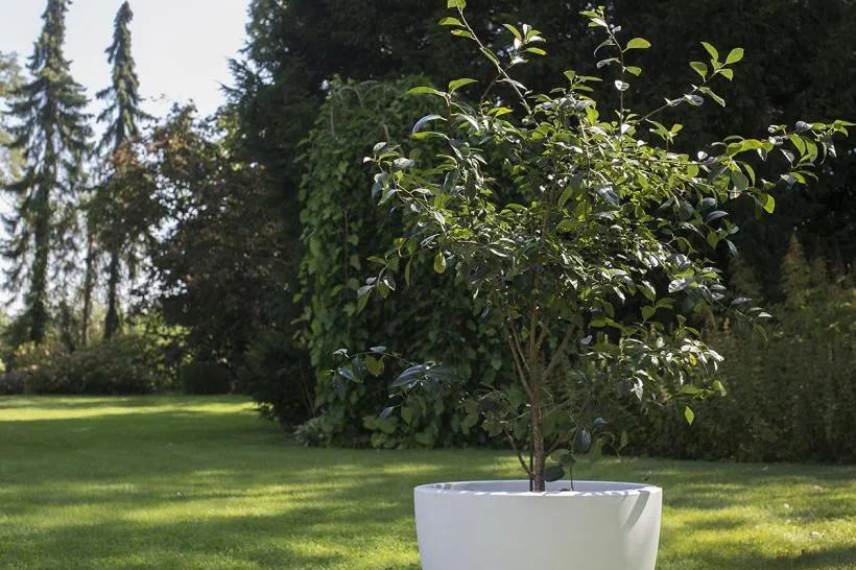
Fruit set for the dwarf cherry tree ‘Cherry Baby’ occurs after about one to two years
Another scenario: your cherry tree, planted for many years, bears little or no fruit. Again, this is normal, because the production of a cherry tree naturally declines with age. Indeed, a cherry tree aged 15 to 20 years will bear slightly fewer fruits each year.
Finally, note that the cherry tree is subject to alternate bearing. This means it may only bear fruit every other year, and in a very irregular fashion. During this resting year, the cherry tree will rebuild its reserves and gain vigour.
Has pollination of your cherry tree not occurred properly?
To obtain beautiful cherries, it is obligatory that the flowers of your cherry tree be pollinated so that the pistil of the female flowers is fertilised by pollen. This task falls to insects, particularly bees and bumblebees. So pollination relies on the presence of these tiny flying insects, entirely harmless. If your garden is not attractive to foraging insects, pollination may not be effective. To attract these beneficial insects, it is recommended to plant melliferous plants or a free-form, bocage-style, country hedge. And above all, permanently stop using insecticidal products, even natural ones, which make little difference between pests and beneficial insects.
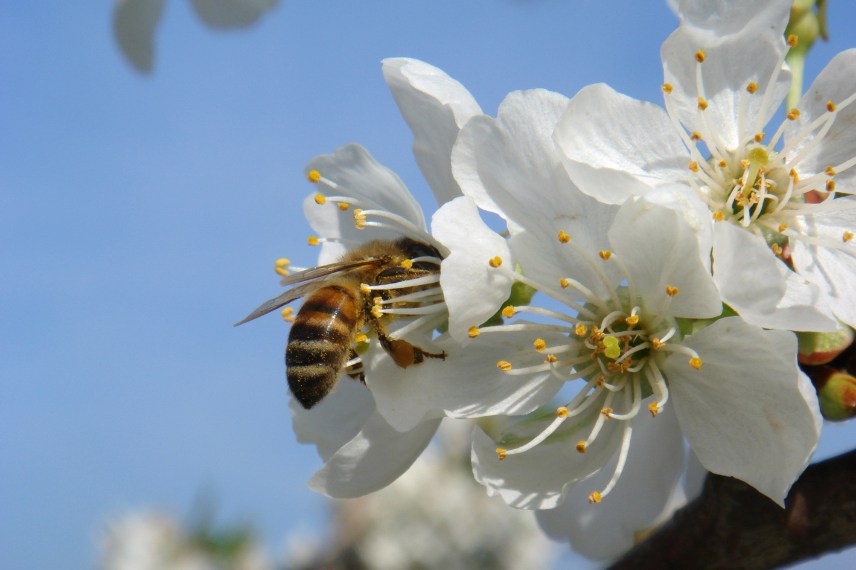
Cross-pollination of cherry trees relies on insects, particularly bees and bumblebees
But, with cherry trees, pollination is more complex. It is called cross-pollination, that is, most cherry trees are self-sterile and require the presence of another cherry tree planted nearby. Some varieties such as ‘Bigarreau Napoléon’, ‘Burlat’, ‘Bigarreau Van’ or ‘Hedelfingen’ are recognised as good pollinating varieties. It is possible to plant them within a radius of up to 300–400 m to give yourself the best chances. Sometimes, the mere presence of a wild cherry or a sour cherry tree (Prunus cerasus) such as the ‘Griotte de Montmorency’ nearby may be enough to ensure this pollination.
Some cherry trees such as ‘Sunburst’, ‘Hong Kong’, ‘Summit’… are, however, self-fertile, but the presence of another cherry tree nearby strengthens pollination.
For those who have not yet made their choice, we offer our cherry pollinator pairs which allow you to harvest without worrying about pollination.
Has your cherry tree faced disastrous weather conditions?
In terms of weather, several climatic factors can affect flowering or fruiting. And especially in spring, at the bud burst period and flowering, or, a little later, during fruit set. Thus, heavy rainfall and an atmosphere too humid can lead to poor-quality flowering or blossom drop. Additionally, with fewer insects, pollination may not occur properly. Obviously, in a wet spring, there is not much one can do…
In spring, in some regions, blossoms can also suffer from late frosts. Even though cherry blossoms are less sensitive to this spring frost than those of some other fruit trees such as apricots, frosts beyond -2 to -3°C can damage them. However, if you live in a region with harsh, long winters, it is preferable to choose late-flowering varieties such as columnar cherry trees ‘Shangaï’ or ‘Sylvia’, ‘Belle Magnifique’, ‘Tardif de Vignola’, ‘Allégria’, the cherry tree ‘Bigarreau Cœur-de-Pigeon’, or the ‘Bigarreau de la Saint-Jean’.
Has your cherry tree been planted incorrectly?
Although relatively easy to grow, cherry trees have some simple planting requirements. It must receive full sun for flowering, fruiting and the ripening of the fruit. That is why the cherry tree should be planted in a sunny location and, above all, sheltered from cold winds in regions where winters are less severe. Partial shade or shade can affect the formation of cherries.
In terms of soil, the cherry tree is very accommodating, as it can be planted in all soil types, provided they are deep, reasonably cool and well-drained. That is indeed its main requirement. A cherry tree planted in damp, waterlogged or very heavy clay soil will not be in optimal conditions for fruiting. Moreover, these cultural conditions promote the appearance of fungal diseases and cause the radicular system to suffocate. So, if your ground retains moisture, it would have been better to plant your cherry tree on a mound or bank to ensure better drainage.
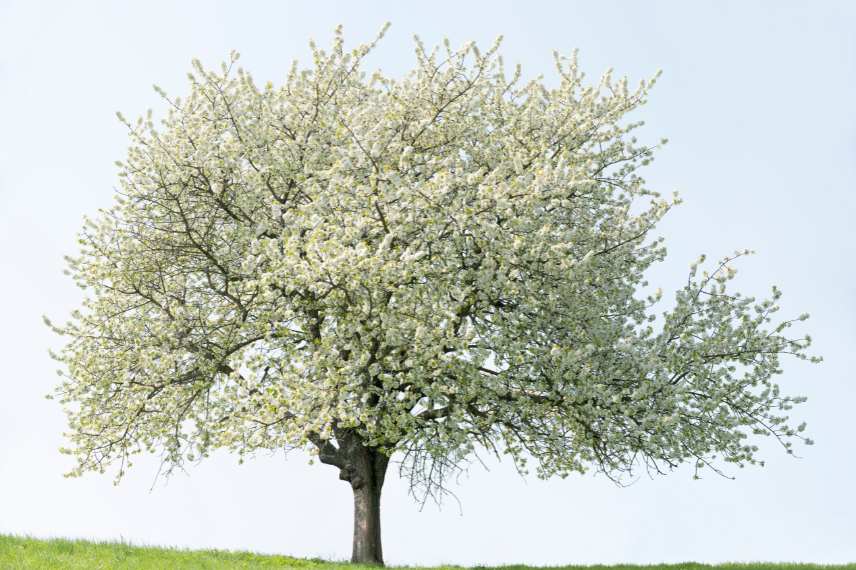
Poorly drained and damp soil can affect cherry fruiting
Is your cherry tree not receiving the best care?
Care and pruning of your cherry tree are also factors affecting fruiting. Indeed, despite its ease of cultivation, the cherry tree requires only minimal maintenance. A wrong pruning cut, inappropriate fertilisation, or a lack of watering can compromise the formation and development of the cherries, particularly at fruit set.
So, to keep your cherry tree in good condition, you should:
- Water regularly during the first year after planting, or during periods of high summer heat, heatwaves or drought. Excessive watering can lead to the appearance of cryptogamic diseases. To space out watering and keep the soil moist, mulching is essential. In early spring, you can lay a good mix of well-decomposed compost and manure at the base of the tree.
- In autumn, apply a complete fertiliser for fruit trees. An application of fertiliser that is too high in nitrogen will cause flower drop. Therefore, prioritise phospho-potash base amendments, low in nitrogen, such as diluted comfrey manure.
- Prune sparingly, every 3 to 4 years, after harvest and leaf fall. Avoid touching large branches, which are highly susceptible to gummosis, but prune smaller branches whose diameter does not exceed 2 cm. Only prune dead, damaged or fragile shoots, but also branches that grow towards the centre to aerate the canopy. And on each wound, carefully apply a healing putty.
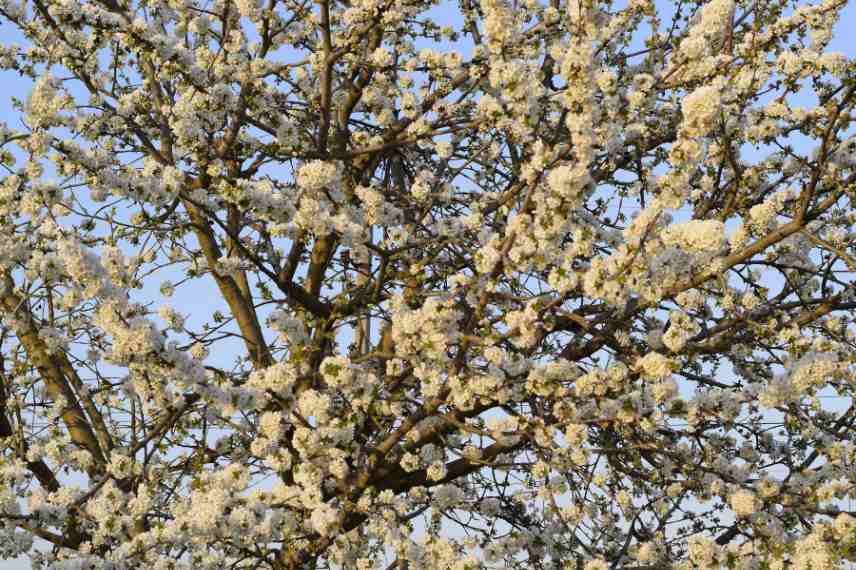
By aerating the cherry tree’s canopy through pruning, you increase cherry production
Is a disease or pest preventing your cherry tree from bearing fruit?
The cherry tree, like most fruit trees, can be susceptible to diseases or pest attacks. Consequently, these problems lead to poorer fruiting, or even no cherries at all.
The cherry tree is often affected by moniliosis, a cryptogamic disease caused by excessive humidity, which causes the flowers to wilt. This wilting can spread to the foliage and the fruits already formed. To combat it, it is essential to remove the affected parts and to spray the Bordeaux mixture at the start of spring and in autumn.
The scale insects and the aphids black are also common on cherry trees. It suffices to treat with insecticidal soap.
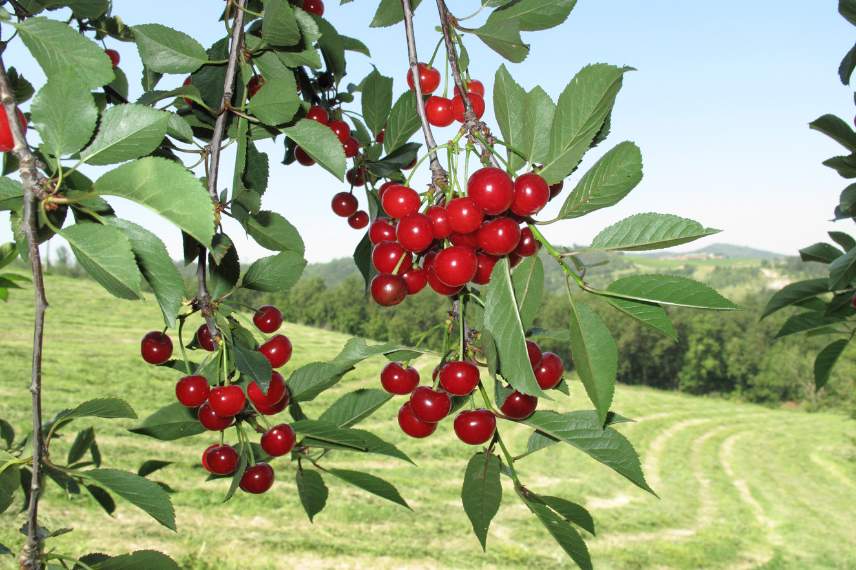
A cherry tree free of diseases or parasites is a cherry tree that bears fruit
Further reading: Diseases and pests of the cherry tree: how to prevent them and fight them naturally.
- Subscribe!
- Contents
Comments