





























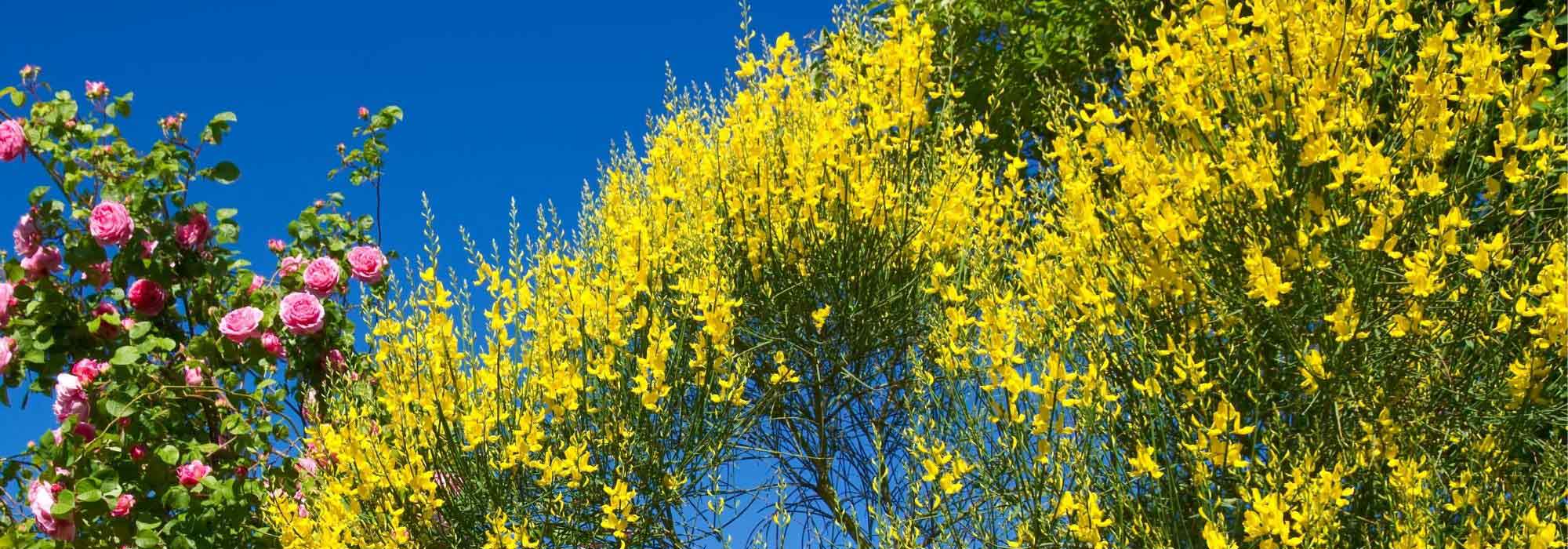
6 ideas for pairing broom plants
Our ideas for inviting them to the garden
Contents
If floriferous and easy to grow, the Brooms are sun-loving bushes that thrive in well-drained and even poor soils, and some can perfectly adapt to drought. They encompass plants from different genera:
- The genus Genista, which includes species with rather moderate to low hardiness
- The Cytisus, easy-going and colourful
- The Chamaecytisus, a diverse genus that includes both dwarf species and larger ones, which grow in most soils and in all situations.
In short, you will have understood that their rich plant palette ranges from bright pink to pale pink, including magenta shades or white, and their diversity of shapes and sizes are all assets for introducing them into your borders by pairing them with other plants to create wonderfully floral displays. Discover our most beautiful ideas and inspirations for pairing Brooms in the garden.

In an evergreen hedge with a touch of the South
The natural silhouette of Broom makes it ideally suited for planting in a free-standing hedge. To create a decorative evergreen hedge throughout the year: plant the Genista ‘Porlock’, which will brighten up spring with its sun-yellow flowers. With its rounded, fast-growing habit, it will reach about 2 m in all directions at maturity, alongside the Grevillea juniperina ‘Canberra Gem’, which will kick off the flowering season from March to July. Its fine, short needle-like leaves lighten the appearance of the hedge, while its purple flowers add a unique touch. From June to August, the Callistemon citrinus ‘Splendens’ will bloom, while the oleanders Nerium oleander will mark the summer season.
You can intersperse among these flowering shrubs the Pittosporum heterophyllum: just as evergreen and dense as the others, it boasts beautiful elegant foliage and delicate cream flowers in May-June. By respecting the appropriate spacing, your hedge will adopt a lovely free form without requiring pruning and will remain attractive throughout the seasons!
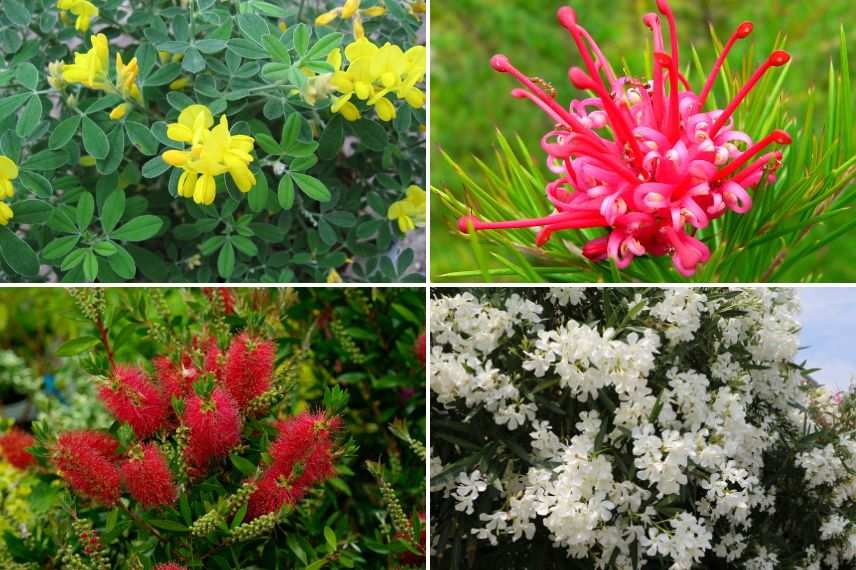
Genista ‘Porlock’ (Wikimedia commons), Grevillea juniperina ‘Canberra Gem’, Callistemon laevis and Nerium oleander
In a pink garden
A garden or a very feminine green room, dressed entirely in pink, featuring the Purple Broom Chamaecytisus purpureus, which, with its spreading and bushy habit and magnificent purplish-pink flowering, is an attractive groundcover bush to highlight. Showcase it with the bright pink bottlebrush of Callistemon viminalis ‘Bright Pink’! Paired with the fine spikes of the pink grass Muhlenbergia capillaris, this beautiful 3 m bush will bloom in May-June, with a second flowering in August-September. The cotton candy inflorescences of the dwarf smoke tree Cotinus ‘Smokey Joe’ will serve as a backdrop for the highly floriferous bush sage Salvia involucrata ‘Bethelii’.
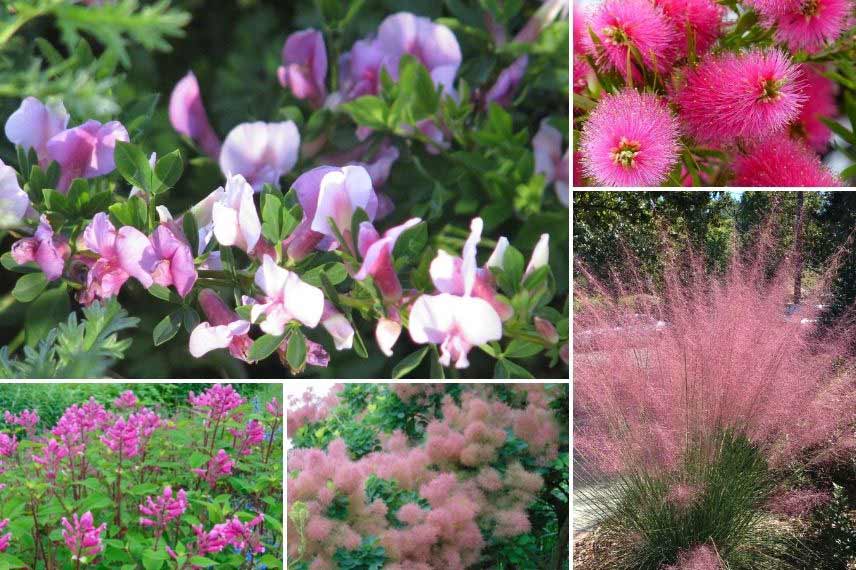
Chamaecytisus purpureus, Callistemon viminalis ‘Bright Pink’, Muhlenbergia capillaris, Cotinus ‘Smokey Joe’ and Salvia involucrata ‘Bethelii’
Discover other Broom - Cytisus
View all →
Available in 2 sizes
Available in 2 sizes
Available in 1 sizes
Available in 1 sizes

Available in 2 sizes
Available in 1 sizes

Available in 2 sizes
Available in 1 sizes
Available in 1 sizes
Available in 1 sizes
In a Mediterranean atmosphere
Considered a plant of Mediterranean climate, the Spanish Broom Spartium junceum is well-suited to drought conditions. If you wish to include it in a low-maintenance landscape, such as a large rockery or a dry garden with gravel, consider pairing it with the Callistemon citrinus ‘Mauve Mist’, notable for its mauve-pink bottlebrush flowers from June to August. This beautiful evergreen bush will blend beautifully, intertwined with lovely olives.
Accent with Yucca rostrata, featuring thick, short trunks topped with long blue-green leaves, and Yucca gloriosa ‘Variegata’ with its cream-marginate foliage. They will easily withstand negative temperatures of -10 °C and will display an impressive flowering of fragrant white bell-shaped flowers from May to July. To complement the blooms, plant the magnificent and floriferous Polygala myrtifolia, with its bushy habit. Covered in violet-pink flowers that stand out against the soft green foliage for almost the entire year, it is also drought-resistant. The Agapanthus ‘Charlotte’, repeat flowering from June to September, will energise the display with its blue-violet umbels from June to September.
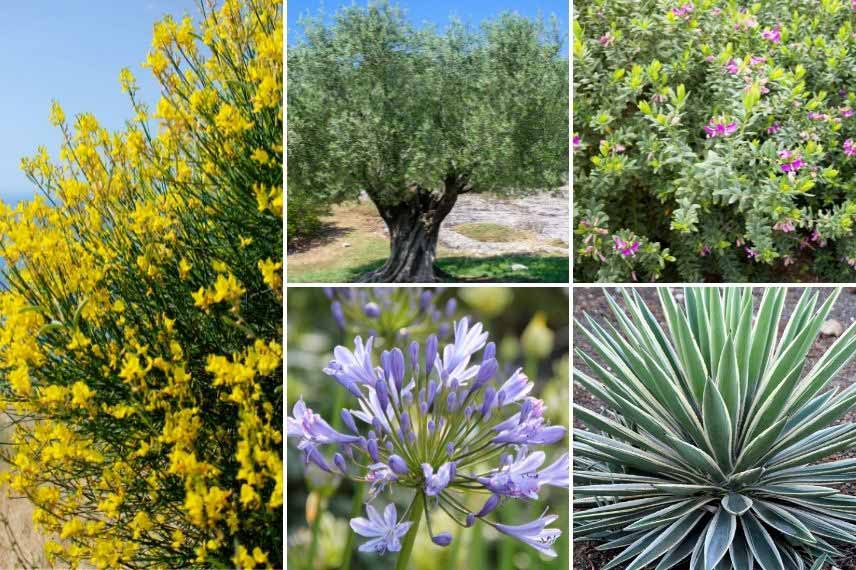
Spartium junceum, Olea europea, Yucca gloriosa ‘Variegata’, Polygala myrtifolia and Agapanthus ‘Charlotte’
Read also
12 evergreen bushes to plant in full sunIn an exotic scene
To create an exotic-looking garden corner, you can plant the Cytisus battandieri, also known as Pineapple Broom: it is a magnificent bush named for the unique shape of its bright yellow, fragrant flowers, reminiscent of the exotic fruit. Its branches, with their grey-green-silver deciduous silky leaves, bear these original flowers from May to July.
The Chinese Windmill PalmTrachycarpus fortunei, suited to the most extreme conditions of drought as well as cold, with a resistance to -18 °C, will display its large fronds alongside the Broom. As a complement, plant the Dasylirion serratifolium: this tufted plant, reminiscent of yuccas in its architecture but with finer leaves, enhances the exotic look of the garden alongside the Cordyline indivisa, an evergreen plant evoking the silhouette of palms.
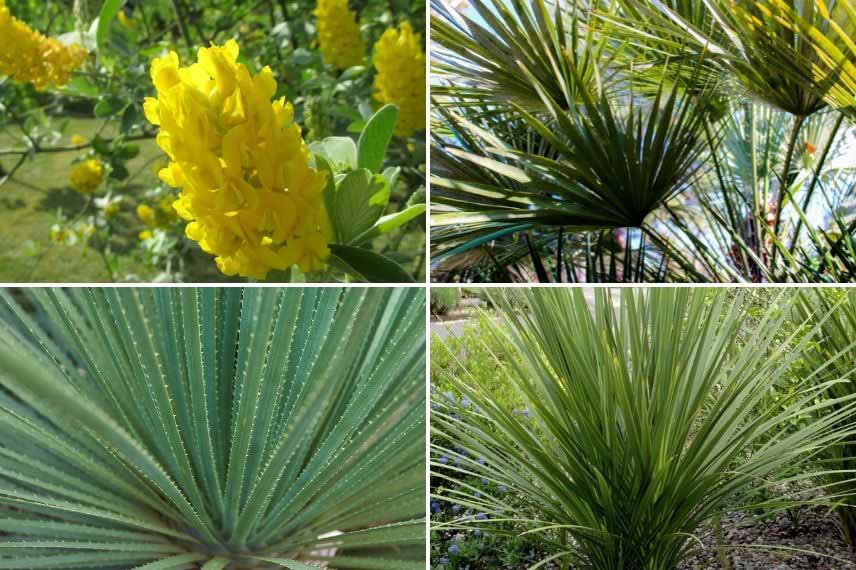
Cytisus battandieri, Trachycarpus fortunei, Dasylirion serratifolium and Cordyline indivisa
In a calming and natural arrangement
The Broom Cytisus Hollandia can be considered a moderately growing bush, its size not exceeding 1.50 m in all directions. It can thus be planted in a border, with the backdrop of the double flowering of a beautiful, bright pink hawthorn Crataegus laevigata ‘Rosea Flore Pleno’.
To create a flowering border that is easy to maintain and prolific, it can be accompanied by a mass planting of low-maintenance perennials such as Nepeta ‘Six Hills Giant’, white valerian Centranthus ruber ‘Albus’ and Alliums. Accent the border with soft tones of old roses Rosa ‘Cuisse de Nymphe’, wormwoods ‘Silver Queen’, Campanulas persicifolia) and hardy geraniums sanguineum.
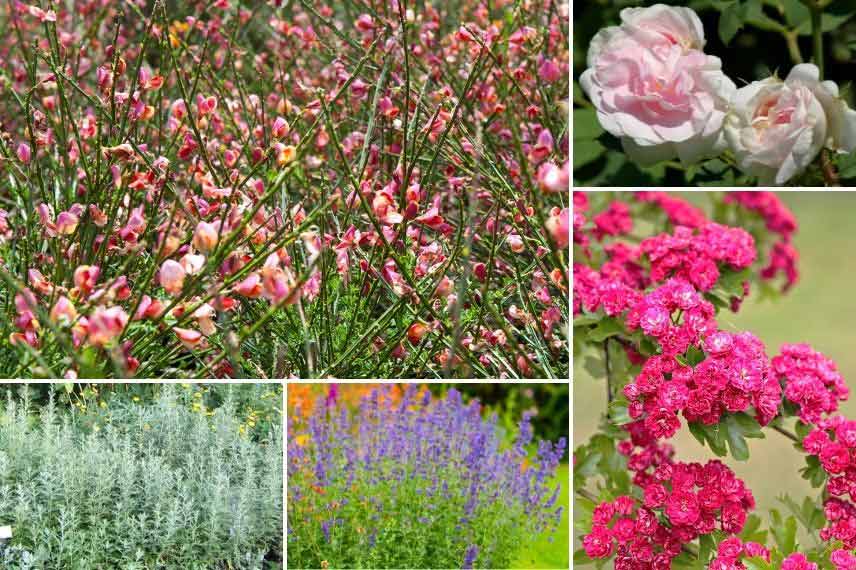
Cytisus Hollandia, Crataegus laevigata ‘Rosea Flore Pleno’, Rosa ‘Cuisse de Nymphe’ (Fredy Wyss – FlickR), Nepeta ‘Six Hills Giant’ and Artemisia ‘Silver Queen’ (cultivar413-Klickr)
In a pot or container on the terrace
Growing a broom in a pot is possible provided you use a container large enough to ensure its proper development. Regular watering throughout the growing season will also be essential. Plant your broom alone in a large trough or pot, placing it in a sunny or partially shaded spot in the hottest regions. For this, choose a moderately growing variety, such as the Winged Broom Genista sagittalis. This small evergreen undershrub will not exceed 30 cm in height and will spread to a maximum of 80 cm in width. It will surprise you with its upright, winged stems of a lovely light green. A great asset for a placement near the house: it will be covered with a profusion of bright yellow flower clusters in harmony with the colour of the stems from May to July!
Alongside it, arrange other dwarf shrubs, each in their pot: the Buddleia davidii ‘Sophie’, which blooms profusely with purple clusters from April to September, a dwarf variety of Weigela, such as the florida ‘Picobella Rosa’, or even a variegated evergreen spindle tree like the Euonymus fortunei ‘Dan’s Delight’, for example.
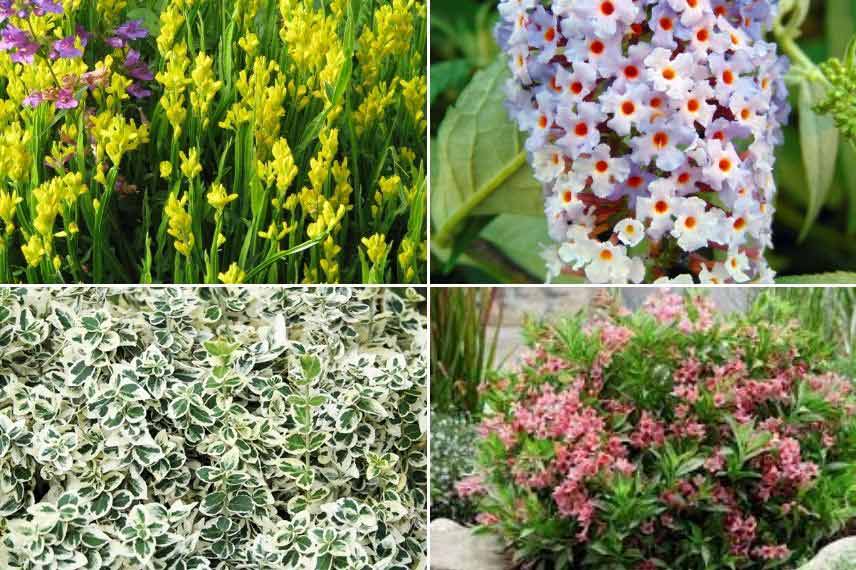
Genista sagittalis, Buddleia davidii ‘Sophie’, Weigela florida ‘Picobella Rosa’ and Euonymus fortunei ‘Dan’s Delight’

- Subscribe!
- Contents
Comments