


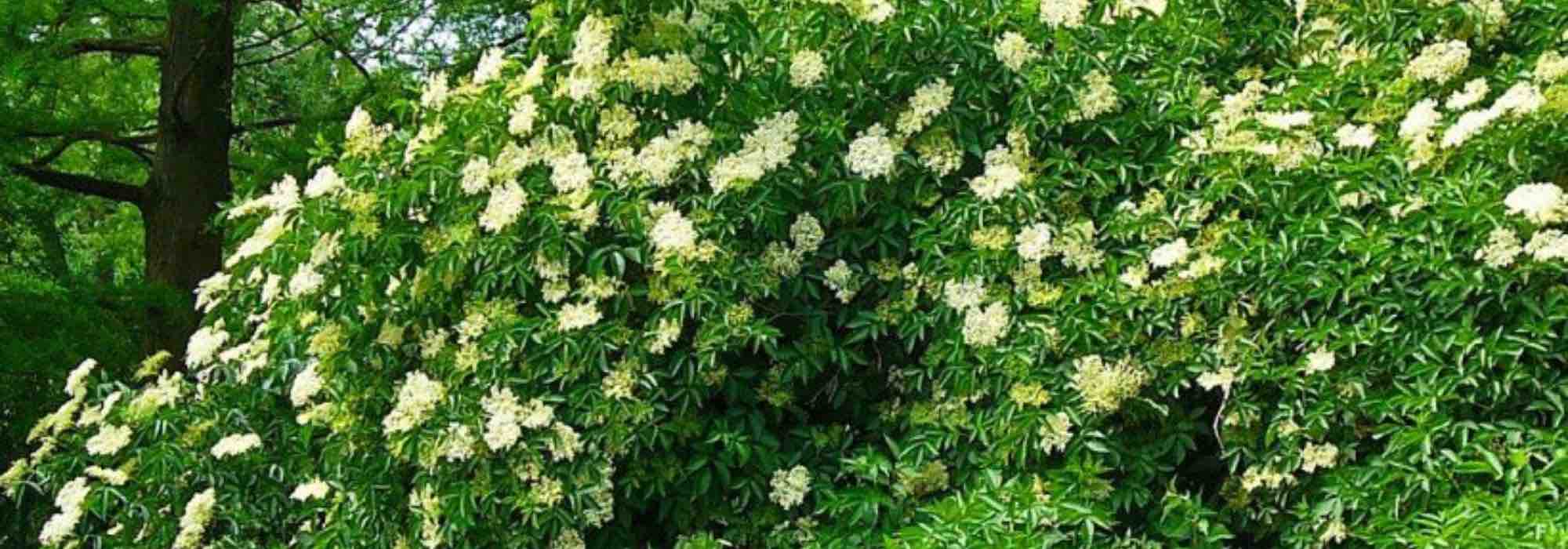
7 easy and reliable shrubs for beginners
Robustness and reliability under all conditions
Contents
Cultivating a vibrant, colourful garden is within everyone’s reach, even for those just starting out in gardening. shrubs play a crucial role in shaping and enhancing gardens, such as terraces and balconies, but not all are equally easy to grow. Some require less maintenance and stand up better to the vagaries of the weather, which makes them ideal for novice gardeners or those who don’t have much time to devote to looking after their garden. In this article, we present seven bushes that require only minimal care while delivering very satisfactory results. These robust and magnificent varieties will enable you to enjoy a flowering garden without the constant worry about their survival.

Spiraeas
Spiraeas, which evoke understated charm and generous flowering, are among the most popular shrubs for their ease of cultivation and ornamental qualities. Originating from various temperate regions of the northern hemisphere, these shrubs come in several species and varieties, offering a range of sizes, shapes, flower colours and flowering seasons. Spring- or summer-flowering spiraeas, they bloom from April to August. Some display attractive autumn colour in the foliage.
The Van Houtte spiraea is prized for its light, graceful habit; the Japanese spiraea ‘Magic Carpet’ offers colourful, changing foliage; Spiraea thunbergii ‘Mount Fuji’ displays variegated green and white foliage.
Very adaptable and hardy, spiraeas grow in ordinary soil, even slightly calcareous, in sunny or partial shade. Their tolerance to drought once established and to diseases makes them particularly attractive to gardeners looking to reduce garden maintenance.
Although tolerant of partial shade, the plant will flower more abundantly in full sun. Once mature, spiraeas are relatively drought-tolerant, but regular watering during long dry spells can encourage more prolific flowering and denser foliage.
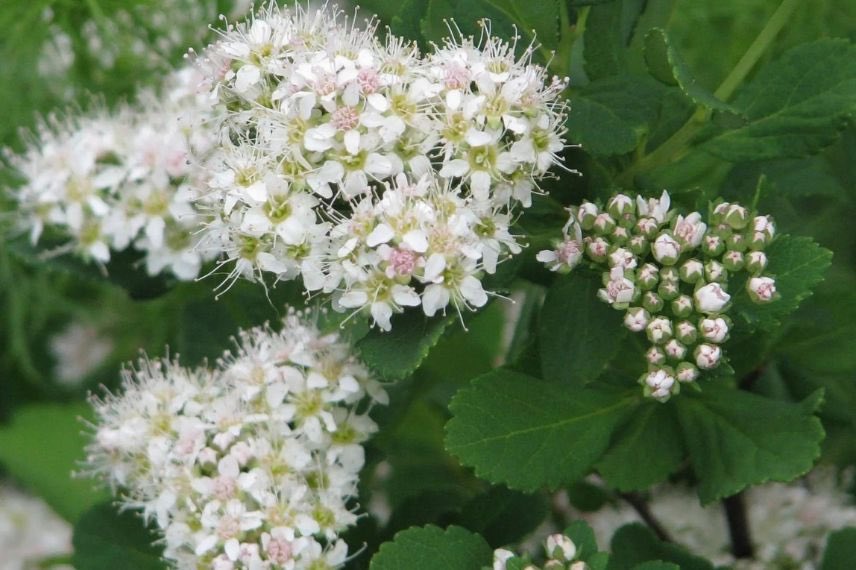
Birchleaf Spiraea
Read also
10 shrubs with long floweringBuddlejas
Buddleias, often known as ‘butterfly bushes’, stand out for their elegance and their ability to attract a myriad of beneficial insects, particularly butterflies. Originating mainly from Asia, these shrubs offer clusters of delicately scented flowers that bloom throughout summer and autumn.
Buddleias come in a range of colours, from pure white to bright pink, through deep purple. Their ability to continually produce new flowers provides a lasting display that delights the senses and catches the eye. Their rapid growth and adaptability make them reliable choices for gardeners. For unusual varieties, consider the Buddleia davidii ‘‘Butterfly Tower’ with a columnar habit or the Buddleia globosa with orange spherical flowers.
Buddleias are easy-care shrubs that thrive in most well-drained, sunny soils, even calcareous and poor ones. They are also drought-tolerant once established, making them ideal candidates for gardens where regular watering can be difficult
Choose a sunny spot in your garden to plant your Buddleias, preferably sheltered from strong winds. Also ensure soil is well-drained to prevent root rot.
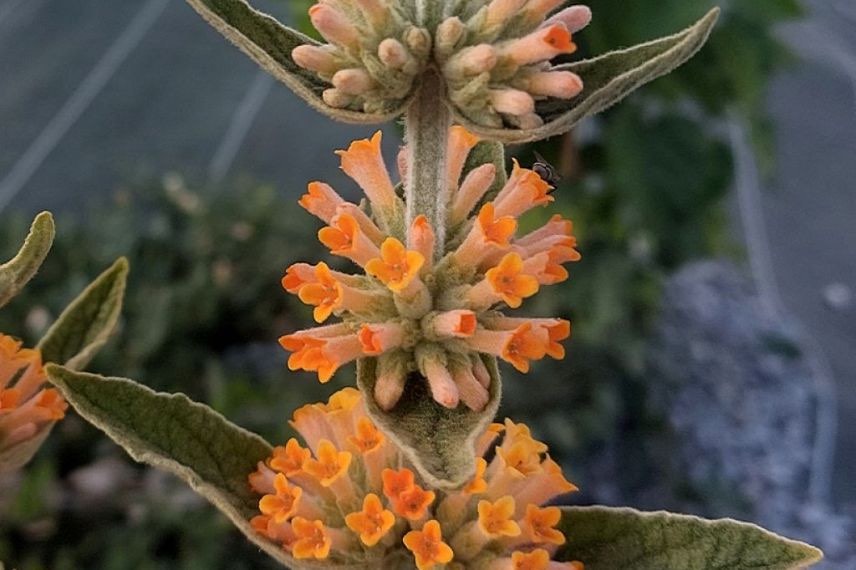
Buddleia ‘Orange Sceptre’
Spindle trees
Euonymus spindle trees or Euonymus are versatile shrubs that bring a touch of brightness to any garden thanks to their attractive foliage and coloured berries. These shrubs offer a variety of species and cultivars suited to a wide range of growing conditions.
Euonymus shrubs are distinguished by their evergreen or deciduous foliage, often variegated in shades of green, yellow and cream. Deciduous euonymus offer superb autumn colouring, very vibrant. In addition, some species produce coloured berries in autumn and winter, adding seasonal interest and a resource for birds. Whether as hedges, borders or focal points, these shrubs provide year-round visual interest.
Euonymus adapt to full sun and partial shade, and thrive in most well-drained soils. Evergreen euonymus grow in neutral to calcareous, fairly rich and cool soil, whereas deciduous euonymus, indifferent to pH, are happy in a poor, well-drained soil, rather cool in summer.
Euonymus fortunei ‘Emerald ‘n Gold’ is a compact form with golden foliage, Euonymus alatus is the type species of the famous deciduous spindle trees with superb autumn colouring in pink. The Euonymus fortunei ‘Wolong Ghost’ is an amazing creeping variety with finely veined, white leaves.
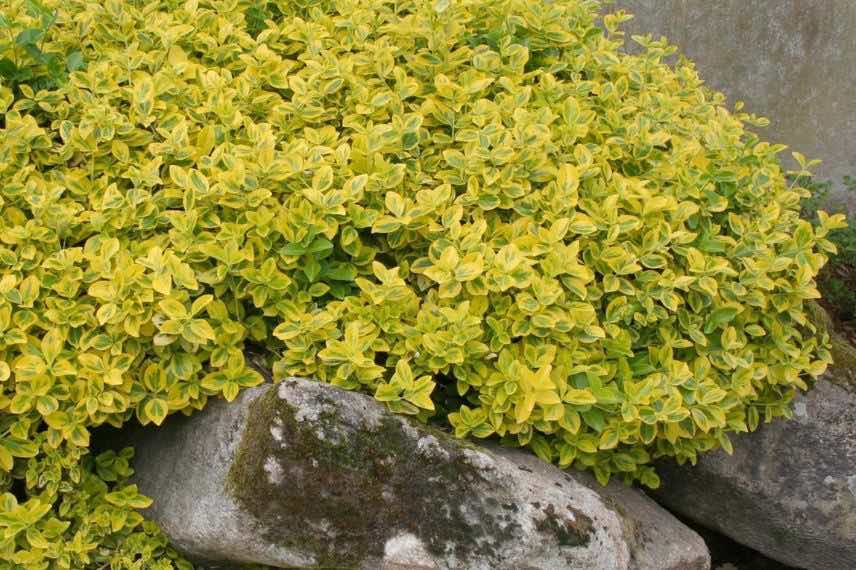
Euonymus ‘Emerald n Gold’
Deutzias
Delicate and charming shrubs, deutzias add a touch of elegance and light to any garden. With a romantic appearance, they develop clusters of small, delicate and fragrant flowers, which bloom generously in spring and early summer.
Their bright green foliage and abundant flowering make them popular choices for borders, beds, or even as isolated specimens in a garden, as well as for their dense growth habit. Their clusters of white, pink or mauve flowers brighten the garden with their glow.
These shrubs are undemanding and thrive in most well-drained, fertile soils—whether acidic or calcareous and moist.
Choose a sunny, partly shaded, and sheltered location to plant your deutzias. Look at the varieties ‘Nikko’, a compact with pure white flowers, ‘Lavender Time’, with round clusters of lavender flowers, and ‘Tourbillon Rouge’, in large pink-purple panicles.
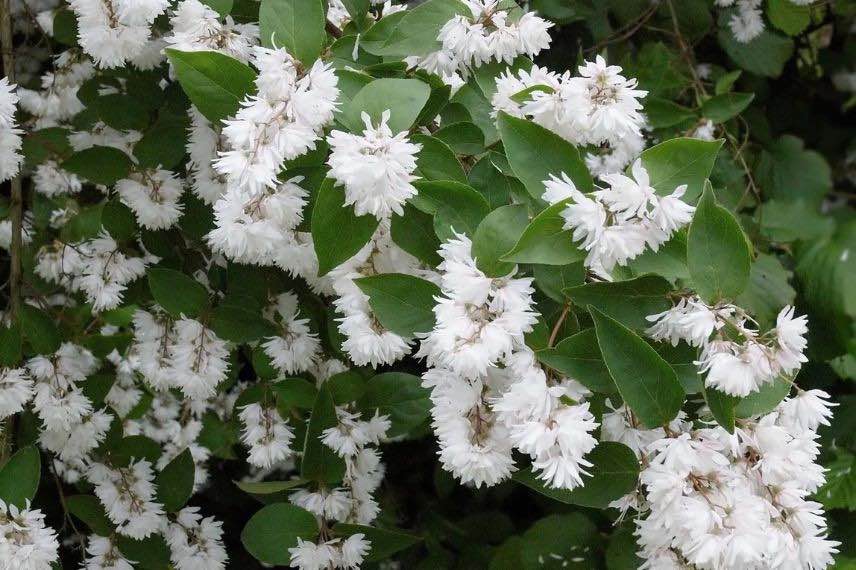
Deutzia ‘Pride of Rochester’
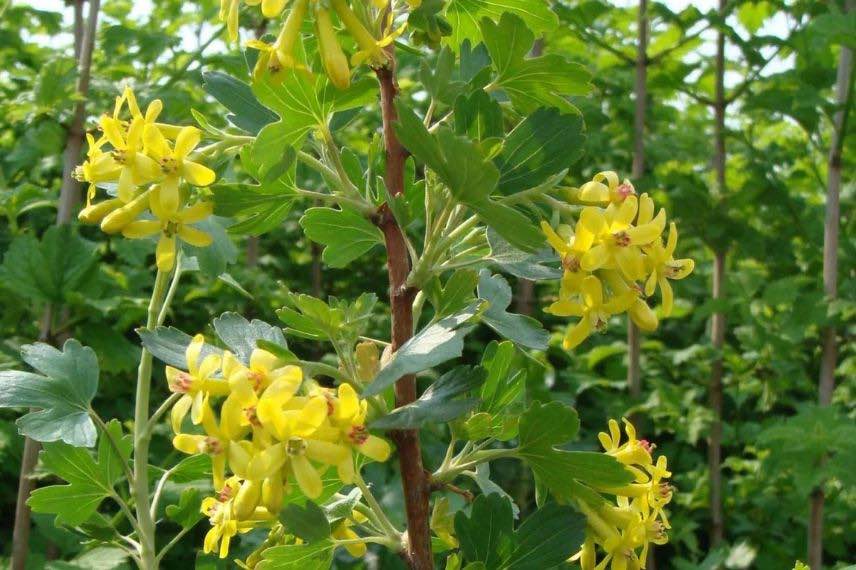
Flowering currants
hawthorns
Well known in our countryside, hawthorns, in the genus Crataegus, are hardy shrubs and among the easiest to grow. They bring natural beauty and a solid structure to any garden, and offer deeply lobed leaves, fragrant flowers and colourful berries.
Hawthorns, depending on species and cultivars, have flowers ranging from pure white to bright pink and berries ranging from red to black. Their vigorous growth and tolerance of adverse conditions make them interesting choices for urban, rural and coastal gardens. See Crataegus laevigata, very common in the north, or Crataegus azarolus, very well suited to the southern climate.
Hawthorns are renowned for their disease resistance, tolerance of air pollution and ability to thrive in a variety of soils, including poor and clay soils.
These shrubs offer spectacular spring flowering, with clusters of fragrant flowers that attract pollinators and add a splash of colour and life to the garden. Hawthorns feature an attractive ramified habit that adds an architectural dimension to the garden. Their dense foliage and deterrent thorns make them ideal choices for defensive hedges or for marking property boundaries.
Choose a sunny to partly shaded site to plant your hawthorns.
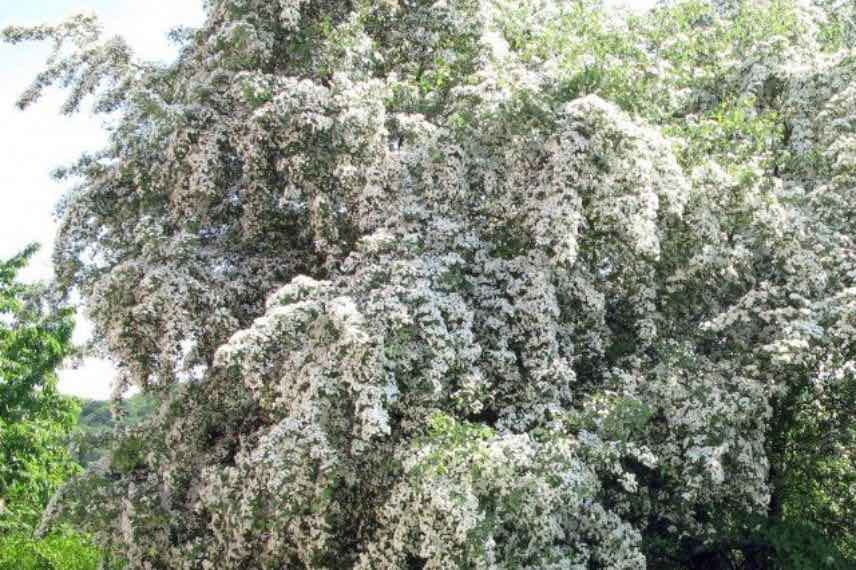
Crataegus monogyna
Elders
Elders offer attractive ornamental qualities and are deciduous shrubs that are very easy to grow. They are known also for flowers from which syrups can be made with an unmistakable flavour, and berries (for black elder) that make delicious jams. The black elder cultivars display foliage that can be very dark, purple-black, and deeply lobed. The foliage of red elder also rivals in beauty with golden or feathery, light leaves that recall those of Japanese maples. Take, for example, the Sambucus nigra ‘Black Beauty’ and the Sambucus racemosa ‘Lemony Lace’.
Spring flowering of the elder unfolds in charming umbels more or less white or pinkish, always nicely contrasted against the foliage. Moreover, elder foliage, once fallen in autumn, makes excellent compost material.
Plant elder in a sunny or partial shade position. It is undemanding of soil, tolerating ordinary soil, even calcareous, but well-drained and rich in humus. It grows fairly quickly and rewards you with its numerous virtues.
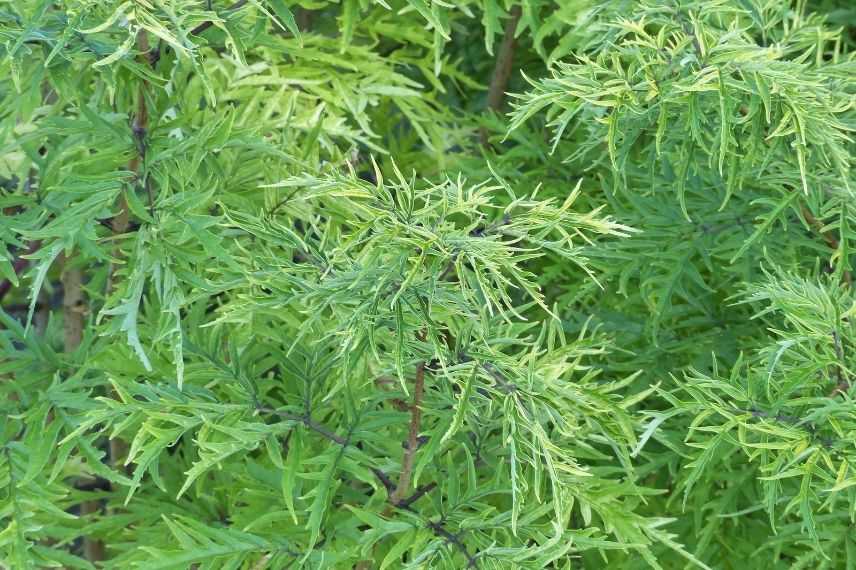 Sambucus racemosa ‘Lemony Lace’
Further reading
This list isn’t exhaustive; we also have in mind Cotoneasters, Eleagnus, Forsythias and Photinias, among others. If these are known for providing good hedge shrubs, they can also be planted as isolated specimens, left unpruned or pruned to form a transparent effect, and reveal their charms in a completely different way.
Finally, among very hardy shrubs, we include the large family of conifers. Of course, within this family there are some more delicate species, but overall conifers are very hardy and low-maintenance. Not always given due credit, they nevertheless offer exceptional ornamental qualities and very interesting structures, textures and colours in the garden.
- Subscribe!
- Contents
Comments