





























7 plants both quirky and gorgeous
Our selection of unusual plants that stand out in the garden
Contents
We know that nature is incredibly creative: it proves it to us by rewarding us with a beautiful diversity of plants. Some plants stand out particularly for their silhouettes, colours, patterns or textures.
These eccentrics are second to none when it comes to bringing graphic impact and personality to the garden. They will form true focal points, which will inevitably draw the eye and generate astonishment as well as wonder.
Whether you simply crave a touch of originality or you are a collector of extravagant plants, discover some of these truly natural works of art with our selection of 7 surprising plants.

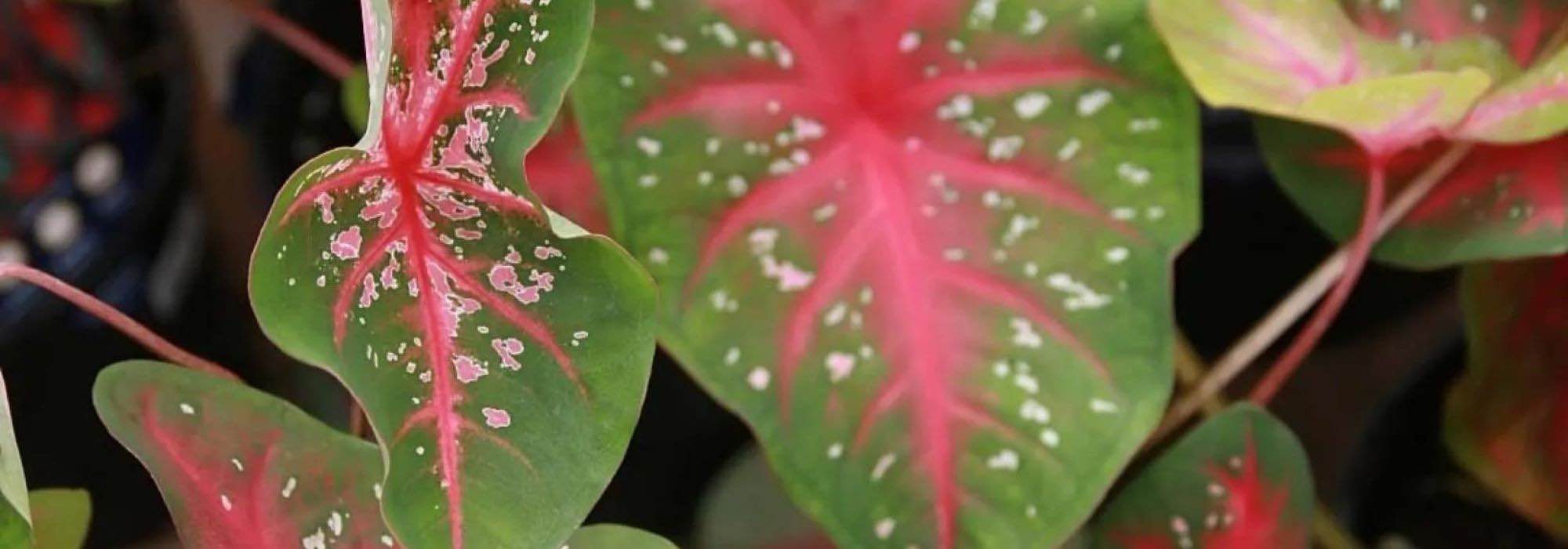
Caladium ‘Red Flash’
If you favour discretion and subdued colours, this isn’t for you!
Caladiums are already renowned for their large, colourful heart-shaped leaves, particularly ornamental.‘Red Flash’ is no exception and offers variegated foliage that does not go unnoticed. Its large green leaves are pink-spotted, with a heart and veins in such a vivid red that it is almost garish. They can reach 35 cm in length and 20 cm in width—a substantial size, well illustrated by the plant’s nickname, ‘elephant ears’.
Caladiums will reach around 60 cm across at maturity.
In terms of cultivation, it prefers partial shade, but this variety will tolerate more sun. Plant this tuberous perennial in soil rich in organic matter, but well-drained (that does not retain excess water) and that never dries out completely. Not hardy, ‘Red Flash’ should be grown as an annual or in a pot. The foliage dies back in autumn, and the tubers can be protected from frost.
Caladiums are ideal for creating a lush, exotic atmosphere during the summer months. This variety will look wonderful in the garden as well as on the terrace or balcony. Place it alongside Dipladenia in red tones. Also consider the handsome foliage of a Cordyline australis ‘Cherry Sensation’ in the same tones, to create a harmonious red- and green-dominated display.
For more information: Caladium, Elephant Ear: planting and growing
Read also
9 rare and collectible perennialsArum 'Picasso'
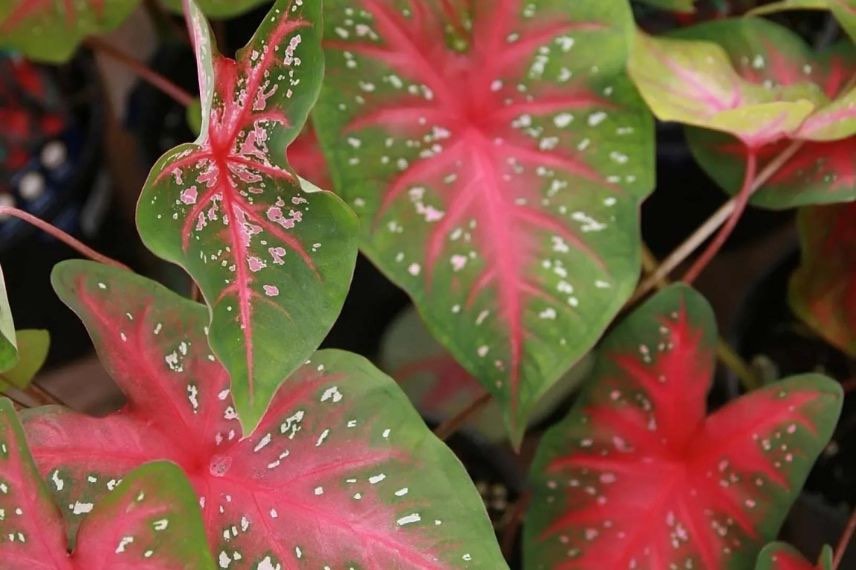
If this plant bears the name of the famous painter, it is because it is a true work of art. The Arum or Zantedeschia ‘Picasso’ is a summer-flowering bulbous plant, native to New Zealand. From June to August it produces spathes, i.e., cone-shaped bracts that protect a spike inflorescence. This distinctive flowering lends charm and elegance to all Arums.
But if the Picasso variety stands out, it is for its bicolour spathes, white maculated with purple-plum, reaching nearly 10 cm. These flowers make excellent candidates for sophisticated bouquets.
The flowering is highlighted by slender linear foliage, a green that is slightly mottled.
With a modest habit, This Arum will form a clump about 60 cm tall and 40 cm across. It can be planted in the garden in regions with moderate winters (hardiness to -6°C), but will also tolerate pot culture.
Plant it in cool to moist soil, fairly rich in organic matter, in a sunny position. Pair it with Alliums in violet tones and grasses such as the Carex, whose foliage will add volume.
For more information: Arums: planting, growing and care
Persicaria runcinata ‘Purple Fantasy’
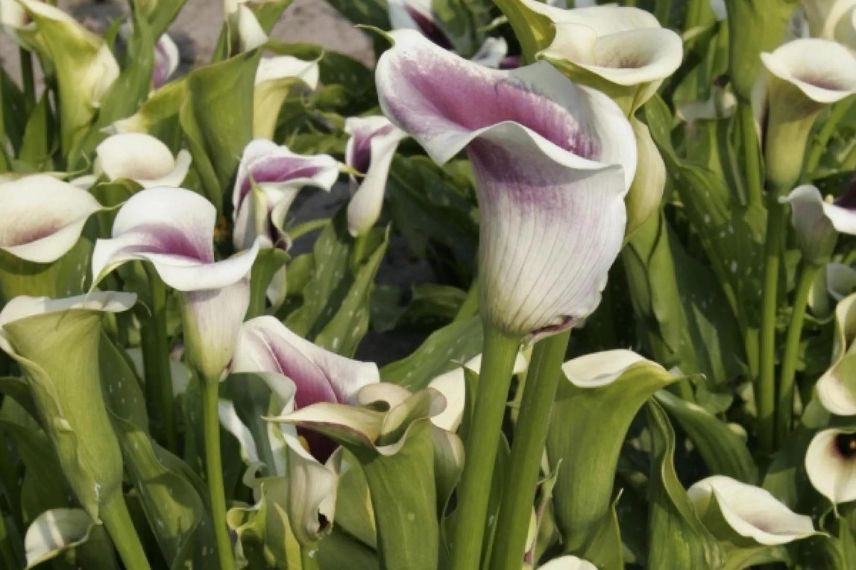
The Persicaria runcinata ‘Purple Fantasy’ is a Chinese knotweed, particularly fanciful. It bears astonishingly triangular leaves, displaying a green background with a brown V at the centre, edged in silver. In autumn, the foliage reddens further to take on seasonal colours. A strikingly architectural plant, with highly ornamental, high-contrast foliage!
Semi-evergreen, it will stay in place if winter does not experience hard or prolonged frosts.
Flowering occurs in summer, in the form of small white flowers arranged in clusters.
This perennial will quickly reach 50 cm in height and will form a pretty groundcover. Hardy and tolerant, it proves easy to grow. Simply provide it with a moist, fertile soil, even heavy, in any exposure. To create a coloured groundcover in woodland, pair it with Ajugas or Geranium macrorrhizum.
For more information: Persicarias or Knotweeds: planting, growing and care
Read also
7 rare shrubsTricyrtis hirta
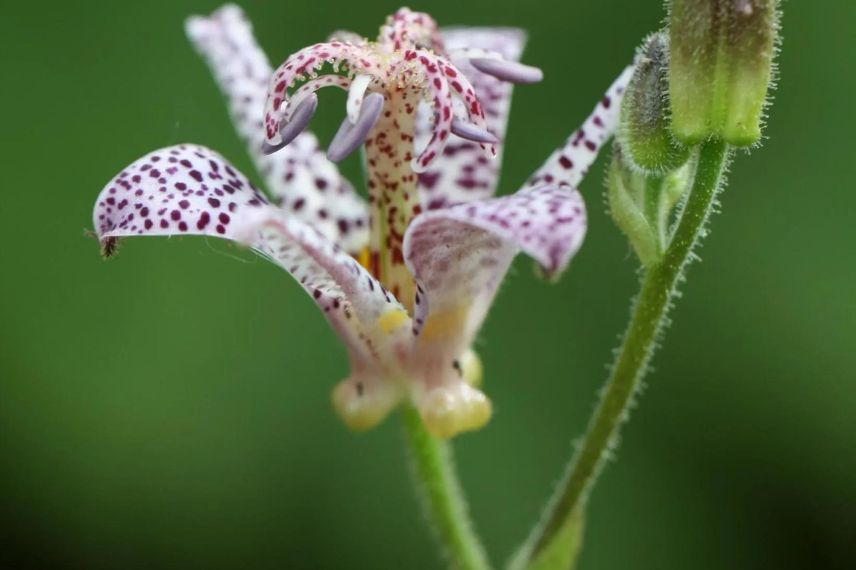
The flowers of the Toad Lily Tricyrtis hirta would almost look as if they had been painted by hand. They boast, indeed an astonishing spotted pattern, which makes them distinctive. They take the form of white corollas, speckled with purple to garnet spots, as if laid on with a brush. In the centre, a spur rises with its stigmas, echoing this original pattern. These little plant marvels reveal themselves in late summer, from August to October. Do not be fooled by their delicate appearance: the plant is hardy and durable in the garden!
The foliage of a pretty glossy dark green is ovate in shape and well-veined. It forms a small tuft that disappears in winter. At maturity, expect around 60 cm in height and 40 cm across.
This “Toad Lily” is a perfect perennial for brightening cool, shaded areas. It proves quite hardy (around -20°C) and easy to grow. Plant this unusual plant in soil rich in organic matter, in a wind-protected position. These winds could affect the flowering, especially in regions that experience cold autumns. In a flowering border, pair this Toa Lily with foxgloves in the same shades, but also with small bulbs such as fritillaries, which will precede the spring flowering. Add the graphic fronds of a few ferns.
For more information: Tricyrtis, Toad Lily: planting, cultivation and care
Coniogramme emeiensis
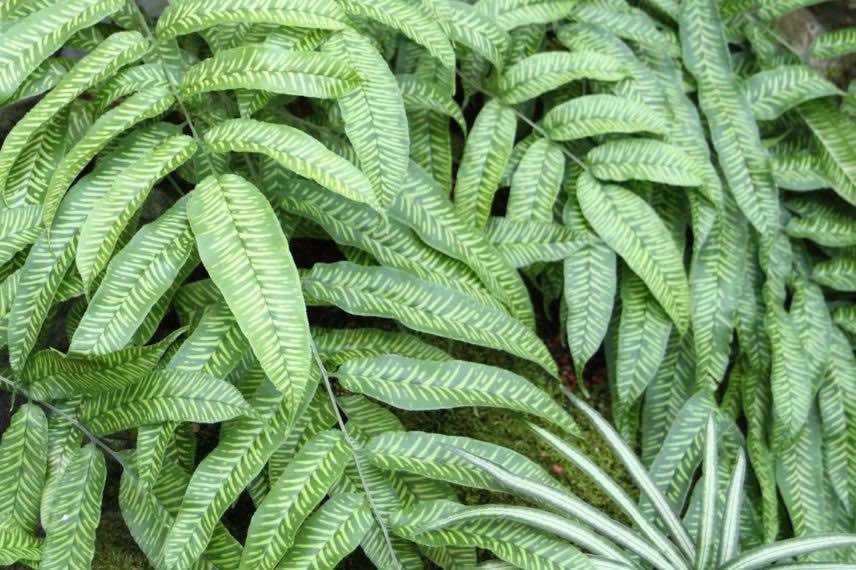
The Coniogramme emeiensis or ‘bamboo fern’ is a Chinese species still not very widespread, despite its undeniable aesthetic qualities. It rewards us with astonishing fronds which certainly earn it its nickname, since they are cut into segments reminiscent of bamboo foliage.
But that isn’t their only ornamental asset: colour-wise, these fronds display a striking variegated pattern, with emerald green striped with yellow to pale green. A real little jewel, bright and luminous!
The foliage is deciduous, but may persist in milder climates or when grown in pots, kept sheltered from winter cold.
Its upright silhouette will reach nearly 1 metre in height and about 80 cm in breadth. This fern will form a perfect groundcover, thanks to its running rootstocks that allow it to spread over time.
Hardy to -12°C, easy to grow and quick-growing, it will elegantly brighten shaded, damp areas. At the base of deciduous trees or shrubs, it can be paired with the delicate flowering of Lily of the Valley or of Dicentra.
For more information: Ferns: planting and growing
Dracunculus vulgaris
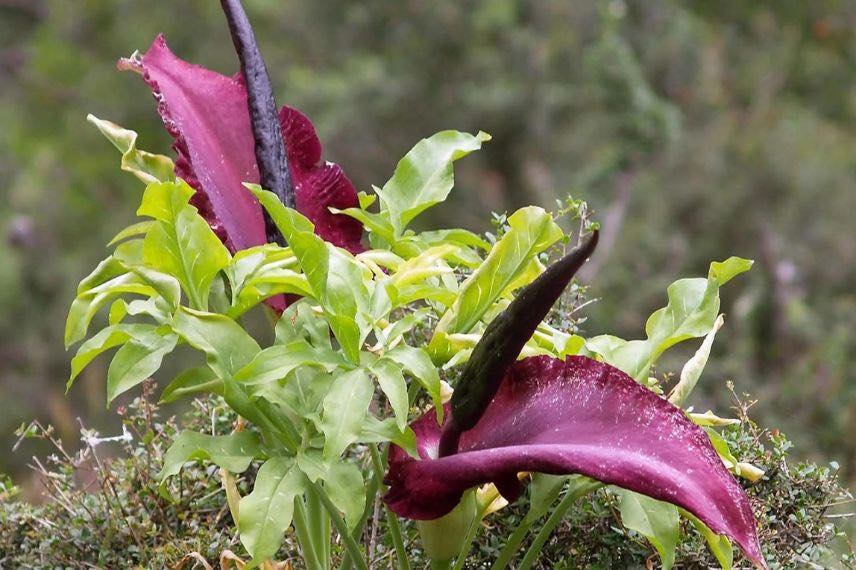
The common dragon lily (Dracunculus vulgaris) is not to everyone’s taste: whether you find its charm surprising or you consider it too eccentric, its flowering will inevitably attract attention in the garden.
It is a tuberous plant related to the Arums, hailing from Mediterranean regions. In late spring, it develops a striped stem from which a large spathe 30 cm cornet-shaped. It bears a deep crimson-purple colour with a velvety texture on the inside. From the centre, a long black column rises.
The triangular foliage is a glossy dark green, sometimes marked with white spots.
The plant can reach up to 1.5 metres in height with a 60 cm spread, depending on growing conditions.
It is also its surprising scent that makes this plant distinctive : but it certainly will not join your indoor bouquets, as it exudes a rotting-meat odour, designed to attract insects that enable fertilisation.
Easy to grow in our mild climates, this plant will tolerate sun or partial shade, sheltered from winds that might spread its unappealing odour. Cultivate it in deep, rich, well-drained soil.
For gardeners in cold regions (frosts above -9°C) wishing to enjoy this distinctive architectural effect, consider pot culture. This botanical curiosity deserves to be grown as a solitary specimen, to be perfectly showcased.
Pseudowintera colorata 'Red Leopard'
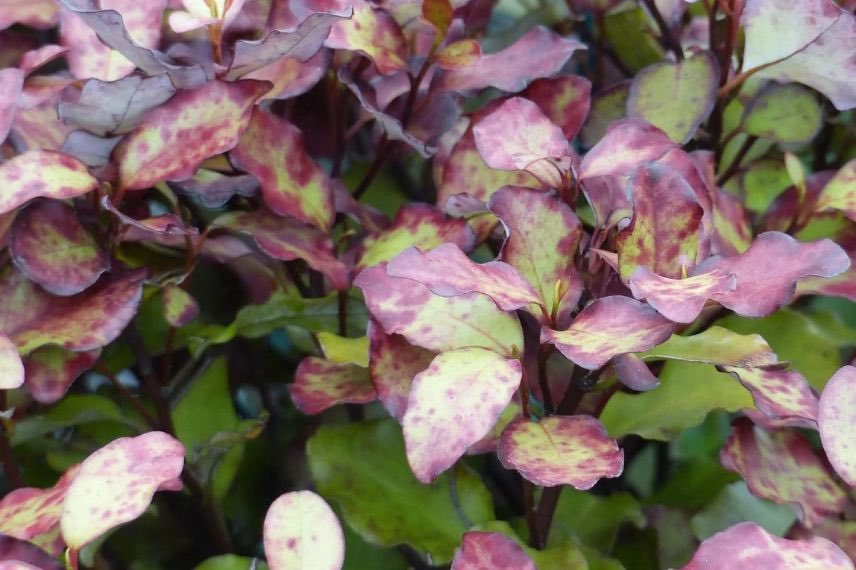
Let’s finish this non-exhaustive list of plants that make a real impact with Pseudowintera colorata ‘Red Leopard’ (or Drimys colorata). This small bush native to New Zealand produces particularly colourful and decorative foliage. It consists of evergreen, oval leaves with a leathery appearance. They display a cream-coloured shade speckled with red. These hues evolve with the seasons: deep red in autumn, or purple on a lime-green background in winter.
Late-spring flowering is discreet and gives way to fruiting reminiscent of small olives.
Its compact habit will gradually reach a height of 80 cm and a width of 50 cm, which will allow it to be grown in either a small garden or in a pot, to brighten terraces and balconies.
A somewhat fussy plant, Pseudowintera colorata ‘Red Leopard’ requires non-calcareous soil that is well-drained and cool year-round. In winter, it will not tolerate frosts above -9°C.
Plant it alongside a Japanese Pieris with its young red leaves, but also the red pom-pom flowers of Knautia macedonica.
For more information: Drimys: planting, growing and care.
- Subscribe!
- Contents

Comments