7 rare trees
Discover magnificent plants for your collection
Contents
Living fossils once thought to have disappeared for ever and saved through advances in plant technology, rare specimens in cultivation and the only representatives of their genus, or plants as exceptional in their natural habitat as they are in nursery collections: some trees are true rarities, which are rewarding to discover and, why not, to grow in your garden, provided you can offer them the optimum growing conditions.
Discover these unusual, unique trees, both to satisfy your curiosity and to consider adopting one for your own garden: here is our selection of 7 rare and collector’s trees.

Quercus myrsinifolia: a wonderful bamboo-leaved oak
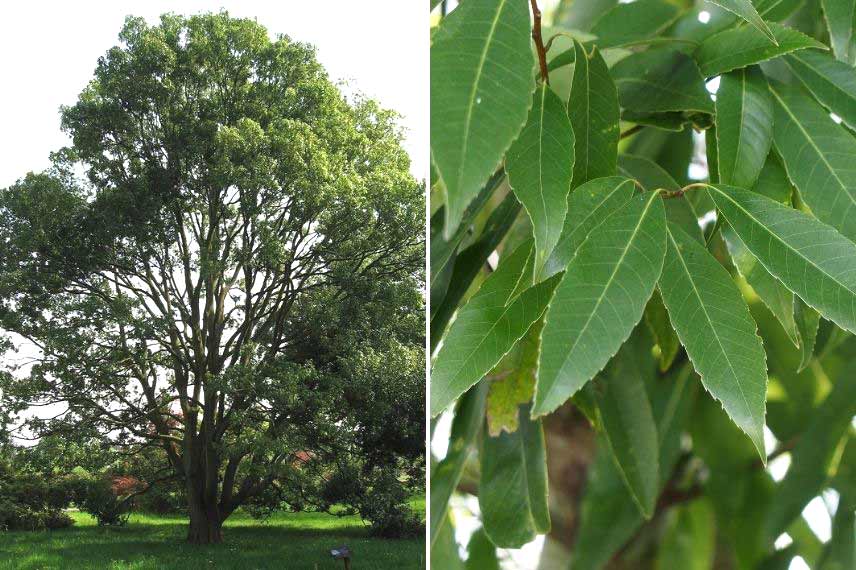
Resembling camphor a little, the rare Myrsine-leaved Oak Quercus myrsinifolia is a small tree native to Japan and China. Its common name, sometimes also “Bamboo-leaved Oak”, comes from the shape of its elegant, lanceolate leaves, with prominent veins, measuring around 13cm long and 4cm wide. This delicate-looking tree has a pyramidal habit when young, eventually developing a rounded crown over the years. Whereas in its native range it grows very slowly into a small tree reaching 15m in height, under our climate, it will not exceed 5m in height and 3m in spread.
Preferring mild conditions, it thrives in moist, neutral to acidic soil in full sun. Give it pride of place as a specimen tree in the garden, or plant it in a coastal garden, as it tolerates salt-laden winds very well! It can also make an excellent addition to a Japanese garden.
Quercus myrsinifolia
Wollemia nobilis: a southern pine once thought extinct
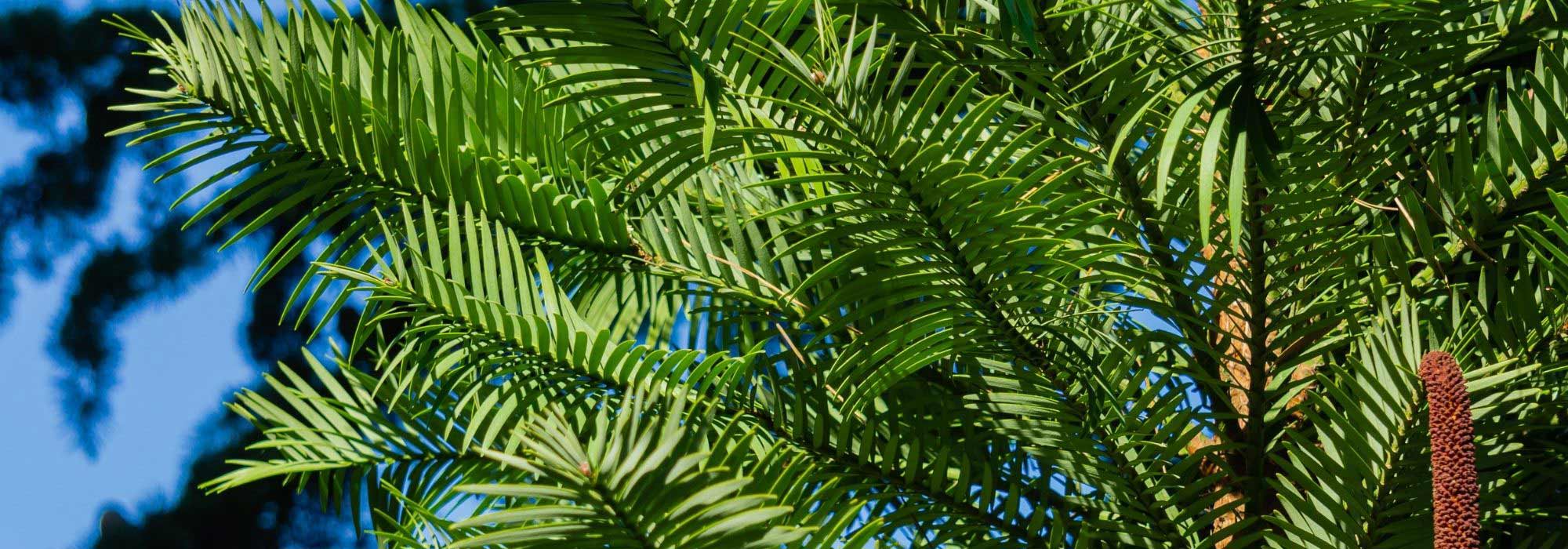
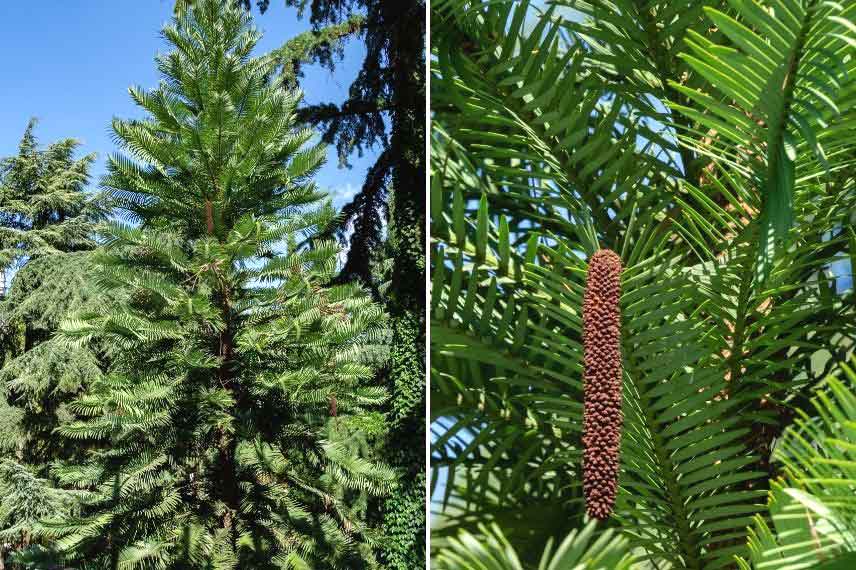
A member of the Araucariaceae family, one of the oldest from a botanical point of view, the Wollemi pine Wollemia nobilis is related to araucarias, the last representatives of a group of plants that proliferated during the Jurassic period. This species is the only living representative of its genus. It was thought to be extinct until it was rediscovered in 1994, at the bottom of a small, secret valley in Australia. Botanists have since managed to propagate it, making it possible not only to preserve it but also to offer it to gardeners.
It has the silhouette of a tall, slender fir with very distinctive branches arranged in two tiers: the lower branches bear pale green foliage consisting of large, flexible, flattened needles, arranged horizontally, resembling fern fronds, while the terminal crown takes on a conical shape. Its knobbly bark is a beautiful chocolate colour. This tree, one of the rarest in the world, prefers humus-bearing, acidic and moist soils and dislikes severe frosts (it is reputed to be hardy down to -12 °C): it can be grown in a mild oceanic climate. The few adult Wollemia nobilis specimens reach 35 m in height and have a generally narrow, pyramidal habit.
Wollemia nobilis
Tetracentron sinense: a rarity from Asia
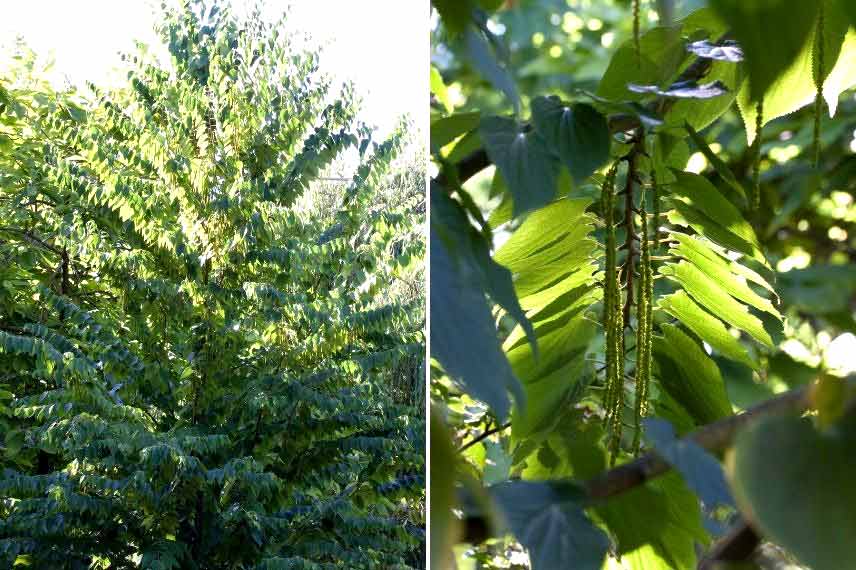
Originally found the Tetracentron sinense at the edge of forests and in the steep-sided valleys of Asia, this small deciduous tree is the sole representative of the genus Tetracentron. The name comes from the Greek “tetra“, meaning “four”, and “kentron“, meaning a prickle, referring to the four dart-shaped appendices adorning its fruits. In its native regions, where it is unfortunately endangered, this tree reaches 30 m in height, but will reach around 12 m in height and 6 m in spread when grown in our climates.
Very graceful, Tetracentron sinense has a generally upright, rounded silhouette and young, heart-shaped red foliage that becomes soft green, before taking on beautiful shimmering tones again in autumn. Its spring and summer flowering consists of unusual long, pendulous catkins, followed by decorative fruiting. Fully hardy down to -18 °C, it prefers a bright or partially shaded position, in neutral to acidic soil.
Tetracentron sinense
Emmenopterys henryi: exceptionally rare flowering
Protected species native to southern China, Emmenopterys henryi can reach 45 m in height and live for several centuries in its native range. Its rare flowering, on an equally rare specimen, is superb but unpredictable, delighting enthusiasts. It is formed of intensely fragrant, creamy white tubular flowers, which appear on the upper branches from June to August. This magnificent tree, with its spreading habit, has attractive dark, glossy foliage, with young shoots that are bronze-red, as well as grey, fissured bark.
Emmenopterys henryi benefits from being planted in deep, rich, humus-bearing, moist yet well-drained soil, in a sunny or partially shaded position, sheltered from cold or drying winds. Fairly hardy, it tolerates temperatures down to –15 °C.
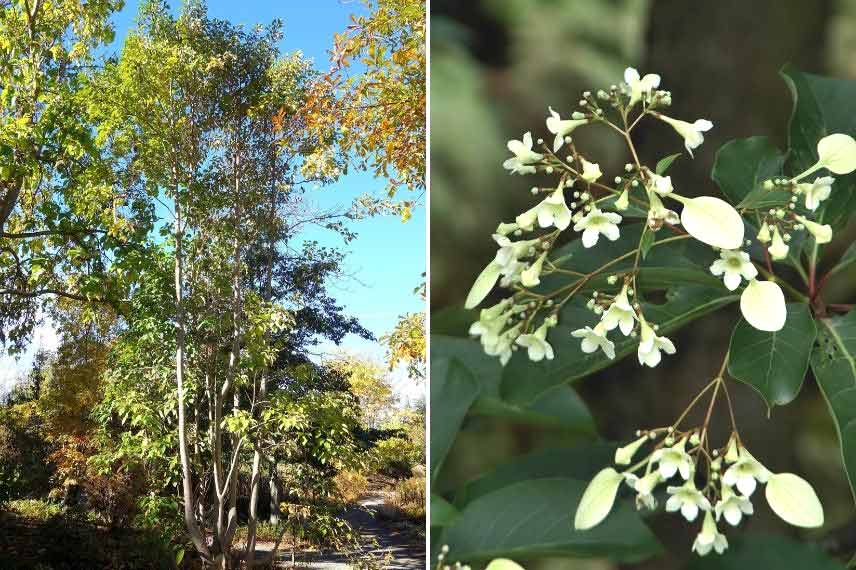
Emmenopterys henryi (Wikimedia)
Magnolia delavayi: a collector’s magnolia
This magnolia variety puts on a magnificent display in summer with its countless large, deliciously fragrant cream flowers. Fairly hardy (down to -12 °C), Magnolia delavayi, also known as Chinese magnolia, is an extremely rare species and a true collector’s tree. From July to September, it is covered in large cream flowers that gradually turn purplish pink, measuring 10 to 20 cm in diameter. They are short-lived and solitary, with a cone at the centre. After flowering, the cone remains on the tree until ripening. Its evergreen foliage consists of large, leathery, glossy ovate leaves in an elegant shade of green.
This is a small evergreen tree with a rounded habit, reaching 10 to 12 m in height and 8 m in spread. It is perfect for restricted spaces, where it will be a focal point in rich, moist or even wet, but well-drained, non-calcareous soil. Protect it from prevailing winds and plant it in full sun or partial shade to see this beautiful rarity flourish to its full potential!
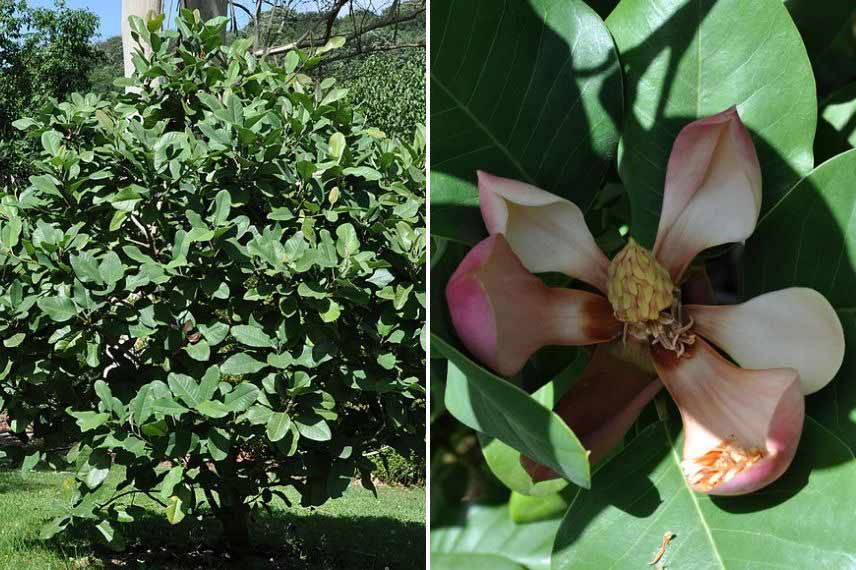
Magnolia delavayi (Citron – Wikimedia)
Davidia involucrata 'Lady Sunshine': a variegated handkerchief tree worth discovering
The common name of this deciduous tree, dove tree, perfectly evokes the shape of its flowers, surrounded by large, very distinctive pendulous bracts. This abundant white flowering appears from early May to late June, giving it a unique appeal. The branches of the dove tree develop rapidly, spreading outwards, reaching up to 12 m in height and attaining a spread of 10 m.
Speaking of rarities, let us mention Davidia involucrata ‘Lady Sunshine‘, a very rare form of the dove tree, with astonishing heart-shaped variegated foliage, green with a broad creamy-yellow margin. This variety flowers from a very young age, unlike the type, which flowers only after many years. Extremely hardy, down to –15 °C or even lower, this collector’s tree grows in sun or partial shade, in deep, fertile, light, moist soil.
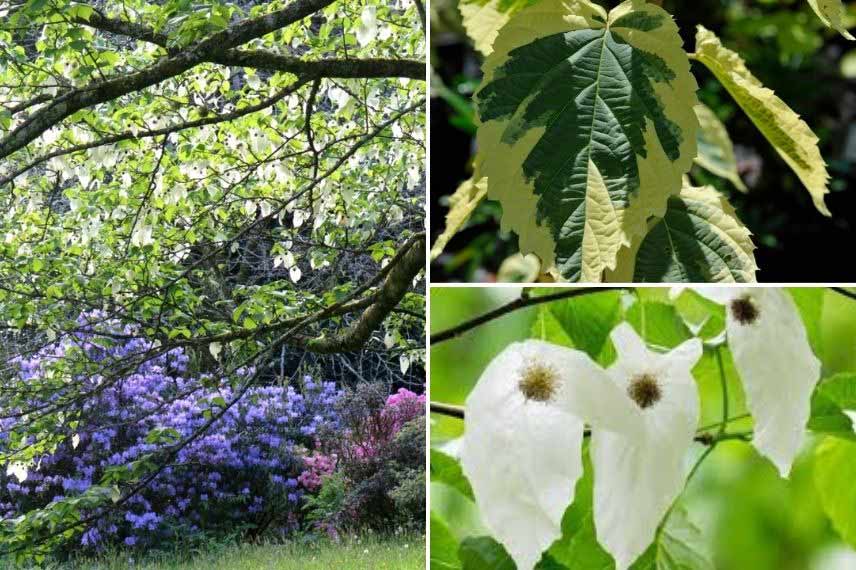
Davidia involucrata ‘Lady Sunshine’
Eucryphia moorei: a charming pinkwood
Flowering generously for almost two months in summer, ‘Eucryphia moorei, also known as rosewood, is a collector’s plant worth discovering! This fastigiate tree reaches 25 m in height in its original, humid and temperate habitat in south-eastern Australia. In our climate, it forms a beautiful small evergreen tree, reaching no more than 8 m in height and 4 m in spread, and is covered with graceful white cup-shaped flowers in July and August.
This beautiful tree, with its dazzling summer flowering and nectar-rich blooms, will have its place in partial shade in gardens with an oceanic climate, in a shrub border or as a standalone specimen. It likes cool, acidic to neutral, well-drained soil and will not tolerate excessive heat or drought. Tender, Eucryphia moorei will withstand temperatures occasionally falling to -5 °C once well established, but its foliage will suffer from -2 °C.
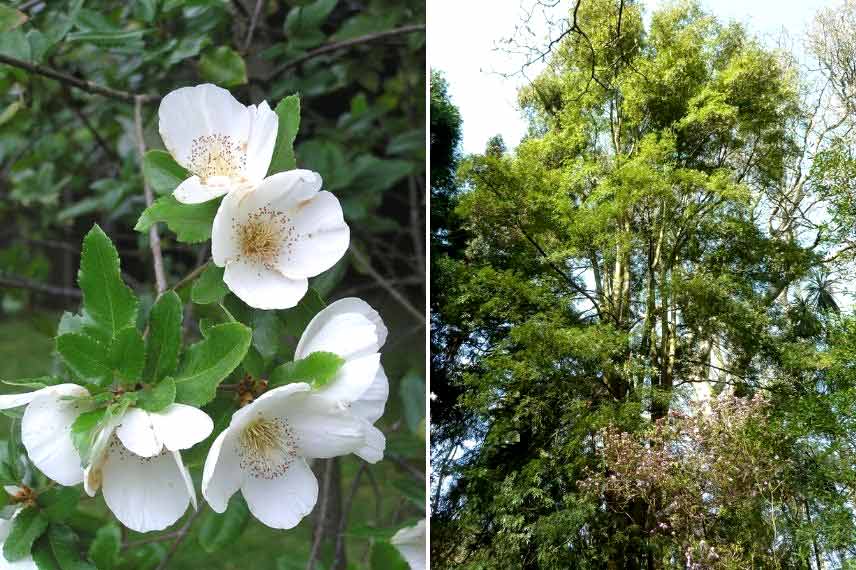
Eucryphia moorei

- Subscribe!
- Contents
This form is protected by reCAPTCHA - the Google Privacy Policy and Terms of Service apply.

































Comments