





























9 cold and drought-resistant perennials
Selection of hardy perennial plants that are drought-tolerant
Contents
Increasingly hot and dry summers are prompting gardeners to seek plants that require little water to thrive while remaining beautiful. This factor must go hand in hand with good cold resistance, as our winters can still experience marked negative temperatures. Regardless of your soil or climate, it is entirely possible to find hardy, drought-tolerant perennials, ranging from large architectural perennials to colourful groundcovers. Here, I present a selection of water-efficient, frost-resistant outdoor plants, for worry-free gardening!

Indigo Lupin, ideal for poor soil
The Baptisia, or Indigo Lupin is a deciduous perennial suited to cold and dry conditions. Ranging from 60 cm to 1.5 m in height, its green to blue-grey foliage resembles that of clover. Its nectar-rich flowering unfolds in upright spikes between late spring and summer. The pea-like flowers clustered together inevitably evoke those of true Lupins. The colour palette is highly varied: blue, white, yellow, purple, bronze, or different mixed shades. Slow-growing, Baptisia can live for a very long time. Choose a sunny, well-drained location, even dry, stony, or poor. The Baptisia has the property of capturing nitrogen from the air and fixing it in the soil, which enriches the ground where it grows. Hardy down to -25°C, it is an ideal candidate for challenging planting areas.
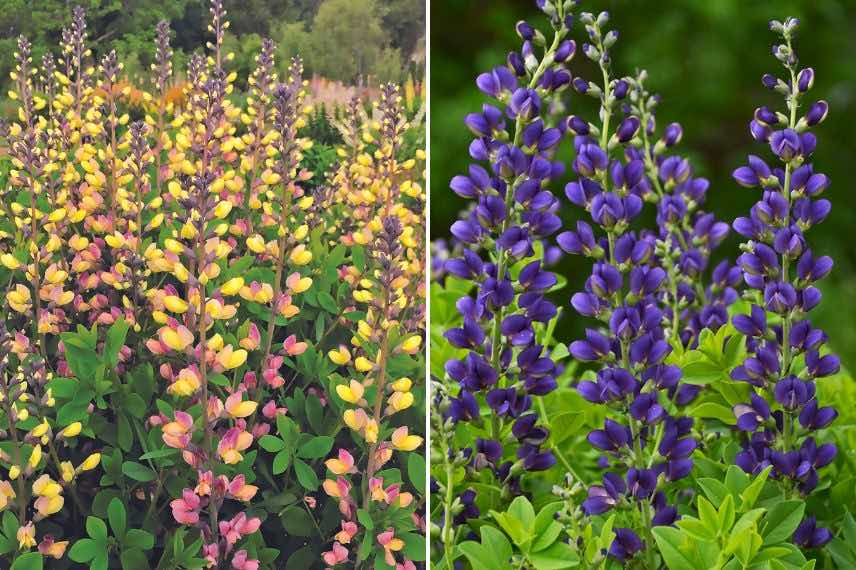
Baptisia ‘Pink Lemonade’ and Baptisia ‘Sparkling Sapphires’, among the many vibrant colours of Indigo Lupin
Read also
10 hardy plants for an exotic dry gardenSedum, drought-resistant
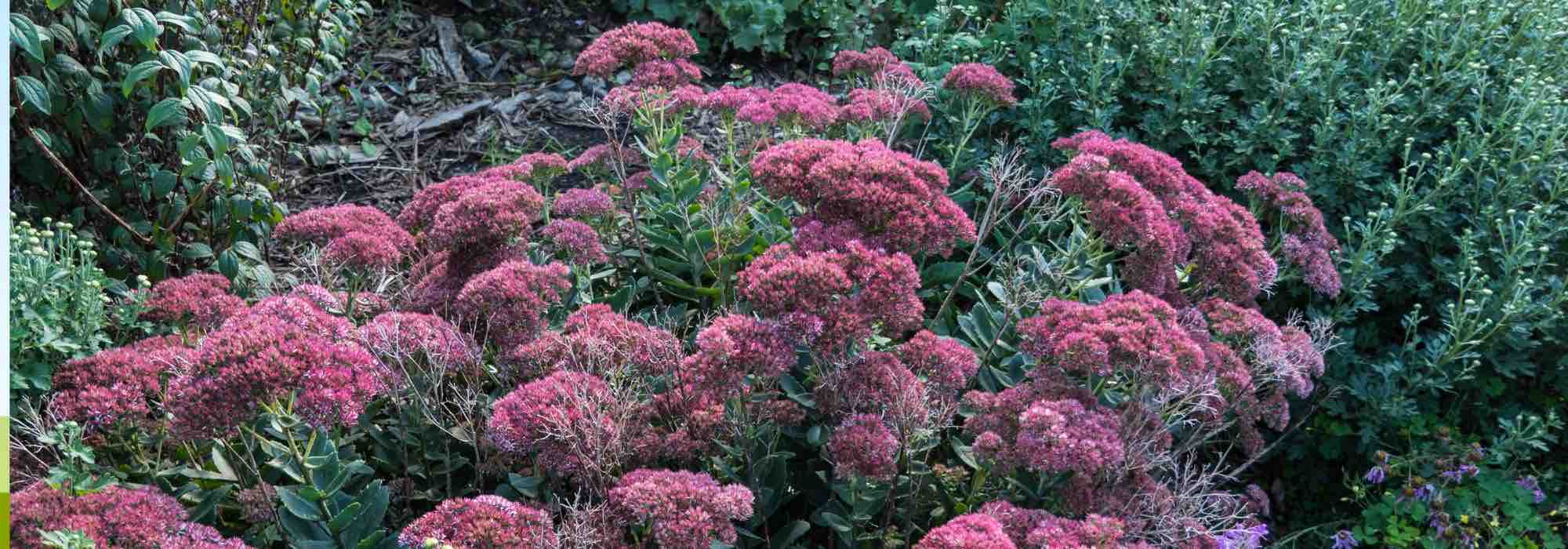
Sedum are succulent-leaved plants, which gives them a superb resistance to drought. Also known as Hylotelephium, they can be roughly divided into two categories. The creeping Sedum, growing to 10 to 15 cm, with often evergreen, fine and rather elongated foliage, are frequently used in rockeries, low walls, or green roofs. The large Sedum, or Orpins, which have an upright habit, can reach 60 cm and look splendid in borders. Their deciduous foliage is broader and flatter. All produce a multitude of small star-shaped flowers. Melliferous, they come in various colours (white, pink, red, yellow, orange, or even multicoloured) that can be admired from spring to autumn. The foliage can also be very decorative and offers a great diversity of shades. Suitable for any type of well-drained soil, the Sedum withstands dry conditions admirably and endures winter temperatures of around -15°C to -20°C without flinching.
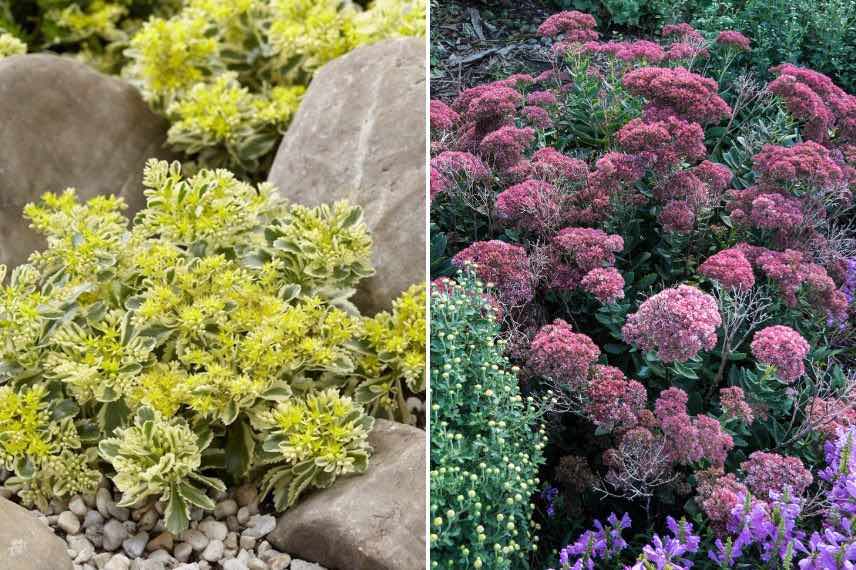
Sedum takesimense ‘Atlantis’, groundcover for rockeries and Sedum ‘Autumn Joy’, large Orpin for borders
Discover other Drought-tolerant perennials
View all →
Available in 1 sizes
Available in 1 sizes
Available in 1 sizes
Available in 1 sizes
Available in 1 sizes
Available in 1 sizes
Available in 1 sizes
Available in 1 sizes
Available in 1 sizes
Available in 1 sizes
Creeping Plumbago, groundcover without watering
The Ceratostigma plumbaginoides is a perennial groundcover that is not afraid of heat, drought, or cold. Although its foliage dies back in winter, its underground part withstands temperatures of around -15°C and regrows once spring advances. Fast-growing, this perennial spreads through its rhizomes to form a carpet about thirty centimetres high. The Plumbago is decorative thanks to its small foliage, which turns from green to vivid red and raspberry pink starting in September, providing a striking contrast to its blue flowers that cover the plant in summer and part of autumn. In rich soil, it can spread freely, but it is very easy to control. However, it is not deterred by poor, lean, or even sandy soil. Provide it with a sunny location in well-drained even calcareous soil. It is an excellent, resilient, and sturdy plant, beautiful for a good part of the year.

The beautiful blue of Ceratostigma plumbaginoides
Read also
12 bushes for dry or free-draining soilGeranium macrorrhizum, an evergreen for dry shade
What to plant in the shaded and dry areas of the garden, which are difficult to vegetate, especially when tree or bush roots are present? Look no further! The Geranium macrorrhizum is a hardy geranium that can withstand just about anything, particularly drought and freezing temperatures. Evergreen, its palmate, slightly fuzzy, and aromatic foliage forms a dense carpet about thirty centimetres high that suffocates weeds. In autumn, it often takes on beautiful reddish hues. The flowering is more discreet than in other species but still decorative. White or pink, it brightens the base of hedges and trees or the borders between spring and summer. Requiring very little maintenance, it is a hardy plant that every gardener should consider, especially since its cold resistance (-20°C) makes it suitable for all regions.
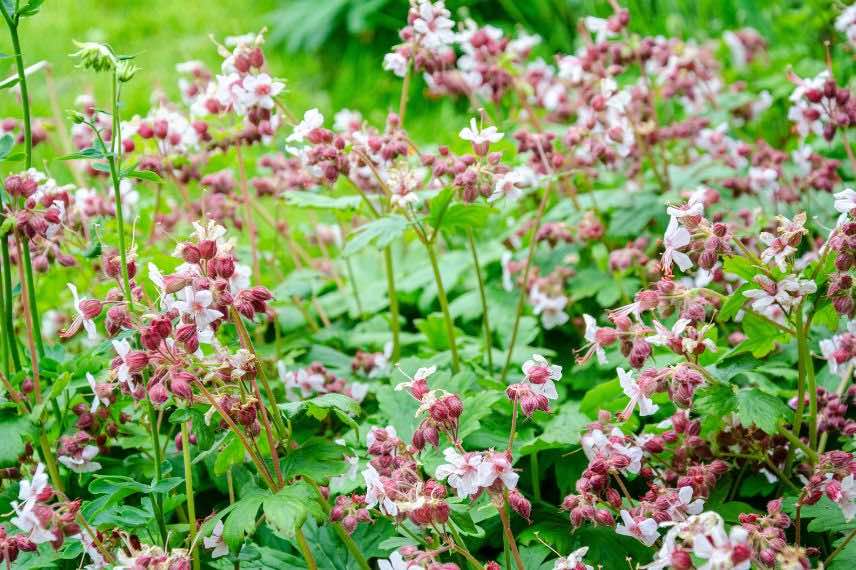
Geranium macrorrhizum
Stachys byzantina, for calcareous seaside borders
Grey, downy foliage often indicates excellent resistance to heat and drought. Stachys byzantina, also known as Lamb’s Ear or Bear’s Ear, is no exception. This evergreen perennial forms a very dense groundcover that leaves no room for unwanted herbs. Its foliage is long and ovate, covered with a very fine whitish down that appears silver-grey in the sun while being incredibly soft to the touch. The stems of Stachys creep along the ground and root to form a wide carpet that is, however, easy to manage. Standing about ten centimetres tall, it is topped in spring and summer with long spikes that develop pink flowers, which can then rise to nearly 60 cm. Very undemanding, the plant is content with poor, well-drained soil and performs very well in calcareous soil. Hardy down to around -20°C, it is a perennial that also withstands sea spray. Plant it in full sun to enhance its silver tones.
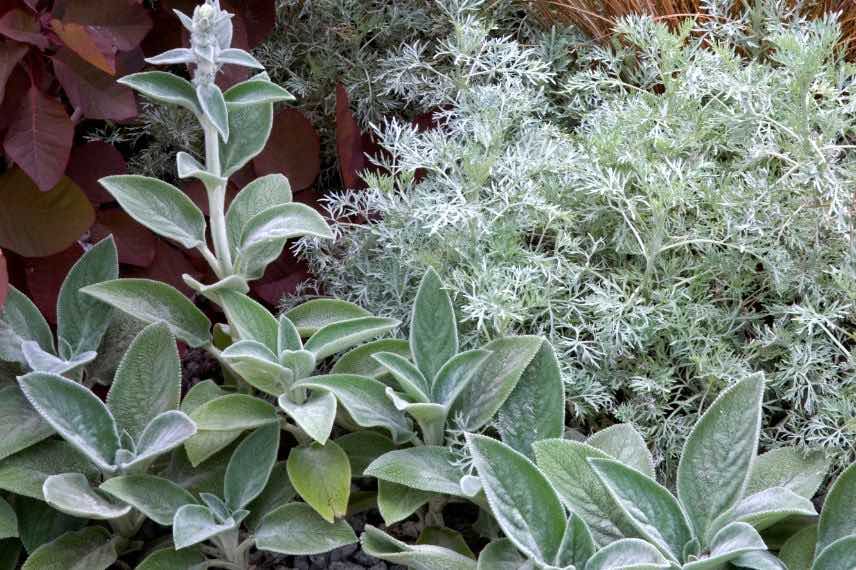
Stachys byzantina, grey foliage in front of the grey foliage of Wormwood
Eryngium, graphic design and simplicity
Eryngium, or decorative thistles, are perennials capable of withstanding both prolonged drought and winter cold. An original and graphic plant, the Sea Holly has the particularity of offering deciduous to evergreen foliage depending on the species, often spiny and with hues ranging from green to metallic blue to silver, sometimes also variegated. The flowering, predominantly in summer, is an additional asset. At the end of very ramified stems, inflorescences in dome shapes develop, more or less rounded, sometimes magnificently highlighted by star-shaped bracts. Although the dominant colour of the flowers is blue, some varieties offer white, red, purple, or grey. Depending on the species, the Blue Thistle can be as short as 30 cm or reach nearly 2m. It thrives in warm, well-exposed situations, in soil that is imperatively drained, even poor but rather deep. Its hardiness ranges from -15°C to -25°C and it also tolerates salt.
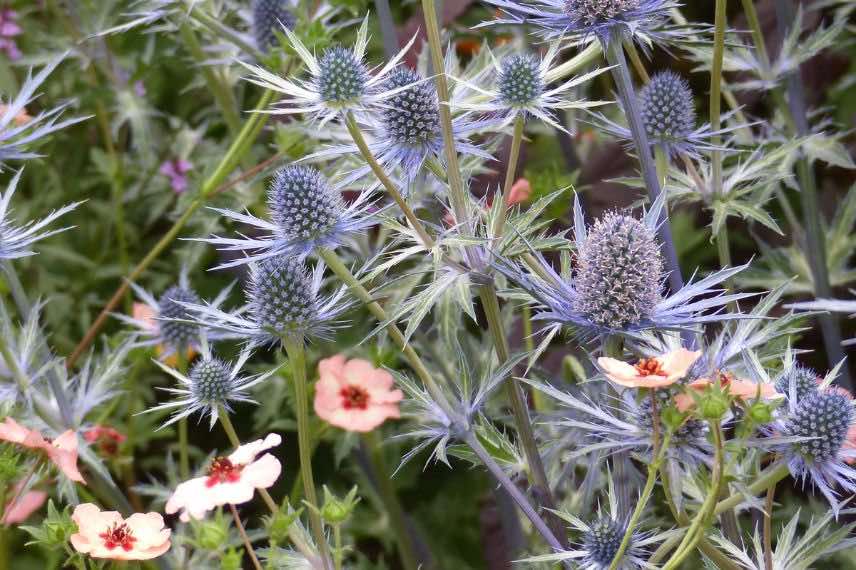
Eryngium ‘Jos Eijking’, a sumptuous perennial for well-drained, dry soil
Stipas, grace and lightness
Stipa are ornamental grasses valued for their ease of cultivation, simplicity, drought resistance, and beauty. Grown for their foliage like Stipa tenuifolia or for their spikes (Stipa gigantea, Stipa pennata, Stipa pulcherrima), they all bring elegance and lightness to a display, a phenomenon further enhanced when the wind animates them. While the shorter varieties generally do not exceed 50 to 60 cm, the giant species provide beautiful verticals at the back or middle of borders. Resistant to wind (Stipa gigantea may be more affected), rain, and salty spray, most are hardy down to -10°C to -20°C and maintain a lovely presence in winter. Grow them in a sunny spot, in poor, well-draining, even calcareous soil. These water-efficient grasses gracefully complement sunny borders, slopes, dry rockeries, and gravel gardens, regardless of your garden style.
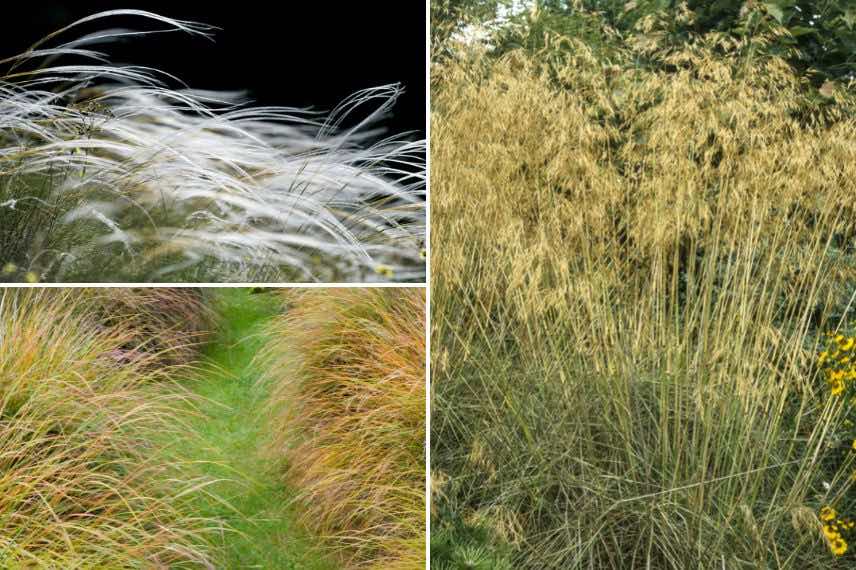
Stipa pennata, Stipa arundinacea, and Stipa gigantea on the right
Helianthemums, flowers of the sun
The Helianthemum is a woody-stemmed perennial. A sun and heat-loving plant, it thrives in scorching and dry summers, with its main enemy being poorly drained soils, especially in winter. The plant has a low, bushy, spreading habit, making it an excellent groundcover. The evergreen to semi-evergreen foliage is a more or less silvery green and serves as a backdrop for a long flowering period that extends from spring to late summer. The flower colours range from white to yellow, including various shades of orange, red, and pink. Melliferous, they only bloom in full sun and close at dusk. Adapted to dry and poor soils, the Helianthemum also appreciates calcareous conditions and withstands wind and salt. Well suited to a Mediterranean climate, it is a perennial that brings colour and cheer to dry rockeries, slopes, and borders, and its cultivation poses no problems, even in pots. Of course, it is included in this selection because its hardiness is also very good, ranging from -15°C to -20°C.
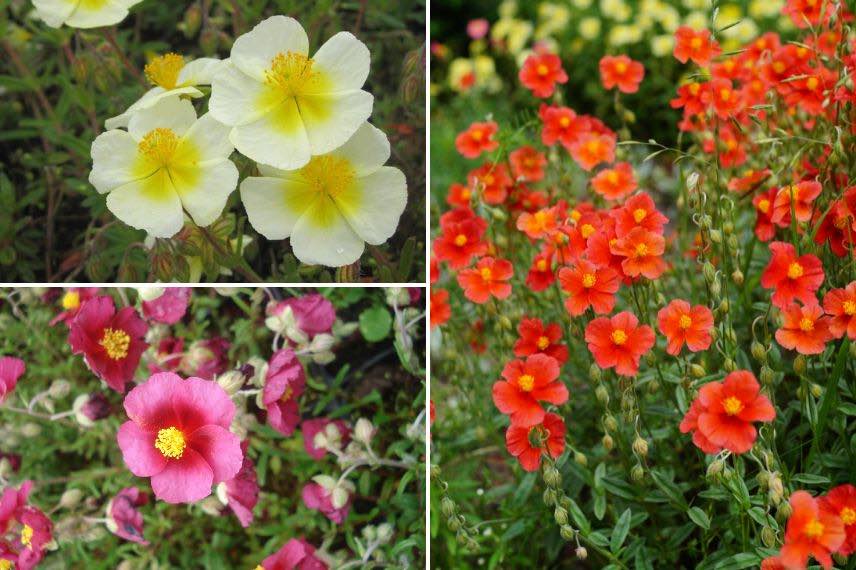
Yellow Helianthemum ‘Elfenbeinglanz‘, pink ‘Hartswood Ruby‘ and red ‘Henfield Brilliant’
Sempervivum, ideal in shallow soil
Sempervivum or Houseleeks are succulent plants adapted to drought, as they store water in their fleshy leaves, which can be fine and long or more flattened and wide. Varying in colour, the evergreen leaves also display changing tones throughout the seasons. Each plant forms a very graphic rosette close to the ground and spreads through stolons that root upon contact with the soil. Flowering occurs on mature plants, in summer, with star-shaped flowers, primarily yellow, but some varieties offer pink and even colour mixes. Originating from mountainous regions, Sempervivum is very hardy, withstands periods of drought, and grows in the most arid environments. However, avoid exposing it to excessive heat. It thrives in shallow soils such as rockeries, the tops of walls, or in troughs on a terrace, as long as the soil is perfectly drained and not too rich.
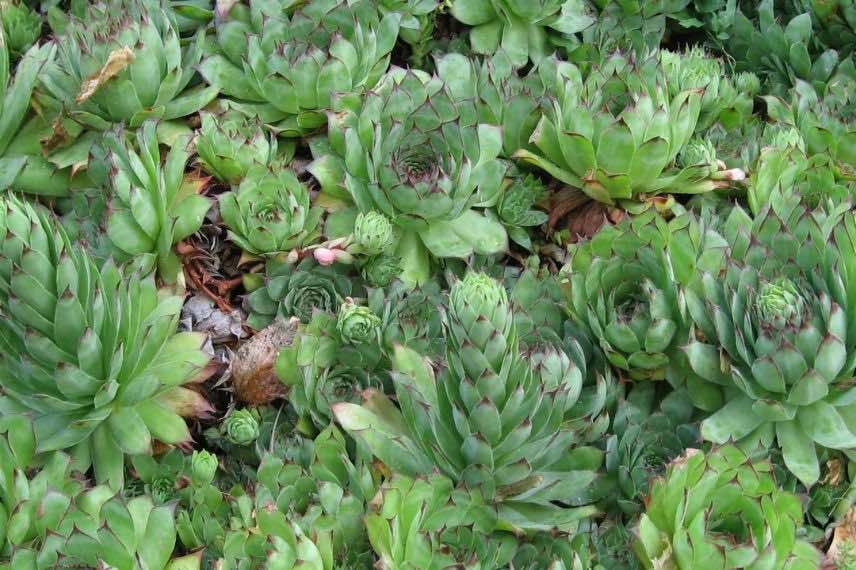
Profusion of Sempervivum tectorum or Roof Houseleek
- Subscribe!
- Contents
Comments