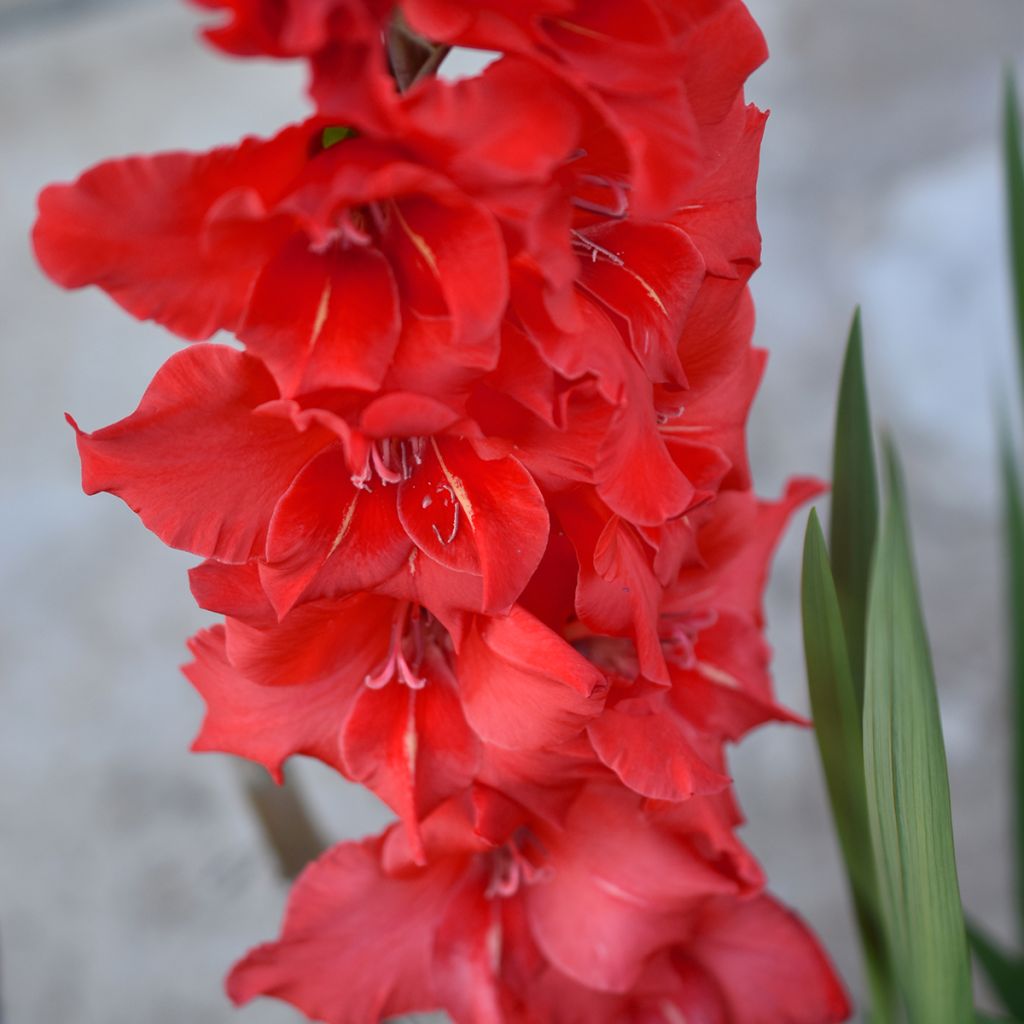
Gladiolus grandiflorus Amiga - Sword Lily
Gladiolus grandiflorus Amiga - Sword Lily
Gladiolus x grandiflorus Amiga
Large-Flowered Gladiolus, Sword Lily
Back-to-school special offer!
Get €10 off for every €50 you spend! And get up to €40 off on a single order.
How does it work?
1. Shop your favourites
Add your favourite plants to your basket. For every €50 you spend (excluding delivery charges, store credit and the plastic-free option), you’ll receive a €10 voucher.
€50 spent = €10 voucher
€100 spent = €20 voucher
€150 spent = €30 voucher
€200 spent = €40 voucher
2. Place your order
Once your basket reaches one of the spending thresholds, place your order. You can even choose your delivery date!
3. Receive your voucher
As soon as your order has been shipped, you’ll receive an email containing your personal voucher code and its value.
4. Use it on your next order
Your voucher is valid for 90 days from the date you receive it. It can be used once only, on a new order worth at least the value of the voucher, excluding delivery charges.
Please note: Vouchers can be combined with other offers, but cannot be split or refunded.
This plant carries a 6 months recovery warranty
More information
We guarantee the quality of our plants for a full growing cycle, and will replace at our expense any plant that fails to recover under normal climatic and planting conditions.
Would this plant suit my garden?
Set up your Plantfit profile →
Description
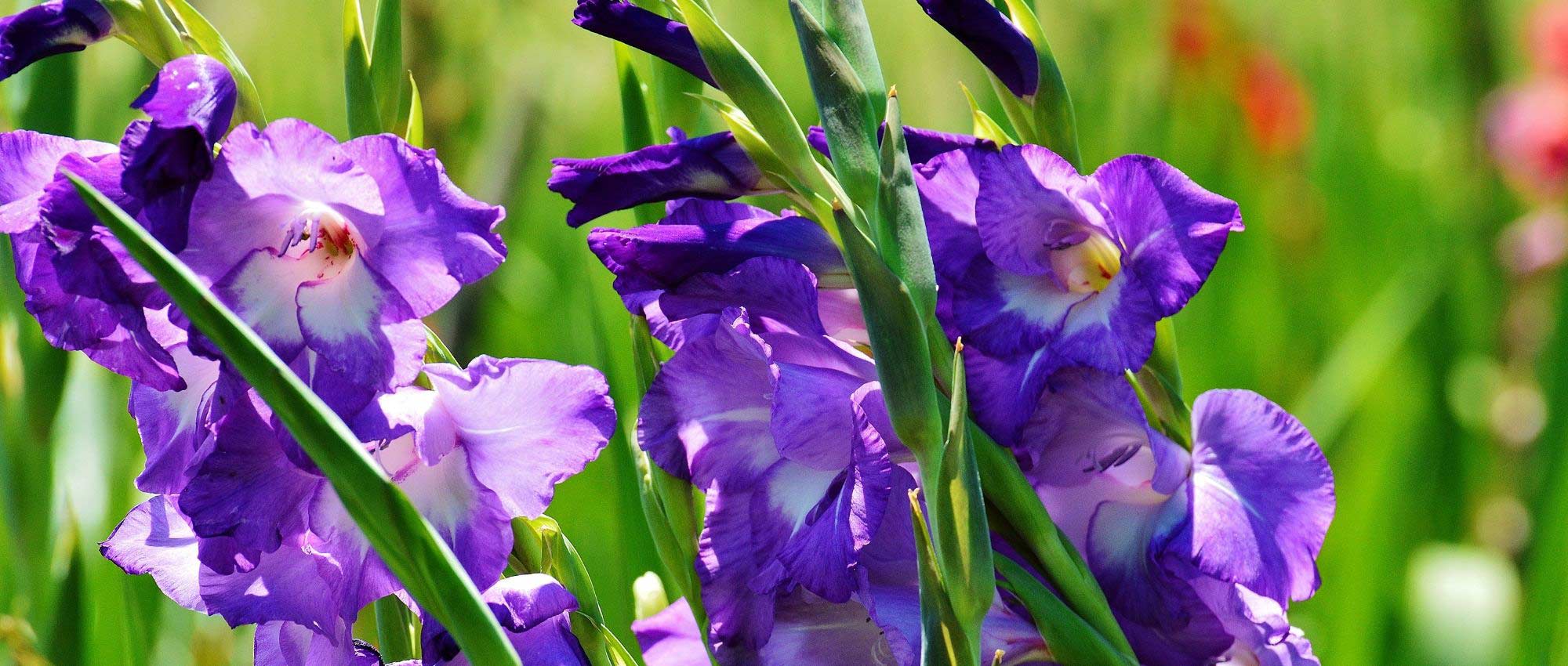
Gladiolus 'Amiga' is a large-flowered gladiolus (Gladiolus grandiflorus) remarkable for its long stems adorned with large red corollas, with slightly ruffled petals. Planted in groups, it structures sunny borders with its well-defined, vertical flowering stems. Its robust stems make this gladiolus an excellent cut flower, prized for its vase life. In a contemporary or more classic garden, it adds a very clear architectural and colourful touch.
Belonging to the group of Gladiolus grandiflorus hybrids, this summer bulb is classified among the large gladioli, characterised by tall flowering stems bearing large funnel-shaped flowers. It is a plant from the Iridaceae family that develops from a corm, an underground storage organ that renews itself each year. The plant forms an upright, vertical clump reaching 90 to 120 cm in height. Its deciduous foliage is composed of long, tapering, ribbon-like, bright green leaves which dry out completely after flowering: the vegetation then disappears and the corm goes dormant. The spikes bear numerous flowers 8 to 10 cm in diameter, with slightly crinkled tepals, in bright red tones. Flowering occurs from July to September, depending on the planting date. Not very hardy, this 'Amiga' gladiolus is grown as a perennial to be overwintered: the corms should be lifted at the end of the season in regions with cold, wet winters.
The name Gladiolus comes from the Latin gladius, meaning sword; in ancient Rome, victorious gladiators were covered with gladioli, hence the enduring association with strength and victory.
In the garden, Gladiolus 'Amiga' is best placed at the back of a border or along the edge of an ornamental kitchen garden, planted in small groups of 5 to 10 bulbs to create a colourful swathe. It pairs wonderfully with the almost black Dahlia ‘Karma Choc’, which brings out its warm tones, or with apple-green Coneflower ‘Green Jewel’ for a very modern contrast. Buenos Aires Vervain ‘Lollipop’ will surround its stems with a cloud of lavender flowers, while Panicum virgatum ‘Rehbraun’ will take over at the end of the season with its brown-red plumes. In a vase, combine a few stems of Amiga with spikes of Salvia ‘Amistad violet’ for powerful and contemporary cut flower arrangements, both bold and elegant.
For cut flower arrangements, cut the stems as soon as the first floret begins to open. Plant gladioli every two weeks, from early spring until the end of June, to enjoy them all summer long, both at home and in the garden.
Plant habit
Flowering
Foliage
Botanical data
Gladiolus
x grandiflorus
Amiga
Iridaceae
Large-Flowered Gladiolus, Sword Lily
Cultivar or hybrid
Planting and care
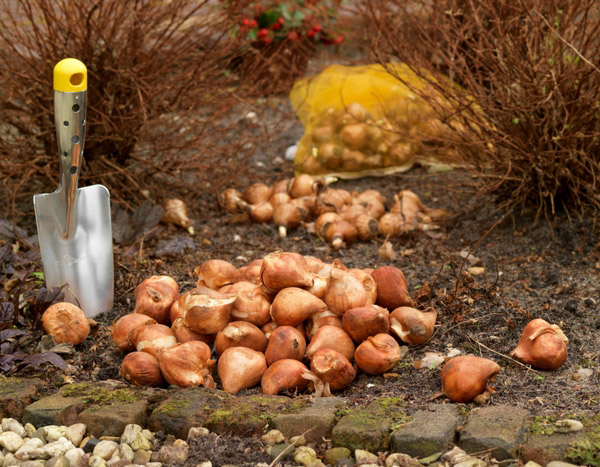
Hybrid gladioli 'Amiga' prefer rich, fertile, yet well-drained soils, so loamy and sandy. Plant in full sun. Space the bulbs or corms 10 to 15 cm apart, covered with 10 cm of soil. Feed after cutting the flowers. Avoid using manure, which encourages bulb rot.
Gladioli are not frost-hardy. They should therefore be lifted when they have faded or immediately after the first frosts. Cut the leaves and allow the rest to dry in a well-ventilated spot for three weeks. Detach the old bulbs. Store the new bulbs and the bulblets throughout the winter in a cool, but frost-free place. The bulblets will flower in two years. It is preferable not to plant gladiolus bulbs in the same spot for several consecutive years. An annual rotation will yield better results.
In mild climates, Gladiolus can be planted in September-October and overwintered in situ.
Planting period
Intended location
Care
Planting & care advice
-
-
-

-
-
-

-
-

This item has not been reviewed yet - be the first to leave a review about it.
Recently viewed products
Haven't found what you were looking for?
Hardiness is the lowest winter temperature a plant can endure without suffering serious damage or even dying. However, hardiness is affected by location (a sheltered area, such as a patio), protection (winter cover) and soil type (hardiness is improved by well-drained soil).

The flowering period indicated on our website applies to countries and regions located in USDA zone 8 (France, the United Kingdom, Ireland, the Netherlands, etc.)
It will vary according to where you live:- In zones 9 to 10 (Italy, Spain, Greece, etc.), flowering will occur about 2 to 4 weeks earlier.
- In zones 6 to 7 (Germany, Poland, Slovenia, and lower mountainous regions), flowering will be delayed by 2 to 3 weeks.
- In zone 5 (Central Europe, Scandinavia), blooming will be delayed by 3 to 5 weeks.
In temperate climates, pruning of spring-flowering shrubs (forsythia, spireas, etc.) should be done just after flowering.
Pruning of summer-flowering shrubs (Indian Lilac, Perovskia, etc.) can be done in winter or spring.
In cold regions as well as with frost-sensitive plants, avoid pruning too early when severe frosts may still occur.
The planting period indicated on our website applies to countries and regions located in USDA zone 8 (France, United Kingdom, Ireland, Netherlands).
It will vary according to where you live:
- In Mediterranean zones (Marseille, Madrid, Milan, etc.), autumn and winter are the best planting periods.
- In continental zones (Strasbourg, Munich, Vienna, etc.), delay planting by 2 to 3 weeks in spring and bring it forward by 2 to 4 weeks in autumn.
- In mountainous regions (the Alps, Pyrenees, Carpathians, etc.), it is best to plant in late spring (May-June) or late summer (August-September).
The harvesting period indicated on our website applies to countries and regions in USDA zone 8 (France, England, Ireland, the Netherlands).
In colder areas (Scandinavia, Poland, Austria...) fruit and vegetable harvests are likely to be delayed by 3-4 weeks.
In warmer areas (Italy, Spain, Greece, etc.), harvesting will probably take place earlier, depending on weather conditions.
The sowing periods indicated on our website apply to countries and regions within USDA Zone 8 (France, UK, Ireland, Netherlands).
In colder areas (Scandinavia, Poland, Austria...), delay any outdoor sowing by 3-4 weeks, or sow under glass.
In warmer climes (Italy, Spain, Greece, etc.), bring outdoor sowing forward by a few weeks.
Shipping country and language
Your country of residence may be:
Your country of residence is:
For a better user experience on our website, you can select:
Your shipping country:
-
 Austria
-
 Belgium
-
 Bosnia & Herzegovina
-
 Bulgaria
-
 Croatia
-
 Cyprus
-
 Czechia
-
 Denmark
-
 Estonia
-
 Finland
-
 France
-
 Germany
-
 Greece
-
 Hungary
-
 Iceland
-
 Ireland
-
 Italy
Italy
-
 Latvia
-
 Liechtenstein
-
 Lithuania
-
 Luxembourg
-
 Malta
Malta
-
 Netherlands
-
 Poland
-
 Portugal
-
 Romania
-
 Serbia
-
 Slovakia
-
 Slovenia
-
 Spain
Spain
-
 Sweden
-
 Switzerland
Language:
-
French
-
 English
-
Spanish
-
Italian
-
German
-
Portuguese
-
Dutch
-
Finnish
My Account
Hello
My wish lists
My cart
Log in / Register
Existing customer?
This form is protected by reCAPTCHA - the Google Privacy Policy and Terms of Service apply.
New customer?
Create an account to track your orders, access our customer service and, if you wish, make the most of our upcoming offers.