





























Pairing ideas with bulbous Corydalis
5 inspiration ideas
Contents
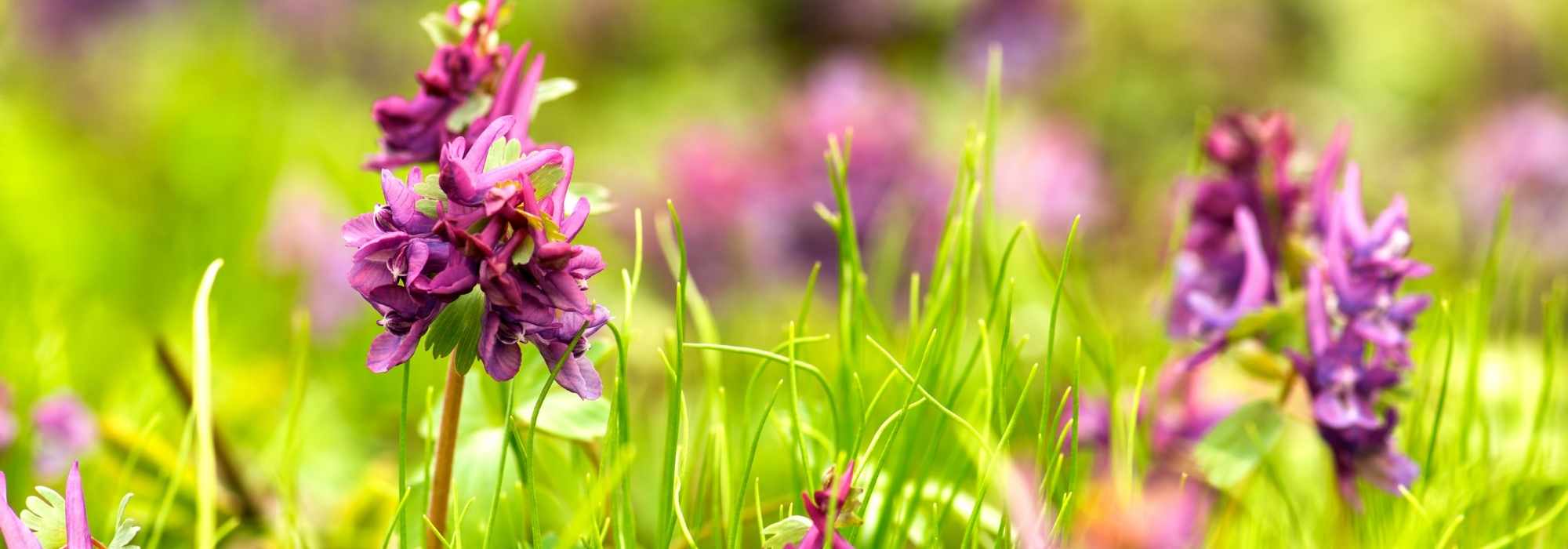
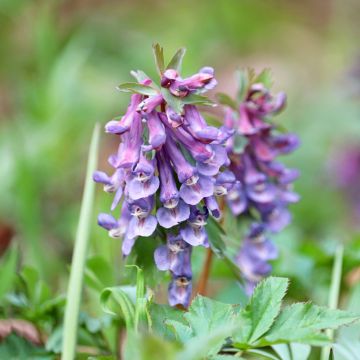
The tuberous corydalis (Corydalis solida), also known as bulbous corydalis, is a small perennial flowering bulb. It offers a lovely original spring flowering with spikes of small tubular flowers in pink, purple, or white, set against fern-like foliage. It is also referred to as “full bulb corydalis,” in contrast to Corydalis cava, the “hollow bulb corydalis,” with which it is closely related.
Hardy and easy to grow, it is a plant for partial shade, even full shade, that thrives in well-drained garden soil that remains slightly cool.
It integrates easily into all spring displays with other perennials or annuals. It is ideal for adding brightness above low walls in the north, in a shaded rockery, or at the edge of woodlands beneath large trees. It stands out in natural-style gardens but can also fit into pink gardens.
Discover how to beautifully combine this lovely spring bulb in your garden!

In a woodland
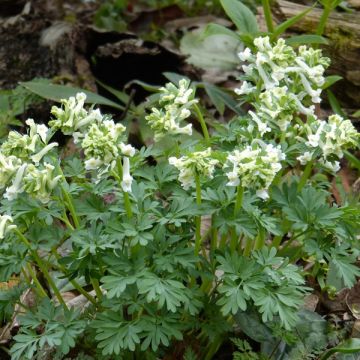
As the bulbous corydalis tolerates root competition very well, it can easily be planted at the base of trees and bushes in cool woodland areas. With its pure white flowers of great delicacy, Corydalis solida ‘White Swallow’ is ideal for bringing brightness to the edge of the woodland. Planted under the beneficial shade of large trees, it will grow without care, expanding over time. In woodland, it can be paired with simple, low-maintenance plants.
Surround it with its shade companions that bloom at the same time, such as Solomon’s seals, cowslips with their delicately scented pale yellow flowers, and fairy flowers like Epimedium versicolor ‘Sulphureum’ with its lovely panicles of small sulphur-yellow flowers. Also consider Disporum cantoniense ‘Green Giant’, a vigorous perennial with lovely pendulous greenish-white bells and Mahonias.
You will enhance this scene of great freshness with some ferns such as Polystichum setiferum ‘Dahlem’, with its long, finely divided fronds of a beautiful light green hue.
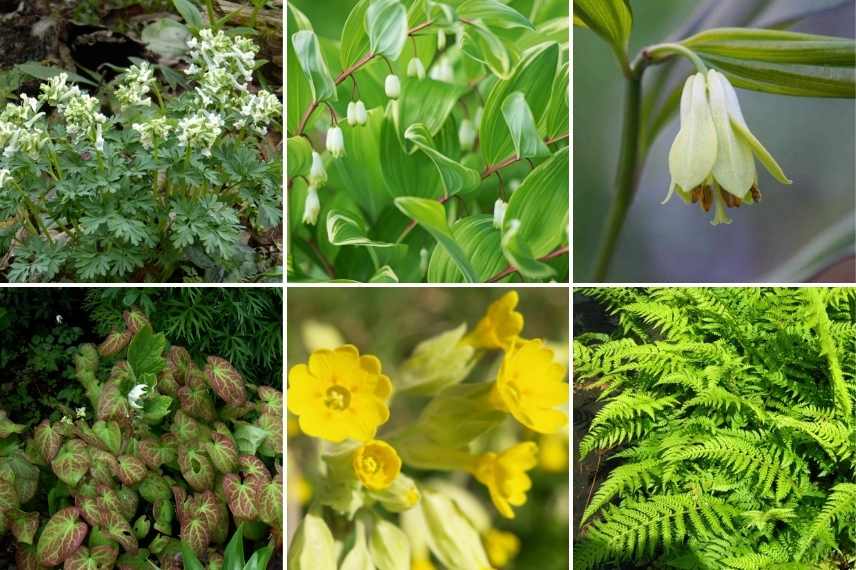
Bulbous corydalis ‘White Swallow’, Polygonatum odoratum, Disporum cantoniense ‘Green Giant’, Epimedium versicolor ‘Sulphureum’, and Polystichum setiferum ‘Dahlem’
Read also
Corydalis: planting, growing and careIn a shady rockery
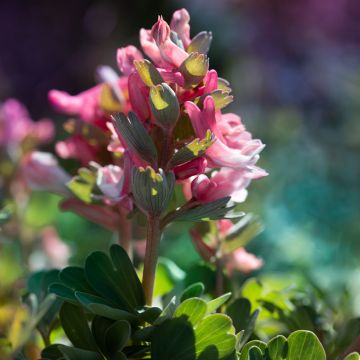
The Corydalis solida also thrives in rockeries, provided they remain cool and shaded later in the season. Plant a Corydalis ‘Beth Evans’, with its small pink flowers in early spring. Pair it with Chionodoxa forbesii ‘Violet Beauty’, another small bulbous plant featuring star-shaped flowers in a lovely pure lavender blue. Its bright flowers will bloom alongside hyacinths, squills, Cyclamen coum whites, and botanical tulips ‘Lilac Wonder’. You can stagger the flowering with Crocuses, Muscaris, and Daffodils.
For perennials, consider Geranium nodosum, Purple creeping Bugle, and ‘Pink Dragonfly’ bergenias with their deep pink flowers.
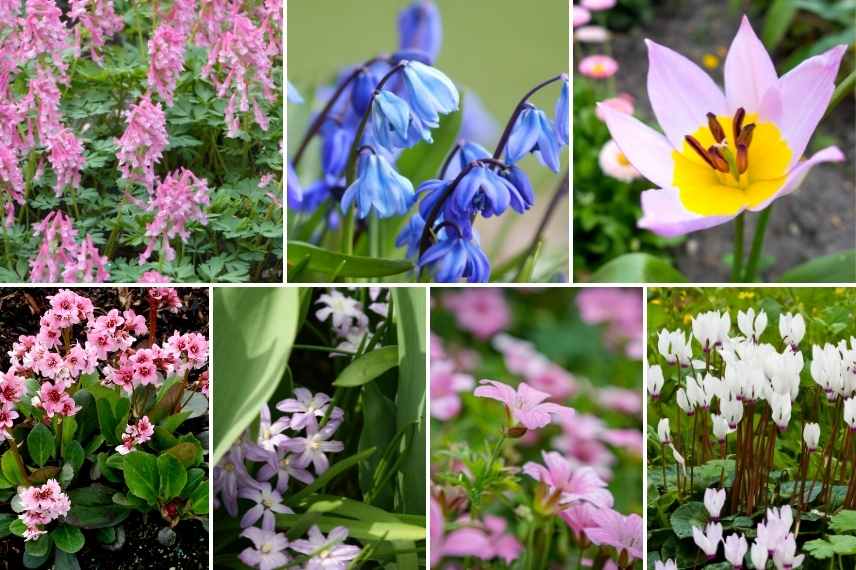
Corydalis ‘Beth Evans’, squill, botanical tulip ‘Lilac Wonder’, Bergenia ‘Pink Dragonfly’, Chionodoxa forbesii ‘Violet Beauty’, Geranium nodosum, and Cyclamen coum
Discover other Tuberous Corydalis
View all →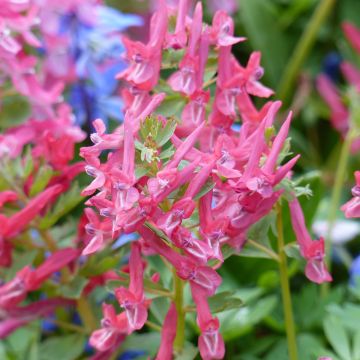
Available in 1 sizes
Available in 1 sizes
Available in 1 sizes

Available in 1 sizes
Available in 1 sizes
Available in 1 sizes
In a fresh pink bed
Enjoy bulbous Corydalis to create a tender and romantic atmosphere. Varieties such as ‘Beth Evans’ and Corydalis solida complement a pink garden beautifully. Choose to accompany them with Dicentra spectabilis with soft pink flowers and white tips, Dodecatheon meadia, Epimedium ‘Pink Elf’, and foxgloves, ideal for adding brightness, along with lamiums and shrub peonies, which will seamlessly alternate in the heart of this monochromatic bed. Carpet the bed with Heuchera ‘Georgia Plum’, Tiarellas, and hardy geraniums in similar tones.
At the back of the bed, tall astilbes and the beautiful Filipendula rubra ‘Venusta’ will take over the flowering from June onwards, followed later in the season by Japanese anemones.
To tone down the pink, integrate the blue-tinged foliage of certain Hostas and silver wormwoods as a counterpoint.
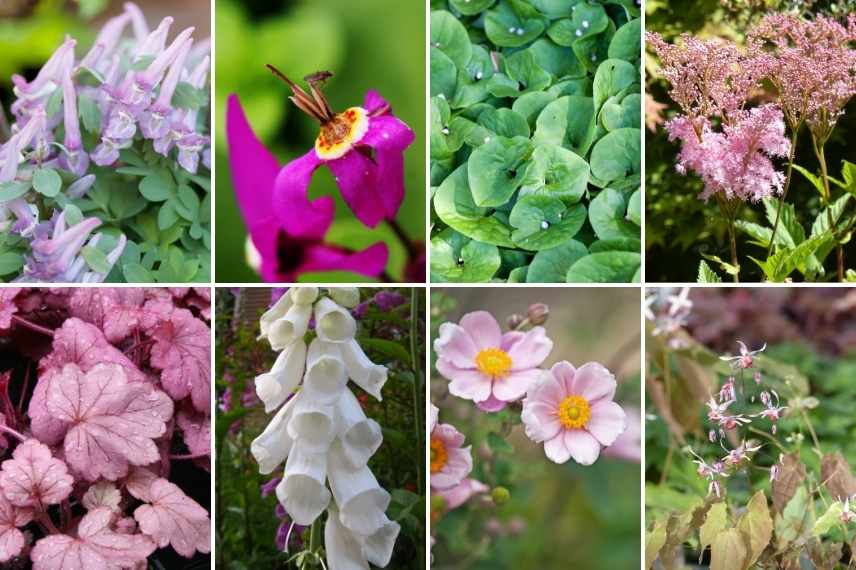
Corydalis, Dodecatheon meadia, Hostas, Filipendula venusta ‘Rubra’, Heuchera ‘Georgia Plum’, Digitalis purpurea ‘Alba’, Anemone hupensis, and Epimedium ‘Pink Elf’
At the foot of spring-flowering bushes
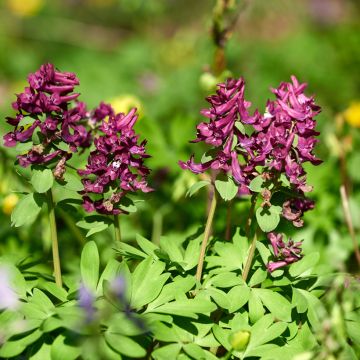
As Corydalis solida is not afraid of competition from the roots of deciduous trees or bushes, it can be planted in groups to cover the bases of spring-flowering shrubs. The bulbs will accompany the flowering of Japanese Andromedas, a Deutzia ‘Raspberry Sundae’, a magnolia, followed a little later by the flowers of an Abelia, symphorines, and Weigelas. Plant alongside it a Chionodoxa sardensis, and very bright Corydalis ‘Craigton Blue’. Also consider periwinkles and brunneras, and brighten everything up with a few spring bulbs, daffodils and tulips that will bring colour and freshness from the very beginning of spring.
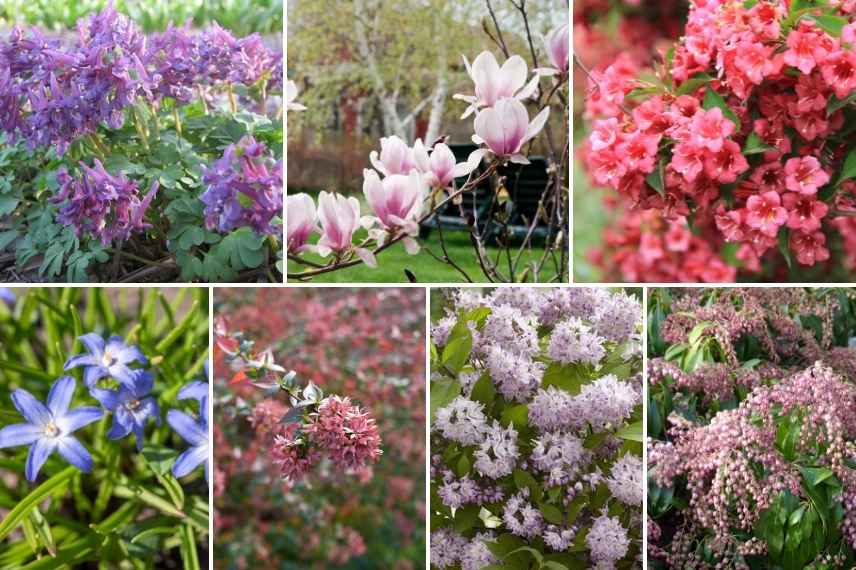
Corydalis solida ‘Purple Bird’, Magnolia, Weigela, Chionodoxa sardensis, Abelia, Deutzia ‘Raspberry Sundae’ and Pieris japonica ‘Katsura’
Symphony of sculpted foliage
You can highlight the beautiful, finely cut foliage of Corydalis bulbous by pairing it with perennials that also offer attractive foliage. To create combinations that rely entirely on finely crafted foliage, consider ferns, such as Dryopteris, for example, or an Adiantum aleuticum ‘Imbricatum’, a lovely capillary fern that is very graphic, or an Onoclea sensibilis, a small, very bright fern with lovely arching fronds, a beautiful pale green tinged with gold in spring. Also consider the Polystichum acrostichoides with its long, evergreen fronds. Pair it with Corydalis solida ‘White Swallow’. Integrate a Dicentra ‘Ivory Hearts’ with finely cut, green-grey-blue foliage.
It is also interesting to associate it with trees and bushes that enjoy cool environments, like small Japanese maples, the Acer palmatum ‘Dissectum Viridis’ with its finely serrated green leaves.

Corydalis solida ‘White Swallow’, Acer palmatum dissectum ‘Viridis’, Onoclea sensibilis, Adiantum aleuticum ‘Imbricatum’, Dicentra ‘Ivory Hearts’ and Dryopteris filix mas
- Subscribe!
- Contents
Comments