


Pairing ideas with Leucothoe
5 ideas for garden companions
Contents
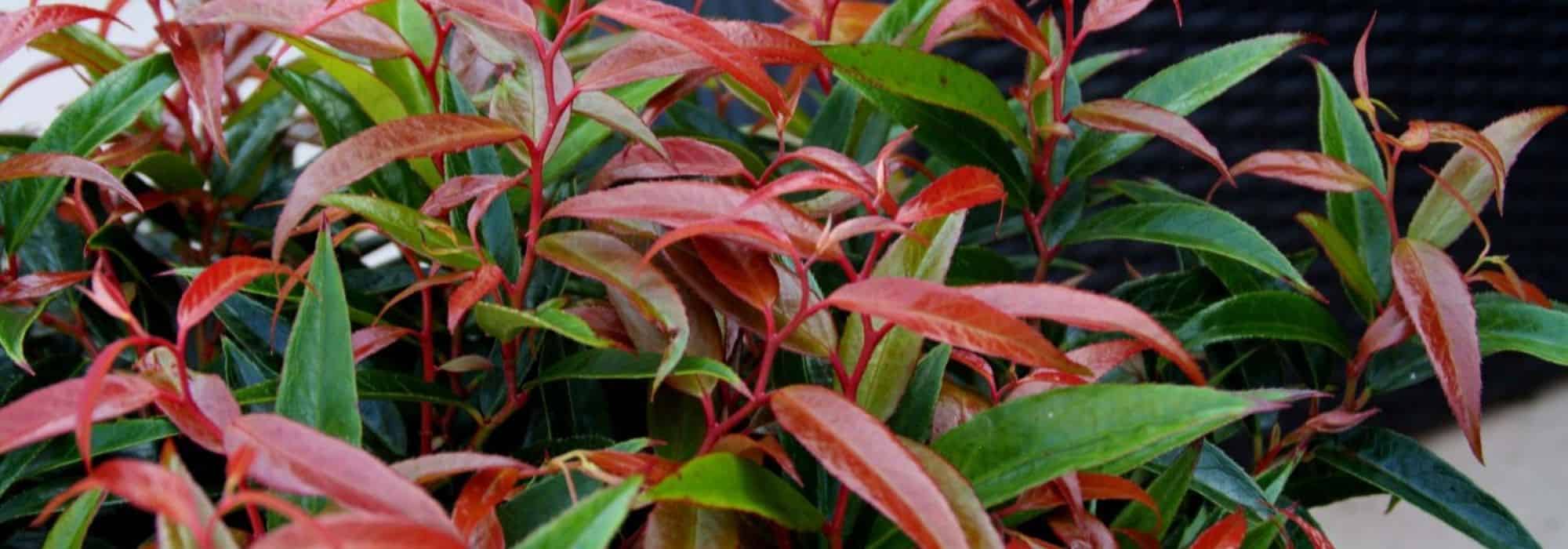
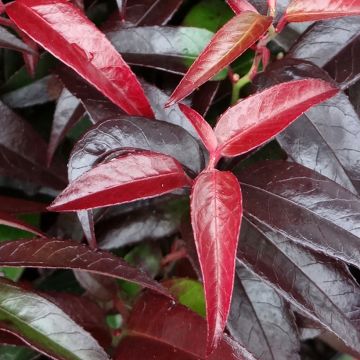
Leucothoe is a beautiful bush notable for its magnificent evergreen foliage, which is colourful and changes throughout the seasons. Nicknamed “Pearl Flower”, it offers a subtle flowering in spring with small white or pink flowers, exuding a light, fresh, and delicate fragrance. This shrub thrives in heather soil that is acidic and rich in humus. Very hardy and never diseased, it wonderfully decorates shady and semi-shady gardens. Still rare, original, and graphic, it can be used in borders, as a specimen, in free hedges, or in pots on the terrace. Discover our 5 ideas to pair Leucothoe.

In a free hedge
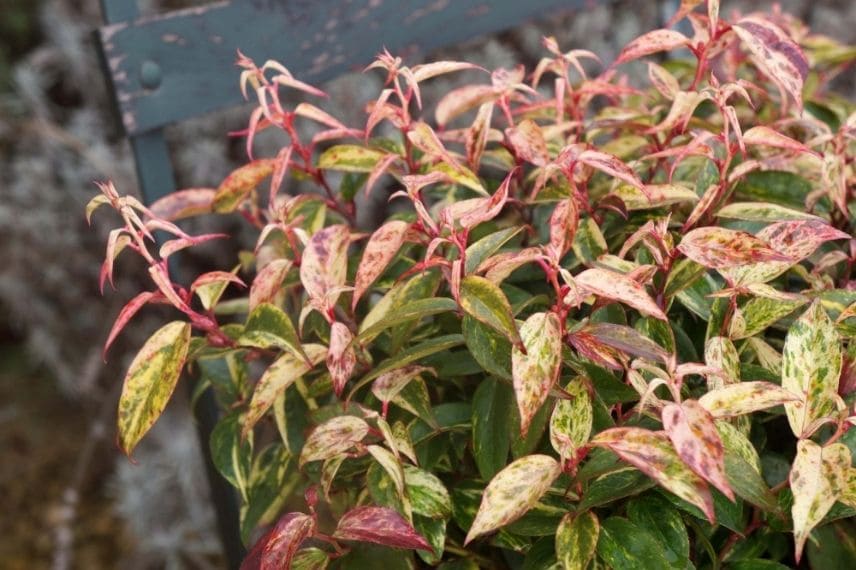
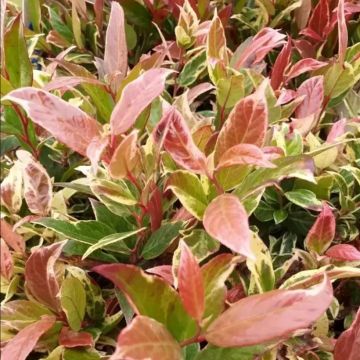
With its very dense habit, Leucothoe is perfect for creating a small free-standing hedge in shade or partial shade. Growing quite slowly, choose from the taller varieties, such as Leucothoe fontanesiana ‘Scarletta’ or the cultivar ‘Whitewater’ for its lovely variegated foliage. It can be planted alongside evergreen bushes, such as a Sarcococca that will start the flowering season as early as January, followed by Daphne and a Pieris japonica ‘Flaming Silver’. For a profusion of flowers, add a mountain laurel (Kalmia), Rhododendrons and Azaleas, and don’t forget Hydrangeas. You can also plant a David Viburnum for its dark green foliage and Skimmias for their decorative berries. Install some Honeyberries that will offer their famous ‘May berries’ to feed birds or hungry gardeners. A Cephalanthus occidentalis ‘Sugar Shack’ will add a touch of originality with its pom-pom shaped flowers. For a lovely contrast of green and purple, add a Physocarpus opulifolius ‘Lady in Red’.
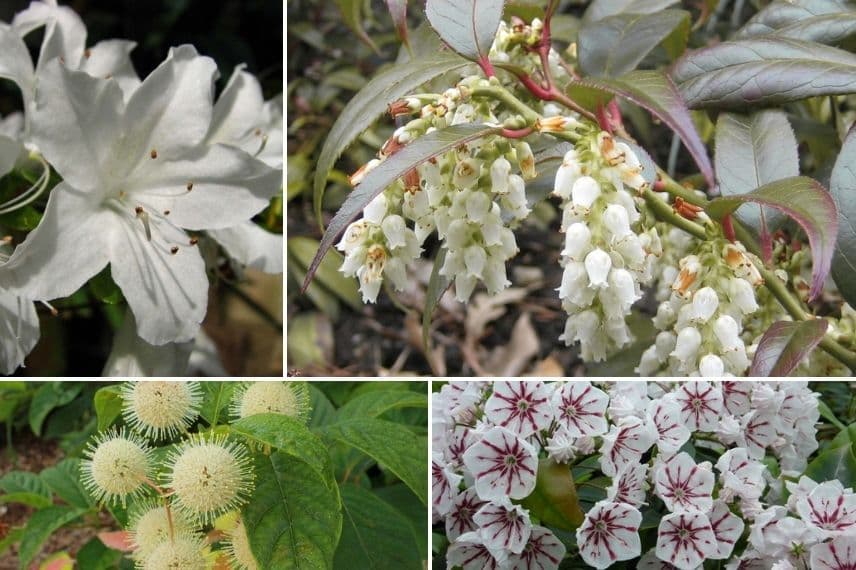
Japanese Azalea ‘Palestrina’, Cephalanthus ‘Sugar Shack’, Leucothoe ‘Scarletta’ and Kalmia ‘Peppermint’
In a Japanese garden
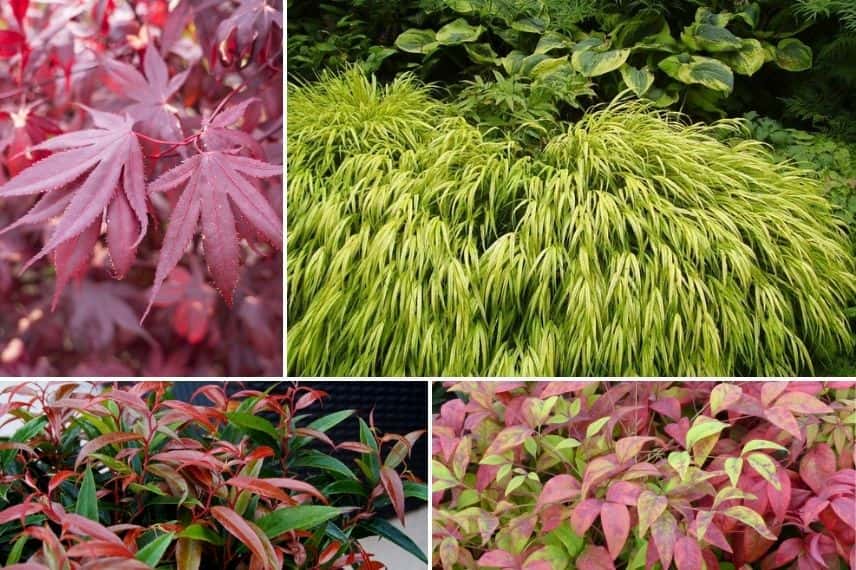
Leucothoe is remarkable for its green foliage, which gradually turns to purple-red under the influence of autumn cold, much like many trees and bushes in Japanese gardens. It also shares their preference for acidic soils. To create a Japanese-inspired atmosphere in your garden, plant nearby a Japanese quince, a Pieris, a Japanese white pine, and rhododendrons and azaleas. Give pride of place to a Japanese maple, this iconic small tree of zen gardens, such as the variety ‘Bloodgood’ with its flamboyant foliage. If your garden is large enough, you can then accommodate a magnificent Japanese cherry or a Wisteria, renowned for their spring flowering in the Land of the Rising Sun. In a flowerbed, plant hostas, Japanese anemones, bulbs of Japanese iris (Iris ensata), Ophiopogons, Astilbes, a Hakonechloa, and sagina. For a perfect scene, install a heavenly bamboo and a Japanese white pine that you will prune into clouds.
Discover other Leucothoe
View all →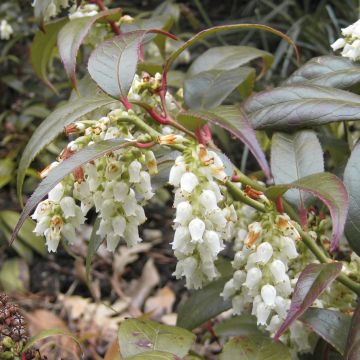
Available in 1 sizes
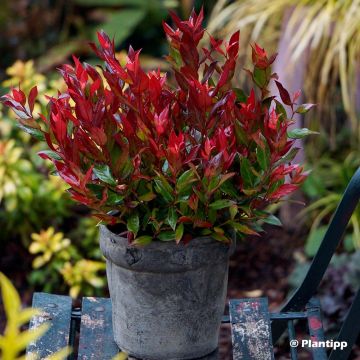
Available in 3 sizes
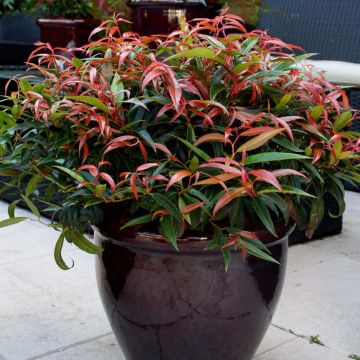
Available in 2 sizes
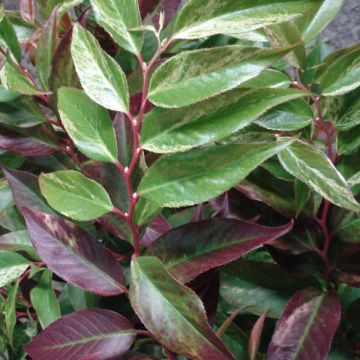
Available in 2 sizes
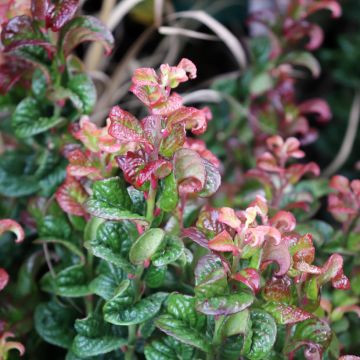
Available in 2 sizes
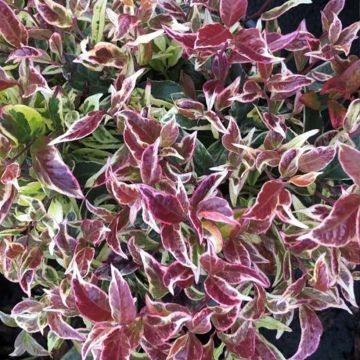
Available in 1 sizes
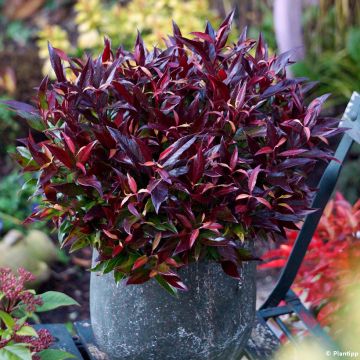
Available in 1 sizes
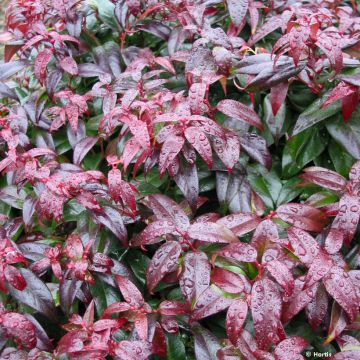
Available in 1 sizes
Available in 1 sizes
Available in 1 sizes
In a rockery
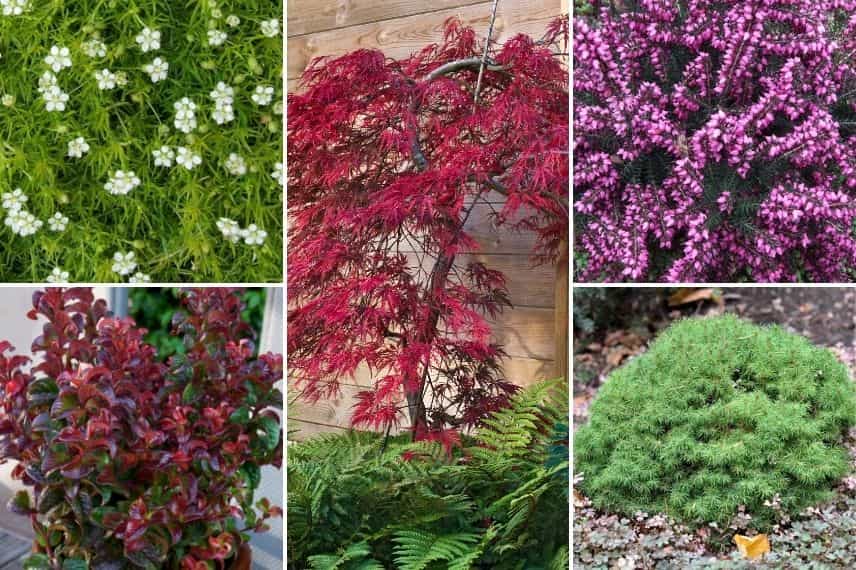
With its compact silhouette and evergreen foliage, Leucothoe is perfect for beautifully decorating a rockery all year round. It thrives in shade or partial shade, as well as in acidic soil that remains slightly moist. Never prone to disease, it requires no special maintenance. It can be paired with other bush-like plants that have a Japanese and graphic spirit, such as a Japanese maple, an Ilex crenata ‘Convexa’ that can be pruned into a ball or cloud shape, and a boxwood. Install some dwarf conifers, such as a white spruce for its lovely rounded cushion shape. Add some ferns and hostas among the rocks and stones, as well as grasses like Ophiopogon, Hakonechloa macra, and Carex oshimensis‘Evergold’. The subulate sagina will form a lovely dense groundcover, sprinkled with delicate and bright little flowers. Also consider Corydalis, Hellebores, and Heathers for their long flowering periods that will add colour to your rockery.
Read also
Plant young ericaceous plantsIn a large pot
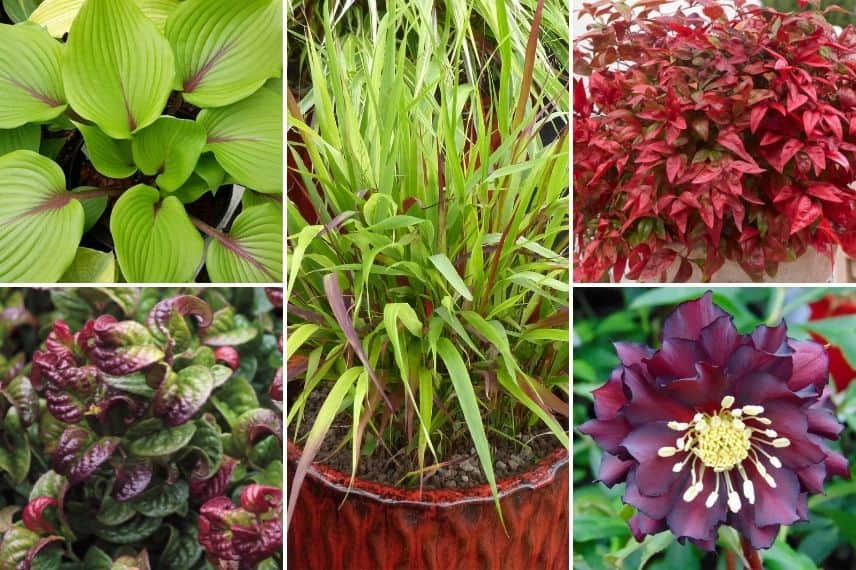
Small varieties of Leucothoe will enhance any terrace or balcony all year round, thanks to their original evergreen foliage. Take the stunning Leucothoe axillaris ‘Curly Red’, with its curled, purple leaves when young, turning dark green at ripeness. It will thrive in a large pot or container, in a partially shaded or shaded position. To create a beautiful environment, you can plant it alongside other small bushes, such as its cousin Pieris, a Nandina domestica ‘Blush Pink’, a Japanese Azalea, a Heather, and a small Japanese Maple. In terms of perennial plants, it will pair beautifully with Hellebores for their winter flowering, a Hosta, or a Hakonechloa for their opulent foliage.
On the edge of the woodland
Thanks to its evergreen foliage, leucothoe will adorn a woodland edge, even in winter when the trees are bare. In this wooded medium, you’ll have plenty of choices among the varieties of Leucothoe. Notably, the cultivar ‘Whitewater’ will bring brightness with its beautiful variegated green and cream foliage, taking on coppery hues as the cold sets in. It can be paired with other evergreen bushes, such as a Camellia, a Rhododendron ‘Percy Wiseman’, and a Kalmia latifolia ‘Tad’. To add lightness, install airy flowering perennials, such as Astilbe, Brunnera, and Elf Flowers (epimediums). For a nearly always flowering woodland, also plant Astrantias, Bergenias, Liriopes, Primroses, and Japanese Anemones. To create a lush woodland edge, add ferns, Hostas, and a few Heucheras for their colourful foliage.
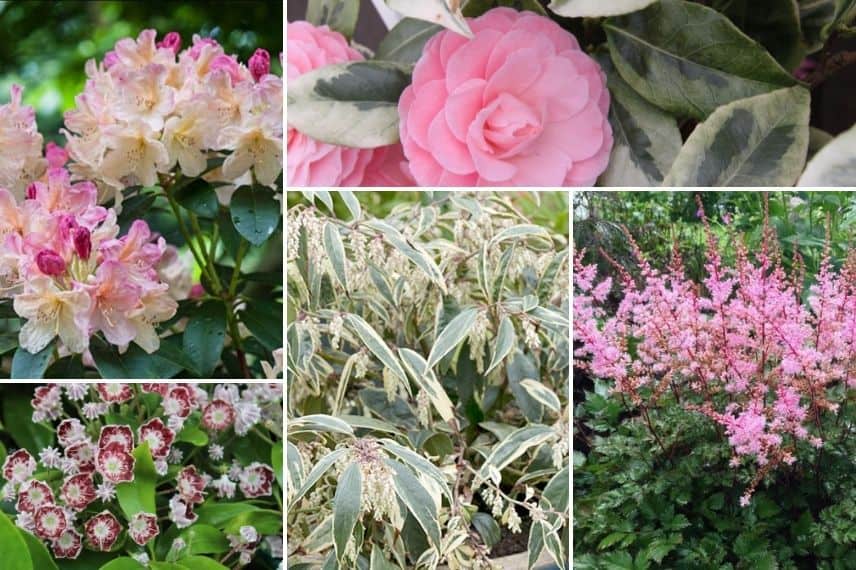
Rhododendron ‘Percy Wiseman’, Kalmia latifolia ‘Tad’, Camellia Kerguelen, Leucothoe fontanesiana ‘Whitewater’, and Astilbe japonica ‘Delft Lace’
For further reading
- Discover all our varieties of Leucothoe
- To learn everything, browse our article on Leucothoe: planting, growing and care
- Don’t miss their planting! Follow Michaël’s tips to succeed in growing acidic soil shrubs
- Subscribe!
- Contents
![[plant id="123" name="Leucothoe"]](https://en.promessedefleurs.eu/blogwp/wp-content/uploads/2022/04/Associer-le-leucothoe.jpg "[plant id=\"123\" name=\"Leucothoe\"]")
Comments