





























Calamintha: 5 Pairing Ideas
Rustic or exotic
Contents
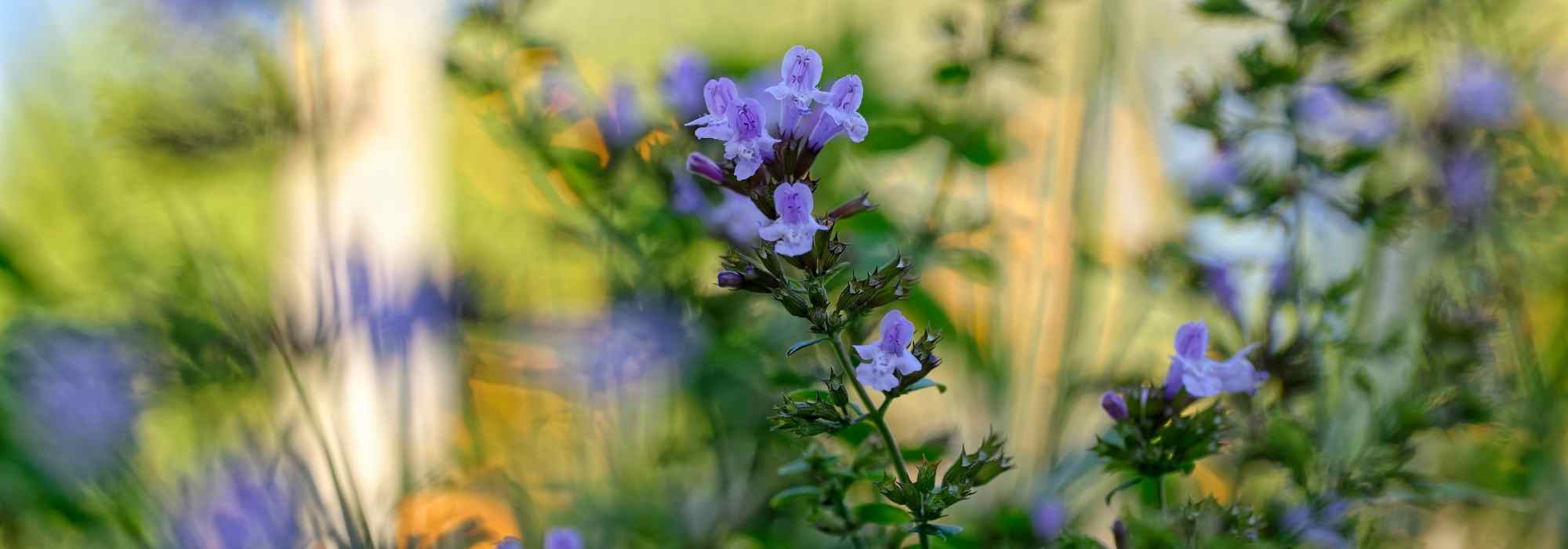
The calamint or Calamintha is an aromatic young plant closely related to nepeta, valued for its very long and delicate summer flowering, often blue-violet, sometimes white or pink. Its fragrant foliage evokes Mediterranean scrublands and banks. It is used in cooking and has medicinal properties for pain relief and digestion. Calamintha thrives in full sun, in well-draining soil that does not retain moisture in winter. It is easy to grow in Mediterranean-style gardens and dry gardens, in wild and free arrangements, in rockeries, borders, and even in pots.
Discover our ideas and inspirations for pairing it well in the garden.

In a dry garden
Adapted to poor, dry, stony soils and drought-resistant, Calamintha thrives in a dry garden, such as a scree garden or mineral garden. In this type of display, it will accompany dwarf wormwoods, Erigeron karvinskianus, thyme, creeping rosemary, or dianthus. Ceratostigma griffithii and Perovskia atriplicifolia, another admirable shrub, will be good companions, as will an Agave filifera for a decidedly more exotic style. It will also be alongside euphorbias for dry ground and Santolina serratifolia, which will provide a complementary touch of yellow.
Accent the scene by planting light grasses alongside them, such as Stipas tenuifolia, Deschampsia flexuosa, a Festuca ‘Intense Blue’, and some small carpet plants, such as houseleeks and Delosperma cooperi.
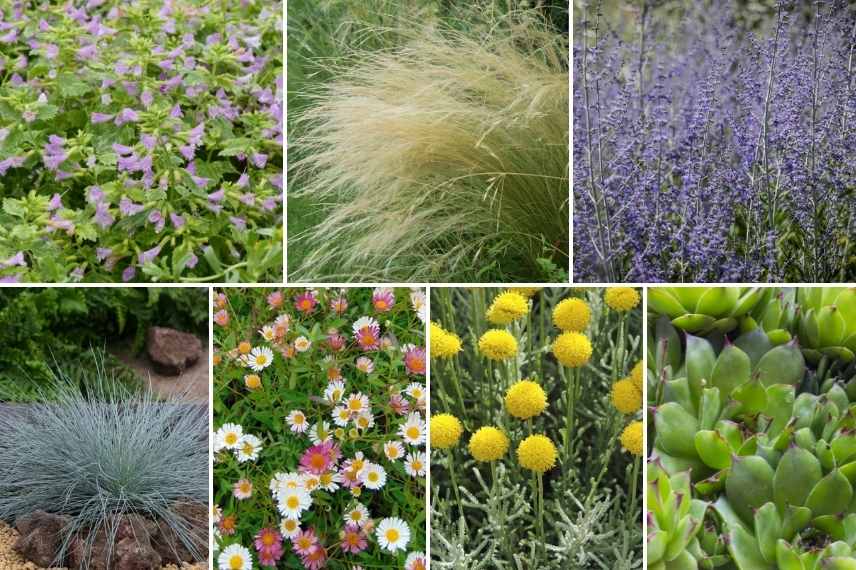
Calamintha grandiflora ‘Variegata’, Stipa tenuifolia, Perovskia atriplicifolia, Festuca ‘Intense Blue’, Erigeron karvinskianus, Santolina serratifolia and houseleeks
In a Mediterranean atmosphere
Native to the Mediterranean region, Calamintha or calamint thrives in full sun and well-drained, even stony soils, and it dislikes heavy, waterlogged soils in winter. It is therefore very comfortable in a Mediterranean garden alongside Mediterranean perennials reminiscent of garrigue. It is also a good plant for covering the base of Mediterranean shrubs such as Callistemon, oleander, or the olive tree. At their feet, pair it with aromatic and fragrant plants, such as rosemaries, lavenders, and santolines. It will also appreciate the company of exotic, strong-tempered perennials, such as Agave americana and Opuntias. The beautiful blue-mauve flowering of Calamintha nepeta will echo that of lavender and its cousin nepeta. The equally aromatic Helichrysum will provide a beautiful contrast with its yellow flowering.
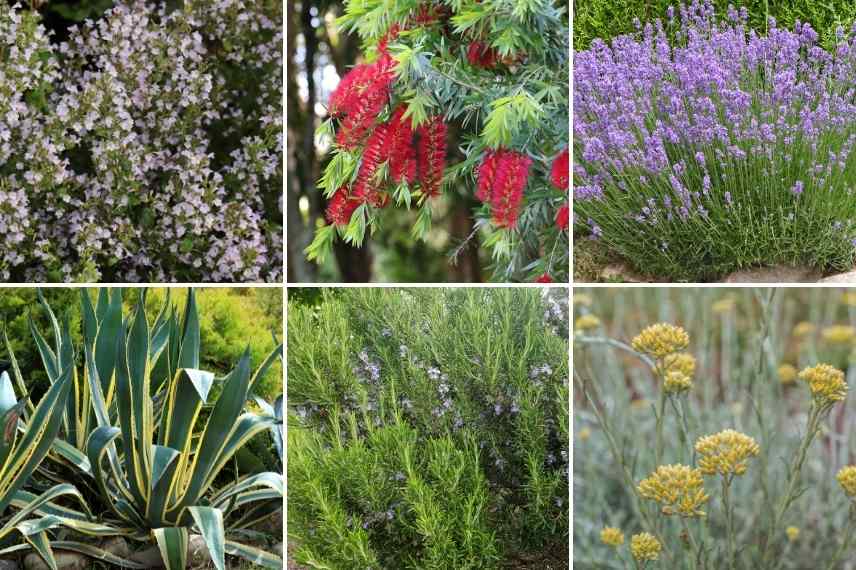
Calamintha nepeta, Callistemon vinimalis ‘Captain Cook’, lavender, Agave americana, rosemary, and Helichrysum italicum
Discover other Calamintha
View all →
Available in 2 sizes
Available in 1 sizes
Available in 1 sizes
Available in 1 sizes
Available in 1 sizes
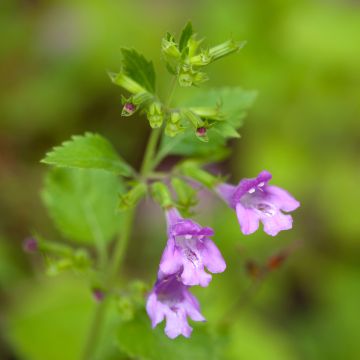
Available in 1 sizes
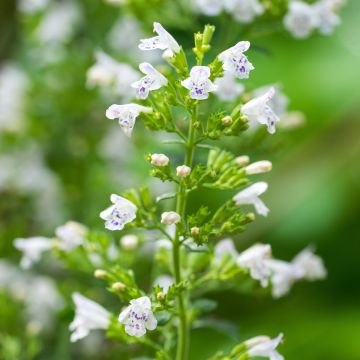
Available in 2 sizes
In a naturalistic garden
With its simple appearance, bushy habit, and delicate flower spikes, Calamintha easily finds its place in all sunny natural gardens, blending seamlessly into lush scenes. It brings colour and light to a somewhat wild large border alongside other summer-flowering perennials. You can create a beautiful natural and rustic tableau by pairing it with freely growing perennials that have light and airy blooms.
Create a backdrop by planting beautiful grasses: Stipa gigantea, Stipa pennata or Stipa tenuifolia, and Pennisetums for lightness. In the heart of the border, it will accompany achilleas, Coreopsis that will soften these cool tones, Gaura lindheimeri, Agastaches, and Buenos Aires verbena. The hardy geraniums will form low flowering clumps alongside it. Meanwhile, Verbascums phlomoides ‘Spica’ and Sanguisorba tenuifolia var. ‘Purpurea’ will add a vertical touch and much elegance to this scene.
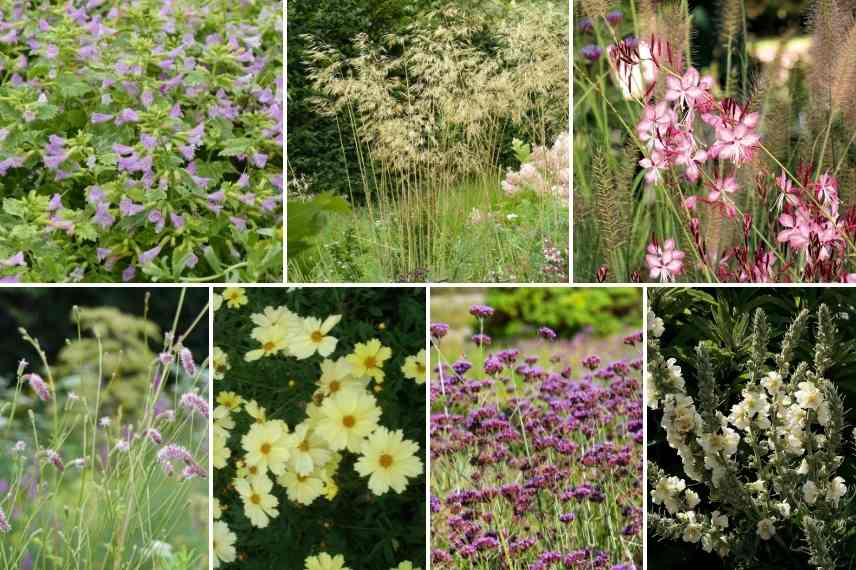
Calamintha grandiflora ‘Variegata’, Stipa gigantea, Gaura and Pennisetums, Sanguisorba tenuifolia var ‘Purpurea’, Coreopsis ‘Full Madness’, Verbena bonariensis and Verbascum phlomoides ‘Spicta’
Read also
10 hardy plants for an exotic dry gardenIn a cottage garden
Capable of forming beautiful bushy and floriferous clumps without requiring maintenance, Calamintha is well-suited for planting in an English cottage garden. This type of very lush border brings together a multitude of perennial and annual flowers along with foliage. At the back of the border, install tall hollyhocks and lavateras such as Lavatera ‘Blue Bird’.
Incorporate a clever mix of tall grasses like Molinies, Miscanthus and robust perennials for dry soil that thrive on their own, returning each year more opulent and floriferous: Nepetas, Dianthus plumarius, Hyssop, Digitalis grandiflora, Sage Salvia nemerosa ‘Caradonna’ and asters for drier soil like Aster rugulosus ‘Asrugo’ with its acid pink flowers. It will serve as a backdrop for the red and pink bush sages. The varieties of Calamintha with purple flowers will provide beautiful contrasts with the yellow blooms of yarrow, Argyranthemum ‘Grandaisy Gold’, and Coreopsis.
The airy flowering of calamintha pairs perfectly with the spiky blue foliage of eryngiums (Eryngium ‘Jos Eijking’) or the soft, silvery foliage of Stachys byzantina and lanata, and some Artemisia like the Artemisia arborescens ‘Little Mice’, perfect for the foreground of this border.
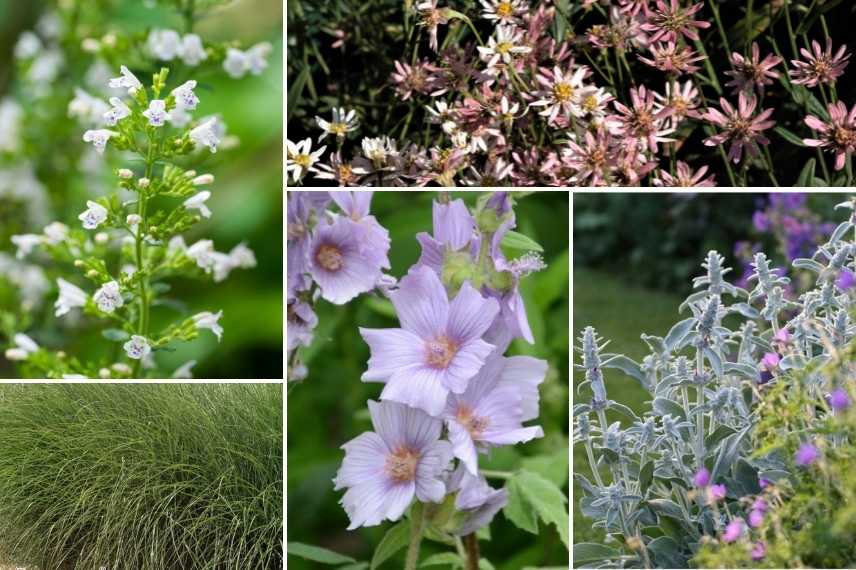
Calamintha nepeta white, Aster rugulosus ‘Asrugo’, Miscanthus sinensis ‘Gnom’, Lavatera ‘Blue Bird’, Stachys byzantina
In a romantic border
With its charming small flowers in soft hues, Calamintha adds a touch of simplicity to romantic gardens right up until the frosts.
It helps to infuse charm and softness into romantic-inspired scenes. It forms small bushy and creeping clumps, reaching 40 to 50 cm in all directions, and can conceal the often naked base of bush roses or a Caryopteris. It blends beautifully with the delicate flowers of garden catchflies, cleomes, astrantias, Campanula lactiflora, the airy inflorescences of gauras, and gypsophila. All these plants will provide successive flowerings over several months. The elegant foxgloves are also good companions.
The greyish foliage of wormwoods, Stachys byzantina, or Salvia argentea adds an extra touch of softness to these romantic flowerings.
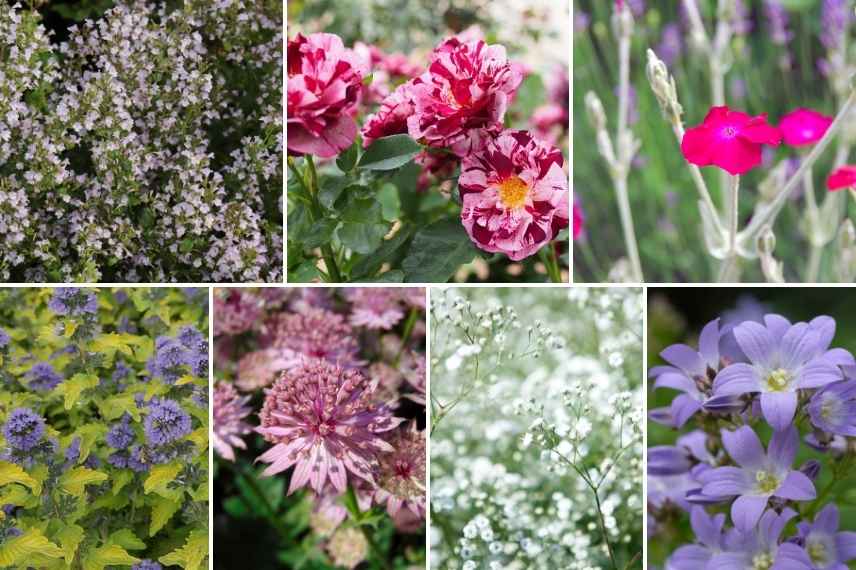
Calamintha grandiflora ‘Variegata’, rose ‘New Imagine’, garden catchfly, Caryopteris, Astrantia ‘Major’, gypsophila, and Campanula lactiflora
- Subscribe!
- Contents
Comments