





























Caring for your vegetable garden in spring
What are the spring tasks in the vegetable garden?
Contents
Gently, you feel nature emerging from its winter slumber. Temperatures are becoming milder, the soil is slowly warming, heated by the sun’s rays, days are lengthening, and birds are singing. Undeniably, spring is on the way. And you are itching to reinvest in your vegetable garden for a new gardening season.
Your sowing indoors or under cover is already underway, your potatoes are quietly sprouting, and your tools are sharpened, cleaned, and disinfected. It is time to prepare your vegetable garden. Some work is indeed necessary to help your garden emerge from winter. Discover all my practical tips for taking care of this nourishing soil that will receive your future sowings and plantings.

Take one's pain in patience
My first piece of advice is a piece of patience. Indeed, in the vegetable garden, even more than elsewhere, there’s no need to rush… Certainly, spring officially arrives on 20 March, but that’s just a date on a calendar. There’s no need to wait for this date, which carries hope, with the broadfork in hand, to invest in your vegetable garden. Sometimes it is wiser to wait a bit and especially to observe nature, which can provide us with excellent indications.
Why wait? First, because in some regions, cold and night frosts are still common in spring. This continues until the famous Ice Saints, on 11, 12, and 13 May, which officially kick off the gardening season. And where there are frosts, the soil is hard!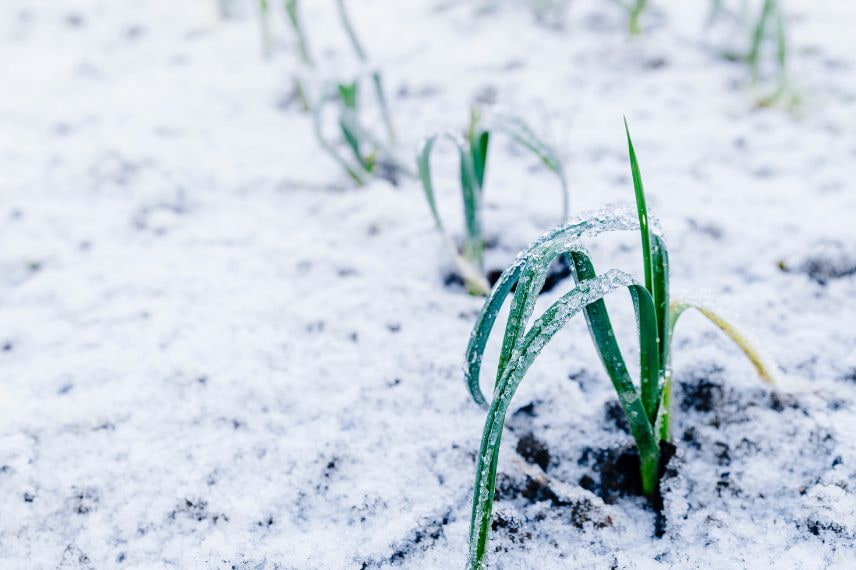
Next, it is very important to let the soil warm up and dry out after winter. Indeed, at the end of the winter period, the soil is often sticky, heavy, and waterlogged. It is therefore difficult, if not impossible, to work it properly.
To know when your soil is warm enough, observe your ornamental garden. A forsythia in bloom confirms that the soil has reached 6 °C. Next come daffodils, indicating that the soil is around 12 °C, then lilacs (15 °C), roses… Simply planting your finger in the soil should also give you indications about the warming of the soil.
To learn all about Saints Mamert, Pancrace, and Servais: The Ice Saints: date, origin, and advice
Clean your vegetable garden
It’s one of the first tasks to tackle in the vegetable garden, as it’s essential to prepare for new crops under the best conditions. Of course, cleaning doesn’t mean leaching and washing, but rather making a tidy space:
- Remove the last vegetables remaining in the garden, such as leeks, a few cabbages, and the last leaves of lamb’s lettuce or spinach… In short, all these vegetables have suffered from frost and are looking decidedly less vibrant. Moreover, they take up a lot of space just as sowing and spring planting are on the horizon.
- Take away the winter mulch that hasn’t fully decomposed. Naturally, it will go into the compost. By removing this winter mulch, the soil warms up more easily. Some gardeners prefer to leave it to provide organic matter for the earthworms that are starting to come back to life. The choice is yours!
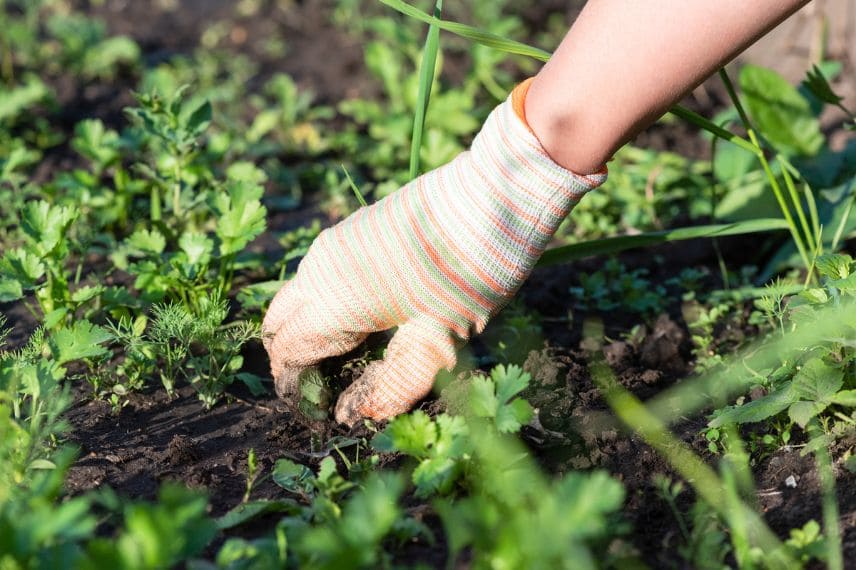
- Eliminate the weeds that are starting to grow. This is the perfect time for this thankless but essential task, as the soil is still sufficiently moist. Manual weeding will be more effective, but the hoe and the hand weeder are also very useful.
Discover other Vegetable gardens
View all →
Available in 1 sizes
Available in 1 sizes
Available in 1 sizes
Available in 1 sizes
Available in 1 sizes

Available in 1 sizes
Available in 1 sizes
Available in 1 sizes
Available in 1 sizes
Incorporate green manures
For reference, green manures enrich the soil with nutrients such as nitrogen, aerate and improve the structure of the soil, and limit the proliferation of adventive plants and erosion. They thus revive the soil.
Some are sown in spring, but others, such as winter vetch, crimson clover, fava bean, or rye, are sown in autumn. They remain in the ground throughout winter due to their frost resistance. At the end of winter, it is time to mow them with a lawn mower to incorporate them during soil preparation, the next step.
Further reading:
- Green manures: everything you need to know
- Green manures: why? How?
Working the soil gently
Là encore, c’est une étape incontournable de la préparation du potager au printemps. En effet, during winter, the soil has been compacted and leached by frost or snow, making it dense. The aim is therefore to loosen this soil so that it is more aerated to welcome the sowings and plantings. However, it is essential to wait until the soil is well-drained before working it.
On the other hand, working the soil does not mean digging vigorously, a task that should have already been done in autumn. In spring, the soil should be worked gently, either with the organic fork or grelinette, or with a simple rake that helps break up clumps. This way, you will not disturb the micro-fauna that is just beginning to emerge from its winter lethargy.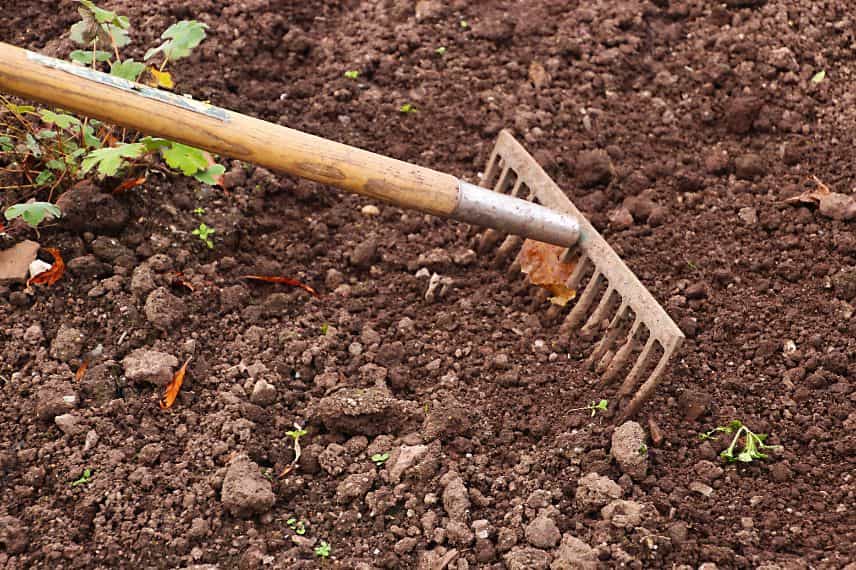
Once this work is done, give a final rake to remove any weeds and stones.
If your soil is too heavy or clayey, do not hesitate to add a bit of sand to lighten it.
Also, read our article: “Preparing the soil in spring: essential actions for the garden
Fertilise and amend the soil
When working the soil, take the opportunity to amend and fertilise the soil. Over the years, the soil in the vegetable garden tends to become depleted. Similarly, some vegetables are particularly greedy and require a humus-bearing soil rich in nutrients. Even if you spread a good layer of manure in the autumn, in spring, it is essential to enrich the soil again with organic matter. Several solutions can be considered:
- Compost, provided it is well-matured and decomposed
- Decomposed and dehydrated manure in powder or pellet form. However, avoid fresh manure that won’t have time to decompose before planting
- Organic fertilisers specifically designed for vegetable gardens, such as Or brun, which will maintain a regular yield, nourish the roots deeply, and make plants more resistant to diseases
These organic materials should be spread on the surface of the soil and simply incorporated into the surface during the raking process. Earthworms and all the microorganisms present in the soil will take care of it!
If you have planned your vegetable garden, increase the organic matter contributions in the areas dedicated to greedy vegetables like tomatoes, aubergines, courgettes… In contrast, legumes such as alliums are content with poorer soil.
Further reading:
Mulch while waiting for sowing and planting
Now that your soil is loosened, nourished, and free from unwanted herbs, it is naked. And nature does not like nudity! So, to limit the spread of weeds that will inevitably (re)occupy the area, apply a thick layer of mulch wherever you can.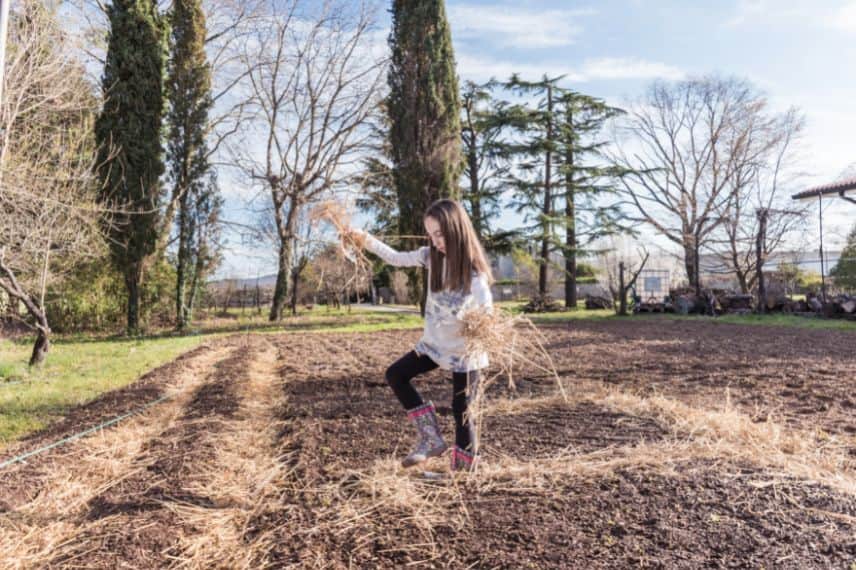
This mulching will also have the advantage of reducing soil erosion caused by compaction and leaching from rain. If you don’t have mulch, use cardboard or freshly cut nettle leaves rich in nitrogen!
To learn more: What mulch for the vegetable garden?
The other little things to do
Spring is also the time to:
- Clean, wash, and disinfect your tools: Clean, maintain, and protect your gardening tools
- Sharpen your cutting tools
- Draw up the final plan for your vegetable garden, taking into account the association and rotation of crops: Plan your vegetable garden: rotations and associations in 5 steps
- Take stock of your seed packets to complete your collection of varieties
- Start chitting your potatoes
- Begin sowing your tomatoes, courgettes, peppers, aubergines… in a warm place
- Subscribe!
- Contents
![[plant_list category="potager" season="spring"]](https://en.promessedefleurs.eu/blogwp/wp-content/uploads/2023/02/Prendre-soin-de-son-potager-au-printemps.png "[tabs tab1=\"Introduction\" tab2=\"Préparation du sol\" tab3=\"Semis et plantation\" tab4=\"Entretien des cultures\"]
[tab id=\"Introduction\"]
In spring, it's time to take care of your vegetable garden to ensure a bountiful harvest later in the season. Here are some tips to help you get started.
[tab id=\"Préparation du sol\"]
To prepare the soil, start by removing any weeds and loosening the earth with a {glossary}spading fork{glossary}. Add some {glossary}compost{glossary} or well-rotted manure to enrich the soil. Avoid working the soil when it's too wet to prevent compaction.
[tab id=\"Semis et plantation\"]
For sowing and planting, follow the instructions on the seed packets for the right timing and spacing. You can start sowing seeds of {glossary}lettuce{glossary}, {glossary}carrots{glossary}, {glossary}radishes{glossary}, and other early crops. Transplant seedlings of tomatoes, peppers, and courgettes once the risk of frost has passed.
[tab id=\"Entretien des cultures\"]
Once your crops are growing, remember to water regularly, especially during dry spells. Mulch around plants to retain moisture and suppress weeds. Keep an eye out for pests and diseases, and take appropriate action to protect your plants. Regularly harvest your crops to encourage further production.
[/tabs]")
Comments