





























Cider apples: which varieties?
Discover our selection of the best varieties to grow in the orchard.
Contents
Bitter-sweet, tangy, sweet, sour, or bitter, depending on their character, cider apples offer a wide range of flavours. Sometimes sweet or astringent, their flesh possesses distinctly different aromas depending on the variety. Unlike eating apples, cider apples are very hard fruits, particularly suited for pressing and transforming into cider. After pressing, they yield a must whose proportions of sugar, tannin, and acidity vary according to the aromatic components. A single variety rarely suffices on its own and generally benefits from subtle blending to modulate the bouquet of the cider. These are often old, vigorous varieties from the French heritage and are very hardy (-20 to -25°C). Cider apple trees grow throughout France, but they usually have a local attachment and show better adaptation to their region of origin. Like other apple trees, they prefer clayey, rich, and cool but well-drained soils. They reach approximately 5 m in height and 4 m in spread at maturity, making them suitable for standard forms. They are said to be self-sterile: fertilization is better if other varieties of apple trees are present to ensure pollination. We have selected the six best varieties for you to consider for their flavour, productivity, or adaptability.
→ Discover our range of apple trees

The cider apple Douce Coët Ligné: a sweet flavour
Here is an apple tree that finds its origins in Brittany, more specifically in Morbihan! The Malus domestica ‘Douce Coët Ligné’ is a variety known as “biennially bearing”, meaning it produces abundantly every other year. This traditional cider apple variety, also listed among the recommended varieties, rewards us, around the second half of October, with medium-sized, slightly flattened, round apples measuring about 6.5 cm in diameter and weighing 50 to 70 g. Their yellow-ochre epidermis, sometimes washed with carmine, reveals flesh perfect for “apple wine”. Crunchy, juicy, very sweet, and free from bitterness, its sweet apples yield a clear, sweet, and fragrant juice. They add roundness and sweetness to cider. The cider apple tree ‘Douce Coët Ligné’ has a semi-upright habit, well-structured and well-ramified. It is suitable for all types of orchards and for standard forms.
Any other variety with a semi-late flowering will be suitable for cross-pollination.
Read also
Harvesting and Storing Apples and PearsThe cider apple Douce Moën: a sweet-bitter flesh
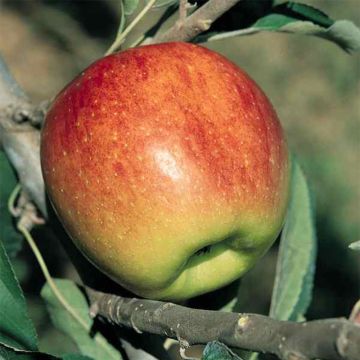
Another ancient variety from Brittany, in southern Finistère, quite productive, listed as a recommended variety since 1949. The Malus domestica ‘Douce Moën’ or ‘Dous Moën Rouge’ has a quick fruiting period and produces a profusion of apples every other year. At the end of October, it rewards us with slightly elongated fruits, measuring 6 cm and weighing 35 to 65 grams. Beneath their rough, golden-yellow skin washed with bright red, lies juicy flesh with a sweet and bitter flavour. Once pressed, its apples yield a sweet-bitter juice of very good quality, highly coloured and fragrant. These sweet apples, rich in tannins and low in acidity with a slight bitterness, allow for the production of a very fine cider with a subtle bouquet. They also blend well with other varieties, adding finesse and roundness to create a balanced cider.
This cider apple tree forms a beautiful, well-structured tree that is easy to train as a standard. Sensitive to powdery mildew in rather dry climates and to fire blight, this apple tree, however, is quite resistant to apple scab and canker.
Recommended varieties for cross-pollination: Petit Jaune, Rouget de Dol, Douce Coët ligné, René Martin, Moulin à Vent, Noël des champs, Guillevic, Saint Martin.
Discover other Apple trees
View all →
Available in 1 sizes
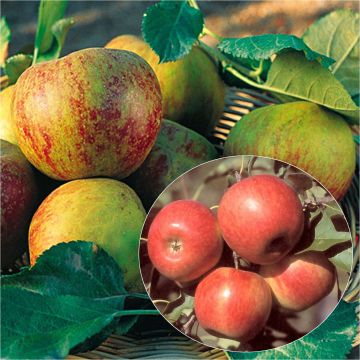
Available in 0 sizes
Available in 0 sizes
Available in 0 sizes
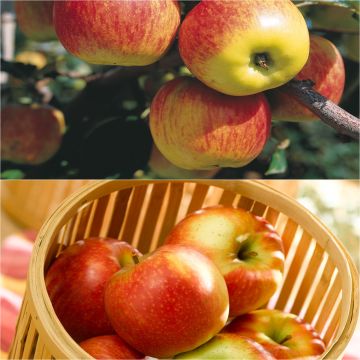
Available in 0 sizes
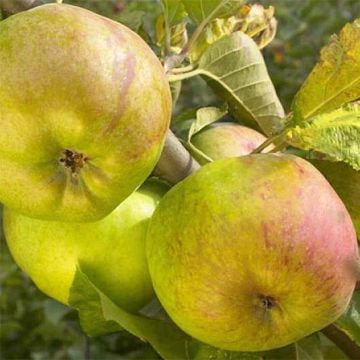
Available in 4 sizes
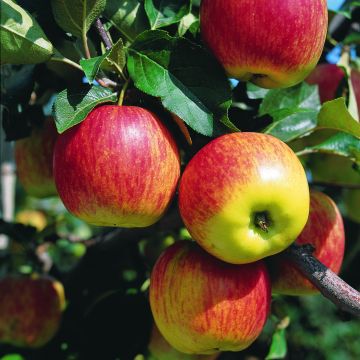
Available in 1 sizes
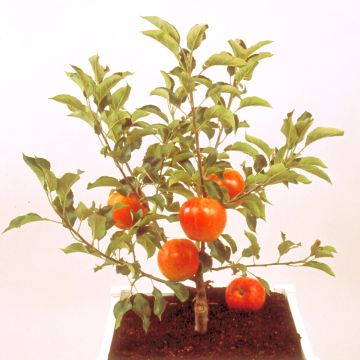
Available in 2 sizes
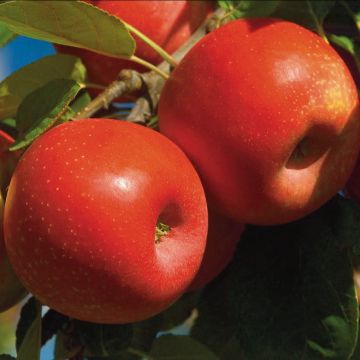
Available in 2 sizes
Available in 3 sizes
The cider apple Locard: a sour aftertaste
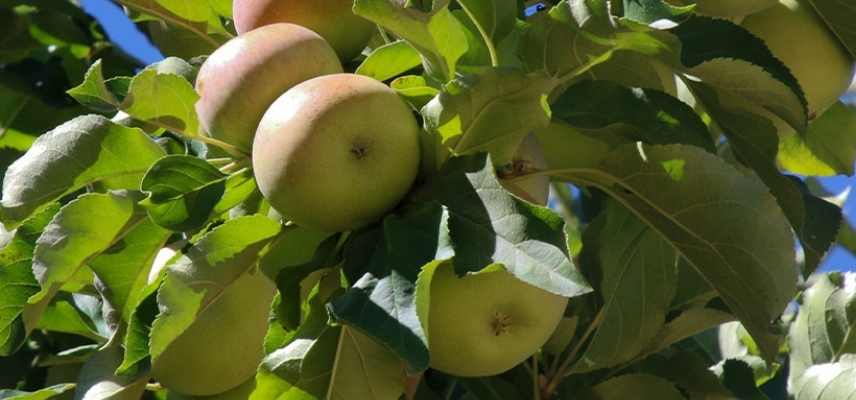
The Malus domestica ‘Locard vert’, also known as ‘Tut Muss’, originates from Creuse and Ille-et-Vilaine. Highly productive, by the end of October, it yields globular apples that are more or less flattened, wider than they are tall, weighing between 40 to 60 g each and measuring 7 cm. These green apples washed with red-pink turn yellowish to varying degrees at ripeness, containing a whitish-green flesh that is slightly corky, low in tannins, neither too sweet nor too acidic. They reveal a slight bitterness on the palate. This type of apple with a tart flavour adds freshness to cider. They benefit from being blended with other varieties to balance the flavours. The Locard vert cider apple tree has a semi-erect habit and a spreading rounded crown.
Varieties such as Douce Moën, Judor, or any other variety with a mid-late flowering period are recommended to ensure pollination.
Read also
Apple tree: planting, pruning and careThe cider apple Marie Ménard: quite bitter!
It was in 1910, in Côtes-d’Armor, that Malus domestica ‘Marie Ménard’ was discovered, a reference variety. This vigorous cider apple tree, which bears fruit weakly biennially, ensures an abundant and regular production of apples each year. The fruiting process is slower than with other varieties, but it compensates with excellent productivity. By the end of October, it produces round, flattened fruits, quite large (8 cm), with a yellow-ochre skin tinged with carmine red. As for their flesh, it is crisp, juicy, sweet, tangy, and highly fragrant. After pressing, a bitter, dense must rich in tannic acid and colour is obtained. These apples yield a full-bodied cider with substance and an intense colour.
This fruit tree develops into a well-balanced, spreading dome, with few branches. It is relatively resistant to scab, powdery mildew, canker, and resistant to fire blight.
As with previous cider apple trees, any other variety with semi-late flowering will allow for pollination.
The cider apple Petit Jaune: very acidic!
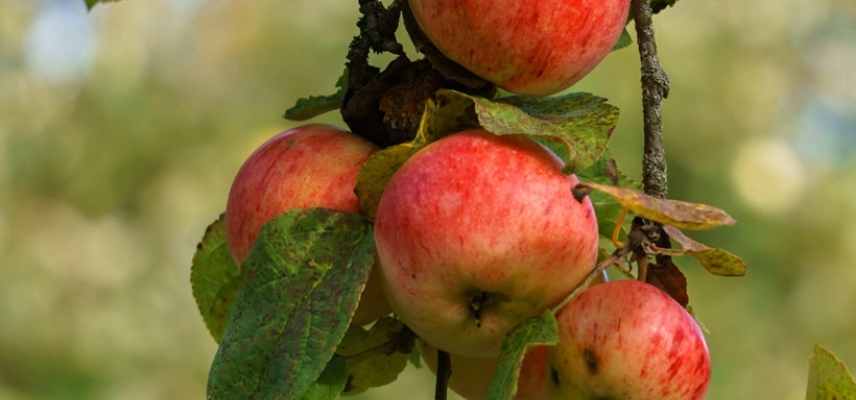
Another cider apple tree offering a very good yield! The Malus domestica ‘Petit Jaune’ is a highly productive variety originating from the north of Loire-Atlantique and the south of Ille-et-Vilaine. It is a biennially bearing variety, with an abundant harvest every other year. Listed since 1966 on the recommended varieties list, it produces small apples (50 to 90 g) that are rounded to conical, with a golden yellow skin washed with light red in the sun by the end of October. Their tangy flesh adds freshness to the cider. After pressing, it yields a pale yellow juice, well-scented, with a sour taste. It is necessary to mix them with other cider apple varieties to achieve a well-balanced apple wine.
Moderately vigorous, it develops a spreading dome, very well ramified. Relatively sensitive to powdery mildew and scab, it is much less vulnerable to bacterial fire and canker.
Any other variety with a semi-late flowering is suitable for cross-pollination.
The Chestnut Apple Tree: a sweet taste
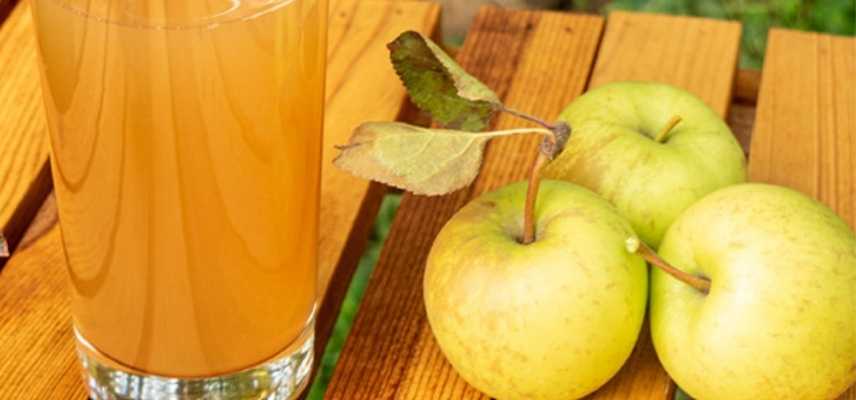
Here is a versatile apple tree! It rewards us with apples that can be turned into cider, but are just as delicious eaten raw as they are cooked. This is a very old variety found in Normandy in the 13th century and recognised for its traditional use as a cider apple. The Malus domestica ‘Châtaignier’ is of medium vigour, although very fertile, with a quick fruiting period. It produces apples that are 7 cm in size, rounded and slightly flattened at the base. These chestnut apples are harvested late, in November-December. Their thin, smooth skin is yellow-green, almost entirely striated with red, and sprinkled with small russet spots. Their flesh is not very juicy, quite sweet, and mildly fragrant, giving roundness to the cider. This variety shows good resistance to diseases, particularly to Apple Scab, which is an advantage if you live in a humid climate.
To encourage pollination, varieties such as Court Pendu, Cox Orange, Golden Delicious, Granny Smith, Reinette Clochard, Reine des Reinettes, Reinette du Mans, Reinette Etoilée, and Royal Gala or any other variety with semi-late flowering are suitable.
- Subscribe!
- Contents
Comments