





























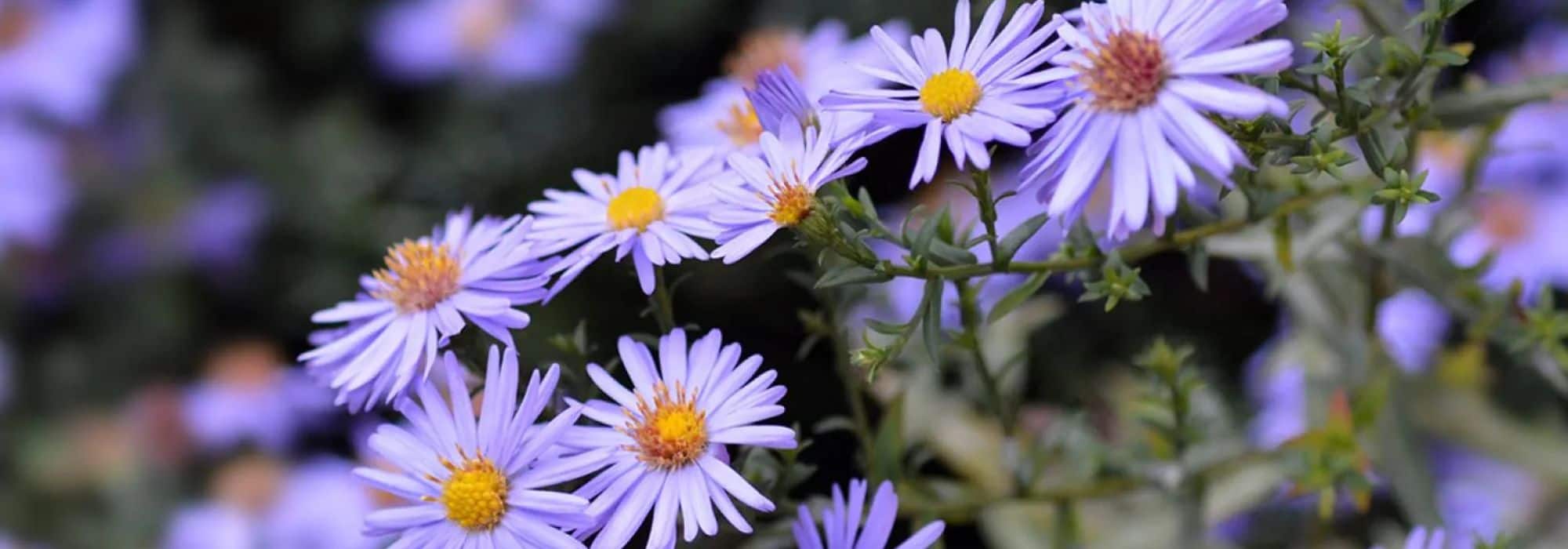
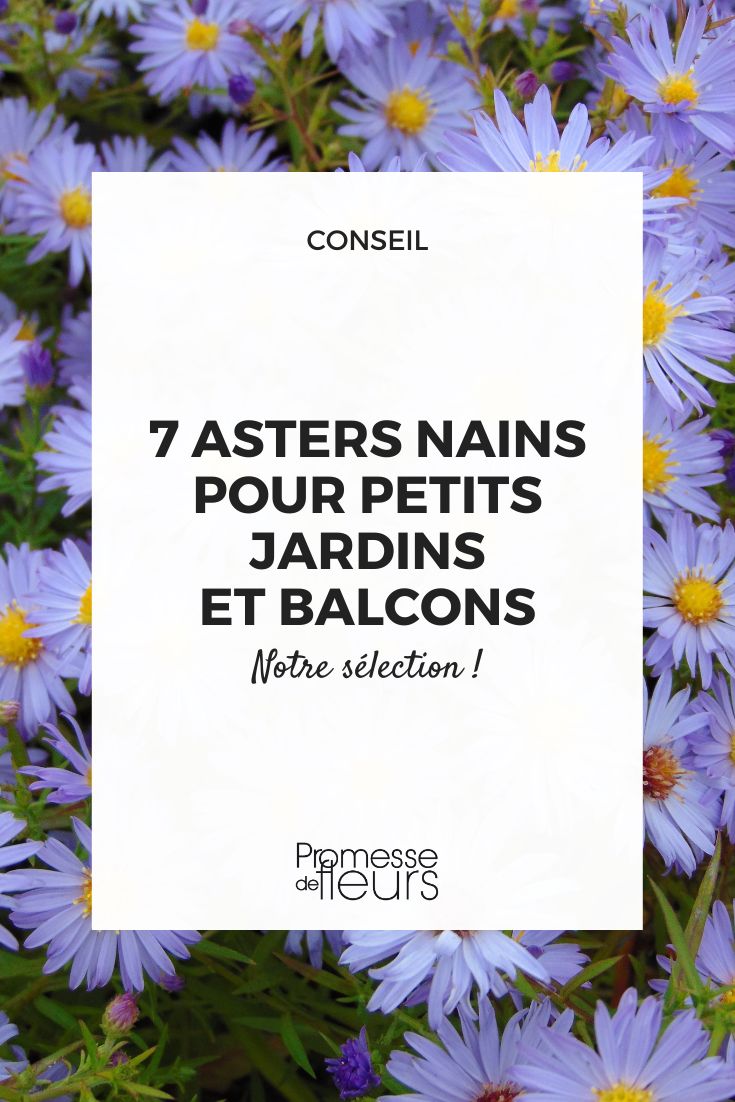
Dwarf asters: compact flowers for small gardens and balconies
adapted to small gardens and balconies
Contents
Small in size, but generous in flowering, the dwarf asters are perennials that bring light and colour, usually in autumn, though a few varieties (the Alpine asters) flower in spring. Their compact habit makes them particularly suited to small gardens and balconies, while offering a generous flowering that attracts pollinators such as bees and butterflies. Easy to grow, they fit just as well into borders as into containers. Let’s discover seven interesting varieties of dwarf asters, together with some ideas for pairings to enhance your outdoor space.

Aster 'Snow Flurry'
TheAster ericoïdes f. prostratus ‘Snow Flurry’ stands out for its small, bright white flowers perfect for brightening borders and planters from September to October. Compact, this variety reaches about 25 cm in height, making it ideal for small spaces. Its hardiness allows it to withstand temperatures down to -29°C once well established, making it a hardy and long-lasting plant. The variety ‘Snow Flurry’ prefers well-drained soil, from cool to dry and exposure in full sun or light shade. Note that it tolerates summer drought well, but fears humidity in winter. It pairs beautifully with grasses such as the Stipa tenuifolia or with autumn-flowering anemones, creating a soft and elegant contrast.
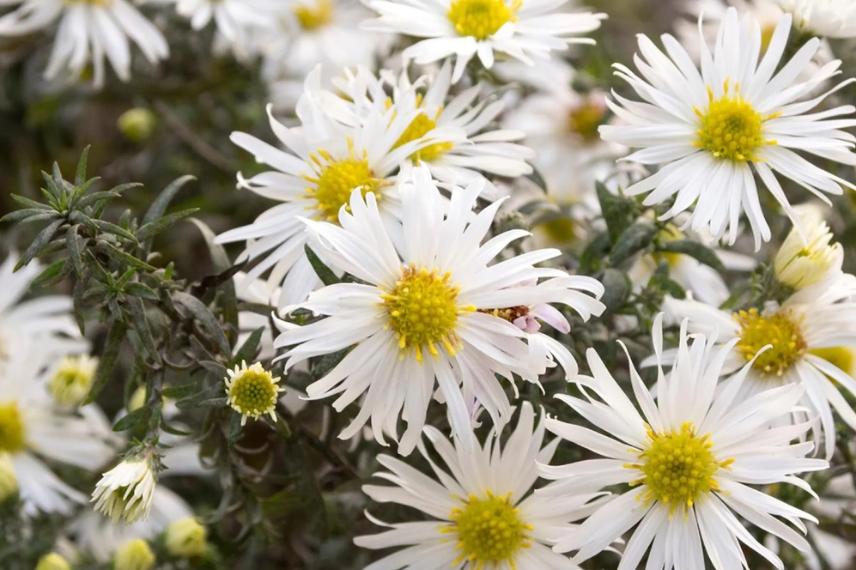
The Aster ‘Snow Flurry’
Read also
Asters : growing and careAster 'Rosenwichtel'
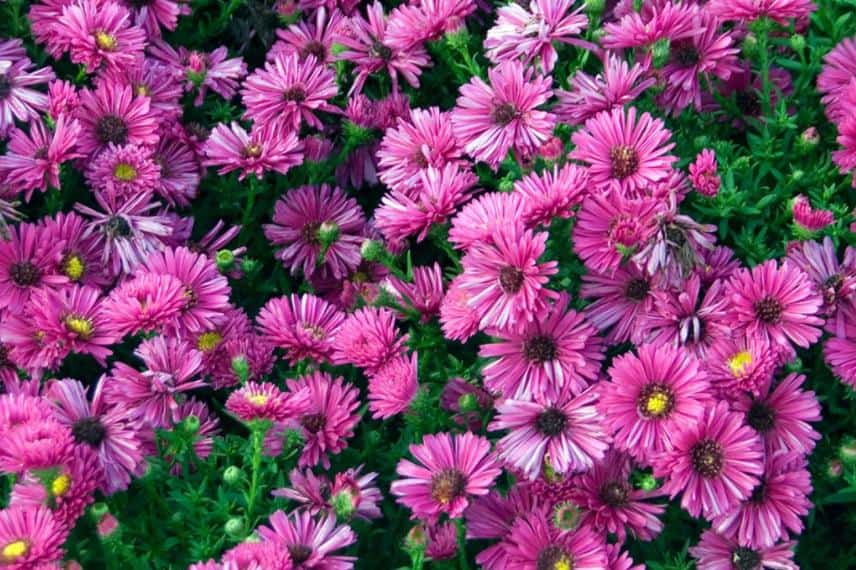
Aster dumosus ‘Rosenwichtel’, for its part, adds a burst of color with its bright pink flowers which appear from September to October. This variety, slightly taller at 30 cm in height, is ideal for borders, containers or flower beds. It particularly attracts pollinators at this season when flowering is scarce. Very hardy, ‘Rosenwichtel’ thrives in full sun or in light partial shade, in well-drained, rich soil that is not too dry. For an even more colourful garden, it is worth pairing it with purple coneflowers or sedums, which extend flowering until the end of autumn.
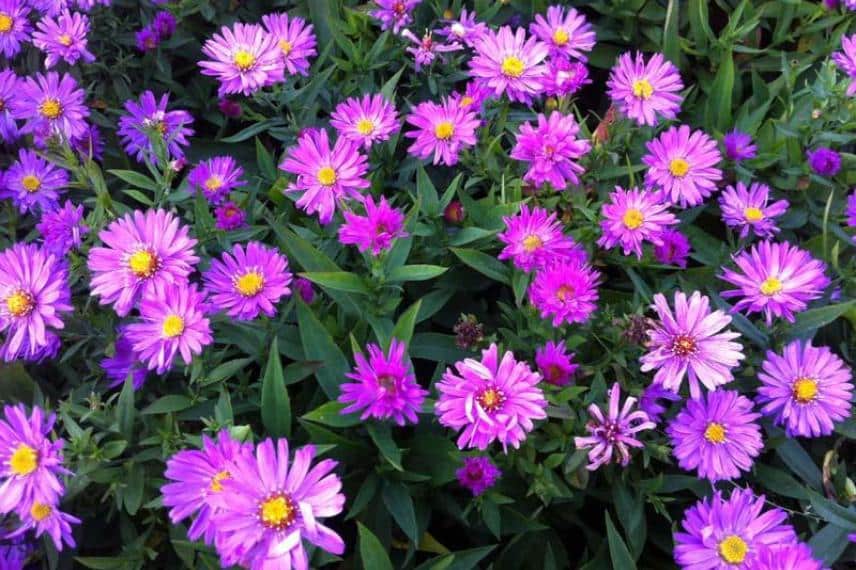
The Aster dumosus ‘Rosenwichtel’
Aster 'Lady In Blue'
For a softer, more soothing touch, the Aster dumosus ‘Lady In Blue’ offers abundant flowering of lavender-blue flowers. This very compact variety, reaching about 25 cm in height, is perfect for small spaces, pots and rock gardens. Very hardy, ‘Lady In Blue’ tolerates temperatures down to -20°C. Easy to grow, it thrives in all well-drained soils. It enjoys full sun but also tolerates a touch of light shade. For a harmonious display, pair it with Perovskia or with Rudbeckias, for a successful blue-and-yellow combination that will catch the eye.
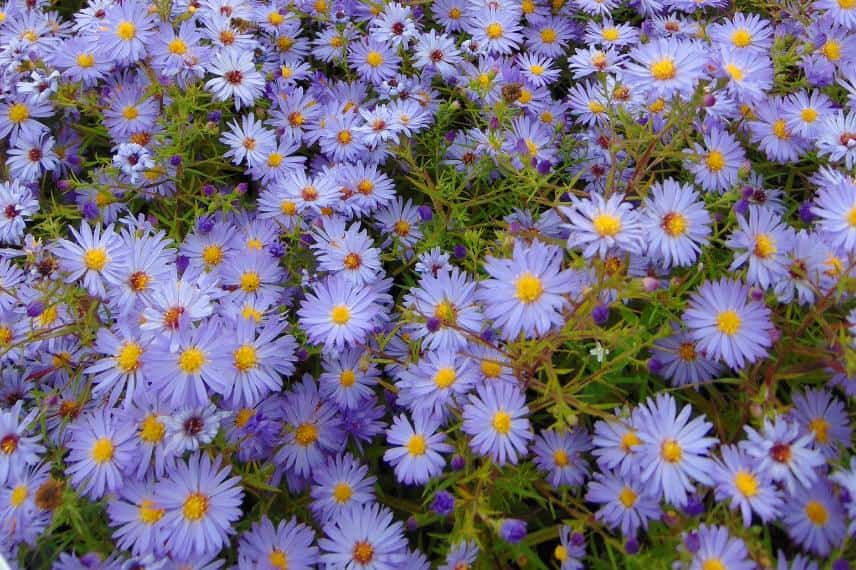
The Aster dumosus ‘Lady In Blue’
Read also
10 ideas to combine astersAster 'Jenny'
The Aster dumosus ‘Jenny’ is another compact variety that will appeal to lovers of bold colours. With its spectacular crimson-purple flowers, ‘Jenny’ flowers late, between September and October, adding a final splash of colour before winter. Reaching about 30–40 cm in height, this plant prefers well-drained, rich and slightly moist soil, as well as sunny or semi-shaded exposures. For a dramatic effect, you can pair it with white asters such as ‘Kristina’ or with dark purple heucheras, which will highlight its flowering.
 The Aster dumosus ‘Jenny’
Aster 'Professor Anton Kippenberg'
Aster dumosus ‘Professor Anton Kippenberg’ is one of the most popular varieties among dwarf asters, with its lavender-blue flowers opening from September to November. Its compact habit, reaching about 30 to 40 cm in height, makes it ideal for small borders or planters. It tolerates temperatures down to -20°C. This variety enjoys full sun or partial shade and tolerates all types of well-drained soils. Its abundant flowering attracts pollinators and it pairs perfectly with white dwarf asters and Heleniums to create a striking contrast.
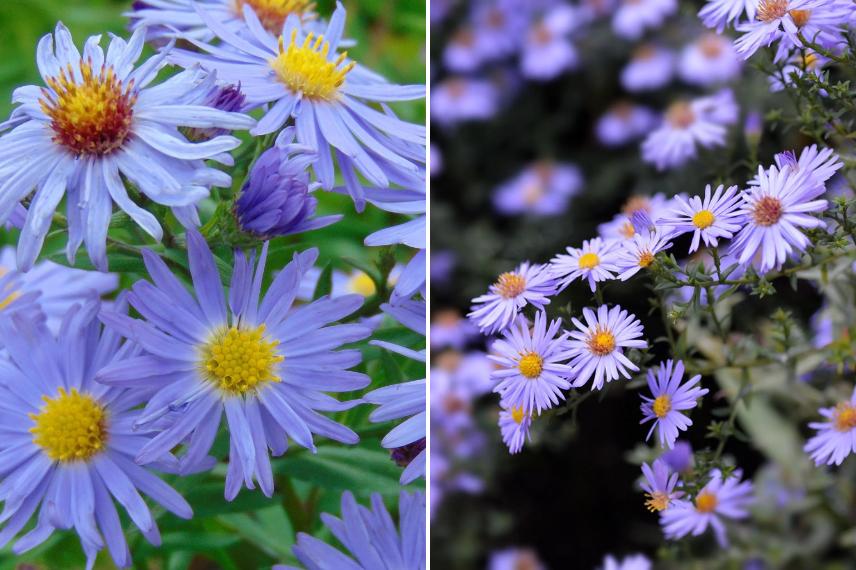 Aster dumosus ‘Professor Anton Kippenberg’
Aster 'Dunkle Schöne'
The Aster alpinus ‘Dunkle Schöne’ stands out for its superb spring flowering, ideal for small gardens. Its flowers in a deep blue-violet colour appear from May, providing the first splash of colour in the garden. Compact, reaching no more than 20–25 cm in height, this aster is perfectly suited for rockeries, borders or even window boxes. Hardy and montane in origin, it tolerates temperatures down to -34°C and prefers well-drained soil in full sun. For a lovely spring combination, pair ‘Dunkle Schöne’ with Phlox or Iberis sempervirens, which flower in the same period and share similar soil and exposure needs.
The Aster alpinus also exists in a pink-flowered form at the Aster alpinus ‘Happy End’ or a white-flowered form at the Aster alpinus ‘Albus’.
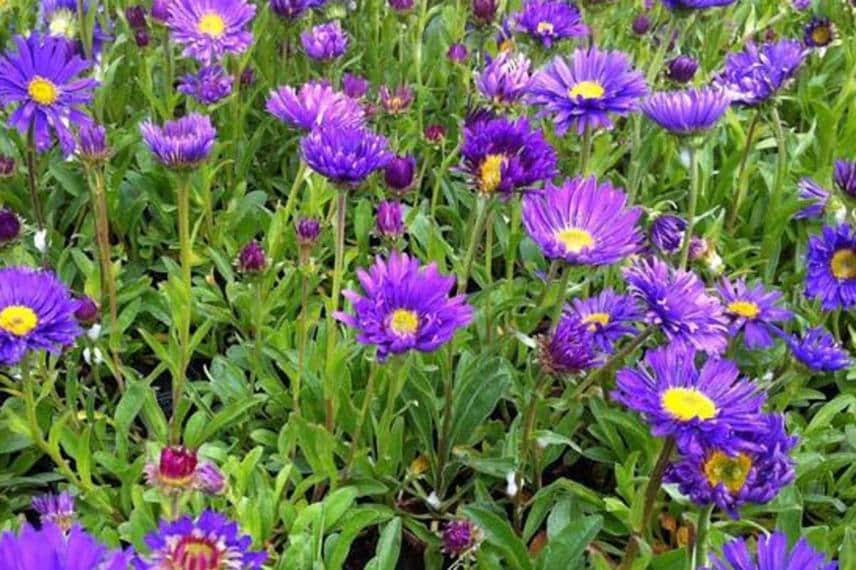
The Aster alpinus ‘Dunkle Schöne’
The Aster sedifolius 'Nanus'
Finally, the Aster sedifolius ‘Nanus’ is a more discreet variety, but just as charming, which is perfectly suited to the Mediterranean climate. It is characterised by its spreading habit and long flowering, from September to November, consisting of small lavender-blue star-shaped flowers. Very compact, this aster reaches about 30 cm in height, making it a perfect choice for borders and rock gardens. The Aster ‘Nanus’ prefers well-drained soil, even if poor, and is in full sun.
In the south, you can pair the Aster ‘Nanus’ with drought-tolerant plants as well, such as lavenders, santolines or euphorbias.
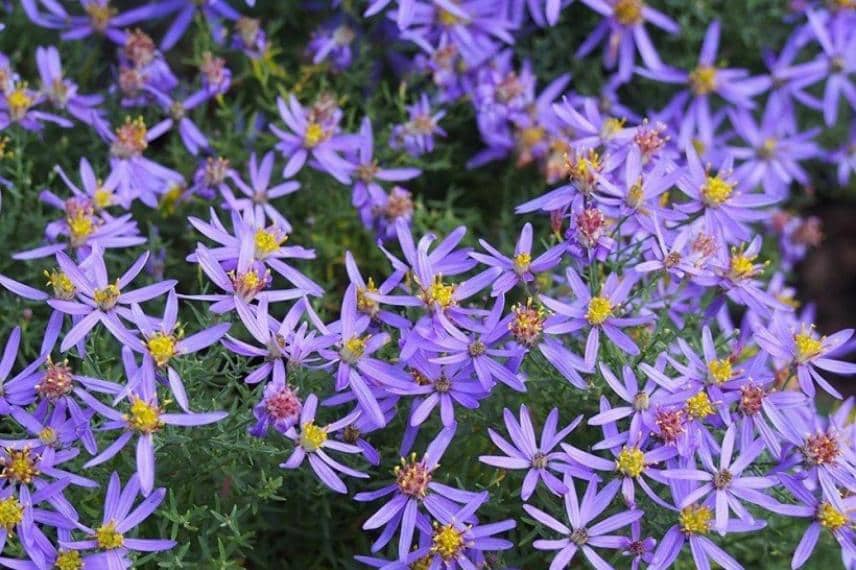
The Aster sedifolius ‘Nanus’
- Subscribe!
- Contents
Comments