
Aster novi-belgii Lady In Blue

Aster novi-belgii Lady In Blue

Aster novi-belgii Lady In Blue

Aster novi-belgii Lady In Blue

Aster novi-belgii Lady In Blue

Aster novi-belgii Lady In Blue

Aster novi-belgii Lady In Blue
View more pictures
Hide images

Anne-Céline M.
Aster novi-belgii Lady In Blue
Anne-Céline M. • 56 FR

Livia C.
Aster novi-belgii Lady In Blue
Livia C. • 91 FR
Aster novi-belgii Lady In Blue
Aster novi-belgii Lady In Blue
New York Aster, Michaelmas Daisy
Plant purchased and planted a bit late (end of June) but simply magnificent in flowering for a month. Fast delivery and well packaged.
Fée11, 28/09/2025
Back-to-school special offer!
Get €10 off for every €50 you spend! And get up to €40 off on a single order.
How does it work?
1. Shop your favourites
Add your favourite plants to your basket. For every €50 you spend (excluding delivery charges, store credit and the plastic-free option), you’ll receive a €10 voucher.
€50 spent = €10 voucher
€100 spent = €20 voucher
€150 spent = €30 voucher
€200 spent = €40 voucher
2. Place your order
Once your basket reaches one of the spending thresholds, place your order. You can even choose your delivery date!
3. Receive your voucher
As soon as your order has been shipped, you’ll receive an email containing your personal voucher code and its value.
4. Use it on your next order
Your voucher is valid for 90 days from the date you receive it. It can be used once only, on a new order worth at least the value of the voucher, excluding delivery charges.
Please note: Vouchers can be combined with other offers, but cannot be split or refunded.
Home or relay delivery (depending on size and destination)
Important: You may be charged customs duties by your country’s customs authorities upon delivery.
Schedule delivery date
and select date in basket
This plant carries a 12 months recovery warranty
More information
We guarantee the quality of our plants for a full growing cycle, and will replace at our expense any plant that fails to recover under normal climatic and planting conditions.

Would this plant suit my garden?
Set up your Plantfit profile →
Description
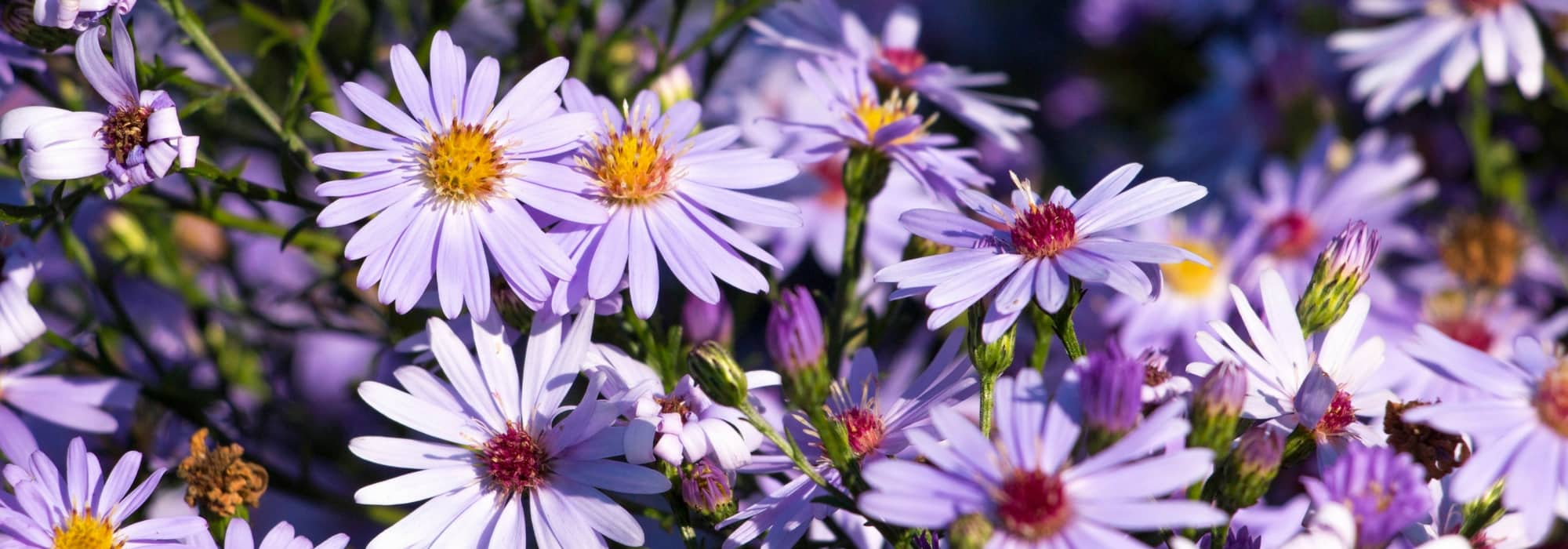
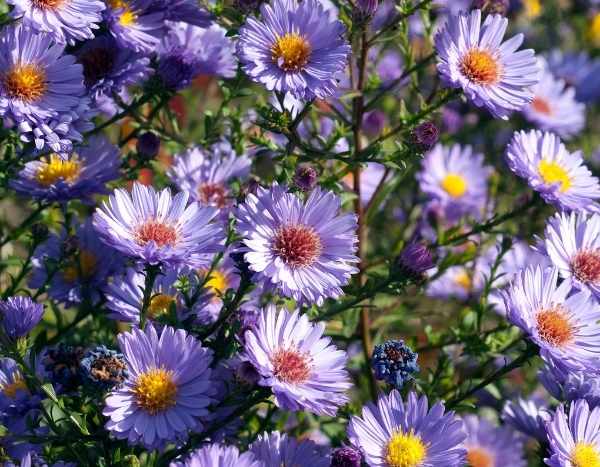
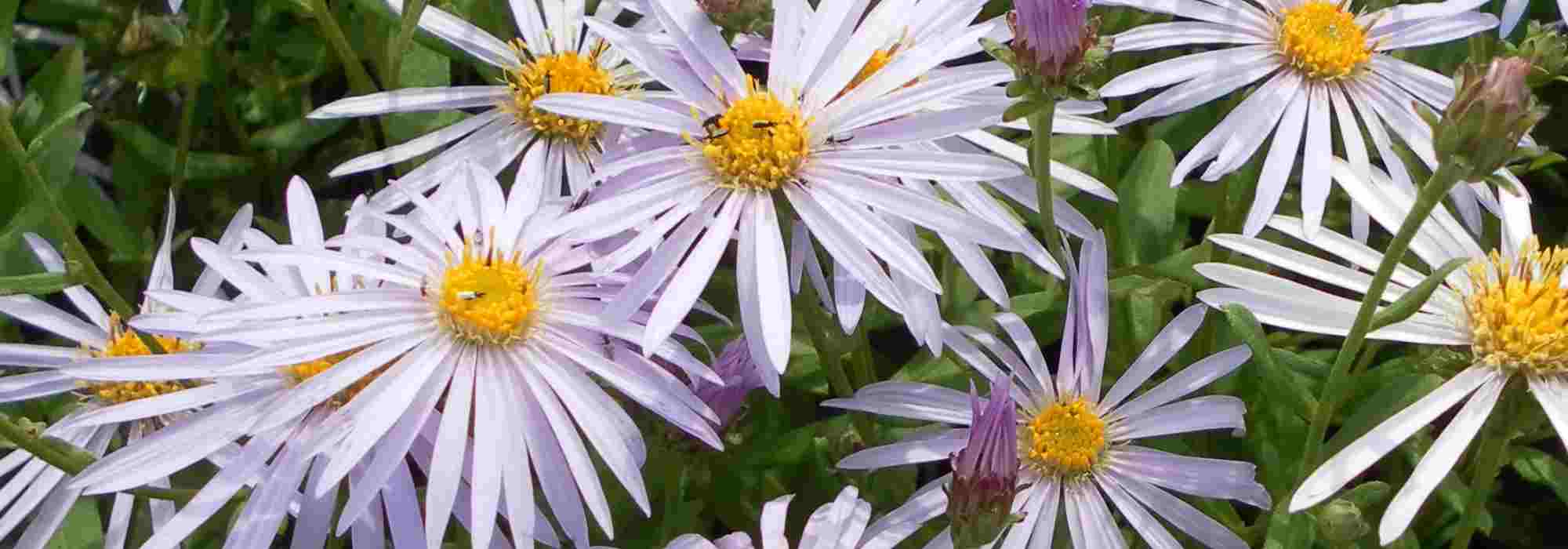
L’Aster dumosus ‘Lady in Blue’ est un aster nain d'automne qui se caractérise par son port bas, dense et arrondi et par sa floraison particulièrement généreuse en fin de saison. Cette vivace se couvre de petites marguerites semi-doubles bleu lavande à bleu violacé, éclairées par un cœur jaune. Naturellement compacte et d'aspect soigné, elle convient parfaitement aux bordures, aux premiers plans de massif et aux grandes potées. Cette variété qui tolère les embruns est adaptée aux jardins côtiers.
Cet aster appartient à la famille des Astéracées. Il s’agit d’une vivace herbacée : ses tiges et son feuillage sèchent avec l'arrivée du froid et sa souche produit de nouvelles pousses au printemps. Longtemps classé parmi les Aster dumosus, ce cultivar est aujourd’hui rattaché à l'espèce Symphyotrichum novi-belgii et porte le nom botanique de Symphyotrichum novi-belgii ‘Lady in Blue’. L’espèce est originaire de l’est du Canada et du nord-est des États-Unis, où elle pousse notamment dans des prairies humides, sur les berges et dans certains milieux littoraux. Cette variété 'Lady in Blue' a été sélectionnée en Grande-Bretagne par la pépinière Perry’s et introduite en 1955 par Carlile’s. Elle appartient à l’ancien groupe horticole des asters « dumosus », recherché pour ses formes plus basses et ramifiées. La plante développe au printemps de nombreuses tiges dressées qui se divisent progressivement pour former une touffe compacte, plus large que haute. À maturité, elle atteint 30 à 40 cm de hauteur pour 40 à 60 cm d’envergure. Les feuilles simples, lancéolées et vert foncé garnissent densément les tiges. De la fin de l’été au cœur de l’automne, et surtout en septembre et en octobre, apparaissent de nombreuses fleurs en capitules de 2 à 3 cm de diamètre. Plusieurs rangs de ligules ou "pétales" bleu lavande entourent un disque central jaune. Très rustique, cette vivace supporte jusqu'à -20°C dans une terre correctement drainée. Elle accepte des sols variés, notamment calcaires, mais fleurit davantage dans une terre fertile qui conserve de la fraîcheur en été. 'Lady in Blue' s’est montré peu sensible à l’oïdium dans des essais comparatifs.
En bordure d’un massif ou le long d’une allée, cet aster ‘Lady in Blue’ accompagnera d’autres vivaces basses, par exemple l'Aster dumosus ‘Jenny’, ‘Kristina’, l’Aster ericoides ‘Snow Flurry’ et la Campanula carpatica ‘Clips bleue’. Le rose, le blanc et le bleu s’associent facilement, sur des plantes compactes qui composent une bordure fleurie de l'été à l'automne. Vous pouvez aussi planter des géraniums vivaces couvre-sol en alternance avec des touffes d'asters nains.
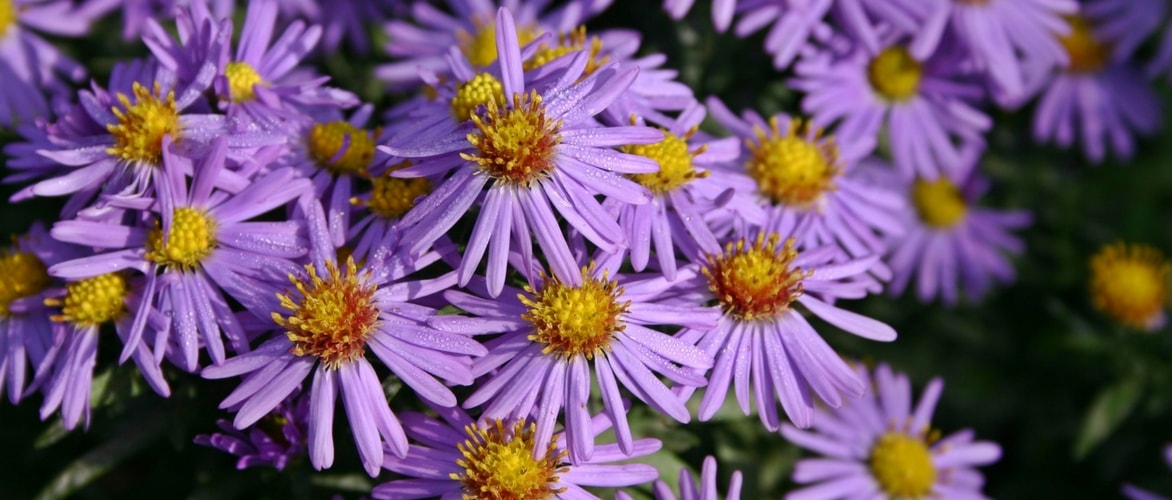
Aster novi-belgii Lady In Blue in pictures


Flowering
Foliage
Plant habit
Botanical data
Aster
novi-belgii
Lady In Blue
Asteraceae
New York Aster, Michaelmas Daisy
Aster dumosus ‘Lady in Blue’, Symphyotrichum novi-belgii ‘Lady in Blue’
Cultivar or hybrid
Planting and care
Aster ‘Lady in Blue’ is planted from February to April or from September to November, in full sun for more generous flowering, or in light partial shade. Loosen the soil deeply and incorporate mature compost if it is poor; in compact clay that is wet in winter, improve drainage by incorporating potting compost and gravel into your soil. Space the young plants 35 to 45 cm apart. Water regularly at the base of the plant during the first season so that the stump roots well. A few waterings during summer droughts are necessary. Avoid regularly wetting the leaves. No staking is necessary. Divide the clumps in spring every three or four years. In a pot, choose a container at least 30 cm across, with good drainage holes in the base, filled with a fertile, free-draining growing medium; watering should be regular in summer.
Planting period
Intended location
Care
Planting & care advice
-
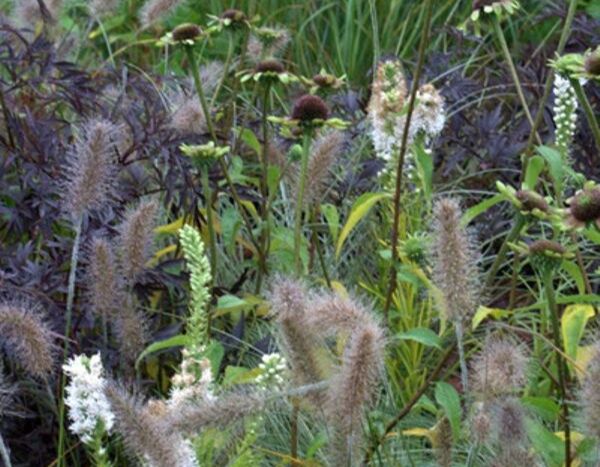
-
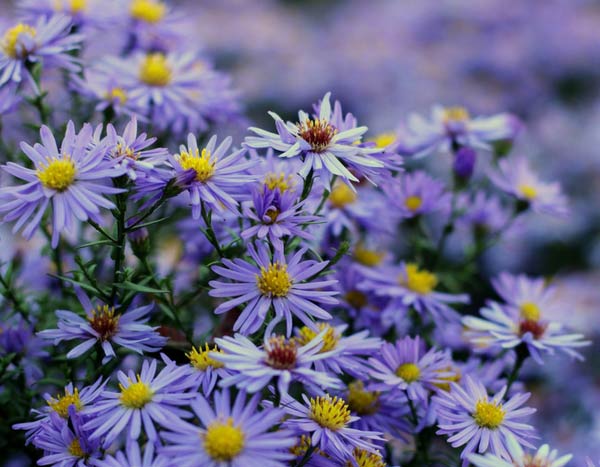
-
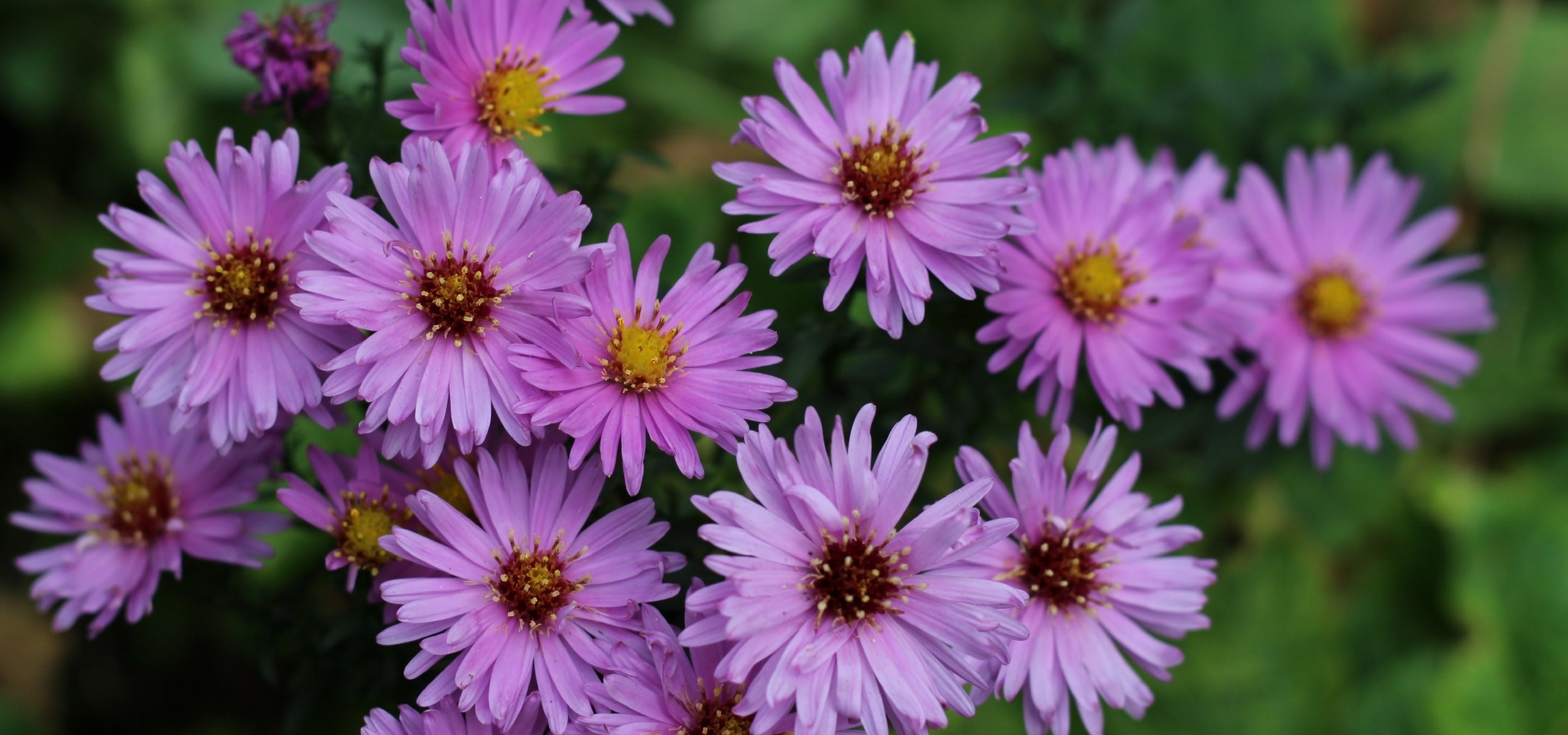
-
-
-

-
-

-
, onOrder confirmed
Reply from on Promesse de fleurs
Recently viewed products
Haven't found what you were looking for?
Hardiness is the lowest winter temperature a plant can endure without suffering serious damage or even dying. However, hardiness is affected by location (a sheltered area, such as a patio), protection (winter cover) and soil type (hardiness is improved by well-drained soil).

The flowering period indicated on our website applies to countries and regions located in USDA zone 8 (France, the United Kingdom, Ireland, the Netherlands, etc.)
It will vary according to where you live:- In zones 9 to 10 (Italy, Spain, Greece, etc.), flowering will occur about 2 to 4 weeks earlier.
- In zones 6 to 7 (Germany, Poland, Slovenia, and lower mountainous regions), flowering will be delayed by 2 to 3 weeks.
- In zone 5 (Central Europe, Scandinavia), blooming will be delayed by 3 to 5 weeks.
In temperate climates, pruning of spring-flowering shrubs (forsythia, spireas, etc.) should be done just after flowering.
Pruning of summer-flowering shrubs (Indian Lilac, Perovskia, etc.) can be done in winter or spring.
In cold regions as well as with frost-sensitive plants, avoid pruning too early when severe frosts may still occur.
The planting period indicated on our website applies to countries and regions located in USDA zone 8 (France, United Kingdom, Ireland, Netherlands).
It will vary according to where you live:
- In Mediterranean zones (Marseille, Madrid, Milan, etc.), autumn and winter are the best planting periods.
- In continental zones (Strasbourg, Munich, Vienna, etc.), delay planting by 2 to 3 weeks in spring and bring it forward by 2 to 4 weeks in autumn.
- In mountainous regions (the Alps, Pyrenees, Carpathians, etc.), it is best to plant in late spring (May-June) or late summer (August-September).
The harvesting period indicated on our website applies to countries and regions in USDA zone 8 (France, England, Ireland, the Netherlands).
In colder areas (Scandinavia, Poland, Austria...) fruit and vegetable harvests are likely to be delayed by 3-4 weeks.
In warmer areas (Italy, Spain, Greece, etc.), harvesting will probably take place earlier, depending on weather conditions.
The sowing periods indicated on our website apply to countries and regions within USDA Zone 8 (France, UK, Ireland, Netherlands).
In colder areas (Scandinavia, Poland, Austria...), delay any outdoor sowing by 3-4 weeks, or sow under glass.
In warmer climes (Italy, Spain, Greece, etc.), bring outdoor sowing forward by a few weeks.
Shipping country and language
Your country of residence may be:
Your country of residence is:
For a better user experience on our website, you can select:
Your shipping country:
-
 Austria
-
 Belgium
-
 Bosnia & Herzegovina
-
 Bulgaria
-
 Croatia
-
 Cyprus
-
 Czechia
-
 Denmark
-
 Estonia
-
 Finland
-
 France
-
 Germany
-
 Greece
-
 Hungary
-
 Iceland
-
 Ireland
-
 Italy
-
 Latvia
-
 Liechtenstein
-
 Lithuania
-
 Luxembourg
-
 Malta
-
 Netherlands
-
 Poland
-
 Portugal
-
 Romania
-
 Serbia
-
 Slovakia
-
 Slovenia
-
 Spain
-
 Sweden
-
 Switzerland
Language:
-
French
-
 English
-
Spanish
-
Italian
-
German
-
Portuguese
-
Dutch
-
Finnish
My Account
Hello
My wish lists
My cart
Log in / Register
Existing customer?
This form is protected by reCAPTCHA - the Google Privacy Policy and Terms of Service apply.
New customer?
Create an account to track your orders, access our customer service and, if you wish, make the most of our upcoming offers.