





























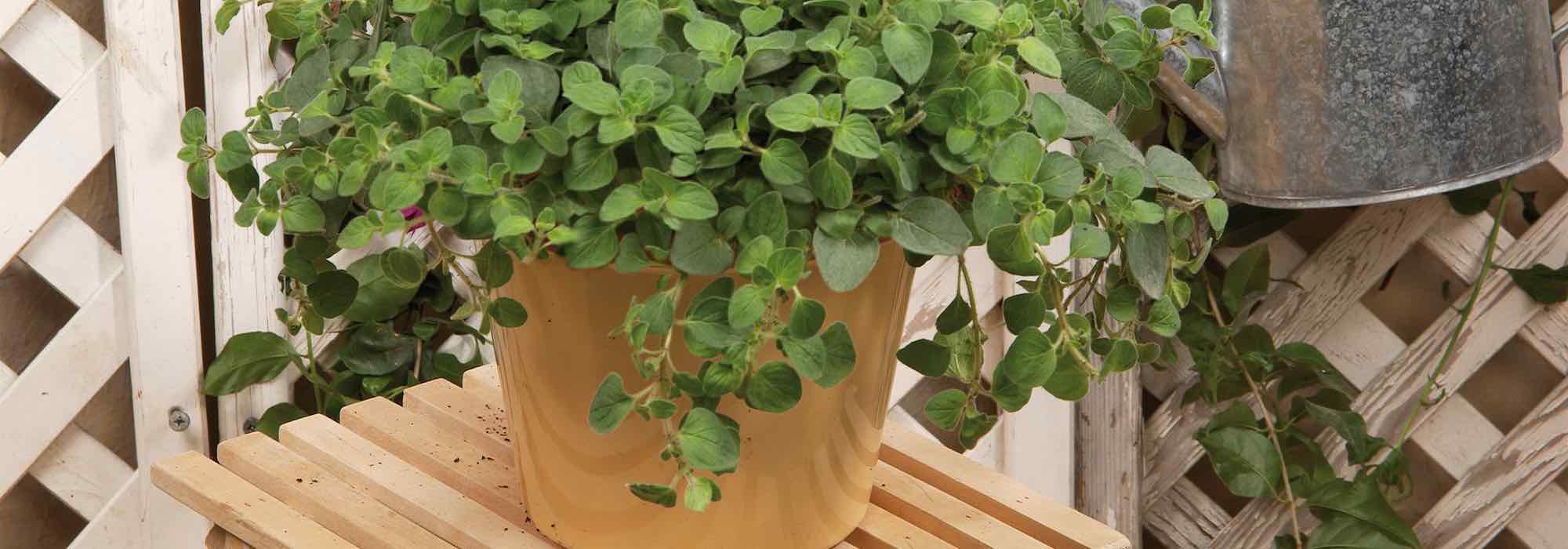
Growing oregano in pots
A plant with multiple benefits that is easy to grow!
Contents
Also known as “perennial marjoram” or Origanum vulgare, oregano is a hardy perennial aromatic plant that is very robust and generally easy to grow.
Its leaves, renowned for their fine and subtle aromas, are widely used in Italian recipes, but you can also use them more generally to enhance all sorts of dishes, combined with other herbs to play on contrasts. Short on space and lacking options to grow your own specimens? Oregano is the perfect choice for you! It is a plant that particularly enjoys being placed in a pot, making it easy to grow even on a small balcony or indoors.
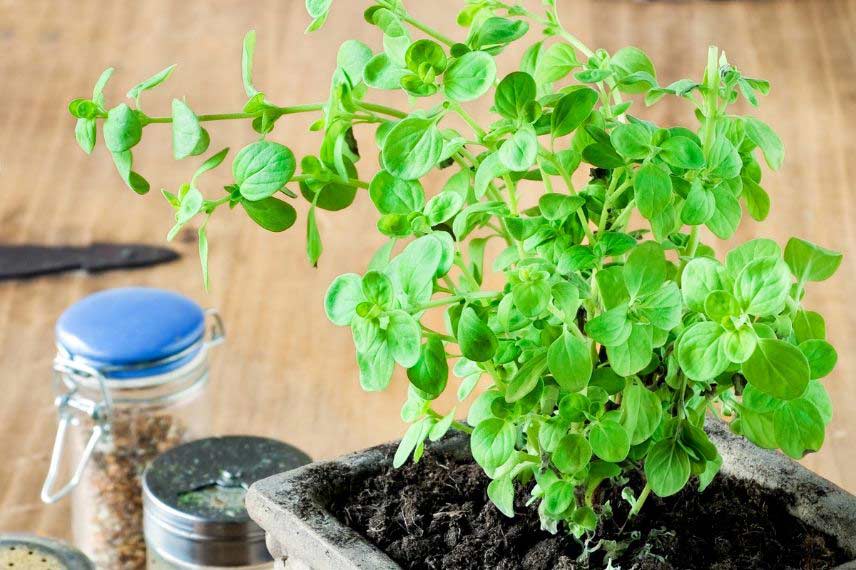

When and where to grow oregano in pots?
Oregano can be found naturally all over France, particularly at the edges of paths and in slightly dry areas. However, you can easily have your own plants: it is suitable for pot cultivation, making it accessible to many… provided you know and apply the right practices!
Oregano needs warmth and sunlight to thrive. With this in mind, you can place it on the balcony during summer so it can fully enjoy the outdoors. Always ensure to protect it from the wind, especially in late spring and early autumn. But if you don’t have a balcony or terrace, there’s nothing stopping you from keeping oregano indoors all year round. Just make sure to place it in a very bright room, ideally on the sill of a well-exposed window.
Theoretically, you can plant oregano in pots at any time of the year. It is a very hardy plant capable of withstanding temperatures as low as -15°C! Nevertheless, if the pots are outside, avoid planting them when frost is expected. The best time to plant oregano is around September, between the end of summer and the beginning of autumn, or in spring. Sowing should be done under cover from April to June.
What type of pot for planting oregano?
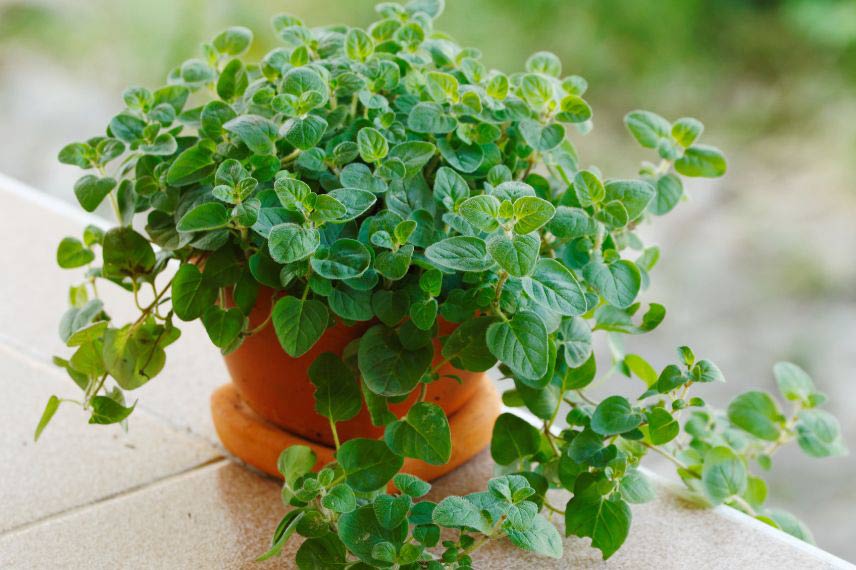
Ideally, it is recommended to choose terracotta pots for planting herbs such as oregano. You can aim for a minimum diameter of 15 cm, and up to about 30 cm at most. Since oregano needs well-drained soil to thrive, prefer, whenever possible, pots with drainage holes.
Discover other Oregano Marjoram
View all →
Available in 1 sizes

Available in 2 sizes
Available in 1 sizes
Available in 1 sizes
Available in 1 sizes
Available in 1 sizes
Available in 1 sizes
Available in 2 sizes
Available in 1 sizes
Available in 1 sizes
What compost to use for pot-grown oregano?
You will need a mix of good garden soil (2/3) and coarse sand (1/3) to fill the pots that will host the oregano. Of course, you can also opt for a compost specially suited for aromatic plants. The presence of an organic fertiliser in its composition allows the plant to have more readily available nutrients, knowing that these composts can be compatible with Organic Agriculture and promote good water retention.
Whether grown in pots or in the ground, this plant is not demanding, so it is advisable to avoid using fertilisers afterwards. Furthermore, it is essential to ban the addition of nitrogenous fertilisers, as they can make your leaves less potent in flavour and even weaken them against certain diseases.
To ensure that moisture is easily drained from the soil, you should start by placing a layer of gravel at the bottom of the pot. If you do not have gravel available, you can use other draining alternatives such as clay balls, for example.
How to plant oregano?
If you are planting directly from young plants of oregano:
- Moisten the root ball of the plant by immersing it in water while you prepare your pot.
- Use a pot with drainage holes at the bottom.
- Fill the bottom of the pot with clay balls.
- Add your potting soil or your homemade substrate up to 2/3 of the pot.
- Position the root ball of the oregano in the pot.
- Ensure that the root ball is slightly sunk, just below the level of the pot.
- Fill in with your potting soil or mixture.
- Lightly compact to ensure the pot is filled with substrate in a homogeneous manner.
- Water generously and check that no air pockets have formed; if so, fill in with substrate.
Repotting
Repot your oregano every 2 to 3 years to refresh the soil and give the plant more space to grow.
How to sow oregano?
If you prefer to carry out your sowing:
- Fill a growing tray or pots with a mix of potting compost for aromatic plants and special sowing compost.
- Sprinkle the oregano seeds over the surface of the soil, ensuring they are spaced adequately.
- Lightly cover them with a bit of fine compost.
- Water the substrate to thoroughly moisten the soil and help the seeds germinate. Continue to water regularly to keep the soil moist.
- Oregano needs plenty of light to grow properly: place your pot in a bright environment, but out of direct sunlight.
- As soon as the oregano plants appear, continue to water them regularly and expose them to light. Avoid letting them dry out between waterings.
- When the oregano plants have grown sufficiently, you can transplant them into one or more larger pots to allow them to develop. Be careful not to damage the roots when moving the plants.
Caring for potted oregano is child's play!
If you don’t necessarily have a green thumb, it certainly won’t stop you from having your own oregano plants at home, and for good reason: this plant requires very little maintenance, it will grow and develop without your intervention, much to your delight…
Watering Oregano: Best Practices
When it comes to tips for caring for oregano, one of the main challenges lies in watering. Throughout the summer, your oregano should be watered regularly, and even daily during very hot weather. In winter, if your pots are outside, you should space out the waterings and plan them during drier periods, when it hasn’t rained for some time.
How can you tell when it’s time to water your oregano? Very simply, you should see a layer of dry soil on the surface, about 2 to 3 cm deep. This means that a new supply of water is needed. Finally, to prevent the roots from rotting, always check that the water in the saucers isn’t prone to stagnation.
Mulching is not obligatory for a potted plant indoors, as long as it is well protected from the cold. However, a small organic mulch can be placed at the base of the oregano if the pot remains on the balcony throughout the winter.
Pruning Oregano
- Remove any dead or dry leaves from the top of the plant.
- Cut back excess stems: if some stems are longer than others, trim them to maintain a uniform shape and encourage the growth of new stems.
- Regularly pinch the stems to encourage denser and more abundant growth. This will also help maintain the shape and size of the plant.
- If the plant is very dense, thin out the internal stems to allow air circulation and prevent mould formation.
In general, pruning oregano in pots every 4 to 6 weeks is sufficient to maintain good growth. Always ensure you use clean and sharp scissors or pruning shears.
Harvesting oregano
You can simply pick the leaves as you go, depending on your cooking needs at the time. It is recommended to harvest in the morning to enjoy a greater aromatic potency. Just cut the stems cleanly, then use them directly or dry them. Fresh, they can be stored for a few days in the vegetable drawer of the refrigerator.
Protection against parasites
Finally, note that oregano is not susceptible to diseases that affect certain plants. However, it can be destroyed by one particular pest: the red spider mite. Check the leaves from time to time, knowing that these are small insects of various colours (red, yellow, or green). To avoid this type of infestation, good watering is always helpful, as is nettle manure. There are also natural treatments based on rosemary essential oil, liquid black soap, and rapeseed oil.
- Subscribe!
- Contents
![[pot1="Origan"] in a pot](https://en.promessedefleurs.eu/blogwp/wp-content/uploads/2023/02/Cultiver-lorigan-en-pot.jpg "[plant id=\"1234\" image=\"true\" title=\"Cultiver l’origan en pot\" difficulty=\"Facile\"]
Pour cultiver de l’[plant id=\"1234\"], également connu sous le nom d’origan, en pot, suivez ces étapes simples :
1. **Choisir le bon pot** : Optez pour un pot profond d’environ 20 cm de diamètre avec des trous de drainage au fond.
2. **Préparer le substrat** : Utilisez un mélange de terreau et de sable pour assurer un bon drainage.
3. **Planter les graines ou les plants** : Semez les graines à la surface du substrat ou plantez des plants déjà établis.
4. **Exposition au soleil** : Placez le pot dans un endroit ensoleillé, l’[plant id=\"1234\"] a besoin de beaucoup de lumière.
5. **Arrosage régulier** : Arrosez régulièrement pour maintenir le substrat légèrement humide, mais pas détrempé.
6. **Fertilisation** : Apportez un engrais équilibré une fois par mois pour favoriser la croissance.
7. **Récolte** : Vous pouvez commencer à récolter les feuilles d’[plant id=\"1234\"] environ 2 mois après la plantation.
En suivant ces conseils, vous pourrez profiter d’un délicieux [plant id=\"1234\"] frais tout au long de la saison de croissance.")
Comments