




























Homemade Jam: The Most Popular Fruits
For classic yet indulgent jams
Contents
What could be more indulgent than homemade jam to perfectly accompany breakfasts and snacks? A delight on brioche, bread, or even a pancake! Strawberries, raspberries, apricots, blackberries, figs are among the most popular fruits to satisfy our jam cravings. To make tasty jams, it’s best to choose seasonal fruits and pick them when fully ripe. If your orchard is overflowing with harvests, this should be easy; otherwise, discover the most popular fruits and our collection of fruit trees specially dedicated to these recipes. Moreover, there are varieties that are very easy to grow in the garden, perfect for delighting both young and old food lovers!

Apricots
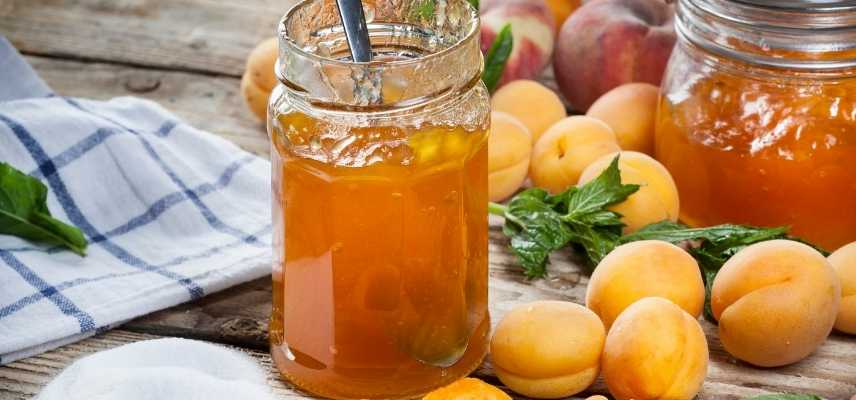
Apricots top the list of favourite fruits for making jams! These fruits, with their velvety skin, contain a sweet, highly fragrant, slightly tangy flesh. Naturally rich in pectin, their flesh thickens without the need for added gelling agents. Once cooked, the firm-fleshed fruits yield a beautiful orange jam with a very dense consistency. The harvest of apricots spans from late May to early September, depending on the regions and varieties, when the fruits are well-golden and tender to the touch. For jams, opt for less sweet varieties. Very hardy down to -20-25°C, the apricot tree can acclimatise anywhere in France, provided you choose the right variety. Most apricot tree varieties are self-fertile. Among the best for making jams are:
- Bergeron apricot tree: its semi-late flowering makes this cold-resistant variety well-suited to the coldest regions. It produces large, highly fragrant fruits.
- ‘Canino’ apricot tree: very productive, it yields large, sweet fruits. This variety is better suited to the south of France.
- Polonais apricot tree: highly resistant to cold and diseases, it produces delicious, juicy fruits.
- ‘Nanum’ or ‘Nana’ apricot tree: a dwarf variety well-suited to small gardens and container growing.
Apricot trees thrive in sunny, sheltered spots with rich, light, cool, and well-drained soil.
→ Our tips for growing an apricot tree
Plums
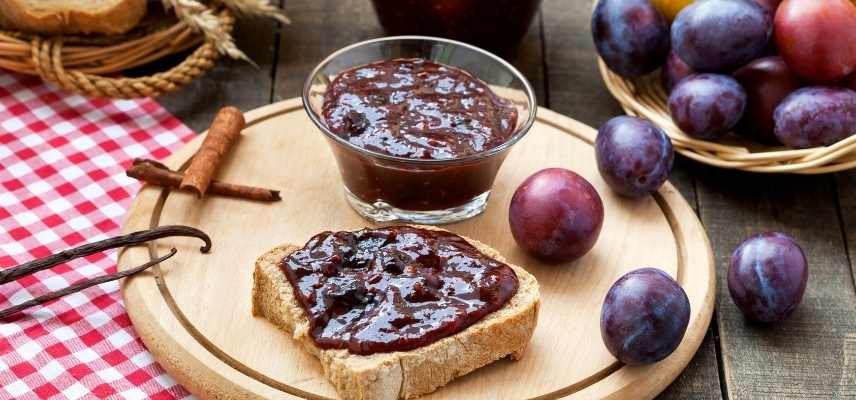
Nothing beats plums for a sweet jam with a delicious tangy aroma. The plum tree (Prunus Domestica) is one of the most common fruit trees in our gardens. Among the many varieties of plums, Reine-Claude, quetsches, and mirabelles are the most commonly used for making jams. Depending on the variety, plums, whether yellow, green, or red, are harvested between late June and mid-September. The fruits, ranging from 3 to 5.5 cm in diameter, contain flesh that is more or less juicy, highly fragrant with aromas of cinnamon, honey, or even peach. There are now dozens of varieties of plum trees, most of which are self-fertile, allowing for the harvest of sweet and fragrant fruits without the need to plant another tree nearby. Among the most interesting are:
- The Mirabelle de Nancy plum tree: very hardy, tolerant of chalky soil and self-fertile, it produces small, firm, and fragrant yellow fruits.
- The ‘Ruby’ Mirabelle plum tree: self-fertile, it yields large red mirabelles with peach-like aromas. Its upright habit is particularly suited to small gardens.
- The Reine Claude d’Oullins plum tree: vigorous, very fertile, and hardy, it produces sweet, fragrant yellow fruits perfect for jam.
- The ‘Stanley’ Quetsche plum tree: self-fertile, with a quick fruiting period, it rewards us with nearly black plums at ripeness, ideal for making jam.
With perfect hardiness, the plum tree can be planted anywhere in France. Not demanding, it thrives in sunny locations, in any type of rich, light, and deep soil, without too much lime.
- Discover our selection of the best varieties of plum trees
- Learn about the hybridization of the plum and apricot: the pluot!
- Our tips for growing a plum tree
Discover other Fruit trees
View all →
Available in 1 sizes
Available in 1 sizes
Available in 1 sizes
Available in 1 sizes
Available in 1 sizes
Available in 1 sizes
Available in 1 sizes
Available in 1 sizes
Available in 1 sizes
Available in 2 sizes
Strawberries
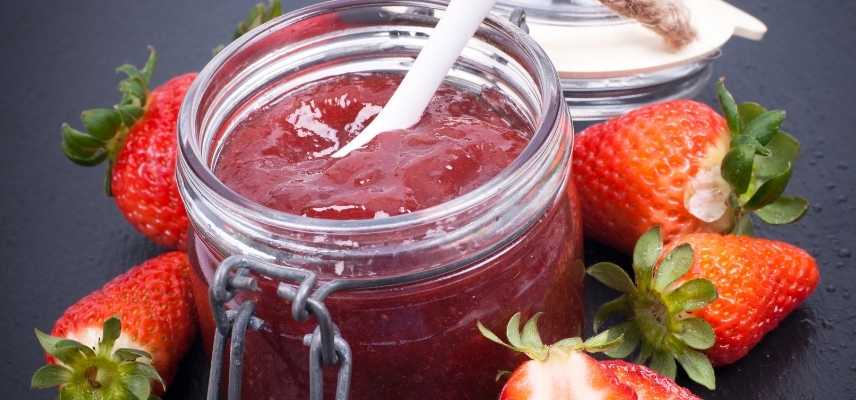
Strawberry is a classic for jam, certainly one of the favourites among the French! We love its highly fragrant, bright red fruits, with fine, fruity aromas and a slightly tangy flavour. Rich in vitamins A, C, and B9, it makes a delicious spreadable jam. Fortunately, strawberry is an easy plant to grow in the garden as well as in pots, on the terrace or balcony. The strawberry harvest period varies depending on the varieties of strawberry plants. We can extend production over several months thanks to repeat flowering varieties that allow for harvesting from May until the frosts. Among our repeat flowering varieties that produce large fruits:
- The Mara des Bois: a productive variety, providing highly fragrant fruits with the taste of wild strawberry.
- The Mariguette: an exceptional new variety that combines the fragrance of wild strawberry, early fruiting, and productivity.
- The Cirafine: a productive variety yielding sweet, fragrant, and juicy red fruits, reminiscent of the flavour of Mara des Bois.
Very hardy (-28°C), the strawberry plant thrives in any good garden soil, deep and humus-bearing.
→ Our tips for growing a strawberry plant and our homemade strawberry jam recipe!
Blackberries
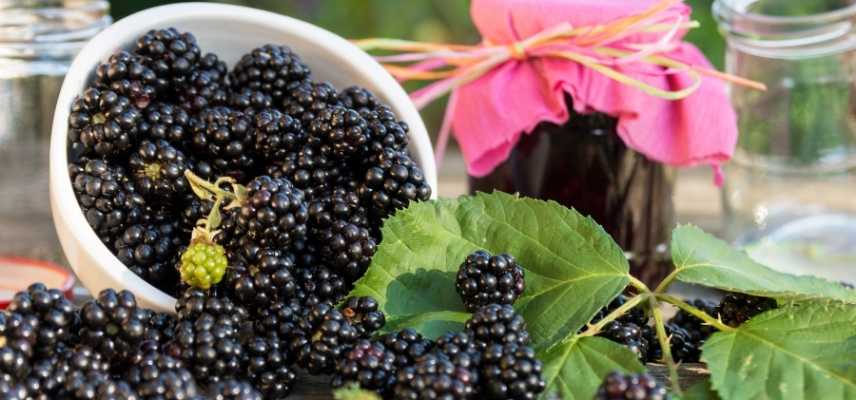
Blackberries are delicate little juicy fruits with a beautiful dark hue and a sweet taste with a slight touch of acidity that retains all its flavour qualities in jam. Once cooked, they yield a creamy jam. Most cultivated bramble varieties have few or no thorns and are very productive. The harvest extends from July to November depending on the cultivars. Here are our favourites:
- The ‘Little Black Prince’ Blackberry: a dwarf variety producing sweet-flavoured fruits that can be grown in a pot on a balcony or terrace.
- The ‘Triple Crown’ Thornless Organic Blackberry: produces large fruits with a sweet flavour. It is a self-fertile variety, disease-resistant, and moderately hardy down to -10° C.
- The ‘Asterina’ Blackberry: yet another thornless variety, and very productive, yielding large, highly fragrant black fruits.
- The ‘Black Satin’ Blackberry: very productive and thornless, it abundantly produces large, tasty, and juicy blackberries with a slight tang.
These blackberries are hardy, enjoy ordinary soil, and thrive in sunny or partially shaded locations.
→ Discover our blackberry jam recipe! and our tips for growing a blackberry bush.
Cherries
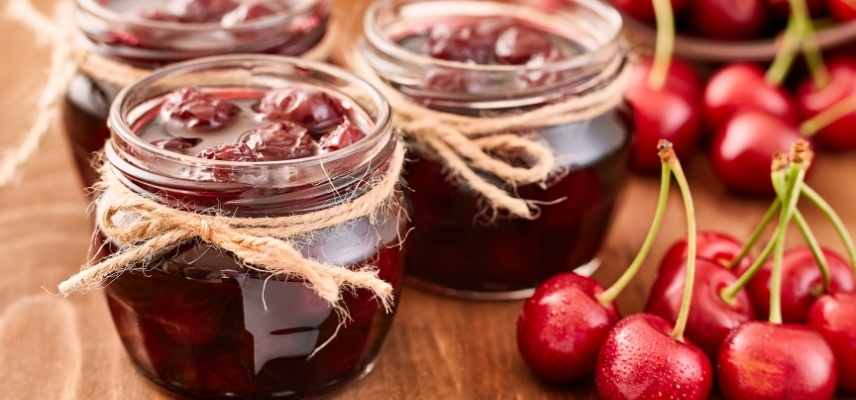
Very sweet cherries are excellent for jam. The cherry tree is one of the most common fruit trees in our gardens. It produces juicy and tasty fruits, ranging from 1 to 3 cm in diameter, from May to August, with varying sweetness depending on the species. However, we distinguish between bigarreaux (‘Burlat’, ‘Napoléon‘) and griottes (‘Montmorency’), which are more acidic cherries, ideal for jams. Their flesh is firm and crunchy, with a tangy flavour, perfect for delicious jams. A jam made with cherries kept almost whole will be a delight for fans of red fruits!
Most griottiers are self-fertile and do not require the presence of another variety of cherry tree nearby. While the cherry tree can grow to a height of 5 to 10 m at maturity, some dwarf varieties are well-suited for small gardens, such as the Dwarf Cherry ‘Garden Bing®’, which does not exceed 1.50 m in height at maturity. Ideal for making homemade jams even without a garden! On average, an adult cherry tree in a garden can produce between 20 and 50 kg of cherries.
Hardy, this fruit tree adapts to all our regions and requires almost no care to enjoy beautiful cherry harvests!
- Advice sheet: Cherry tree: the best varieties
- Our tips for growing a cherry tree and How to harvest and store cherries?
Raspberries
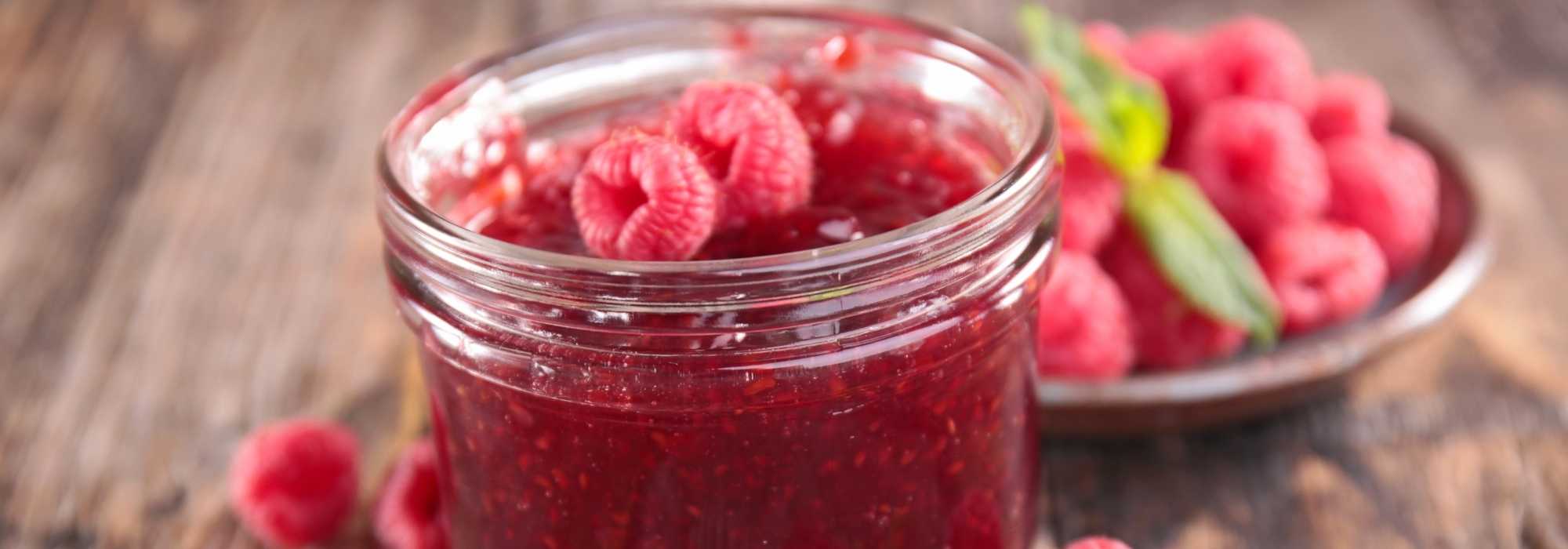
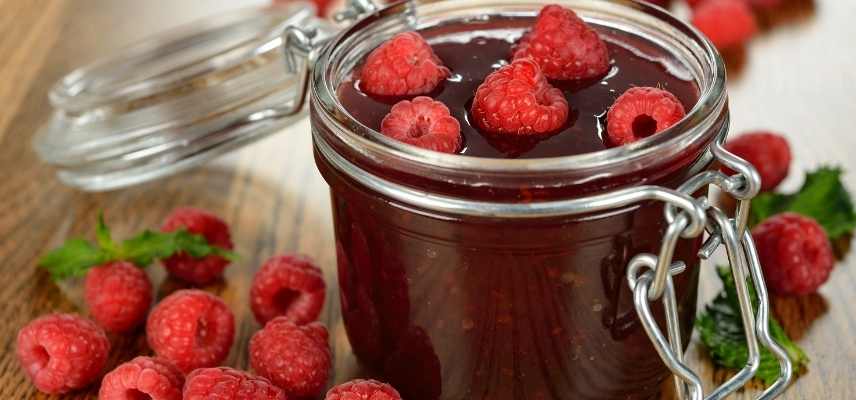
The raspberry ranks among the favourite fruits (almost as much as strawberries!) for making jams characterised by a slight acidity. With its small, round, firm, fleshy fruits of dark red colour, this fruit bush is a classic on the breakfast table. The purists will make a delicious seedless raspberry jam. These small berries, clustered together with a tangy and highly fragrant taste, are generally harvested from August to October in the year following planting. There are remontant varieties that produce from June to July, and then from August to October, and non-remontant varieties that have a single but more abundant harvest around June to July. Among our favourites:
- The ‘Autumn First’ raspberry: an early remontant variety that produces large fruits from the beginning of August.
- The ‘Malling Happy Bio’ raspberry: remontant, it produces enormous raspberries that are both sweet and highly aromatic.
- The ‘Belle de Malicorne® delgrosse’ raspberry: a remontant variety, very productive and with few thorns, producing very large fruits with sweet, melting flesh and fragrance.
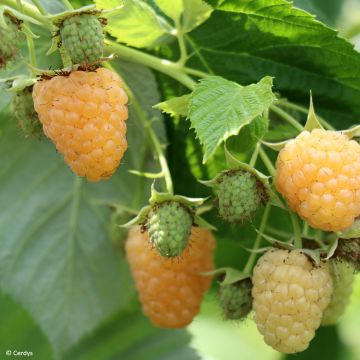
- The ‘Golden Everest’ raspberry: stands out with its large, yellow-orange fruits that are very fragrant and slightly tangy.
- The ‘Ruby Beauty’ raspberry: a dwarf variety, ideal for balconies and terraces. Each plant can produce around 1.5 kg of fruit!
Plant your raspberries in non-scorching sunlight in loose, humus-bearing, well-drained soil that remains cool during the summer.
→ Our tips for growing a raspberry bush
Figs
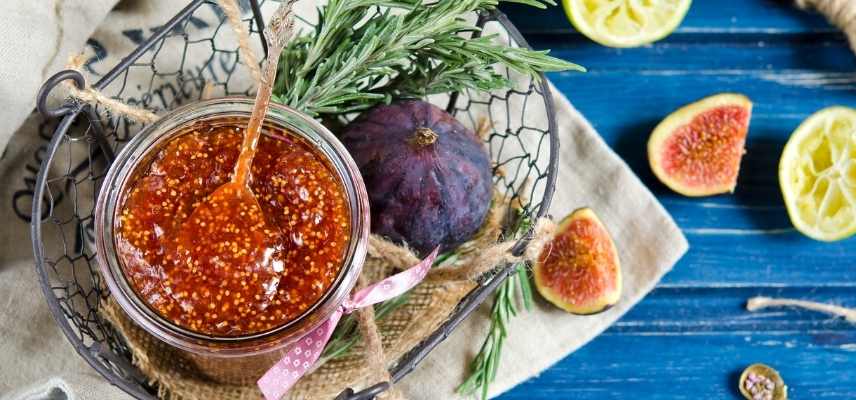
Whether green or purple, figs are distinguished by their tender, sweet, juicy, and aromatic flesh, speckled with tiny seeds. Fig jam has a slightly tangy taste and a delightful texture. There are two types of fig trees: uniferous varieties, producing a single harvest per year in early autumn, and biferous varieties, fruiting twice a year. In the north of the Loire, we recommend choosing a uniferous fig tree as spring frosts are likely to compromise the harvest. Figs reach ripeness in summer, from early July to mid-August, and/or in autumn until October, depending on the variety. Among the interesting varieties:
- The Dwarf Fig ‘Figality’: perfect for pot cultivation or small spaces. Self-fertile and hardy, it produces sweet and fragrant figs.
- The ‘Brown Turkey’ fig tree: very cold-resistant, self-fertile and biferous, it yields brown-red fruits with sweet and tasty flesh.
- The ‘Violette Dauphine’ fig tree: an early, self-fertile, and biferous variety. Very fertile and vigorous, it produces large, juicy, and sweet purple figs.
- The Dalmatian fig tree: very cold-resistant, this variety with green-yellow fruits is well-suited to wetter regions.
The fig tree is a hardy tree capable of acclimatising in most of our regions, provided you choose the right variety. It enjoys a sunny position sheltered from strong winds, especially in the colder regions.
→ For our tips on growing a fig tree and to make the right choice, feel free to consult our buying guide: “Fig Tree: How to Choose the Right Variety”
Blueberries
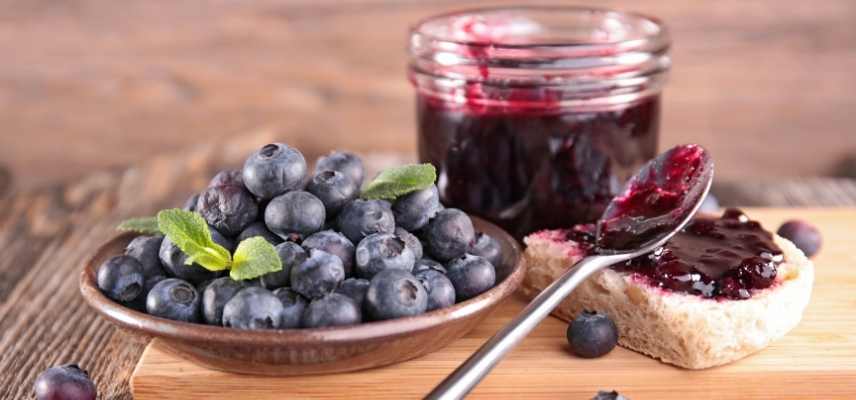
In our gardens, we grow the American blueberry bush, which produces an abundance of succulent little blue-black berries. Tart and fruity, blueberry jam instantly evokes a mountain walk! Very rich in vitamins A, B, and C, with powerful antioxidant properties and low in calories, blueberries are a super fruit perfect for making excellent jams reminiscent of yesteryear. The harvest spans from mid or late July to the end of August. Among our favourite varieties:
- The ‘Patriot Bio’ blueberry bush: hardy, resistant to cold and diseases, it offers very large, firm berries with a robust and pronounced flavour.
- The ‘Brigitta Blue’ blueberry bush: an excellent variety well suited for small gardens and container growing. It produces blueberries with a balanced tart flavour.
- The ‘Powder Blue’ blueberry bush: productive and particularly late, it yields delicious, sweet, and tangy berries.
The blueberry bush is a very hardy fruit bush that enjoys full sun in northern France and partial shade in the south. It grows quickly in acidic, light soils rich in humus.
→ Our tips for growing a blueberry bush
- Subscribe!
- Contents
![[title]Homemade Jam: Most Popular Fruits[/title]
[content]Discover our selection of the most popular fruits for making delicious homemade jam. Whether you prefer [param1="strawberries"], [param2="raspberries"], [param3="apricots"], or [param4="figs"], we have the perfect fruit for your jam-making adventures. Get ready to enjoy the sweet taste of summer all year round![/content]](https://en.promessedefleurs.eu/blogwp/wp-content/uploads/2022/10/confiture-maison-fruits-les-plus-populaires.jpg "[plantnet_search term=\"homemade jam most popular fruits\" lang=\"en\"]")
Comments