





























How to choose an Albizia?
Our buying guide to find the ideal variety
Contents
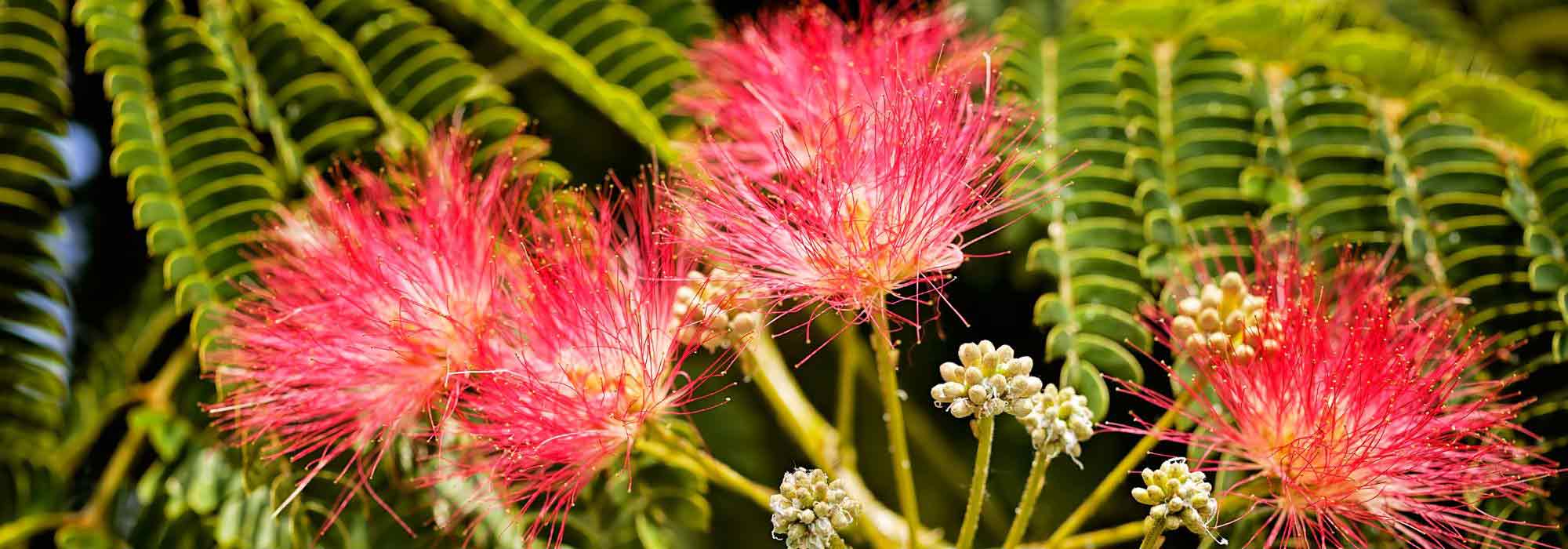
Also known as the “Silk Tree” or “Constantinople Mimosa”, Albizia is a small tree highly valued for its beautiful summer flowering, which takes the original form of small, feathery, colourful pom-poms. It naturally has a lovely umbrella-shaped silhouette that provides dappled shade, and it thrives in warm conditions: perfect for full sun in well-drained soil. Once established in the garden, Albizia is easy to grow and requires very little maintenance.
Some varieties of Albizia feature beautiful green leaves and pink flowers, while others display unusual purplish foliage rich in shades. How do you choose between the different varieties available? What criteria should you consider based on your preferences or planting constraints? Discover the characteristics and differences you can take into account when planting an Albizia in the garden or even in a pot.

According to the pruning
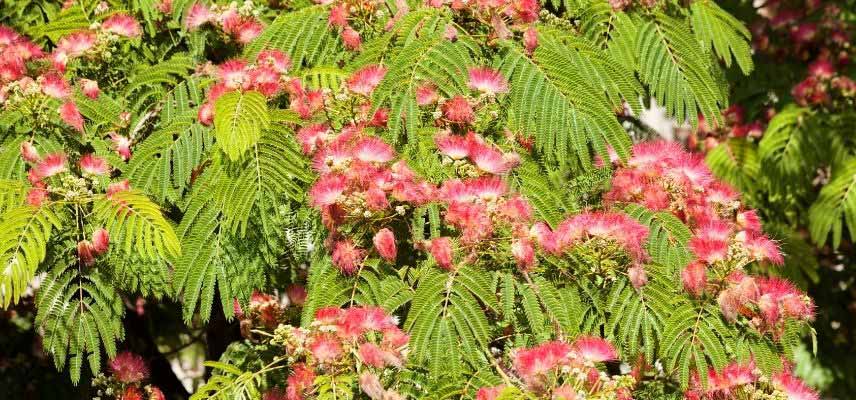
Albizia take the form of small trees that naturally develop an umbrella-like silhouette. The height at ripeness is an important criterion to consider for the future placement of a Silk Tree in your garden.
The smallest varieties: up to 4.5 m tall
Small Albizia are suitable for planting in small spaces, such as a city garden, a courtyard, or in large pots or containers:
- Albizia julibrissin ‘Shidare’: of modest size, it can reach 3.5 m in height with a spread of 2.5 m within about ten years, with a fairly slow growth rate. It stands out for its weeping habit, with its fine, light, and finely cut foliage that gently cascades down.
- Albizia julibrissin ‘Evey’s Pride’: its finely cut deciduous foliage takes on extraordinary colours, light green tinged with bronze darkening to chocolate purple under the summer sun. It can reach 4 m in height with a spread of 3.5 m.
- Albizia julibrissin ‘Summer Chocolate’: its light and very finely cut foliage turns dark chocolate purple in summer. It usually reaches 4 to 5 m in height and displays a crown habit with a spread equivalent to its height.
The medium varieties: 5 to 6 m tall
- The Albizia julibrissin ‘Ombrella’, ‘Tropical Dream’, ‘Chocolate Fountain‘ and ‘Evi’s Purple‘: these varieties will reach about 5 m in height with a spreading habit of great elegance.
- Albizia julibrissin ‘Rosea’ can reach 6 m in height with a spread of 4 m.
- The Albizia lophantha generally reaches 5 m in height with a similar width.
The largest varieties: up to 8 m
These larger specimens should be planted in isolation or at the back of borders:
- Albizia julibrissin ‘Rouge Selection’: if the growing conditions suit it, it can reach 7 m in height with a spread of 5 m.
- Albizia julibrissin ‘Rouge de Tuilière’ can reach 7-8 m in height with nearly the same spread.
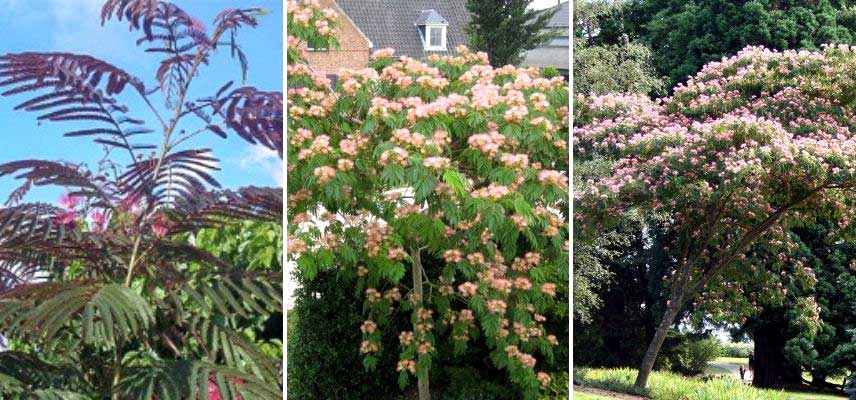 Albizia julibrissin ‘Evey’s Pride’, ‘Tropical Dream’ and ‘Rosea’
Read also
Albizia: planting, pruning and careAccording to the colour of the flowers
The Albizia blooms in mid-summer, from mid-June to early July, and continues until August-September. It offers an original flowering, in plumes or pom-poms, gathered in terminal clusters. The flowers have very short sepals and petals, and it is the long and numerous stamens that are impressive. They measure between two and four centimetres in length, giving a very soft appearance, which earns the plant its nickname, Silk Tree. Depending on the species, they are white at the base and pink to varying degrees at the tip, and can even be red.
The Albizias with pink flowers:
Soft, powdery colours to pair in the garden with mauve tones, pale pinks, and greyish foliage, up to bright pink for bolder contrasts:
- Albizia julibrissin ‘Summer Chocolate’: with pale pink flowers and a white base
- The Albizias julibrissin ‘Rosea’, ‘Tropical Dream’, ‘Chocolate Fountain’, and ‘Shidare’ are varieties with slightly deeper pink flowers
- The Albizias julibrissin Evey’s Pride, ‘Ombrella’, ‘Rouge Selection’, and ‘Evi’s Purple’ feature dark pink flowers
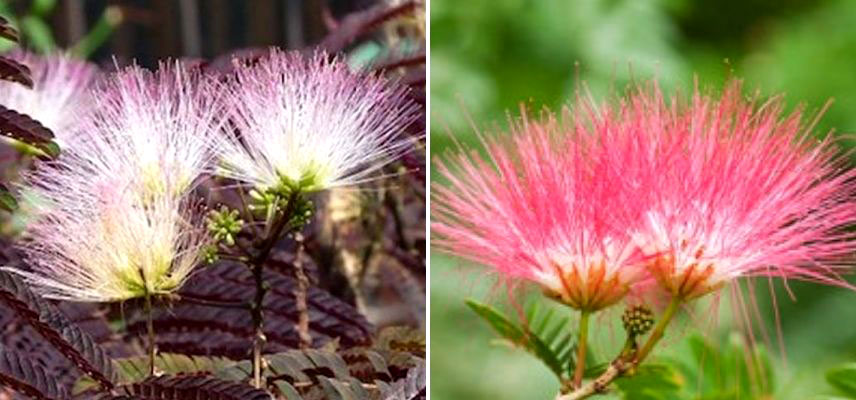
Albizia julibrissin ‘Summer Chocolate’, Albizia julibrissin ‘Evi’s Purple’
The Albizias with red flowers:
For those who appreciate strong colours in the garden, some Silk Trees are quite suitable. Their vibrant flowering highlights these subjects with lush green foliage. The flowers of the Albizia julibrissin ‘Rouge de Tuilière’ are a bright, luminous red.
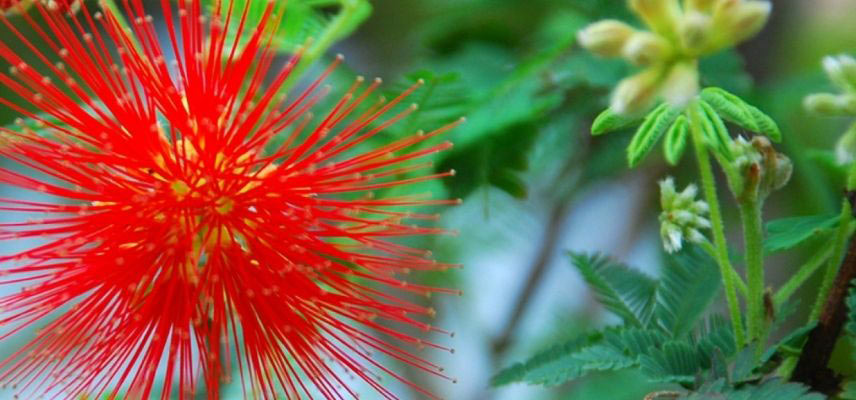
Albizia julibrissin ‘Rouge de Tuilière’
The Albizias with white or yellow flowers:
Depending on the different species and varieties, the flowers can also be entirely white, as in Albizia julibrissin ‘Alba’, or cream white as in Albizia amara. In the case of Albizia lophantha, they take on a “bottlebrush” shape and are yellow. This Albizia has the unique feature of winter flowering (from December to March).
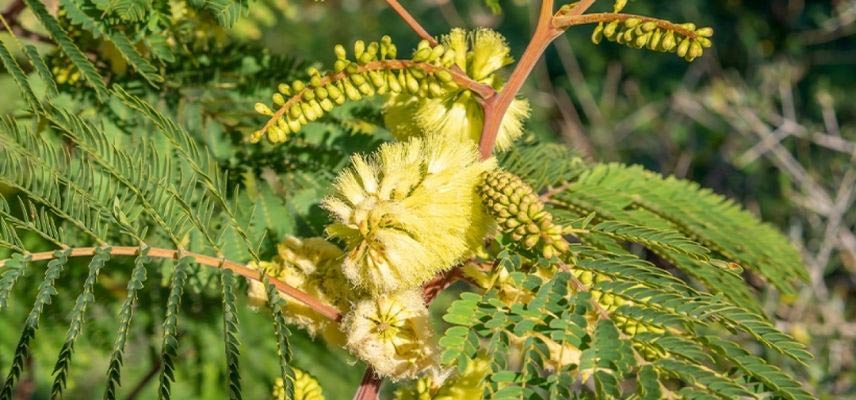 Albizia lophantha
Discover other Mediterranean shrubs
View all →
Available in 1 sizes
Available in 1 sizes
Available in 0 sizes

Available in 2 sizes
Available in 2 sizes
Available in 1 sizes
Available in 1 sizes
Available in 1 sizes

Available in 1 sizes
Available in 1 sizes
According to the colour of the foliage
The foliage of Albizia can be light green or adorned with deep, dark, and original colours. An important criterion for it to blend beautifully with the other plants in your borders!
Green Albizias
- The Albizias julibrissin ‘Ombrella’, ‘Rosea’, ‘Tropical Dream’, ‘Rouge de Tuilière’, ‘Rouge Selection’, and ‘Shidare’ have deciduous leaves that are quite light green. They are very large, measuring 15 to 40 cm long, and are divided into numerous leaflets.
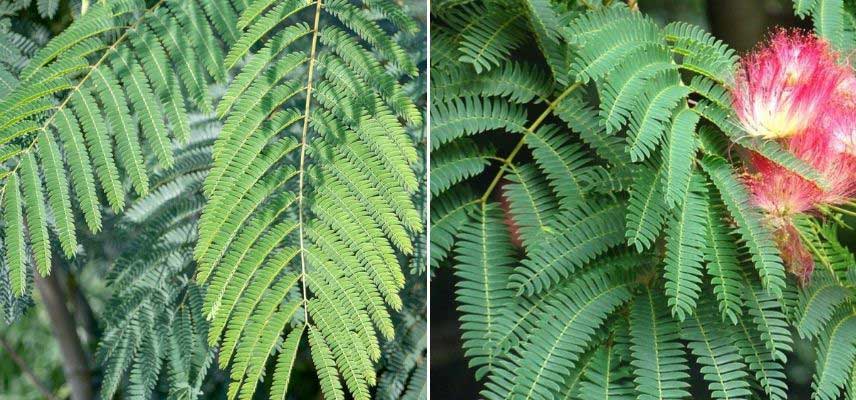 Albizia julibrissin ‘Shidare’ and ‘Rouge Selection’
Purple Albizias
- The varieties Evey’s Pride, ‘Summer Chocolate’, ‘Chocolate Fountain’, and ‘Evi’s Purple’, with their evocative names, display foliage that is initially bronze, then dark purple in summer.
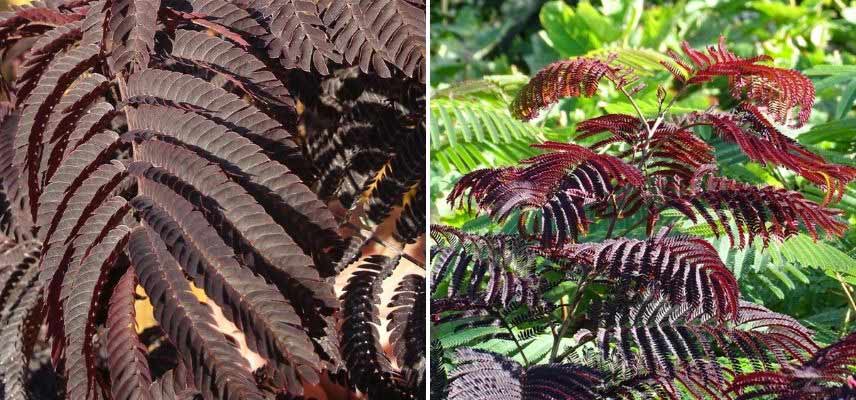 Albizia julibrissin ‘Evey’s Pride’, Albizia julibrissin ‘Summer Chocolate’
Read also
Albizia: when and how to prune?According to hardiness
Albizia is a tree that enjoys sun and warmth, thriving in well-drained, sandy soil. It is best grown in a mild climate. During the first few years, it is relatively sensitive to cold, but once mature, depending on the varieties, it can withstand temperatures between –5 and –15 °C.
Albizias that withstand down to -5 °C
These varieties can tolerate down to -5 °C, and even -7 °C for short periods, before a welcome warming. They therefore appreciate warmth and full sun. In colder regions, they should be grown in pots and wintered indoors:
- Albizia lophanta (Paraserianthes lophantha) is not as hardy as Albizia julibrissin, which is widespread in much of France. This rarity only withstands a few degrees below zero, and even then, not for extended periods. It should therefore be planted in the ground only on the Côte d’Azur or the mildest areas of the Atlantic coast, preferably in spring to allow it time to root before the following winter. Choose a sheltered spot from cold winter winds, in partial shade as well as in full sun. A neutral soil is suitable, but it is relatively tolerant of soil types, provided it is light and well-drained to avoid excess water in winter. Once established, it proves to be quite drought-resistant.
Albizias that withstand down to -10 °C
- Somewhat hardier, the varieties ‘Summer Chocolate’ and ‘Ombrella’ can withstand down to -10 °C, and exceptionally down to -12 °C.
Albizias that withstand down to -15 °C
- Most other Albizias can tolerate cold down to -15 °C. They also show good resistance to heat and drought.
According to the flowering period
Albizias have a summer flowering period, in July-August.
- ‘Evey’s Pride’, ‘Tropical Dream’, ‘Chocolate Fountain‘, ‘Rouge de Tuilière’ and ‘Rouge Selection’ bloom a little longer, until September.
- The Albizia lophantha has a different flowering, yellow, with inflorescences shaped like bottle brushes reminiscent of those of Callistemons. Its other interest is that it flowers in mid-winter, from December to March.
According to use in the garden
The spreading silhouette of Albizias allows them to be planted to provide beautiful shade around a terrace or a small parking area. Their modest height (5 to 6 m tall with a spread of 4 to 6 m depending on the varieties) makes them suitable for small gardens or even in a green courtyard.
They can also be placed as solitary specimens or within borders where their flowering will add an exotic touch. They prefer well-drained soils and need a sunny location, sheltered from winds.

- Subscribe!
- Contents

Comments