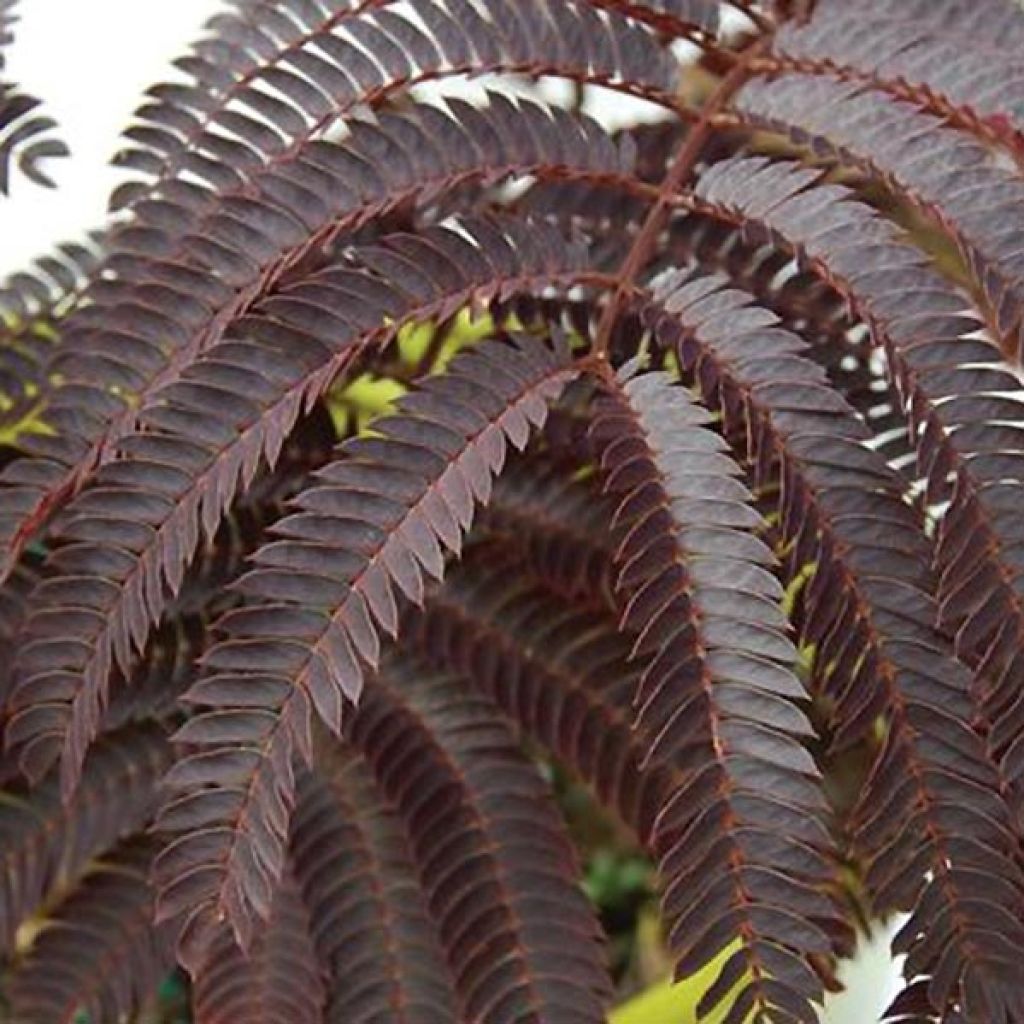
Albizia julibrissin Chocolate Fountain
Albizia julibrissin Chocolate Fountain
Albizia julibrissin Chocolate Fountain®
Persian Silk Tree, Pink Silk Tree, Mimosa Tree, Silk Tree, Persian Acacia
Plant delivered within the stated delivery slot. Three horizontal shoots for a height of less than 20 cm (far short of the 30–40 cm stated). This is not what I would call a tree or a shrub. In short, the plant is in good condition, but absolutely not what I wanted nor what the website indicated.
Didier, 10/11/2025
Back-to-school special offer!
Get €10 off for every €50 you spend! And get up to €40 off on a single order.
How does it work?
1. Shop your favourites
Add your favourite plants to your basket. For every €50 you spend (excluding delivery charges, store credit and the plastic-free option), you’ll receive a €10 voucher.
€50 spent = €10 voucher
€100 spent = €20 voucher
€150 spent = €30 voucher
€200 spent = €40 voucher
2. Place your order
Once your basket reaches one of the spending thresholds, place your order. You can even choose your delivery date!
3. Receive your voucher
As soon as your order has been shipped, you’ll receive an email containing your personal voucher code and its value.
4. Use it on your next order
Your voucher is valid for 90 days from the date you receive it. It can be used once only, on a new order worth at least the value of the voucher, excluding delivery charges.
Please note: Vouchers can be combined with other offers, but cannot be split or refunded.
Home or relay delivery (depending on size and destination)
Important: You may be charged customs duties by your country’s customs authorities upon delivery.
Schedule delivery date,
and select date in basket
This plant carries a 24 months recovery warranty
More information
We guarantee the quality of our plants for a full growing cycle, and will replace at our expense any plant that fails to recover under normal climatic and planting conditions.
Would this plant suit my garden?
Set up your Plantfit profile →
Description
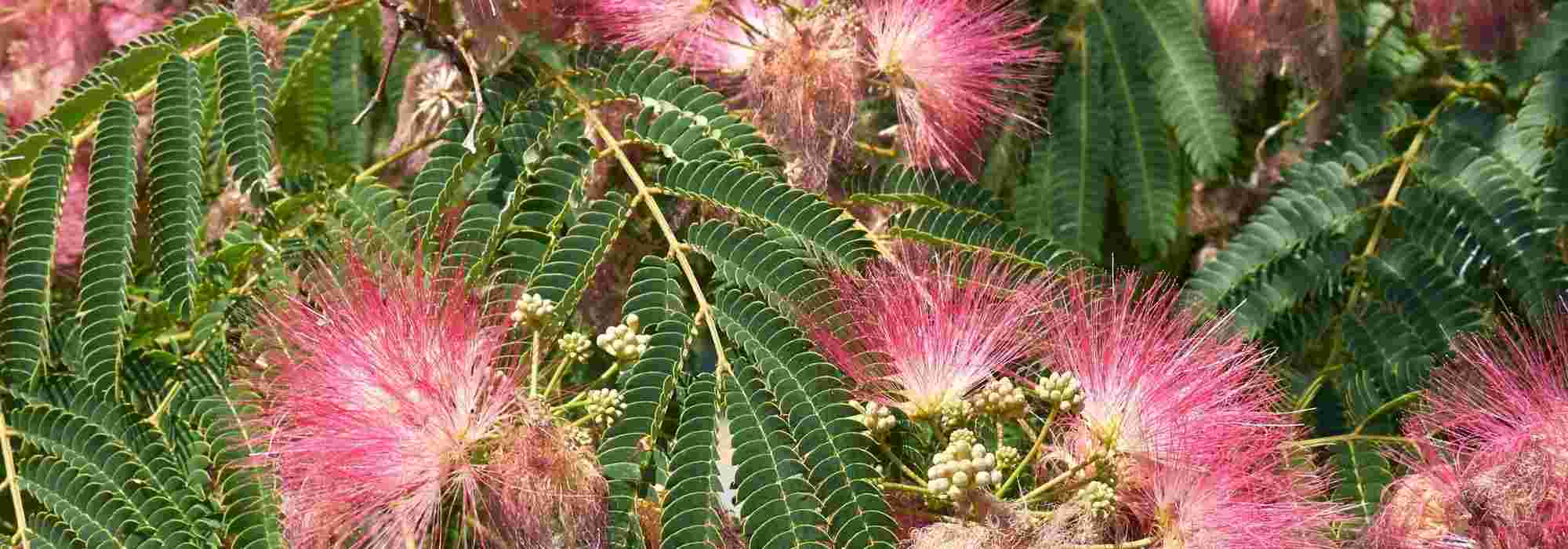
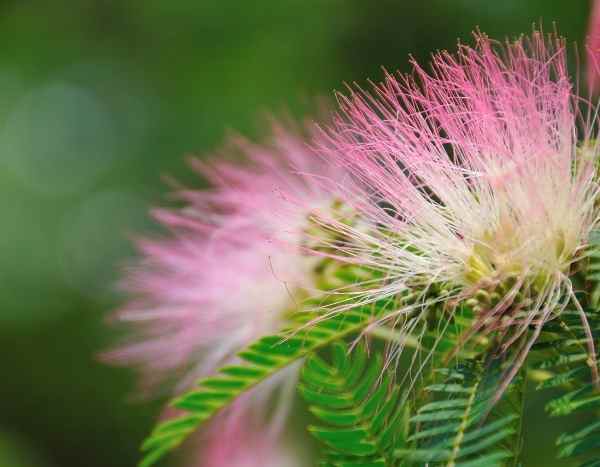
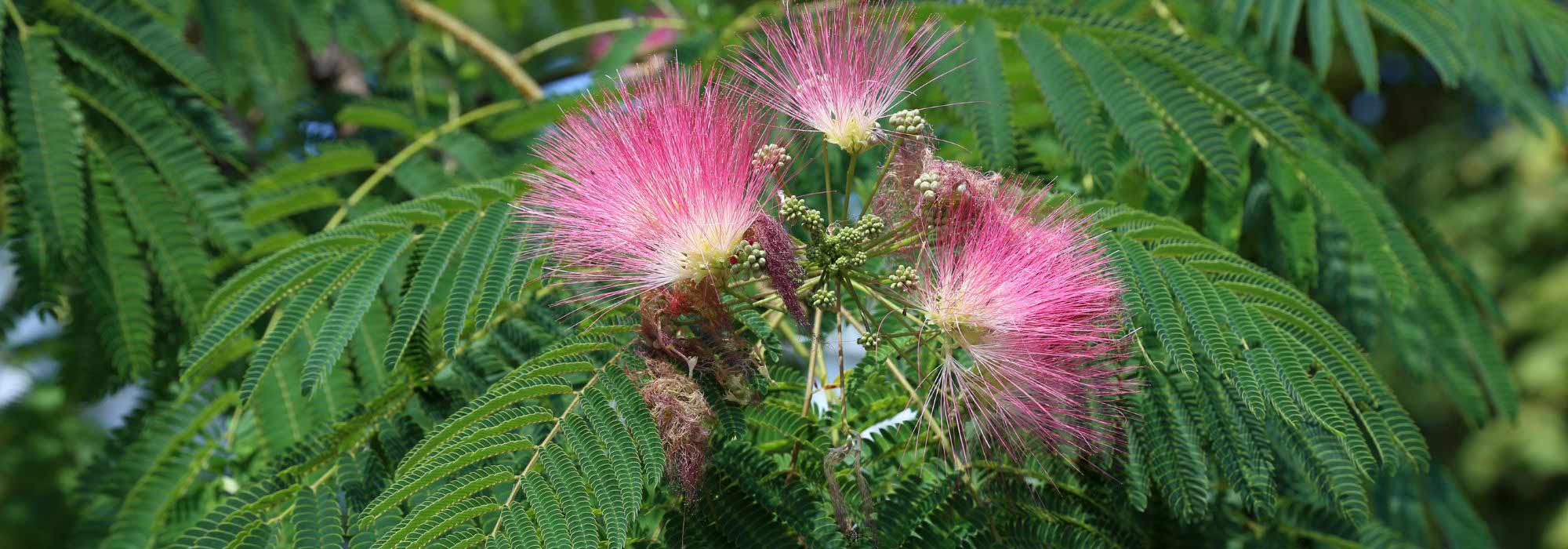
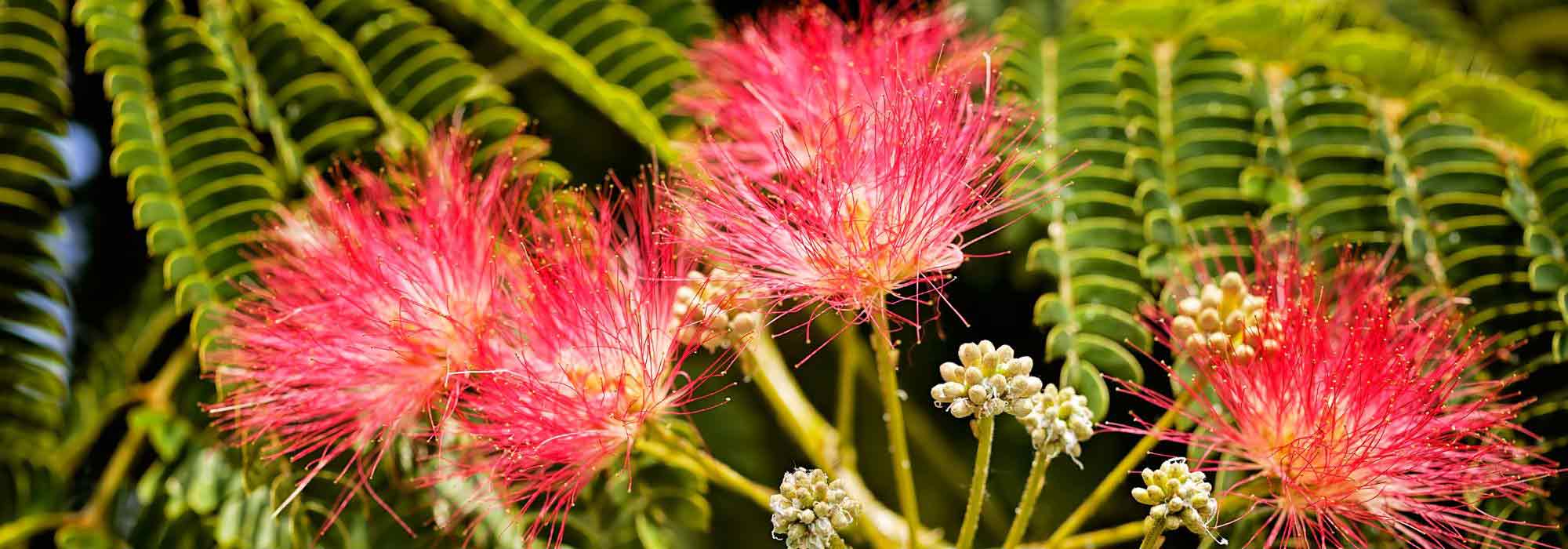
Albizia julibrissin 'Chocolate Fountain' is a new American variety, unique for its weeping habit and chocolate-coloured foliage! It is a deciduous tree with drooping branches, adorned with large, light, and finely divided foliage reminiscent of ferns or mimosa, its close relatives. Its unique summer flowering in soft pink, long and silky stamens dramatically enhances the purple, black, and copper tones of its foliage. The Albizia is a low-maintenance tree that can tolerate temperatures as low as -15 °C, heat, and drought. It is ideal for row or solitary planting in Mediterranean gardens, coastal areas, and urban spaces. The compact size of this variety makes it perfectly suited for container or small garden cultivation, where it can effectively serve as a shade tree and bring a touch of exotic colour. Plant it in full sun in well-drained garden soil for optimal development.
Albizia julibrissin is a small deciduous tree in the Fabaceae family, native to Iran and eastern China. The 'Chocolate Fountain' variety was recently developed by North Carolina State University and patented in 2013. Under favorable growing conditions, it can reach heights of 5m (16 in 5 ft) with a spread of 4m. It blooms from July to September, producing fluffy and silky inflorescences that have earned it the name "silk tree." These clusters consist of long stamens white at the base and soft pink at the ends, surpassing the rudimentary corollas grouped in heads. The fragrance of the flowers is most noticeable up close, powdery and sweet. Flowering gives way to a fruit, a flat pod measuring 8 to 20 cm (3.1 - 7.9 in) in length, initially green then turning brown, containing 5 to 15 fairly large oval seeds that germinate easily. The leaves, deciduous, are bronze-green in spring and purple for the rest of the year, alternate and very large, measuring 15 to 40 cm (5.9 - 15.7 in), which hang beautifully in cascades from the drooping branches. They are divided into large leaflets, themselves subdivided into small leaflets. The bark is thin, initially grey-green then grey, almost smooth, with whitish lenticels. Finally, and this is a characteristic of plants in the Fabaceae family, the roots form nodules capable of fixing atmospheric nitrogen through the presence of specific bacteria in these organs. The taproot system of this small tree does not tolerate transplanting well. The lifespan of the Albizia is variable, usually reaching about thirty years in European climates.
With its majestic and airy silhouette the Silk Tree is planted alone to provide light shade on the terrace, for example. Its blooms accentuate its exotic aspect. In mild climates, it can be combined with oleanders and pittosporums. Care should be taken to ensure its hardiness by planting it in well-drained soil, in full sun, and sheltered from prevailing winds and cold drafts. The compact size and weeping habit of this variety make it particularly well-suited for container or pot cultivation on a balcony or terrace.
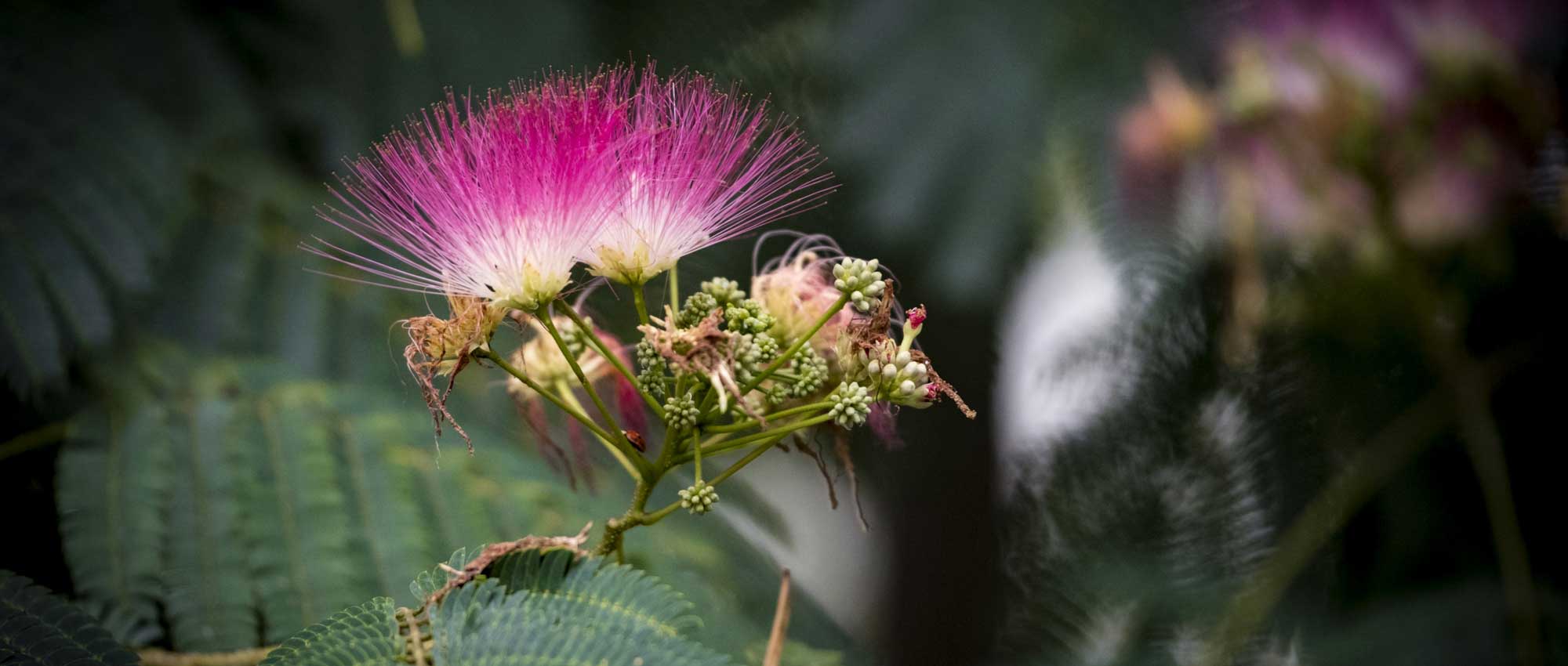
Albizia julibrissin Chocolate Fountain in pictures
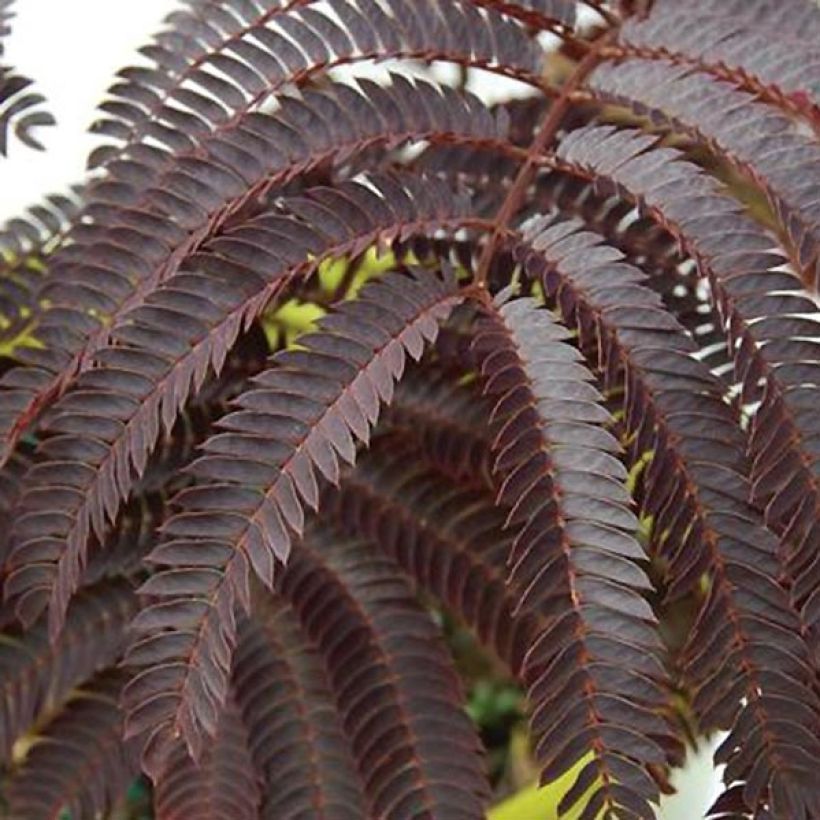
Plant habit
Flowering
Foliage
Botanical data
Albizia
julibrissin
Chocolate Fountain®
Fabaceae
Persian Silk Tree, Pink Silk Tree, Mimosa Tree, Silk Tree, Persian Acacia
Cultivar or hybrid
Planting and care
The 'Chocolate Fountain' Albizia is best planted in early autumn in warmer regions or late winter in regions with cold winters. Hardy down to -15°C (5 °F), choose a warm location, in full sun and sheltered from cold winds. In late winter, between February and March and before the start of vegetation, prune dead or diseased wood, or any that hinders maintaining a beautiful habit. Severe pruning will result in numerous vigorous shoots. It is naturally resistant to diseases and parasites.
Planting period
Intended location
Care
Planting & care advice
-
-

-
-
-
-
-

-
-
, onOrder confirmed
Reply from on Promesse de fleurs
Recently viewed products
Haven't found what you were looking for?
Hardiness is the lowest winter temperature a plant can endure without suffering serious damage or even dying. However, hardiness is affected by location (a sheltered area, such as a patio), protection (winter cover) and soil type (hardiness is improved by well-drained soil).

The flowering period indicated on our website applies to countries and regions located in USDA zone 8 (France, the United Kingdom, Ireland, the Netherlands, etc.)
It will vary according to where you live:- In zones 9 to 10 (Italy, Spain, Greece, etc.), flowering will occur about 2 to 4 weeks earlier.
- In zones 6 to 7 (Germany, Poland, Slovenia, and lower mountainous regions), flowering will be delayed by 2 to 3 weeks.
- In zone 5 (Central Europe, Scandinavia), blooming will be delayed by 3 to 5 weeks.
In temperate climates, pruning of spring-flowering shrubs (forsythia, spireas, etc.) should be done just after flowering.
Pruning of summer-flowering shrubs (Indian Lilac, Perovskia, etc.) can be done in winter or spring.
In cold regions as well as with frost-sensitive plants, avoid pruning too early when severe frosts may still occur.
The planting period indicated on our website applies to countries and regions located in USDA zone 8 (France, United Kingdom, Ireland, Netherlands).
It will vary according to where you live:
- In Mediterranean zones (Marseille, Madrid, Milan, etc.), autumn and winter are the best planting periods.
- In continental zones (Strasbourg, Munich, Vienna, etc.), delay planting by 2 to 3 weeks in spring and bring it forward by 2 to 4 weeks in autumn.
- In mountainous regions (the Alps, Pyrenees, Carpathians, etc.), it is best to plant in late spring (May-June) or late summer (August-September).
The harvesting period indicated on our website applies to countries and regions in USDA zone 8 (France, England, Ireland, the Netherlands).
In colder areas (Scandinavia, Poland, Austria...) fruit and vegetable harvests are likely to be delayed by 3-4 weeks.
In warmer areas (Italy, Spain, Greece, etc.), harvesting will probably take place earlier, depending on weather conditions.
The sowing periods indicated on our website apply to countries and regions within USDA Zone 8 (France, UK, Ireland, Netherlands).
In colder areas (Scandinavia, Poland, Austria...), delay any outdoor sowing by 3-4 weeks, or sow under glass.
In warmer climes (Italy, Spain, Greece, etc.), bring outdoor sowing forward by a few weeks.
Shipping country and language
Your country of residence may be:
Your country of residence is:
For a better user experience on our website, you can select:
Your shipping country:
-
 Austria
-
 Belgium
-
 Bosnia & Herzegovina
-
 Bulgaria
-
 Croatia
-
 Cyprus
-
 Czechia
-
 Denmark
-
 Estonia
-
 Finland
-
 France
-
 Germany
-
 Greece
-
 Hungary
-
 Iceland
-
 Ireland
-
 Italy
Italy
-
 Latvia
-
 Liechtenstein
-
 Lithuania
-
 Luxembourg
-
 Malta
Malta
-
 Netherlands
-
 Poland
-
 Portugal
-
 Romania
-
 Serbia
-
 Slovakia
-
 Slovenia
-
 Spain
Spain
-
 Sweden
-
 Switzerland
Language:
-
French
-
 English
-
Spanish
-
Italian
-
German
-
Portuguese
-
Dutch
-
Finnish
My Account
Hello
My wish lists
My cart
Log in / Register
Existing customer?
This form is protected by reCAPTCHA - the Google Privacy Policy and Terms of Service apply.
New customer?
Create an account to track your orders, access our customer service and, if you wish, make the most of our upcoming offers.