





























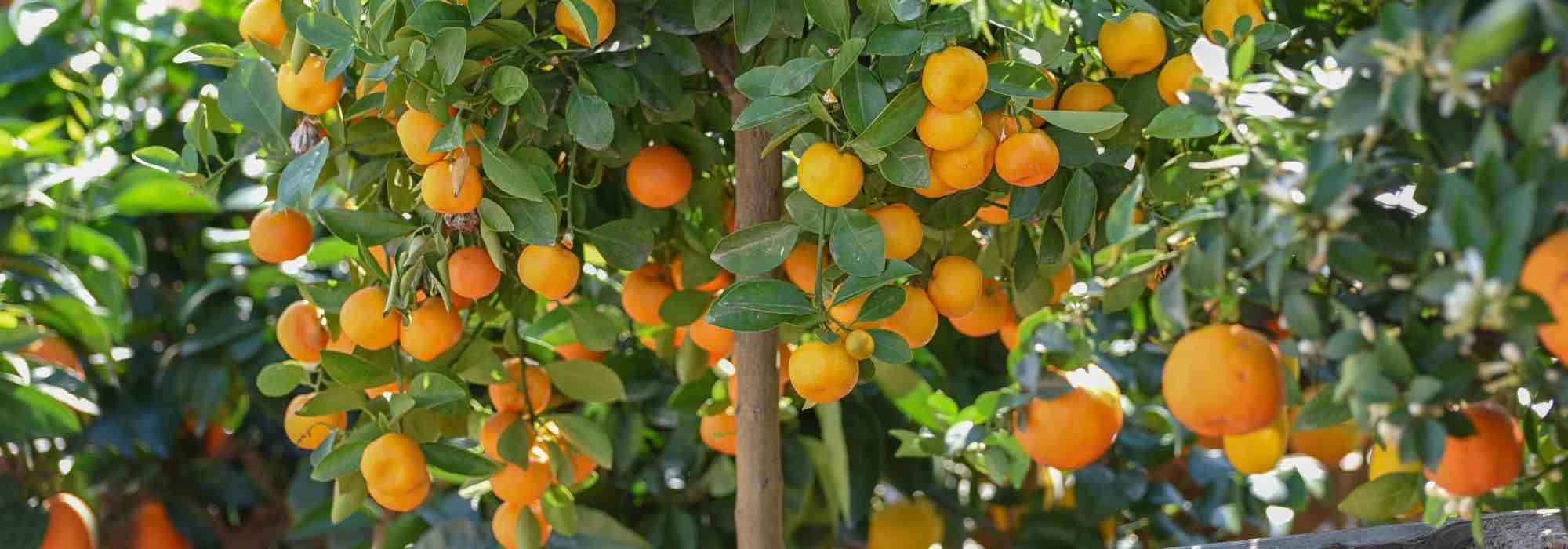
How to grow calamondin?
Our tips for successfully planting and maintaining in the ground or in pots
Contents
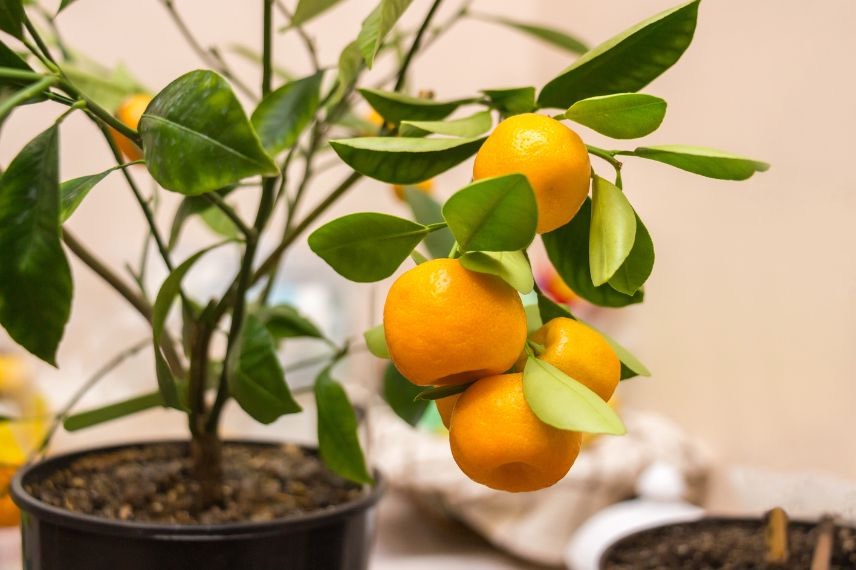
Calamondin (Citrus madurensis or mitis in Latin), also known as kalamansi, is a small citrus resulting from the cross-breeding of a kumquat and a mandarin tree. It has many decorative advantages: a compact silhouette (about 2 metres in all directions), evergreen foliage, fragrant white flowering, and fruits resembling small oranges. Although they are edible, their taste, combining acidity and bitterness, may not suit all palates; they are better appreciated when cooked or as juice.
What is special about the calamondin? It is the only citrus that can withstand the hot, dry air of our interiors all year round, hence its nickname “apartment orange”. Not very hardy, it can only be grown outdoors in a few regions with mild winters. Elsewhere, it should be wintered away from frost.
Here’s how to easily grow and care for a calamondin, both indoors and outdoors.
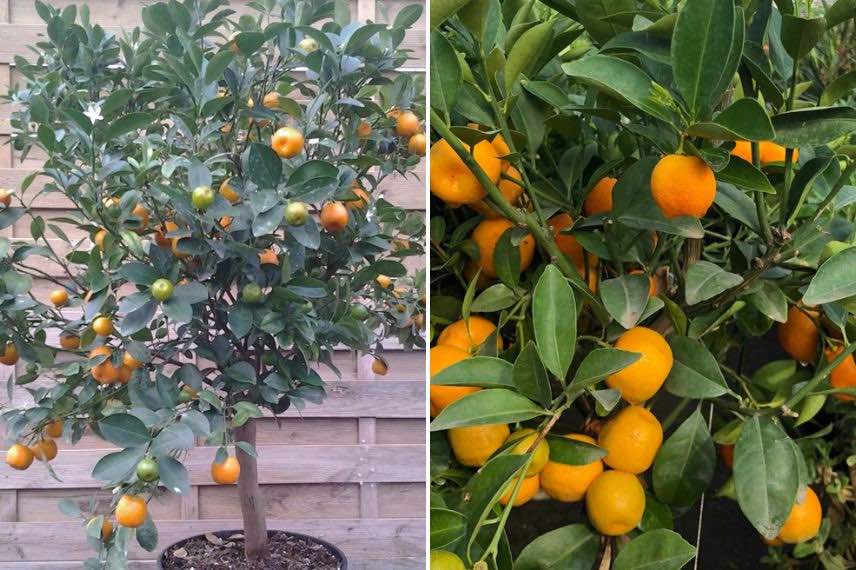
The Calamondin and its fruits

Planting Calamondin in the ground
The cultivation of calamondin in open ground is only possible in a few regions with mild winters, where frosts are rare and short, or even non-existent. The Mediterranean coast, some privileged areas of the south-west basin, or regions with tropical climates overseas are therefore the only ones suitable for its garden cultivation. Its hardiness is indeed very limited: our citrus tree begins to suffer from the cold at -2°C and cannot withstand temperatures below -6°C.
The ideal planting period
In open ground, calamondin should ideally be planted at the beginning of spring in March-April, to take advantage of the gradual rise in temperatures. Autumn planting is also possible.
Location
For your calamondin, choose a warm and sunny position, but not scorching. It should also be protected from cold winds, drying winds, and sea spray.
Plant it in deep, rich organic matter soil that is well-drained (which does not retain excess water). Avoid clay soils. In terms of pH, it prefers slightly acidic to neutral soils but dislikes limestone.
If necessary at the time of planting:
- rebalance the pH by adding heather soil;
- lighten heavy soils with drainage elements (gravel, clay balls, pouzzolane, etc.) or coarse sand;
- enrich sandy and poor soils with well-decomposed compost, manure, or potting soil.
Finally, as citrus trees do not appreciate root competition, ensure sufficient planting distance (at least 1.5 to 2 metres) from other plants.
Planting
- Soak the root ball in a bucket or basin of water for about ten minutes to allow it to rehydrate properly.
- Dig a planting hole about twice the volume of the root ball.
- Work the soil and enrich it with a handful of compost, manure, or other specific fertilisers (ground horn, dried blood, etc.).
- Install a drainage layer at the bottom of the planting hole (gravel, coarse sand, clay balls, etc.).
- Place the root ball in the centre of the hole, add garden soil or potting soil until the roots are covered, but without burying the grafting point (a sort of bulge at the base of the trunk).
- Firmly press down with your fingers.
- Create a basin around the base to better retain water (optional).
- Water generously.
- Mulch the base of the calamondin to retain moisture and space out watering.
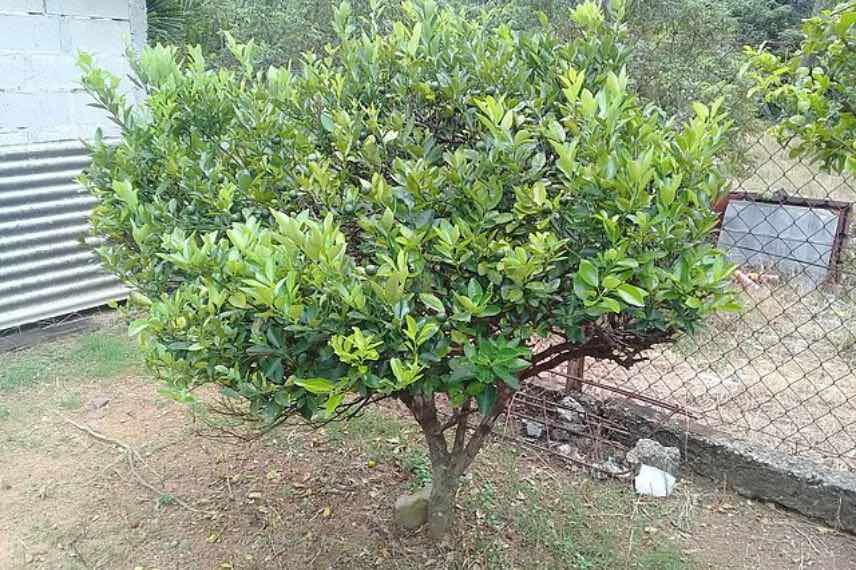
A Calamondin in open ground
Planting Calamondin in a pot
The calamondin can be grown in a pot, either:
- kept indoors all year round;
- moved outdoors during the fine days from May to October, then wintered in a sheltered spot during the cold season.
The ideal planting period
Planting the calamondin in a pot can be done either in spring, between March and May, or in autumn.
Repotting occurs every 2 to 3 years, depending on the growth of the citrus tree. In years without repotting, proceed with a top dressing: remove the substrate to a depth of 3 cm and replace it with fresh potting soil.
The container
Choose a container with a diameter about 2 times larger than the root system, in which your citrus tree will not feel cramped. Opt for a container with drainage holes to allow excess water to escape without suffocating the roots.
Prefer a terracotta pot or a wooden box, which are more breathable than plastic containers.
For repotting, simply choose a container that is larger than the current one.
If you need to move your calamondin during the year, we recommend placing it on wheels.
The substrate
The calamondin prefers fertile soils, rich in organic matter, but light and well-drained.
To keep it simple, obtain a potting soil for Mediterranean plants or a special citrus potting soil, which promotes both plant growth and flowering and fruiting.
If you prefer to make your own mix, choose:
- 2/3 of high-quality horticultural soil or non-calcareous garden soil;
- 1/3 of coarse sand or gravel to enhance drainage;
- 1 to 2 handfuls of household compost or well-decomposed manure.
Planting
- Soak the root ball in a bucket or basin of water for about ten minutes to allow it to rehydrate deeply and to facilitate the removal from its original container.
- Install a drainage layer of about 3 to 5 cm at the bottom of the new container (gravel, coarse sand, clay balls, broken terracotta…).
- Add the substrate mix until half full.
- Remove the old container from the citrus tree and gently loosen the root ball with your fingers.
- Place the calamondin in the centre of the container, then fill with substrate. Be careful not to bury the grafting point.
- Firm down with your fingers.
- Water generously.
- Install a mulch to protect the base of the plant.
- Add a saucer under the container.
Exposure
Place your potted calamondin in a sunny position, but sheltered from cold, drying winds. If possible, set it outdoors in the garden, on the terrace, or balcony as soon as the last frost risks have passed and until autumn (from April-May to October-November depending on the regions).
Indoors, position your citrus tree in a bright spot, but shielded from the hottest rays of the sun. Avoid proximity to a radiator or any other artificial heat source (fireplace, stove, etc.). Also protect it from draughts.
Note: while the calamondin is self-fertile, meaning it does not require the presence of another tree to bear fruit, its flowers need to be pollinated. Indoors, in the absence of pollinating insects, you will need to use a small brush to replace them if you wish to have fruit.
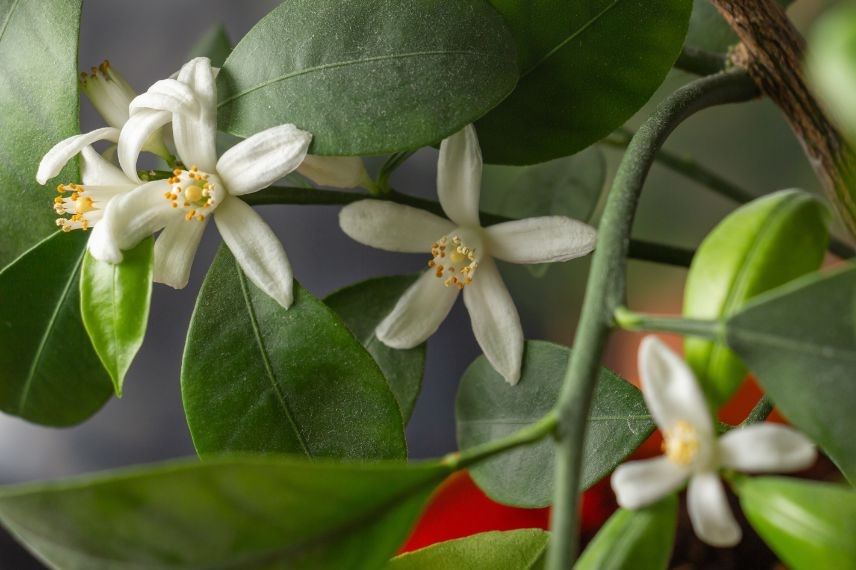
The flowers of the Calamondin need to be pollinated using a brush when grown indoors
Discover other Citrus trees
View all →
Available in 0 sizes
Available in 0 sizes
Available in 1 sizes
Available in 2 sizes
Available in 3 sizes
Available in 3 sizes
Available in 1 sizes
Available in 1 sizes
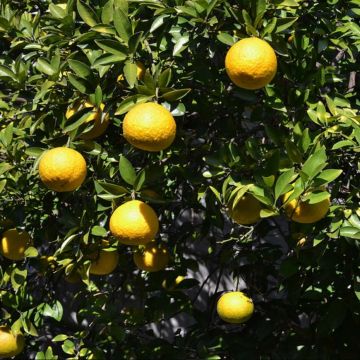
Available in 2 sizes
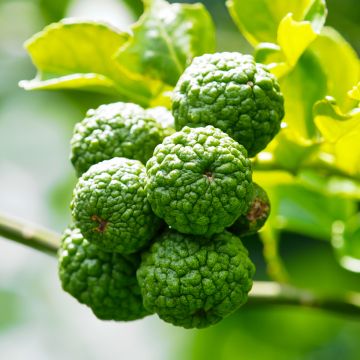
Available in 3 sizes
Caring for Calamondin
Soothing watering and fertilisation are key points for a healthy calamondin.
Watering
The calamondin prefers its soil to remain cool, meaning moist but not overly wet.
In the ground, watering should be regular and generous, especially during the first few years, allowing the citrus tree to develop its root system. Plan to water once a week in summer, more often during prolonged dry spells or heatwaves. Gradually reduce watering in autumn, then stop in winter, unless there is a complete lack of rain.
In pots, the substrate dries out more quickly than in the ground. Check the soil with your fingers: as soon as it feels dry in the top few centimetres, it’s time to water. Empty the saucer about twenty minutes after watering or after heavy rain. If your calamondin is grown indoors year-round, regularly mist its foliage and place a layer of clay balls in the saucer. This will help increase ambient humidity.
Prefer rainwater to tap water, which can be too calcareous for the calamondin.
As indicated in the planting tutorials, don’t hesitate to mulch around your citrus tree to retain moisture longer and limit evaporation.
Fertilisation
Like all citrus trees, the calamondin is a heavy feeder.
In the ground, add well-matured compost or manure at the beginning of spring. Lightly scratch the soil to incorporate it into the substrate. You can also place ashes at the base of the plant: their natural richness in potash promotes fruiting. From late spring to summer, you can supplement with fertiliser for fruit trees or fertiliser for Mediterranean plants.
In pots, fertilisation should be more regular, as the nutrients in the substrate deplete quickly. Apply specific fertilisers from early spring to late summer. You can choose fast-release liquid fertilisers or slow-release solid fertilisers. For quantities, refer to the usage instructions on the packaging.
Pruning
To maintain the naturally round shape of the calamondin, prune at the end of winter after harvesting the fruit. Slightly shorten the new shoots. Using a pruning shear that has been disinfected, also remove any damaged or dried branches.
You can also remove crossing branches to allow for better air circulation and let more light in.
To prevent the development of fungal diseases, you can use healing paste on the cut wounds.
For more information, check out our article: “Citrus: when and how to prune?”.
Pests and diseases
When grown in the ground, the calamondin is generally not very susceptible. Just be careful not to damage its roots when working around the base of the plant, as this can open the door to potential diseases.
In pots and confined spaces, the calamondin may suffer from red spider mite attacks. Regularly mist the foliage as a preventive measure. For treatment, shower the aerial parts to dislodge the unwanted pests.
Scale insects can be removed manually using a cotton swab dipped in alcohol.
Wintering
Not very hardy, the calamondin can only withstand very short and mild frosts. In the ground, protect its base with a thick layer of mulch and add a winter fleece around the aerial parts in case of forecasted frosts.
Bring your potted calamondin indoors, or into an unheated room (temperature between 5 and 10°C), but ensure it is well-lit.
To learn more, read our article: “Wintering orange trees, lemon trees, and other citrus.”
- Subscribe!
- Contents
![[plant_guide plant="Calamondin"]
Calamondin is a small citrus tree that is very popular for its decorative value and its small, tangy fruits. Here are some tips for successfully growing Calamondin in your garden:
1. **Exposure**: Calamondin thrives in a sunny location, ideally with some protection from strong winds.
2. **Soil**: Plant your Calamondin in well-draining soil, rich in organic matter. A slightly acidic soil pH is preferred.
3. **Watering**: Keep the soil consistently moist but not waterlogged. Water when the top inch of soil feels dry to the touch.
4. **Fertilizing**: Feed your Calamondin regularly during the growing season with a balanced fertiliser suitable for citrus trees.
5. **Pruning**: Prune your Calamondin tree in late winter or early spring to maintain its shape and promote fruit production.
6. **Pests and Diseases**: Keep an eye out for common citrus pests such as aphids and scale insects. Treat any infestations promptly to prevent damage to your plant.
7. **Harvesting**: Calamondin fruits can be harvested when they are fully orange. They are often used in cooking, baking, or for making preserves.
By following these simple tips, you can enjoy a healthy and productive Calamondin tree in your garden. Happy gardening!](https://en.promessedefleurs.eu/blogwp/wp-content/uploads/2023/01/Comment-cultiver-le-calamondin.png "[plant_guide plant=\"calamondin\"]
This guide will help you grow your Calamondin plant successfully. Follow these steps to ensure a healthy and thriving plant:
1. **Light**: Place your Calamondin plant in a bright location with indirect sunlight.
2. **Watering**: Water your Calamondin regularly, allowing the top inch of soil to dry out between waterings.
3. **Temperature**: Keep your Calamondin in a warm environment, away from drafts and cold temperatures.
4. **Fertilizing**: Feed your Calamondin plant with a balanced fertiliser during the growing season.
5. **Pruning**: Prune your Calamondin plant to maintain its shape and remove any dead or damaged branches.
6. **Pests**: Keep an eye out for common pests such as aphids and scale insects, and treat them promptly.
By following these simple guidelines, you can enjoy a beautiful and fruitful Calamondin plant in your home or garden. Happy gardening!")
Comments