





























Pairing ideas with Abeliophyllum or Korean White Forsythia
A late-winter shrub in the garden
Contents
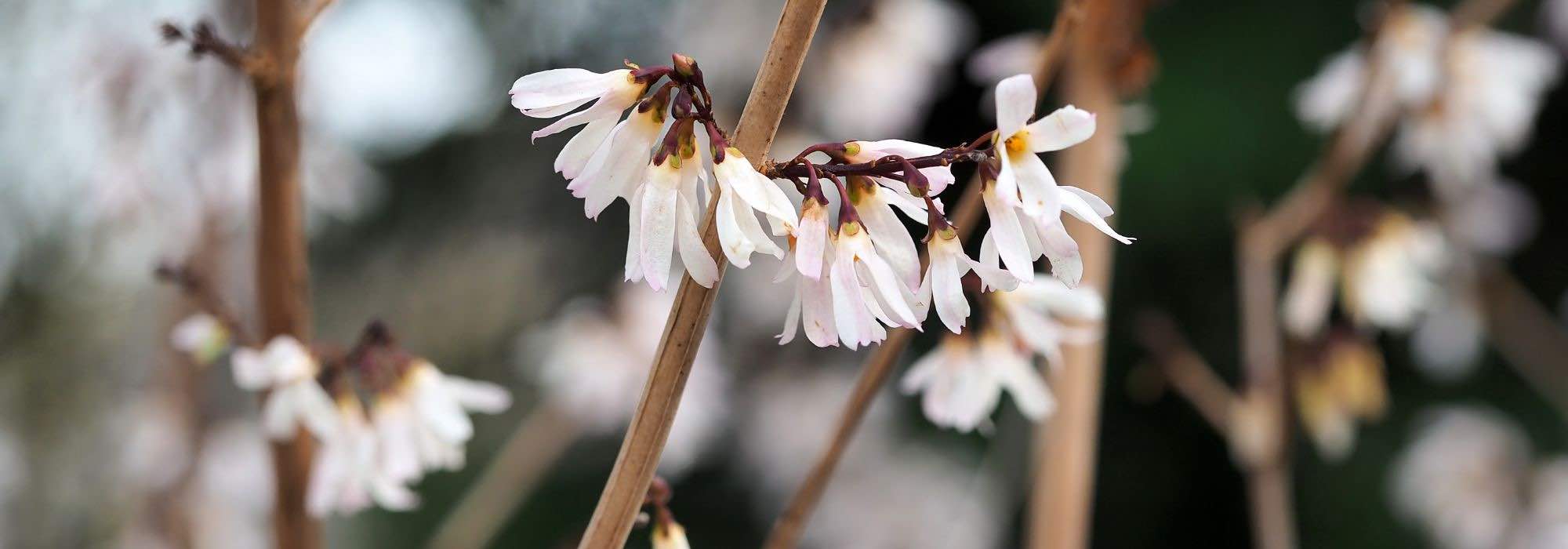
Abeliophyllum, also known as Korean white forsythia, is a delicate and fragrant shrub that lights up the garden from the end of winter with its white flowering. There is also a pink-flowering form commonly called Korean Forsythia. These two shrubs are botanically close to Forsythia. Its white or pink flowering brings a touch of freshness and elegance, perfect for creating informal hedges or naturalistic beds. To realise its full potential, it pairs beautifully with other shrubs with staggered flowering or decorative woody stems, as well as perennials that prolong its visual appeal. In this article, discover ideas for harmonious plant associations to incorporate Abeliophyllum into the garden.

In an informal hedge
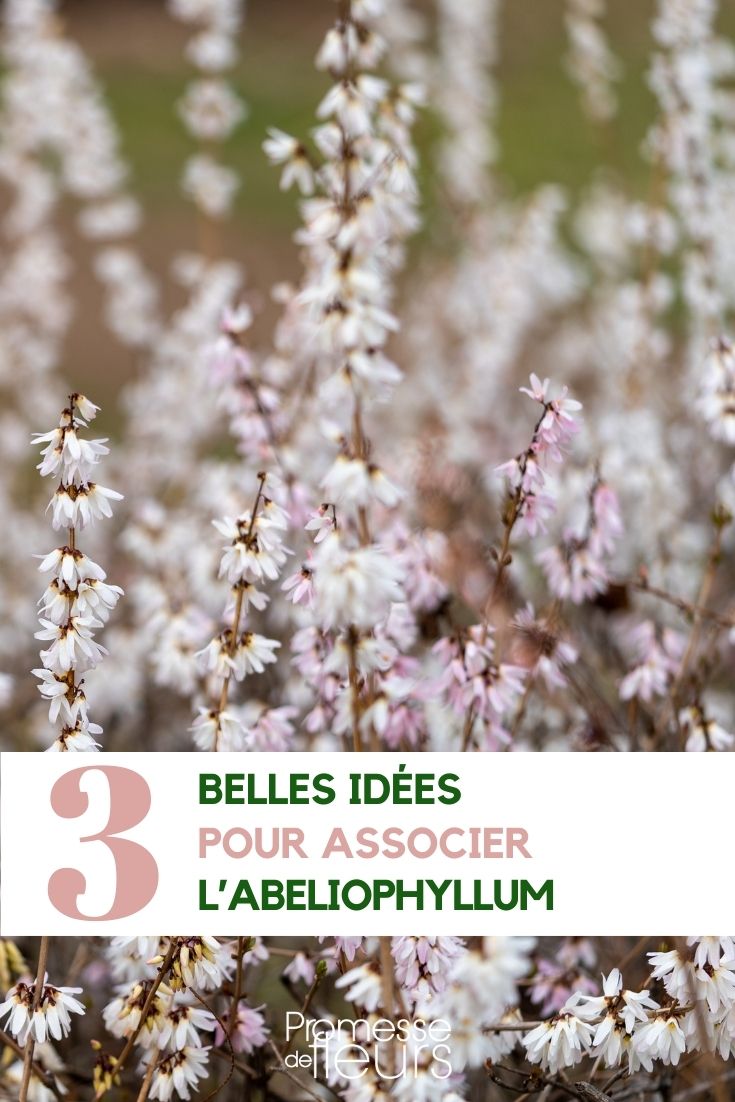
Abeliophyllum, also known as white forsythia or pink forsythia, is an ornamental shrub little known. It is nevertheless highly appreciated for its small white or slightly pink-tinged flowers, with a delicate fragrance, visited by pollinators, which appear from the end of winter, in February–March. Integrated into an informal hedge, it can be enhanced by other shrubs with complementary characteristics.
The informal hedge, unlike a uniform or clipped hedge, allows mixing different species for a natural and wild appearance. It is ideal for providing flowering all year round and for pairing deciduous and evergreen species, to create a habitat that supports biodiversity and reduces maintenance. In this context, Abeliophyllum is a plant of interest thanks to its early flowering and discreet elegance, which harmonises easily with other shrubs.
To succeed in the pairing, it is essential to choose plants according to a few criteria. Flowering periods should be varied to ensure a colourful and lively hedge through the seasons. The colours can be chosen to play on contrasts or to stay within soft harmonies. The heights of the shrubs should be alternated to provide volume and a natural appearance. Finally, it is important that all chosen plants have similar requirements in terms of soil, sun exposure and watering.
Abeliophyllum can be beautifully paired with other shrubs that flower at the same time, such as shrubs that flower in late winter, early spring, like Japanese quinces with single or double flowers. Also consider the delicate pink blossoms of the winter-flowering viburnum, Viburnum farreri, or the elegant flowering of camellias of the Japonica or wild-type varieties. By prolonging the flowering, it is possible to incorporate plants such as forsythia, a cousin with bright yellow flowering in March–April. Also the flowering currants or the Viburnum opulus ‘Roseum’, also called “snowball”, which offers spectacular white flower balls in May and June. In summer, shrubs such as the spirea, notably Spirea japonica, with its pink flower clusters, or the strawberry tree, which combines white flowers and red fruits from September, bring a colourful and lively touch. Later, in autumn, shrubs with flamboyant foliage or decorative berries, such as the Cotoneaster lacteus or the aronia, complete this composition while attracting birds.
To create an informal hedge, it is advisable to alternate shrubs of different sizes and shapes to create a harmonious composition and avoid a too linear appearance. By pairing Abeliophyllum with other shrubs, you create a true garden ecosystem. The diversity of flowers and fruits attracts bees, butterflies and birds, while offering a palette of colours and textures. An informal hedge thus designed combines elegance and practicality, for a living and pleasant garden throughout the year.
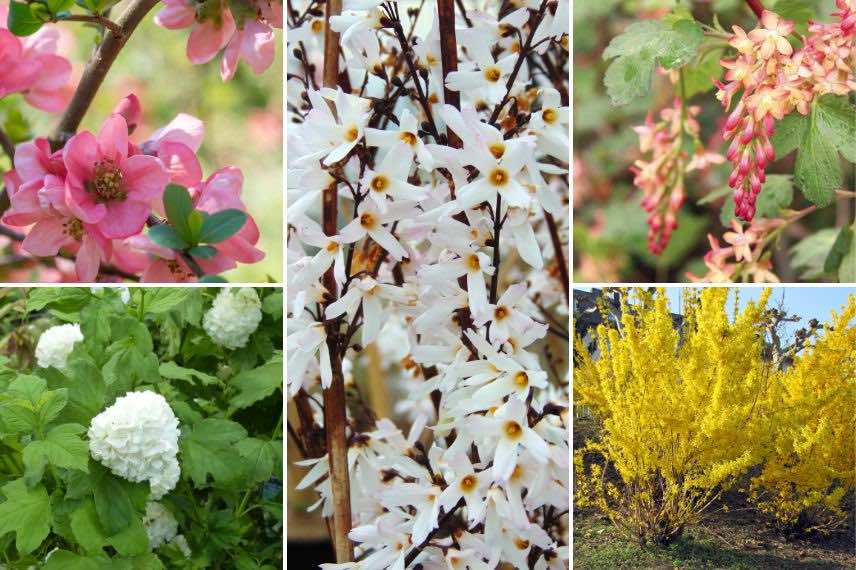
Some late-winter-flowering hedge shrubs surround Abeliophyllum (in clockwise order): Japanese quinces, Abeliophyllum, Ribes, Forsythia, Viburnum opulus ‘Roseum’
A spring scene with bulbs
Abeliophyllum delicately decorates the garden in late winter.
To enhance this shrub and create a near-spring scene full of charm, nothing beats pairing its flowering with that of early bulbs—the first to bloom from February and March.
They, planted at its base, bring a splash of colour and cheer, while enhancing the overall elegance of the display.
To achieve this display, it’s important to choose bulbs that flower in harmony with Abeliophyllum from the first days of fine weather. The Crocus, in vibrant shades of purple, yellow or white, form small colour carpets that highlight the shrub’s understated flowers. The Snowdrops and the Spring Snowflakes or Leucojum vernum with bells of pure white, create a gentle transition between winter flowering and spring. Add Dwarf Daffodils, in bright yellow or cream tones, the Eranthis hyemalis, planted at ground level, and Ipheion.
For an even richer atmosphere, Muscari, with their spikes of intense blue, and Hyacinths, with their heady fragrance and a range of colours, complete the palette.
In terms of placement, bulbs can be planted in small irregular drifts for a natural, wild effect. A ring planting around Abeliophyllum, with the lowest bulbs at the front and the tallest at the back, creates a lovely sense of depth. This staging frames the shrub while emphasising its presence. The choice of bulbs with progressive flowering also ensures a flower carpet for several weeks, accompanying and prolonging Abeliophyllum’s flowering.
The pairing of these bulbs with Abeliophyllum offers a spring scene with subtle contrasts and soft harmonies. Moreover, their simultaneous flowering attracts the first pollinators, adding a lively and animated dimension to the display. With this pairing, the garden awakens gradually, in a festival of colours and fragrances.
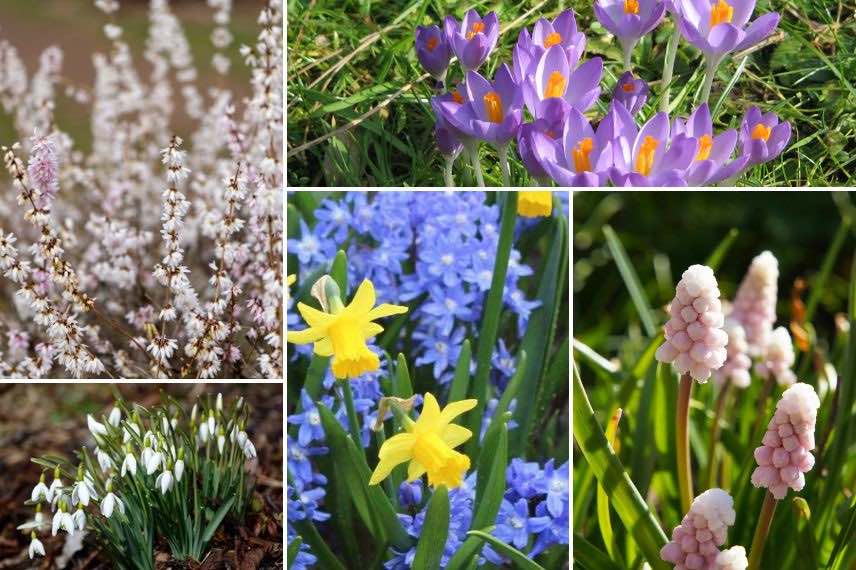
At the foot of Abeliophyllum, plant early bulbs such as Crocus, Muscari, Narcissus, Chionodoxa, and Galanthus.
Late-winter border
The garden is often neglected in winter, yet many plants can proudly enliven it and reveal themselves on a sunny day or from a window in the house. A well-designed border brings light and softness to the garden during this cold period.
At the heart of the border, the small flowers of Abeliophyllum bloom on naked branches. This white forsythia adds a romantic lightness and makes a perfect focal point thanks to the light it gives off. Its compact size makes it an excellent companion for more imposing shrubs.
To complement Abeliophyllum, Edgeworthia chrysantha is a must-have. This exotic shrub produces pale yellow flowers with an intense fragrance, hanging in silky clusters. Placed nearby, it creates a subtle contrast with the white tones of Abeliophyllum, while sharing its delicate appearance. The Hamamelis, with its flowers in golden, coppery or red filaments, adds an intriguing and colourful touch. Its flowering begins as early as January and lasts through March, providing a perfect transition in the border. Pair varieties such as ‘Pallida’ in pale yellow or ‘Jelena’ in copper-orange. To structure the border further, add a decorative dogwood such as Cornus sanguinea ‘Mid Winter Fire’. Its orange-red stems provide a graphic base that highlights the delicacy of the flowering shrubs.
At the base of the shrubs, hellebores offer a generous bloom that completes the scene perfectly. The hellebores Helleborus orientalis and Helleborus foetidus come in cream, pale pink, purple or lime green tones, coordinating with the colours of the shrubs. Their evergreen foliage adds a beautiful carpet to the border and shapes the border year-round.
To enrich textures, include bergenias, whose broad, glossy leaves remain attractive even after flowering. Their pink or red flowers appear from February, heralding the arrival of spring blooms. Evergreen ferns such as Polystichum setiferum or Dryopteris erythrosora bring a touch of lightness and volume, while enhancing the border’s natural character.
Shrubs such as Sarcococca, with their discreet and fragrant flowers, are valuable allies. Their glossy, dense foliage can help fill a large border. At the border, euphorbias such as Euphorbia amygdaloides var. robbiae add a chartreuse green note that brightens the display.
Winter heathers (Erica carnea or Erica x darleyensis) form a colourful carpet at the foot of the shrubs, offering pink, mauve or white tones. Their year-round flowering lasts all winter through to spring, enhancing the visual richness of the border.
In this border, place Abeliophyllum slightly towards the front or centre, surrounded by Edgeworthia and Hamamelis to create balance. Cornus or other architectural shrubs form the background, while perennials such as hellebores and bergenias dress the ground and soften the transitions. Plants should be arranged in a fluid manner for a natural effect, playing on contrasts of height, textures and colours.
This border, where Abeliophyllum blends with spectacular shrubs and timeless perennials, offers an unforgettable display from the final weeks of winter. In February and March, it captures the eye while celebrating the garden’s renewal in an explosion of soft colours and intoxicating scents.
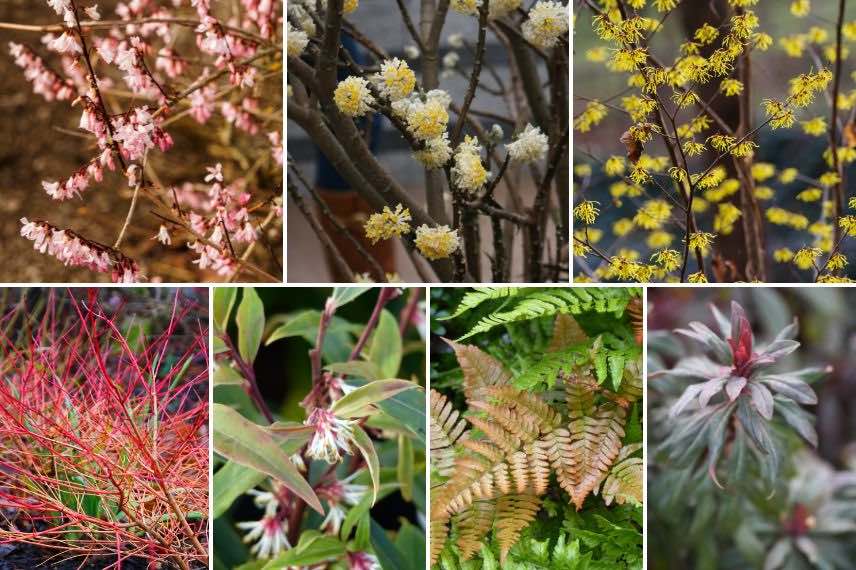
Abeliophyllum, Edgeworthia, Hamamelis, Euphorbia amygdaloides ‘Purpurea’, Dryopteris erythrosora, Sarcococca, Cornus sanguinea
- Subscribe!
- Contents
Comments