




























The 7 best apples for long-term storage
Long-lasting fruits to enjoy throughout winter
Contents
Apples are certainly among the most popular fruits in our country. There are thousands of apple tree varieties (Malus domestica). Some will need to be consumed quickly, while others lend themselves well to storage, allowing you to enjoy them for most of the winter months, and even until the start of spring. Recall that to promote storage, it is necessary to handle the harvest carefully and keep only sound, undamaged fruits.
Storage apples are often late-ripening varieties, which reach ripeness between October and early December. Here are our favourite storage apples.
And for everything you need to know about growing apple trees, please consult our comprehensive guide: Apple tree: planting, pruning and care.

Golden Delicious apple
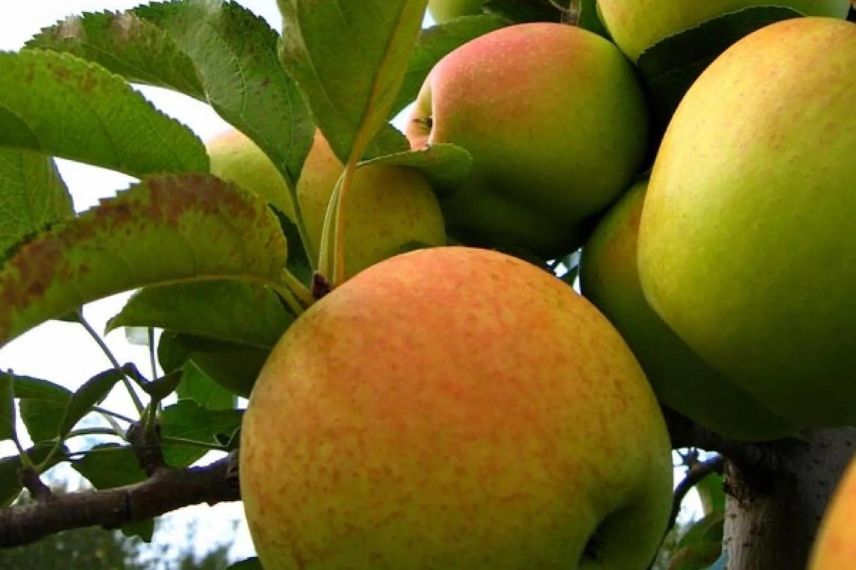
‘Golden Delicious’ has an evocative name: this apple tree indeed yields excellent fruit, a lovely golden-yellow colour, fairly plump. They offer a white-to-yellow flesh that is fairly firm, fine and crisp to bite. In terms of flavour, it is a fairly balanced apple, combining sweetness and acidity. It is suitable for eating fresh, as well as cooked into compotes or pastries.
Flowering occurs in early April. The harvest of these apples takes place next between September and October. The fruits can, in the end, be stored for quite a long time over the winter, up to February.
This apple tree has the advantage of relatively rapid fruiting (it usually starts bearing apples 3 to 5 years after planting). Its yield is fairly generous and regular. At maturity, it reaches a height of between 4 and 5 metres.
Note that it is not a self-fertile variety. It should therefore be planted alongside other trees to ensure pollination of its flowers. To accompany it, for example, choose ‘Reine des Reinettes’ or ‘Starking Delicious’, which should be grown within a maximum radius of 30 metres.
In terms of cultivation, it is an easy-going fruit tree that suits all our regions and resists frost down to -20°C. It requires well-drained soil (light, so water does not stagnate), but rich to support fruiting. Don’t hesitate to feed with compost or other organic fertiliser each winter. Plant it in full sun, ideally in a sheltered position. Water regularly.
Read also
Harvesting and Storing Apples and PearsMelrose apple
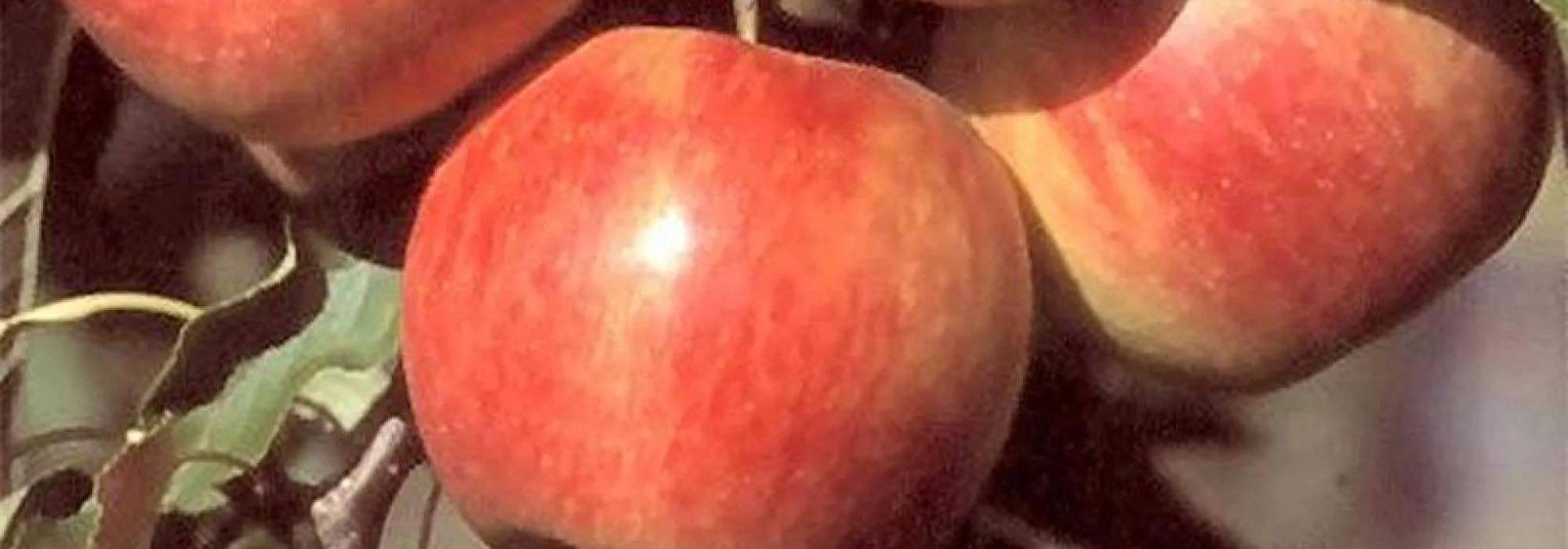
The Melrose apple tree is among the best red-fruited varieties. It bears apples around 8 cm in diameter, round and slightly flattened. The skin displays a dark pink flush with a bright gloss on a yellow background. In terms of taste, it has a fine, crisp flesh, pale cream in colour. It is a juicy and sweet apple that will appeal to palates that prefer less acidity. If it is mostly eaten raw, as a dessert apple, it also performs very well when cooked.
This apple tree variety is vigorous and productive. It comes into bearing fairly quickly. At maturity, expect about 6 metres in height with a 3 metre spread.
Flowering occurs late, in late April, with harvest in October. They store very well and can be kept for many months, until April. You can therefore enjoy their vitamins to give you a little boost throughout the cold season.
Here again, this is a self-sterile variety, which should be planted near other apple trees, such as ‘Golden Delicious’ mentioned earlier or ‘Granny Smith’, which we will discuss again in this article.
This variety has the advantage of being fairly resistant to apple scab, a fungal disease to which apple trees are susceptible. Cultivate it in full sun, in rich and well-drained soil. Be careful with watering: apple trees prefer cool, moist soils.
The 'Ariane' apple
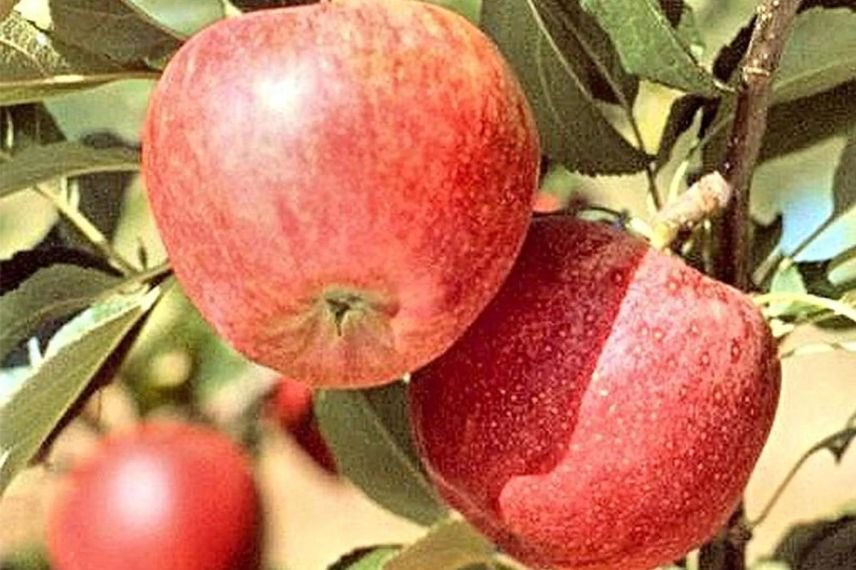
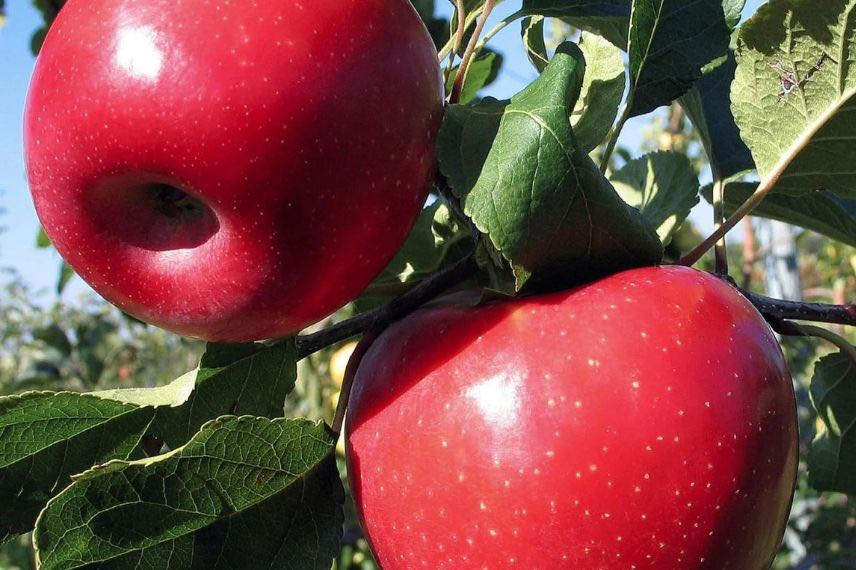
The fruits of the apple tree ‘Ariane’ are so red and glossy that they could have inspired Snow White’s apple! They are actually bicoloured, with a yellowish wash. Their diameter reaches about 7 cm. The flesh of these fairly round fruits is crisp and juicy, sweet and tart, even slightly sparkling on the palate.
The flowering occurs in April and lasts a long time. It is not sensitive to frosts. It is a late-season apple tree with long keeping quality, since the fruits can be kept for up to around 7 months after harvest. The harvest takes place between late September and October.
Regarding its dimensions, this apple tree reaches around 5 metres in height and spread.
This highly productive apple tree is, however, not self-fertile. It will therefore be planted alongside ‘Royal Gala’ or ‘Reine des reinettes’.
Resistant to apple scab and easy to grow, the Ariane apple tree will thrive in full sun, in well-drained, fertile and cool soil.
Read also
6 late apple varietiesChanteclerc apple
The variety ‘Chanteclerc’, also known as ‘Belchard’®, was created by INRA (National Institute for Agricultural Research).
It is a dessert apple that is appreciated for its balanced flavour, half-sweet, half-tart. But it is also regarded as the queen of tarts, being as enjoyable raw as when cooked. The fruit is golden-yellow, speckled with small brown spots (lenticels). The flesh is fine, highly fragrant, melting and juicy. Each apple, slightly flattened in shape, reaches about 7 cm in diameter.
Flowering occurs in April, with harvest in October. The fruits store very well: they can be kept until May, provided conditions are optimal. This allows them to be enjoyed for long months.
A vigorous apple tree, it reaches around 5 metres in height and spread. Fruit set begins in the fourth year of cultivation and is fairly regular. It is moderately susceptible to apple diseases (scab, powdery mildew, canker…).
Partially self-fertile, it will offer a better yield if planted in association with ‘Golden Delicious’, ‘Granny Smith’ or ‘Reine des Reinettes’.
Apple ‘Reine des Reinettes’
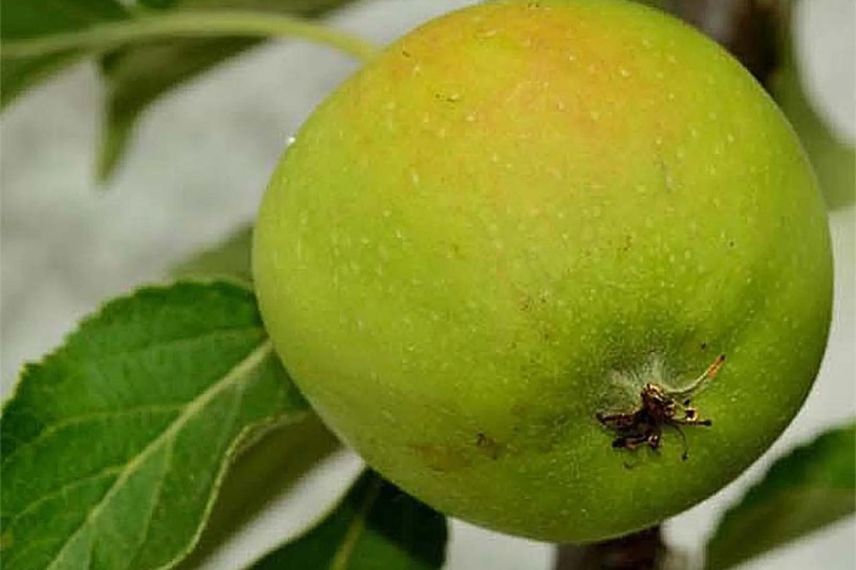
We’ve mentioned it several times: the apple tree ‘Reine des Reinettes’ offers long keeping quality, lasting until March. Harvest takes place from September to October. Robust and generous, it bears apples 7 cm in diameter, with skin red, subtly shaded with golden yellow. Its flesh is juicy, crisp and tangy, with a flavour reminiscent of a walnut. Well scented, it complements both desserts and savoury dishes and cheeses.
This apple tree flowers in April, fairly extensively, which makes it a good pollinator for other varieties. This flowering is frost-tolerant, making ‘Reine des Reinettes’ interesting for many regions. Self-sterile, it should be planted with other apple trees to ensure good fruiting.
At maturity, the tree reaches about 5 metres in height and spread.
Like its peers, it should be planted in a sunny position, in soil rich in organic matter, well-drained and remaining cool.
Fuji apple
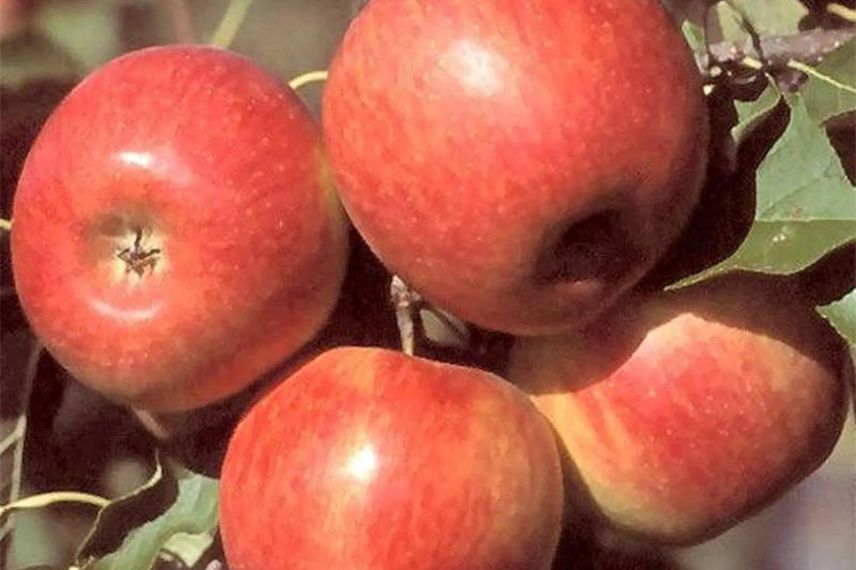
‘Fuji’ is the most cultivated apple tree variety in Japan. Its fruit keeps for almost 8 months. The harvest takes place late, from October to November. Large in size, the apples reach about 9 cm in diameter. They are green with a red blush. In terms of taste, expect a crisp and juicy flesh, very sweet, which will appeal to those who do not enjoy acidity.
Vigorous, this apple tree reaches 6 metres in height with a 4-metre spread. The fruit set is rapid, and this variety is not prone to biennial bearing (the harvest is fairly regular from one year to the next). It is not self-fertile: plant it near other apple trees whose flowering also occurs between March and April.
The Fuji apple tree is fairly resistant to frost and to mildew, but somewhat susceptible to scab. Ensure good natural ventilation by observing planting distances and thinning, to limit the risk of disease development.
Granny Smith apple
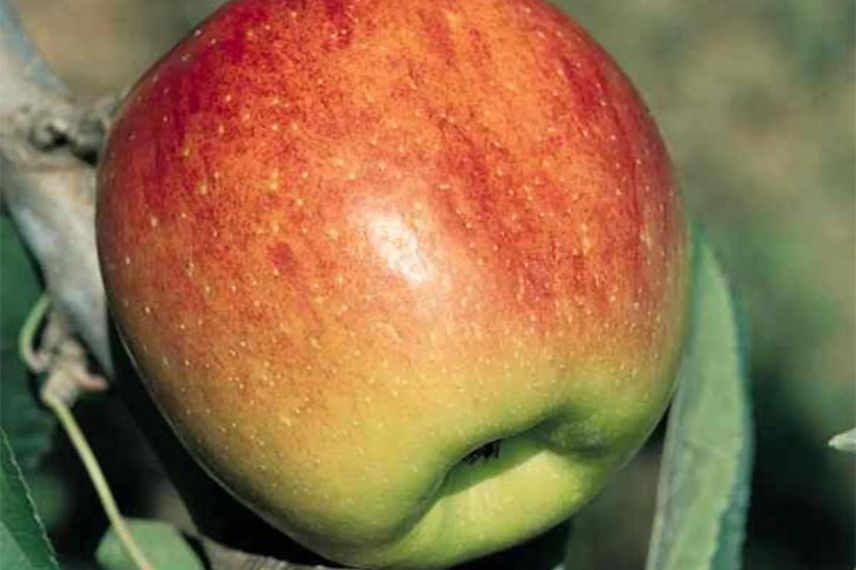
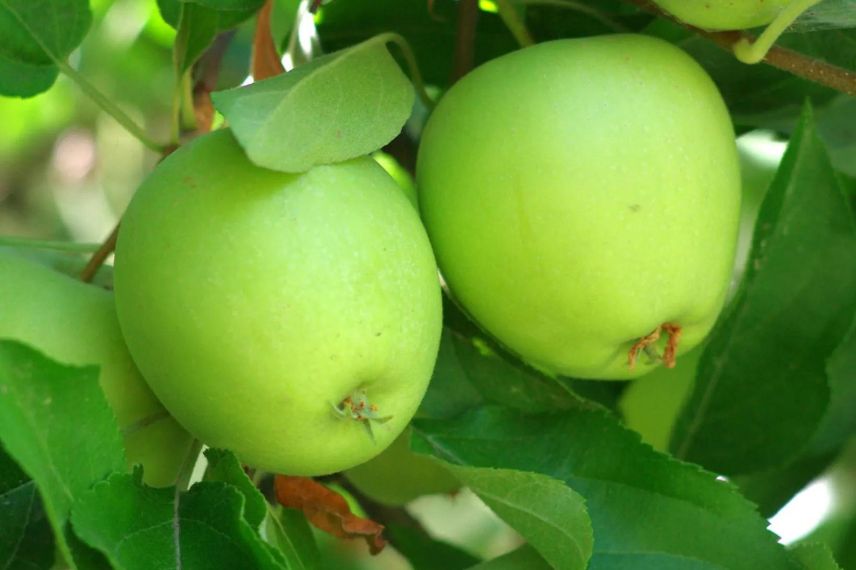
You will no doubt be familiar with the famous ‘Granny Smith’, as it is one of the most widely grown apples in France. It is the apple that first comes to mind when we talk about green apples. Its skin is glossy, punctuated with white lenticels. Its flavour is also typical and recognisable, with its refreshing and very acidic palate, even if it does not please all palates. The flesh is firm and juicy. Of good size, the fruits reach about 8 cm in diameter. They are eaten as they are, raw, simply sliced with a knife, but also in pastries and compotes.
This late-ripening variety enjoys autumn warmth: it is therefore not the most suitable for regions north of the Loire. The harvest indeed takes place in November. These storage apples can then be kept until April.
Like the other long-keeping apple trees mentioned above, this variety is not self-fertile and will therefore need to be paired with other cultivars that also flower between March and April, such as ‘Melrose’ and ‘Golden Delicious’.
In terms of cultivation, sun, but also a light, rich and moist soil will be the main keys to its success.
- Subscribe!
- Contents
Comments