





























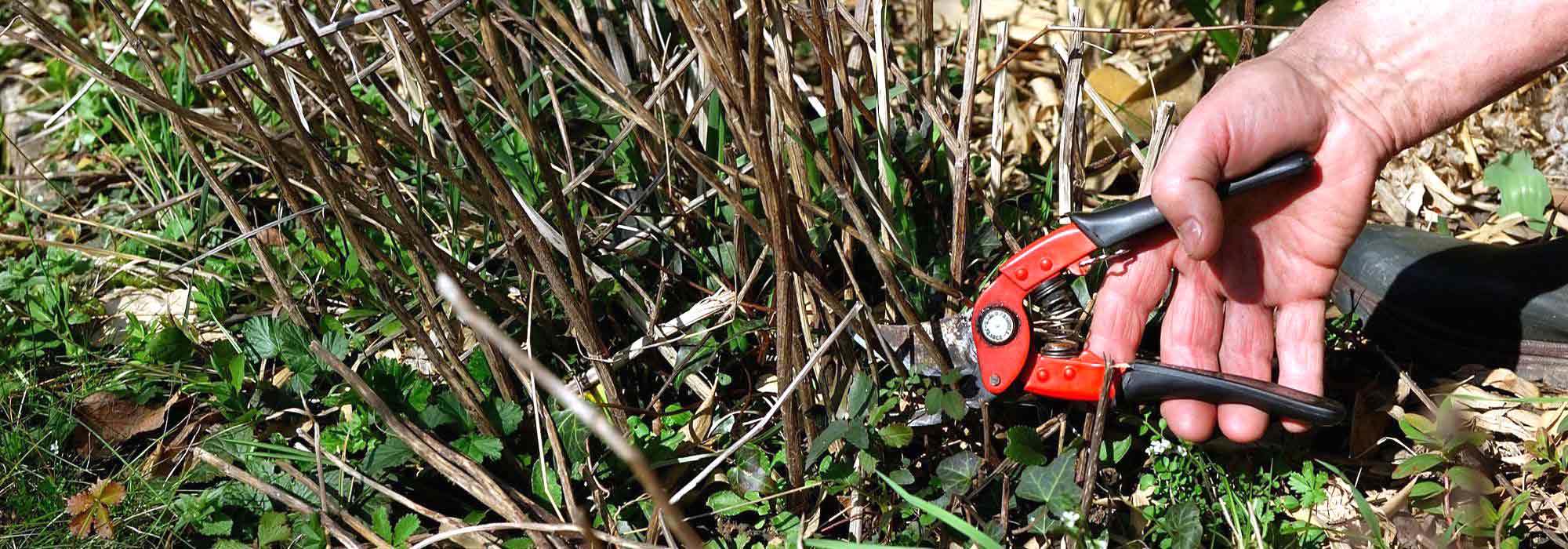
What to prune in spring?
Pruning tasks to be carried out from April to June
Contents
The beautiful days have returned, and it’s time to give a fresh look to your flower beds and your entire garden. Pruning allows for a thorough spring clean by removing faded stems and leaves, while aerating plants and bushes. It also helps maintain a lovely shape and ensures generous flowering.
If you’re unsure about making the right cuts and which plants to prune, which bushes to prune in spring or conversely, which plants not to prune, here’s a quick recap on pruning plants in spring.
→ Remember that trees and hedges should not be pruned between 15 March and 31 July, the breeding and nesting period for birds. This recommendation is essential for their survival!

Ornamental trees and conifers
Since it is not advisable to prune trees during the bird nesting period, except in a few rare cases, any necessary pruning should ideally be done before the sap rises at the end of winter (January-February). If not, don’t panic; you can also do it in autumn (November-December), avoiding any potential frost periods.
-
Pruning of the Olive tree can be carried out from March to mid-May, but always with the aim of preserving the nests of our feathered friends, we recommend that you perform this pruning before 15 March. Pruning an ornamental olive tree is not very demanding; it is gentle and helps maintain a beautiful shape. Each year, carry out a spring clean-up and a thinning cut by removing dead branches and those that are tangled to lighten the centre of the branches:
- Clear the trunk by removing the less vigorous branches
- Remove any suckers at the base of the trunk
- In the South, to encourage olive production, prune every 2 or 3 years, as the fruits appear on the wood from the previous year
- The strawberry tree has a slow growth rate and does not really require pruning. However, if your strawberry tree needs pruning, only intervene in spring to remove any dead shoots or to carry out a very light refresh to maintain a balanced shape.
- In March-April, cut back the Eucalyptus to ground level if you wish to rejuvenate them. They will form beautiful, bushy plants 2-3 m high. Alternatively, you can perform a transparency pruning to aerate the branches, clear the background, and highlight the bark. You can also carry out a simple maintenance pruning to remove dead or broken branches.
- Although optional, light annual pruning of Mimosas is recommended, especially if the tree is exposed to wind: after flowering, in April, shorten the branches that have flowered by about half their length. This operation also helps prevent the formation of pods that unnecessarily exhaust the plant. A spring pruning can also be carried out to remove branches that have suffered from the cold and to rebalance the tree’s shape. Be careful, the Four Seasons Mimosa (Acacia retinodes) does not tolerate severe pruning well!
- To encourage a bushy shape and the formation of ament-bearing branches on the Goat willow (Salix caprea), prune it very short (5 cm) every year in April after flowering.
- For topiary or hedging; prune the Yew (Taxus baccata) at the beginning of spring (April) to give it the desired shape.
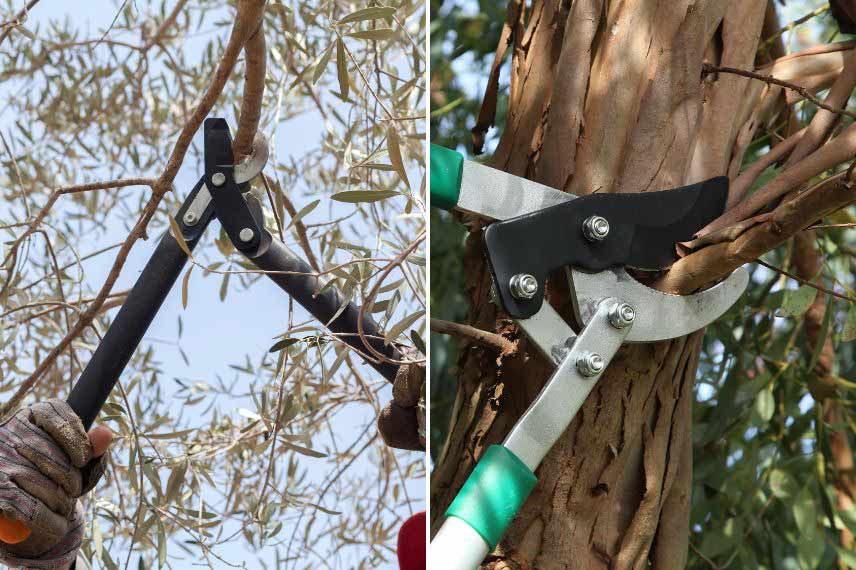 Early spring is the right time to prune olive trees and eucalyptus.
→ Sophie’s advice: very polluting, burning green waste is prohibited. The ideal solution is to invest in a garden shredder to use your pruning waste as mulch in the garden. If not, take them to the recycling centre!
Read also
What to prune in autumn?Fruit trees and soft fruits
Before pruning fruit trees, always remember to disinfect your pruning shear with alcohol to prevent the spread of fungal or viral diseases.
- The green pruning of fruit trees generally takes place from the very end of spring (June), when the fruits are forming and the tree begins to shed malformed or poorly fertilised fruits. This green pruning applies to:
- pome trees (apple, pear, quince…) trained in small espalier forms
- stone fruit trees (cherry, plum and mirabelle, apricot), which tolerate pruning well at this time, whereas their poor healing limits winter interventions
- the vine: bud thinning and shoot removal (removal of suckers)
- The pruning of the fig tree is important. Its hollow wood heals poorly, so it is best not to prune it too severely. In the coldest regions, prefer a pruning at the beginning of spring, during the sap rise: in April, it is recommended to pinch the young shoots, meaning to cut off the tip. For well-formed fig trees, cut above the 2nd eye the shoots of the year. From September to November, you can cut the shoots that have borne fruit to improve the next fruiting and the upcoming harvest. Remember to coat the pruning wounds with healing paste
- Citrus trees should be pruned after fruiting, either at the end of winter or at the beginning of spring (April); this way, they will have time to produce new branches that will bear the next fruits. Ensure that all risk of frost is eliminated before carrying out this pruning. It is best to start pruning citrus trees when they are young, after planting. Clementine trees need to be pruned every year, while orange trees and lemon trees can be pruned every year or every two years. Citrus trees grown in pots require more frequent pruning than those in the ground. For proper intervention, consult our advice sheet: Pruning citrus trees: when and how?
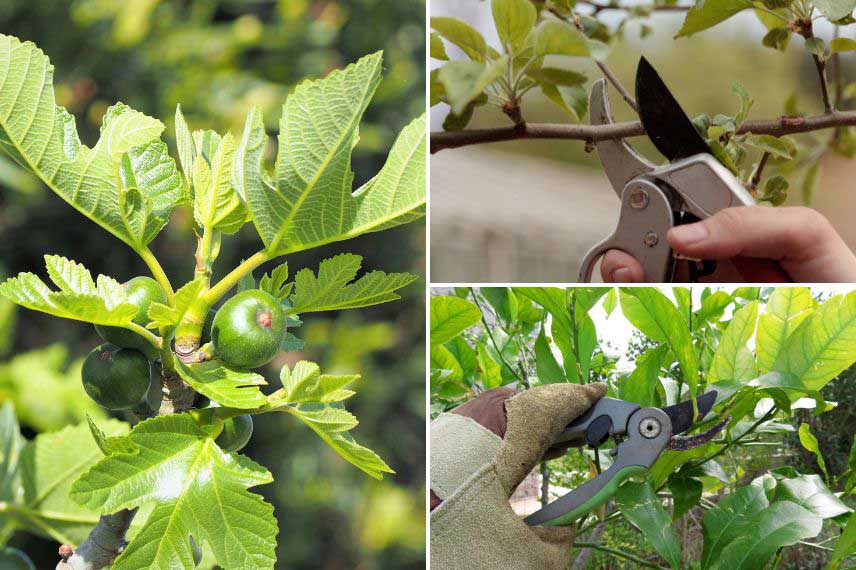 Early spring pruning is recommended for fig trees and citrus trees. Then in June, carry out green pruning on fruit trees.
Roses
Prune repeat flowering roses at the beginning of spring, just before the vegetation starts to grow again, whether they are climbing or bush roses:
- remove dead or damaged wood
- cut back crossing stems and check that your rose has not formed suckers. Keep between 3 and 5 branches, a few more for small-flowered roses
- remove 1/3, or even half of each branch depending on the vigour of the rose, ensuring a balanced habit. You can also prune to 2 or 3 eyes on the weakest shoots and to 5 or 6 eyes on the strongest. Cut at an angle 0.5 cm above an outward-facing eye
- severe pruning is only recommended when you want to encourage an ageing rose to produce new shoots and only every 3 to 4 years
→ Learn more with expert advice from Virginie in Pruning Roses, Techniques and Tips, and When to Prune Roses, Key Periods and Our Tips
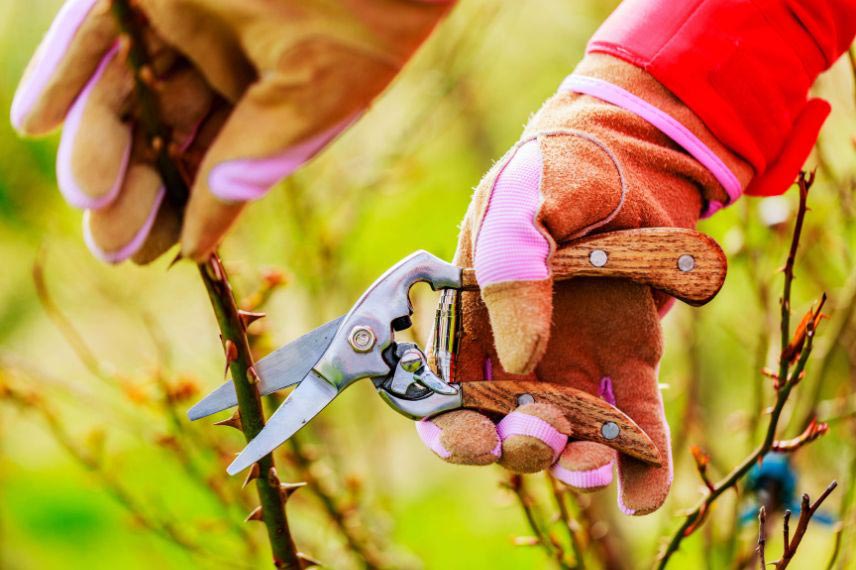 Pruning repeat flowering roses takes place at the beginning of spring
Read also
What to prune in winter?Ornamental and hedge bushes
- Winter-flowering shrubs should be pruned in March-April, when the last flowers have faded. Flowering will occur on the shoots formed the following year.
- For shrubs that flower in spring (Japanese quince, flowering almond, forsythia, flowering currant, lilac, spring tamarisk…) wait until the end of flowering, otherwise you will miss out on flowers this year. Pruning should be done within 1 to 2 months after flowering ends. If you prune too late, you risk removing the buds that form as early as summer to bloom in the following spring, thus missing out on flowering the next year. Pruning deciduous spring-flowering shrubs involves removing older shoots to encourage the growth of more vigorous and floriferous shoots. Evergreen shrubs (Osmanthus delavayi, rosemary, berberis, Japanese azaleas, Pittosporum tobira, Leptospermum…) are lightly pruned just after flowering. For Mexican orange blossom, removing the fruits leads to a resurgence of flowering in autumn. For more information, see our advice sheet: Pruning spring-flowering shrubs.
- Pruning bay laurel (Laurus nobilis) is not essential, but may be necessary depending on its location in the garden. It can also be shaped into topiary for a decorative form. Pruning occurs after flowering, in spring (and if necessary, a second time in autumn). It is also possible to cut back bay laurel completely to 20 cm above the ground, especially in the case of severe frosts.
- Prune before the end of April (and if possible before 15 April) all summer-flowering shrubs. Shrubs should be pruned with pruning shears, loppers, or a pruning saw for larger branches.
- Pruning hydrangeas should be done at the beginning of spring, as soon as the new leaves begin to appear.
- The oleander (Nerium oleander) flowers on the wood of the year; pruning should occur every 4 to 5 years for plants in the ground, every 2 years for those in pots, knowing that the shrub should be at least 5 years old before it starts to be pruned. Perform this pruning at the beginning of spring, in April (otherwise, you will do it just after flowering). For more information, see our tutorial that explains in detail how to prune oleander.
- On Polygala, prune any overhanging shoots if necessary at the end of spring before it begins a second wave of flowering. However, in general, the bushy Polygala does not require pruning, as it struggles to regrow on old wood.
- At the beginning of spring, remove excess bamboo shoots by cutting them a few centimetres below the ground. Take the opportunity to remove old dry stems, which can serve as stakes.
- In light of the biodiversity crisis we are witnessing, as with trees, do not prune hedge shrubs during the breeding and nesting period of birds (from 15 March to 31 July).
- However, you can prune evergreen shrubs forming borders, low hedges, or topiary such as Lonicera nitida and boxwood, which produce shoots in all directions as the good weather arrives. This pruning serves to give them a homogeneous shape and refresh them with a well-sharpened hedge trimmer. Don’t hesitate to use a string line for guidance.
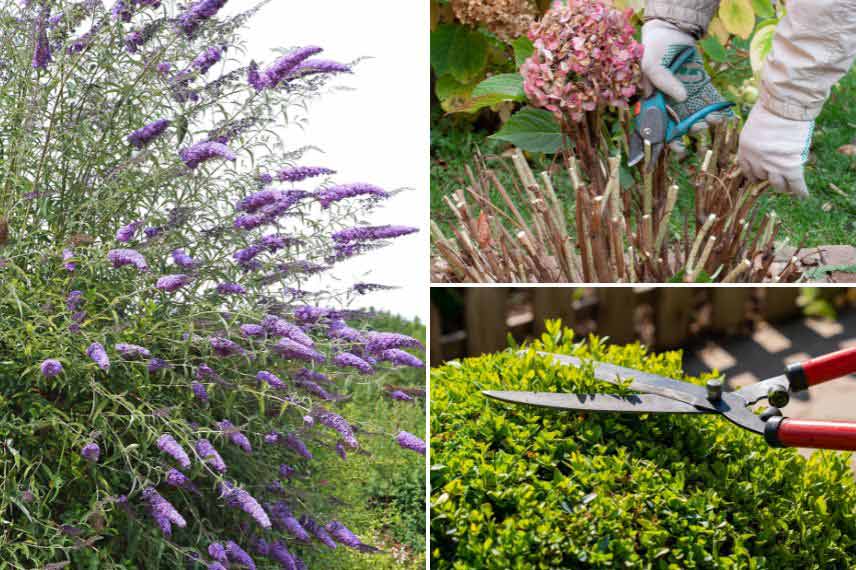 Perform spring pruning on summer-flowering shrubs and on topiary.
Climbing
- The pruning of climbing plants generally takes place in spring, between March and April. This pruning encourages new shoots and promotes the multiplication of flower buds. However, be careful to only proceed when the risk of frost has passed.
- Prune spring-flowering climbing plants after flowering.
- To limit the growth of Virginia creeper, several annual prunings are necessary: at the end of winter, late February to early March, when the vegetation has not yet resumed and the branches are more visible. This will simplify the pruning and help limit the growth of this beautiful climber. Then at the end of spring, between May and June to maintain the branches.
- The pruning of the bougainvillea serves to shape and guide it as desired, balance the branches, and maintain its overall shape. Wait until early spring when frost is no longer a concern. The bougainvillea flowers on two-year-old wood, so it is essential to prune the current year’s shoots to avoid compromising flowering. Find our tips in the article: How to prune and train a bougainvillea?
- Prune the winter jasmine (Jasminum nudiflorum) in early April to encourage generous flowering the following year, maintain a dense habit, control its shape and expansion, and rejuvenate it.
- Solanum jasminoides climbing should be pruned in spring before flowering: cut back the stems strongly to three to four buds about 30 cm from the ground, remove old branches and broken stems, and it will flower even better.
- If your ivy dresses a facade or gable, avoid, by pruning it each spring, allowing it to reach the roof. It could sneak into the smallest crevices and cause damage.
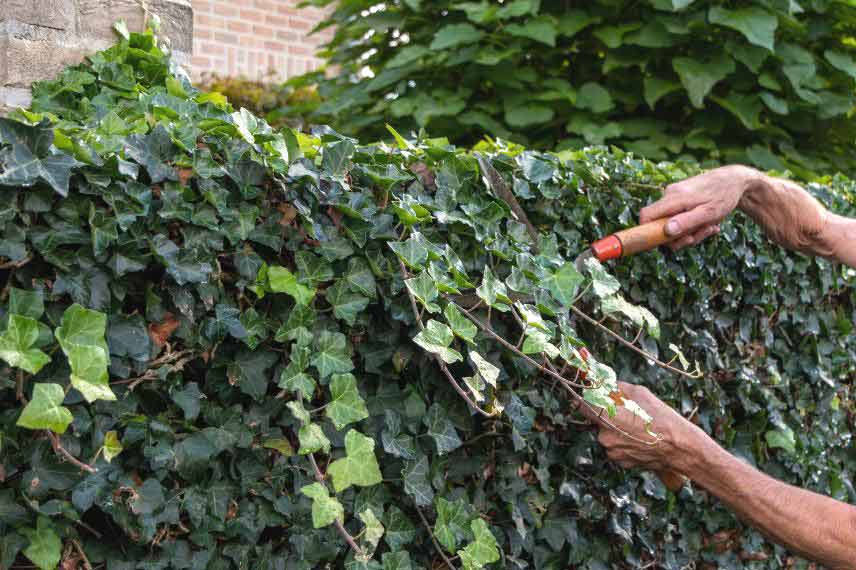
Climbing plants can be pruned in spring
Perennials, grasses and bulbs
Pruning perennial plants gives them light and space; it’s the great spring clean, with dry foliage and faded stems having played their protective role for the heart of the plants during winter.
- At the end of March, carry out a severe pruning of your perennials down to the ground and remove all dry or damaged parts using pruning shears or shears.
- Pruning shrubby sages is done at the very beginning of spring, from late March to the end of April, or even early May in areas with late frosts. Our illustrated tutorial explains everything you need to know about when and how to prune a shrubby sage.
- Winter heathers (Erica carnea and Erica (x) darleyensis) bloom in winter between October and May depending on the climate. Pruning will therefore take place from the end of winter to mid-spring.
- At the beginning of spring (April), you can pinch back perennials such as santolines and cinerarias to make them denser.
- In May-June, lightly trim the faded rock garden plants with shears, such as Iberis, Aubrietas, or golden baskets.
- The Chelsea chop is a green pruning practice for perennial plants: it involves reducing them so they become more vigorous and have a longer flowering period. This pruning is carried out from mid-May to early June (or even until mid-June for the latest perennials, such as asters or garden chrysanthemums) on perennials with a ramified habit that flower in summer or autumn (between July and October). Depending on the plants, you will need to cut them back by about a third using disinfected and well-sharpened pruning shears for a clean cut. Depending on whether you want to stagger or prolong the flowering, you will prune all the stems of a plant or just part of them. The perennials that benefit most from this method of pinching are Penstemon, campanulas, sages like Salvia nemorosa, Phlox, Leucanthemum, Hélénies, Rudbeckia, Helianthus, asters, and chrysanthemums or even gauras.
- Young shoots of dahlias are pinched at the end of spring (or at the very beginning of summer depending on the regions). By pinching your dahlias, meaning cutting the tip of the main stem, you will force them to branch out and become denser, resulting in more stems and more flowers.
- Some plants, like wormwood, need to be pruned to prevent their insignificant flowering, highlight their lovely foliage, and make them denser.
- Throughout spring, during flowering, I recommend removing faded flowers every two days from your perennials.
- Evergreen perennials do not require any pruning. For Phlomis, remove the decorative flower spikes in spring if you left them all winter, and take the opportunity to also remove any leaves damaged by the cold. Be cautious of the allergenic properties of this bush when pruning.
- Although most grasses are pruned at the end of winter, blue fescue (Festuca glauca) and angel hair (Stipa tenuissima or Stipa tenuifolia) can be pruned between late April and mid-May. You can simply brush them regularly, but the more radical method is to cut them back to the ground. This forces them to form fresh, well-coloured clumps of foliage for the entire summer. Be careful, if you cut them too early in the season, they may not recover.
→ For a zero-waste garden, Ingrid explains what to do with the pruning of perennials and cut flowers.
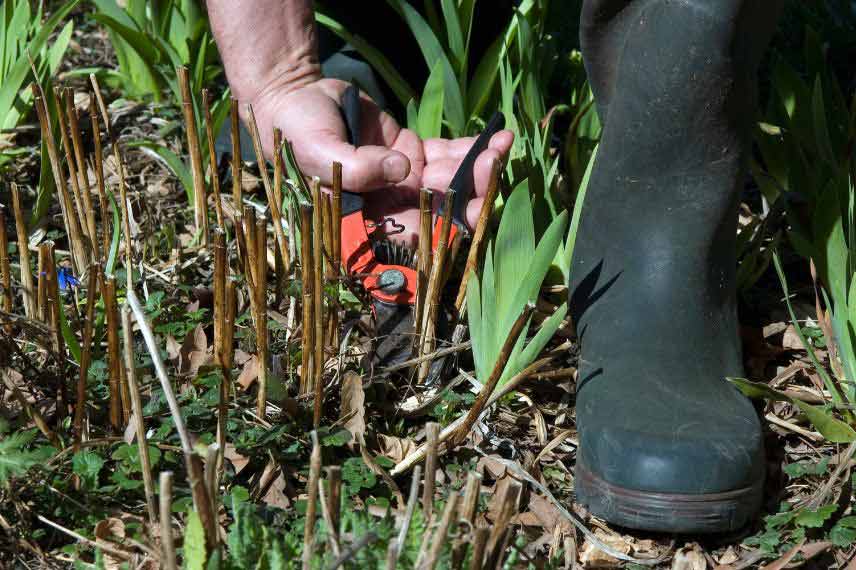 Perennials are pruned at the beginning of spring and then some are pinched again around mid-May.

- Subscribe!
- Contents
Comments