


























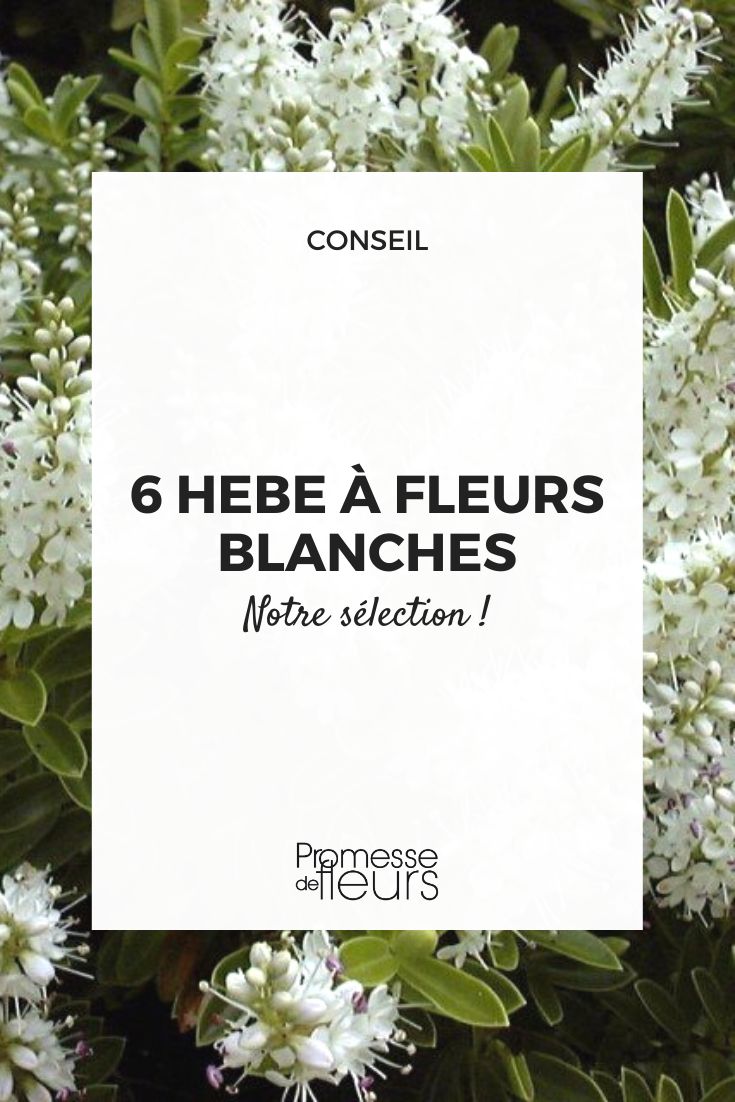
6 White Flowering Hebe
To adopt on the terrace or in the garden
Contents
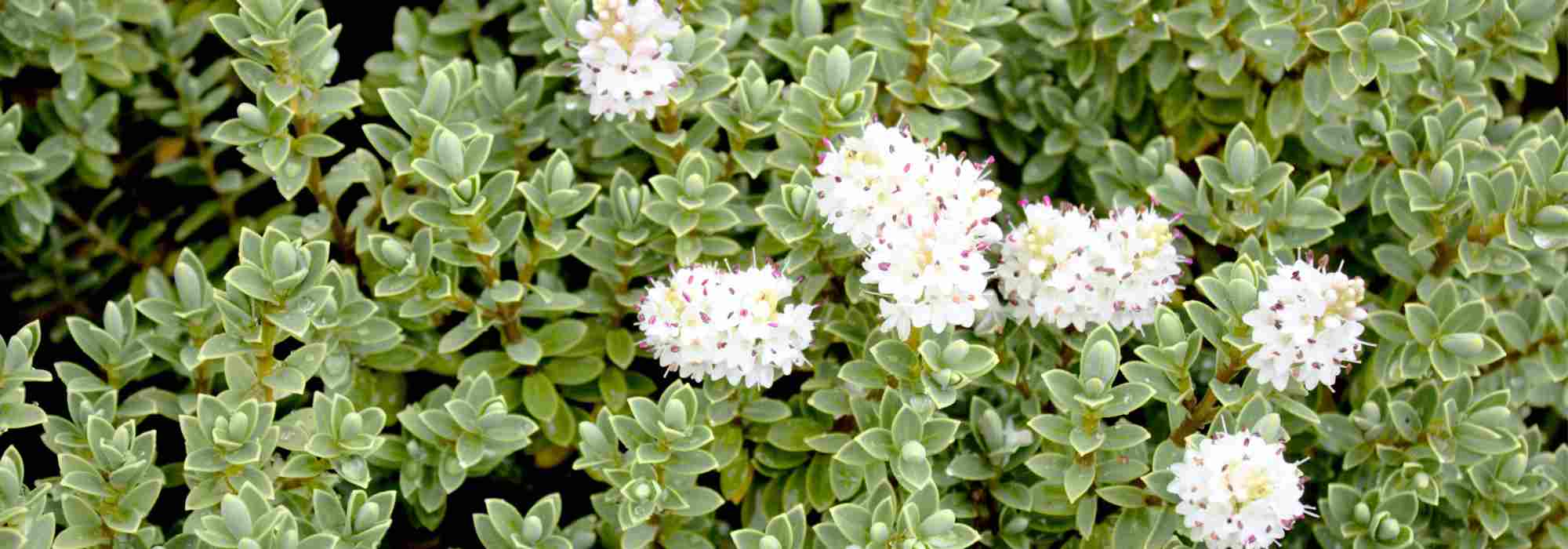
Hebe or shrubby veronicas are attractive bushes known for their summer flowering. With their spikes in various colours, they provide a striking presence in sunny borders, helping to structure the decor of a rockery, along pathways, or making a statement in a large pot on the terrace. A bit tender, they are easy to grow in mild climates and are perfectly suited to coastal areas and the Mediterranean climate. They prefer sunny situations and well-drained soils. They form a small rounded bush with very dense evergreen foliage, ranging from 20 cm to 1.20 metres in height depending on the species and varieties. The white-flowered varieties fit into all types of gardens: timeless, they highlight more colourful plants in a contemporary garden, or in a romantic garden, they add a pure and elegant touch.
Discover our white-flowering Hebe, suitable for growing both in the ground and in pots!
And to successfully cultivate Hebe, check out our article “shrubby veronica: planting, pruning, and care”.

Hebe ‘Green Globe’
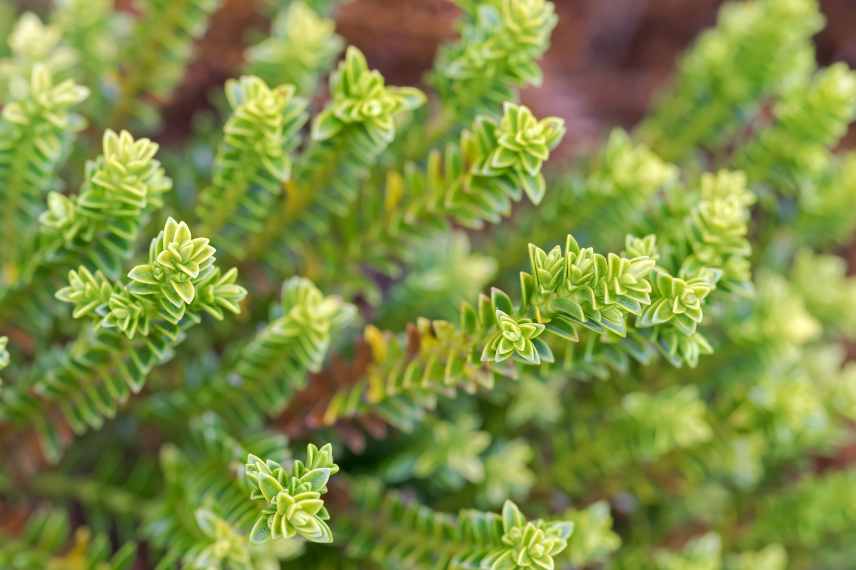
‘Green Globe’ (also known as the Hebe ‘Emerald Green’) is a reliable choice, essential in all gardens, even small ones, due to its moderate growth. Particularly compact, it forms a small, regular and bright ball measuring 30 to 40 cm in all directions. From June to August, the evergreen, fine and dense foliage is adorned with subtle white spikes. Its soft yellow-green leaves resemble scales that evoke heather or cypress and give this variety the appearance of santolina. It remains beautiful and maintains a neat appearance in all seasons, all qualities that make it suitable to replace boxwood in pathway borders. This is a variety that is not very hardy (-8°C), best reserved for outdoor planting in mild climates.
Depending on your region, this small shrub will make a lovely dense ball to showcase in a large pot on a terrace or will structure a very sunny rockery. In the garden, the contrast in shape will be very pleasing with white Lavenders, such as Lavandula angustifolia ‘Silbermöwe’.
Hebe rakaiensis or Rakai Hebe
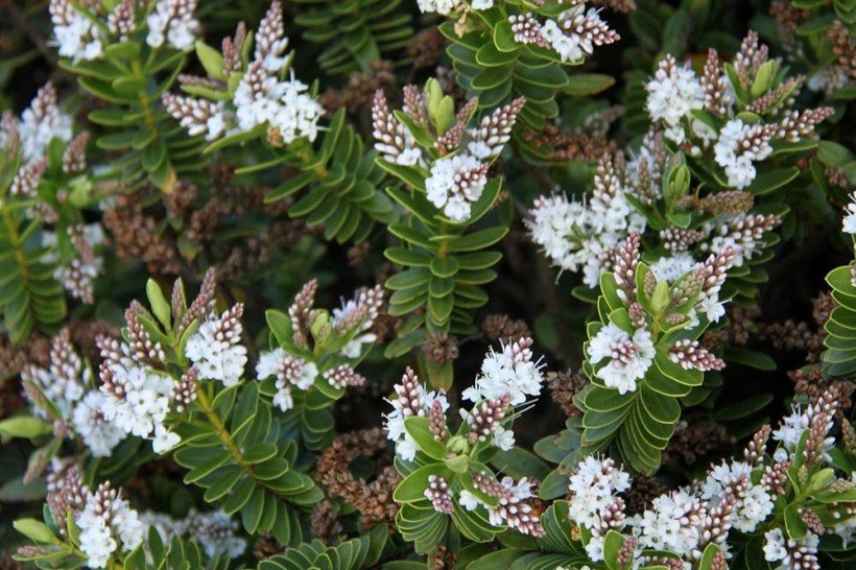
The Hebe rakaiensis is a stunning variety with pure white flowers enhanced by a green centre. Throughout summer, it is covered in a multitude of short, bright spikes of flowers, creating a beautiful contrast with its small, glossy bright green leaves. It develops into a compact ball, reaching about 90 cm in height and 1.20 m in spread at maturity. This is a lovely bush that remains interesting for a good part of the year, making it valuable for decorating terraces and balconies or to brighten up a large groundcover in dry soil. It is one of the hardiest shrubby veronicas, tolerating -12/-13°C in porous soil and is very accommodating regarding soil conditions. It will add a refined and luminous touch to a sunny rockery surrounded by Lithodora diffusa ‘Alba’, a lovely variety with pure white flowers.
Discover other Hebe - Shrubby Veronica
View all →
Available in 1 sizes
Available in 1 sizes
Available in 1 sizes
Available in 1 sizes
Available in 1 sizes
Available in 1 sizes
Available in 1 sizes
Available in 1 sizes
Available in 1 sizes
Available in 1 sizes
Hebe vernicosa
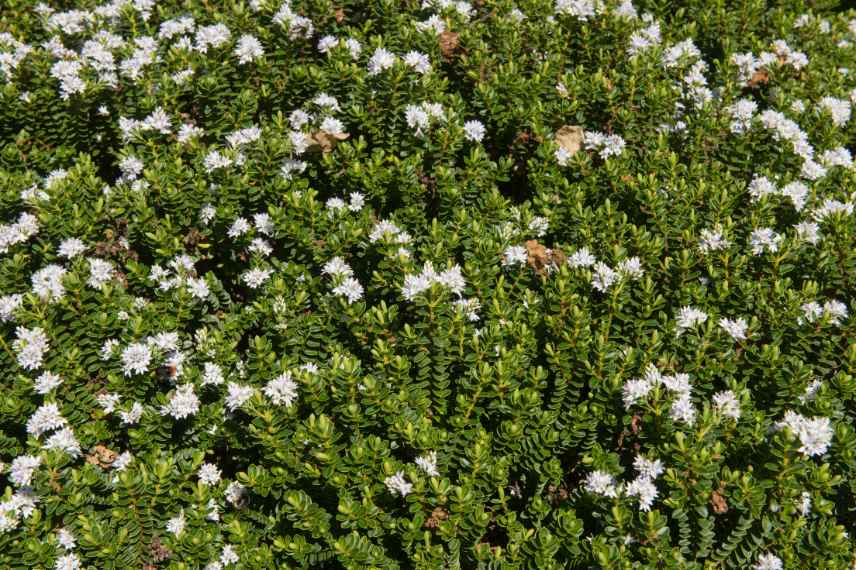
Smaller, the Hebe vernicosa is a low and very dense variety of shrubby veronica, measuring 50 cm in height and 90 cm in width. It has a compact and spreading habit. From its lovely glossy dark green evergreen foliage emerges in summer, a multitude of pure white flower spikes, contrasting beautifully with the vegetation. It is certainly one of the most floriferous varieties of hebe with small flowers. Hardy down to -7°C, in open ground, it will require winter protection and good drainage.
It will find its place in all gardens, even the smallest, planted in borders, in dry rockeries or even used in a large pot on the terrace or balcony, treated as topiary like boxwood or left in free form. Position its small bushy shape in full sun and well-drained soil, alongside a Lavandula angustifolia ‘Hidcote White’, or Hemerocallis ‘Gentle Shepherd’ with large ivory white flowers.
Read also
How to pair Hebe?Hebe ochraceous
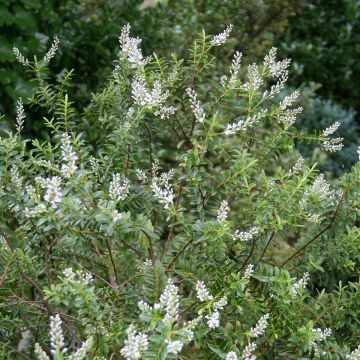
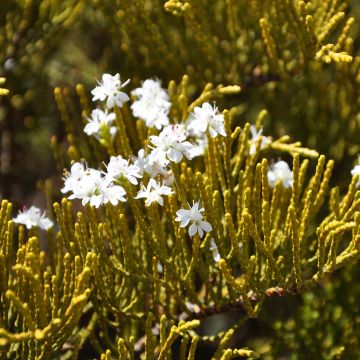
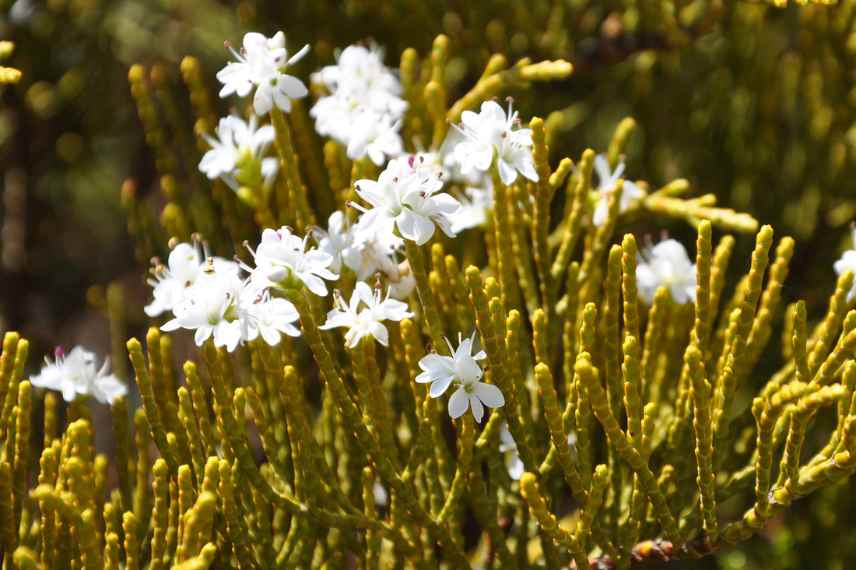
The Hebe ochracea surprises us with the hue of its foliage. It showcases stunning scale-like leaves that are truly orange-green to golden-brown, reminiscent of a cypress. Its splendour is fully revealed when it presents its lovely white flowering spikes during June and July. Over time, it forms a beautiful bush reaching 60 cm in height and 80 cm in spread, with magnificent orange reflections. With its spreading habit, it makes an excellent groundcover to adorn a large bank, a rockery, or a container by the sea, as like all hebes, it is perfectly suited to drought and sea spray. Quite cold-resistant (Zone 7b (-15°C to -12.2°C)), it can withstand short frosts, provided the soil is perfectly dry. With its truly sunny foliage, it conquers the most challenging areas of the garden as long as they are sunny and well-drained. Its golden foliage pairs well with the blue flowers of lavenders, rosemaries, or Teucrium chamaedrys that appreciate the same conditions.
Hebe pinguifolia ‘Sutherlandii’
This hebe stands out with its fine almond-green foliage, shining in the sunlight. The Hebe pinguifolia ‘Sutherlandii’ is a particularly bright variety, dressed in shades of grey and white. Its dense, very soft grey-green foliage is covered from June to August with a myriad of white flowers. Of medium size, 50 cm in all directions, it forms a true ball of light in a harmonious blend of shades. Its hardiness is around -12°C, making it a charming little rounded bush for the terrace or rockery in our gardens that are least affected by frost.
Its silvery foliage pairs well with the grey attire of the ‘Artemisia alba ‘Canescens’ in a sunny border. Its summer flowering also complements that of the buddleias, as well as their sometimes silver-tinted foliage, like that of the Buddleia ‘Silver Anniversary’.
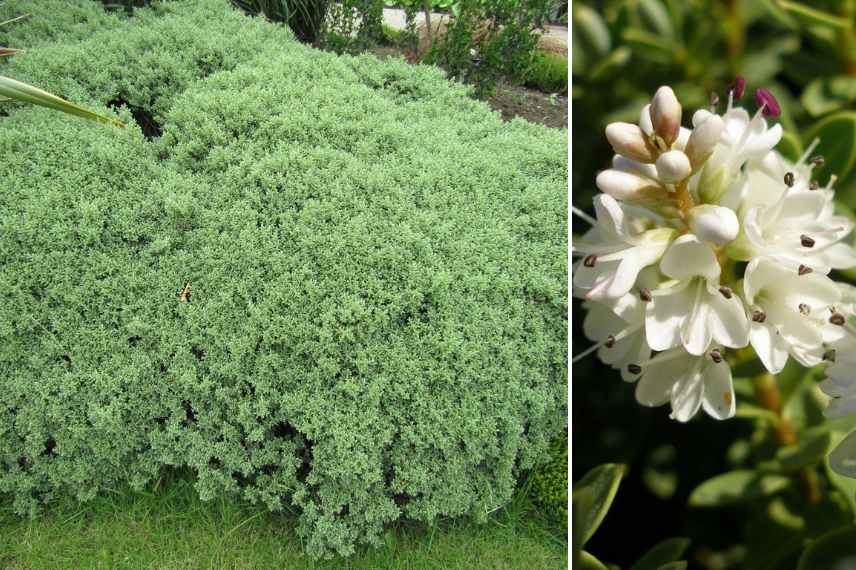
Hebe pinguifolia Sutherlandii (© Leonora Enking)
Hebe brachysiphon
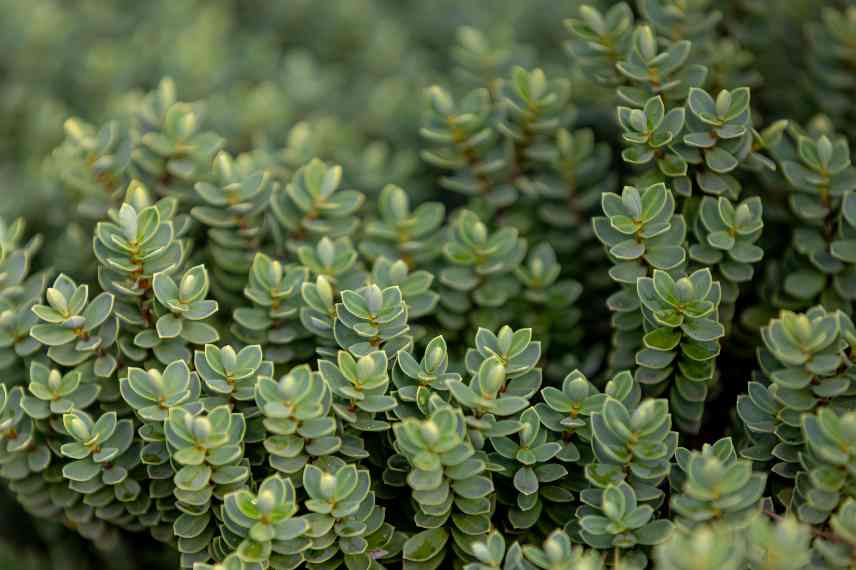
Here is a species appreciated for the graphic quality of its foliage, as well as for its flowering from spring to summer. Hebe brachysiphon or Veronica brachysiphon develops a bushy, rounded clump that can reach up to 1.50 m in all directions. Its narrow leaves, a beautiful glossy olive green, are inserted very symmetrically along the branches. From May to July, depending on the climate, small, bright white flowers gathered in spikes at the tips of the branches adorn this graphic foliage. With a hardiness not exceeding -10 °C, it will thrive in well-drained soil, in a sunny position, in open ground in regions where winters are mild.
Like a boxwood, it can form low hedges by the sea. It creates a large ball of light that fits perfectly into a dry contemporary setting with Echinops bannaticus ‘Star Frost’ featuring silver globes, or even in combination with echinaceas. It will also easily find its place alongside an Escallonia Iveyi in a coastal garden.
- Subscribe!
- Contents
Comments