






























7 shrubs that withstand cold and drought
Plants that withstand harsh winters as well as drought
Contents
For a sustainable garden, the plants cultivated must be suited to the growing conditions. However, with the current climate disruption, the context is evolving: more and more regions are facing an unusual situation where water scarcity and high temperatures are becoming regular.
Choosing drought-tolerant plants is therefore useful. However, winters can still be harsh, and tolerance to severe frosts is sometimes necessary as well. Here is a selection of 7 shrubs to adopt in the garden, chosen for their dual resilience.

Hawthorn: a low-maintenance shrub with a generous spring flowering
The hawthorn, also known as white thorn (Crataegus monogyna in Latin), is a beautiful shrub valued for its long and abundant spring flowering. Between April and June, the shrub is almost completely covered by a cloud of small single flowers. Their colour is a delicate rosy white, just enhanced by a nest of stamens with purple-pink anthers. The flowers are both fragrant and melliferous.
This bright flowering will then give way to a very ornamental fruiting in autumn, consisting of red berries that delight the birds.
The thorny branches of this shrub bear dentate leaves of a bright light green, with a white underside. Deciduous, the foliage disappears in autumn.
Quite imposing, the hawthorn can reach heights of 4 to 10 metres. It is therefore more suited to large spaces, cultivated in hedges or as a specimen plant. Easy to grow, it thrives in full sun or partial shade, in all types of well-drained soils (where water can flow), even calcareous ones. Low-maintenance, it tolerates dry soils and heat, but is also very resistant to cold, withstanding frosts of up to about -30°C.
For more information: Hawthorn, crataegus: planting, pruning, care
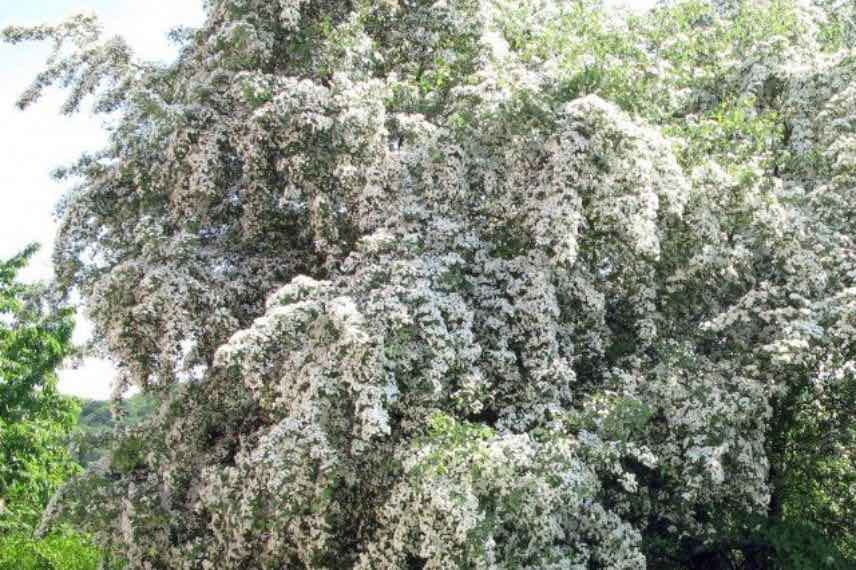
Crataegus monogyna
Read also
7 Cold and Drought-Resistant TreesCotinus coggygria: an astonishing flowering and evolving colourful foliage
Smoke bush or Cotinus get their name from their impressive feathery flowering that certainly catches the eye. They provide a stunning display in the garden throughout summer and into early autumn. However, the foliage of this deciduous shrub is equally noteworthy: it can be purple (‘Royal Purple’, ‘Winecraft Black’), green (species type, ‘Red Spirit’), blue-tinged (‘Old Fashioned’) or even golden (‘Golden Lady’). The colour often changes with the seasons.
It’s hard to find a more accommodating shrub, as it tolerates all dry, even arid, soils, including calcareous ones. It also withstands wind and urban pollution. To top it all off, it is hardy down to -20°C. Grow Cotinus coggygria in full sun or partial shade in well-drained soil to prevent it from becoming waterlogged in winter.
The larger varieties will thrive in free-standing hedges, at the back of borders, or even as solitary specimens. The smaller ones can easily be grown in pots, but watering will be essential during prolonged dry spells (the substrate dries out more quickly, and the plant cannot access water from deeper soil).
For more information: Cotinus, smoke tree: planting, pruning, maintenance
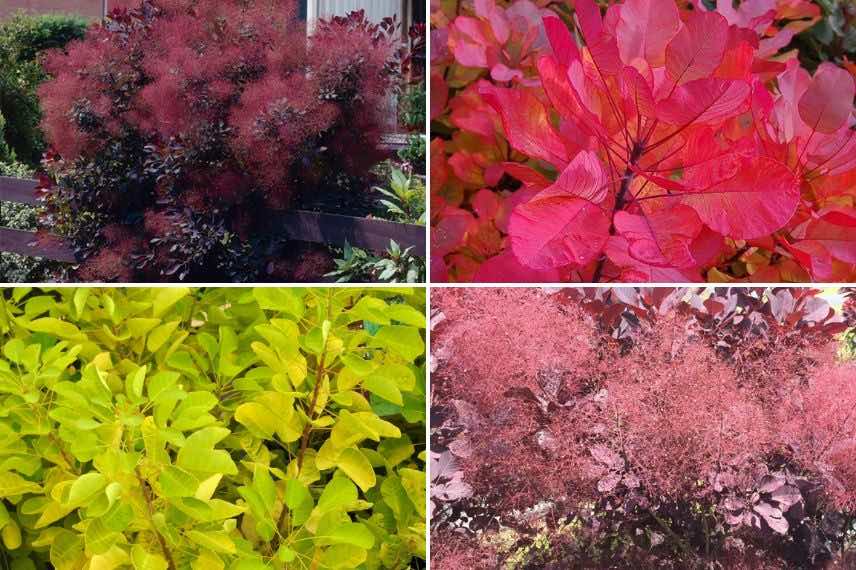
Cotinus coggyria ‘Royal Purple’, ‘Old Fashioned’, ‘Winecraft Black’ and ‘Golden Lady’
Discover other Drought-resistant bushes
View all →
Available in 1 sizes
Available in 1 sizes
Available in 1 sizes
Available in 1 sizes

Available in 1 sizes
Available in 1 sizes
Available in 1 sizes
Available in 1 sizes
Available in 1 sizes
Available in 1 sizes
Some varieties of Photinia x fraseri: evergreen and hardy shrubs
If Photinia is one of the stars of our hedges, it’s due to its ease of cultivation and beautiful evergreen foliage, often very colourful. This is true for ‘Devil’s Dream’ with its red foliage, or for the dwarf variety ‘Little Fenna’, which produces bright pink foliage turning green. These varieties are among the hardiest, tolerating frosts down to about -18°C, provided they are sheltered from cold, dry winds.
In spring, they reveal large umbels of small cream flowers, whose fragrance attracts pollinating insects.
Their modest silhouette (less than 1 metre for ‘Little Fenna’ and 2 metres for ‘Devil’s Dream’) will be wonderful in the garden, in borders or as a hedge. Their foliage will remain beautiful in all seasons.
Grow them in full sun in light, well-drained soil, rich in organic matter. They will only struggle in overly heavy or chalky soils. Once well established, these shrubs will be tolerant of drought.
To learn more: Photinia: planting, pruning and maintaining
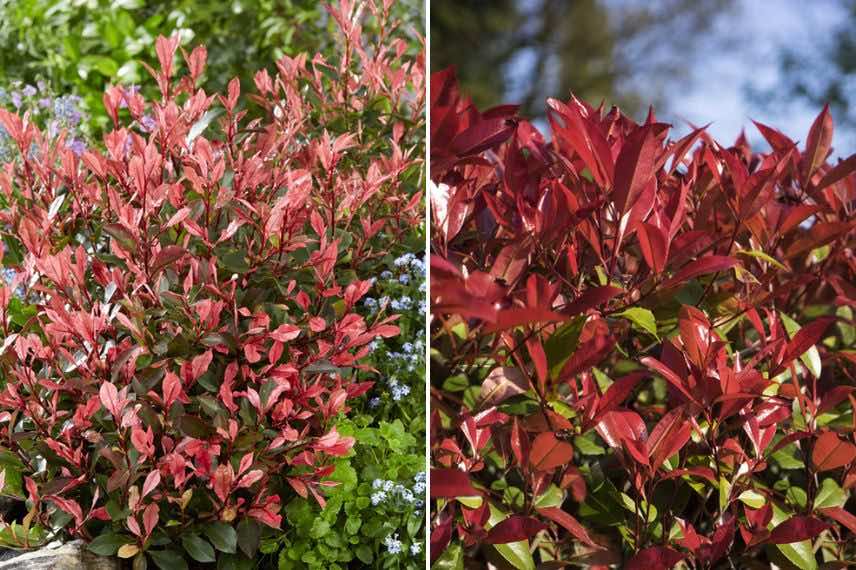
Photinia fraseri ‘Little Fenna’ and ‘Devil’s Dream’
Read also
7 drought-resistant melliferous bushesPrunus spinosa: a shrub as beautiful as it is resilient
The Prunus spinosa or blackthorn is one of those shrubs that is resistant to both heat and cold.
We are well acquainted with Prunus for their beautiful early flowering in spring. This species is no exception, with its delicate pure white flowers between March and April, simply enhanced by golden yellow anthers. This flowering occurs on branches that are still devoid of leaves. Our shrub is then adorned with sloes, small edible black fruits appreciated by birds.
This thorny shrub will quickly bring a rustic and wild touch to any garden. Its bushy silhouette reaches about 3 to 4 metres in all directions. It will fit perfectly in a defensive or natural hedge, allowing light to pass through in winter thanks to its deciduous foliage.
A sun-loving shrub, the blackthorn is a robust plant that tolerates dry soils while being hardy down to -20°C. Once established, it will no longer need watering. It is best planted in clay-limestone soil, but it also adapts to more stony ground, where it will just develop a little more slowly.
For more information: Japanese cherry trees: planting, pruning, and caring for
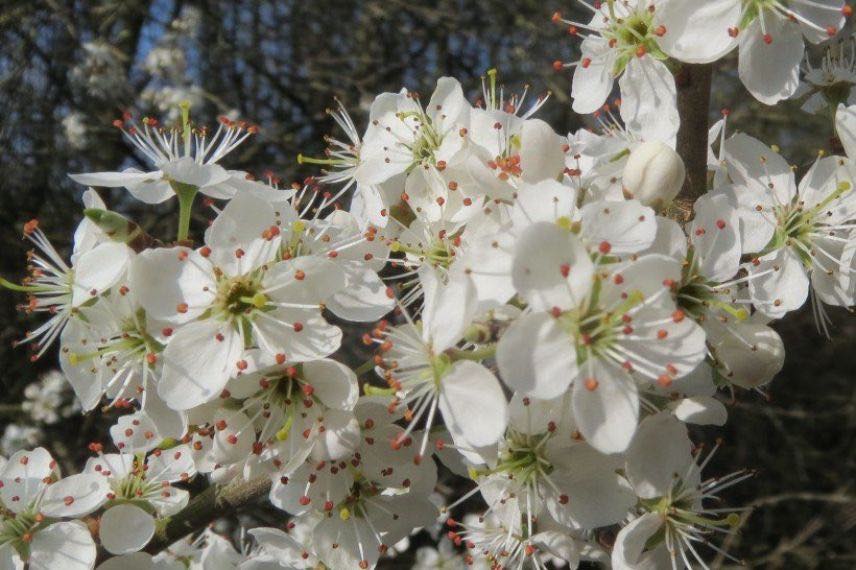
The Prunus spinosa
Cotoneaster lacteus: an evergreen foliage and great ease of cultivation
The Cotoneaster lacteus or wooly cotoneaster boasts numerous ornamental advantages. It features a well-green evergreen foliage that remains attractive throughout the year. At the end of spring, it rewards us with a lovely white-pink flowering in panicles, slightly fragrant and highly melliferous. This is followed by small red berries, which delight the birds.
This vigorous species is very tolerant. It withstands even marked droughts, as well as frosts of around -18°C to -20°C.
Its rapid growth and tolerance to pruning make it ideal for screening or boundary hedges, but it can also be grown as a free-standing hedge, at the back of a border, or as a specimen plant. It adds a rustic and natural touch, or can present a neat appearance if pruned. At maturity, it reaches about 3 metres in all directions.
Low-maintenance, it can be cultivated in all situations, all soils, and all exposures. It thus allows for the greening of partially shaded or shaded areas that are not always easy to vegetate.
For more information: Cotoneaster: planting, pruning, maintaining
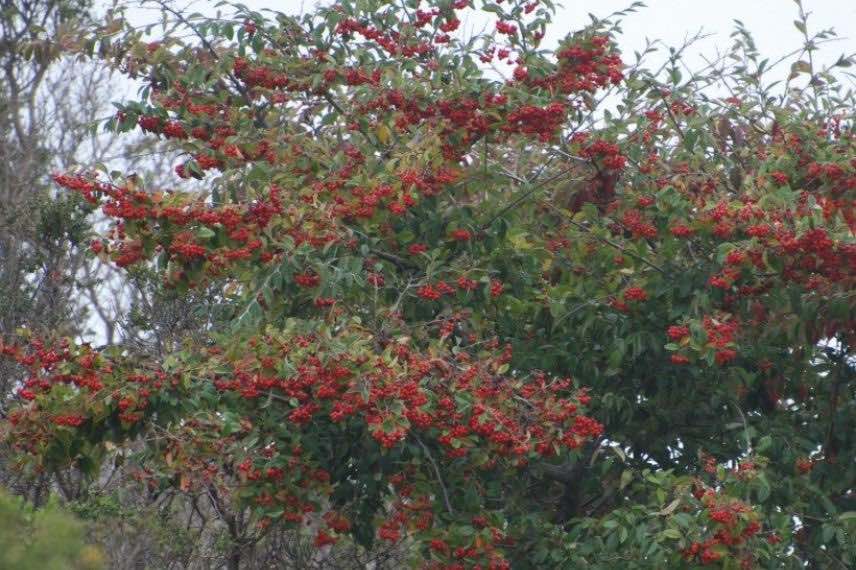
The Cotoneaster lacteus
Gorse: a sunny flowering for poor, well-drained soil
The common gorse (Ulex europaeus) is also known as “spiny broom” or “furze.” It is commonly found in the wild in sunny coastal regions. Undemanding, it thrives in well-drained soils, even poor, sandy, or arid conditions.
This bushy shrub reaches heights of 1 to 2 metres and has a similar spread. It features formidable thorns, making it an ideal candidate for creating impenetrable defensive hedges. It can also be planted in rockeries.
The long flowering period extends from February to June. It consists of small, bright yellow papilionaceous flowers, transforming the plant into a true luminous solar ball. Its flowers emit a delicious almond-like fragrance, or a coconut scent in very sunny conditions. After flowering, small pod-shaped fruits appear, ranging in colour from brown to dark purple.
The common gorse thrives in full sun, in warm situations. Resistant to diseases, frost down to about -20°C, and of course to drought, it requires no maintenance.
Note: The common gorse does not tolerate transplantation, so be sure to choose its permanent location carefully from the start.
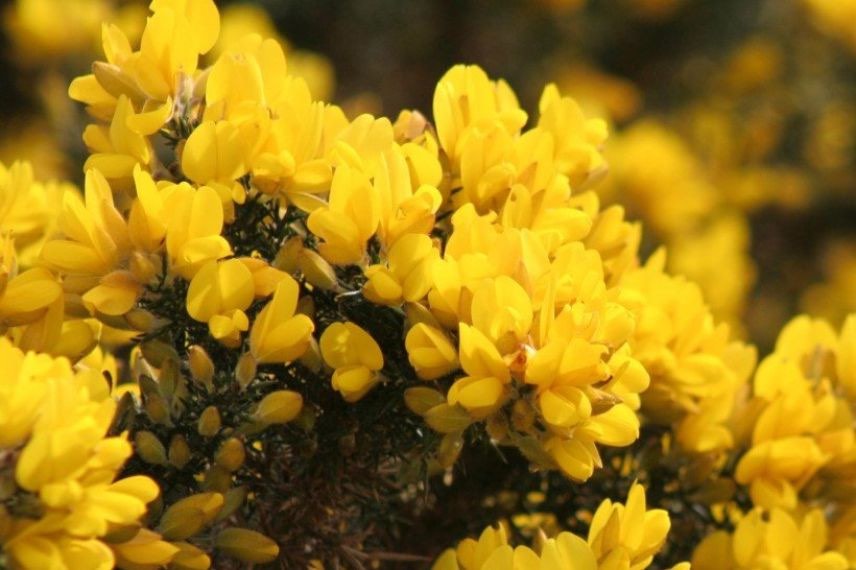
Ulex europaeus
Colutea arborescens: a robust and undemanding shrub
The bladder senna or Colutea arborescens is a perfect shrub for challenging areas. It naturally thrives in Mediterranean scrublands, as well as at higher altitudes. This all-terrain plant can withstand the harshest conditions : poor, stony, calcareous soils, fallow or inhospitable land, as well as summer drought and frosts down to -18°C to -20°C.
Its flowering features warm colours of yellow, orange, and brown. It occurs from late spring to early summer, depending on the region. Our shrub then reveals clusters of papilionaceous flowers, which are highly melliferous. Its unique fruiting consists of translucent pods filled with air, initially greenish-yellow, before turning brown-red. This adds an interesting decorative touch.
The foliage consists of small round leaves divided into leaflets. It is deciduous.
Fast-growing, this bushy shrub will reach about 2 metres in height and 1 metre in spread. Plant it in a hedge, or to dress rocky areas and slopes.
Robust and undemanding, it thrives in full sun, with little difficulty or maintenance. Once established, rainwater will suffice to meet its water needs.
A little quirk for insect lovers: it is the only host plant to welcome within its pods the eggs laid by a charming blue butterfly, unfortunately endangered, known as the azure bladder senna.
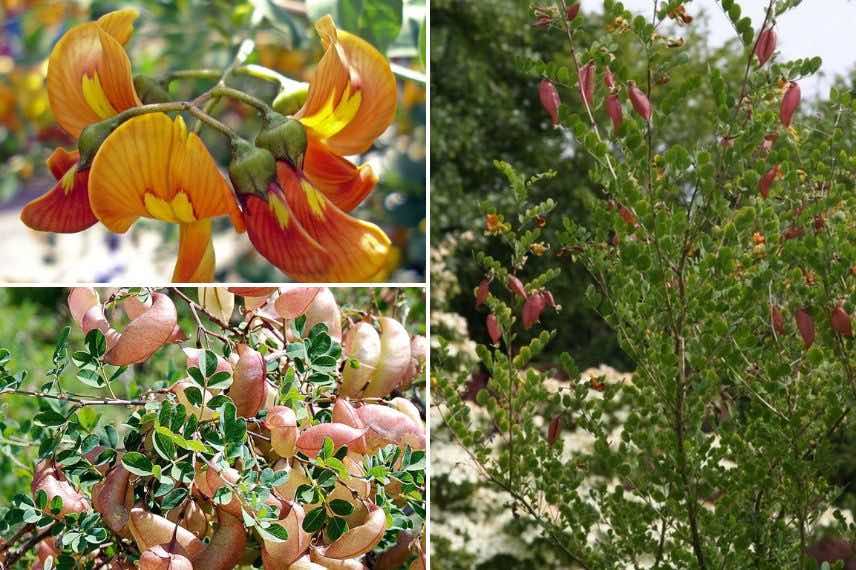
Colutea arborescens
- Subscribe!
- Contents
Comments