
Cotinus coggygria - Smoke Bush

Cotinus coggygria - Smoke Bush

Cotinus coggygria - Smoke Bush

Cotinus coggygria - Smoke Bush

Cotinus coggygria - Smoke Bush

Cotinus coggygria - Smoke Bush
Cotinus coggygria - Smoke Bush
Cotinus coggygria
Smoke Bush, European Smoke Tree, Venetian Sumach, Dyer's Sumach
Following numerous orders, I have consistently observed excellent plant recovery. No need to worry about this cotinus.
Christine, 10/03/2024
Back-to-school special offer!
Get €10 off for every €50 you spend! And get up to €40 off on a single order.
How does it work?
1. Shop your favourites
Add your favourite plants to your basket. For every €50 you spend (excluding delivery charges, store credit and the plastic-free option), you’ll receive a €10 voucher.
€50 spent = €10 voucher
€100 spent = €20 voucher
€150 spent = €30 voucher
€200 spent = €40 voucher
2. Place your order
Once your basket reaches one of the spending thresholds, place your order. You can even choose your delivery date!
3. Receive your voucher
As soon as your order has been shipped, you’ll receive an email containing your personal voucher code and its value.
4. Use it on your next order
Your voucher is valid for 90 days from the date you receive it. It can be used once only, on a new order worth at least the value of the voucher, excluding delivery charges.
Please note: Vouchers can be combined with other offers, but cannot be split or refunded.
Home or relay delivery (depending on size and destination)
Important: You may be charged customs duties by your country’s customs authorities upon delivery.
Schedule delivery date,
and select date in basket
This plant carries a 24 months recovery warranty
More information
We guarantee the quality of our plants for a full growing cycle, and will replace at our expense any plant that fails to recover under normal climatic and planting conditions.
Would this plant suit my garden?
Set up your Plantfit profile →
Description
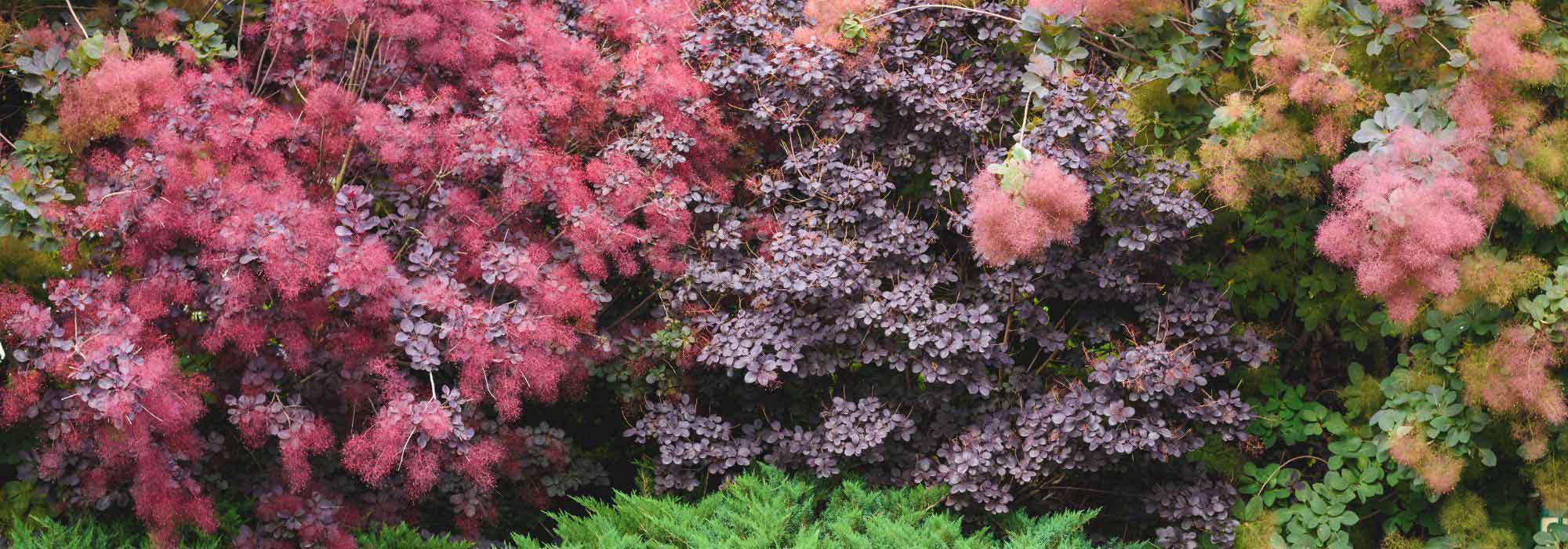
Cotinus coggygria, surnommé l'arbre à perruques, fustet ou barbe-de-Jupiter, est un grand arbuste caduc apprécié pour sa floraison estivale nuageuse et ses belles couleurs d’automne. Cette espèce botanique à feuillage vert est moins souvent proposée que ses nombreux cultivars pourpres ou dorés, alors qu’elle possède de nombreuses qualités au jardin : elle est robuste, rustique, peu exigeante, résistante à la sécheresse et décorative durant une grande partie de l’année.
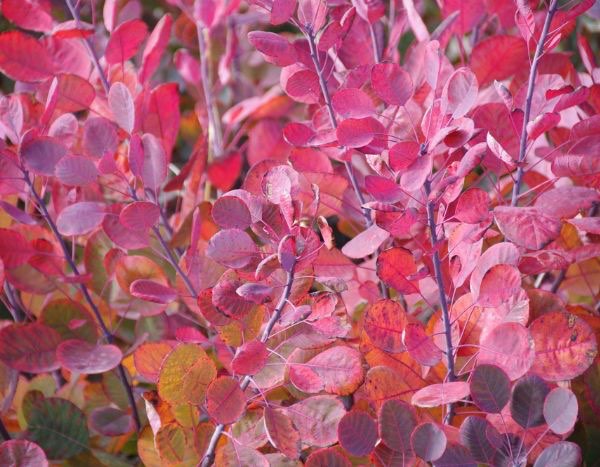
Membre de la famille des Anacardiacées, le Cotinus coggygria est originaire d’une vaste région qui s’étend du sud de l’Europe à l’Asie centrale et à la Chine. Il pousse naturellement dans les bois clairs, les broussailles et sur les pentes pierreuses, généralement calcaires et exposées au soleil. On le trouve dans le sud-est de la France où il est indigène. Cet arbre à perruques forme un arbuste buissonnant, large et irrégulier, composé de plusieurs tiges partant de la base. Il atteint couramment 3 m de hauteur et presque autant de largeur, mais un sujet âgé peut dépasser 4 m en tous sens dans de bonnes conditions. Sa croissance est moyenne, assez vigoureuse pendant les premières années. Avec l’âge, il peut être conduit en petit arbre à un ou plusieurs troncs. Son écorce, d’abord lisse et gris brun, devient plus fissurée sur les sujets âgés. Le feuillage apparaît assez tard au printemps, souvent au cours du mois d’avril. Les feuilles, ovales à presque rondes, mesurent de 4 à 8 cm de longueur. Leur couleur est un vert légèrement bleuté. Dès que les nuits fraîchissent, elles prennent des tons jaunes, orangés, écarlates et rouge pourpré. L’intensité de ces couleurs dépend de l’ensoleillement, du sol et des écarts de température en automne. La floraison a lieu en juin et juillet, parfois dès la fin du mois de mai dans les régions chaudes. Les fleurs proprement dites sont minuscules, d'un jaune verdâtre. Elles sont réunies en grandes panicules dressées et très ramifiées. Après la floraison, les pédicelles des fleurs stériles s’allongent et se couvrent de fins poils soyeux. Ils composent alors de larges panaches aériens, beige rosé à rose fumé, qui donnent l’impression que l’arbuste est enveloppé de brume. Ces « perruques » restent décoratives une bonne partie de l’été. Quelques fleurs produisent de petits fruits aplatis, peu visibles au milieu des filaments.
Dans un jardin naturel, un jardin sec ou une grande haie libre, le Cotinus coggygria peut être associé à d'autres grands arbustes capables de supporter le froid et la sécheresse estivale. Le Cornus mas, le Viburnum lantana, le Buddleja alternifolia et le Berberis × ottawensis ‘Superba’ offrent des floraisons, des fructifications et des couleurs automnales qui animeront le jardin de la fin de l'hiver jusqu'à l'automne. Dans les régions méditerranéennes, le fustet est souvent planté avec des Phillyrea et des Vitex.

Cotinus coggygria - Smoke Bush in pictures


Plant habit
Flowering
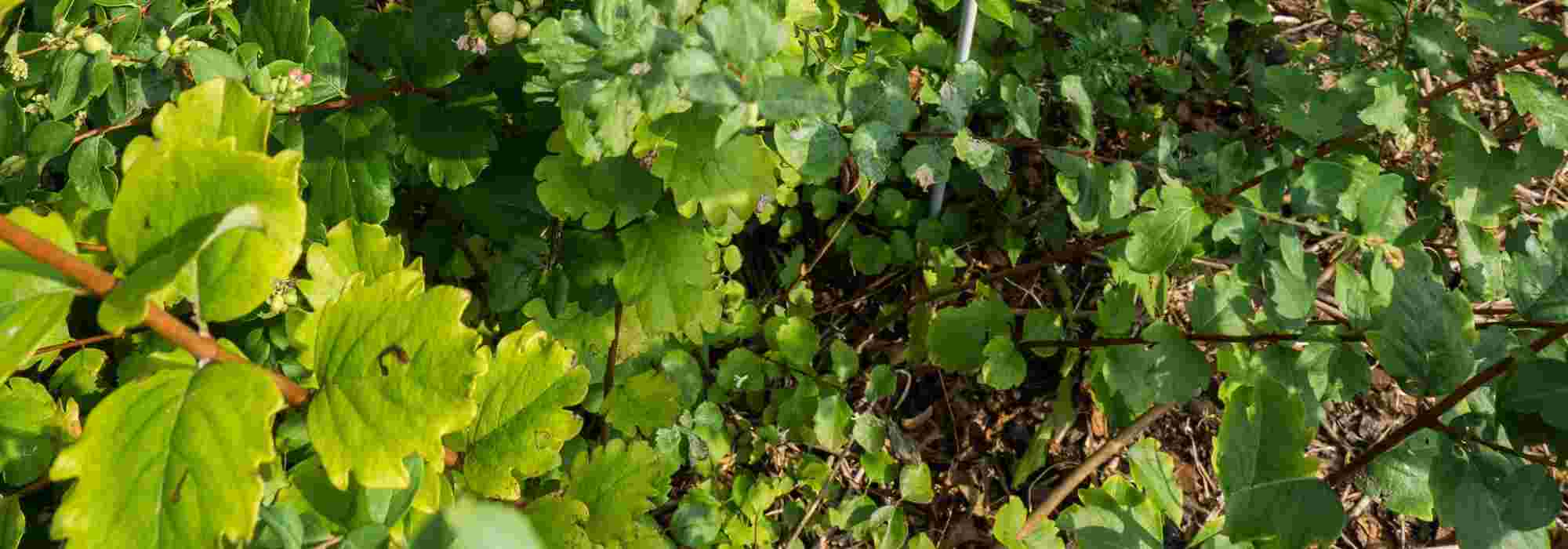
Foliage
Botanical data
Cotinus
coggygria
Anacardiaceae
Smoke Bush, European Smoke Tree, Venetian Sumach, Dyer's Sumach
Rhus cotinus, Cotinus cotinus
Southern Europe, Central Asia, China
Planting and care
Cotinus coggygria is best planted in autumn, from September to November, or in early spring in regions with harsh winters. A sunny position encourages abundant flowering and more intense autumn colours; light partial shade is possible in very hot climates. The smoke tree tolerates most soils, even poor, stony, chalky or slightly acidic ones, provided they are well drained. A clay soil may suit it if it does not remain waterlogged in winter. The root ball should be watered generously at planting time, then regularly during the first two summers in dry spells. Once established, the shrub withstands heat and drought well. Fertiliser applications are unnecessary and can encourage excessive growth at the expense of flowering.
Planting period
Intended location
Care
Planting & care advice
-
-
-

-

-
-
-

-
-
, onOrder confirmed
Reply from on Promesse de fleurs
Recently viewed products
Haven't found what you were looking for?
Hardiness is the lowest winter temperature a plant can endure without suffering serious damage or even dying. However, hardiness is affected by location (a sheltered area, such as a patio), protection (winter cover) and soil type (hardiness is improved by well-drained soil).

The flowering period indicated on our website applies to countries and regions located in USDA zone 8 (France, the United Kingdom, Ireland, the Netherlands, etc.)
It will vary according to where you live:- In zones 9 to 10 (Italy, Spain, Greece, etc.), flowering will occur about 2 to 4 weeks earlier.
- In zones 6 to 7 (Germany, Poland, Slovenia, and lower mountainous regions), flowering will be delayed by 2 to 3 weeks.
- In zone 5 (Central Europe, Scandinavia), blooming will be delayed by 3 to 5 weeks.
In temperate climates, pruning of spring-flowering shrubs (forsythia, spireas, etc.) should be done just after flowering.
Pruning of summer-flowering shrubs (Indian Lilac, Perovskia, etc.) can be done in winter or spring.
In cold regions as well as with frost-sensitive plants, avoid pruning too early when severe frosts may still occur.
The planting period indicated on our website applies to countries and regions located in USDA zone 8 (France, United Kingdom, Ireland, Netherlands).
It will vary according to where you live:
- In Mediterranean zones (Marseille, Madrid, Milan, etc.), autumn and winter are the best planting periods.
- In continental zones (Strasbourg, Munich, Vienna, etc.), delay planting by 2 to 3 weeks in spring and bring it forward by 2 to 4 weeks in autumn.
- In mountainous regions (the Alps, Pyrenees, Carpathians, etc.), it is best to plant in late spring (May-June) or late summer (August-September).
The harvesting period indicated on our website applies to countries and regions in USDA zone 8 (France, England, Ireland, the Netherlands).
In colder areas (Scandinavia, Poland, Austria...) fruit and vegetable harvests are likely to be delayed by 3-4 weeks.
In warmer areas (Italy, Spain, Greece, etc.), harvesting will probably take place earlier, depending on weather conditions.
The sowing periods indicated on our website apply to countries and regions within USDA Zone 8 (France, UK, Ireland, Netherlands).
In colder areas (Scandinavia, Poland, Austria...), delay any outdoor sowing by 3-4 weeks, or sow under glass.
In warmer climes (Italy, Spain, Greece, etc.), bring outdoor sowing forward by a few weeks.
Shipping country and language
Your country of residence may be:
Your country of residence is:
For a better user experience on our website, you can select:
Your shipping country:
-
 Austria
-
 Belgium
-
 Bosnia & Herzegovina
-
 Bulgaria
-
 Croatia
-
 Cyprus
-
 Czechia
-
 Denmark
-
 Estonia
-
 Finland
-
 France
-
 Germany
-
 Greece
-
 Hungary
-
 Iceland
-
 Ireland
-
 Italy
-
 Latvia
-
 Liechtenstein
-
 Lithuania
-
 Luxembourg
-
 Malta
-
 Netherlands
-
 Poland
-
 Portugal
-
 Romania
-
 Serbia
-
 Slovakia
-
 Slovenia
-
 Spain
-
 Sweden
-
 Switzerland
Language:
-
French
-
 English
-
Spanish
-
Italian
-
German
-
Portuguese
-
Dutch
-
Finnish
My Account
Hello
My wish lists
My cart
Log in / Register
Existing customer?
This form is protected by reCAPTCHA - the Google Privacy Policy and Terms of Service apply.
New customer?
Create an account to track your orders, access our customer service and, if you wish, make the most of our upcoming offers.