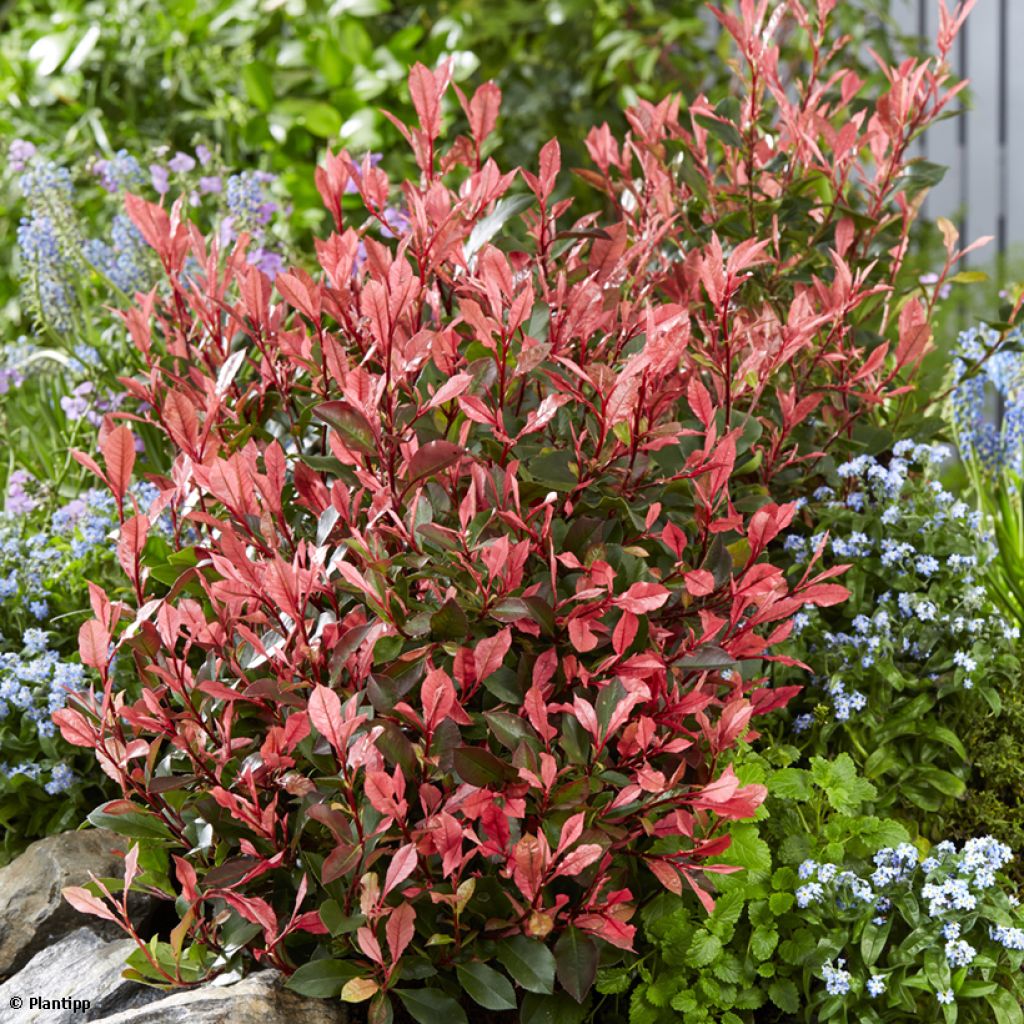
Photinia fraseri Little Fenna - Christmas Berry
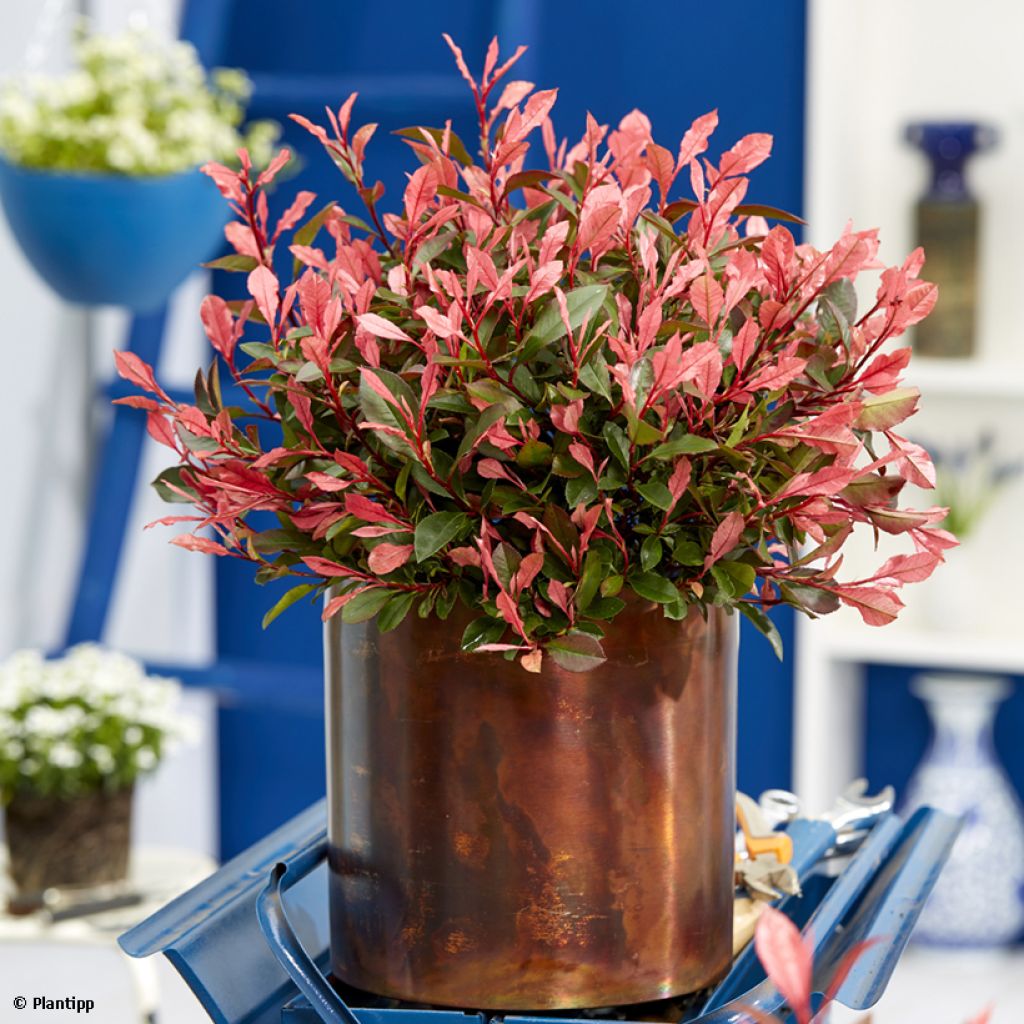
Photinia fraseri Little Fenna - Christmas Berry
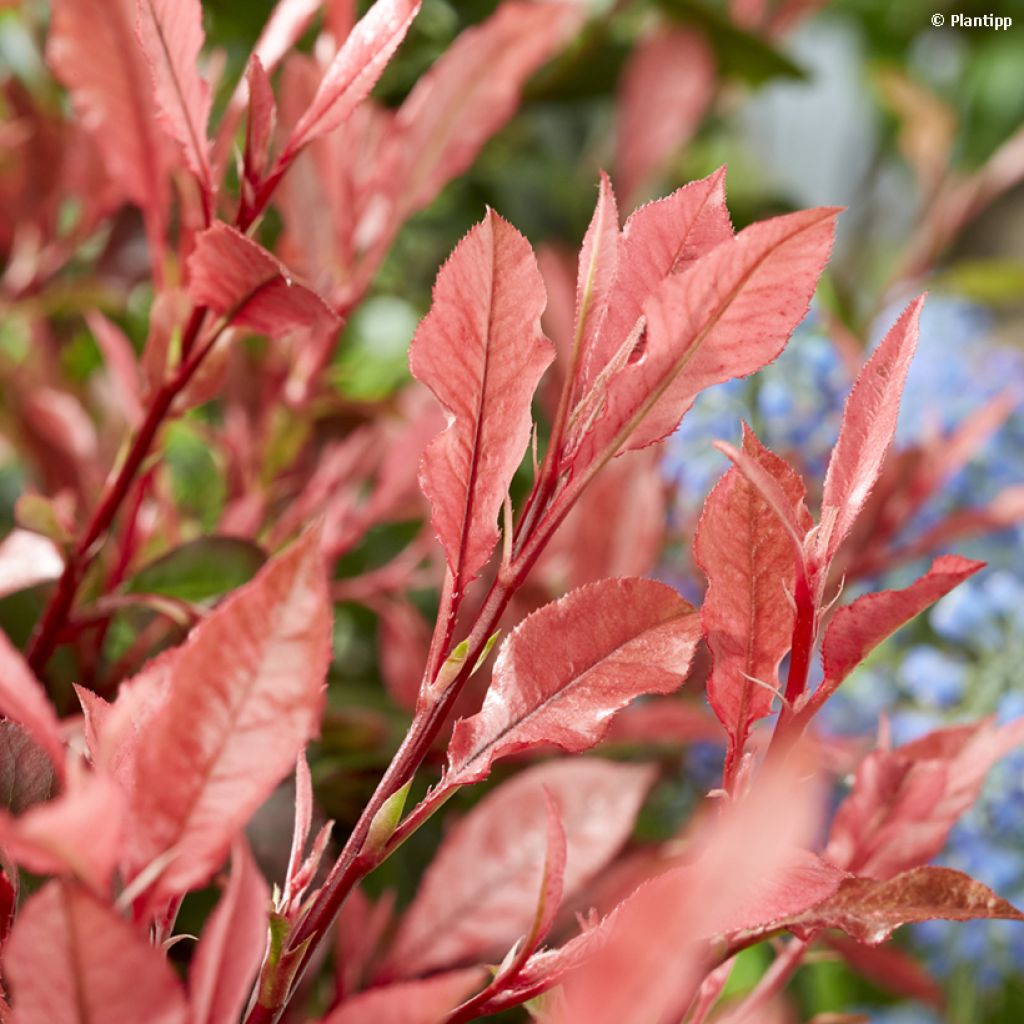
Photinia fraseri Little Fenna - Christmas Berry
Photinia fraseri Little Fenna - Christmas Berry
Photinia x fraseri Little Fenna
Christmas Berry, Redtip Photinia
Young plant fairly small but well balanced. One out of two has taken. The new leaves are green. Perhaps with spring...
Rosalinde, 21/09/2025
Back-to-school special offer!
Get €10 off for every €50 you spend! And get up to €40 off on a single order.
How does it work?
1. Shop your favourites
Add your favourite plants to your basket. For every €50 you spend (excluding delivery charges, store credit and the plastic-free option), you’ll receive a €10 voucher.
€50 spent = €10 voucher
€100 spent = €20 voucher
€150 spent = €30 voucher
€200 spent = €40 voucher
2. Place your order
Once your basket reaches one of the spending thresholds, place your order. You can even choose your delivery date!
3. Receive your voucher
As soon as your order has been shipped, you’ll receive an email containing your personal voucher code and its value.
4. Use it on your next order
Your voucher is valid for 90 days from the date you receive it. It can be used once only, on a new order worth at least the value of the voucher, excluding delivery charges.
Please note: Vouchers can be combined with other offers, but cannot be split or refunded.
Why not try an alternative variety in stock?
View all →
Available in 1 sizes

Available in 1 sizes
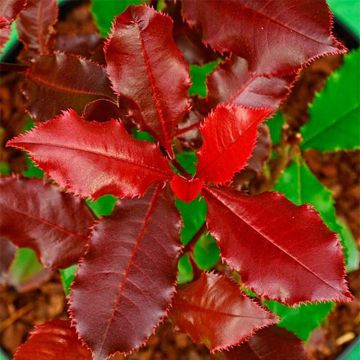
Available in 2 sizes
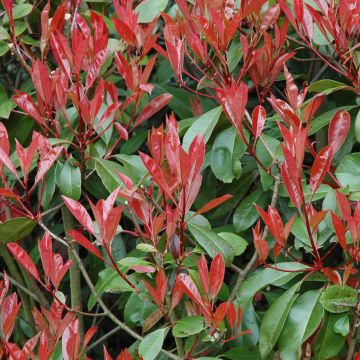
Available in 3 sizes

Available in 4 sizes
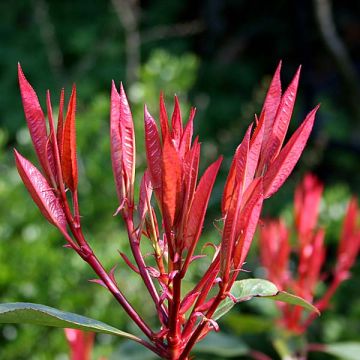
Available in 7 sizes

Available in 2 sizes
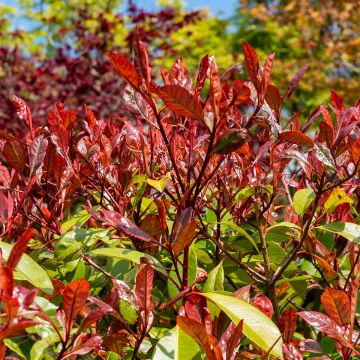
Available in 1 sizes
Available in 1 sizes
Available in 1 sizes
This plant carries a 24 months recovery warranty
More information
We guarantee the quality of our plants for a full growing cycle, and will replace at our expense any plant that fails to recover under normal climatic and planting conditions.
Would this plant suit my garden?
Set up your Plantfit profile →
Description
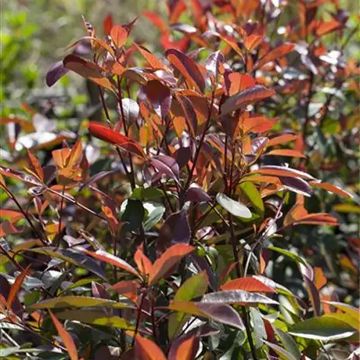
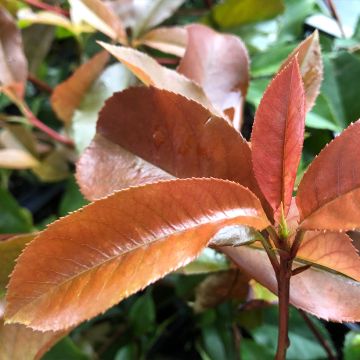
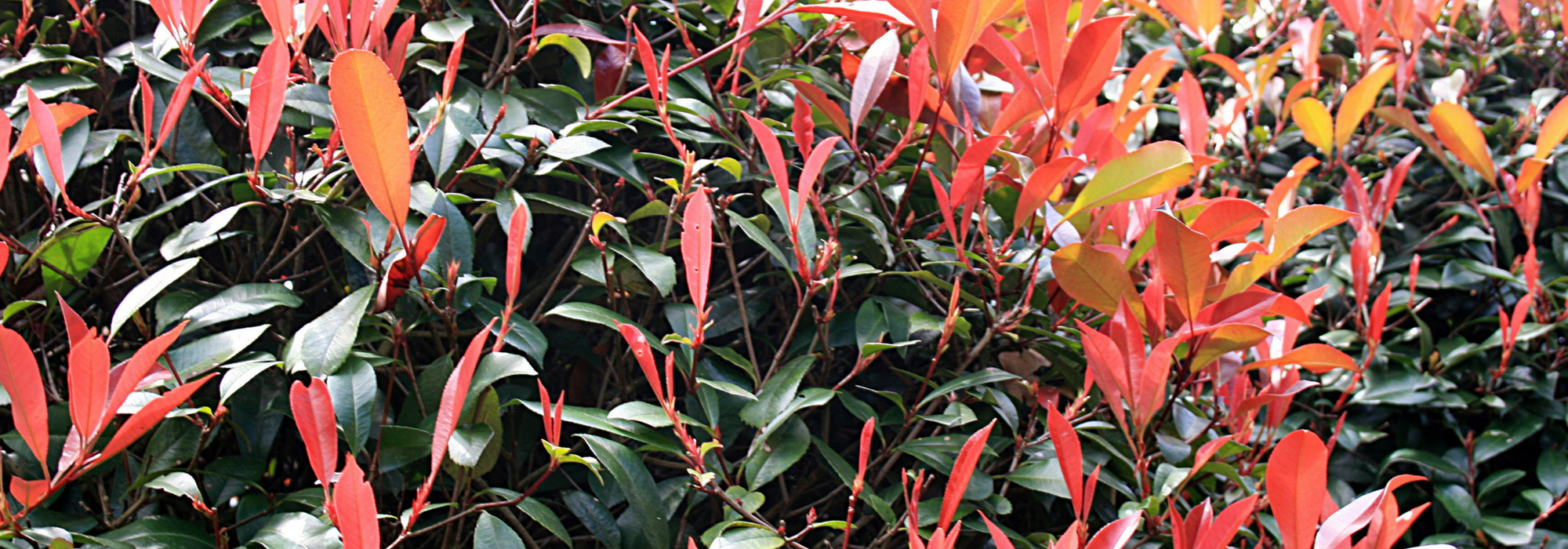
The Photinia Fraseri 'Little Fenna' is a very interesting variety for its particularly dense and compact habit, allowing it to be grown in a pot to decorate a terrace or a pathway. Hardy, this bush can also be planted in the garden in open ground, where it will form a nice dense clump of 80 to 90 cm (32 to 35in) in height, and 70 cm (1 and 28in) in width. It is particularly attractive in spring thanks to its young shoots, which are a bright pink with a hint of red and stand out against the fairly dark green adult foliage. It also produces decorative white umbel flowers in April-May. Easy to grow, this small bush thrives in full sun or partial shade in most soils.
The Photinia belongs to the large botanical family Rosaceae. This family includes most of our temperate climate fruit trees (Apple trees, Pear trees, Plum trees, Apricot trees, Peach trees, etc.), as well as many ornamental plants (Hawthorn, Cotoneaster, Rose of course, Prunus) and numerous wild plants that brighten up our countryside. The Photinia (x) fraseri or Fraser's Photinia is an old horticultural creation born in 1940 in the United States, resulting from the cross-breeding between the Photinia glabra, native to Japan, and the Photinia serrulata, native to China. This hybrid has given rise to some famous cultivars, including 'Red Robin', which is widely planted in our parks and gardens. In recent years, some beautiful improvements have been made, with more compact, more colorful, and more disease-resistant varieties.
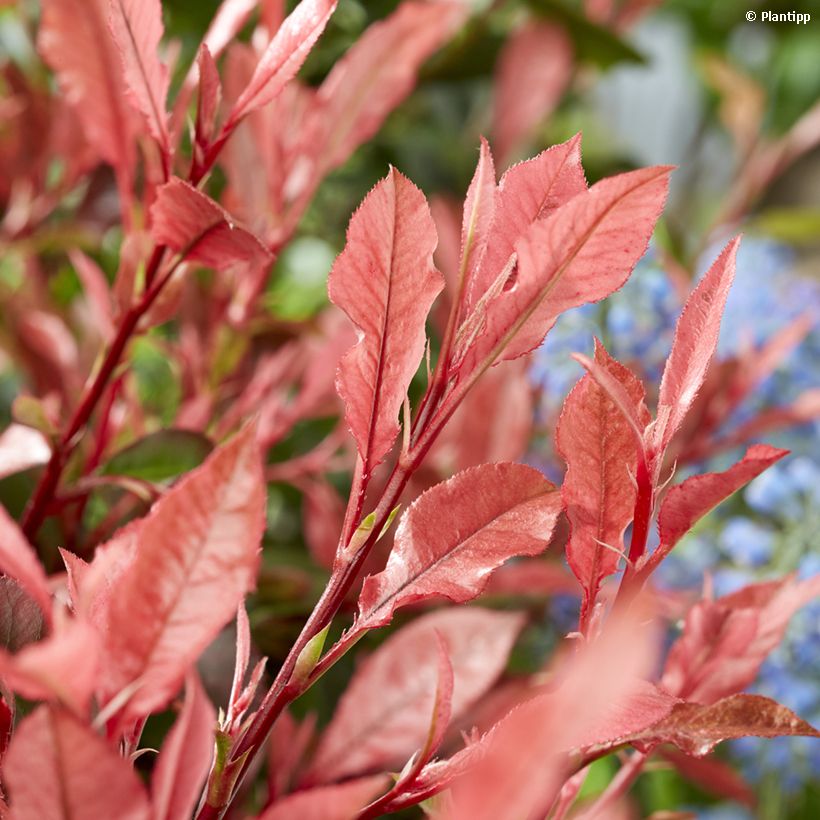
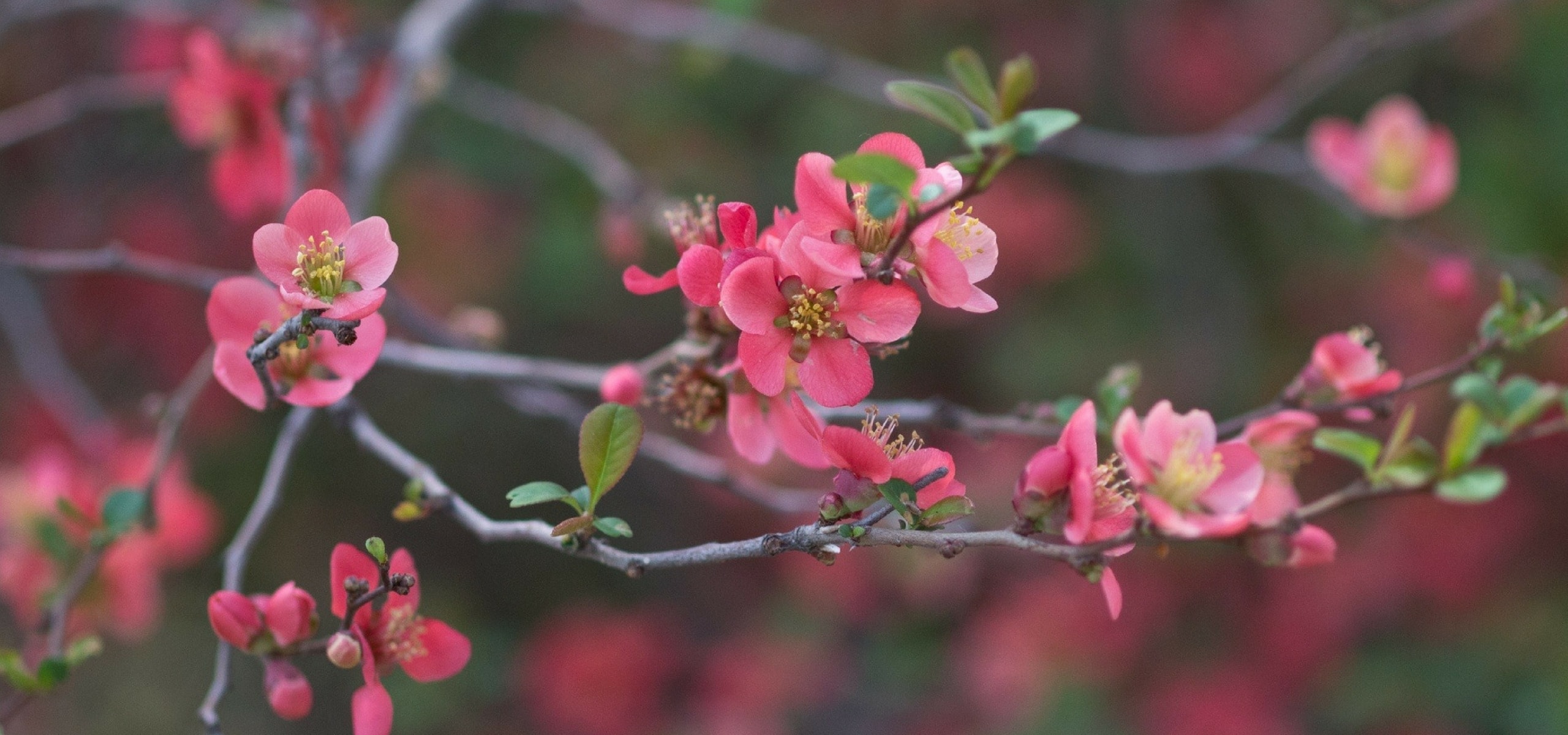
'Little Fenna' is a recent variety fortuitously discovered by the Dutch nurseryman Niesing, from Boskoop, a major nursery center in Europe hosting multiple specialized companies. He named it after his daughter, Fenna. This charming little bush surprises with its compactness, not exceeding 90 cm (35in) in height and 70 cm (28in) in width, where a 'Red Robin' can quickly become cumbersome. Its annual growth is also quite moderate, about 10 cm (4in), which limits its maintenance to a light pruning in summer to maintain its compact shape. Like the others, it shines with its young shoots, which have a beautiful bright pink color with a slight touch of red, before gradually turning to a fairly dark green during the season. Its particularly dense and ramified vegetation is adorned with evergreen foliage composed of thinner leaves than those of Red Robin. Arranged alternately on the branches, they are about 5-8 cm (2-3in) long, subtly toothed at the edges and carried by relatively long petioles. In April or May, decorative clusters of small cream-white flowers appear at the terminal part of the branches.
In addition to the beautiful coloration of its young foliage, it is also its hardiness and adaptation to any type of soil that have earned the Photinia (x) fraseri its worldwide success. Thus, 'Little Fenna' tolerates all types of well-drained soils, from deep to shallow, from moist to dry, in sunny or partially shaded locations. It is an easy-to-grow and low-maintenance bush that can withstand temperatures down to -18°C when exposed to the sun. It is truly the epitome of an easy plant, requiring little maintenance, limited to occasional pruning in summer to maintain its shape, and a few waterings during hot periods, knowing that once well rooted, it is quite resistant to drought. Particularly welcome for creating low hedges, trimmed or not, due to its size, it also adapts very well to container gardening and makes an excellent subject in the foreground of a flower bed.
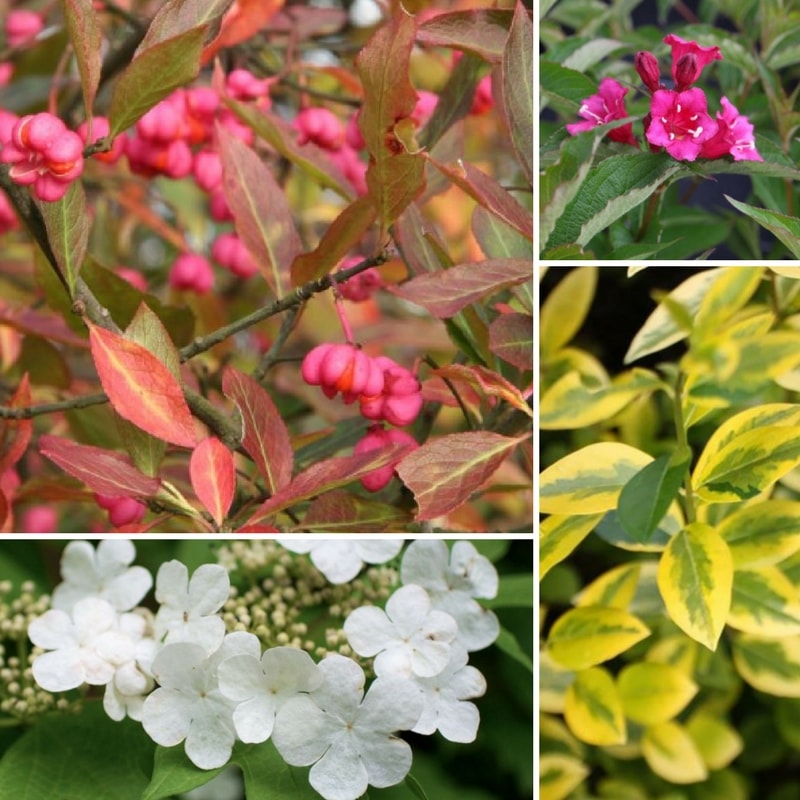
This Photinia Little Fenna is a fortunate discovery that pleasantly renews the genus and will easily find its place in small urban gardens, where 'Red Robin' often takes up too much space. Easy to grow in a container, it can also decorate a terrace or even a balcony, where its spring foliage and flowering will create attraction. In open ground, it will be perfect in the foreground or background of a flower bed mixing shrubs and perennial plants. To enjoy decorative foliage all year round, accompany it with variegated plants, such as Euonymus fortunei Emerald Gaiety, a euonymus as easy and accommodating as it is, with evergreen foliage edged in white. Add some deciduous plants with autumnal coloring, such as the superb Cotinus coggygria Golden Lady, whose almost oval leaves change color throughout the year; from yellow-orange in spring, it then turns golden yellow in summer before blazing orange in autumn. Another very easy compact shrub, the Winged Euonymus, or Euonymus alatus Ciliatodentatus, with slow growth, has the particularity of developing small corky bands resembling wings on its branches, which are decorative in winter after the leaves have fallen. This Euonymus has one of the most beautiful autumn colorations, a dazzling bright pink, turning to red and then to purple, an unforgettable spectacle!
Photinia fraseri Little Fenna - Christmas Berry in pictures
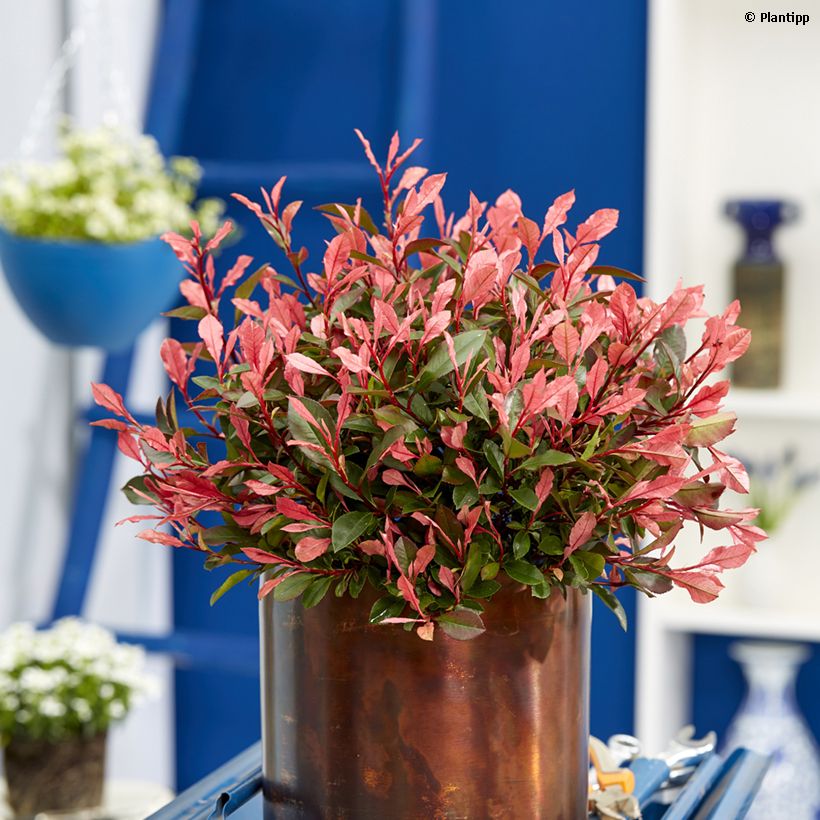
Plant habit
Flowering
Foliage
Botanical data
Photinia
x fraseri
Little Fenna
Rosaceae
Christmas Berry, Redtip Photinia
Cultivar or hybrid
Planting and care
Photinia Fraseri 'Little Fenna' can be planted in spring or autumn in any deep, moist to occasionally dry, fertile, and well-drained soil. It appreciates a sunny or semi-shaded exposure, sheltered from cold and brisk winds. It also tolerates shaded exposures, although at the expense of flowering and the intensity of young leaf coloration. Water well for the first two years, one to two times a week, especially in hot and dry weather during summer. Mulch the soil to keep it cool in hot regions, and potentially protect the base in cold regions during the first few years in case of severe frost. Once well established, Photinia fraseri tolerates summer drought quite well.
In humid weather or, conversely, in certain dry and poor soils, Photinias can be affected by a fungus (entomosporiosis). Keep an eye on the leaves, if black and red spots appear, treat with Bordeaux mixture. The otiorhynchus can also nibble on the edges of the leaves at night, while their larvae can attack the roots; treat the soil with nematodes that parasitize the larvae.
Planting period
Intended location
Care
Planting & care advice
-
-

-
-
-

-
-
-

-
, onOrder confirmed
Reply from on Promesse de fleurs
Recently viewed products
Haven't found what you were looking for?
Hardiness is the lowest winter temperature a plant can endure without suffering serious damage or even dying. However, hardiness is affected by location (a sheltered area, such as a patio), protection (winter cover) and soil type (hardiness is improved by well-drained soil).

The flowering period indicated on our website applies to countries and regions located in USDA zone 8 (France, the United Kingdom, Ireland, the Netherlands, etc.)
It will vary according to where you live:- In zones 9 to 10 (Italy, Spain, Greece, etc.), flowering will occur about 2 to 4 weeks earlier.
- In zones 6 to 7 (Germany, Poland, Slovenia, and lower mountainous regions), flowering will be delayed by 2 to 3 weeks.
- In zone 5 (Central Europe, Scandinavia), blooming will be delayed by 3 to 5 weeks.
In temperate climates, pruning of spring-flowering shrubs (forsythia, spireas, etc.) should be done just after flowering.
Pruning of summer-flowering shrubs (Indian Lilac, Perovskia, etc.) can be done in winter or spring.
In cold regions as well as with frost-sensitive plants, avoid pruning too early when severe frosts may still occur.
The planting period indicated on our website applies to countries and regions located in USDA zone 8 (France, United Kingdom, Ireland, Netherlands).
It will vary according to where you live:
- In Mediterranean zones (Marseille, Madrid, Milan, etc.), autumn and winter are the best planting periods.
- In continental zones (Strasbourg, Munich, Vienna, etc.), delay planting by 2 to 3 weeks in spring and bring it forward by 2 to 4 weeks in autumn.
- In mountainous regions (the Alps, Pyrenees, Carpathians, etc.), it is best to plant in late spring (May-June) or late summer (August-September).
The harvesting period indicated on our website applies to countries and regions in USDA zone 8 (France, England, Ireland, the Netherlands).
In colder areas (Scandinavia, Poland, Austria...) fruit and vegetable harvests are likely to be delayed by 3-4 weeks.
In warmer areas (Italy, Spain, Greece, etc.), harvesting will probably take place earlier, depending on weather conditions.
The sowing periods indicated on our website apply to countries and regions within USDA Zone 8 (France, UK, Ireland, Netherlands).
In colder areas (Scandinavia, Poland, Austria...), delay any outdoor sowing by 3-4 weeks, or sow under glass.
In warmer climes (Italy, Spain, Greece, etc.), bring outdoor sowing forward by a few weeks.
Shipping country and language
Your country of residence may be:
Your country of residence is:
For a better user experience on our website, you can select:
Your shipping country:
-
 Austria
-
 Belgium
-
 Bosnia & Herzegovina
-
 Bulgaria
-
 Croatia
-
 Cyprus
-
 Czechia
-
 Denmark
-
 Estonia
-
 Finland
-
 France
-
 Germany
-
 Greece
-
 Hungary
-
 Iceland
-
 Ireland
-
 Italy
Italy
-
 Latvia
-
 Liechtenstein
-
 Lithuania
-
 Luxembourg
-
 Malta
Malta
-
 Netherlands
-
 Poland
-
 Portugal
-
 Romania
-
 Serbia
-
 Slovakia
-
 Slovenia
-
 Spain
Spain
-
 Sweden
-
 Switzerland
Language:
-
French
-
 English
-
Spanish
-
Italian
-
German
-
Portuguese
-
Dutch
-
Finnish
My Account
Hello
My wish lists
My cart
Log in / Register
Existing customer?
This form is protected by reCAPTCHA - the Google Privacy Policy and Terms of Service apply.
New customer?
Create an account to track your orders, access our customer service and, if you wish, make the most of our upcoming offers.