





























9 rare and collectible perennials
Original and more unusual plants, to give or to acquire.
Contents
Plants never cease to amaze us, and that’s one of the reasons we appreciate them so much. Perennials are no exception: among the thousands of existing varieties, some exhibit great originality in the shape of their flowers, their foliage, their colour, or their fragrance.
For gardeners who love uncommon plants, for enthusiasts of gardens with strong personalities, or for discerning collectors, these exceptional perennials will be true little treasures.
We have selected 9 plants rare and collectible perennials for you. While some require a minimum of experience with plants, others are, on the contrary, easy to grow, suited for both pot cultivation and the garden.

Agapanthus orientalis ‘Black Pantha’, a large variety with flowers shaded in black
The‘Black Pantha’ agapanthus is an exceptional variety, both in terms of its height and flowering. It can reach up to 1.5 metres tall, further enhancing the natural verticality and graphic effect of this plant.
The flowers arrive late in summer, between July and August. First, astonishing black flower buds make their appearance. Then, an abundance of long pendulous bells reveals itself, beautifully gathered in umbels. They captivate us with their dark blue-violet colour, with almost black reflections.
Evergreen, the foliage forms an upright tuft of grey-green ribbons all year round.
Not very hardy due to its South African origins, ‘Black Pantha’ should be grown in pots in regions where winter temperatures drop below approximately -6 °C. Provide it with a sunny position, in soil that remains consistently moist during growth.
Pair it with amaryllis, crinums, a giant lily, or ornamental garlic. Add some grasses like stipas or miscanthus for a modern and light style. With a long vase life, do not hesitate to use the magnificent flowers of this agapanthus in summer bouquets.
For further reading: “Agapanthus: planting, growing, and caring for.”
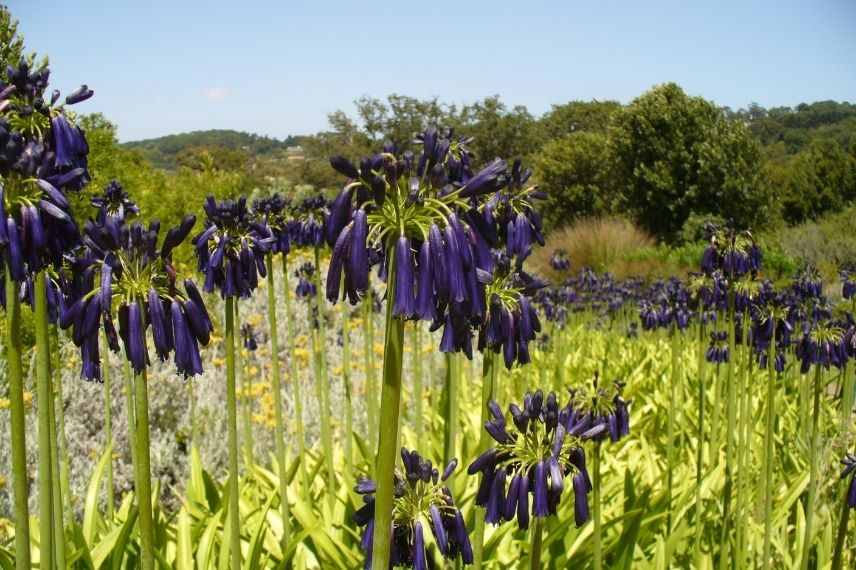
Agapanthus orientalis ‘Black Pantha’ (photo Andrew Massyn)
Read also
Perennial plants: how to choose?Asarum maximum 'Ling Ling', flowers with panda-like heads and a mushroom scent
The Asarum maximum ‘Ling Ling’ has several characteristics that make it a botanical curiosity. This giant asarum (or “wild ginger”) has the advantage of offering large, decorative evergreen leaves all year round. They are glossy, marbled, and heart-shaped.
But it is primarily its spring flowering that makes it an astonishing plant. Shy, it is hidden beneath the foliage and does not reveal itself at first glance. This perennial produces velvety, round flowers with three petals. Their nickname “Panda Face” refers to their black and white bicolour. In terms of fragrance, they emit an astonishing mushroom scent, while the foliage releases lemony and spicy notes when crushed.
‘Ling Ling’ makes a perfect groundcover for shade or partial shade, forming a small carpet about fifty centimetres wide. Hardy down to around -8°C, this variety can easily be grown in pots in regions with harsh winters.
Grow this rare perennial in light woodland, alongside the decorative foliage of ferns, hostas, and heucheras. Add the delicate flowers of epimediums or an ajuga.
For further reading: “Asarum, asaret: planting, cultivation, maintenance.”
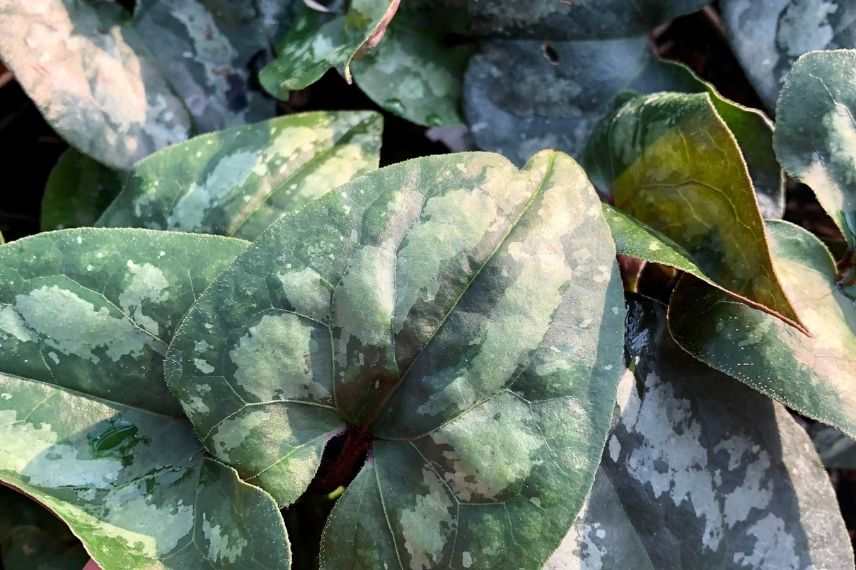
Asarum maximum ‘Ling Ling’
Discover other Rare and collectible perennials
View all →
Available in 1 sizes
Available in 1 sizes
Available in 1 sizes
Available in 1 sizes
Available in 1 sizes
Available in 1 sizes
Available in 1 sizes
Available in 1 sizes
Available in 1 sizes
Available in 1 sizes
Habenaria radiata ‘Variegata’, a poetic flowering like a flight of doves
A bulb with incredible poetry and delicacy: here is the terrestrial orchid Habenaria radiata ‘Variegata’, also known as the “dove orchid” or “egret orchid.” A little treasure for collectors of the genus!
Its summer flowering reveals clusters of small white flowers with an astonishing shape, resembling an elegant flight of immaculate doves. They indeed evoke birds in full flight, with wings spread and fringed. To top it all off, these plant beauties exhale a light fragrance.
In terms of foliage, our perennial is dressed in ribbon-like leaves, variegated in green and white, equally bright.
Orchids are quite demanding and not very hardy; this variety is no exception. It will therefore be rather reserved for experienced gardeners or knowledgeable collectors. In pots, it will pair wonderfully with other summer bulbs, such as arum, begonias, bletillas, or dwarf dahlias.
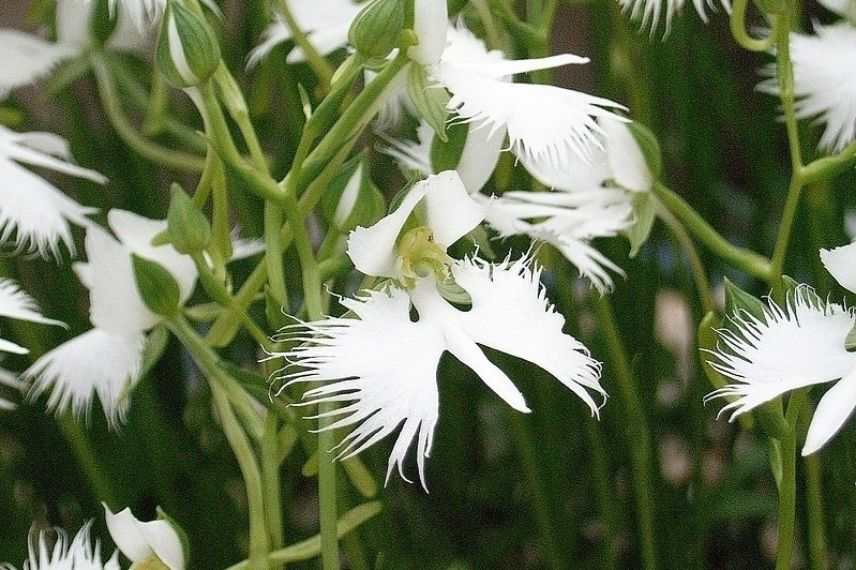
Habenaria radiata ‘Variegata’ (photo opencage)
Read also
Care of perennial plantsBelamcanda chinensis, the leopard flower with exotic airs
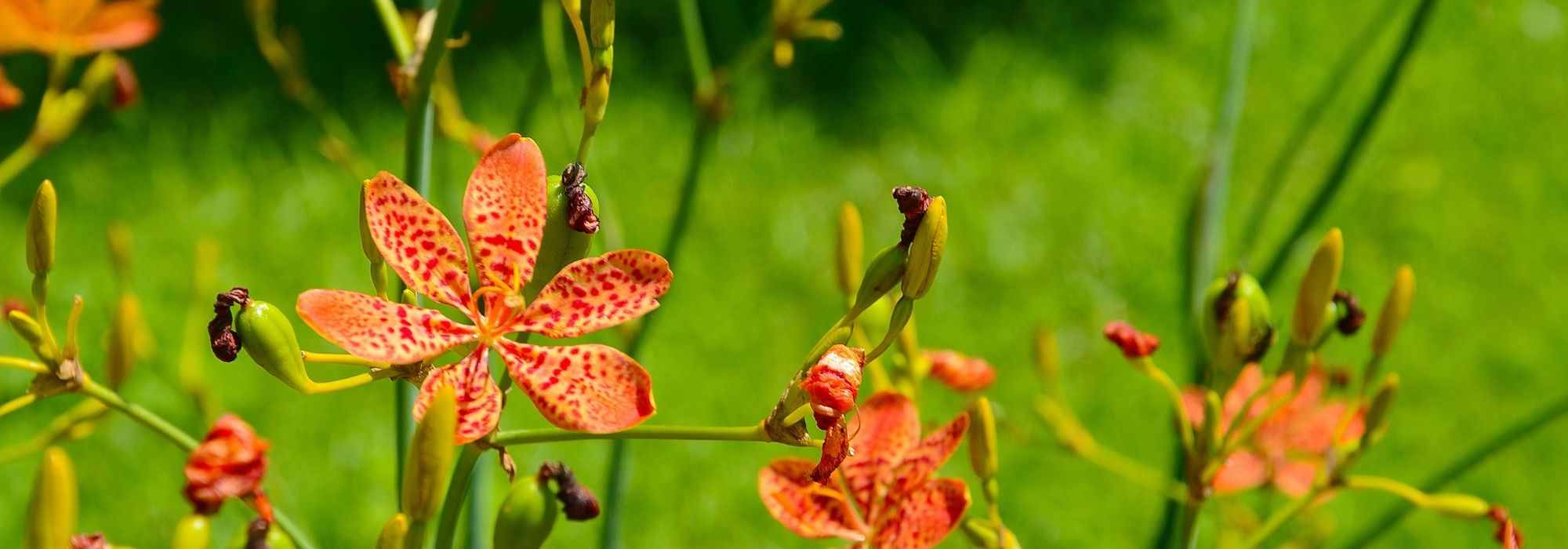
A bright orange colour speckled with red-brown, visible stamens rising from the centre and 6 well-opened petals: here are the flowers of Belamcanda chinensis that brighten up summer. This perennial is also known as “tiger iris” or “leopard flower,” referring to its original and tawny pattern.
The flowering is then followed by the formation of shiny black fruits, with very decorative open capsules, ideal for dried bouquets.
The deciduous foliage consists of narrow, fan-shaped leaves, further accentuating the exotic appearance of this rootstock plant.
A cousin of garden irises, it is quite hardy and can be easily grown in full sun or partial shade, in soil that does not retain too much moisture. Plant this uncommon perennial with other irises that will follow its flowering, but also with blue-violet flowers that will create a lovely colour contrast (such as love-in-a-mist, flax, sages, for example).
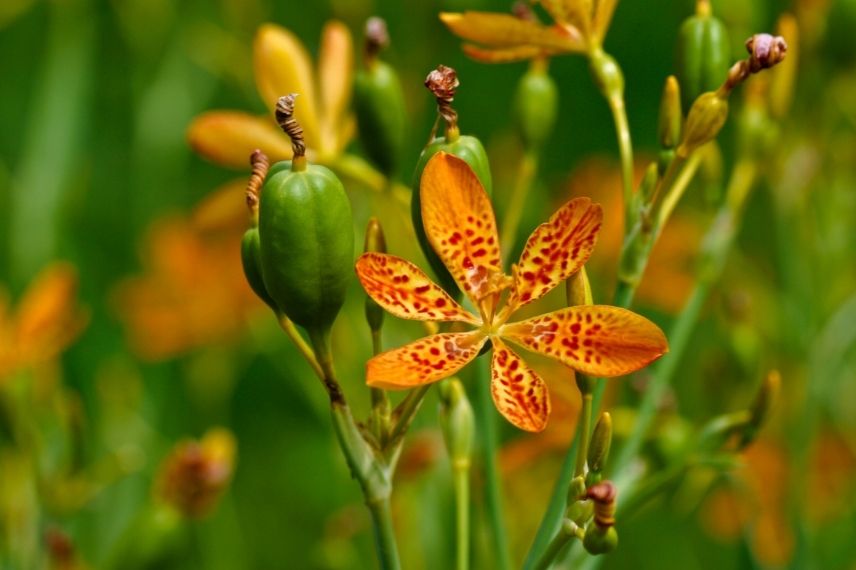
Belamcanda chinensis (photo Wikipedia)
Trillium sessile, a precious and fragrant flowering.
The Trillium sessile offers an original and unusual flowering. In spring, between April and May, the veined flower reveals itself in a lovely purple tinged with reddish-brown. The 3 petals resemble protective leaves that never truly open fully, leaving the flower’s modest heart little exposed. A musky and spicy fragrance, equally surprising, emanates during this flowering.
The foliage is not to be overlooked, as it displays a marbled colour of purple and silver. This small wild and precious treasure, sought after by collectors, will require a little time for hardening before flowering for the first time.
The Trillium sessile is a rhizomatous perennial of the undergrowth, enjoying shade or partial shade. Quite hardy and easy to cultivate, its small silhouette of about thirty centimetres will also thrive in pots. It will pair beautifully with ferns, as well as with begonias or saxifrages that will take over the flowering.
For further reading: “Trillium: planting, cultivation, care and use.”
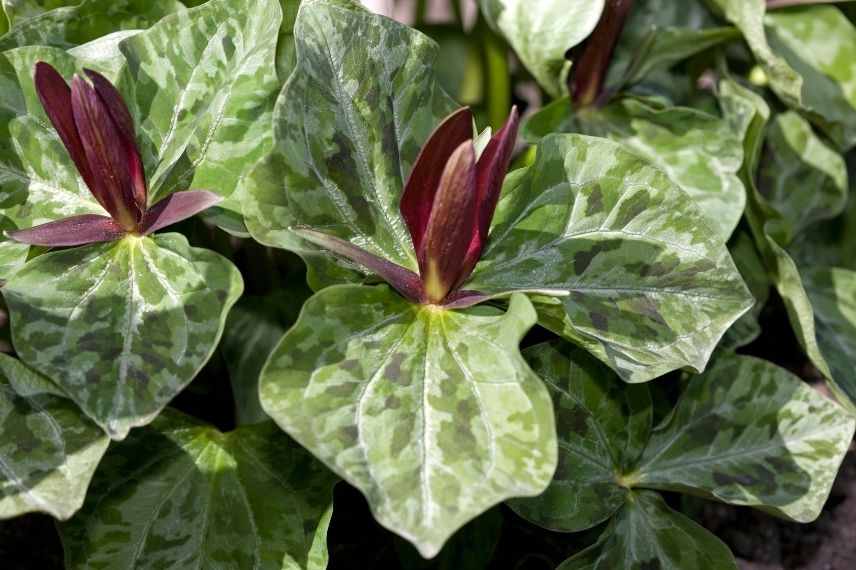
Trillium sessile
Gentiana scabra ‘Royal Stripes’, with stunning blue and white stripes
The Japanese gentian Gentiana scabra ‘Royal Stripes’ is a highly graphic flower. At the end of summer, between August and September, it produces adorable upright trumpets measuring 7 cm across, striped in blue and white. A rare royal variety that certainly stands out!
Very hardy due to its high-altitude origins and evergreen, it has the advantage of remaining decorative all year round. The lanceolate and pointed leaves offer a beautiful dark green, accented by tips that are sometimes blue-violet.
This compact perennial (25 cm in all directions) and slow-growing plant can be cultivated in the ground or in pots, in fairly moist soil and in a slightly sunny position. Pair it with dwarf conifers or other montane perennials, such as corydalis.
For further reading: “The gentian: planting, cultivation and maintenance.”
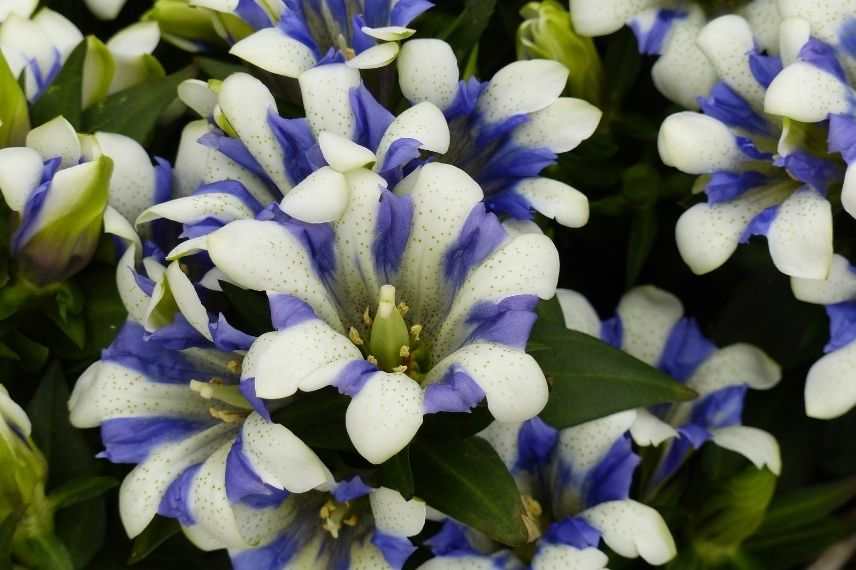
Gentiana scabra ‘Royal Stripes’
Helleborus orientalis 'Double Yellow Guttatus', a true masterpiece.
We love hellebores, these Christmas roses that bloom and brighten the garden in winter. The variety of Oriental hellebore ‘Double Yellow Spotted’ puts on a spectacular display from February to April. It features large double flowers with numerous very regular petals, in a cream yellow speckled with red-purple. The petals turn slightly green over time. Its evergreen foliage remains attractive throughout the year.
Robust and hardy, this hellebore is easy to grow. In the ground or in a pot, this small bush, measuring 40 cm in all directions, will beautifully adorn shaded beds or borders, as well as terraces or balconies. Its rare colour will be enhanced by white-flowering plants, such as spring bulbs (snowdrops, daffodils, …), or by rhododendrons and azaleas.
For further reading: « Hellebores: planting and cultivating them ».
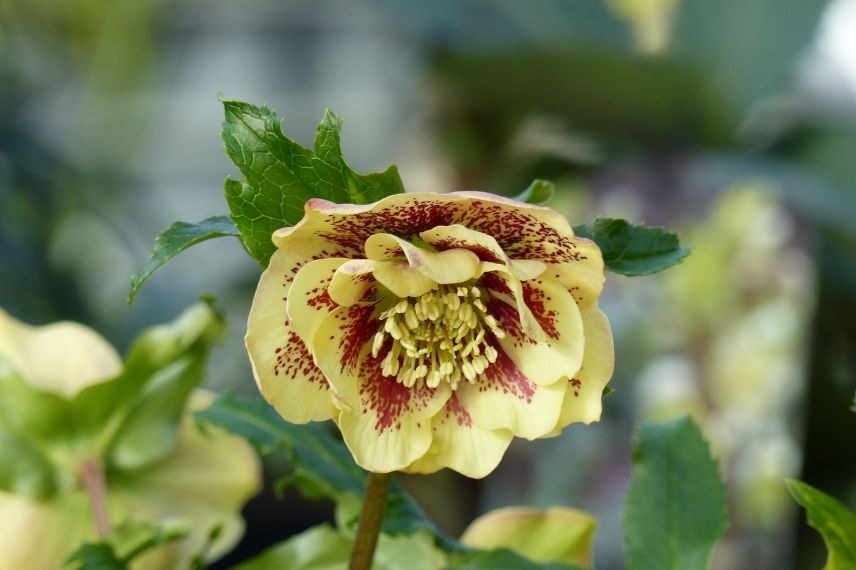
Helleborus orientalis ‘Double Yellow Spotted’
Arisaema griffithii, a hypnotic reptilian charm
The Arisaema griffithii is yet another curiosity of the vegetable kingdom, with an unusual and uncommon flowering. This bulbous plant related to the arums offers a fascinating inflorescence in spring, composed of a thick, funnel-shaped spathe that curls in on itself at the tip. It displays a hypnotic pattern, striated and marbled in green, white, and red-purple, as well as a reptilian silhouette that earns it the nickname “cobra plant”. An almost black spadix is found at its heart, almost entirely shielded from view.
The flower stem is accompanied by a beautifully vibrant green leaf, with a graphic appearance and exotic charm, rising 60 cm from the ground.
Cold-resistant due to its Himalayan origins, this rare plant will be perfect in woodland or in a pot in the shade. Uniquely original, it will complement imposing colocasias, a tetrapanax, or even dwarf bamboos, to enhance its beautiful exotic effect.
For further reading: “Arisaema: planting, growing, and caring for.”
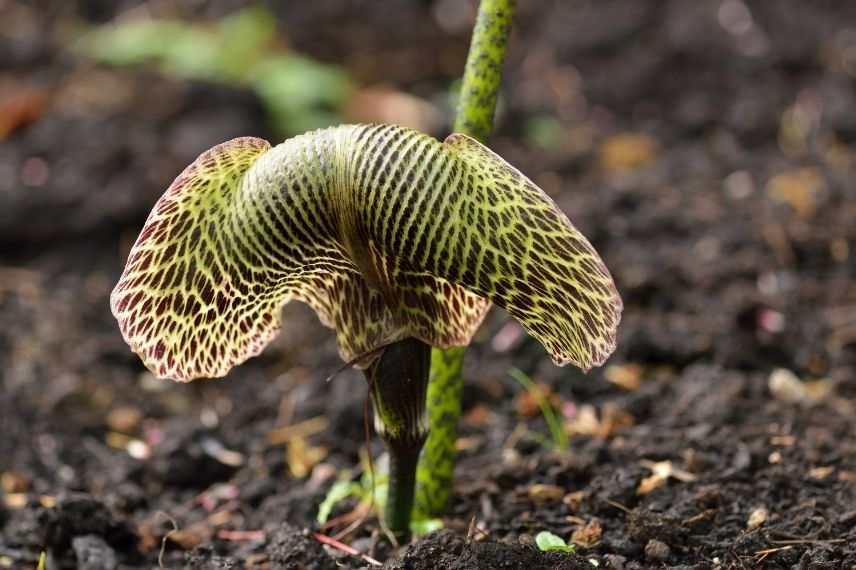
Arisaema griffithii
Sanguisorba hakusanensis, a graceful bottlebrush flowering
The Sanguisorba hakusanensis is a rare botanical burnet, full of grace and lightness. Throughout the summer, from July to September, it adorns itself with long, fringed, moss-like flower spikes, with a pendulous habit. They start as a beautiful vivid blue-pink before turning lilac. This flowering is accompanied by long, fresh green pinnate foliage.
With a natural and airy style, this hardy rhizomatous perennial will enliven borders, beds, or wildflower meadows. Hardy, it thrives in moist, rich soil, in full sun or partial shade. Pair it with grasses to enhance its airy and light aspect, as well as with agastaches, heleniums, or echinaceas.
For further reading: « The burnet or sanguisorba: planting, cultivation, and maintenance ».
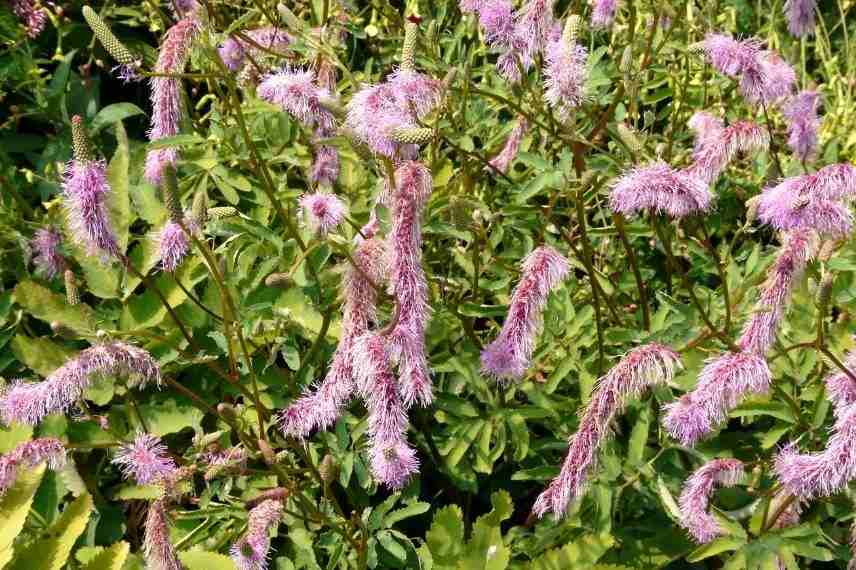
Sanguisorba hakusanensis (photo Karl Lewis)
- Subscribe!
- Contents
Comments