
















Fruit trees: the most popular self-fertile varieties
self-pollinating fruit trees
Contents
Among fruit trees, there are species and varieties known as self-fertile. These fruit trees can fruit perfectly on their own. The term “self-fertile” means that the flowers of a tree can fertilise all the flowers it bears. Among the naturally self-fertile species, we can mention the vine, the peach and nectarine trees, the pomegranate, citrus trees, and the vast majority of apricot trees.
In contrast, other fruit trees, known as self-sterile, require another tree of the same species, but not necessarily of the same variety, to produce well: this is the case for certain pear, apple, and plum trees, in particular. For example, you will need to plant two pear trees in the orchard of the same variety or different varieties that bloom at the same time.
However, it is worth noting that a self-fertile variety can contribute to the pollination of a self-sterile variety if the flowering periods coincide. Fortunately, nowadays, there are many self-fertile varieties for the most common fruit trees: apple, pear, cherry, plum, and even kiwis (Actinidia) or figs. A single specimen will then provide you with a good harvest of fruit.
→ Let’s explore in this advice sheet the best self-fertile varieties of the most cultivated fruit trees.

Apple trees
Apple Tree ‘Reine des Reinettes’
Reine des Reinettes is an old variety. It is an early apple tree, harvested in early September. Very hardy, it is also somewhat resistant to scab. This variety is quite productive. The Reine des Reinettes apple is yellow striped with red, sometimes almost entirely red. It is medium-sized, measuring about 7 cm in diameter. It is an ideal apple for baking, but it is also enjoyed raw. It is sweet, tangy, and very fragrant. Due to its long flowering period, the ‘Reine des Reinettes’ apple tree is a very good pollinator. It is partially self-fertile, so it is preferable to plant other apple trees nearby, such as ‘Golden Delicious’ or ‘Cox Orange Pippin’.
Apple Tree ‘Reinette Grise du Canada’
Reinette Grise du Canada is an old variety also known as ‘Golden Russet’. It is an apple with a somewhat flattened and irregular shape, with a hue ranging from yellow to bronze or cinnamon, featuring a rough skin. The flesh is pleasantly fragrant, with a good balance between sweetness and acidity. It can also be used for making compotes, baking, or eating raw. Self-fertile, it is suitable for cultivation in most regions.
Dwarf Apple Tree ‘Fruit Me® Apple Me Yellow Golden’
The ‘Fruit Me® Apple Me Yellow Golden’ is an apple tree notable for its compact growth, perfectly suited for container cultivation. The apples produced are comparable to ‘Golden Delicious’ apples. This fruit boasts a golden yellow skin at ripeness, protecting a light yellow flesh that is both juicy, crisp, and sweet. The apples are harvested in late summer, starting from September.
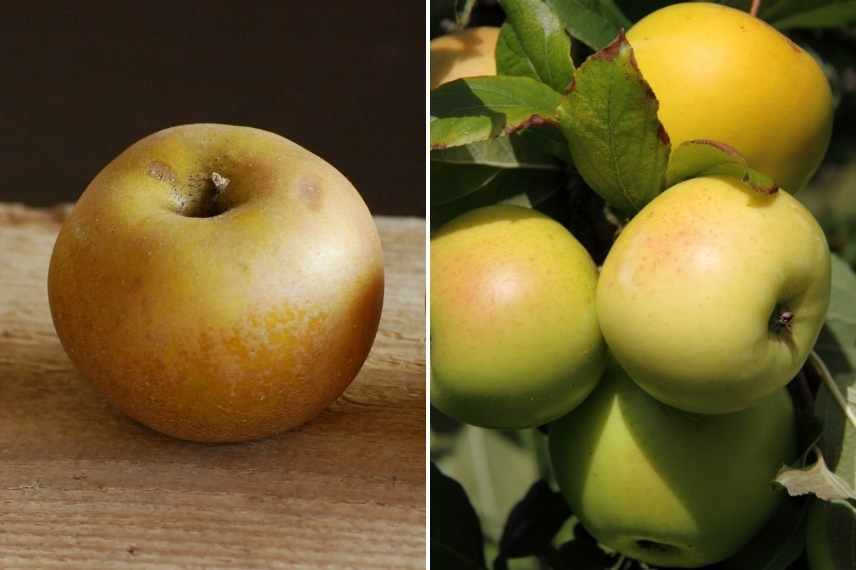
Reinette Grise du Canada and Dwarf Apple Tree ‘Fruit Me® Apple Me Yellow Golden’
Read also
10 dwarf fruit trees to grow in potsPear trees
The Pear Tree ‘Comtesse de Paris’
The Pear Tree ‘Comtesse de Paris’ is the ideal candidate for starting an orchard due to its pollination qualities, modest size (4 m high), good yield, and self-fertile nature. This pear tree can indeed be planted alone in your orchard. The fragrant white flowers bloom in April, giving way to beautiful “round” fruits (7 cm in diameter) by the end of October. These fruits are distinctive: thick, green skin speckled with brown, hiding a grainy, melting flesh with a spicy flavour.
The Dwarf Pear ‘Garden Pearl’
The dwarf pear ‘Garden Pearl’ is perfect for pot cultivation on a terrace, balcony, or small garden. It produces numerous fruits, similar in size to those of a standard pear tree. Its pears are green, with a mildly fragrant, yet melting and sweet flesh. The harvest occurs between late September and October. This variety is completely self-fertile.
The Nashi ‘Shinseiki’
The Nashi is a close cousin of the pear tree, also known as the “Japanese pear” or “apple-pear”. These fruit trees are very hardy (-15 to -20°), vigorous, and offer good yields. The fruits of the nashi are pretty round fruits, slightly flattened, with thick, smooth skin, yellow-green in colour. The variety ‘Shinseiki’ is self-fertile, vigorous, and productive, bearing numerous fruits with white, crunchy, and juicy flesh.
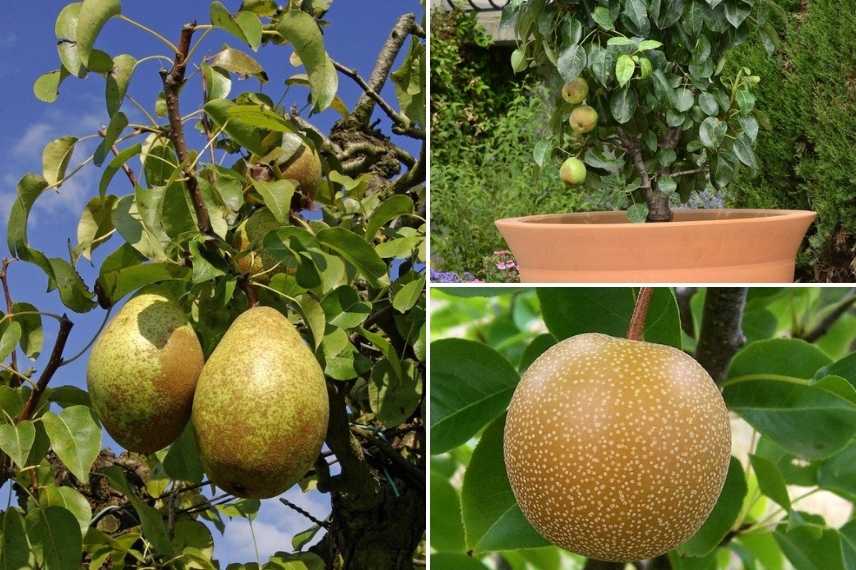
Pear Tree ‘Comtesse de Paris’ on the left. At the top, dwarf pear ‘Garden Pearl’ and at the bottom, nashi ‘Shinseiki’
Discover other Self-fertilising varieties
View all →
Available in 1 sizes
Available in 1 sizes
Available in 1 sizes
Available in 1 sizes
Available in 1 sizes
Available in 1 sizes
Available in 1 sizes
Available in 1 sizes
Available in 1 sizes
Available in 1 sizes
Plum trees
Plum ‘Reine-Claude d’Oullins’
A vigorous variety with a beautiful semi-early yield, spread from late July to August. It produces round plums measuring 4 cm in diameter, canary yellow, tinged with pink at ripeness. The flesh is semi-fine, semi-tender, juicy, sweet, and fragrant. The Plum ‘Reine Claude d’Oullins’ is the best pollinator for other golden Reine Claude varieties. Well resistant to brown rot, its fruits do not drop at ripeness, an advantage that makes its cultivation possible in windy locations.
Plum ‘Mirabelle de Nancy’
This plum tree is resistant to both cold and diseases: it is one of the most sought-after varieties in regions with harsh winters. It also tolerates calcareous soils, unlike other plums that prefer slightly acidic soils. It is a self-fertile plum tree, requiring no other plums for pollination. Fully self-fertile, the fruiting of this plum can be enhanced by pairing it with a ‘Reine Claude’ plum, for example. The semi-early harvest occurs in August-September. Highly productive, ‘Mirabelle de Nancy’ produces small orange-yellow fruits, measuring 3-4 cm in diameter that detach very well from the stone. Its mirabelles are very sweet and have an exceptional honey-like flavour.
Plum ‘Quetsche d’Alsace’
This is an old variety of plum typical of the Alsace and Lorraine regions. It is a very productive semi-late variety. In early September, ‘Quetsche d’Alsace’ produces elongated purple fruits. These plums, known as quetsches, reveal a melting flesh that is low in juice and slightly tangy. It is a self-fertile variety that does not require another plum tree for improved fruiting.
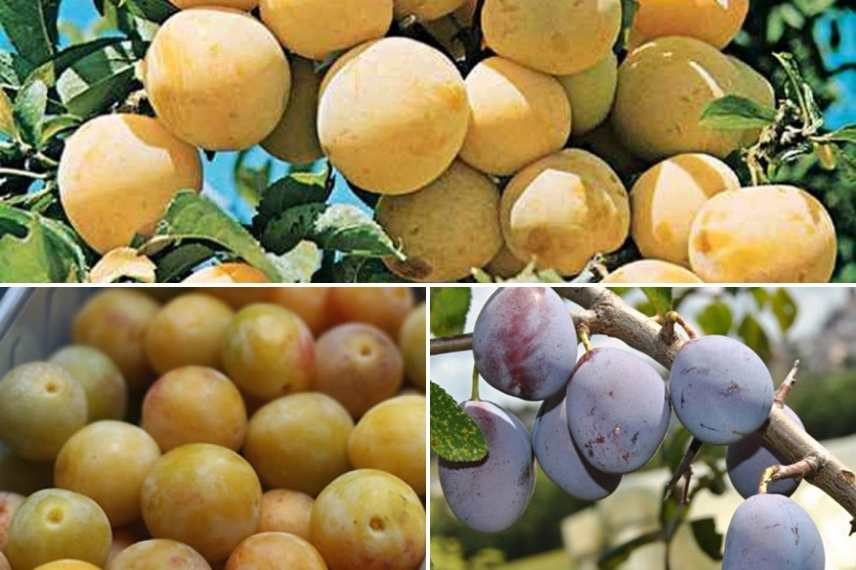
Above, plum ‘Reine Claude d’Oullins’, plum ‘Mirabelle de Nancy’ and plum ‘Quetsche d’Alsace’
Cherry trees
The Cherry Tree ‘Belle Magnifique’
The Cherry Tree ‘Belle Magnifique’ is a cross between sweet cherries of the Bigarreau type and sour cherries. It produces what are known as guignes: round, scarlet-red, shiny cherries with a sweet yet tangy flavour. This cherry, or guigne, is a good table fruit but can also be used to make delicious desserts. The harvest takes place from mid-July and continues until the end of the month. Very hardy, this late-harvest cherry tree can withstand the harshest winters but may suffer in excessively hot summers.
The Cherry Tree ‘Cherry Boop’
The Cherry Tree ‘Cherry Boop ®’ produces cherries of excellent taste quality in July. This dwarf cherry tree will not exceed 2 metres in height, making it perfect for smaller gardens and easily grown in pots on the terrace. Self-fertile, ‘Cherry Boop ®’ also yields fruit within just one or two years. After 4 to 5 years of cultivation, this cherry tree produces an average of around fifteen kilos of cherries per year.
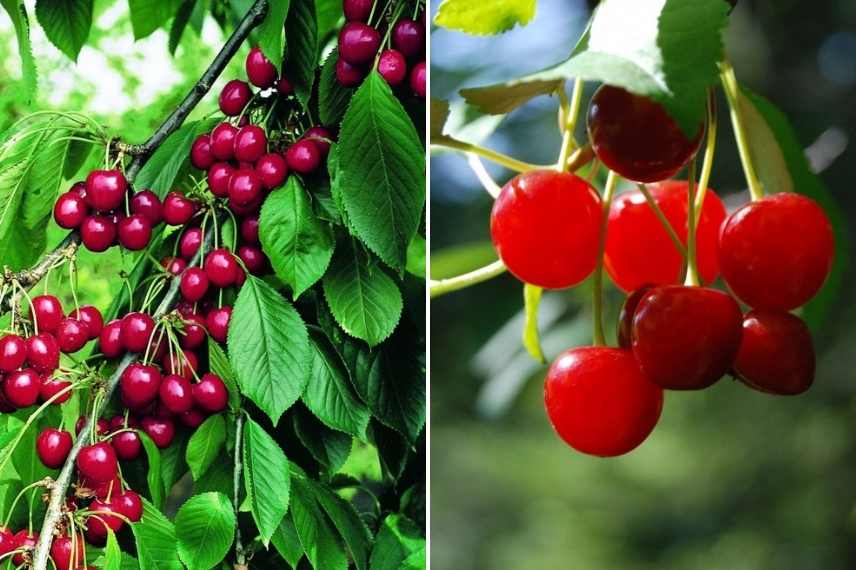
Cherry Tree ‘Belle Magnifique’ and Cherry Tree ‘Cherry Boop’
Kiwis (or Actinidia)
Normally, to bear fruit and produce kiwis, it is essential to plant one male kiwi plant or Actinidia and one or more female plants. Male plants are significantly more floriferous than female plants and pollinate the female plants. One male plant can pollinate about 5 to 6 female plants at a distance of 5-6 m.
However, new self-fertile varieties, which have both male and female flowers on the same plant, have emerged: ‘Issaï’, ‘Solissimo’, ‘Jenny’, or ‘Solo’. In this case, one single plant is sufficient to obtain fruit.
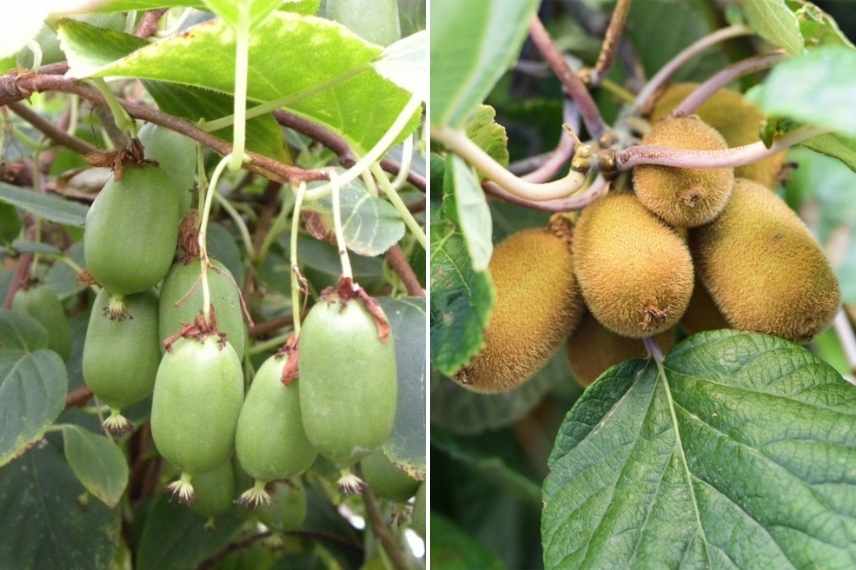
Kiwi ‘Issaï’ and ‘Solo’
Fig trees
Fig trees represent a unique case among fruit trees. Indeed, the sexual reproduction of the fig tree is complex. Among fig trees, we distinguish between varieties that require the presence of other fig trees nearby for pollination with the help of a pollinating insect (the blastophage, found only in the south of France), and self-fertile varieties that can produce fruit without fertilization. In the northernmost regions, it is essential to choose a self-fertile variety that does not need to be pollinated by the blastophage. Unifera varieties, which only bear fruit once a year, are also more suitable for regions with harsher winters.
You can choose the Nazareth Fig, which is a self-fertile and unifera variety, fruiting towards the end of August and producing large fruits with green skin and pink flesh. You may also opt for the ‘Rouge de Bordeaux’ or ‘Pastilière’ Fig, another unifera variety that fruits in early August and has good cold resistance.
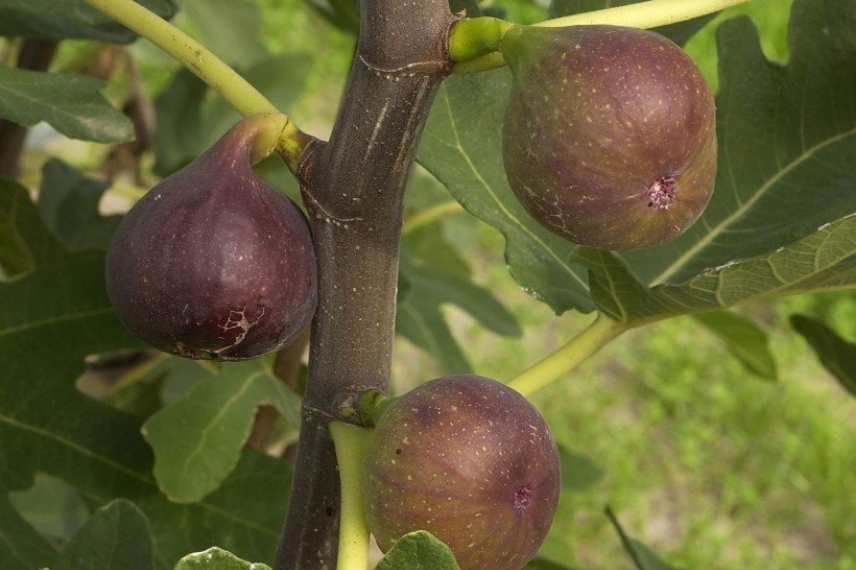
‘Rouge de Bordeaux’ Fig
- Subscribe!
- Contents
Comments