





























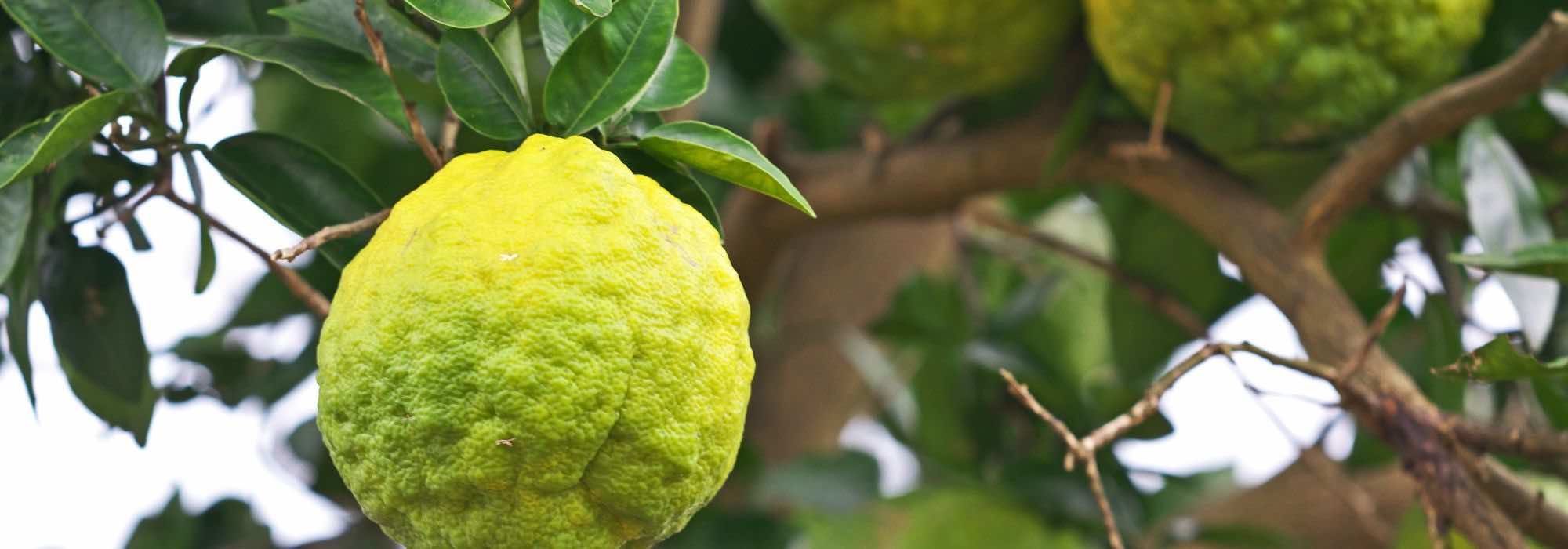
Growing Yuzu
All our tips for enjoying this refined citrus at home
Contents
Very popular in East Asia and a cultural symbol in Japan, yuzu or Citrus juno has sparked significant interest in recent years as it has become known elsewhere. Highly valued in cooking for its aromatic qualities, delicate and refined, much like Japanese cuisine, it is, however, rare and expensive. Why not grow it at home? In the garden, it forms a bush with very thorny branches and a rounded habit, and it is hardy down to about -10°C. It can be grown in the ground in the most southern regions. Elsewhere, it is planted in a pot and should be brought indoors during the cold season to a conservatory or unheated greenhouse. Like all citrus trees, it requires rich soil where it does not lack water.
Discover our tips for growing, maintaining, harvesting, and using this subtle citrus with multiple uses.

Basket of yuzus in Chichibu, Japan

How to grow yuzu? Where to plant yuzu in the garden?
Yuzu is planted in spring, in March-April, when temperatures rise.
Planting yuzu in open ground is reserved for the so-called orange zone, which includes a large part of the Mediterranean coastline, the French Riviera, and Corsica, that is, up to USDA zone 9a. As it is frost-resistant down to about -10°C, it can also be attempted in zone 8.
→ In this regard, read Virginie’s article to learn all about the orange zone and suitable locations for planting a citrus in open ground.
→ Also read Pascale’s article: Which citrus to plant according to your region?
Elsewhere, yuzu is grown in pots outdoors and brought in for the cold season.
Choose a sunny and warm location, but not scorching, sheltered from winds and sea spray.
Yuzu, being a hungry plant, requires rich and fertile soil. Not fond of stagnant water, this soil should also be light and well-draining. This citrus dislikes limestone and is best grown in neutral to acidic pH soil.
How to plant a yuzu in the ground or in a pot?
To plant a yuzu citrus tree, whether in the ground or in a pot, you will need sand, compost, fertiliser, as well as potting mix, drainage for the bottom of the planting hole or pot, and organic mulch to keep the base cool.
Planting in the ground
- Soak the root ball in a bucket of water for about ten minutes to allow it to rehydrate properly;
- Dig a planting hole approximately 2 to 3 times the size of the root ball;
- Mix your soil with well-decomposed compost, river sand, and possibly potting mix. Feel free to also add a special citrus fertiliser, preferably organic;
- Install a layer of drainage at the bottom of the planting hole (gravel, pumice, clay balls, etc.);
- Add a portion of your soil mixture;
- Place the root ball in the centre of the hole, adding your mixture until the roots are covered, but without burying the grafting point (a sort of bulge at the base of the trunk);
- Firm the soil;
- Create a wide basin around the base of your yuzu to retain watering water effectively;
- Water generously;
- Mulch thoroughly to limit water evaporation and space out watering.
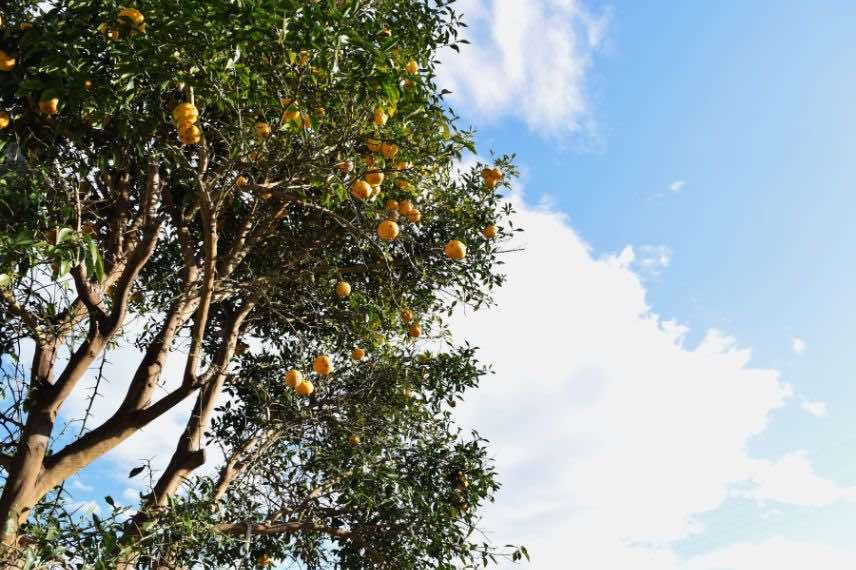
Mature tree in the ground
Planting in a pot
Choose a container 2 to 3 times larger than the size of the root ball, such as a terracotta pot or a wooden box, which must be drilled or can be drilled by you, to prevent the roots from stagnating in water.
Use a special citrus potting mix or create a substrate consisting of 50% potting mix, 30% compost, and 20% sand.
- Soak the root ball in a bucket of water for about ten minutes to allow it to rehydrate and facilitate the removal from the nursery pot;
- Place a layer of drainage at the bottom of the pot using clay balls or gravel a few centimetres thick (pumice is heavier and should be avoided in pots);
- Pour the potting mix or the mixed substrate until it is about half full. You can also add a special citrus fertiliser;
- Remove the nursery pot and loosen the roots at the bottom of the root ball;
- Place your yuzu in the pot;
- Fill in with your substrate without burying the collar;
- Firm the soil;
- Water generously;
- Mulch thoroughly to a depth of several centimetres.
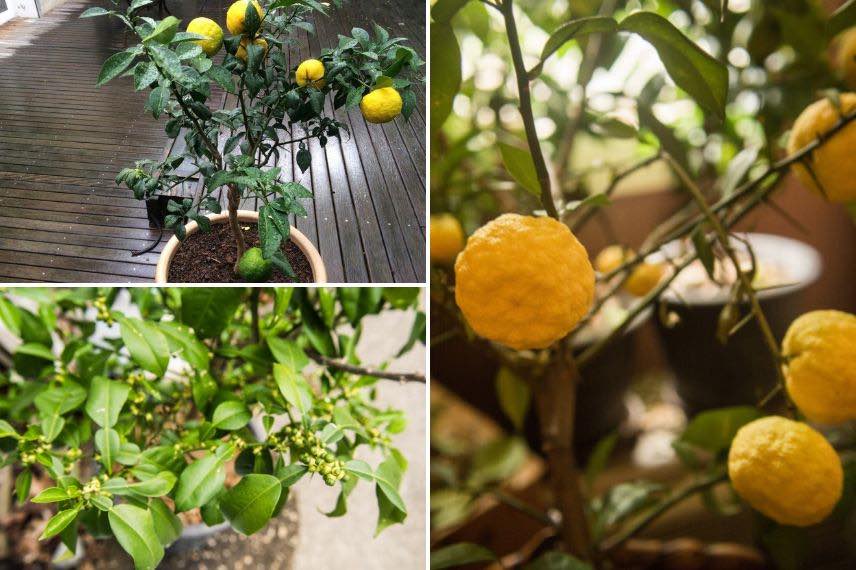
Yuzus planted in pots
Discover other Lemon trees
View all →
Available in 3 sizes
Available in 3 sizes
Available in 1 sizes
Available in 2 sizes
Available in 1 sizes
Available in 2 sizes
Available in 3 sizes
Available in 1 sizes
Available in 3 sizes
Available in 2 sizes
How to care for a yuzu?
The care of yuzu boils down to two main axes: watering and fertilisation.
Outdoor cultivation
Water regularly during the first few years, allowing the citrus to develop its root system. Afterwards, water mainly during dry periods, preferably using rainwater. Plan to water once a week in summer, more often in case of prolonged drought. Reduce watering in autumn, then stop or significantly reduce it in winter (adjust according to winter rainfall). Mulch around the base, as this helps to keep the soil cool for longer while limiting weed growth. Place dead leaves or organic mulch around the trunk.
Apply organic fertiliser or well-decomposed compost to nourish the bush.
In autumn, when temperatures cool, you can install a fleece over the aerial parts to protect the fruits, which are more sensitive to frost.
Pot cultivation
Water regularly from spring to autumn, providing water as soon as the substrate becomes dry (once or twice a week). Use rainwater whenever possible. Avoid leaving water standing in the saucer. Yuzu is nutrient-hungry, so apply liquid fertiliser about once a month. You can also use slow-release fertiliser. In winter, reduce water and fertiliser applications.
In autumn, around October, bring it into a frost-free shelter, such as a cold greenhouse or conservatory. Choose a bright but unheated location: ideally, the temperature should be between 7 and 10 °C. In spring, take your yuzu back outside and place it in a sunny spot.
Repot your yuzu approximately every two years, preferably in spring. This renews its substrate and allows more space for its roots and growth. In years when you do not repot, perform a top dressing: remove the top few centimetres of substrate and replace it with fresh potting soil.
Read also
Citrus trees: planting and maintenanceWhen and how to prune yuzu?
The pruning of the yuzu lemon tree takes place after fruiting, at the end of winter, before the resumption of growth. Prune lightly approximately every two years, making clean and precise cuts. Disinfect your tools to avoid transmitting diseases. Also, apply a healing paste to the wounds.
For a bush in a pot, you can intervene more frequently to control growth, even several times a year, each time quite lightly.
Pruning is straightforward and consists of:
- Removing dead wood and crossing branches inside, to allow air and light to circulate through the bush.
- Giving a balanced shape to the bush and making harvesting easier by limiting the height of the plant.
- Determining the general shape of the bush in the first few years (rounded or stemmed).
Harvest, uses, and why yuzu is so expensive?
After the abundant and fragrant flowering of March-April, fruits the size and shape of a mandarin follow. Their epidermis is thick and slightly bumpy; the yuzu is initially green and turns yellow at ripeness. The pulp of the yuzu lemon is full of pips, not very juicy, but its juice is highly valued.
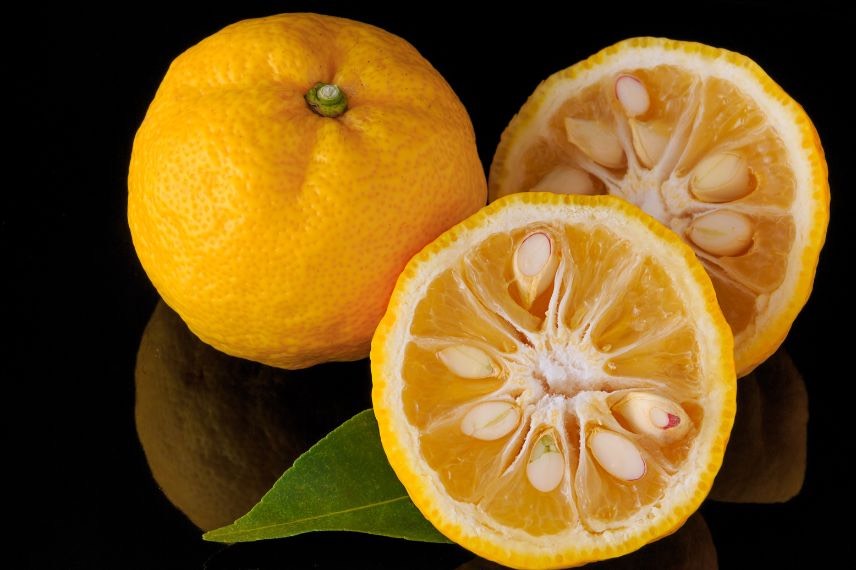
Little juice and many pips in the yuzu
The flavour of this unique fruit is rich: very tangy, between grapefruit, mandarin, and lime, it also evokes citron and bergamot with subtly spicy notes.
The yuzu fruit is harvested from September to November-December, when their concentration of essential oils is at its peak.
Yuzu leaves are not consumed. The peel, zest, and juice, which is not abundant, are used.
The culinary uses of this Japanese citrus are very varied, in both savoury and sweet dishes, drawing inspiration from Japanese culinary culture and its many delicious yuzu-based sauces, as well as exploring all sorts of other recipes, such as making mayonnaise by replacing lemon with yuzu zest and juice. Feel free to create all kinds of subtle dressings or yuzu sauces; it enhances this type of preparation.
- The yuzu peel is used candied, and one can imagine all the usual uses of candied fruits.
- The zest of yuzu is used in Japan in various condiment preparations, such as in cakes. More generally, it can be used to flavour fish and shellfish or to aromatise butter or paired with dark chocolate, for example.
- Yuzu juice is part of the composition of Japanese sauces like ponzu, in cakes, or in non-alcoholic drinks or liqueurs. It can also be used in marinades for meat and fish, and on the sweet side, to make sorbets, panna cotta, biscuits, and cocktails.

How about a yuzu cheesecake? The fresh and subtle taste of the citrus pairs very well with a mild cheesy flavour
The price of fresh yuzu or yuzu condiments is very high, often due to its distant origin, but also because little juice is extracted from a fruit, about 18% of the total weight of the fruit. The yield of yuzu lemon trees is quite unpredictable and unstable; a bush does not produce every year. In Japan, where great attention is paid to production conditions, the concept of terroir, taste, and product quality, there are still yuzu crops from seeds, reputed to produce the best fruits, with the most unpredictable yield, and bushes that do not bear fruit until 20 years old.
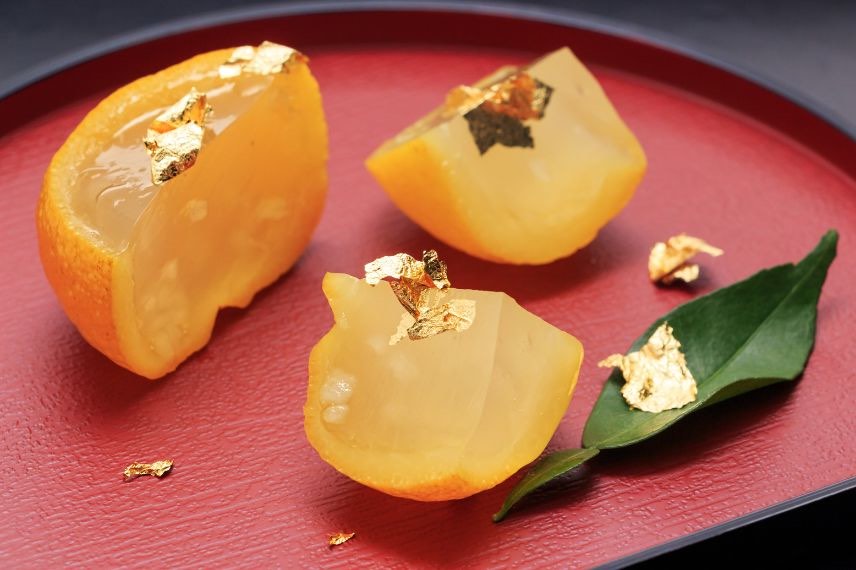
Metaphor for the rarity of this sought-after fruit
- Subscribe!
- Contents
![[Yuzu] is a citrus fruit tree that is particularly appreciated for its fragrant and tangy fruits. Native to East Asia, [Yuzu] is a small tree that can reach a height of 5 meters. Its fruits are round and yellow when ripe, with a rough skin. The juice and zest of [Yuzu] are widely used in cooking, especially in Japanese cuisine, to add a unique citrusy flavour to dishes. In the garden, [Yuzu] requires a sunny and sheltered location, as well as well-drained soil. It is hardy to -10°C and can be grown in pots in cooler climates. Prune [Yuzu] in spring to maintain its shape and promote fruit production.](https://en.promessedefleurs.eu/blogwp/wp-content/uploads/2023/03/Cultiver-le-Yuzu.png "Growing Yuzu")
Comments