





























Primroses: the easiest to grow
to flower your garden or balcony
Contents
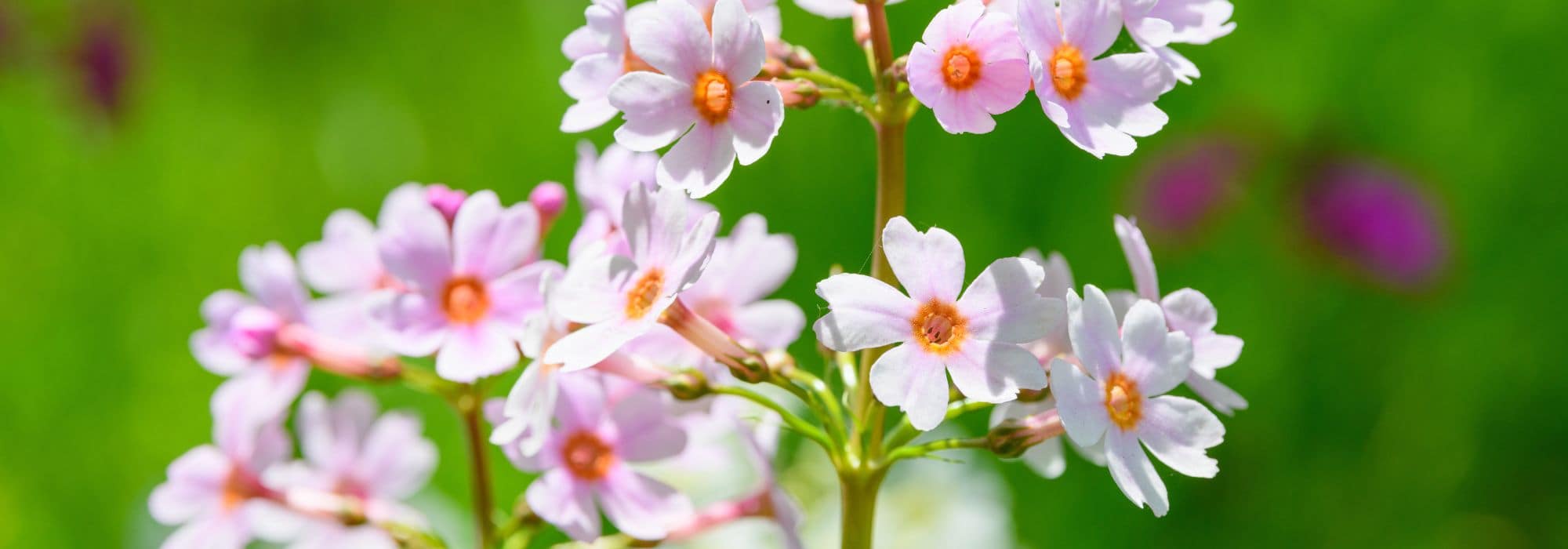
Primroses are among the first flowers to brighten up the garden with their charming flowering. They are also known as easy-to-maintain plants, requiring only a partially shaded position and fresh, well-drained soil. They offer a great diversity of forms, from Primula veris, also known as “cowslip,” to Primula elatior (oxlip), as well as the garden primrose, known as vulgaris or acaulis, which is very common in gardens, and the candelabra primrose, which is more delicate to grow. Discover our selection of the easiest primroses to grow to flower your garden in spring without maintenance worries.

The common primrose – Primula veris, the wood cowslip
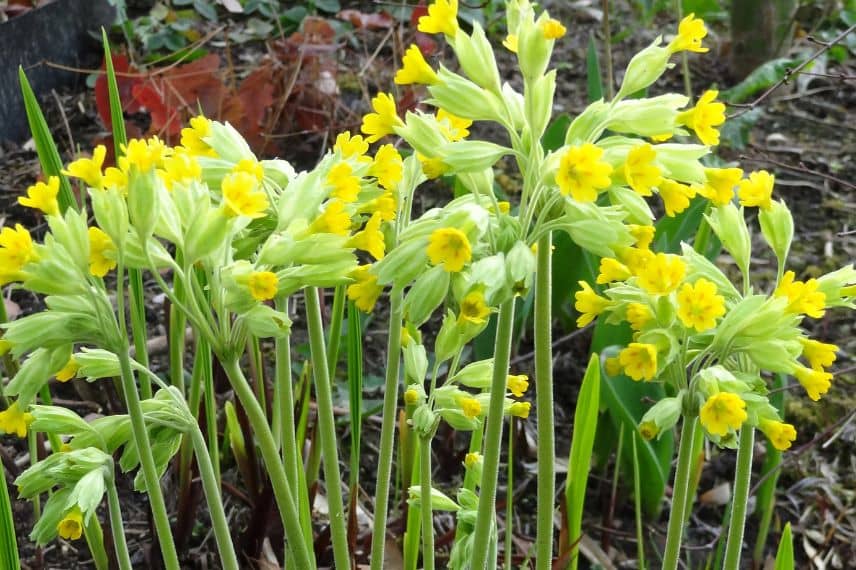
Well-known among forest walkers, the common primrose or cowslip bears lovely umbels of soft yellow flowers with a light fragrance in April and May. Reaching a height of 20 cm, they require a moist, clayey soil rich in humus, similar to the substrate they are accustomed to in the woods. With their very natural appearance, they help create a woodland atmosphere, especially if planted under trees.
To enhance this charming woodland aspect, you can pair them with daffodils, narcissi, and spring crocuses. For example, try combining them with Avalanche narcissi and Crocus tommasinianus with star-shaped lavender-tinted flowers.
Read also
Primroses: 7 ideas for garden companionsThe tall primrose – Primula eliator, the cuckoo's lookalike
The oxlip is a perennial with sulphur-yellow flowers, which is easily confused with the common primrose or wood cowslip. It differs in size, as it is taller than the common primrose, and in colour, as its flowers display a paler yellow. It flowers from March to May, with its flowers opening in a corolla above a persistent, crinkled foliage. It enjoys a spot in partial shade, away from scorching sun, as well as humus-bearing, cool, well-drained soil. The oxlip has given rise to numerous cultivars with bright and cheerful colours, such as the Primula – Primula elatior ‘Colibri Red Shades’ with its red flowers contrasting with its yellow centre, providing a long flowering period from January to April.
The oxlip allows for the creation of natural and rustic atmospheres. If you love this style, plant it alongside blue forget-me-nots and white bleeding hearts to create a charming floral space in a shady corner.
Discover other Primula - Primroses
View all →
Available in 1 sizes
Available in 0 sizes
Available in 2 sizes
Available in 1 sizes
Available in 1 sizes
Available in 1 sizes
Available in 1 sizes
Available in 2 sizes
Available in 1 sizes
Available in 1 sizes
Common primrose – Primula vulgaris, simple and beautiful
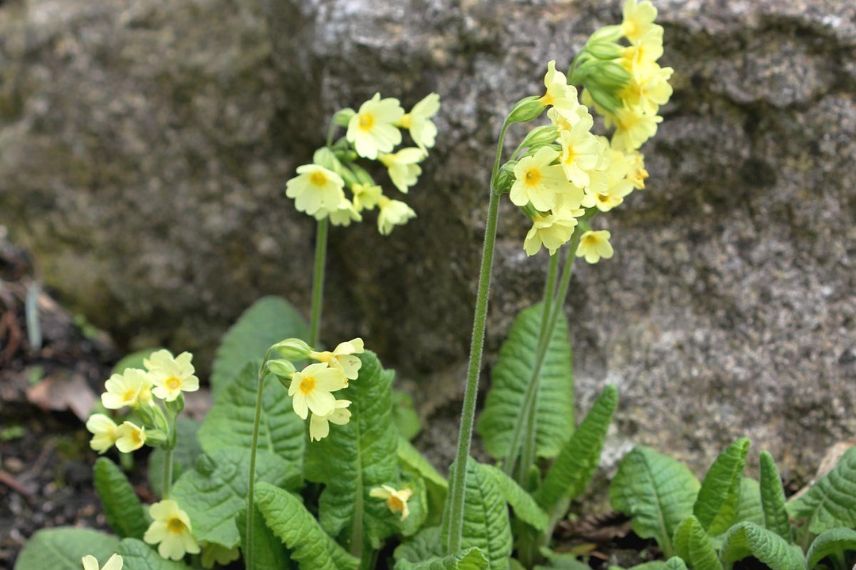
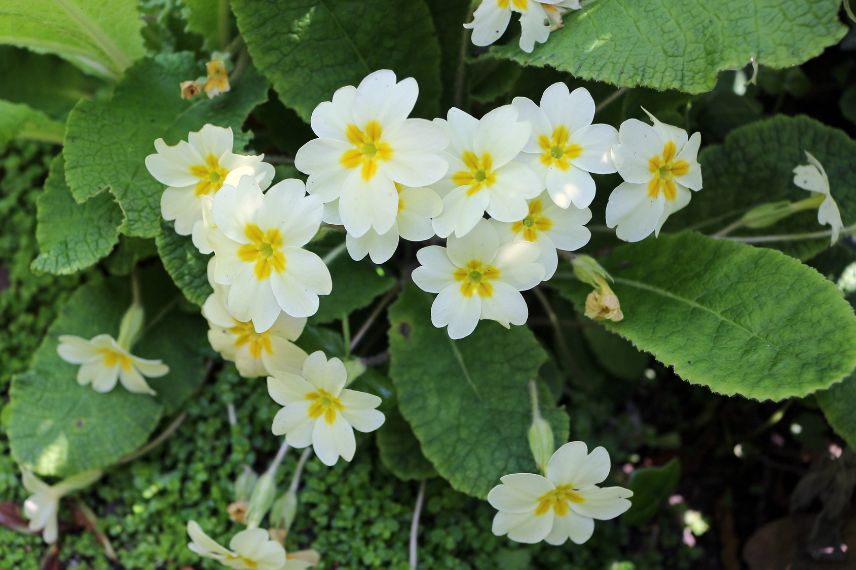
The Primula vulgaris, also known as Primula acaulis, is the common primrose with large, flat, stemless flowers. This small perennial plant, reaching 10 cm in height naturally thrives in woodlands and along roadsides. It is easy to grow and settles effortlessly into a garden. Its simple beauty and hardiness have made it a favourite among gardeners. It grows best in a partially shaded spot with cool, clayey, rather neutral soil. From March to May, its crinkled, soft green foliage provides a backdrop for solitary, pale yellow flowers borne on short stems. The flower consists of five petals arranged in a corolla. The foliage forms a rosette that remains evergreen in winter.
The Primula vulgaris pairs well, in a lawn, a cool rockery, or beneath a tree, with snowdrops, violets, hyacinths, or woodland daffodils to create a bucolic and natural atmosphere.
The primrose – Primula acaulis Lipstick, a small plant that is easy to grow
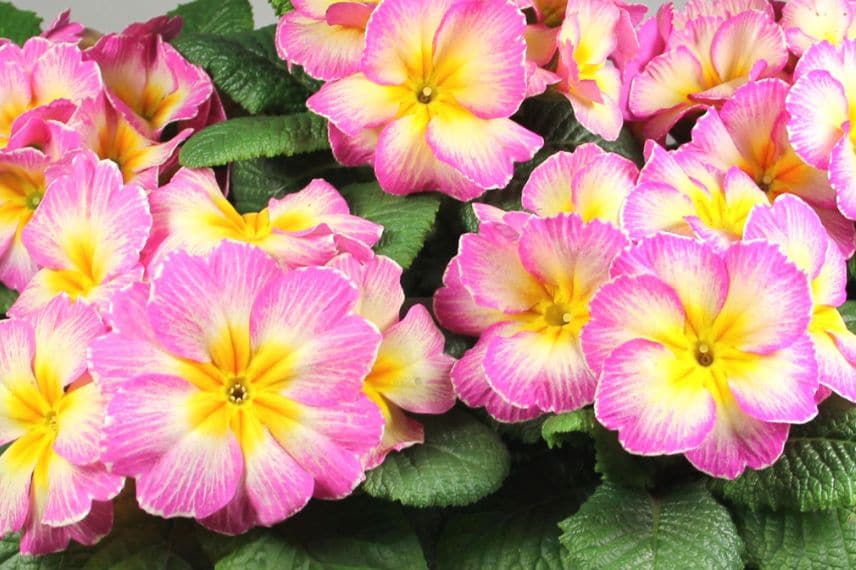
From the perennial Primula acaulis, new varieties have been created that are also very easy to grow. This is the case, for example, with the Primula acaulis Lipstick, which has a compact habit and an unusual colour. This small primrose, 15 cm tall, blooms from January to March. On its crinkled foliage forming a neat light green cushion, bicoloured flowers in yellow and pink emerge. These primroses are grown as biennials and thrive in both sun and shade, in cool, fertile soil. They can be planted in a garden or in pots.
Have fun pairing them with botanical tulips, such as Tulip batalinii ‘Yellow Jewel’, hyacinths, or muscari.
The garden primrose – Primula 'Everlast F1', an easy-going hybrid
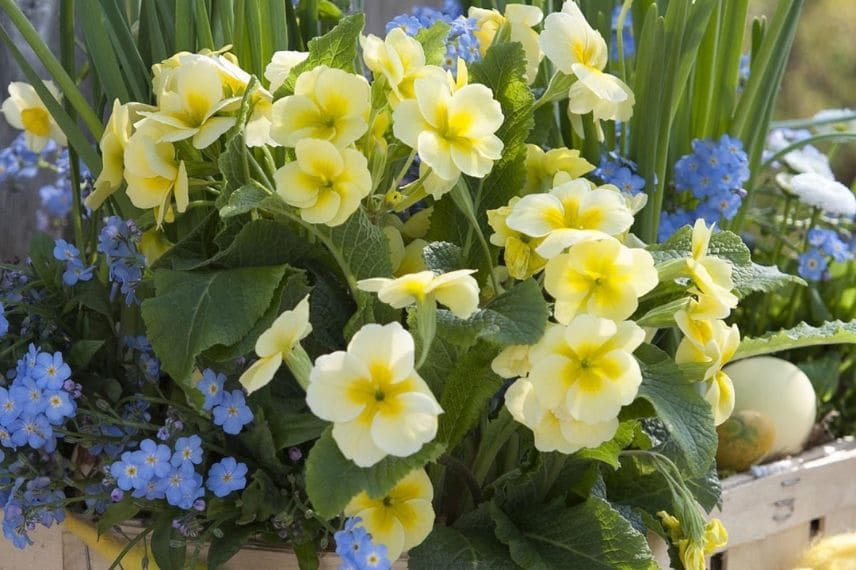
Hybrid primroses are also excellent candidates for an easy-to-grow garden or container. The Primula ‘Everlast F1’ is one of the hassle-free hybrid primroses for gardeners. A multiflorous type, it has been awarded by Fleuroselect for its decorative qualities as well as its ease of cultivation. Perennial, it demonstrates great hardiness. It thrives in gentle sunlight, partial shade, and even full shade, in humus-bearing, cool soil. It is the result of hybridization between Primula eliator, Primula veris, and Primula acaulis. Its dark green, rosette foliage is evergreen and crinkled. It reaches a height of 20 cm and produces pale yellow flowers with a golden heart from December to March.
In a border or planter, pair the Primula ‘Everlast F1’ with Myosotis sylvatica ‘Savoie Bleu’ and Viola cornuta ‘Sorbet Delft Blue’ for a guaranteed fresh effect.
The primrose – Primula denticulata, stately and elegant
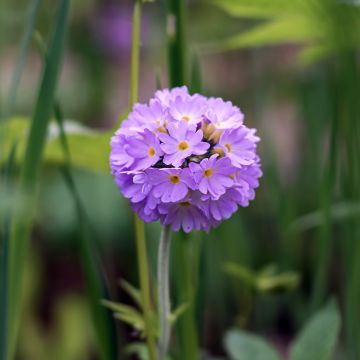
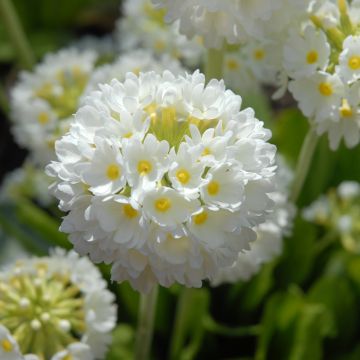
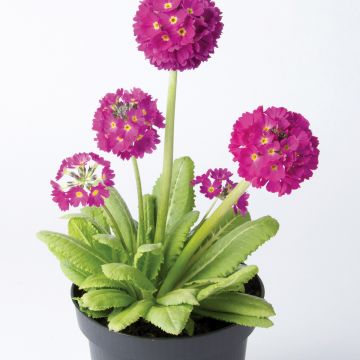
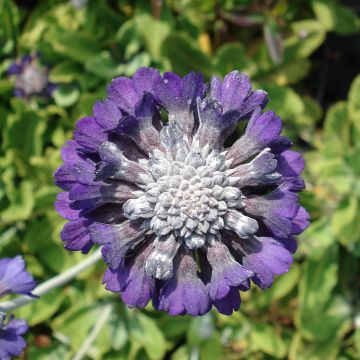
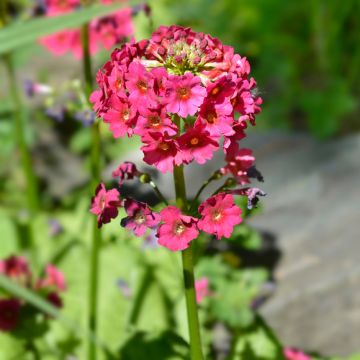
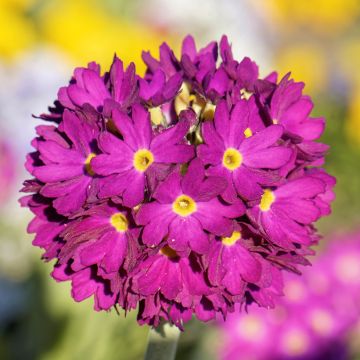
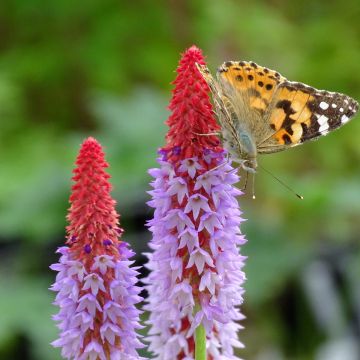
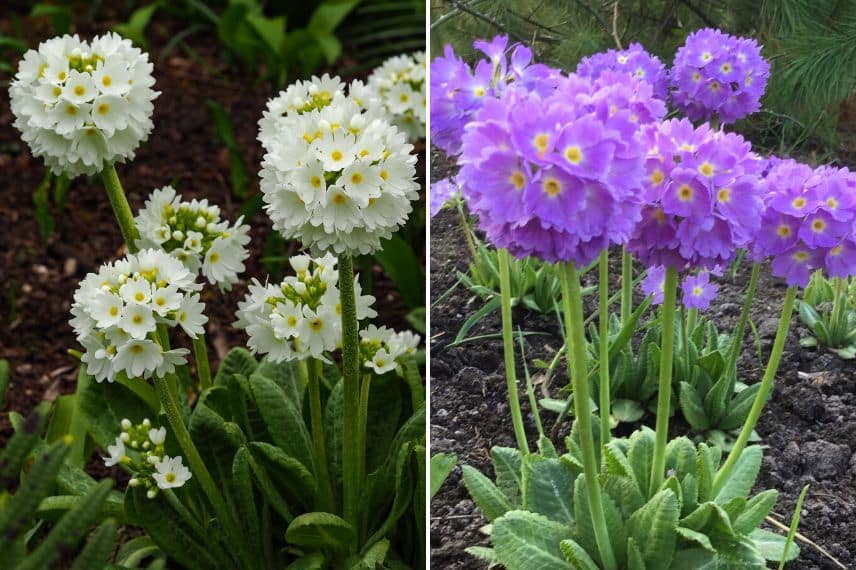
Also easy to grow, the denticulate primrose or Primula denticulata is robust and offers attractive flower pom-poms, reminiscent of alliums. Its flowers are arranged in a ball shape on a stem 30 cm tall, giving it a certain elegance. They can be white like Primula denticulata Alba, purple like Primula denticulata Cashmiriana, or pink like Primula denticulata Rubin. They bloom from March to May and the elongated, dentate leaves are deciduous.
In a garden, in full sun or partial shade, plant Primula denticulata Alba alongside Primula denticulata Cashmiriana, as well as Siberian squills, which bloom at the same time.
Japanese Primrose Apple Blossom – Primula japonica, sheer delicacy
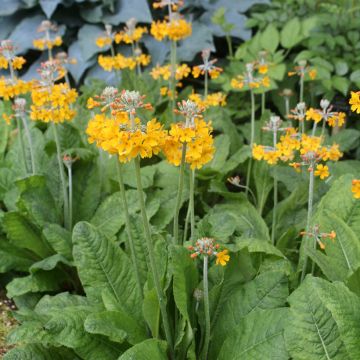
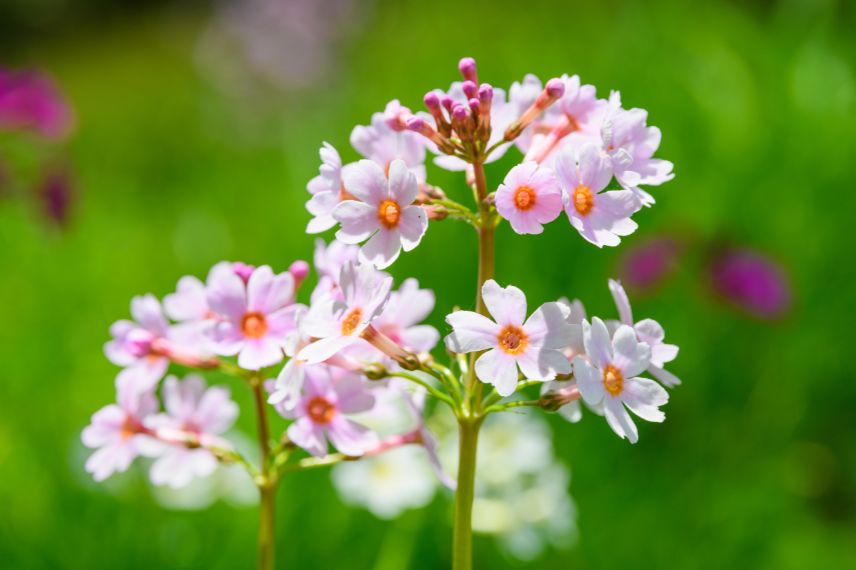
The Japanese primrose Apple Blossom – Primula japonica also adds a very elegant touch to a garden. It is easy to maintain if planted in cool, humus-bearing soil. Standing at 60 cm tall, it belongs to the category of candelabra primroses. From May to July, it produces floral spikes adorned with charming little crowns of flowers reminiscent of apple blossoms. They display a soft pink with a coral red centre. This plant features pale green, dentate leaves measuring 20 cm that are deciduous. Vigorous and frost-resistant, this perennial is easily grown in shade or partial shade in humus-bearing, cool, and well-drained soil.
It pairs beautifully with shade plants such as small ferns, hostas, Bleeding Hearts, and tiarellas, sheltered by trees. They will charmingly brighten up a shady corner in the garden.
- Subscribe!
- Contents
Comments