





























Pruning of Hedges
When and how to maintain them?
Contents
Hedge bushes allow you to create all sorts of green screens: privacy screens, windbreaks, fences, or defensive barriers. These green screens inevitably require a minimum of maintenance, as neglecting a hedge risks losing its density, reducing its function, or encroaching further into the garden… or your neighbour’s! To do it right, hedge maintenance must be tailored to the varieties of plants that make it up.
How should hedges be pruned? What is the best time to prune hedges? Let’s clarify for each situation.

Hedges: a refugium for biodiversity
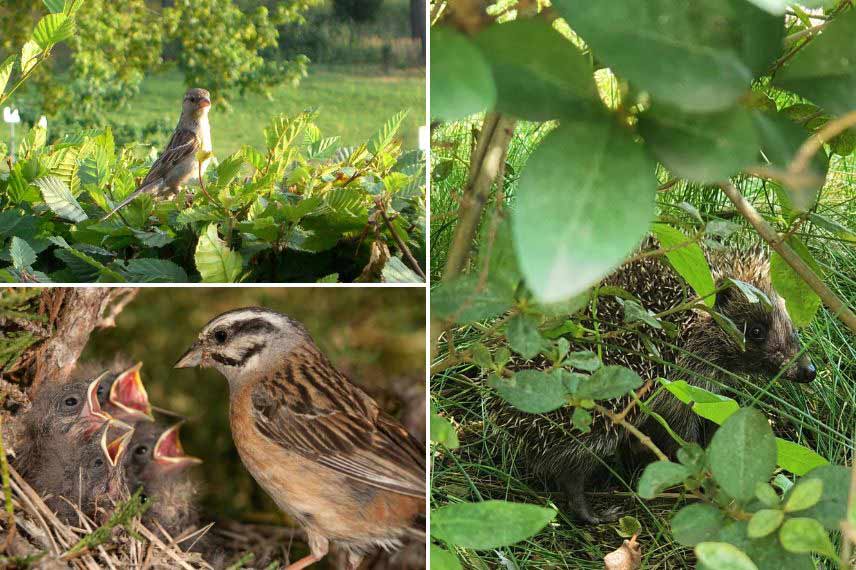
Starting from mid-March, the nesting season begins. To avoid disturbing birds during this crucial period, the French Office for Biodiversity and the L.P.O. recommend not pruning hedges (or trimming trees) from 15 March to 31 July.
During your pruning work, also be mindful of the small animals that may reside there year-round: in addition to the thousands of insects and other invertebrates living in this medium, the hedge also shelters many amphibians and reptiles (slow worm, common lizard, common toad…), as well as several species of mammals such as shrews, dormice, hazel dormice, and hedgehogs.
Read also
How to plant a hedge?Pruning evergreen hedges
The evergreen hedge is often the first thing planted in a developing garden. It aims to create a screen for privacy or a dense windbreak, providing cover all year round to hide from prying eyes. To design it, one chooses evergreen bushes, which retain their foliage in winter, have dense vegetation, grow quickly, and respond well to pruning.
Evergreen hedge shrubs
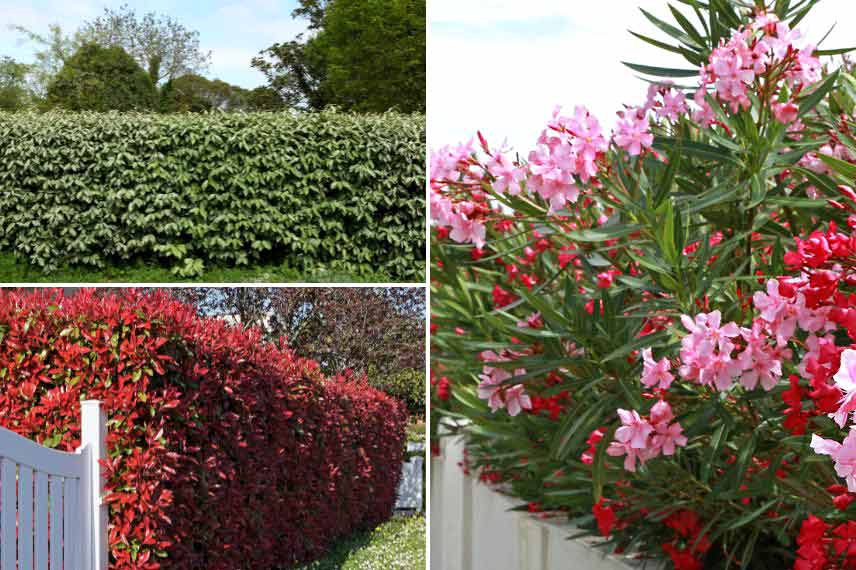
Privet, Photinia, Laurels (Cherry Laurel, Portuguese Laurel, Bay Laurel) , Eleagnus, Abelia are the most commonly used for evergreen hedges. In mild climate gardens, hedges of Oleander, Pittosporum, Griselinia, Laurustinus, or Callistemon are also planted.
These shrubs have a rapid growth rate and can be pruned strictly in height and width.
⇒ Discover our full range of evergreen hedge shrubs on our site.
When and how to prune an evergreen hedge?
- This type of hedge, if pruned “to the line”, will require regular maintenance to maintain its harmonious shape and limit its spread. Pruning may not be necessary in the first few years, depending on the chosen plants, allowing them to grow and thicken. It should be done when the hedge is well dense and thick.
- Once or twice a year, at the end of winter (early March) and in autumn (September or October), pruning will help achieve a beautiful uniformity and prevent the shrubs from growing in a disorderly manner. Always avoid pruning during frost or drought.
- If you allow your evergreen shrub hedge to grow freely, the effect will be different: much less strict and more natural, and you will also fully benefit from their flowering and fruiting, which are significant advantages for biodiversity. However, you will need more space in width, and their height will be greater.
- Regarding Oleander hedges: flowering on the wood of the year, you should avoid severe pruning, or you risk being deprived of flowers for the entire season. They should be at least 5 years old before they can start being pruned, and this pruning should occur every 4 to 5 years. In early spring (March), using clean pruning shears, cut back one-third of all branches, also removing dead, damaged, or poorly placed stems. For safety, wear gloves while pruning, as the sap of oleander is highly toxic, primarily through ingestion. It can also cause burns upon skin contact.
- Prune Laurustinus hedges after flowering, around the end of March. However, if you do not prune them, you will encourage the appearance of berries, which are very useful to birds in winter.
- You can prune low evergreen shrubs like boxwood or Lonicera nitida, which produce shoots in all directions as soon as the nice weather arrives. This pruning, done with a well-sharpened shear, serves to give them a homogeneous shape and refresh them.
Discover other Hedge shrubs
View all →
Available in 1 sizes
Available in 1 sizes
Available in 1 sizes
Available in 1 sizes
Available in 1 sizes
Available in 1 sizes
Available in 1 sizes
Available in 1 sizes
Available in 1 sizes
Available in 1 sizes
Pruning conifer hedges
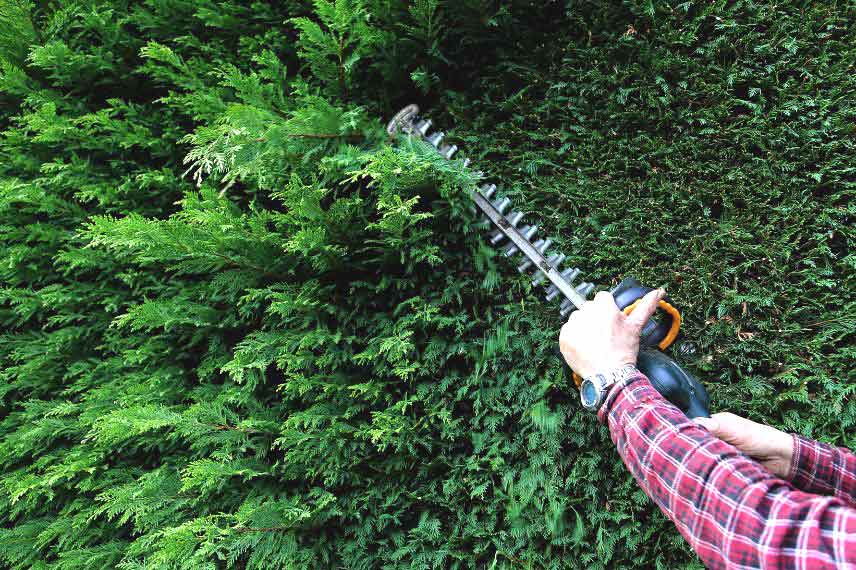
Grand classique des haies party walls, conifer hedges are dense, compact, and green all year round. They make an excellent windbreak or privacy screen, with a neutral colour that is both understated, effective, and elegant.
Conifer hedge shrubs
The Leyland Cypress, thujas, and false cypresses are among the best conifer hedges, due to their rapid growth, ease of cultivation in good garden soil, and tolerance to repeated pruning. You can also find hedges of Yew.
⇒ Discover our full range of conifer hedge shrubs on our website.
When and how to prune a conifer hedge?
- A conifer hedge can be easily maintained with one or two annual prunings depending on the varieties: in early spring and late August – September. This pruning allows for the removal of diseased or dead parts and helps to control the height and width of the hedge.
- Prune the young shoots to restore the previous shape, without reaching the old wood. Start with the sides, from the bottom to the top, keeping a slightly wider base. Then prune the height (using a step ladder or, better, a small scaffold) following a line stretched at each end of the hedge or using a hedge trimmer with a built-in level. Regularly step back to ensure straight cuts and achieve a perfect result.
- If you allow the conifer hedge to grow naturally without pruning, especially in the case of tall windbreak hedges, simply remove any dead or diseased branches that may be present.
Read also
How to create a privacy hedge?Pruning flowering hedges
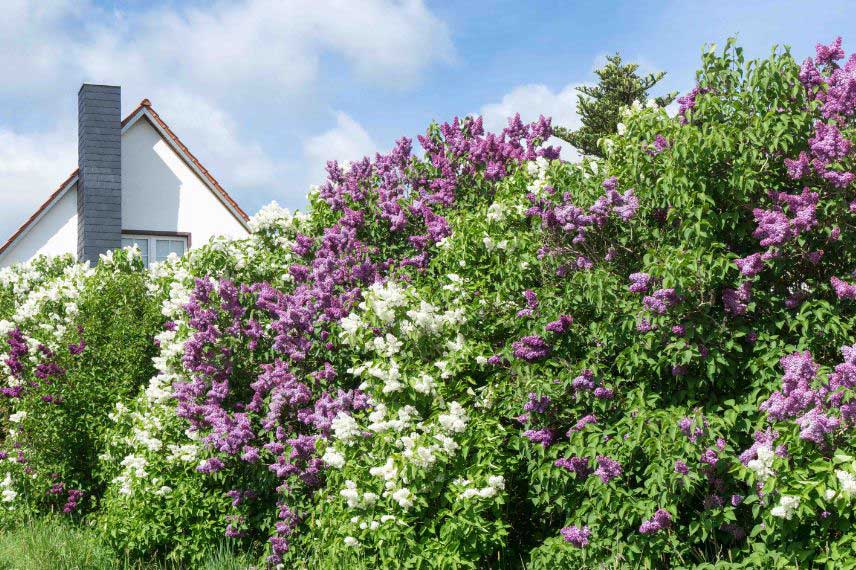
Flowering hedges enliven the garden and change colour throughout the seasons and flowerings. They consist of bushes that can flower in spring, summer, autumn, or even winter. To ensure the hedge remains attractive in winter, it is ideal to have 1/3 evergreens to 2/3 deciduous plants. Also consider marcescent shrubs like Hornbeam (Carpinus betulus) that retain their dry leaves throughout most of the winter.
Flowering hedge shrubs
Forsythia, flowering currant, Japanese quince, hibiscus, buddleia, abelia, crape myrtle, strawberry tree, Mahonia, Lonicera fragrantissima, Escallonia, summer spiraea, weigela… the list of shrubs for this type of hedge is extensive. These are all beautiful varieties to create a flowering and fragrant hedge, attractive all year round.
⇒ Discover our full range of flowering hedge shrubs on our site.
When and how to prune a flowering hedge?
You must adapt the pruning to the flowering of the different shrubs and wait until the flowers have faded:
- Winter-flowering shrubs should be pruned in March-April, when the last flowers have faded.
- For shrubs that flower in spring, wait until the end of flowering and intervene within 1 to 2 months after it has finished.
- Prune before the end of April (and preferably before 15 April) all summer-flowering shrubs.
- Autumn-flowering shrubs are generally pruned at the end of winter, between February and April, before the vegetation resumes.
- It may be necessary to remove dead leaves and faded flowers at the end of the season.
- For a natural pruning, you should only intervene if the hedge starts to become unbalanced or looks very untidy and simply use pruning shears and loppers. The aim of this type of pruning is simply to reduce the plants so they regain vigour and to remove dead or diseased wood. Step back and only prune each shrub at the level of branches that are protruding or those that may hinder other subjects in the hedge.
- A more classic and controlled pruning will require regular maintenance to prevent the shrubs from developing in a disorderly manner. You will need to intervene every year.
The pruning of hedgerows or bocage hedges
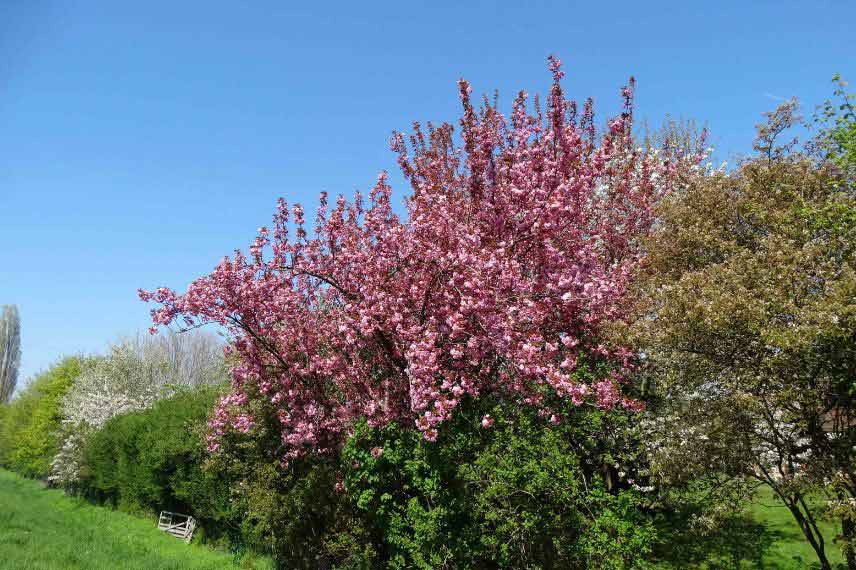
On is rediscovering the usefulness and natural beauty of bocage hedges, whether in the countryside or to delineate gardens. This wild hedge consists of trees, bushes, and shrubs that provide refuge for birds, insects, and small mammals.
Hedge shrubs of the countryside or bocage
The countryside hedge mainly consists of local species that can vary by region: blackthorn, field maple, hawthorn, bloodtwig dogwood, hornbeam, wayfaring tree, Italian alder, or privet, to name just a few. You can choose other species such as lilac, buddleia, Mexican orange, laurels, elder, viburnums, bush honeysuckle, roses, the important thing being to create a diverse hedge that respects your climate and the needs of the shrubs.
⇒ Discover our range of shrubs for bocage hedges on our site.
When and how to prune a countryside bocage hedge?
- For this type of hedge, maintenance is very simple! Put away the shears and hedge trimmer, as it requires minimal maintenance. Occasional pruning is possible to control the growth of certain plants or to remove dead or diseased branches, intervening in a way that keeps the result as natural as possible.
Pruning defensive hedges
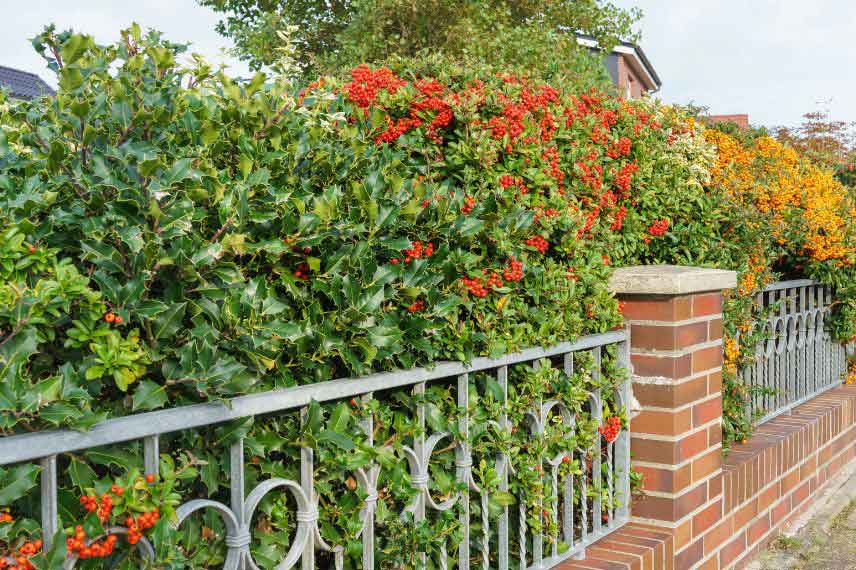
There are many bushes that, due to their thorns, spiky leaves, or tangled branches, can make an excellent natural and impenetrable defensive hedge. Additionally, both evergreen and deciduous thorny bushes can be very ornamental, showcasing beautiful flowering and colourful fruit, providing food for wildlife that can also take shelter there.
Defensive hedge shrubs
Berberis, Pyracantha, Holly, Mahonia, bush roses (Rosa rugosa…), Poncirus trifoliata, or even Japanese quinces are excellent candidates for creating perfect defensive hedges.
⇒ Discover our entire range of shrubs for defensive hedges on our site.
When and how to prune a defensive hedge?
- One year after planting, you can cut each bush back by a third of its height to stimulate them and encourage branching, making them denser and bushier from the base.
- For the next three years, prune the young shoots by a third of their height, from February to mid-March before the growth season resumes.
- After that, the hedge will no longer need pruning, and you can let it grow freely. To prevent it from encroaching on your garden or your neighbour’s, occasional light pruning will suffice to remove any troublesome branches.
Pruning bamboo hedges
Persistent, dense, low-maintenance hedge that can grow quickly, withstand frost and wind, and effectively preserve your privacy: bamboos are perfect candidates for creating hedges! Whether it is a single-species or mixed hedge, a bamboo hedge is ideal for protection against wind, prying eyes, and noise. Their extremely rapid growth allows for the creation of a dense curtain of greenery that remains beautiful throughout the seasons. Their foliage and graphic canes bring an exotic, refreshing, and structured look to the garden.
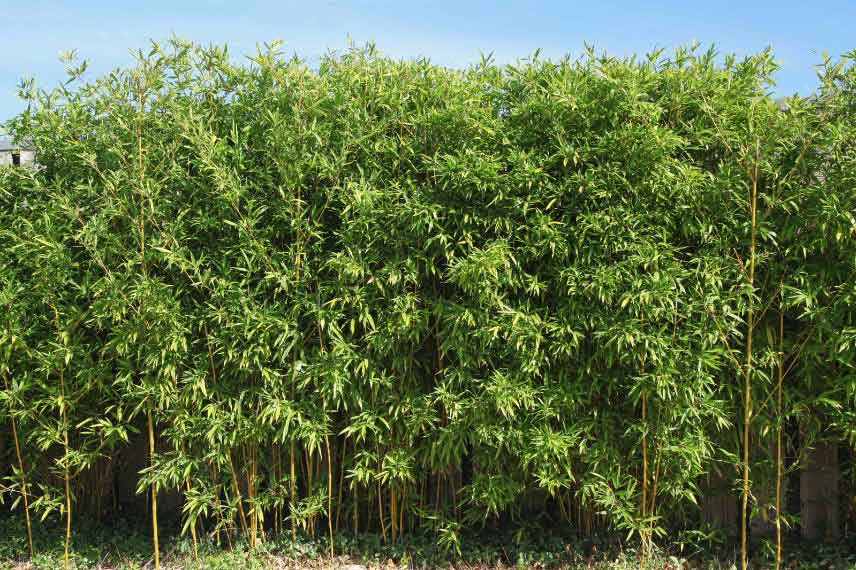
Bamboos for creating a hedge
For small spaces or simply if you are concerned about the invasive nature of bamboos, plant non-running bamboos, known as “cespitose”. Non-invasive, they take a little longer to fill out than running varieties: expect about 5 years to achieve a dense foliage. The rhizome barrier is optional for this type of bamboo. Otherwise, you will choose them based on their mature size, your soil, and your climate… and of course your preferences, and ensure to install a root guide at planting.
⇒ Discover our full range of bamboos on our site.
When and how to prune a bamboo hedge?
- In February-March, before the vegetation resumes, simply clean the clumps to remove the sheaths of the culms and the dried canes. If you do not maintain your bamboos, they will eventually become exhausted. It is therefore advisable to cut the oldest culms each year.
- Then, the pruning of a bamboo hedge takes place in spring, around April-May, after the new shoots have fully developed into culms. Prune either with shears or a hedge trimmer for dense bamboos of small diameter. If you wish, you can cut to a uniform height to control the overall height of the hedge.
→ Good to know: If you cut a bamboo culm, it will remain permanently at the cut height. You will have to wait until the following spring for new culms to emerge and for your bamboo to regain its original height, or taller if it is a young plant in full growth.
Pruning grass hedges
Some grasses reach sufficient dimensions to create a screen that protects from view, and their record growth allows for very quick results. By the second year after planting, you can thus benefit from a grass hedge that is already quite dense and opaque.
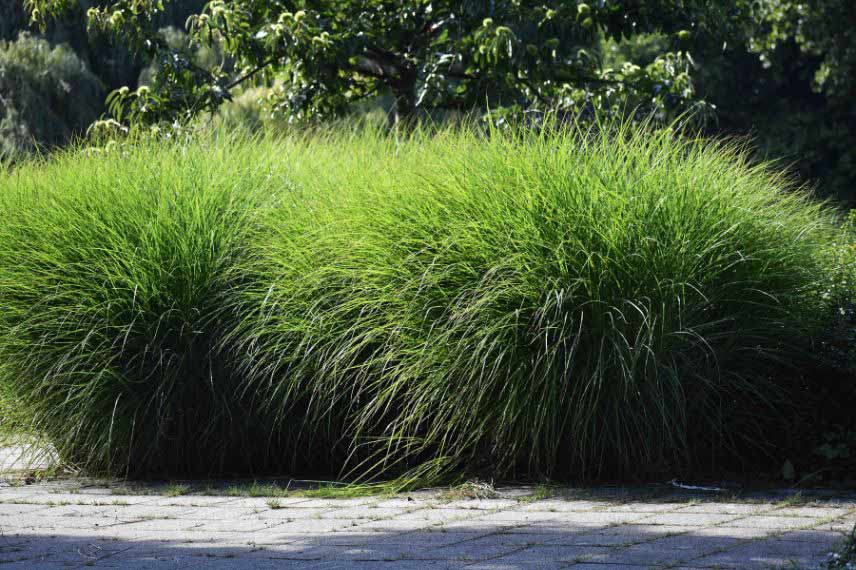
Grasses for creating a hedge
The Miscanthus are particularly suited for this purpose (Miscanthus giganteus, Miscanthus giganteus ‘Alligator’, Miscanthus sinensis ‘Sirène’…). They grow quickly, are decorative from mid-spring, and reach their ripeness in summer. The Reed canes can also quickly form excellent hedges, although care should be taken due to their invasive character.
⇒ Discover our full range of tall grasses on our site.
When and how to prune a grass hedge?
- Deciduous or marcescent grasses should be cut back to about ten centimetres above the soil at the end of winter.
- Evergreen grasses should not be cut, but simply cleaned as one would comb hair. If the plants become too large or if you wish to multiply them, for example to enlarge your hedge or to form a new one, you simply need to divide the clump.
What equipment to use for pruning hedges?
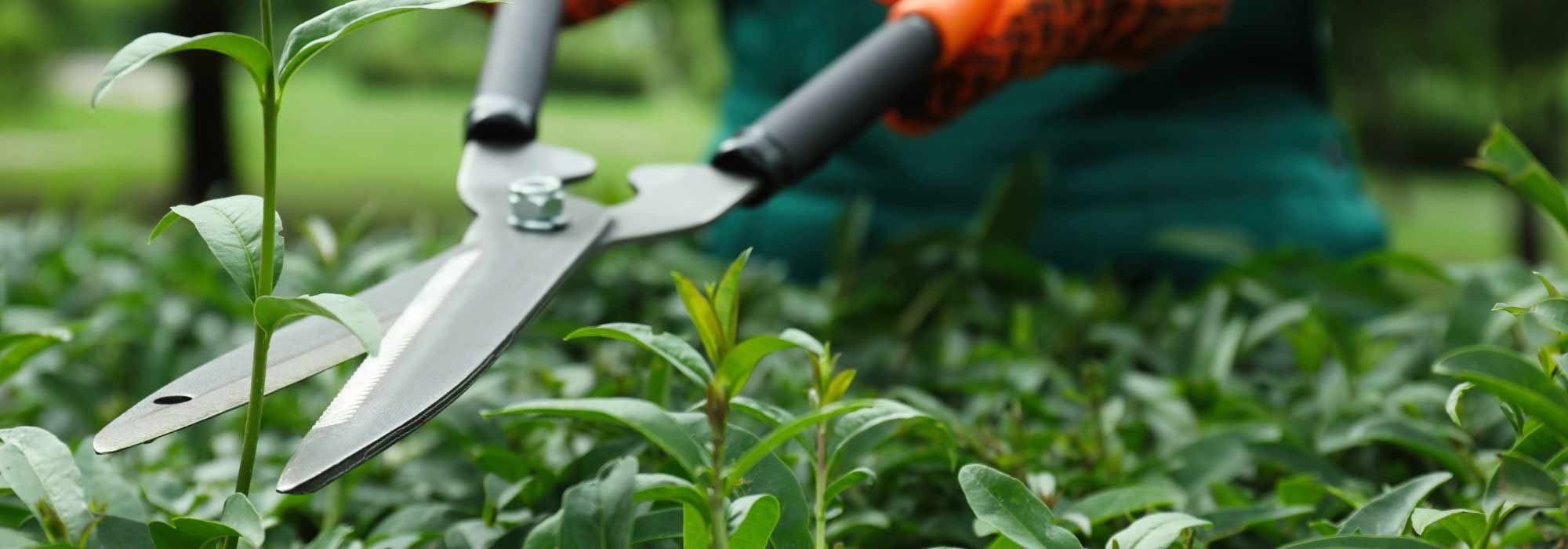
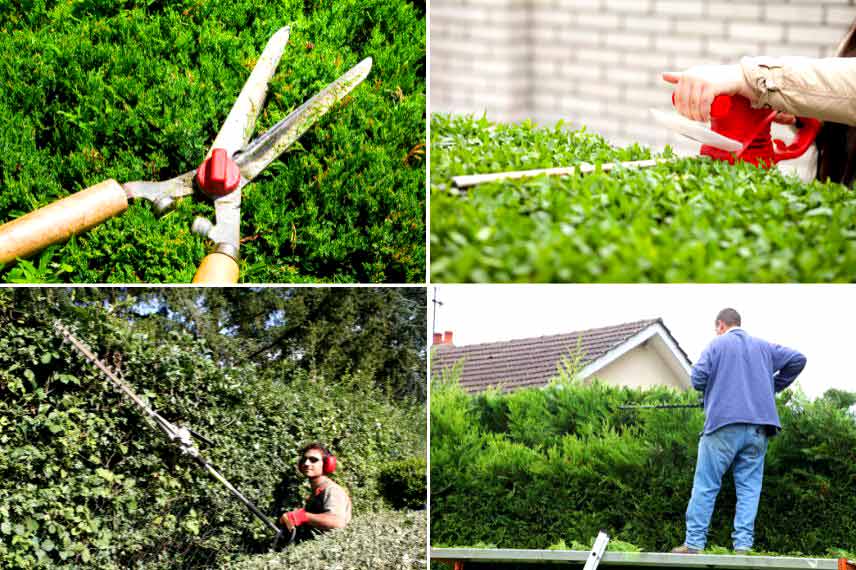
- Shears are used for trimming hedges, but to work faster and reduce fatigue, especially for strictly shaped hedges, using a hedge trimmer (battery-operated models are very convenient as they eliminate the need for extension cords) or a petrol-powered one is recommended. There are pole hedge trimmers available to make it easier to trim tall hedges. Investing in expensive equipment for just one or two trims a year may not be necessary: you can easily rent this type of gardening tool.
- If you encounter large branches, use a loppers or a pruning saw.
- Use previously disinfected pruning tools.
- When trimming a bush over 2 metres tall, do not overlook the stability of your stepladder or ladder. Using a small scaffold is safer and very practical, as it prevents you from constantly climbing up and down to progress along the hedge.
- A line placed at each end of the hedge and secured to two posts allows for level cuts.
- Don’t forget to wear protective gear when trimming thorny bushes: work clothes, thick gloves (bramble gloves, for example) and safety glasses. Use your tools (fork, rake, spade…) to collect the branches on the ground to avoid scratches.

- Subscribe!
- Contents
Comments