





























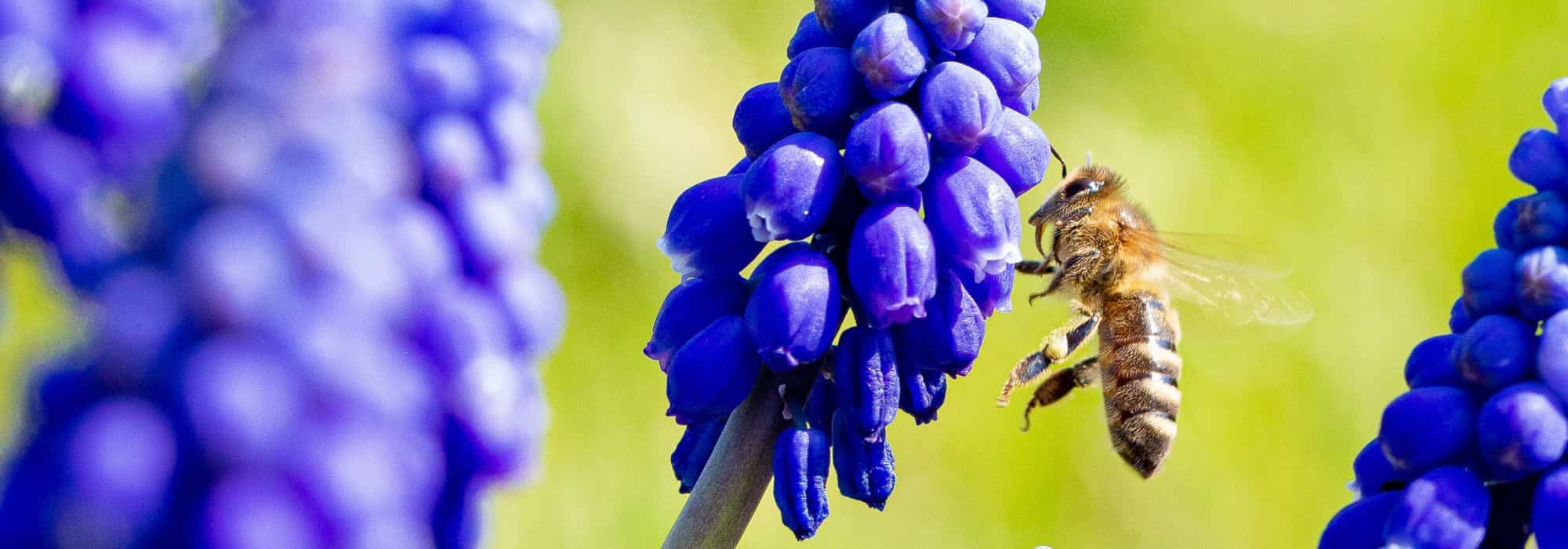
8 melliferous spring bulbs for pollinators
Discover 8 varieties that will delight pollinators.
Contents
Spring heralds, the bulbs in slumber are among the first to awaken and offer a myriad of colourful flowers. They attract not only the eye but also numerous insects, emerging from their torpor and joyfully indulging in this bountiful nectar. Indeed, these spring-flowering and melliferous bulbs are essential for pollinators, when it is not yet time for the first flowering meadows. However, these greedy insects often prove to be quite selective. Therefore, you must design your flower beds and pots according to their tastes and needs.
Discover our selection of 8 spring bulbs and melliferous plants for pollinators.

Crocuses
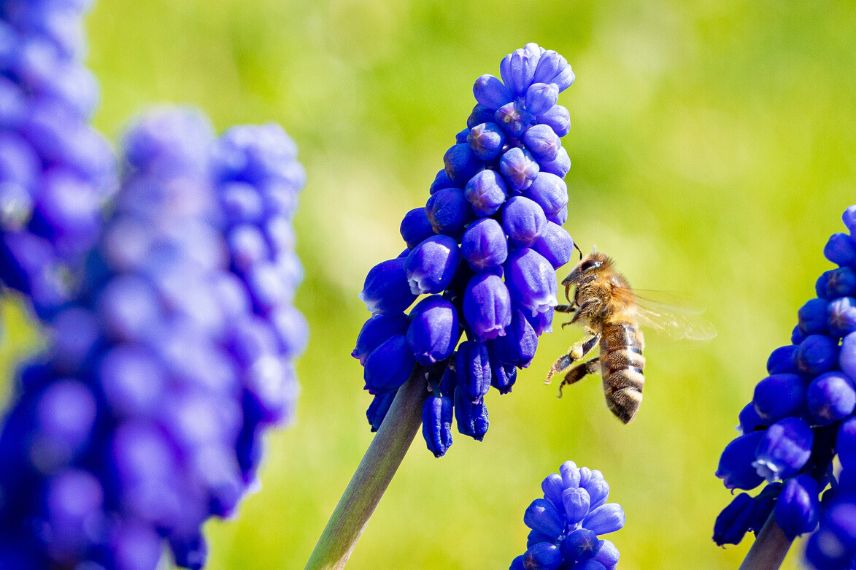
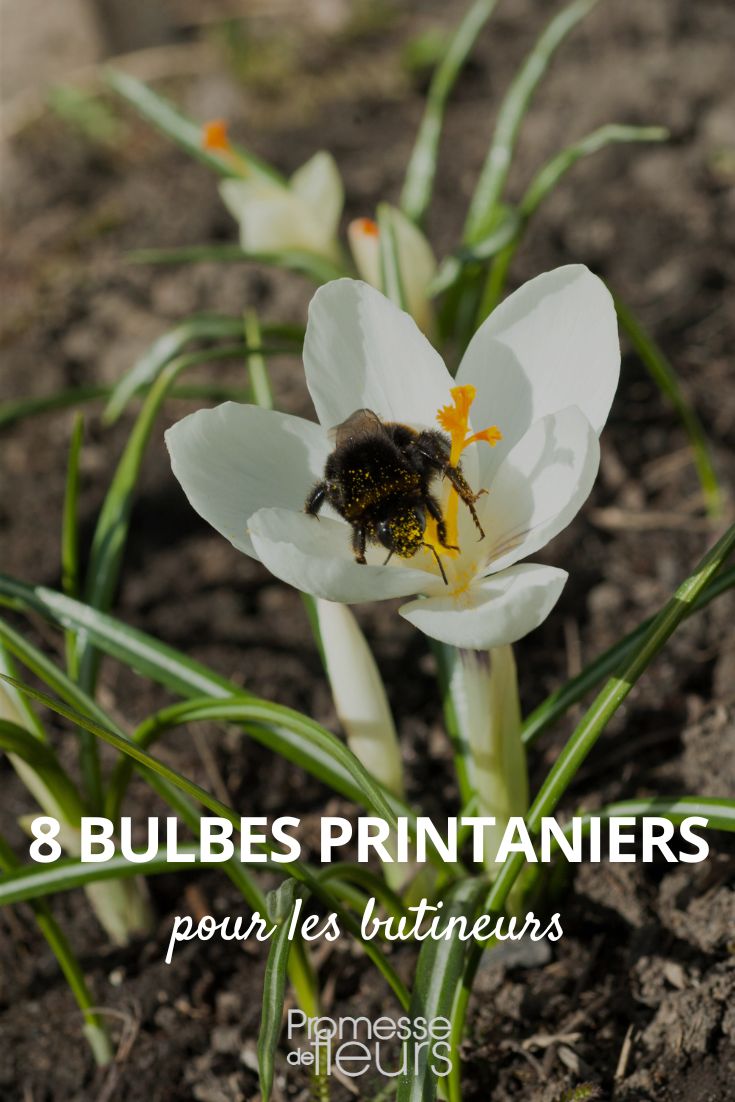
Crocuses are among the first bulbs to flower at the very beginning of spring and are therefore highly appreciated by pollinators, particularly by wild bees, bumblebees, osmiine bees, as well as dipterans like bombyliids and hoverflies. Among the many varieties, one should choose botanical crocuses, such as Crocus chrysanthus ‘Cream Beauty’ and Thomas’s crocus (Crocus tommasinianus) which bloom between February and March.
Standing at 10 cm tall, Crocuses display star-shaped flowers, white or tinged with blue, mauve, and even golden yellow in the case of Crocus chrysanthus ‘Fuscotinctus’. The orange-yellow stamens dazzle at the heart of the flower. Very hardy, they are not afraid of frost (they can withstand temperatures as low as -20°C), nor summer drought. This is a plant that naturalises easily in meadows, lawns, borders, and rockeries, as well as in pots. They prefer to be planted in light, humus-bearing, well-drained soil and a neutral to slightly calcareous earth. They particularly enjoy full sun or partial shade which allows their beautiful corollas to open fully, thus inviting pollinators.
Muscari
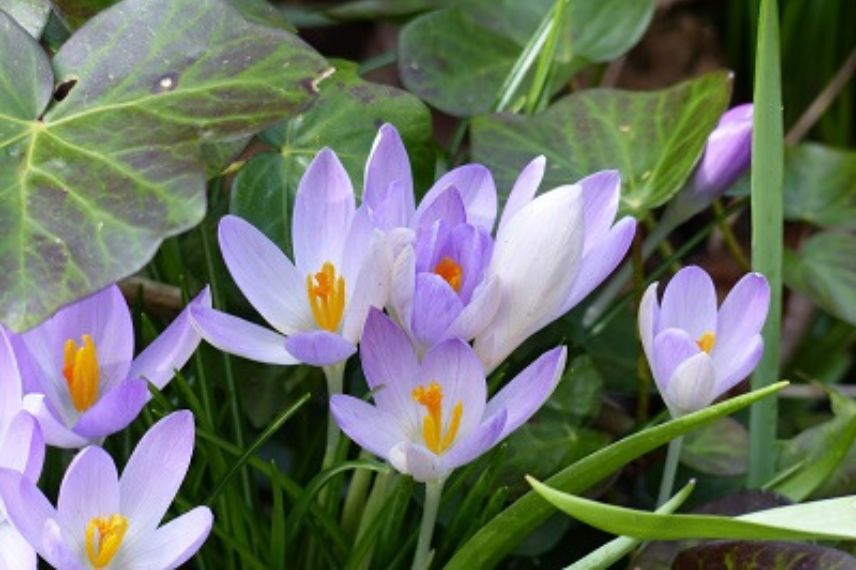
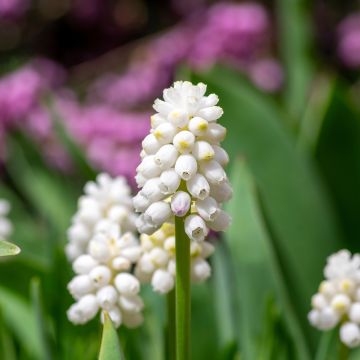
With blue or white flowers, Muscari resemble miniature hyacinths, measuring about 15 to 20 cm in height. They bloom in spring, between March and May, attracting many nectar and pollen-loving pollinators. One can observe a flying ballet, composed of bees from the species Apis mellifera, bumblebees, anthophores, osmiine bees, andrenids, bombyliids, and syrphids.
Perfectly hardy, Muscari also has the advantage of being beautifully prolific, allowing for the creation of lovely, fragrant carpets of flowers in just a few years, right in the middle of the lawn, at the edge of a flowerbed, or under a hedge of bushes. They can also be grown in window boxes and pots. Muscari bulbs can be planted in both sun and shade, in any well-drained soil, alongside daffodils and Anemones ‘White Splendour’.
Discover other Spring bulbs
View all →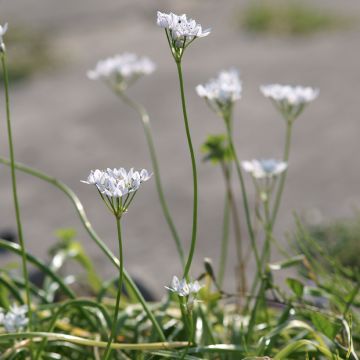
Available in 1 sizes
Available in 1 sizes
Available in 1 sizes
Available in 1 sizes
Available in 1 sizes
Available in 1 sizes
Available in 2 sizes
Available in 1 sizes
Available in 0 sizes
Available in 1 sizes
Daffodils
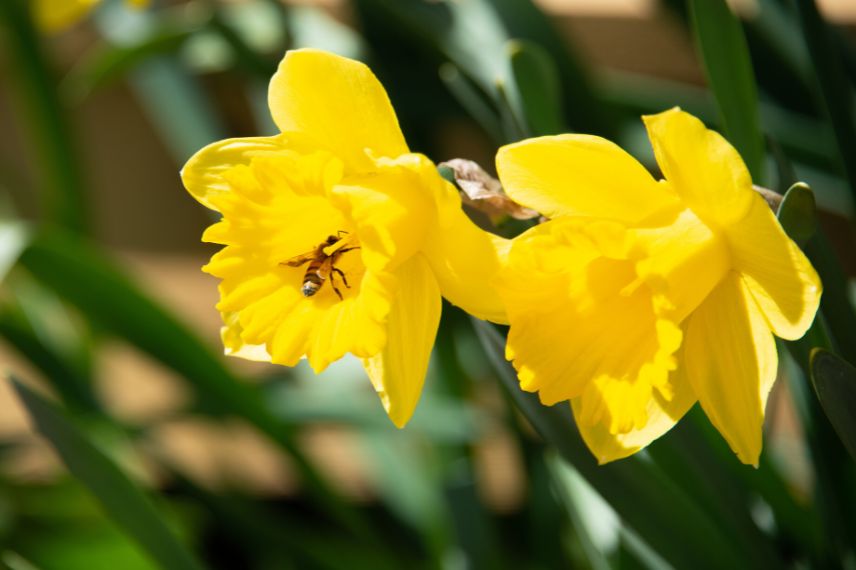
Like little suns, daffodils light up the undergrowth, borders, and gardens with their pale yellow to white flowers at the beginning of spring. They attract not only the eye but also insects that delight in their nectar. Black bees, for instance, are fond of the wood daffodil (Narcissus pseudonarcissus) and wriggle within their narrow trumpet-shaped corollas to reach the precious pollen. It is also appreciated by early pollinators, such as bumblebees, solitary bees, Osmia, and certain dipterans.
The daffodil is easy to grow, in neutral or acidic soil, in the shade of trees as well as in full sun, amidst a border, alongside tulips and Anemone blanda ‘White Splendour’. Depending on the variety, daffodils can reach heights of 15 to 50 cm in bloom, in shades of white, cream, yellow, or salmon and flower from February to May.
Read also
7 drought-resistant melliferous bushesWild garlic
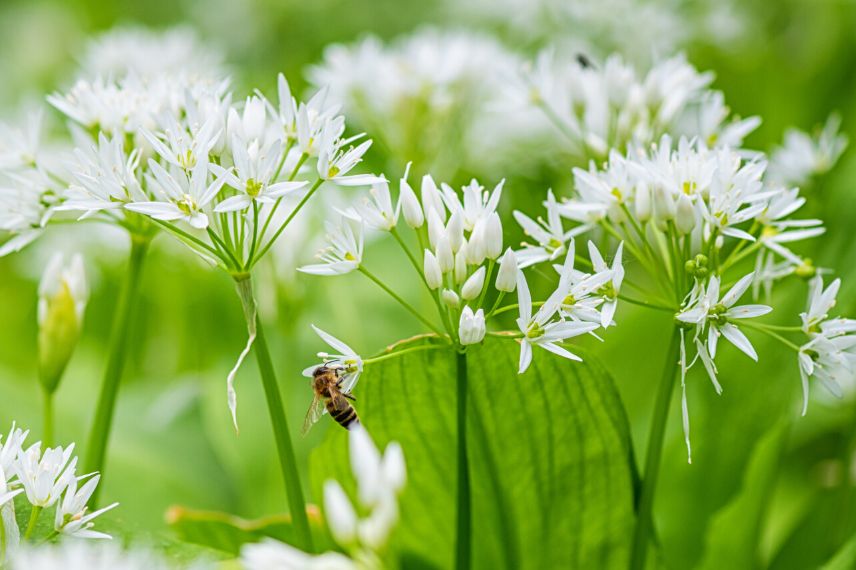
With its tiny bulb, Wild Garlic (Allium ursinum) offers, from April to May, a flowering composed of white, starry umbels. Highly melliferous, these flowers attract many pollinators drawn by their nectar and pollen, particularly wild bees and bumblebees.
This entirely edible flower is recognised by its distinctive garlic scent when the leaves or flowers are crushed. Valued in cooking, this beautiful bulbous plant also adds a touch of brightness to the garden from late winter, preferably in shade or partial shade. Very hardy, it spontaneously multiplies among the roots of trees, alongside Bluebells.
Anemones
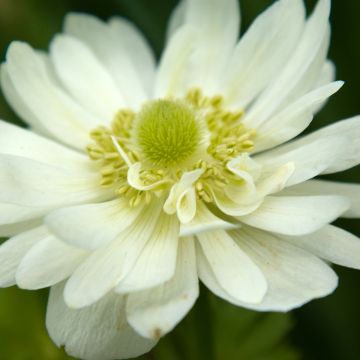
With their spring flowering, anemones attract insects and pollinators, particularly Anemones blanda, also known as Greek Anemone. This small bulbous plant, more precisely a tuberous-rooted one, features beautiful white flowers in the cultivar ‘White Splendour’. These flowers resemble small daisies, with white petals that are tinged with pink on the reverse. But it is especially its light yellow centre that attracts insects like a sun.
Low-maintenance, they quickly form a flowering carpet at the foot of bushes or a deciduous hedge, in full sun or partial shade, alongside Muscari, tulips, or daffodils. Anemone blanda can be planted in all types of soil, even calcareous, and withstands summer drought once well established.
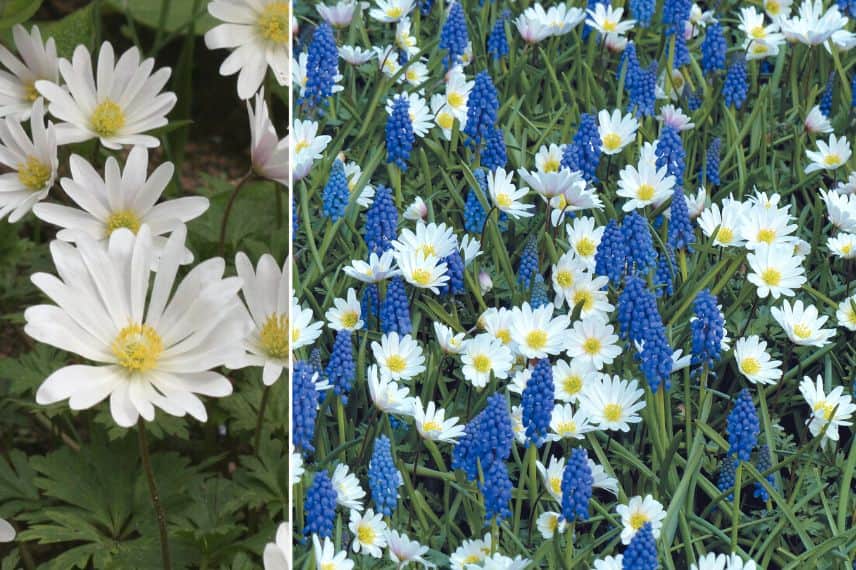
The Anemone blanda ‘White Splendour’ pairs wonderfully with Muscari to satisfy foragers.
Camassias
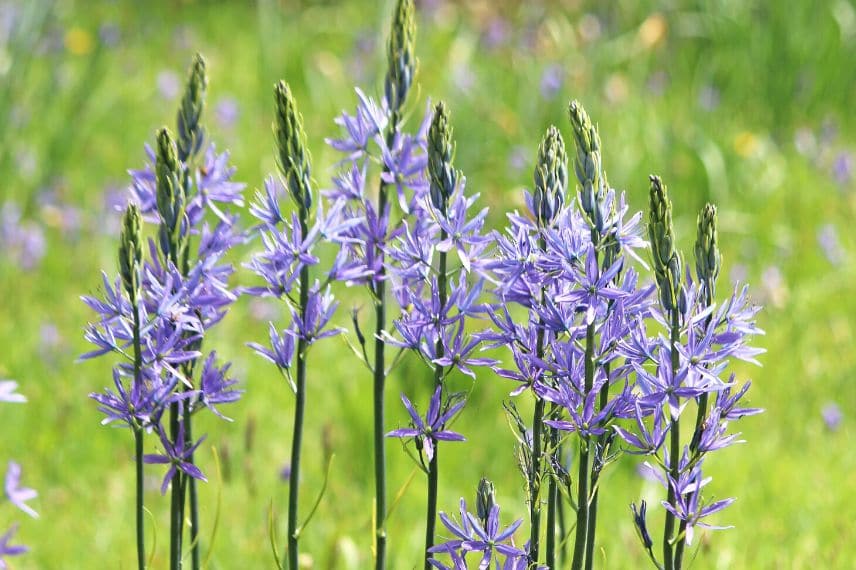
The Camassias, also known as “Quamash”, produce large star-shaped flowers in late spring, between May and June. They provide a beautiful transition between early bulbs, such as daffodils, and summer flowering meadows. Their star-shaped flowers, in blue or white, single or double, are attractive to both gardeners and pollinators. In fact, the first to bloom is the lovely Camassia leichtlinii ‘Caerulea’ with its light violet-blue flowers.
Easy to grow in all exposures, even in shade, they thrive in rich, rather moist soil. Camassias slowly naturalise to form beautiful, dense clumps that are highly floriferous.
Snowdrops
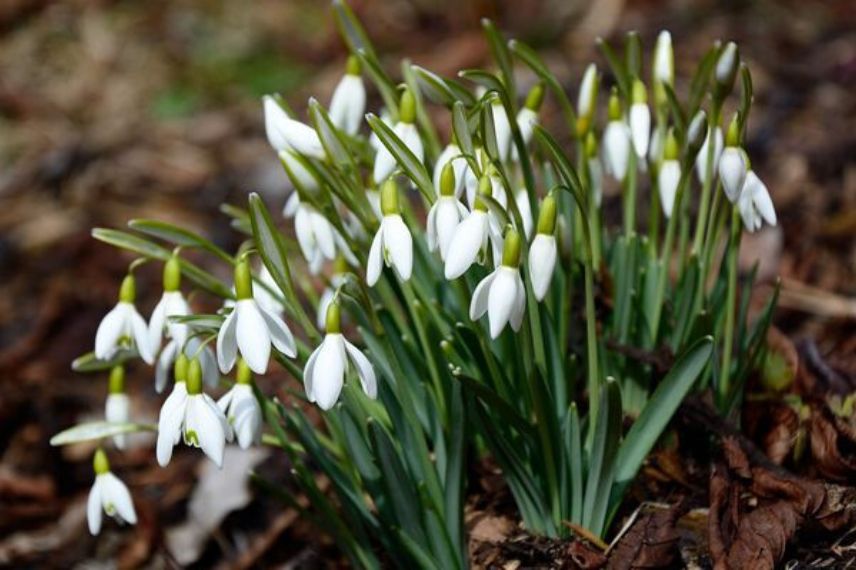
Snowdrops or Galanthus offer delicate little white flowers in the shape of bells, with a small hint of green at the tips of the petals, at the end of winter and the beginning of spring. Among the many varieties, Galanthus nivalis ‘S. Arnott’ is certainly one of the latest to bloom, flowering in March-April, a time when the first insects slowly awaken. The flower is very attractive with its light honey scent.
Snowdrops prefer light, slightly moist, and well-drained soils in winter. The bulbs enjoy being planted in all exposures, from full sun to the north, including partial shade, or even shade in the south of the country. However, snowdrops appreciate a period of winter cold to bloom well. They will enhance rockeries, pots, and also the bases of bushes and trees in woodlands, alongside wild garlic and crocuses.
Scillas
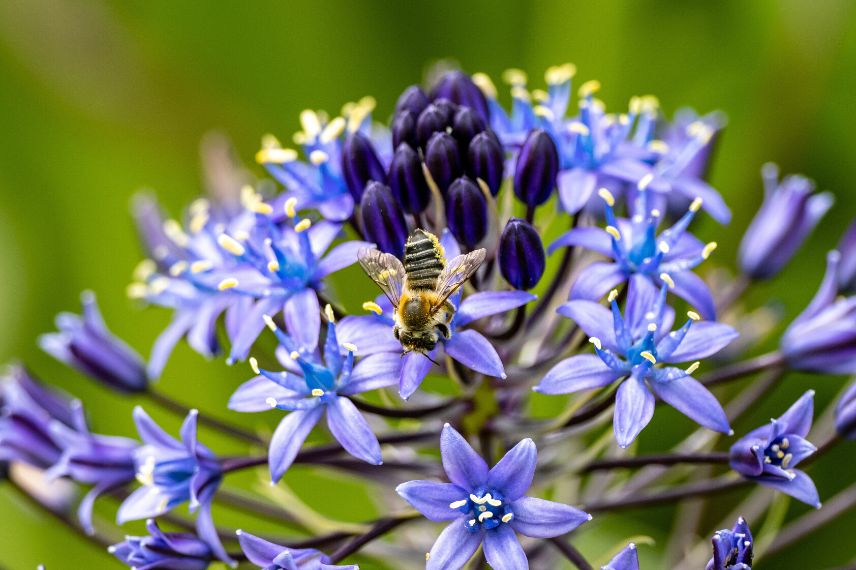
The Scillas are bulbous plants with blue or white flowers, the most well-known of which is undoubtedly the Scilla nutans, also known as the wood hyacinth. Blooming in spring, its bell-shaped starry flowers attract pollinators, particularly wild bees and bumblebees. The Peruvian scilla flowers later, around May-June, but forms a large dense corymb, composed of numerous small intense blue flowers.
As quintessential understorey plants, Scillas also thrive in semi-shaded beds and borders. They will then take over from the snowdrops and will pair beautifully with the yellow hues of daffodils.
 Peruvian scilla</caption]
And many other bulbs
We can easily combine the bulbs we have just seen to achieve successive flowerings, thus ensuring a continuous production of pollen and nectar for pollinators. They can also be paired with other interesting bulbous plants, such as the Ornithogales or “Eleven O’Clocks” for their beautiful star-shaped white flowers.
The hyacinths (Hyacinthus) also bloom in early spring, or even late winter depending on the regions. We will also plant Chionodoxa or Glory of the Snow, whose blue flowers resemble those of Scillas. At the end of spring, it will be the turn of the bell-shaped flowers of the Bulgarian Allium (Nectaroscordum), as well as the Foxtail Lily (Eremurus) to delight bees and bumblebees.
- Subscribe!
- Contents
Comments