





























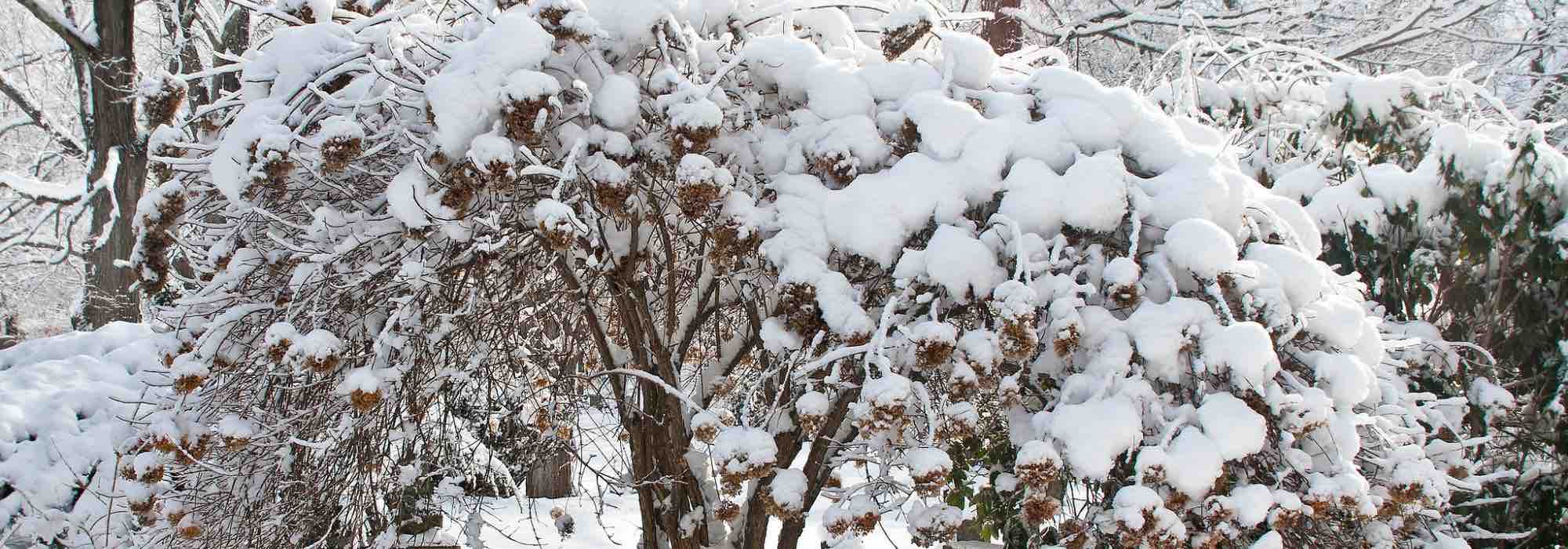
Choosing a hydrangea based on its frost resistance
Not all Hydrangeas are equal in hardiness.
Contents
Depending on the region of origin, altitude, and environment, different hydrangeas have varying hardiness. Some are very resistant to severe negative temperatures, while others are more susceptible. Do you know the many species of Hydrangea and their specific characteristics? Discover which ones to adopt in your garden according to your climate.

Totally frost-resistant hydrangeas (-20°C and below)
In mountainous regions or areas with very cold winters, it is essential to choose the right species of hydrangea. Not all are equally resistant to negative temperatures. Among the hardiest hydrangeas or Hydrangea, we find Hydrangea arborescens, paniculata, and quercifolia. These do not behave like the typical hydrangea one might envision, the one often seen in front of Breton houses, in the shade or facing north: the Hydrangea macrophylla. These varieties thrive in non-burning sunlight, tolerate slightly dry soil, and for arborescens and quercifolia, they accept calcareous soils. These three species are generally classified at least in USDA zones 6a or 6b, where temperatures can drop to -20 to -25° C. We can also include Hydrangea serrata among these hardy hydrangeas, which are closer to Hydrangea macrophylla.
- The Hydrangea arborescens forms beautiful bushes with large inflorescences, often white or pink. They tolerate summer drought quite well. They include some famous cultivars such as ‘Annabelle’ and ‘Strong Annabelle’ with their opulent round white flowers, which can be seen from afar. ‘Invincibelle’ is the pink version of ‘Annabelle’. Also, take a look at the other beautiful cultivars of this robust species.
- The Hydrangea quercifolia gets its name from its beautiful oak-shaped leaves, which take on vibrant colours in autumn, turning brown, red, or bronze. Its inflorescences, either upright or trailing, are white, cream, or pink. For example, check out ‘Snowflake’ with double flowers, or ‘Burgundy’ with intense autumn colouring.
- The Hydrangea paniculata: they grow in ordinary soil, tolerate some lime, but less so than the other two sun species. They bloom in elongated panicles, green, pink, or white, which change colour in autumn, like the well-known ‘Fraise Melba’ that evolves from white-pink to red, or ‘Skyfall’ with gigantic panicles.
- The Hydrangea serrata, while quite hardy, can sometimes be at the limit of -20° C, depending on the varieties or cultivars. With flat or rounded umbels, they are close to Hydrangea macrophylla, with a rather modest growth.
Next, let’s discuss two more or less rare and quite hardy botanical species.
- Hydrangea anomala: this is a climbing hydrangea, it is deciduous, grows in the shade, and is covered with flat, white or pink umbel flowers. For example, discover Hydrangea anomala ‘Crug Coral’, with bright green foliage and pink flowers. You may know Hydrangea petiolaris, a beautiful climbing hydrangea, which is a subspecies of Hydrangea anomala. It is very useful for covering shaded walls up to 8 m high using its climbing roots and is adorned with white umbels. It also comes in variegated versions or with foliage tinged with red in winter.
- You may be less familiar with Hydrangea heteromalla: a large shrub reaching 4 m with colourful foliage in autumn and flat inflorescences.
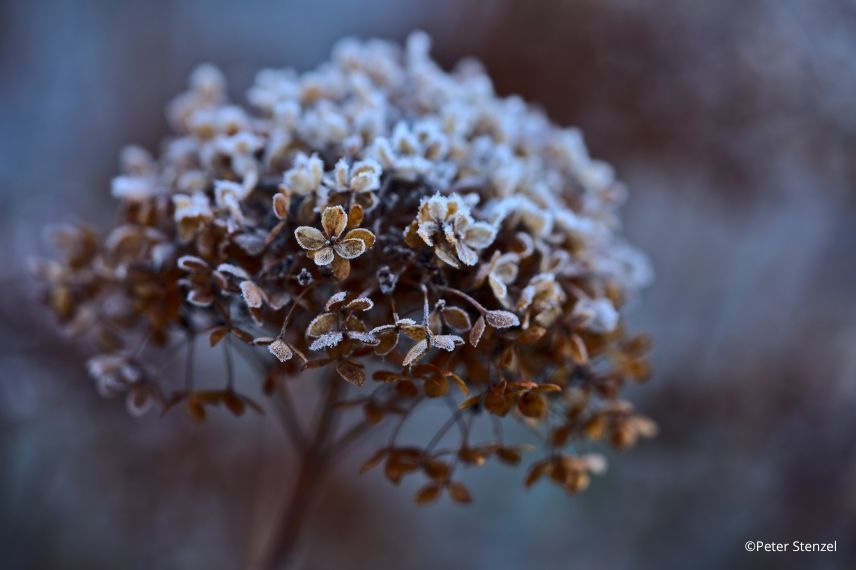
Hydrangea suffering from frost
Read also
Climate zones and USDA zones in FranceMedium cold-resistant hydrangeas (-10 to -20°C)
Let’s now look at hydrangeas whose hardiness is somewhat more variable, which can suffer more quickly from frost on their buds, for example, compromising flowering. On average, the hydrangeas presented in this chapter can withstand temperatures down to -15° C without damage.
- Hydrangea macrophylla: The Hydrangea macrophylla are the well-known blue hydrangeas of Breton gardens. They thrive in mild and temperate climates and grow in shade or to the north. Numerous cultivars have been developed. Generally, for macrophylla, beyond -15° C and without the protection of a snow blanket, the aerial part of the plant may suffer some damage, mainly to the floral buds. However, some natural coastal varieties like Ayesha freeze before temperatures reach -10° C without protective snow cover. Among the most sensitive are the Hydrangea macrophylla ‘Madame Plumecoq’, ‘Leuchtfeuer’, ‘Mirai’, ‘Lanarth White’, ‘Buchfink’.
- The Hydrangea serrata also finds its place here, as it is somewhat on the boundary of the two chapters and varies according to the cultivars. Note that their mountainous origin gives them greater hardiness than Hydrangea macrophylla.
- Hydrangea aspera: these beautiful, less commonly cultivated hydrangeas are adorned with refined flat umbels, white, purple, mauve, or pink, on elegant dark green foliage. The Hydrangea aspera is a woodland plant, thriving in semi-shade with cool, moist soil, protected from cold, drying winds. Some are hardy beyond -15° C and even down to -20° C. Take a look at the lovely Hydrangea aspera villosa ‘Velvet & Lace’ or Hydrangea aspera ‘Hot Chocolate’ with its brown foliage.
- Hydrangea involucrata: small hydrangeas with flowering similar to aspera. They can withstand frosts of around -15 to -18° C. Note that they tolerate slightly calcareous soil.
- Schizophragma: from the family Hydrangeaceae, and closely related to climbing hydrangeas, Schizophragma can be confused with Hydrangea petiolaris mentioned earlier. They have a more spectacular flowering with large bracts and small fluffy flowers. They also grow in shade, although they appreciate a touch of sun to encourage their flowering. Generally quite hardy, Schizophragma is, however, quite sensitive to early spring frosts, as its foliage appears early. For example, look at the varieties ‘Angel Wing’ and ‘Rose Sensation’.
- A word about Cardiandra, a perennial plant from Taiwan, a cousin of the hydrangea, which tolerates frosts down to -18° C. The species Cardiandra formosana is particularly renowned for its beauty.
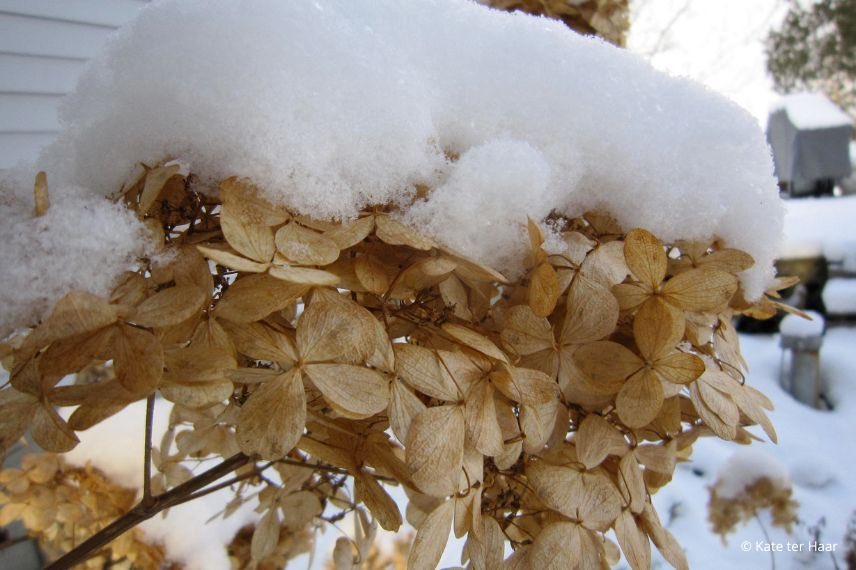
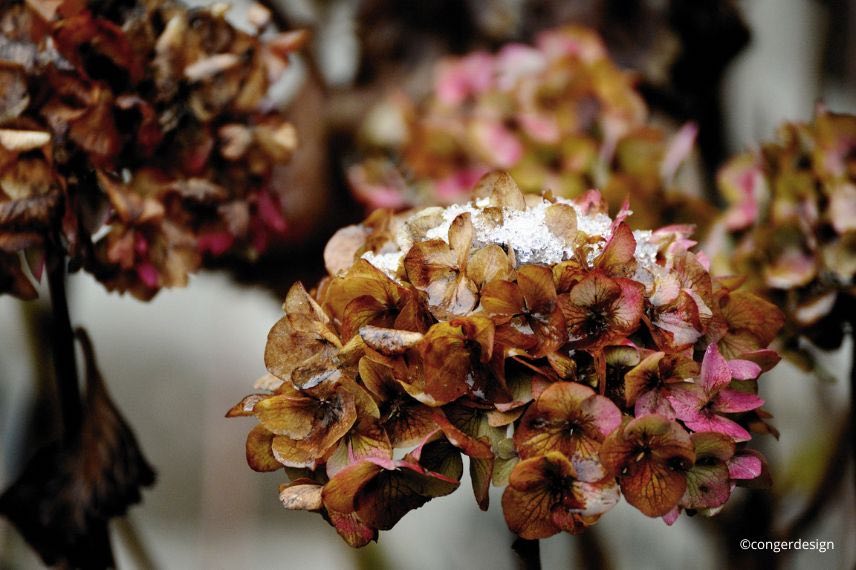
Flower of Hydrangea weighed down by a snowy blanket
Hydrangeas with low frost resistance (maximum -10°C)
- Let’s re-mention Hydrangea macrophylla ‘Ayesha’, for the reasons explained above, and a few other macrophylla when they originate from the same regions (for example: ‘Domotoï’, ‘Hanabi’, ‘Izu-no-Hana’, ‘Mikamba’, ‘Seafoam’).
- And let’s discover Hydrangea seemanii: another climbing species reaching 4 m in height, with white umbels and decorative, evergreen foliage, to be grown in shade or partial shade, which withstands frost down to about -10° C.
- And finally, Hydrangea angustipetala: a wild hydrangea with more or less fragrant flowering, it also tolerates frosts down to -10° C. Let’s mention Hydrangea angustipetala ‘Golden Crane’, with white to yellow flowering, highly fragrant (honey and jasmine).
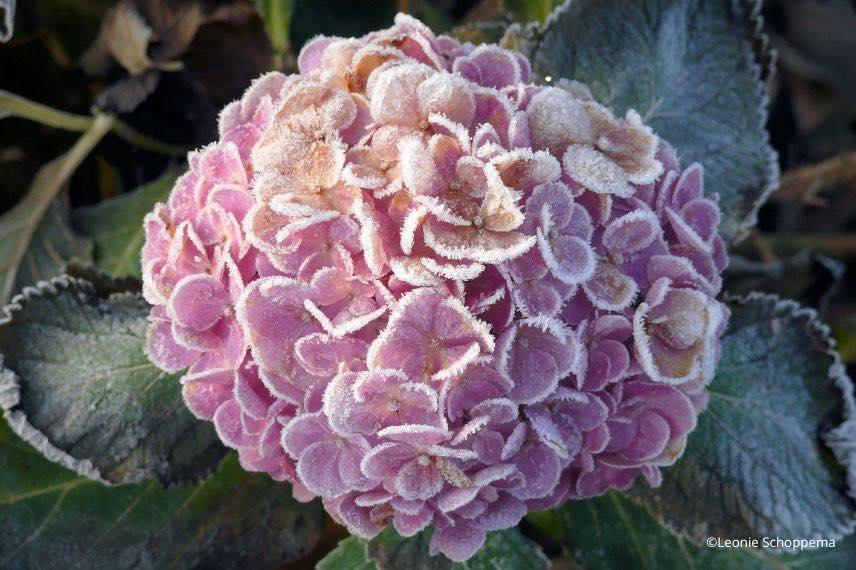
Frosted pink hydrangea
Read also
How to grow hydrangeas?Frost-resistant hydrangeas (minimum -5°C)
Let’s mention Dichroa, which is not a Hydrangea but a bush belonging to the Hydrangeaceae family. It is close to hydrangeas in terms of cultivation and behaviour. This evergreen bush is native to China and the Himalayas, with brown stems and summer flowering similar to hydrangeas. It is distinguished by its fruiting in the form of small berries. Significantly less hardy, it should not be planted in regions where temperatures fall below -5° C. Let’s mention ‘Marie’, a form of Dichroa with tender pink to gentian blue flowers depending on the soil.
End of frost
- Subscribe!
- Contents
Comments