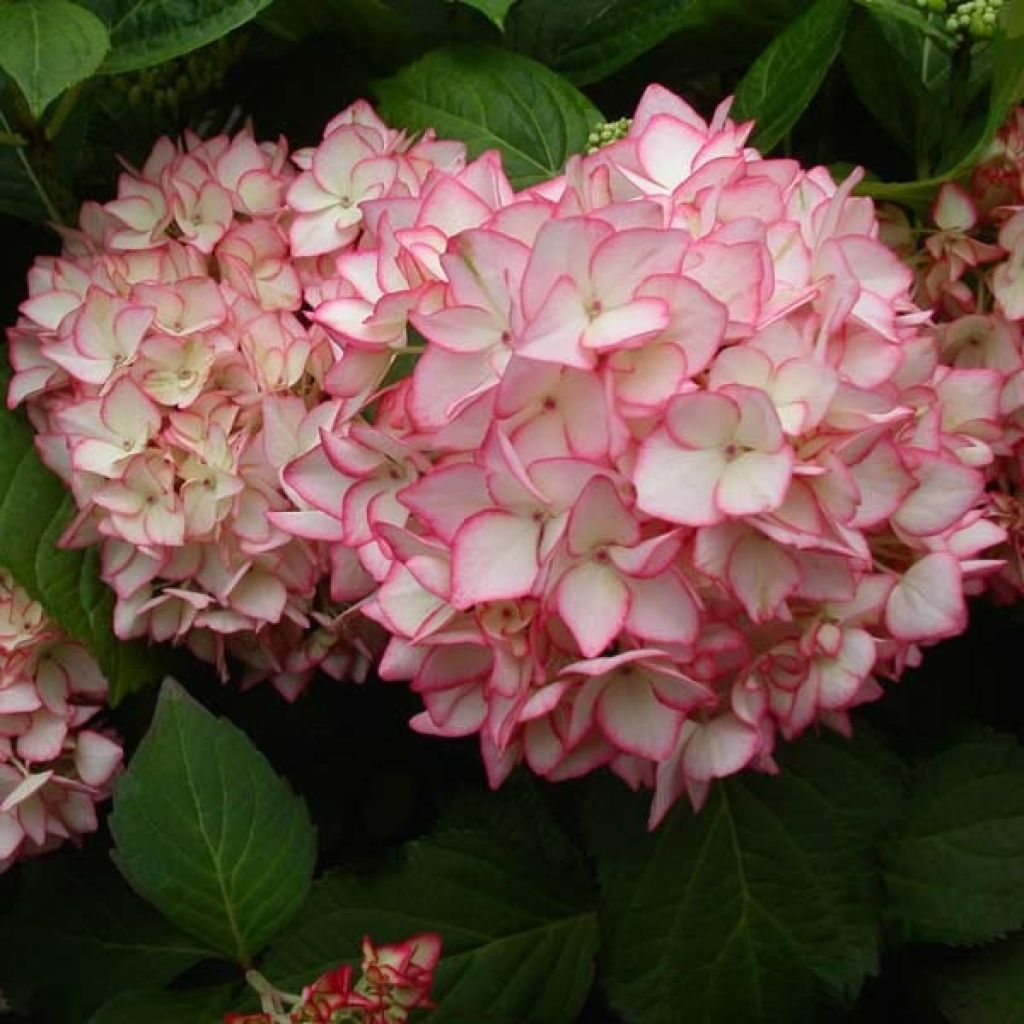
Hydrangea macrophylla Miraï
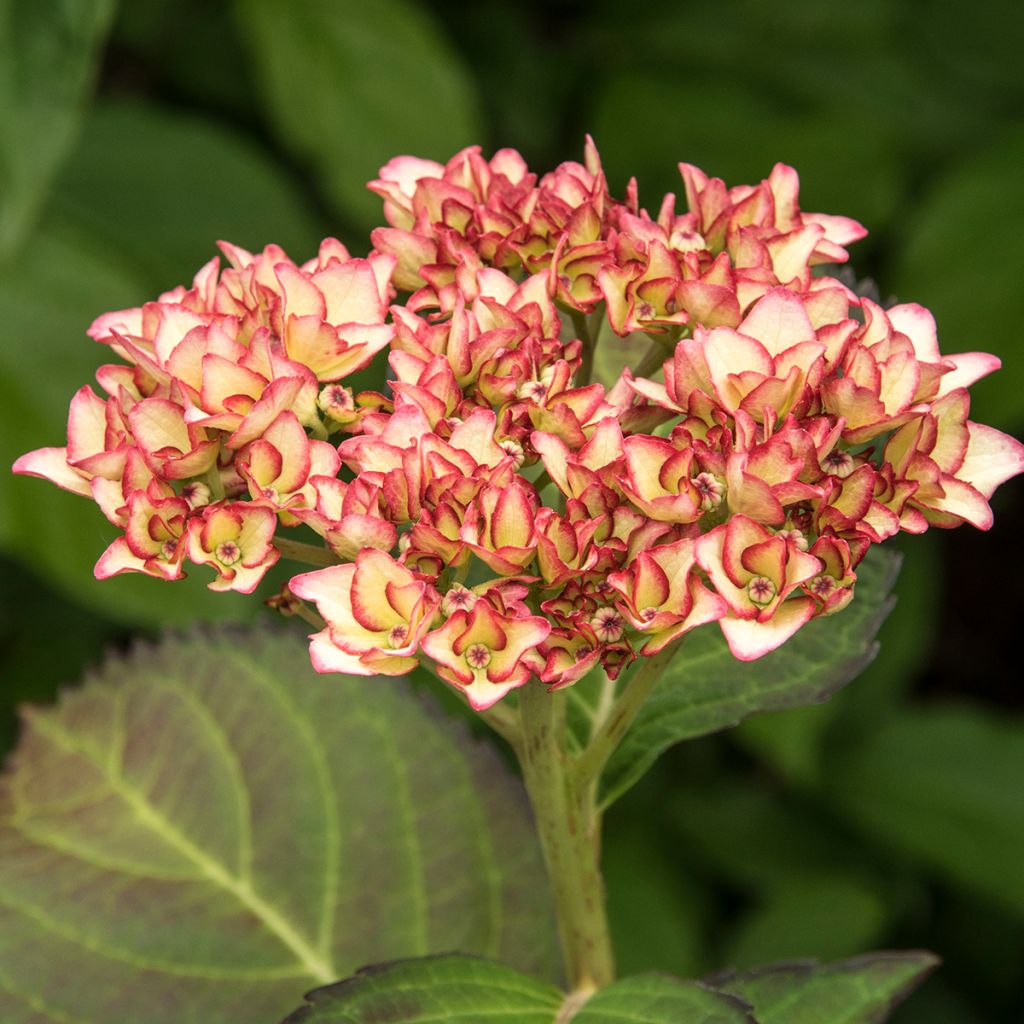
Hydrangea macrophylla Miraï
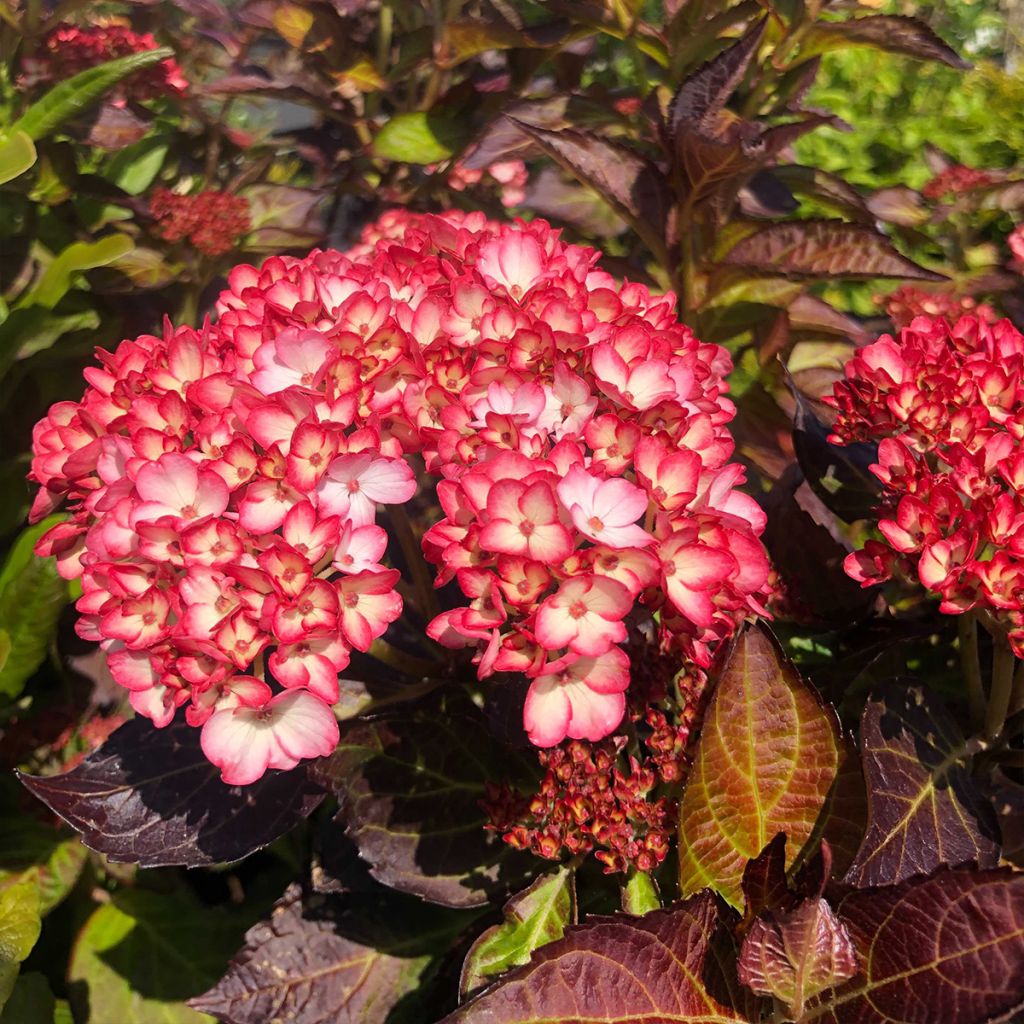
Hydrangea macrophylla Miraï
Hydrangea macrophylla Miraï
Hydrangea macrophylla Miraï
Bigleaf Hydrangea, French Hydrangea
Beautiful hydrangea (first year), lovely Bordeaux-edged leaves, original flowers. 10 flowers for its first season.
Gaelle, 18/06/2024
Back-to-school special offer!
Get €10 off for every €50 you spend! And get up to €40 off on a single order.
How does it work?
1. Shop your favourites
Add your favourite plants to your basket. For every €50 you spend (excluding delivery charges, store credit and the plastic-free option), you’ll receive a €10 voucher.
€50 spent = €10 voucher
€100 spent = €20 voucher
€150 spent = €30 voucher
€200 spent = €40 voucher
2. Place your order
Once your basket reaches one of the spending thresholds, place your order. You can even choose your delivery date!
3. Receive your voucher
As soon as your order has been shipped, you’ll receive an email containing your personal voucher code and its value.
4. Use it on your next order
Your voucher is valid for 90 days from the date you receive it. It can be used once only, on a new order worth at least the value of the voucher, excluding delivery charges.
Please note: Vouchers can be combined with other offers, but cannot be split or refunded.
Home or relay delivery (depending on size and destination)
Important: You may be charged customs duties by your country’s customs authorities upon delivery.
Schedule delivery date,
and select date in basket
This plant carries a 24 months recovery warranty
More information
We guarantee the quality of our plants for a full growing cycle, and will replace at our expense any plant that fails to recover under normal climatic and planting conditions.

Would this plant suit my garden?
Set up your Plantfit profile →
Description
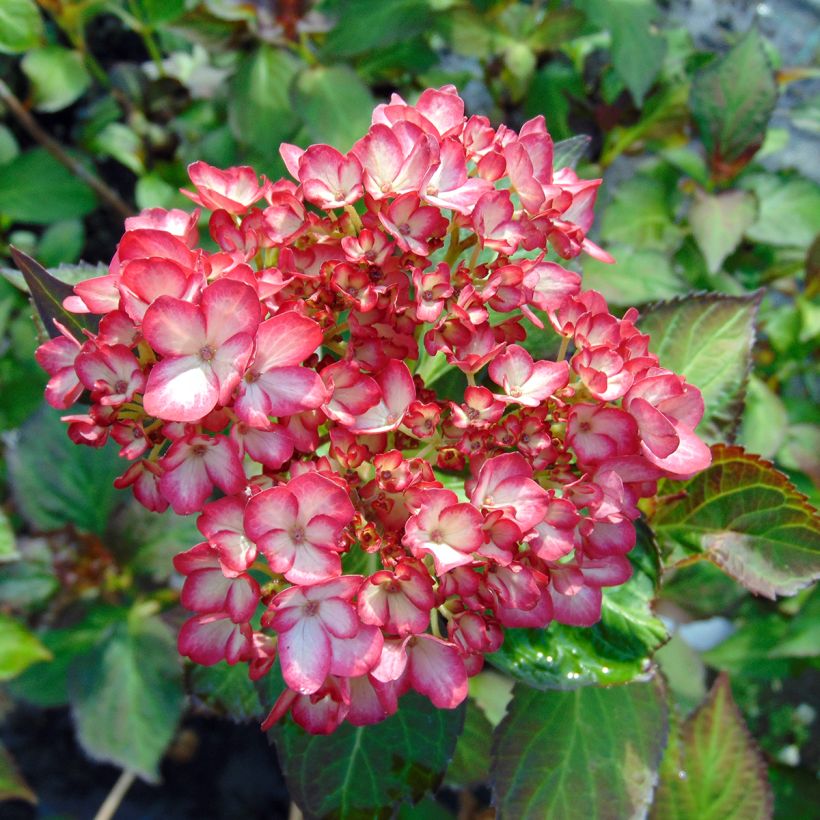
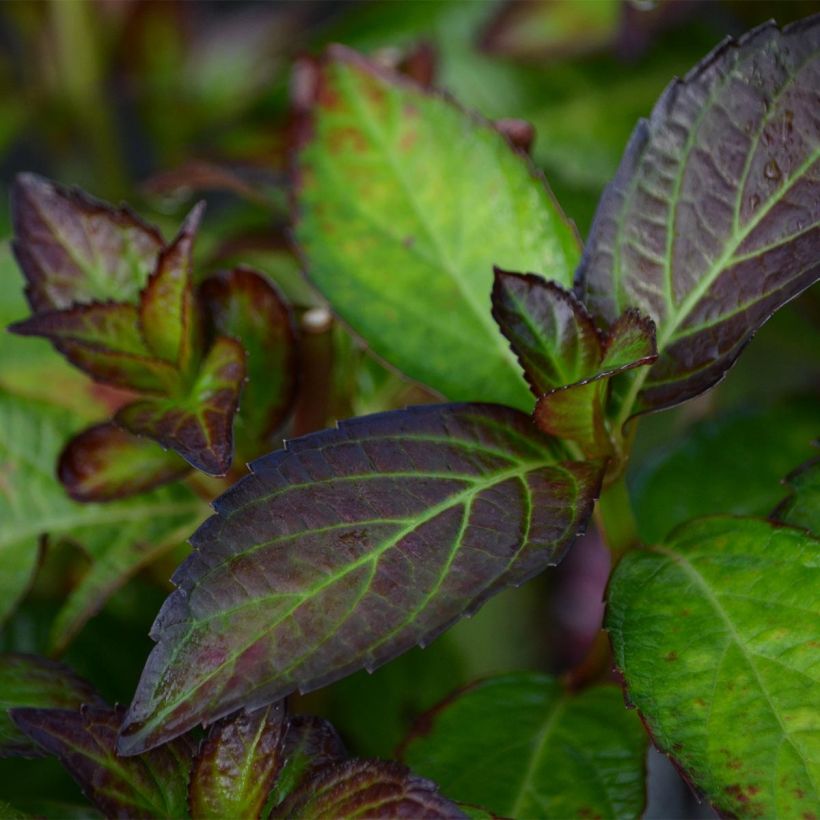
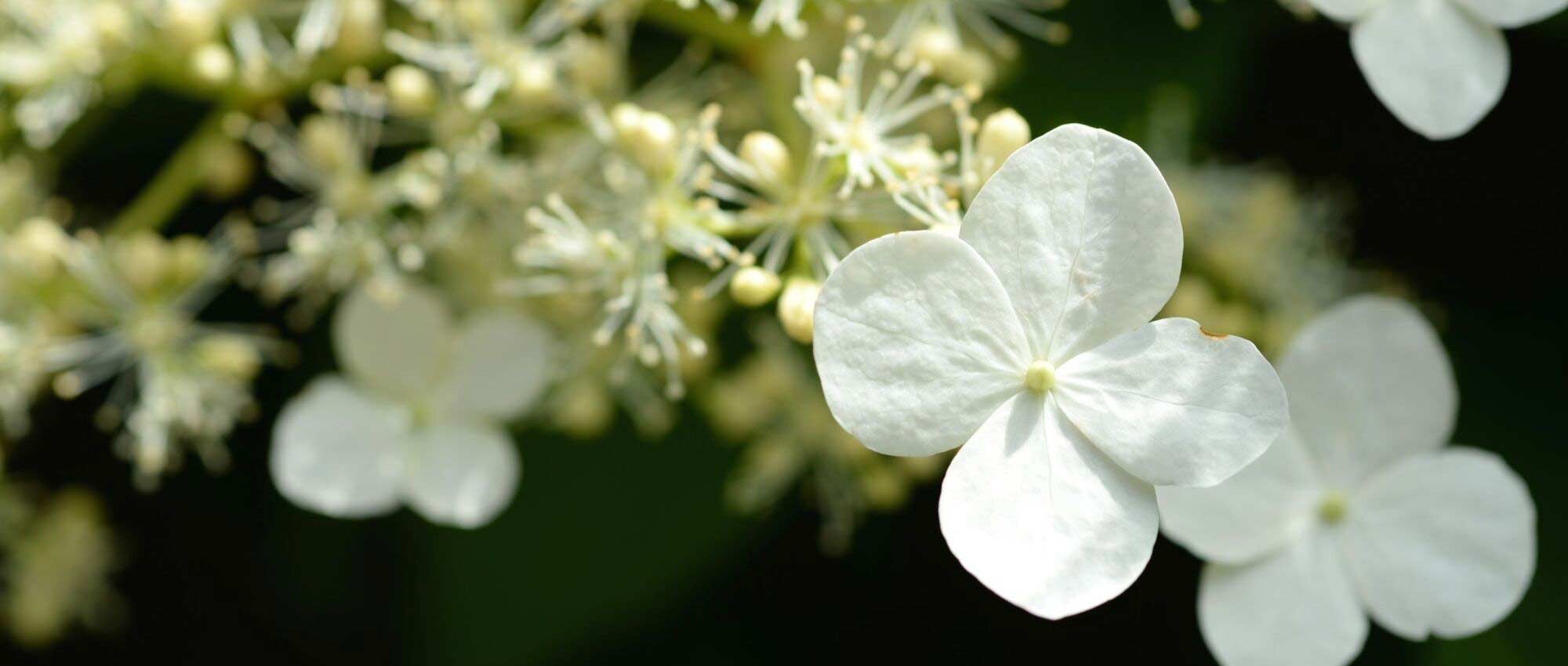
Hydrangea macrophylla 'Miraï' is a unique and floriferous bush, with decorative foliage and astonishing bi-coloured flowering, with exceptional vivacity. Throughout the summer, this bushy shrub is covered with an abundance of pretty white flower balls bordered with a red edge. Another asset of this variety is its young red foliage that turns bronze green, sometimes purple, during the season. An excellent plant for partial shade and cool, non-calcareous soil. 'Miraï' lacks hardiness. In cooler climates, this relatively compact bush can be grown in a container to protect it from severe frost.
'Miraï' is a Japanese creation dating back to 1990. It is a descendant of hydrangeas belonging to the Hydrangeaceae family, originally from China and Japan. This compact and bushy shrub is often wider than it is tall at the time of flowering, which weighs down and bends its branches. It reaches a height of approximately 1.2 m (3.9 ft) in all directions at maturity. In spring, young leaves tinged with red develop on its stems, becoming greener throughout the season. Throughout the summer, from July to September, its inflorescences bloom in 15 cm (5.9 in) diameter balls, often 7 per branch. They are composed of sterile flowers with 4 bi-coloured petals, which are white edged with deep pink, and arranged in a spiral. They are carried by one-year-old or older stems. The flowering, which becomes uniform in a purplish tone over time, is set against a beautiful bronze green foliage, which is sometimes purple. The foliage is rather elongated, and it slightly reddens at the end of the season. The leaves are opposite, reaching a length of about 10 cm (3.9 in). They are simple, ovate, end in a pointed tip, and are strongly serrated. Hydrangeas can live for at least 50 years.
'Miraï' looks wonderful in hedges or in isolated groups, as long as its truly fantastic flowering can be seen in partial shade. It is also a good plant for flower beds in warmer regions and it will make a sensation in a large pot on a balcony, terrace, or next to the house. Hydrangeas are well known for brightening up the north side of houses. This one will thrive in a non-burning east or west exposure. Even though hydrangeas fear lime, they are not strictly ericaceous soil plants. Pair them with Magellan fuchsias, Begonia grandis evansiana, Pieris, Sarcococca, Bearded irises, or plant spring-flowering bulbs in front of their round silhouette. Enjoy their magnificent flowering in the garden or indoors, in a vase.
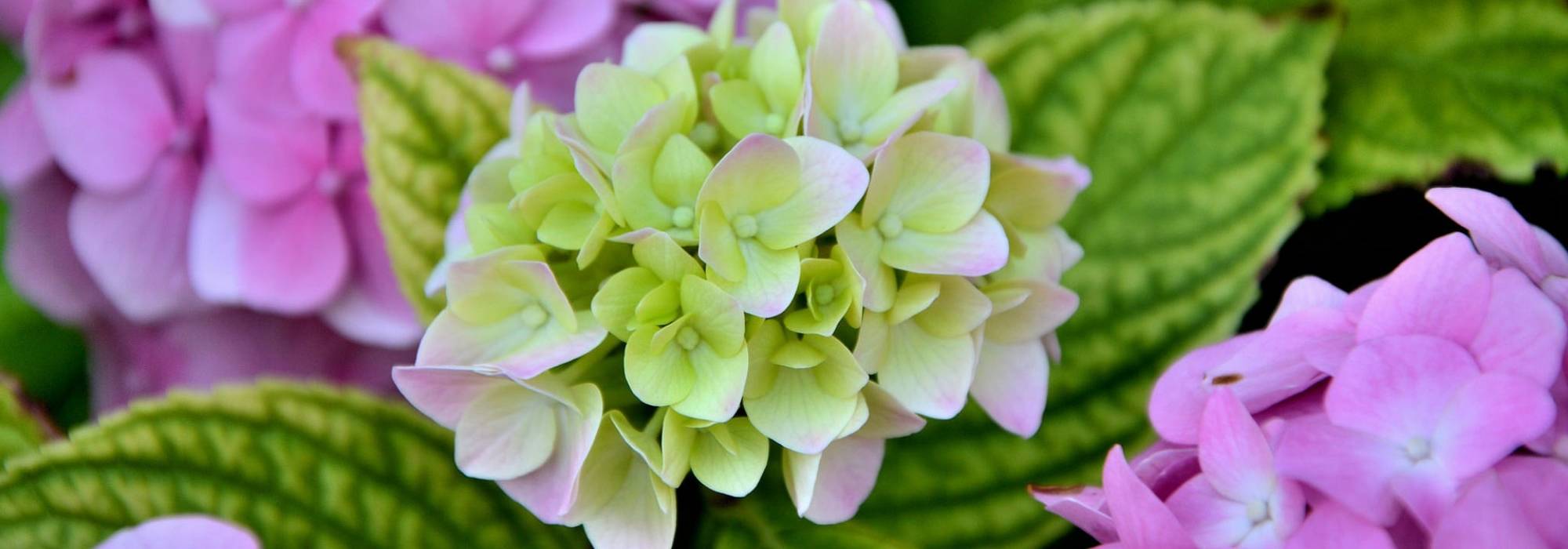
Hydrangea macrophylla Miraï in pictures
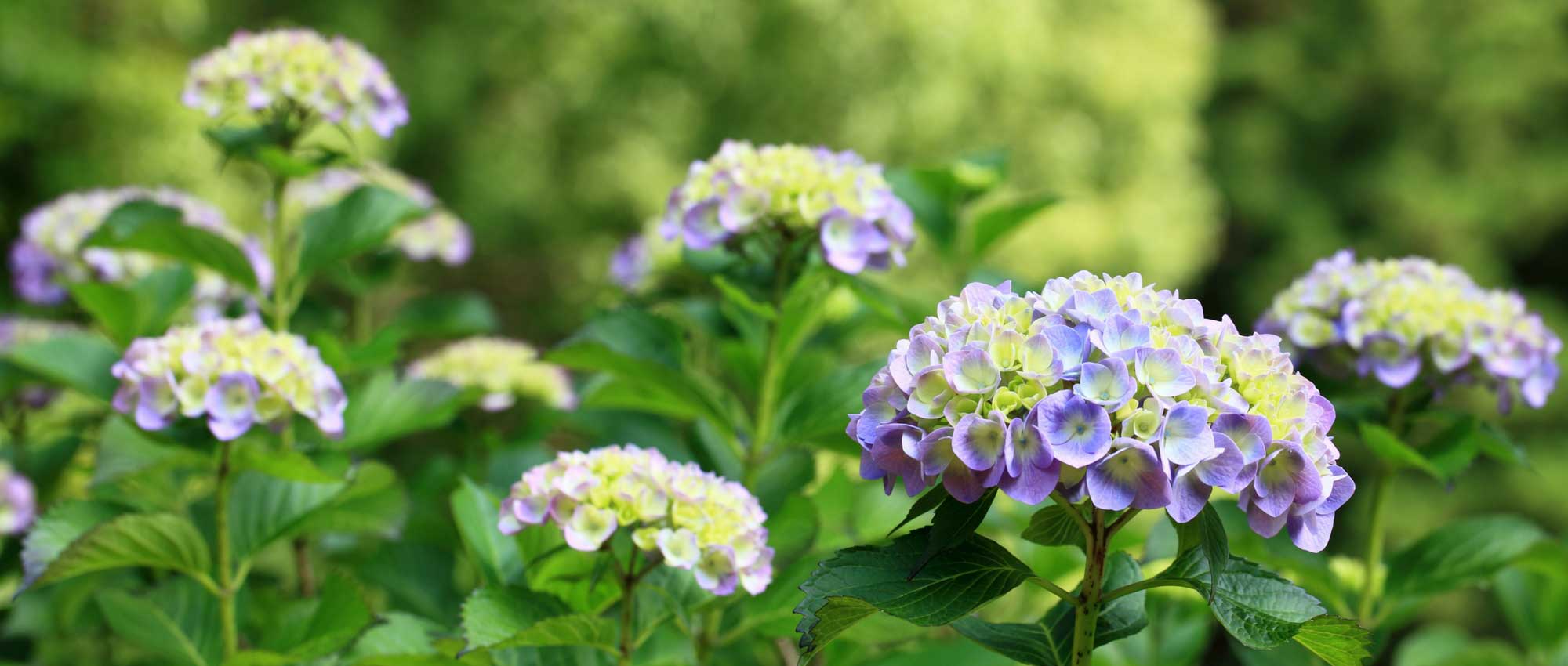
Plant habit
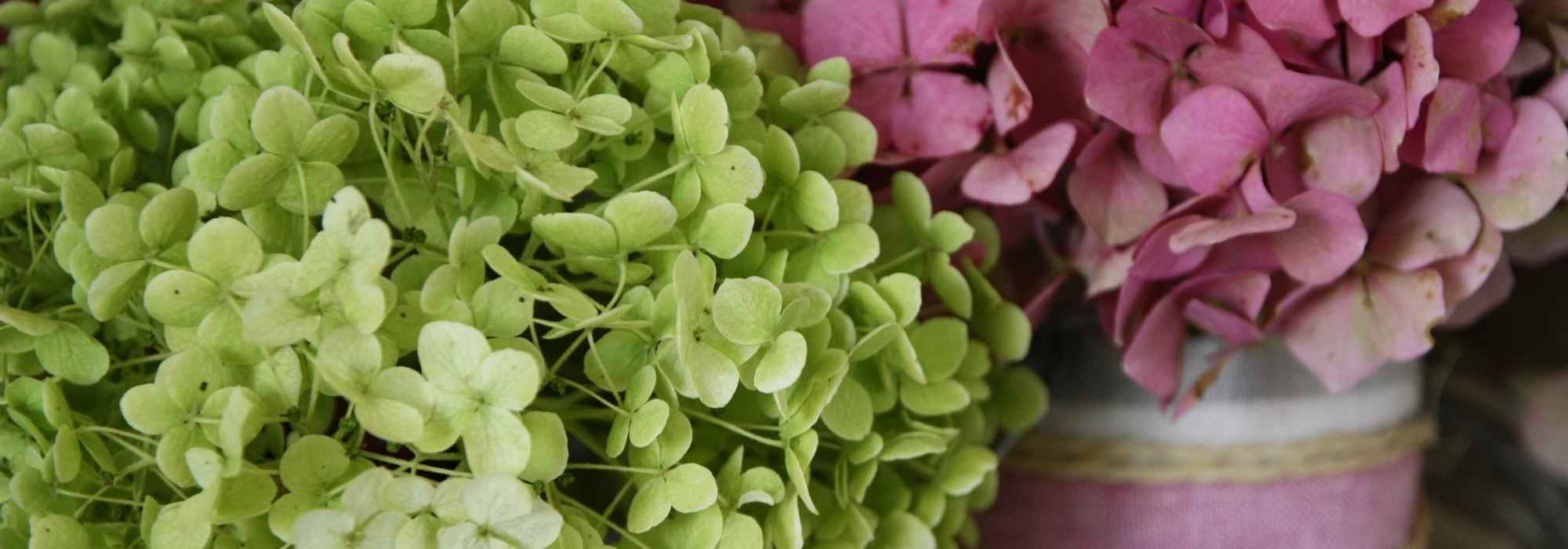
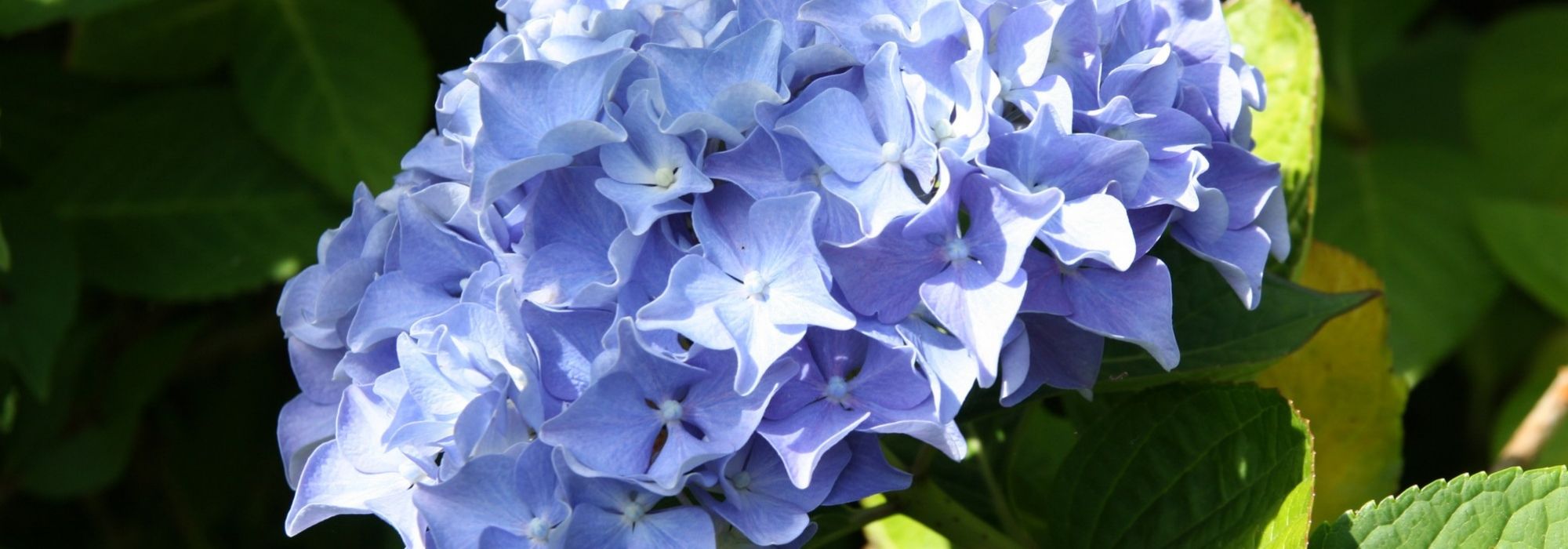
Flowering
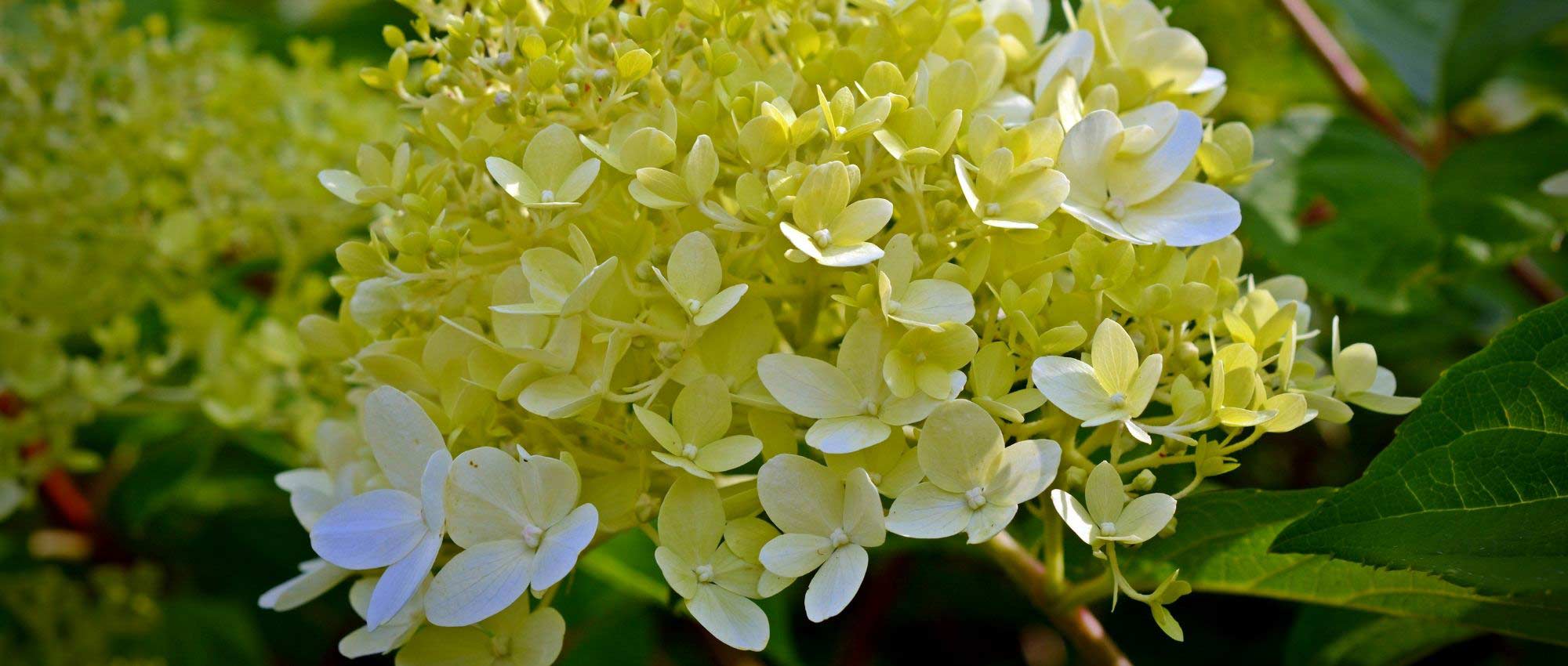
Foliage
Botanical data
Hydrangea
macrophylla
Miraï
Hydrangeaceae
Bigleaf Hydrangea, French Hydrangea
Cultivar or hybrid
Planting and care
Hydrangea macrophylla 'Miraï' is hardy to approximately -12° C (10.4° F). It thrives in partial shade in moist but well-drained soil. It is commonly found in maritime climates as it tolerates winds and sea spray, and does not like heat or dry air and soil. It can tolerate acidic soils but does not like alkaline soils. If your soil is alkaline, incorporate ericaceous soil or decomposed leaf compost. Water during dry periods. When planting, space the plants 1 m (3.3 ft) apart. Plant in deeply worked soil. A good base fertiliser (horn or dehydrated blood) will promote the establishment of your plant and nourish it without risk of burning. If your soil tends to be dry, mix a water retainer with the soil when backfilling the planting hole and create a watering basin on the surface.
At the end of summer, we advise you not to cut the dry umbels as they will protect the terminal shoots of the branches in winter. Wait until March-April each year to remove the faded heads at the level of the first bud or on the pair of buds immediately below. For an adult plant, prune approximately a quarter to a third of the older stems at the base to encourage the formation of replacement shoots. 'Miraï' is disease-free.
Planting period
Intended location
Care
Planting & care advice

-
, onOrder confirmed
Reply from on Promesse de fleurs
Recently viewed products
Haven't found what you were looking for?
Hardiness is the lowest winter temperature a plant can endure without suffering serious damage or even dying. However, hardiness is affected by location (a sheltered area, such as a patio), protection (winter cover) and soil type (hardiness is improved by well-drained soil).

The flowering period indicated on our website applies to countries and regions located in USDA zone 8 (France, the United Kingdom, Ireland, the Netherlands, etc.)
It will vary according to where you live:- In zones 9 to 10 (Italy, Spain, Greece, etc.), flowering will occur about 2 to 4 weeks earlier.
- In zones 6 to 7 (Germany, Poland, Slovenia, and lower mountainous regions), flowering will be delayed by 2 to 3 weeks.
- In zone 5 (Central Europe, Scandinavia), blooming will be delayed by 3 to 5 weeks.
In temperate climates, pruning of spring-flowering shrubs (forsythia, spireas, etc.) should be done just after flowering.
Pruning of summer-flowering shrubs (Indian Lilac, Perovskia, etc.) can be done in winter or spring.
In cold regions as well as with frost-sensitive plants, avoid pruning too early when severe frosts may still occur.
The planting period indicated on our website applies to countries and regions located in USDA zone 8 (France, United Kingdom, Ireland, Netherlands).
It will vary according to where you live:
- In Mediterranean zones (Marseille, Madrid, Milan, etc.), autumn and winter are the best planting periods.
- In continental zones (Strasbourg, Munich, Vienna, etc.), delay planting by 2 to 3 weeks in spring and bring it forward by 2 to 4 weeks in autumn.
- In mountainous regions (the Alps, Pyrenees, Carpathians, etc.), it is best to plant in late spring (May-June) or late summer (August-September).
The harvesting period indicated on our website applies to countries and regions in USDA zone 8 (France, England, Ireland, the Netherlands).
In colder areas (Scandinavia, Poland, Austria...) fruit and vegetable harvests are likely to be delayed by 3-4 weeks.
In warmer areas (Italy, Spain, Greece, etc.), harvesting will probably take place earlier, depending on weather conditions.
The sowing periods indicated on our website apply to countries and regions within USDA Zone 8 (France, UK, Ireland, Netherlands).
In colder areas (Scandinavia, Poland, Austria...), delay any outdoor sowing by 3-4 weeks, or sow under glass.
In warmer climes (Italy, Spain, Greece, etc.), bring outdoor sowing forward by a few weeks.
Shipping country and language
Your country of residence may be:
Your country of residence is:
For a better user experience on our website, you can select:
Your shipping country:
-
 Austria
-
 Belgium
-
 Bosnia & Herzegovina
-
 Bulgaria
-
 Croatia
-
 Cyprus
-
 Czechia
-
 Denmark
-
 Estonia
-
 Finland
-
 France
-
 Germany
-
 Greece
-
 Hungary
-
 Iceland
-
 Ireland
-
 Italy
Italy
-
 Latvia
-
 Liechtenstein
-
 Lithuania
-
 Luxembourg
-
 Malta
Malta
-
 Netherlands
-
 Poland
-
 Portugal
-
 Romania
-
 Serbia
-
 Slovakia
-
 Slovenia
-
 Spain
Spain
-
 Sweden
-
 Switzerland
Language:
-
French
-
 English
-
Spanish
-
Italian
-
German
-
Portuguese
-
Dutch
-
Finnish
My Account
Hello
My wish lists
My cart
Log in / Register
Existing customer?
This form is protected by reCAPTCHA - the Google Privacy Policy and Terms of Service apply.
New customer?
Create an account to track your orders, access our customer service and, if you wish, make the most of our upcoming offers.