





























Choosing a lilac to plant in your garden: our buying guide
Discover our selection of lilacs according to aesthetics, size and planting criteria
Contents
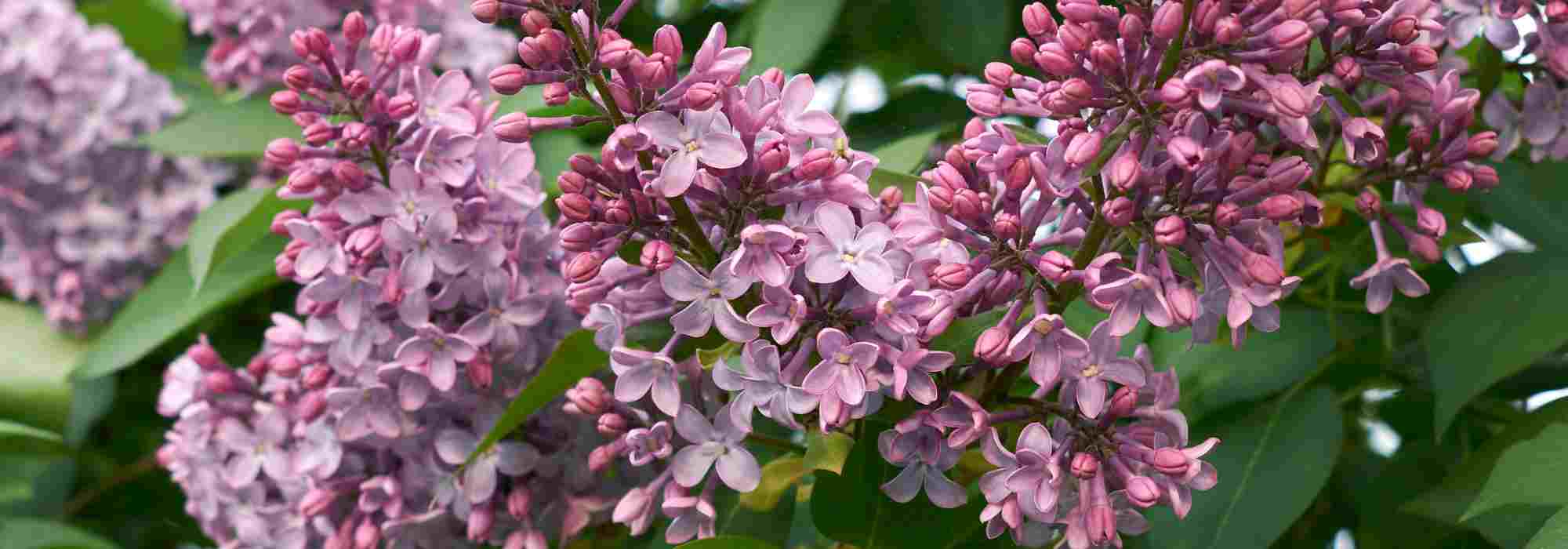
How can you resist the lilac’s delightful fragrance that perfumes the garden in spring? Although it has a touch of old-world charm, lilac (Syringa) is indispensable in a garden, given its many attributes. Beautiful with its clusters of white, pink, mauve to violet, or burgundy-red, very fragrant, the lilac forms a vigorous shrub, exceptionally hardy and easy to care for. And above all very floriferous, since its panicles of flowers open in April and May, sometimes even into June. Besides their simple beauty, these flower panicles attract pollinating insects with their melliferous attributes. With its rapid growth, the lilac can quickly ornament a small garden, or even fill a hedge or a border. Some dwarf varieties are even suited to pot cultivation.
Whether you want a white lilac or a purple lilac, whether you want to grow it on your terrace or in your large garden, whether you are looking for a lilac suited to dry soil, discover our buying guide. You’ll have confidence in choosing the lilac that best meets your criteria.
For further reading: Lilac, Syringa: planting, pruning and care.

According to the colour of the flowers
We appreciate lilacs for their flowering, composed of large thyrses (clusters) of simple, semi-double or double flowers with a very characteristic fragrance, almost indescribable. Nevertheless, these inflorescences, so distinctive, are essentially distinguished by colour. Indeed, some are charmed by white lilacs, while other gardeners swear by the original mauve colour.
If you favour white-flowered lilacs, Syringa vulgaris ‘Madame Lemoine’ is for you. This old variety indeed offers fluffy clusters of double flowers in pure white. As for ‘Dentelle d’Anjou’, it is an improvement on ‘Madame Lemoine’, with a more compact and more ramified habit, but still with pure white double flowers. The flowers of the variety ‘Jeanne D’arc’ are just as white but more fragrant.
Those who enjoy lilacs that come in varying shades of pink have plenty to choose from: Belle de Moscou ‘ offers a white tinged with pink, the Chinese lilac (Syringa microphylla) ‘Superba’ produces flowers in a deeper pink, and ‘Zhemchuzhina’, of Russian origin, is cloaked in pink-violet flowers.
Other varieties such as ‘Michel Buchner’ stand out for the red-purple colour of their flowers, just as ‘Charles Joly’ with the wine-red of its florets.
Blue to violet lilacs are more common but just as interesting. Among this category, ‘Président Grévy’ stands out for its double and fragrant cobalt-blue flowers.
Finally, those seeking a touch more originality can turn to two rarities: the common lilac ‘Sensation’ offers bi-coloured flowers, violet margined with white. As for ‘Primrose’, it asserts its characteristic with pale-yellow-tinted flowers.
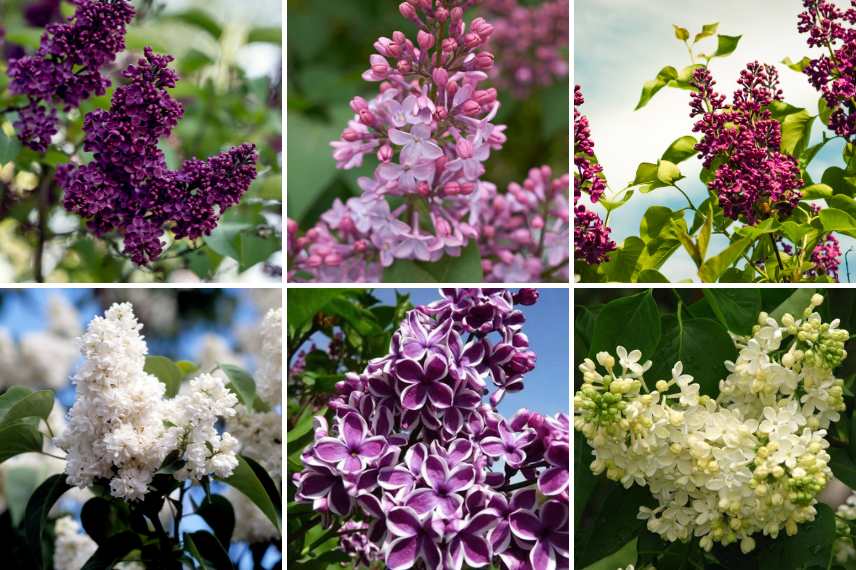
Lilac offers a wide range of colours
According to its fragrance
Lilac produces very fragrant florets. Nevertheless, some varieties are more renowned for their fragrance than others. Thus, lilac ‘Superba’ captivates not only with its deep pink flowering, which repeats in late summer, but also with its incredible fragrance that makes it a little marvel. With its large panicles of single flowers in a dark red, slightly purplish shade, the variety ‘Souvenir de Louis Spaeth’, obtained in Germany in 1883, also ranks among the most fragrant lilacs. In addition to its fragrance, it boasts outstanding robustness and ease of cultivation.
For those seeking lilacs with a strong fragrance to plant on a balcony or terrace near the house entrance, the two Bloomerang® series varieties are perfect. With their modest size (1.30 to 1.60 m across), their autumn repeat flowering, and their compact habit, they are also valuable for very small gardens. The fragrance is particularly intense. Those who prefer pink flowers will choose the variety ‘Pink Perfume’, those who favour lavender-blue will opt for ‘Dark Purple’.
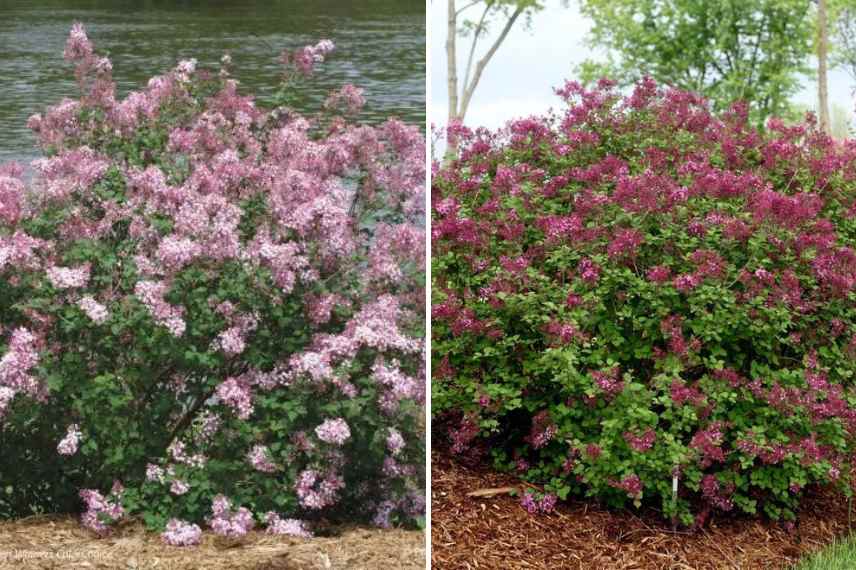
The two Bloomerang® varieties are distinguished by their intense fragrance
The Syringa meyeri ‘Palibin’ also spreads in small gardens the delicate fragrance of its rose-lilac flowers in spring, then intermittently until autumn.
With regard to the shrub's dimensions
Most lilacs, at maturity, reach 3–5 m in height. Ideal dimensions for planting in isolation on a lawn, in a shrub border, or even in a flowering hedge. However, if you only have a small garden, a balcony or a terrace, you’ll need to opt for dwarf lilacs. And hybrids under 1.5 m tall are numerous. Thus, beyond the two varieties ‘Pink Perfume’ and ‘Dark Purple’ from the Bloomerang® series, previously mentioned and chosen for their extraordinary fragrance, one can also highlight Syringa meyeri varieties from the Dutch Flowerfesta® series, which come in ‘Pink’, in ‘White’ and in ‘Purple’. None exceed 1.25 m in all directions, and they offer generous flowering in April–May, repeat flowering in September–October, pleasantly scented.
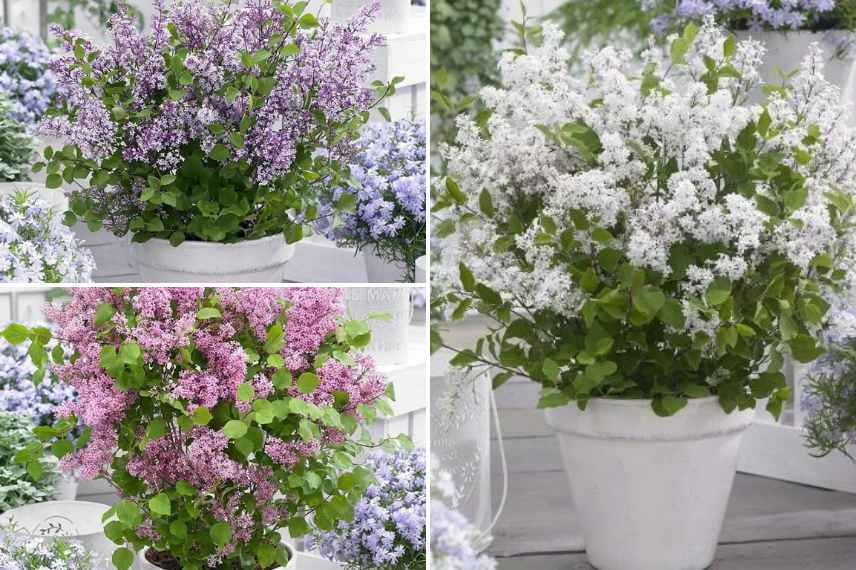
The Flowerfesta® dwarf lilacs are particularly well suited to container planting
The Syringa patula ‘Miss Kim’ is also classed among small lilacs, perfect for brightening restricted spaces. Compact and sturdy, it bears numerous thyrses, finer and smaller than those of the common variety, but just as fragrant. These panicles display a delicate white hue shaded with a very pale mauve.
Read also
Purple lilac: the best varietiesAccording to the foliage
Lilac is a deciduous shrub with foliage typically oval to heart-shaped in most varieties. However, some species offer somewhat more atypical foliage. It is the case for Syringa persica, also known as parsley-leaved lilac, because its foliage is lanceolate acuminate, often pinnate or trilobed. The variety ‘Laciniata’, quite rare in cultivation, displays this foliage broadly dissected, giving it a certain lightness. Moreover, its panicles, a very soft blue-violet, are fairly small. This flowering also has the peculiarity of being earlier and longer-lasting.
Another lilac with distinctive foliage, Syringa pinnatifolia. This species, otherwise known as pinnate-leaved lilac, offers deciduous leaves with long petioles, pinnate, 3–6 cm long, consisting of 7–11 lanceolate leaflets, in a rather dark green. It is also very floriferous and bears panicles 4–7 cm long, consisting of small tubular flowers ivory-white shaded with lilac.
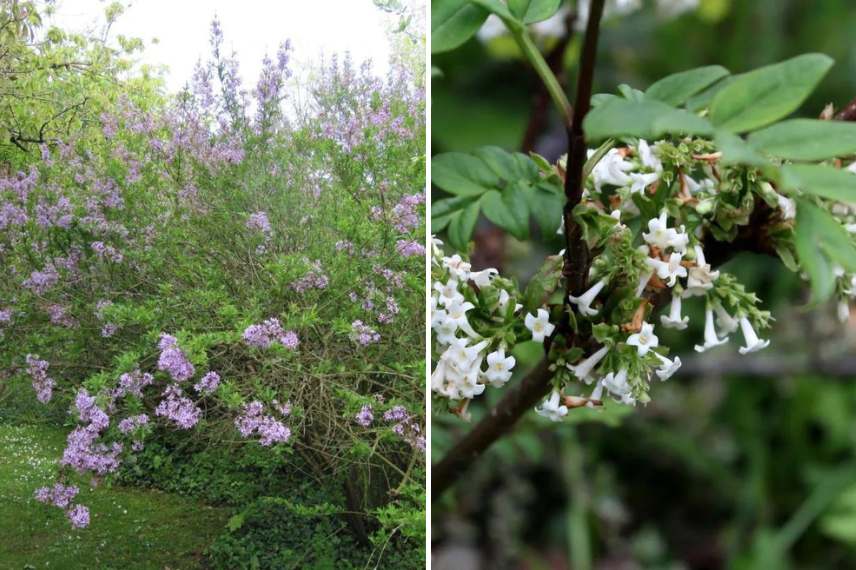
The species Syringa persica and Syringa pinnatifolia offer unusual foliage
Depending on your garden's soil type
Relatively adaptable, lilac thrives in ordinary soil. However, a cool, well-drained, fertile and deep soil promotes its growth and flowering. However, it greatly dislikes waterlogged soils, or soils with excess moisture. Nevertheless, some species are even less demanding and can tolerate calcareous and poor soils, provided they are perfectly drained. If you have alkaline-leaning soil, we recommend the lilac with pinnate leaves (Syringa pinniatifolia), native to the wooded slopes of southwestern China. It is also very hardy (down to -20°C), and enjoys sunny positions, though partial shade can also suit it.
The common lilac ‘Katherine Havemeyer‘ with numerous clusters of double mauve flowers also tolerates slightly calcareous, even poor and stony soils, provided they are well-drained. ‘Belle de Nancy‘ whose thyrses range from light purple to pink-violet, accepts the same growing conditions. Just like the safe bet, ‘Prince of Wolkonsky’ with a profusion of pink-violet flowers.
According to the habit
Lilacs generally form a shrub with an erect, bushy, rounded or conical habit, rather airy. Over time, the habit becomes more spreading. Spontaneously, it ramifies to achieve a very dense habit. Thus, varieties of Syringa vulgaris ‘Princesse Sturdza’ and ‘Zhemchuzhina’ prove to be particularly bushy due to their development into multiple stems. Just like the hyacinth-flowered lilac (Syringa hyacynthifolia) ‘Maiden’s Blush’ with late clusters of soft pink flowers, scented with a sweet fragrance.
Some species adopt a distinctive habit. Thus, Syringa microphylla Syringa microphylla ‘Red Pixie’ or lilac with small leaves offers branches that are almost horizontal, nearly arching, giving it a slightly weeping habit. 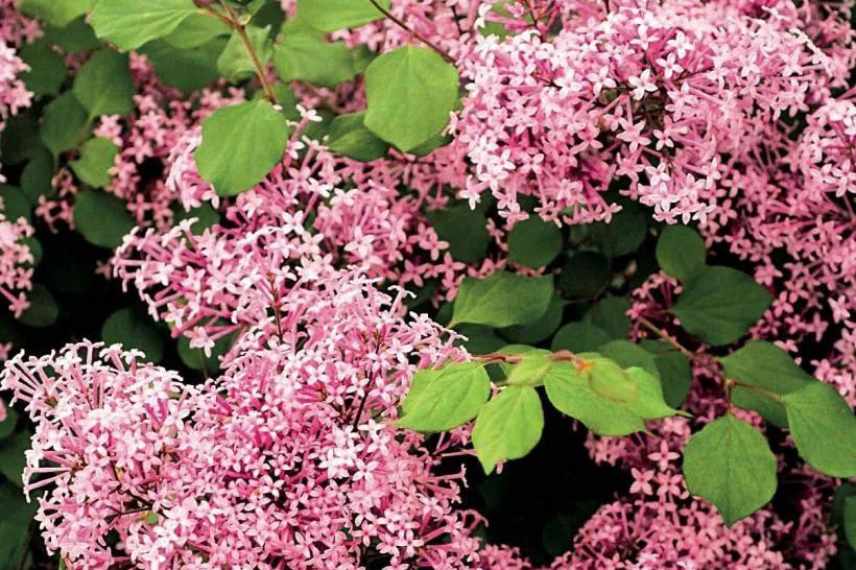
- Subscribe!
- Contents
Comments