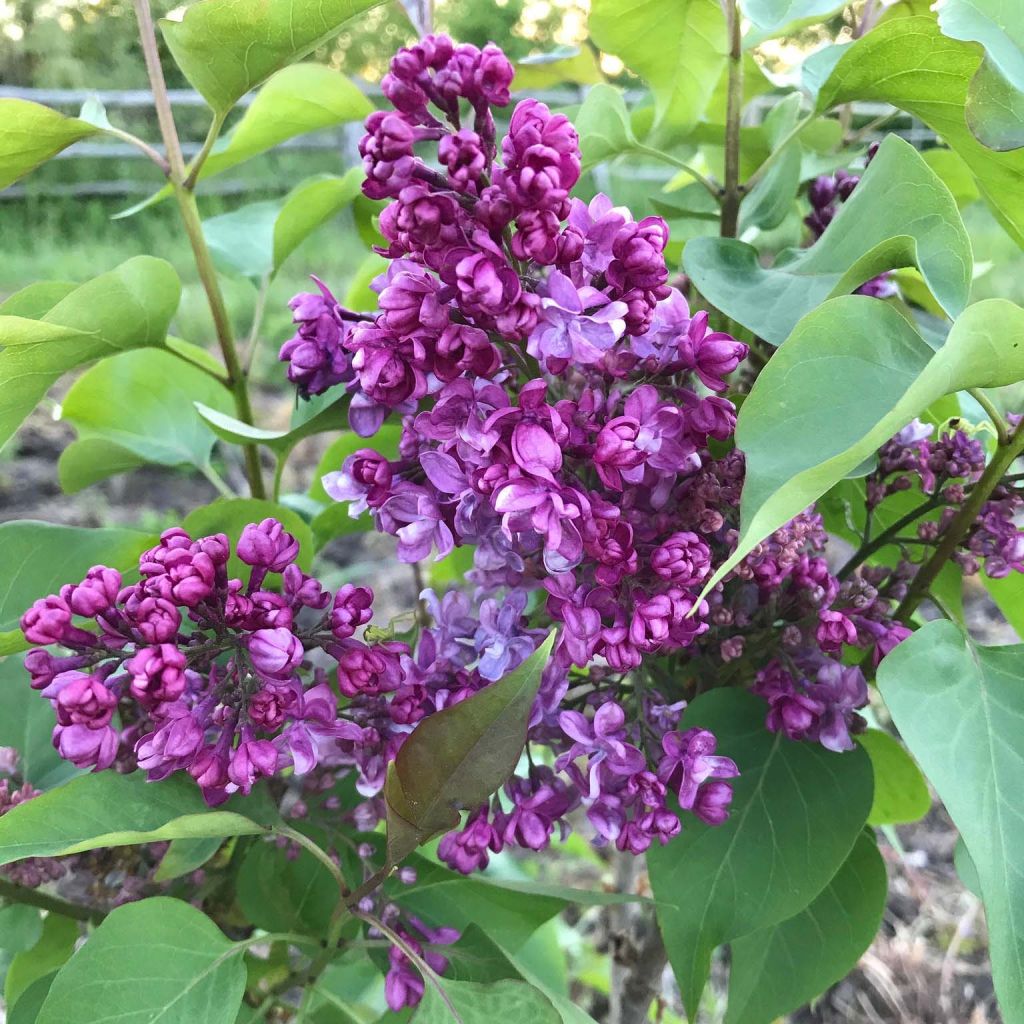
Syringa vulgaris Prince Wolkonsky - Common Lilac
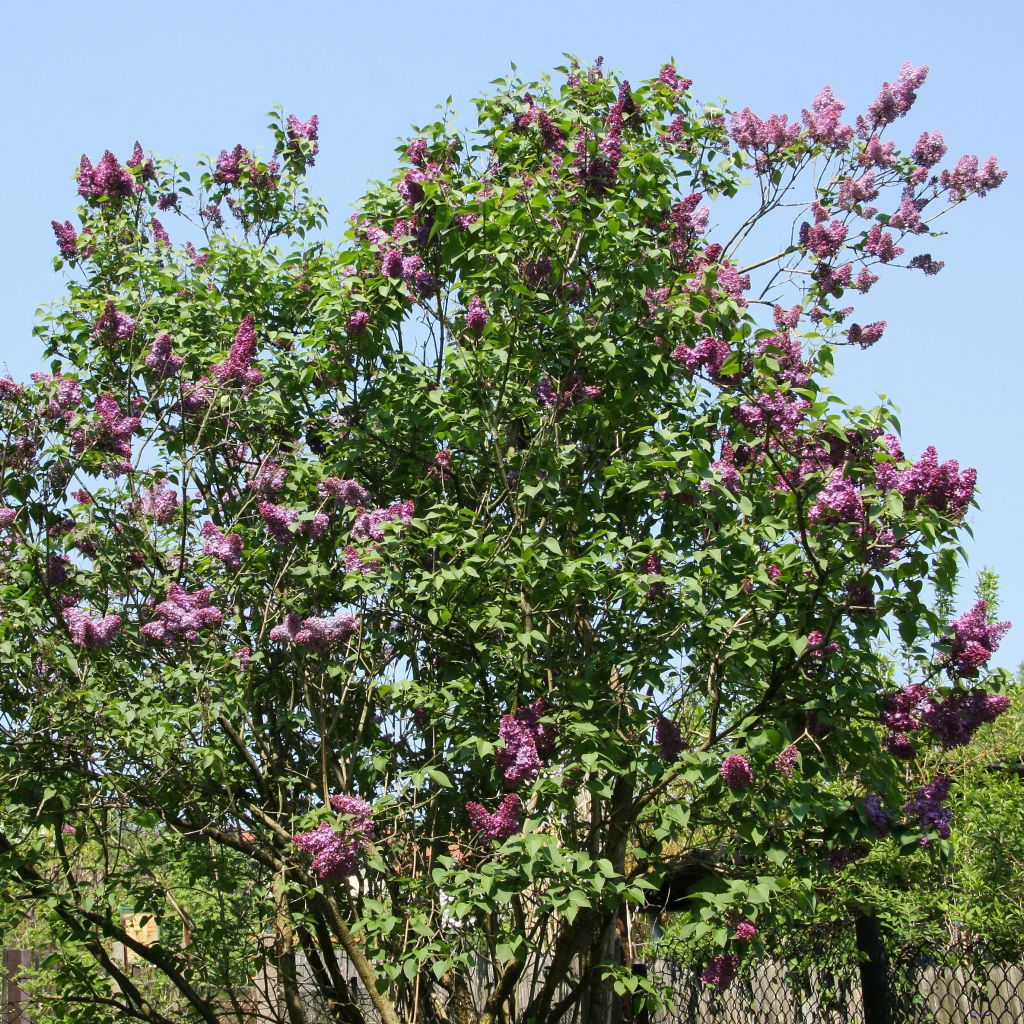
Syringa vulgaris Prince Wolkonsky - Common Lilac
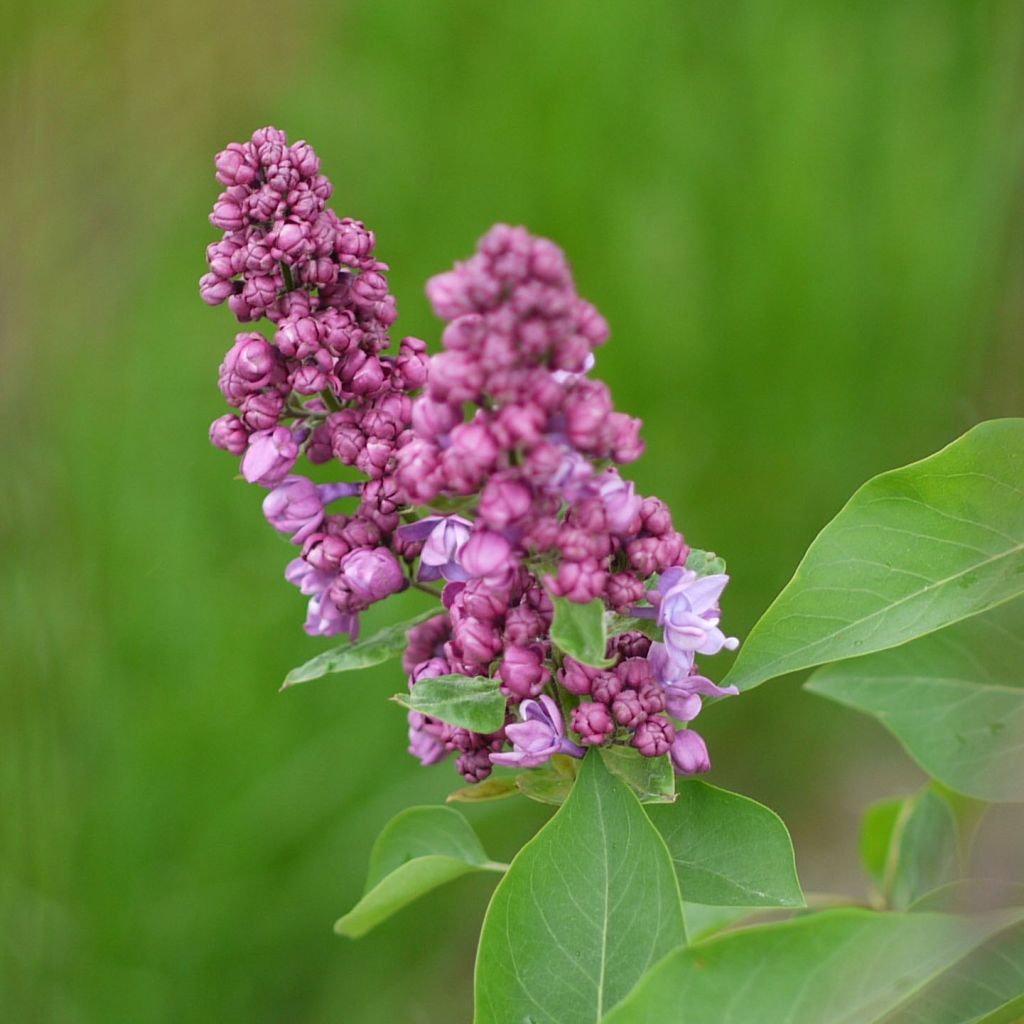
Syringa vulgaris Prince Wolkonsky - Common Lilac
Syringa vulgaris Prince Wolkonsky - Common Lilac
Syringa vulgaris Prince Wolkonsky
Common Lilac, Lilac
Plant not delivered!!!! For 20 euros!! Well done.
Alain, 14/06/2024
Back-to-school special offer!
Get €10 off for every €50 you spend! And get up to €40 off on a single order.
How does it work?
1. Shop your favourites
Add your favourite plants to your basket. For every €50 you spend (excluding delivery charges, store credit and the plastic-free option), you’ll receive a €10 voucher.
€50 spent = €10 voucher
€100 spent = €20 voucher
€150 spent = €30 voucher
€200 spent = €40 voucher
2. Place your order
Once your basket reaches one of the spending thresholds, place your order. You can even choose your delivery date!
3. Receive your voucher
As soon as your order has been shipped, you’ll receive an email containing your personal voucher code and its value.
4. Use it on your next order
Your voucher is valid for 90 days from the date you receive it. It can be used once only, on a new order worth at least the value of the voucher, excluding delivery charges.
Please note: Vouchers can be combined with other offers, but cannot be split or refunded.
Home or relay delivery (depending on size and destination)
Important: You may be charged customs duties by your country’s customs authorities upon delivery.
Schedule delivery date,
and select date in basket
This plant carries a 24 months recovery warranty
More information
We guarantee the quality of our plants for a full growing cycle, and will replace at our expense any plant that fails to recover under normal climatic and planting conditions.
Would this plant suit my garden?
Set up your Plantfit profile →
Description
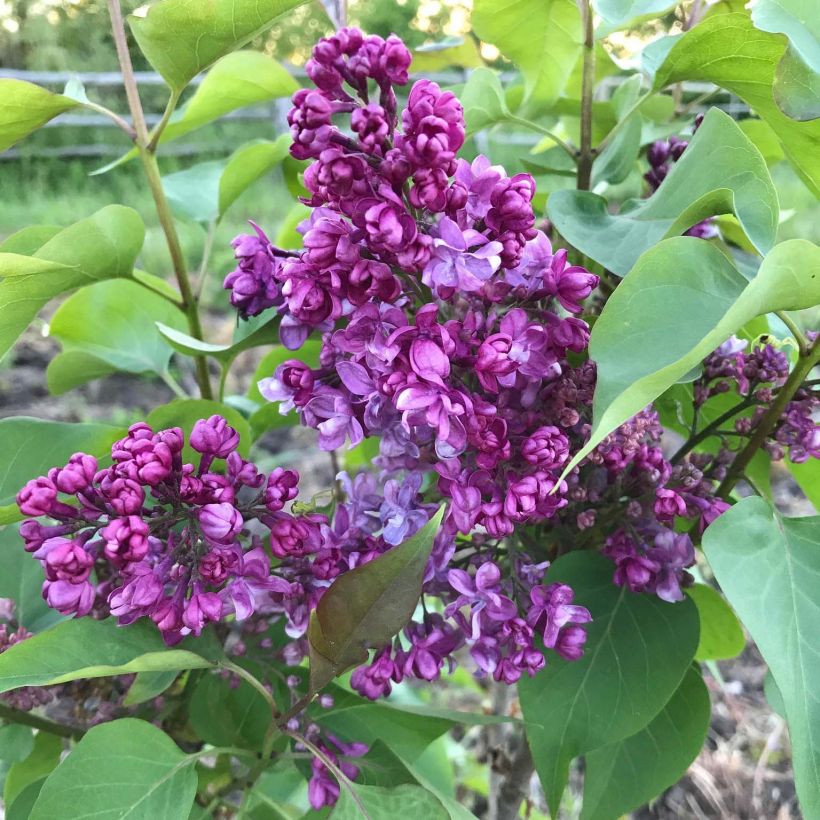
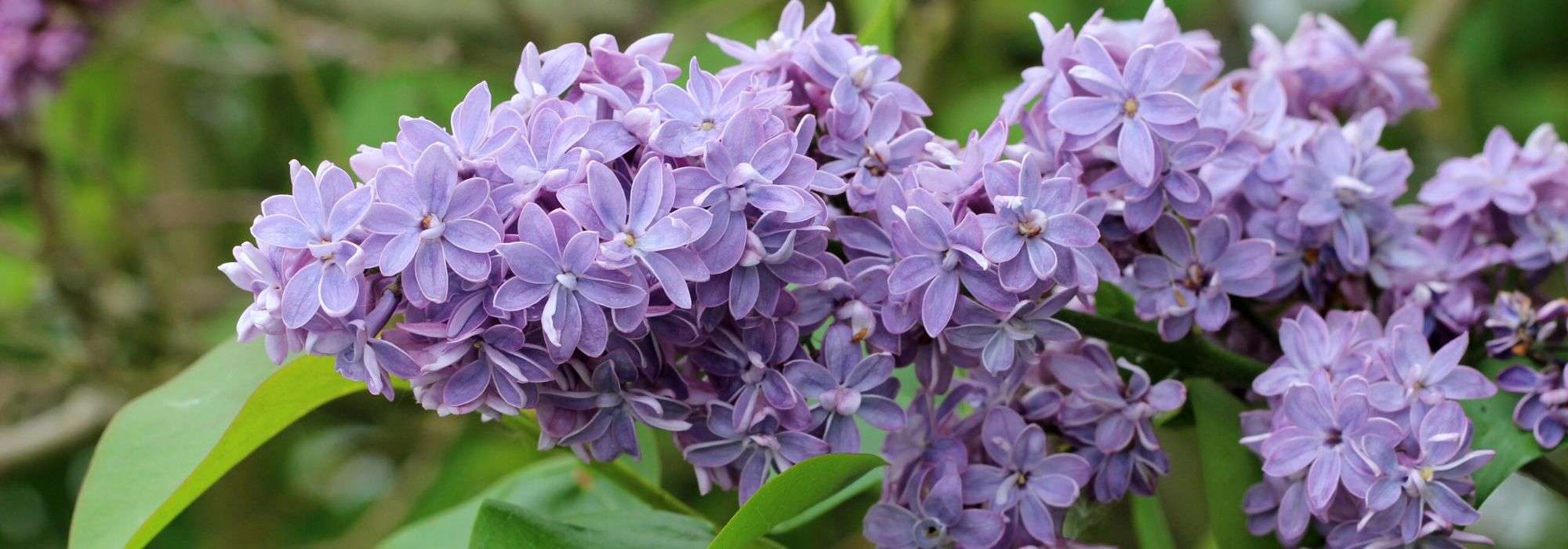
Le Syringa vulgaris ‘Prince Wolkonsky’ est une variété de lilas commun remarquable par la profondeur de son coloris. Serrés sur de grosses grappes parfumées, ses boutons d'un rouge pourpré s’ouvrent en fleurs doubles rose violacé. Cette floraison, abondante au printemps, fournit de beaux rameaux pour les bouquets. Vigoureux sans être démesuré, cet arbuste convient aux grands massifs et aux haies libres. Sa culture ne présente pas de difficulté en terre ordinaire dans la plupart des jardins.
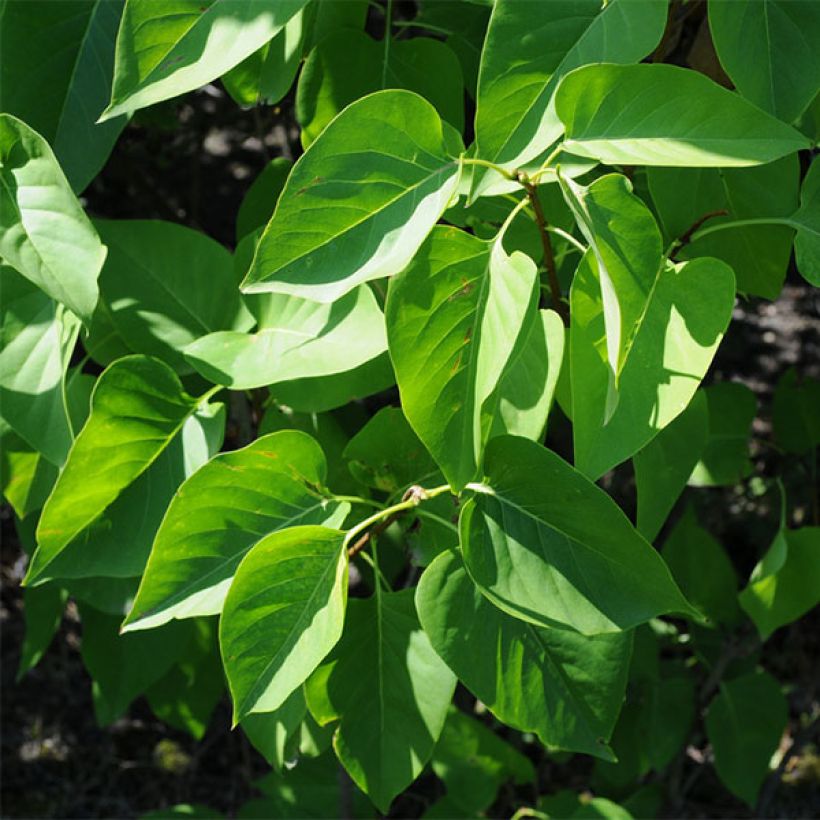
Ce lilas appartient à la famille des Oléacées. C’est un arbuste caduc, dont la ramure persiste en hiver et dont les feuilles tombent à l’automne. Le Syringa vulgaris est une espèce botanique originaire du nord de la péninsule Balkanique, présente jusqu’au nord de la Roumanie centrale. 'Prince Wolkonsky’ a été sélectionné en France par Claude Bellion pour les pépinières Minier et enregistré en 1995. Sa filiation est connue : il provient du croisement de ‘Charles Joly’ et ‘Sensation’. Ce cultivar a été nommé en l’honneur du prince Peter Wolkonsky, peintre et horticulteur, créateur des Jardins de Kerdalo à Trédarzec, en Bretagne, qu’il aménagea à partir de 1965. Il s'agit d'un grand buisson vigoureux, d’abord dressé, devenant plus arrondi et ramifié avec l’âge. Il atteint 3,50 à 4 m de hauteur pour 2,50 à 3 m d’envergure dans de bonnes conditions. Comme de nombreux lilas communs, il peut produire des rejets à partir de sa souche et s’élargir progressivement. Les jeunes rameaux poussent avec vigueur au printemps et portent des feuilles opposées, en forme de cœur, d'un vert moyen. La floraison se forme sur le bois de l’année précédente et a lieu principalement en avril et mai. Les boutons rouge pourpré s'ouvrent en fleurs doubles qui évoluent vers le rose violacé et le pourpre plus clair au fil de l’épanouissement. Toutes ces nuances confèrent aux grappes une coloration riche, qui change légèrement à mesure que les fleurs s’ouvrent. Leur parfum est moins puissant que celui de certains anciens lilas particulièrement odorants. Ce cultivar supporte des froids proches de −20 °C et les situations exposées au vent. Il fleurit plus généreusement en plein soleil, dans une terre fertile, neutre à calcaire.
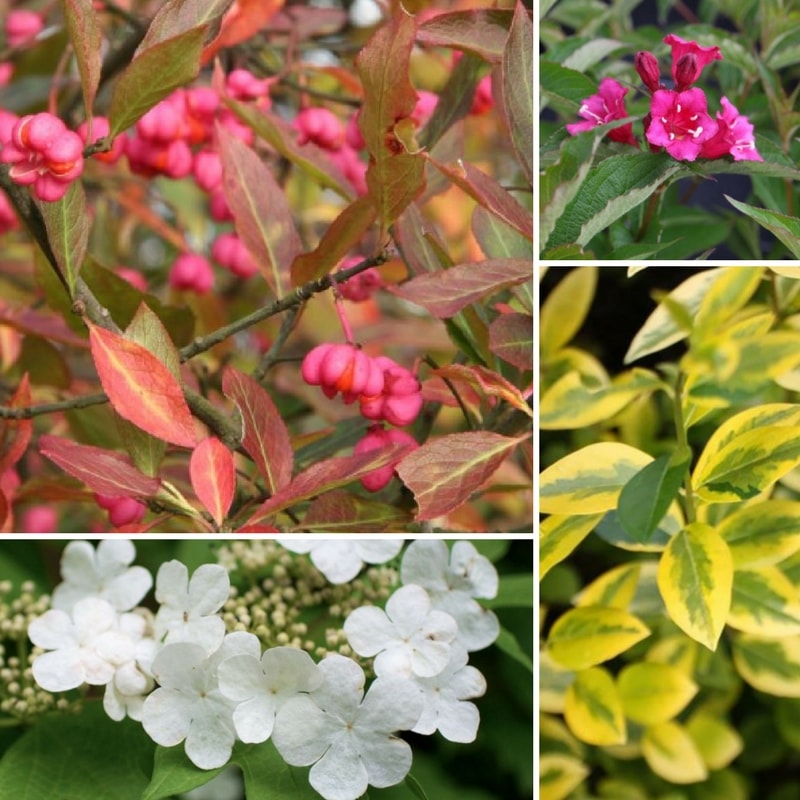
Dans le jardin, ce lilas ‘Prince Wolkonsky’ se plante en isolé sur une pelouse, dans un grand massif ou dans une haie libre avec d'autres arbustes faciles et rustiques tels que les Forsythias ou les grands weigélias. Son port buissonnant et sa floraison généreuse font merveille dans les jardins à l’anglaise et les jardins de curé. Près d’une terrasse ou d’un passage, on profite aussi de son parfum et on peut facilement prélever quelques rameaux pour faire des bouquets. Pour l’accompagner, on peut choisir le Philadelphus ‘Belle Étoile’, le Deutzia scabra ‘Plena’, le Cotinus coggygria ‘Royal Purple’ ou un arbuste très champêtre comme le Viburnum lantana.
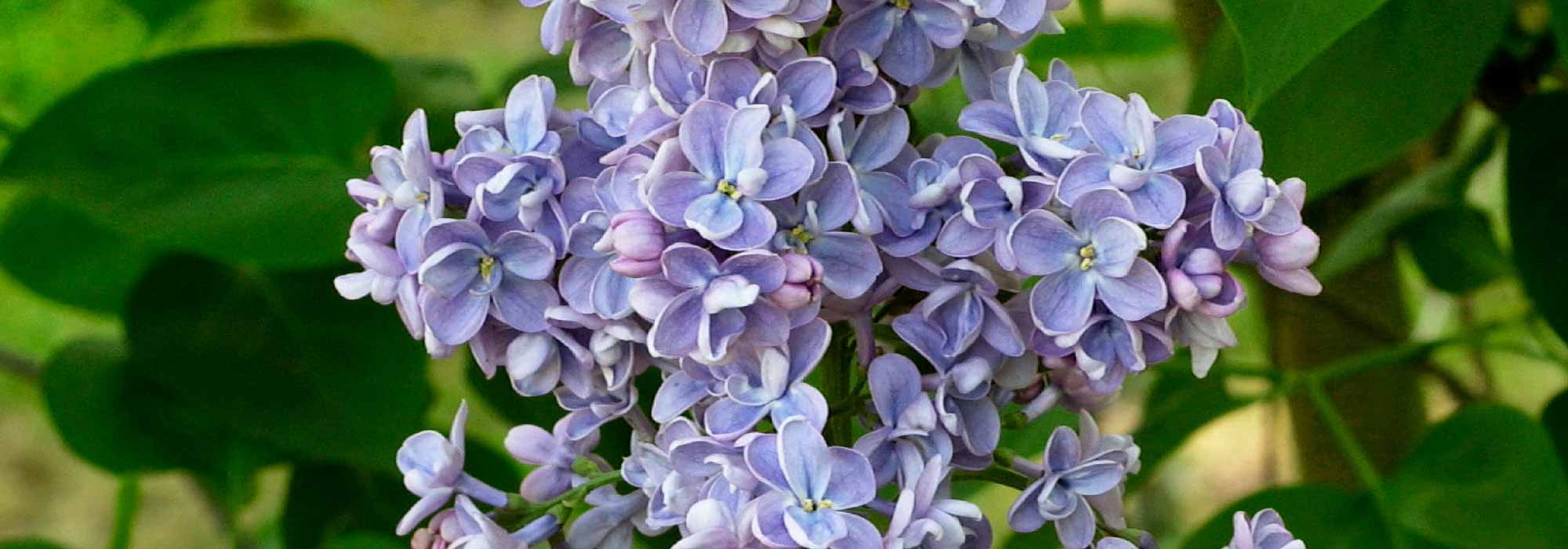
Syringa vulgaris Prince Wolkonsky - Common Lilac in pictures
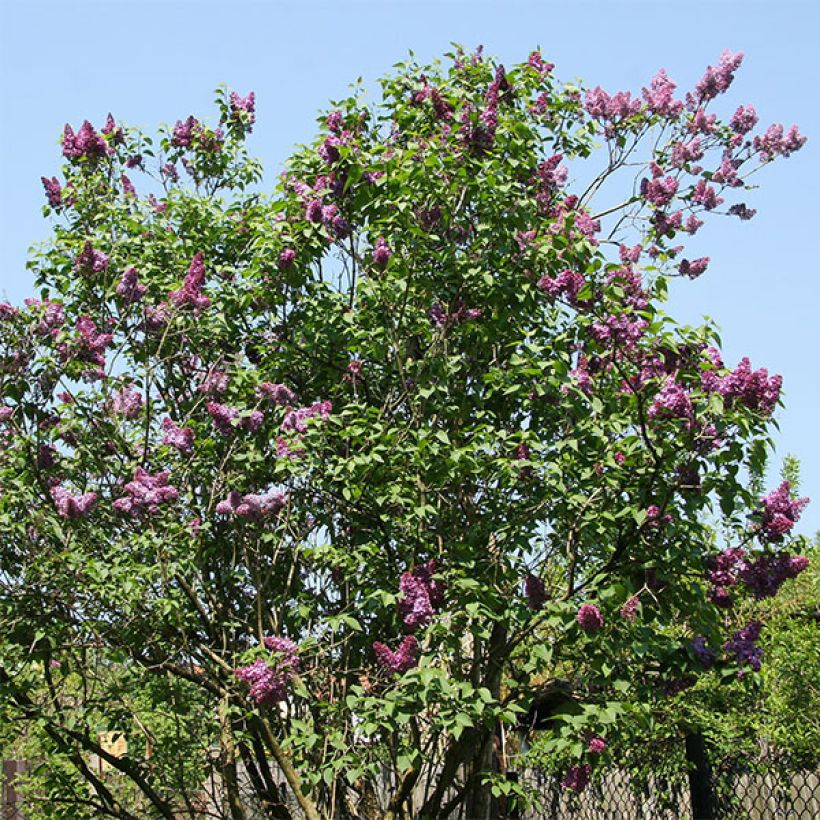
Plant habit
Flowering
Foliage
Botanical data
Syringa
vulgaris
Prince Wolkonsky
Oleaceae
Common Lilac, Lilac
Cultivar or hybrid
Planting and care
Syringa vulgaris ‘Prince Wolkonsky’ is best planted from autumn to early spring, when there is no frost, in full sun. Partial shade that is not too dense is tolerated, but flowering will be less generous there. Plant it in a deep, fertile, well-drained soil, neutral to alkaline; it tolerates clay soils if water does not stand in winter. Water regularly during the first year or two, especially during dry spells. Once well established, it copes better with a lack of water, but a few waterings in spring encourage growth and flowering if the weather is dry. Remove suckers if you wish to limit the spread of your lilac.
Planting period
Intended location
Care
Planting & care advice
-
-

-
-

-

-

-

-
-
, onOrder confirmed
Reply from on Promesse de fleurs
Recently viewed products
Haven't found what you were looking for?
Hardiness is the lowest winter temperature a plant can endure without suffering serious damage or even dying. However, hardiness is affected by location (a sheltered area, such as a patio), protection (winter cover) and soil type (hardiness is improved by well-drained soil).

The flowering period indicated on our website applies to countries and regions located in USDA zone 8 (France, the United Kingdom, Ireland, the Netherlands, etc.)
It will vary according to where you live:- In zones 9 to 10 (Italy, Spain, Greece, etc.), flowering will occur about 2 to 4 weeks earlier.
- In zones 6 to 7 (Germany, Poland, Slovenia, and lower mountainous regions), flowering will be delayed by 2 to 3 weeks.
- In zone 5 (Central Europe, Scandinavia), blooming will be delayed by 3 to 5 weeks.
In temperate climates, pruning of spring-flowering shrubs (forsythia, spireas, etc.) should be done just after flowering.
Pruning of summer-flowering shrubs (Indian Lilac, Perovskia, etc.) can be done in winter or spring.
In cold regions as well as with frost-sensitive plants, avoid pruning too early when severe frosts may still occur.
The planting period indicated on our website applies to countries and regions located in USDA zone 8 (France, United Kingdom, Ireland, Netherlands).
It will vary according to where you live:
- In Mediterranean zones (Marseille, Madrid, Milan, etc.), autumn and winter are the best planting periods.
- In continental zones (Strasbourg, Munich, Vienna, etc.), delay planting by 2 to 3 weeks in spring and bring it forward by 2 to 4 weeks in autumn.
- In mountainous regions (the Alps, Pyrenees, Carpathians, etc.), it is best to plant in late spring (May-June) or late summer (August-September).
The harvesting period indicated on our website applies to countries and regions in USDA zone 8 (France, England, Ireland, the Netherlands).
In colder areas (Scandinavia, Poland, Austria...) fruit and vegetable harvests are likely to be delayed by 3-4 weeks.
In warmer areas (Italy, Spain, Greece, etc.), harvesting will probably take place earlier, depending on weather conditions.
The sowing periods indicated on our website apply to countries and regions within USDA Zone 8 (France, UK, Ireland, Netherlands).
In colder areas (Scandinavia, Poland, Austria...), delay any outdoor sowing by 3-4 weeks, or sow under glass.
In warmer climes (Italy, Spain, Greece, etc.), bring outdoor sowing forward by a few weeks.
Shipping country and language
Your country of residence may be:
Your country of residence is:
For a better user experience on our website, you can select:
Your shipping country:
-
 Austria
-
 Belgium
-
 Bosnia & Herzegovina
-
 Bulgaria
-
 Croatia
-
 Cyprus
-
 Czechia
-
 Denmark
-
 Estonia
-
 Finland
-
 France
-
 Germany
-
 Greece
-
 Hungary
-
 Iceland
-
 Ireland
-
 Italy
Italy
-
 Latvia
-
 Liechtenstein
-
 Lithuania
-
 Luxembourg
-
 Malta
Malta
-
 Netherlands
-
 Poland
-
 Portugal
-
 Romania
-
 Serbia
-
 Slovakia
-
 Slovenia
-
 Spain
Spain
-
 Sweden
-
 Switzerland
Language:
-
French
-
 English
-
Spanish
-
Italian
-
German
-
Portuguese
-
Dutch
-
Finnish
My Account
Hello
My wish lists
My cart
Log in / Register
Existing customer?
This form is protected by reCAPTCHA - the Google Privacy Policy and Terms of Service apply.
New customer?
Create an account to track your orders, access our customer service and, if you wish, make the most of our upcoming offers.