


Lamium: 6 pairing ideas
Our finest ideas and inspirations
Contents
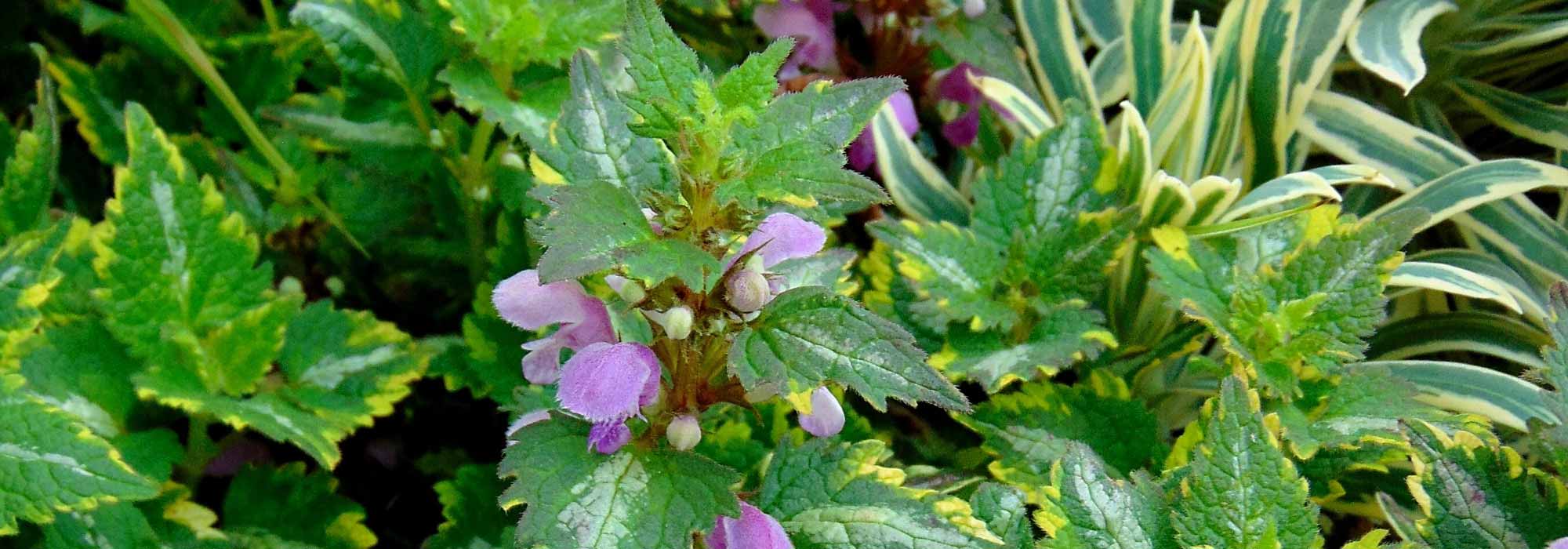
Dead nettle or Lamium is a pretty little ground-covering perennial, which grows spontaneously in France. The most common is the Lamium maculatum. There are many varieties, offering pretty variations in flowering colours and the variegation of the foliage. Its flowers come in shades of pink, mauve, purple and white… and even yellow for the Lamium galeobdolon. Lamium bears beautiful dentate leaves, which are often variegated and take green, silvery or golden tones. It is very easy to grow, in fairly cool, fertile and light soil, in shade or partial shade, and doesn’t really require maintenance once established. In the garden, it will find a place in woodland shade, at the foot of trees, in a cool, shaded rockery or along the edge of a border.
Discover our six best ideas and inspirations for pairing Lamium!
And to learn everything about its cultivation, see our complete guide: “Dead nettle: planting, growing and care”

In a white garden
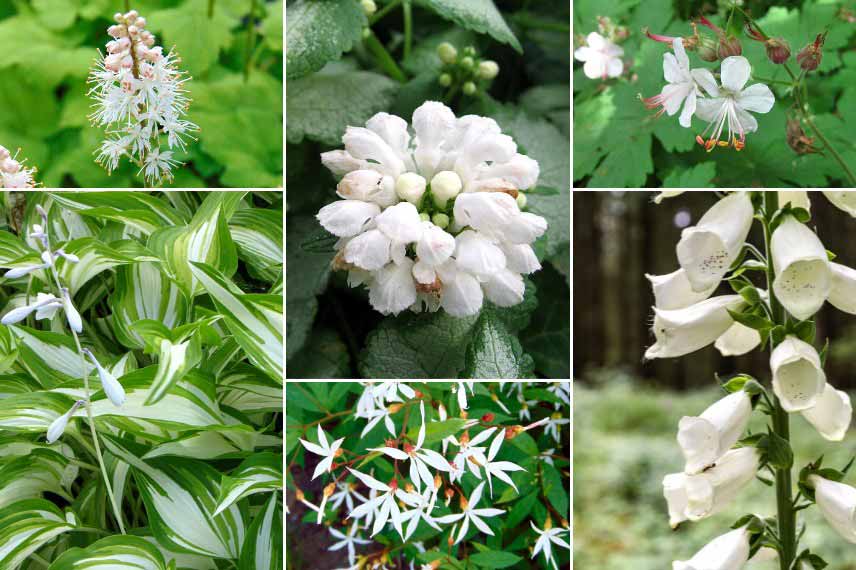
With its white flowers and silvery foliage, Lamium maculatum ‘White Nancy’ will blend beautifully into a white border, perfect for brightening a shady corner. Plant alongside it other perennials with pure white flowering, such as the Tiarella cordifolia ‘Moorgrun’, which, from April to June, offers delightful feathery spikes, the Geranium macrorrhizum ‘Spessart’, which bears pretty palmate leaves and five-petalled white flowers, with soft pink reflections, as well as the digitalis Digitalis purpurea ‘Alba’, ideal for bringing height and verticality to the border! Also discover Gillenia trifoliata, a superb perennial with leaves split into three leaflets and star-shaped flowers. Alongside these flowering displays, incorporate plants with decorative foliage, such as the Hosta ‘Cascades’ and its white-centred lamina and pale green on the outer lamina. You can also rely on the splendid Pagoda tree Cornus controversa Cornus controversa ‘Variegata’, with a tiered habit and leaves variegated with white. Besides being very bright, white gardens have a timeless and graphic style, and are particularly soothing. Don’t hesitate to also integrate a few plants with silvery foliage, which will reflect the sun’s rays, such as the Stachys byzantina, Artemisia ‘Powis Castle’ and the Salvia argentea.
Our article: “7 ideas for white garden beds”
j
Read also
Deadnettle: planting, pruning and careIn a romantic garden
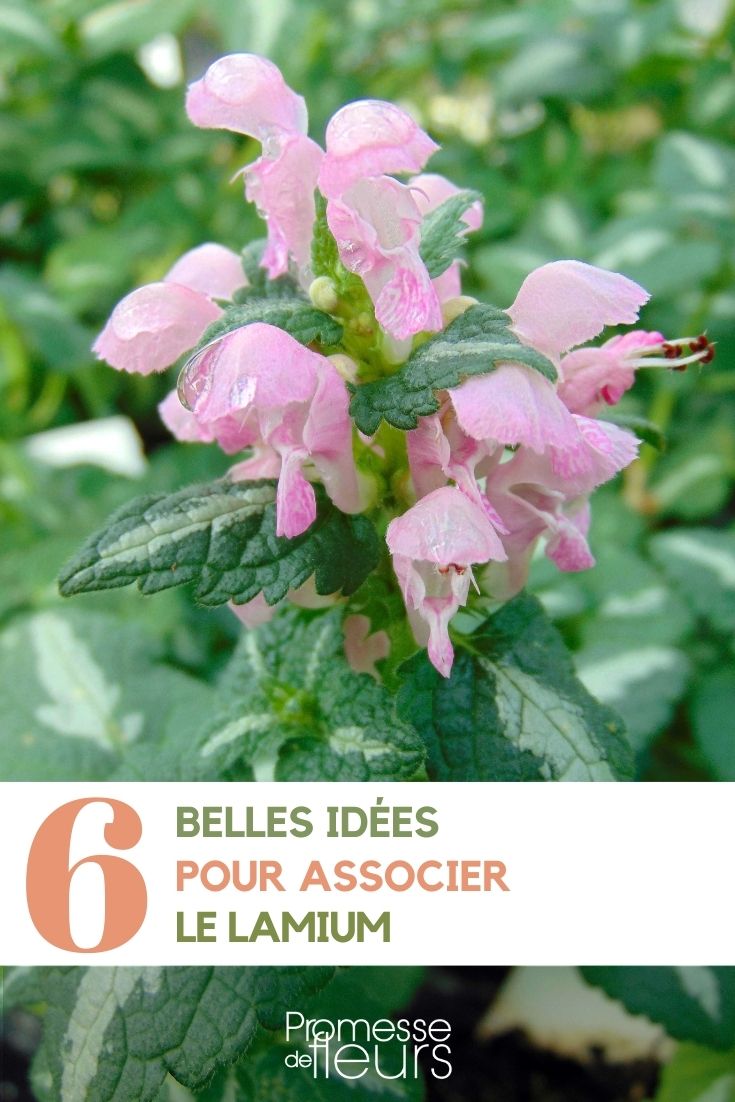
Lamium maculatum ‘Pink Pewter’ offers soft pink flowers and pretty variegated foliage, green and silver, ideal for bringing a touch of softness to the garden., In a very similar style, you can also choose the Lamium ‘Shell Pink’. With their soft tones, these lamiums will be perfect for composing a romantic garden, alongside perennials and shrubs with pink, mauve and white flowers. Prefer pastel tones, very delicate, but also include in the border a few plants with red or bright pink flowers, occasionally, to add depth and a touch more intensity. For example, enjoy the lush flowering of Paeonia lactiflora ‘Inspecteur Lavergne’ and Rosa ‘Ingrid Bergman’, a climbing rose. Also think of the pretty pink flowers of Deutzia ‘Strawberry Fields’ and the delicate blooms of Bleeding Heart or Dicentra spectabilis. Set up a small garden seating area, with wrought-iron or wooden furniture, sheltered by a trellis or pergola on which a Clematis ‘White Pearl’ will climb, with pure white flowers, and a climbing rose. This space invites you to sit and enjoy the garden! At their feet, plant Astrantias, alongside Aquilegia vulgaris ‘Munstead White’.
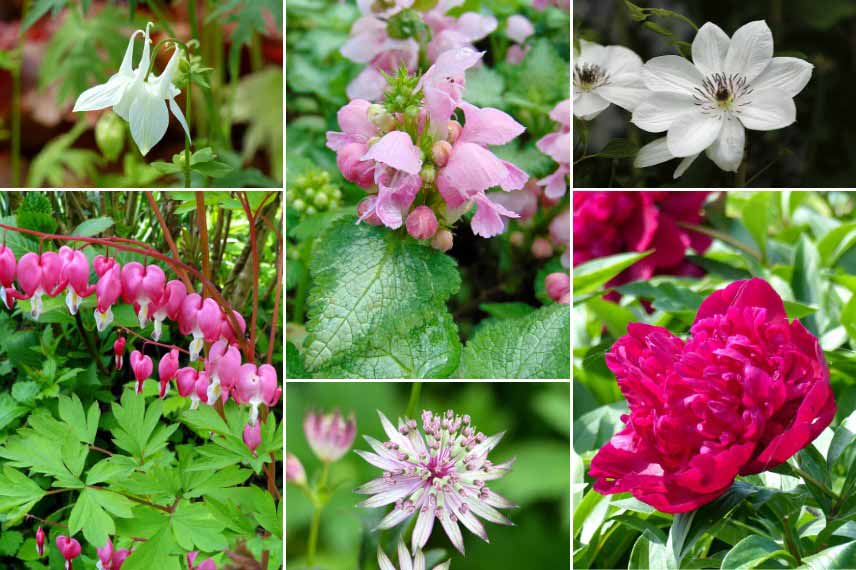 Aquilegia vulgaris ‘Munstead White’, Lamium ‘Pink Pewter’, Clematis ‘White Pearl’, Dicentra spectabilis, Astrantia major ‘Ruby Star’ and Paeonia lactiflora ‘Inspecteur Lavergne’
To play with contrasts in a purple-and-gold flower bed
Some Lamiums stand out with colourful foliage, which can sometimes be golden-yellow! This is notably the case for Lamium maculatum ‘Cannon’s Gold’ and ‘Aureum’. An excellent way to showcase them is to surround them with plants with dark, purplish leaves. For example, think of the Heucheras ‘Velvet Night’ and ‘Obsidian’, the Ophiopogon planiscapus ‘Nigrescens’, the Physocarpus ‘Midnight’ and the Ajuga reptans ‘Atropurpurea’. This will give you a lovely contrast, highlighting the Lamium’s brightness. Lighten the border slightly by incorporating other golden foliage, which will echo that of the Lamium. For example, consider the Hakonechloa macra ‘Aureola’, the Carex oshimensis ‘Everillo’, the Lysimachia nummularia ‘Goldilocks’, the elder ‘Lemony Lace’ and the Hydrangea quercifolia ‘Little Honey’. You will thus obtain an original, chiaroscuro bed in gold and purple tones! This contrasted bed will be ideal in a contemporary, graphic garden.
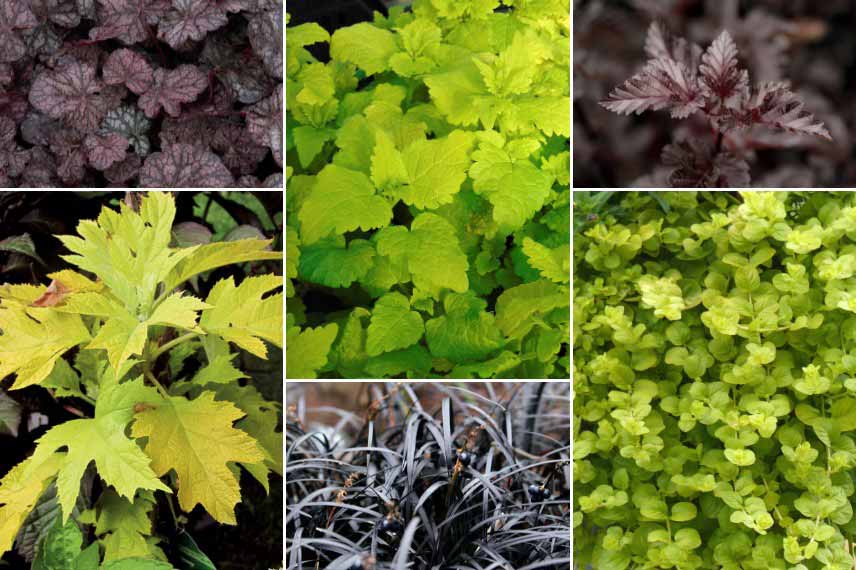 Heuchera ‘Velvet Night’, Lamium maculatum ‘Cannon’s Gold’, Physocarpus ‘Midnight’, Hydrangea quercifolia ‘Little Honey’, Ophiopogon planiscapus ‘Nigrescens’ (photo: brewbooks) and Lysimachia nummularia ‘Goldilocks’
Read also
10 plants to create a shady rockeryWith coloured foliage
Lamiums offer a beautiful diversity of foliage colours depending on the varieties! Discover, for example, Lamium maculatum ‘Anne Greenaway’, which bears three-coloured leaves: green, variegated with silvery-grey at the centre, and margined with golden yellow. In the garden, there is sometimes a tendency to overlook foliage colours and rely on flowering for colour alone! Or, these are often fairly fleeting, while the foliage remains decorative from spring to autumn, and sometimes even in winter. Create a pretty border by pairing Lamium ‘Anne Greenaway’ with variegated hosta foliage, the fine, colourfully variegated leaves of Carex, and coppery fronds of the pretty fern Dryopteris erythrosora… not forgetting Heucheras, whose leaves come in an incredible range of colours! You can, for example, choose ‘Vienna’, ‘Paprika’ or ‘Berry Smoothie’. Also discover Euphorbia polychroma ‘Bonfire’, with purplish leaves and golden flowering heads.
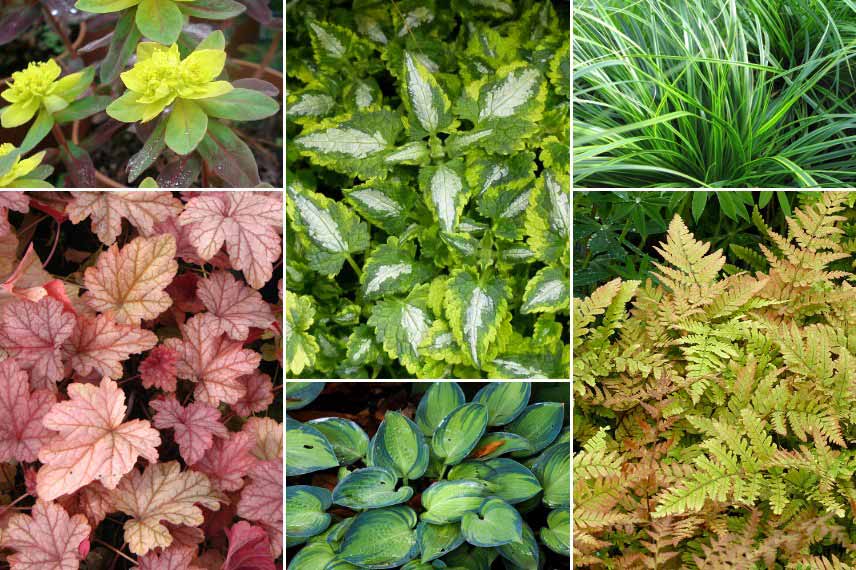
Euphorbia polychroma ‘Bonfire’, Lamium maculatum ‘Anne Greenaway’ , Carex oshimensis ‘Everlime’, Heuchera ‘Vienna’, Hosta ‘June’ and Dryopteris erythrosora
In a naturalistic woodland garden
Lamium is a plant with a very natural look that will integrate easily into a woodland garden. It also grows wild in France, particularly on the edge of forests, in fallow patches, on slopes, and along riverbanks… We especially recommend the Lamium orvala, which forms large green leaves, resembling nettle leaves, and pinkish-purple flowers reminiscent of orchid blooms. You may also choose the Lamium galeobdolon, with leaves maculated with silver-grey and yellow flowers. Plant beside them ferns such as the Dryopteris wallichiana and the Matteuccia struthiopteris, their large fronds, finely dissected, are ideal for creating a very natural look! Also think of hostas and the Brunnera macrophylla, also known as Caucasian forget-me-not, which bears beautiful leaves often silver-variegated. As for flowering, go for the Anemone nemorosa, the Geranium nodosum, and the Iris foetidissima.
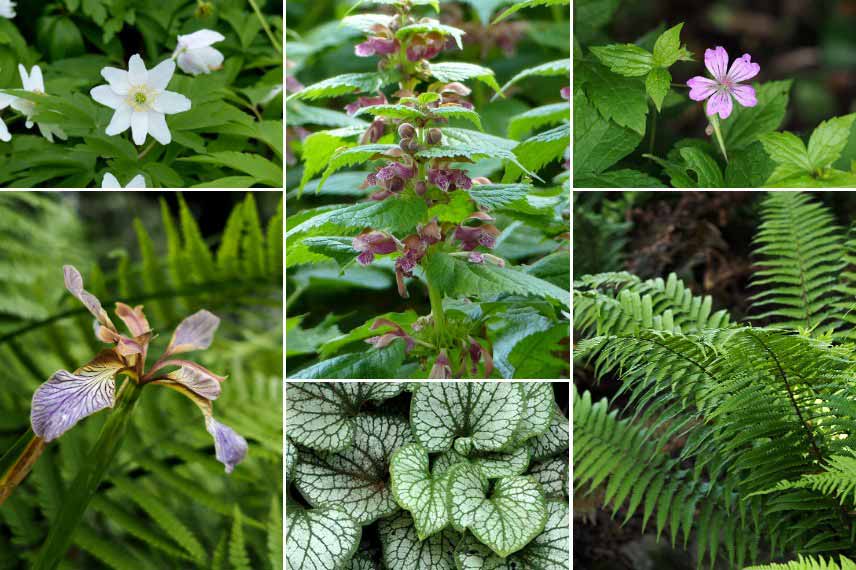
Anemone nemorosa ‘Lychette’, Lamium orvala, Geranium nodosum, Iris foetidissima, Brunnera ‘Jack Frost’ and Dryopteris wallichiana
In a cool, shaded rock garden
The Lamium maculatum will have no trouble finding a place in a cool rockery, in shade or part shade. It’s also an excellent way to showcase it! To create your rockery, choose a naturally elevated, shaded spot or build a mound, and place large stones at the front to hold back the soil. Also place smaller stones on top, then plant your perennials between these stones. Pair Lamium with creeping bugle, creeping bugle, Ajuga reptans, another small creeping perennial with a natural habit and bearing short spikes of blue or purple flowers. Plant saxifrages alongside them, as well as Carex morrowii ‘Ice Dance’, with emerald-green leaves, slightly margined with cream, and Alpine alchemilla, alchémilles des Alpes, Alchemilla alpina, which offer superb palmate foliage, very fine, with silvery margins on the edges and undersides. Also discover the Asiatic fern Coniogramme emeiensis, with very graphic fronds, glossy green marked with yellow striations. You can also incorporate Chiastophyllum oppositifolium beside them: this small creeping perennial, little known, offers splendid clusters of bright yellow flowers, upright at first and then trailing at the tips. Also discover Boykinia, a charming shade-loving perennial, cousin of the saxifrages, which bears white star-shaped flowers with a yellow heart.
Discover our care sheets “Create a rockery: our tips for success” and “10 plants to create a shady rockery”
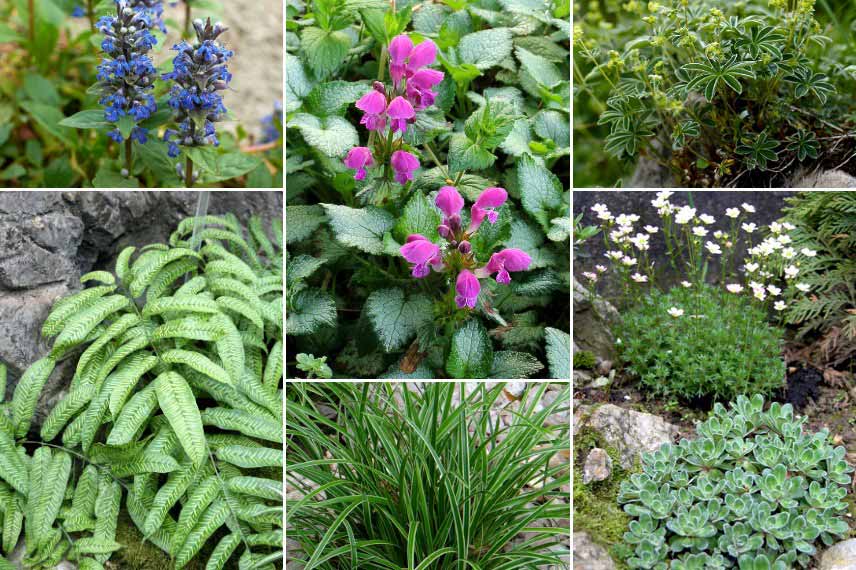 Ajuga reptans, Lamium maculatum ‘Beacon Silver’, Alchemilla alpina (photo : Udo Schmidt), Coniogramme emeiensis, Carex morrowii ‘Ice Dance’ et Saxifraga arendsii ‘Adebar’
- Subscribe!
- Contents
Comments