Hosta Cascades

Hosta Cascades
Hosta Cascades
Hosta Cascades
Plantain Lily, Funkia
Back-to-school special offer!
Get €10 off for every €50 you spend! And get up to €40 off on a single order.
How does it work?
1. Shop your favourites
Add your favourite plants to your basket. For every €50 you spend (excluding delivery charges, store credit and the plastic-free option), you’ll receive a €10 voucher.
€50 spent = €10 voucher
€100 spent = €20 voucher
€150 spent = €30 voucher
€200 spent = €40 voucher
2. Place your order
Once your basket reaches one of the spending thresholds, place your order. You can even choose your delivery date!
3. Receive your voucher
As soon as your order has been shipped, you’ll receive an email containing your personal voucher code and its value.
4. Use it on your next order
Your voucher is valid for 90 days from the date you receive it. It can be used once only, on a new order worth at least the value of the voucher, excluding delivery charges.
Please note: Vouchers can be combined with other offers, but cannot be split or refunded.
Why not try an alternative variety in stock?
View all →
Available in 1 sizes
Available in 1 sizes
Available in 1 sizes
Available in 2 sizes

Available in 1 sizes
Available in 1 sizes
Available in 1 sizes

Available in 1 sizes

Available in 2 sizes
Available in 1 sizes
This plant carries a 12 months recovery warranty
More information
We guarantee the quality of our plants for a full growing cycle, and will replace at our expense any plant that fails to recover under normal climatic and planting conditions.
Would this plant suit my garden?
Set up your Plantfit profile →
Description
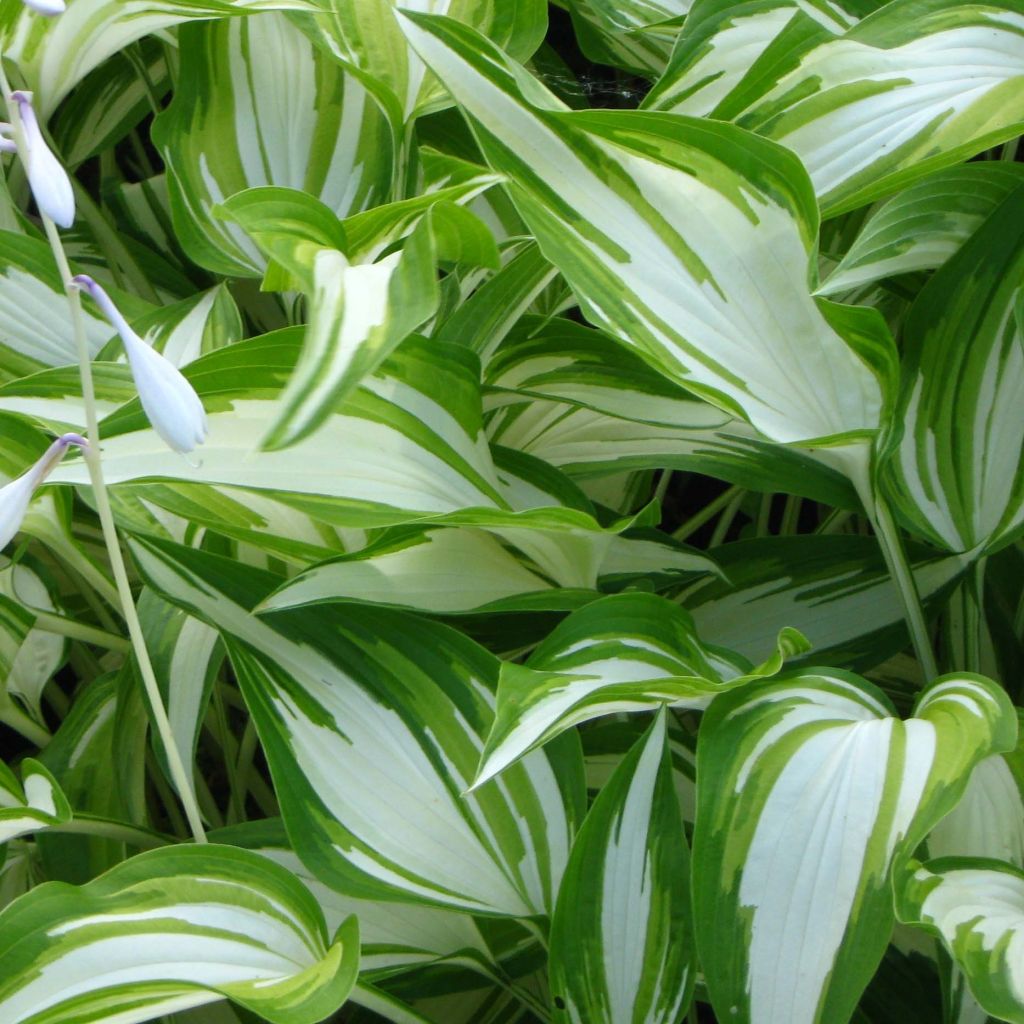
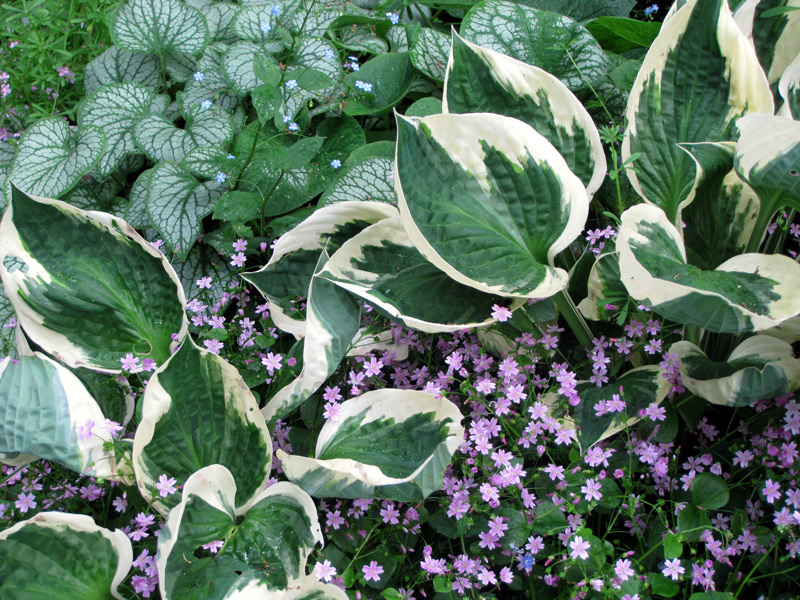
The 'Cascades' Hosta is a variety that owes its name to its elongated, pointed and highly arched foliage, cascading into curtains of overlapping leaves. This cascading effect is enhanced by subtle variegation. The centre of the leaves is pure white and the edges are widely and irregularly margined in dark green, transitioning to lime green between the two colours! This deciduous perennial has slow growth but forms a very elegant ground cover that is easy to cultivate in shaded areas of the garden. Its bushy and erect habit allows for the planting of lower companion plants at its base. Ideally, it should be planted in moist, well-drained and rich soil, exposed to morning sun!
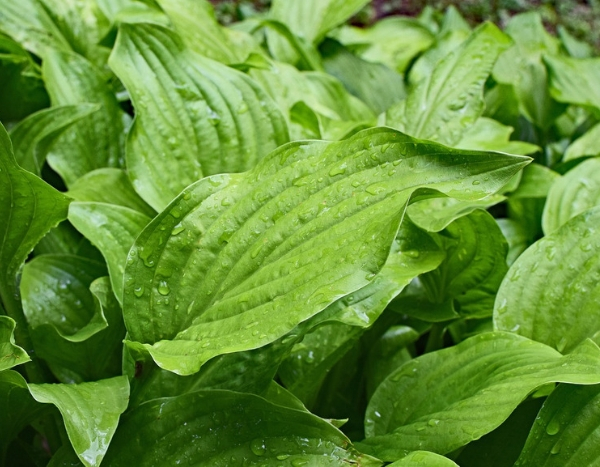
This Hosta, or Funkia, is a very hardy deciduous perennial with an upright bushy habit starting from spring. It belongs to the asparagus family. The plant forms a spread-out and dense clump that is 45 cm (18in) tall and 70 cm (28in) wide. It has a good lifespan and bears thick deciduous leaves that are 20 cm (8in) long and 18 cm (7in) wide. The lamina is thick and plicate with deep veins. From the variegated foliage, from July to August, emerge relatively short flower stalks that bear clusters of almost white flowers tinged with mauve in bell-shaped blooms, slightly fragrant.
Hostas like moist, well-drained and rich soil and are not tolerant of drought. In hotter and drier regions, a thick mulch should be provided. Hostas, with their generous and decorative foliage, are perfect as ground cover in partially to fully shaded borders or beds, where other plants struggle to thrive. They prefer sheltered and cool locations, such as woodland areas. Blue-leaved varieties prefer shade, while lighter foliage thrives in partial shade, especially morning sun.
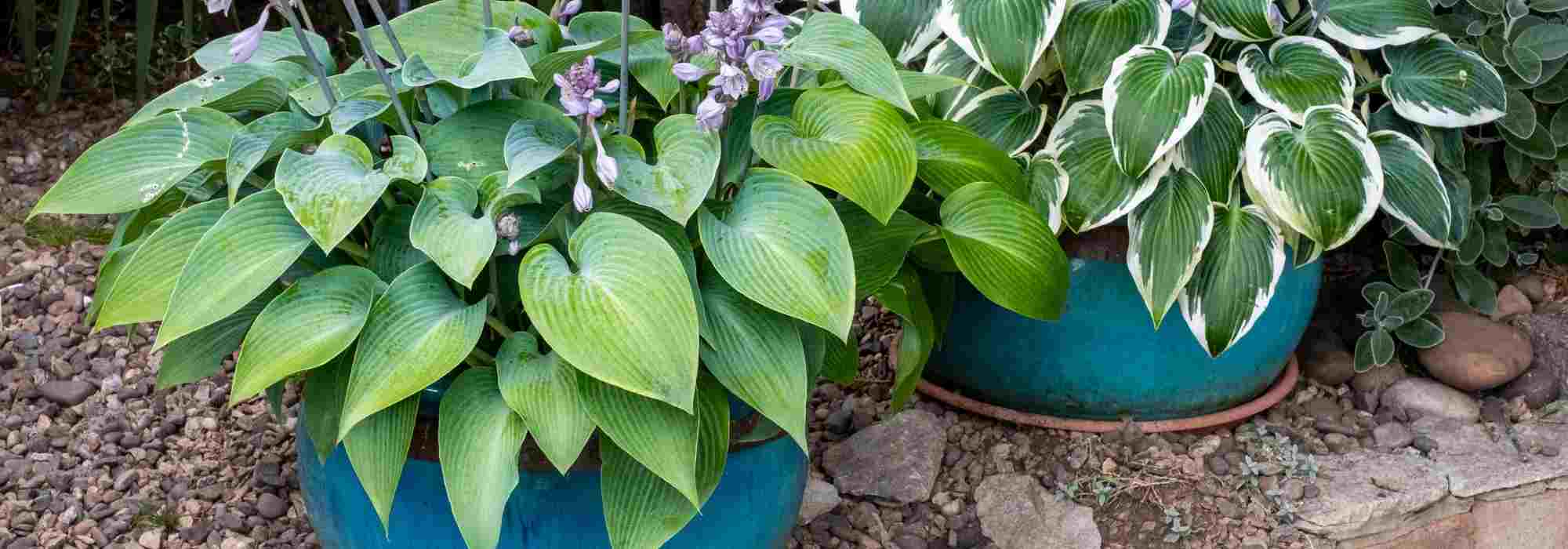
Combine them in masses with other hostas, ferns, delphiniums, Solomon's seals, and other low-growing ground cover perennials like creeping bugles, geraniums, and lamiums. They are all very effective as slug repellents. The silvery Brunnera macrophylla 'Mr Morse', familiar in woodland settings, makes an excellent companion. Consider also Heucheras with their wonderful range of colours, or the delicate flowers of Epimediums. You can enhance shaded and slightly moist areas of the garden by creating a pleasant haven of freshness for the summer. Hostas also thrive in containers, which should be placed in partial shade and watered regularly. Hostas pair wonderfully with spring bulbs, appearing in late spring, just in time to cover up fading plants with their generous foliage! Plant them around a pond with persicarias, carex, and astilbes. The blue foliage harmonizes perfectly with the red and purple foliage of Japanese maples.
Did you know: Most species widely spread in Western gardens have been introduced from Japan. Hostas are edible and are called urui in Japan, where they are commonly consumed.
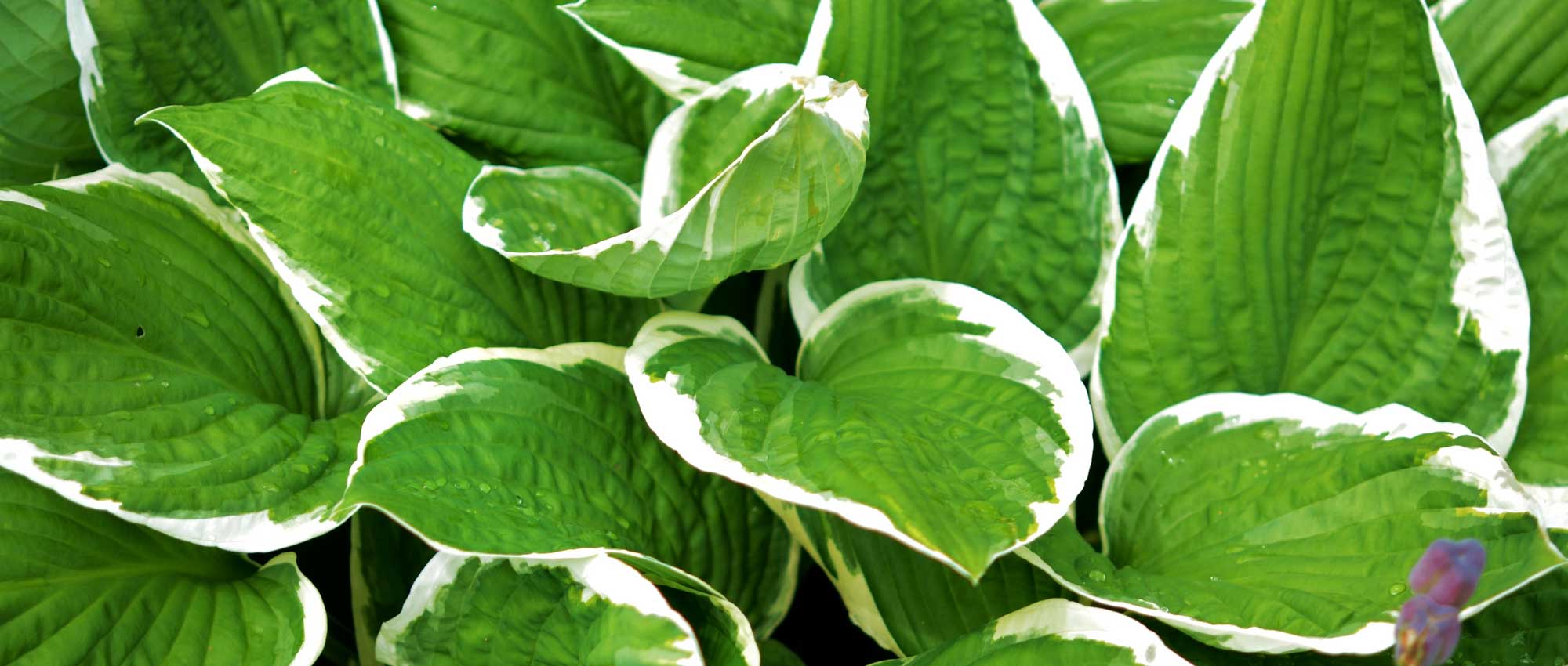
Hosta Cascades in pictures

Flowering
Foliage
Plant habit
Botanical data
Hosta
Cascades
Asparagaceae
Plantain Lily, Funkia
Cultivar or hybrid
Planting and care
Hostas are planted in spring or autumn. Hostas thrive in a deep, rich, humus-bearing, loose soil, preferably neutral to acidic (at least low in limestone), and moist to wet throughout the year. Plant them in partial or dappled shade, and in a sheltered location away from strong winds.
Prepare a planting hole of 20 cm (8in) x 20 cm (8in) x 20 cm (8in). If your soil is heavy, mix equal parts of compost with crumbled soil, partially backfill the hole, and place your potted plant in such a way that the top of the root ball is covered with 3 cm (1in) of soil. Applying a slow-release fertiliser (dehydrated blood, horn powder) will nourish your plant during its rooting period without the risk of burning. Make sure to position the collar well above the soil level. Firm the soil and water generously to eliminate air pockets. If the weather is dry, regular watering for a few weeks is necessary to facilitate the establishment of your plant. Also, water regularly during dry summers.
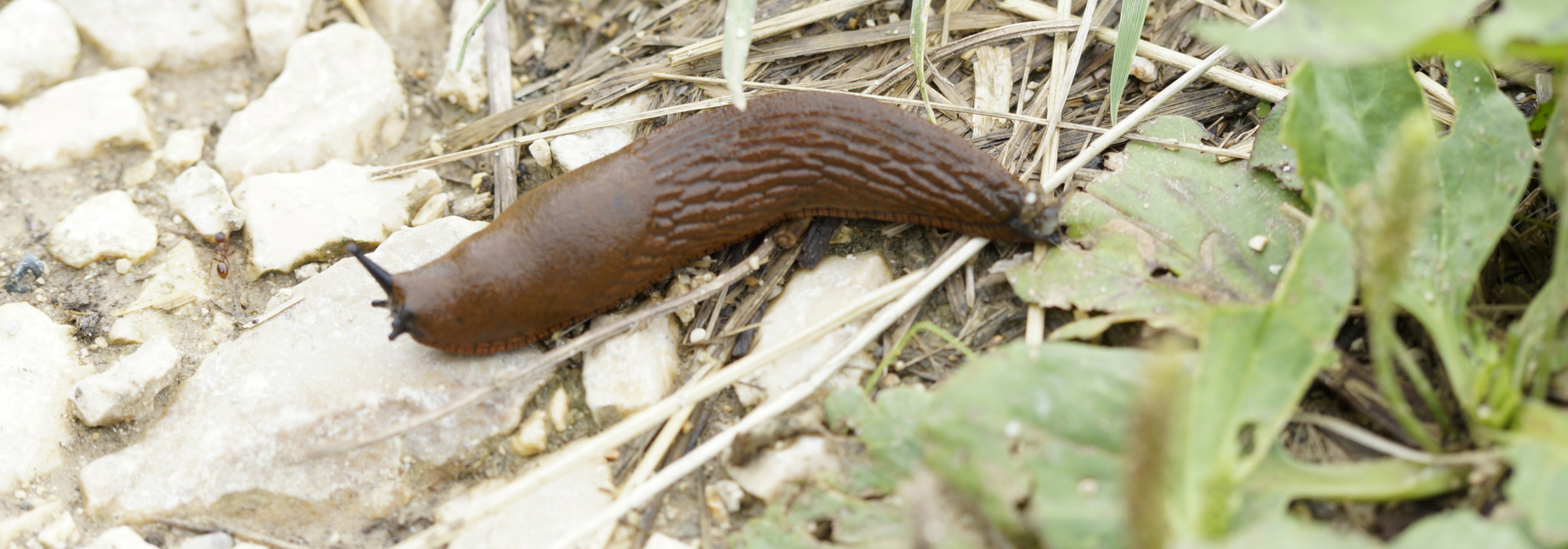
With their shared preference for moist locations, slugs and snails are never far away from hostas. Even though blue or variegated hostas often have thicker and tougher foliage, which is less appealing to slugs, these plants still need protection against gastropods. Protect your hosta plants by surrounding them with ferramol-based granules (approved for organic farming), eggshells, coffee grounds, mulch, or any dry and rough natural substance that repels them. Hedgehogs are the gardener's best allies in the fight against gastropods because, unlike chickens, they do not till the soil or attack the tender green shoots of young plants. Finally, some plants have a repulsive smell for slugs, such as wormwood and garlic.
Planting period
Intended location
Care
Planting & care advice
-
-
-
-

-

-
-

-

This item has not been reviewed yet - be the first to leave a review about it.
Recently viewed products
Haven't found what you were looking for?
Hardiness is the lowest winter temperature a plant can endure without suffering serious damage or even dying. However, hardiness is affected by location (a sheltered area, such as a patio), protection (winter cover) and soil type (hardiness is improved by well-drained soil).

The flowering period indicated on our website applies to countries and regions located in USDA zone 8 (France, the United Kingdom, Ireland, the Netherlands, etc.)
It will vary according to where you live:- In zones 9 to 10 (Italy, Spain, Greece, etc.), flowering will occur about 2 to 4 weeks earlier.
- In zones 6 to 7 (Germany, Poland, Slovenia, and lower mountainous regions), flowering will be delayed by 2 to 3 weeks.
- In zone 5 (Central Europe, Scandinavia), blooming will be delayed by 3 to 5 weeks.
In temperate climates, pruning of spring-flowering shrubs (forsythia, spireas, etc.) should be done just after flowering.
Pruning of summer-flowering shrubs (Indian Lilac, Perovskia, etc.) can be done in winter or spring.
In cold regions as well as with frost-sensitive plants, avoid pruning too early when severe frosts may still occur.
The planting period indicated on our website applies to countries and regions located in USDA zone 8 (France, United Kingdom, Ireland, Netherlands).
It will vary according to where you live:
- In Mediterranean zones (Marseille, Madrid, Milan, etc.), autumn and winter are the best planting periods.
- In continental zones (Strasbourg, Munich, Vienna, etc.), delay planting by 2 to 3 weeks in spring and bring it forward by 2 to 4 weeks in autumn.
- In mountainous regions (the Alps, Pyrenees, Carpathians, etc.), it is best to plant in late spring (May-June) or late summer (August-September).
The harvesting period indicated on our website applies to countries and regions in USDA zone 8 (France, England, Ireland, the Netherlands).
In colder areas (Scandinavia, Poland, Austria...) fruit and vegetable harvests are likely to be delayed by 3-4 weeks.
In warmer areas (Italy, Spain, Greece, etc.), harvesting will probably take place earlier, depending on weather conditions.
The sowing periods indicated on our website apply to countries and regions within USDA Zone 8 (France, UK, Ireland, Netherlands).
In colder areas (Scandinavia, Poland, Austria...), delay any outdoor sowing by 3-4 weeks, or sow under glass.
In warmer climes (Italy, Spain, Greece, etc.), bring outdoor sowing forward by a few weeks.
Shipping country and language
Your country of residence may be:
Your country of residence is:
For a better user experience on our website, you can select:
Your shipping country:
-
 Austria
-
 Belgium
-
 Bosnia & Herzegovina
-
 Bulgaria
-
 Croatia
-
 Cyprus
-
 Czechia
-
 Denmark
-
 Estonia
-
 Finland
-
 France
-
 Germany
-
 Greece
-
 Hungary
-
 Iceland
-
 Ireland
-
 Italy
Italy
-
 Latvia
-
 Liechtenstein
-
 Lithuania
-
 Luxembourg
-
 Malta
Malta
-
 Netherlands
-
 Poland
-
 Portugal
-
 Romania
-
 Serbia
-
 Slovakia
-
 Slovenia
-
 Spain
Spain
-
 Sweden
-
 Switzerland
Language:
-
French
-
 English
-
Spanish
-
Italian
-
German
-
Portuguese
-
Dutch
-
Finnish
My Account
Hello
My wish lists
My cart
Log in / Register
Existing customer?
This form is protected by reCAPTCHA - the Google Privacy Policy and Terms of Service apply.
New customer?
Create an account to track your orders, access our customer service and, if you wish, make the most of our upcoming offers.