





























What to do in the garden in September?
autumn gardening tasks
Contents
The hot weather has passed, children are heading back to school, and the garden is experiencing a second youth! New flowers are blooming, the lawn is greening up, and the harvests are still going strong… In this pivotal month between summer and autumn, we take advantage of the respite to prepare for the late season and the upcoming plantings.
Discover the gardening tasks awaiting you this September, as the return will be quite busy!

On the side of trees, shrubs, and fruit plants
Autumn plantings are on the horizon: plan your plantings, choose varieties based on your experiences from the ending season and the criteria to consider now (drought, heatwaves, shading…). By the end of the month, especially if the rains have finally moistened the soil, you can start preparing the planting holes for the new specimens you will welcome to your garden!
Ornamental trees and conifers
- Now more than ever, it is important to plant trees, true green lungs and natural air conditioners. Take the time to choose your future trees, carefully considering the characteristics of your region, your soil, and their mature size. For this, draw inspiration from our expert advice: Climate change: let’s plant trees… but not just any trees!, 7 cold and drought-resistant trees, 6 beautiful trees all year round, or Drought-resistant trees.
Fruit trees and small fruits
- In the orchard, remove fallen fruit: they often contain many pests.
- Apples, pears: pick the fruit at ripeness, they should detach easily.
- Collect mirabelles: they are sweetest and most fragrant once fallen to the ground.
- Prepare your storage area for fruits and vegetables by cleaning and disinfecting your boxes and shelves.
- Cut the last suckers that have developed at the base of the trees.
- The shell fruits are harvested at this time. By mid-September, walnut harvesting begins: spread a tarp on the ground and use a pole to knock them down. Let them dry for a few days away from moisture, then store them in crates. Find our detailed advice in the tutorial: Harvesting and storing walnuts.
- Harvest hazelnuts and almonds using the advice from our tutorials: How to harvest and store hazelnuts and How to harvest and store almonds?
- Clear the clusters from your trellis and remove the excess leaves that were protecting the grapes from the sun. When they are ripe, pick them at the peduncle for better preservation.
- The maintenance pruning, aimed at preserving a harmonious structure, promoting air and light circulation, and thus allowing for better fruiting, is done every 3 to 5 years. Stone fruit trees are pruned at the beginning of autumn. To proceed correctly, feel free to follow some valuable advice for low-stem fruit trees, standard fruit trees, and young shoot fruit trees.
Shrubs
- Now is the time to perform a clean-up pruning on shrubs that bloomed this summer. Be careful not to prune spring-flowering shrubs at the same time, as this may compromise their next flowering.
- Before they wilt, consider picking your hydrangea flowers and drying them.
- Perform light pruning on your Buddleias in early September to encourage a second flowering.
- Start choosing from the shrubs you will plant this autumn. Treat yourself, but also consider the evolving climatic conditions you may have observed in recent seasons.
- Continue semi-ripe cuttings of evergreen shrubs by following our advice: Propagation by cuttings: everything you need to know about different techniques and our advice.
- Prune the Lonicera nitida.
Hedges
- Eleagnus, privets, hornbeams, or boxwoods: prune the hedges that have grown well this summer, as well as the topiaries.
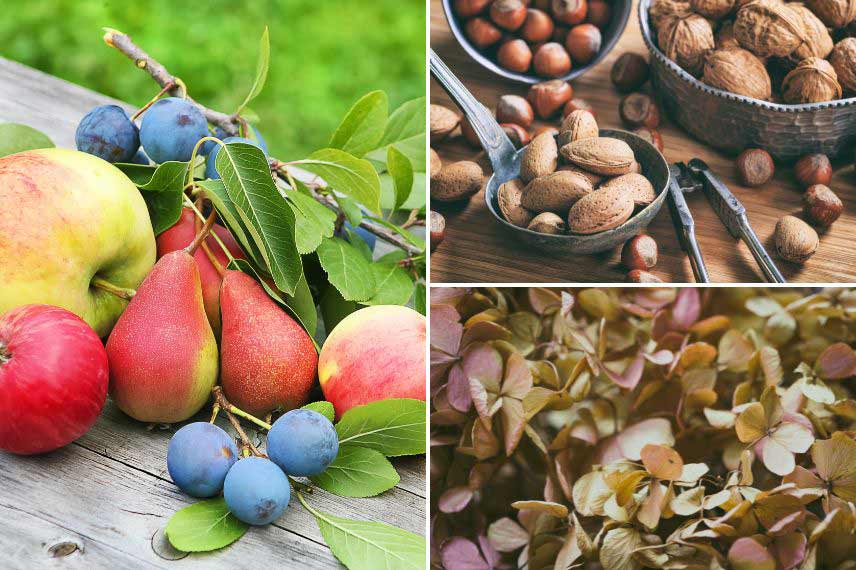 Harvest seasonal fruits and dry hydrangea flowers for beautiful dry bouquets, very trendy.
Read also
What to do in the garden in August?Perennials, bulbs, climbing plants and grasses
In September, collect the seeds to sow them next spring. Store them carefully, protected from moisture and light. You can also take this opportunity to clean and thin your plants by removing spent flowers and stems, as well as getting rid of “weeds.”
Perennials
- Cut back the spent stems of perennial plants
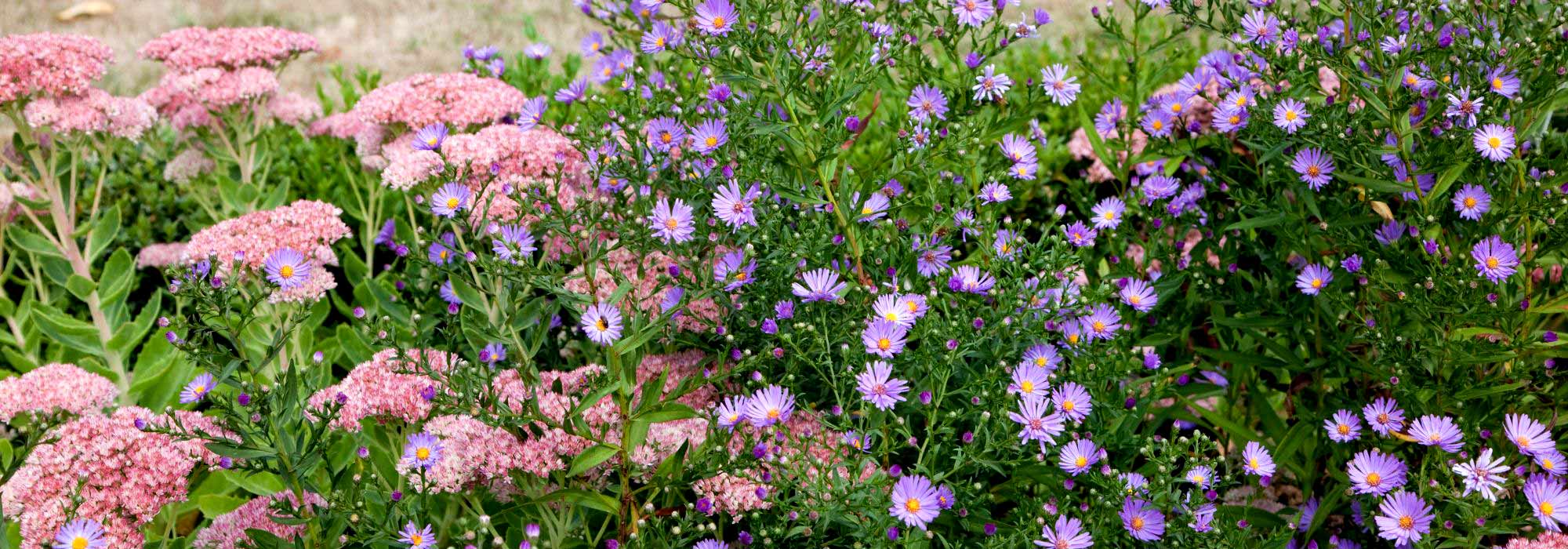
- Create autumn flower beds with asters, dahlias, or autumn stonecrops
- Agapanthus usually fade by early September. Leave the spent flower spikes in place to allow the rootstock to regenerate. You can cut them back to the base around mid-October.
Bulbs
- Tulips, daffodils, Alliums: select and order your spring bulbs. To help you choose the right variety and make delightful discoveries, we have prepared several guides: Chionodoxa: our favourite varieties, 8 spring bulbs with pink flowers that you must have in your garden and Spring bulbs: 6 ideas for pairing them. Need help planting them in the garden without making mistakes? Follow our 7 practical (and useful) tips for planting your bulbs!
- Plant your Hyacinths from September to November: they will have time to settle in and bloom early in spring
- Plant the corms of spring crocus
- It’s still time to plant Colchicums and saffron crocus
- Continue to divide iris rhizomes until October. This is also the best time to plant Iris germanica! Take this opportunity to discover 6 successful pairing ideas with other plants that enjoy full sun and tolerate drought
- Lift the bulbs of gladioli, but wait a bit longer to remove the tubers of dahlias
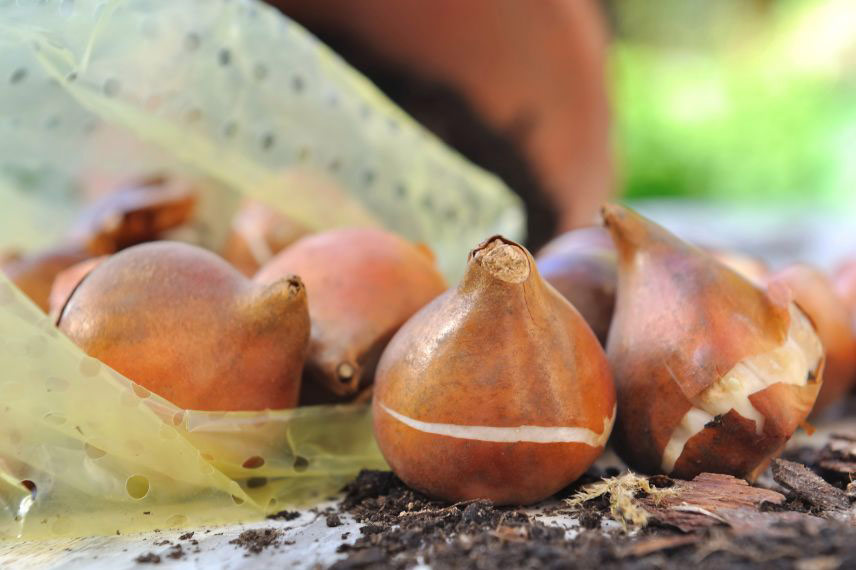 In September, it’s time to plant spring bulbs!
Climbers
- Layer climbing plants such as jasmines, honeysuckles, or wisterias
Grasses
- At this time, grasses are decorative and add a bit of movement to the garden. You will cut them back at the end of winter, ideally after the severe cold, just before the start of growth, in February or March.
- To consider giving them a lovely spot in the garden during autumn planting, here is a selection of 10 reliable grasses, ideal for taking your first steps into the world of “wild herbs”!
- Do a simple “back-to-school clean-up” on the clumps of Stipa arundinacea and all Luzula. Their rather discreet spikes are not decorative, and this operation will highlight their evergreen foliage.
Roses
Repeat-flowering roses are in bloom again! Discover our tips on drying roses to create beautiful floral arrangements.
- Regularly remove faded roses
- Check the ties of standard and climbing roses
- Layer climbing roses
- September is the ideal month to propagate roses; the cuttings taken are then semi-ripe. This intermediate stage is conducive to root development, and the covered cuttings yield very good results. Unsure how to proceed? Our advice sheet “Propagating Roses: When and How?” provides all the tips you need!
- Collect and dispose of fallen leaves in the waste disposal site, as well as those showing signs of disease
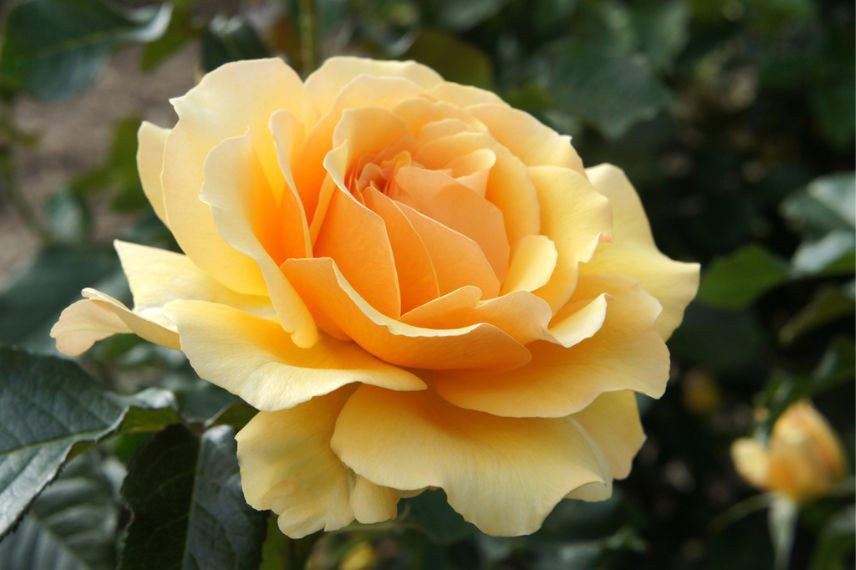
Like the rose ‘Amber Queen’ with its exceptional amber-yellow colour, repeat-flowering roses put on a show in September in the garden!
Read also
What to do in the garden in October?Annuals and potted plants
Get ahead by composing now the planters and pots that will brighten the end of winter and the beginning of spring. For this, nothing beats biennials like pansies, primroses, daisies, and other wallflowers that pair wonderfully with small spring bulbs (crocuses, muscari, mini-narcissi…) which also need to be planted at the end of summer. Our tips and tricks can be found in the blog “Spring planters: compose them in September/October… thank us in March!”
- Remove faded flowers and dried leaves from the annuals
- At the end of the month, start to reduce watering unless the weather is still warm and dry where you are
- Loosen the surface of the pots and planters
- Take woody cuttings of fuchsia following the advice in our sheet Fuchsia: planting, pruning, culture and maintenance
- Transplant geranium cuttings if they are sufficiently rooted
- Plan to bring in the less hardy plants as soon as the first cold weather arrives
- Replace the bare annuals at this time with autumn plants, such as Asters, Chrysanthemums, dahlias, Japanese anemones, or autumn pansies
- Shower and clean your houseplants before bringing them in
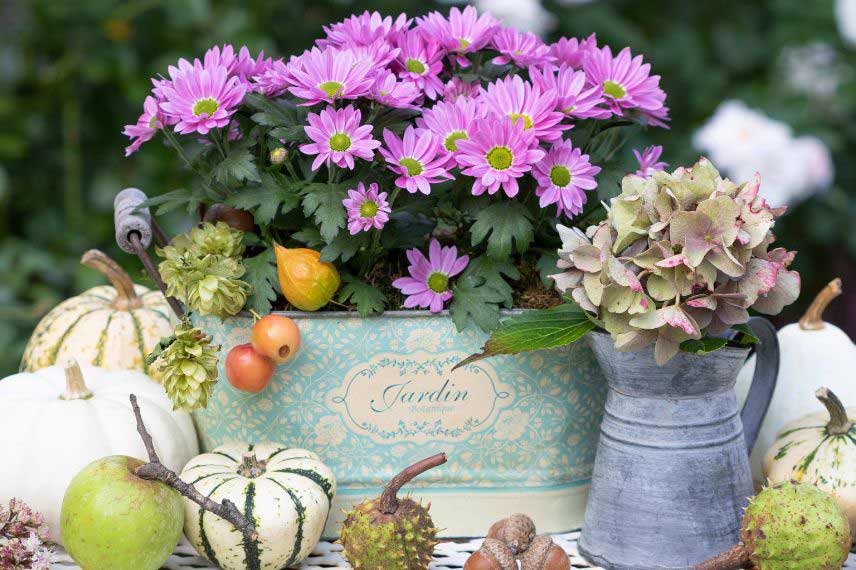
Replace summer compositions with late-season pots
In the vegetable garden
At the vegetable garden, harvesting continues in September, with the last summer vegetables and the first autumn ones. To avoid waste and extend the shelf life of your precious produce while treating yourself, make some delicious pickles. Our tips and tricks await you in the article “Successfully Making Homemade Vegetable Pickles“!
Vegetables to Plant in August, Sowing and Tasks to Do
- Renew your strawberry patch by multiplying plants from runners or by planting new ones
- Continue watering preferably in the morning. Weed to maintain freshness
- Avoid wetting the foliage of squashes and pumpkins to prevent powdery mildew
- Sow lamb’s lettuce
- In a sheltered nursery, sow spring cabbages, early white onions, winter lettuces, autumn spinach, and 18-day radishes
- Sow black radishes in early September for a mid-November harvest
- Harvest the potatoes intended for your winter consumption
- In autumn, carrots are lifted and cut at the collar. You can then store them in a box containing dry, fine sand
- Sow turnips for a late autumn harvest
- Freeze aromatic plants such as parsley and chives to use this winter in cooking
- Divide rhubarb
- Squashes such as pumpkins or Butternuts are no longer growing. They have reached their size and are simply continuing to ripen. Therefore, stop watering and wait one to two months. Place a board, tile, or straw under each fruit to prevent it from rotting on the ground. Also, remove leaves from mid-September onwards to optimise the fruits’ exposure to sunlight and eliminate potential hiding spots for pests
- Sow a green manure such as phacelia or mustard in the unused parts of the vegetable garden
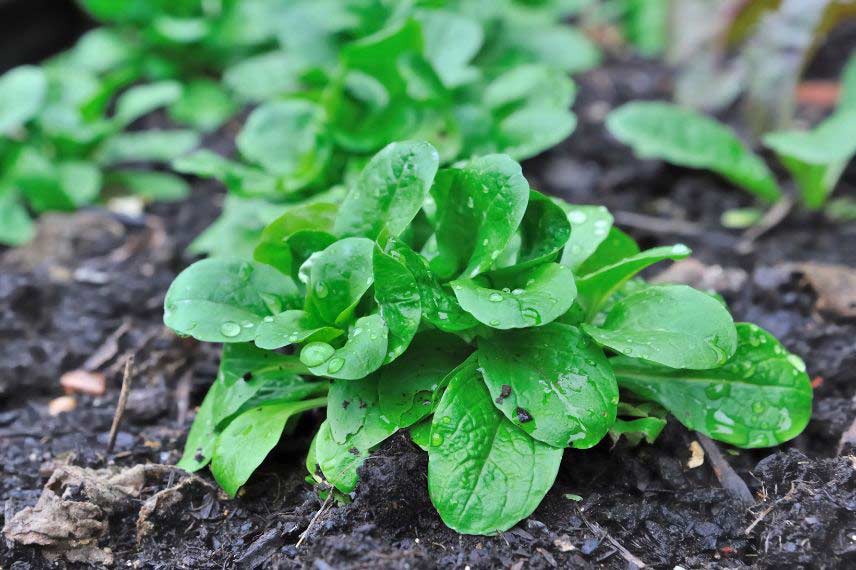
Sow lamb’s lettuce and winter salads
Lawn and various works
The lawn and flowering fallows
- In September, scarifying helps to rejuvenate old lawns and remove a good portion of moss. If your lawn shows signs of weakness, wait for the rain to bring some moisture to the soil and sow some young plant seed.
- If you wish to sow a new lawn, prepare the soil properly and then sow. In September, it will benefit from both the warmth of the soil and the first rains.
- To give a neater appearance to your flower beds, edge the borders using a edging tool.
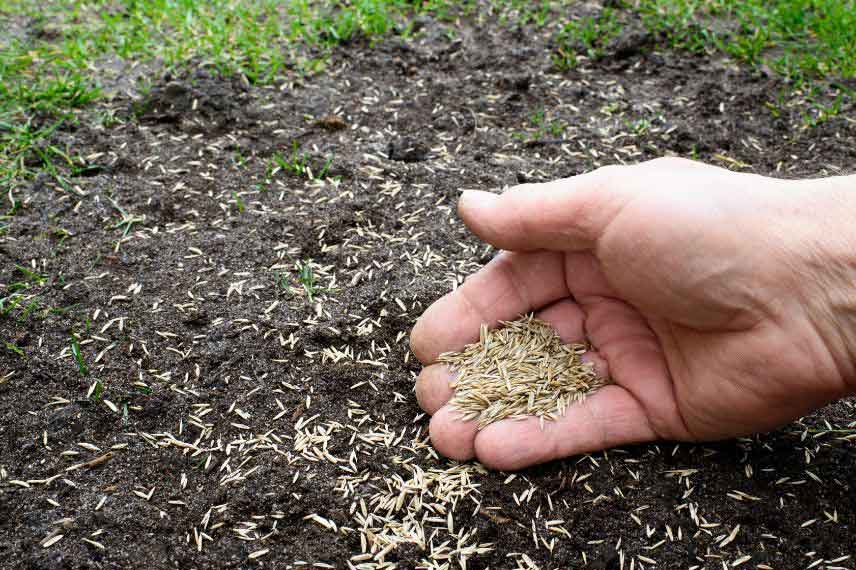 Bare lawns will benefit from a September regrowth.
In the ornamental garden
- When the risk of fire is no longer a concern, clean the neglected or hard-to-reach areas of the garden (banks, undergrowth, etc.) with a brush cutter.
- When the first leaves start to fall, collect them to feed the compost.
By the pond
- Remove the wilted leaves from aquatic plants to prevent them from decomposing in the water.
- If the temperature remains high, regularly oxygenate the water in your pond.

- Subscribe!
- Contents

Comments