





























7 citrus trees to grow in pots
Our selection
Contents
Originating from Southeast Asia, citrus trees have been cultivated for thousands of years and have been hybridised by humans to offer a beautiful diversity today. They are generally considered to be not very hardy and are thought to struggle with temperatures dropping below –5 °C. Growing them in pots provides the dual advantage of protecting them from frost in winter and enjoying their beauty close to our homes, even without a garden: a sunny balcony or courtyard is sufficient!
In addition to their lovely evergreen and glossy foliage and fragrant flowers, their fruits are decorative and add a splash of vibrant colour ranging from yellow to orange. They are, of course, immensely appreciated for their flavours, which vary depending on the varieties you choose to grow. Sweet and sugary, tangy or bitter, sometimes with surprising textures, citrus fruits are generally very rich in vitamin C and possess valuable antioxidant properties.
If you are tempted to grow lemon trees, orange trees, or more unusual citrus trees, discover our selection of 7 citrus trees to grow in pots or in a conservatory.

Calamondin - Citrus madurensis
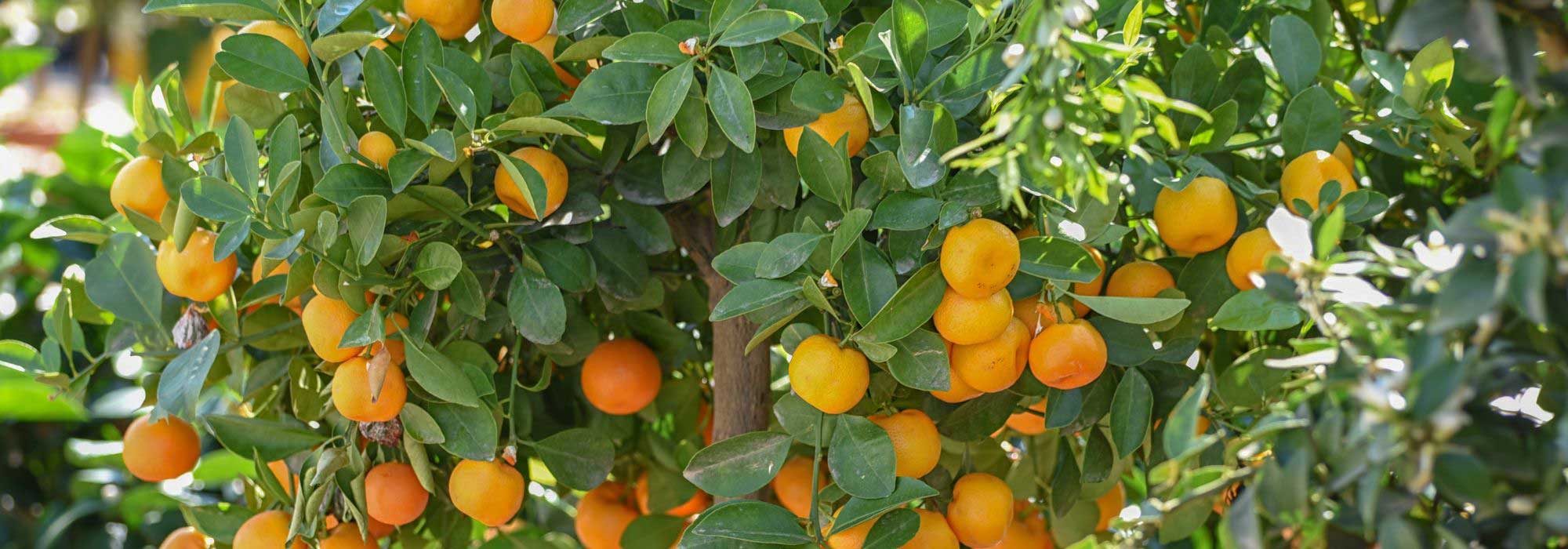
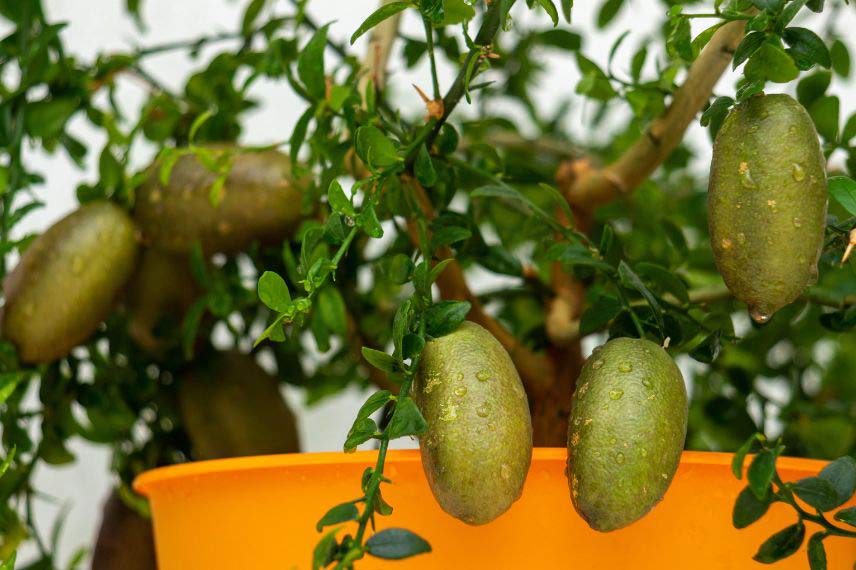
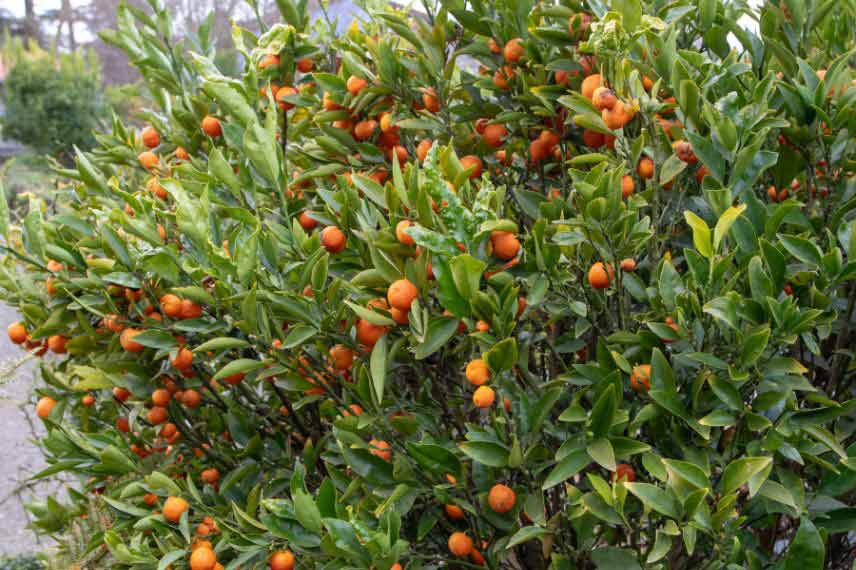
Calamondin or Citrus madurensis is a hybrid of kumquat (Fortunella margarita) and mandarin (Citrus reticulata). Planted in a container on a terrace or balcony, this modest-sized bush will delight with its lovely shape, small dark green evergreen leaves, and fragrant white flowers! Easy to grow in a pot or container, it produces small mandarins 2 to 3 cm in diameter, whose fruity and tangy flavour is wonderful in cooking! Their skin has a sweet taste and a subtle bitter orange aroma. Their juicy, bitter, and tangy pulp contains many pips. Their flavour is reminiscent of bitter orange but more floral and aromatic. Knowing that the Calamondin flowers and fruits all year round (but more abundantly in spring), its small mandarins at different stages of ripeness coexist permanently on the bush alongside its fragrant white flowers.
Not very hardy, Calamondin starts to suffer from cold at -2°C and does not withstand temperatures below -6°C. When planted in a pot, you can winter it in an unheated greenhouse or conservatory, but being the only citrus tree capable of tolerating the dry atmosphere of our heated interiors – which has earned it the nickname of apartment orange tree – you can place it in a bright, cool, and ventilated room. However, care must be taken to provide it with enough water to keep the root ball consistently moist and to regularly mist the leaves.
Finger lime - Microcitrus australasica
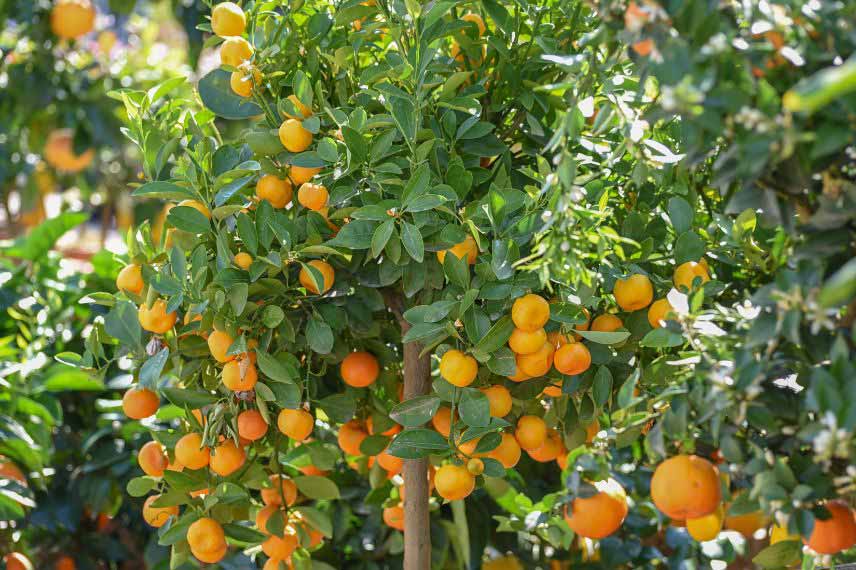
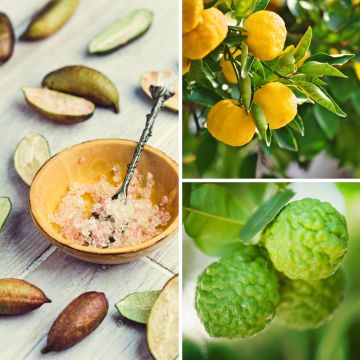
Highly appreciated by chefs, the Caviar Lime, known by its Latin name Microcitrus australasica, is a small Australian lime tree with slender branches that bear</strong tiny leaves, tiny thorns, and green, cylindrical fruits measuring 4 to 8 cm long, harvested from October to December. It is their refined pulp, made up of small, juicy, crunchy beads that is absolutely delicious, which establishes this citrus’s culinary reputation. Caviar limes are self-fertile: there is no need to buy two plants for them to bear fruit.
This delicate citrus is not very hardy, as it is frost-sensitive at -3°C, and should be grown in a substrate that is slightly acidic, always kept moist, in a humid atmosphere; these requirements are easier to meet in a large pot where it will maintain a modest size. Native to the understorey of Australia’s humid forests, it enjoys warm humidity, so in summer, it is important to monitor the moisture of the substrate and water it as often as necessary. It prefers a sunny position, ideally sheltered from cold winds.
Discover our article about this extraordinary citrus: Caviar Lime: a rare little citrus to discover
Discover other Citrus trees
View all →
Available in 0 sizes
Available in 0 sizes
Available in 1 sizes
Available in 2 sizes
Available in 3 sizes
Available in 3 sizes
Available in 1 sizes
Available in 1 sizes
Available in 2 sizes
Available in 3 sizes
Kumquat - Citrus 'Kucle'
Issued from the cross-breeding of the kumquat (Fortunella margarita) and the clementine tree (Citrus clementina), the Kucle, also known as Kucli or Kumquatine, is a vigorous and highly decorative bush, rounded, compact, and thornless, which can easily be grown in a large pot. It produces an abundance of orange fruits resembling large kumquats with a deliciously tangy flavour and a hint of clementine, which can be eaten with the skin. They can be consumed raw, but are also used in savoury or sweet recipes, in jams, candied, or prepared in syrup. It is a self-fertile bush, so a single plant is sufficient to ensure fruiting.
When grown in a large pot, you can winter it in a frost-free environment such as a greenhouse or conservatory, as it only withstands negative temperatures down to -4°C. While it can reach a height of 3 m and a spread of about 1.5 m at maturity, its size will be reduced if grown in a pot, and its growth is medium-paced. It will appreciate a light, fertile substrate, slightly acidic to neutral and non-calcareous. Ensure it remains moist with frequent watering.
Read also
Citrus trees: planting and maintenanceBuddha's Hand - Citrus medica digitata
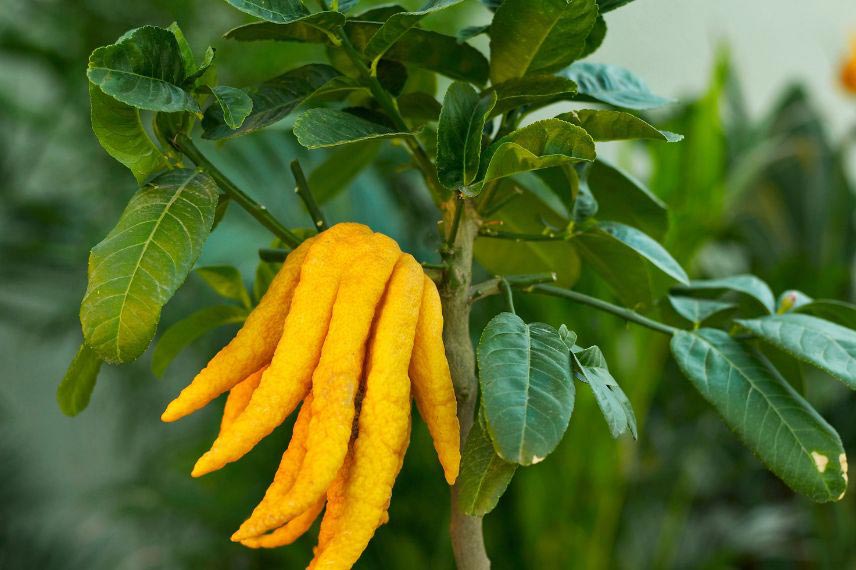
Another citrus tree to grow in a pot, adding a touch of exoticism and originality, is the Buddha’s Hand or Citrus medica digitata. This is a mutation of a citron tree that produces curious fruits, resembling fragmented fingers, evoking a human hand. In open ground cultivation, this small tree reaches a height of 3 m and spreads to about 2 m, but its dimensions in a container will, of course, be reduced. Not very vigorous, it develops into a large spiny bush with a somewhat irregular habit and produces clusters of highly fragrant white or purple flowers early in spring, which quickly turn into fruits. It is mainly the rind of this fruit that is sought after for its extraordinary scent reminiscent of cedar. These large fruits can weigh over 1 kg and measure up to 20 cm in length.
Not very hardy, the Buddha’s Hand citrus perishes below -3°C, which is why, like its relatives, it is best grown in a pot for many years. Provide it with a well-drained, light, and non-calcareous substrate, such as a special citrus compost. For optimal growth, flowering, and fruiting, it should be watered daily with low or non-calcareous water, and its substrate should remain consistently moist.
Yuzu - Citrus junos
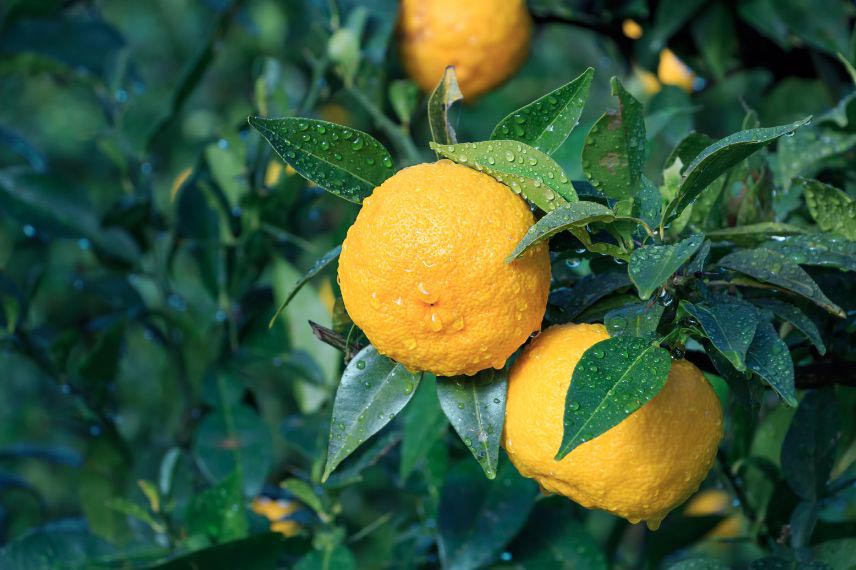
Japanese citrus tree highly valued in cooking for the extraordinary fragrance of its fruit’s peel, which resembles yellow mandarins, the Yuzu or Citrus junos is a self-fertile bush with very thorny branches and slow growth. If you choose to grow this incomparable citrus in a pot for its culinary qualities, be sure not to place it in a high-traffic area to avoid potential injuries from its thorns. The evergreen and aromatic leaves of this citrus are entire, lanceolate, and a beautiful glossy green.
In the ground, the Yuzu or Japanese lemon is a hardy bush down to -10/-12°C in a sheltered position, but it will need increased protection in a pot and should be wintered as soon as negative temperatures appear. It flowers abundantly in March-April on plants at least 4 years old, but it does not necessarily bear fruit every year. It produces small white flowers with a pleasant and slightly peppery fragrance, which give way to fruits that resemble mandarins in size and shape. Their thick skin, green then yellow at ripeness, has a slightly bumpy appearance. The flesh of Yuzu lemons, yellowish and translucent, is filled with numerous pips. Its flavour, very tangy, lies at the crossroads of grapefruit and mandarin, enhanced by subtly spicy notes. Yuzu fruits are harvested from September to November-December, when they are yellow, at which point their concentration of essential oils is at its peak.
→ Also read our advice sheet: Growing Yuzu
Sweet Lemon Tree - Citrus limetta 'Pursha'
The Sweet Lemon ‘Pursha’, also known as Limetta or Sweet Lime of Rome, is a surprising citrus variety, perfect for happily growing on a balcony! It produces from a young agesmall, well-rounded yellow lemon-shaped fruitsthat are completelydevoid of acidity. Their tasty and juicy pulp can be eaten raw, candied, in tagines, or used to flavour stews. This is a moderately vigorous citrus tree with a spreading, rounded habit, both ornamental and useful. Thevery beautiful flowering of the Sweet Lemon ‘Pursha’ is fragrant and abundant, extending from spring to autumn. The young shoots are tinged with purple, then take on a greyer hue with age. They bear rounded leaves, 5 to 10 cm long and 3 to 4 cm wide, in an elegant dark green.
Plant the Limetta in a pot to enjoy its ornamental aspect and bring it indoors for the winter. Like allcitrus trees, it is a full sun plant that requiresplenty of light and warmth. TheSweet Lemon ‘Pursha’ prefers well-draining, sandy, rich, cool, non-calcareous soils. When grown in a pot, it should be repotted every three to four years. It does not like drought and will need fairly frequent watering in summer. In fact, it is these waterings combined with regular fertilisations that will ensure a good harvest.
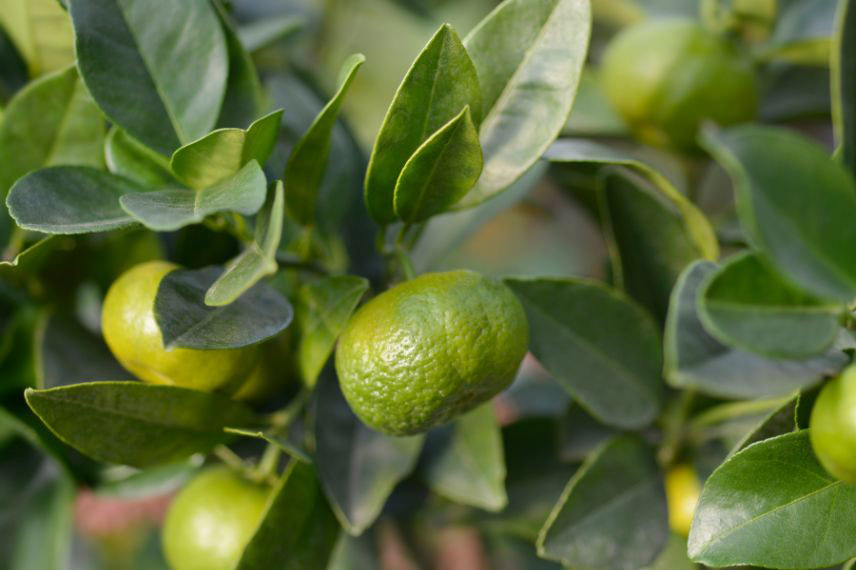
Kaffir lime - Citrus hystrix
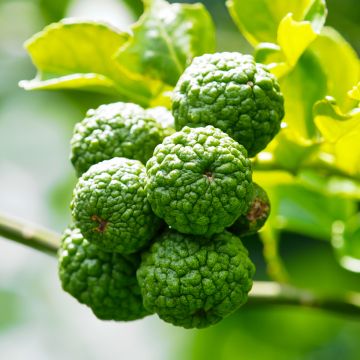
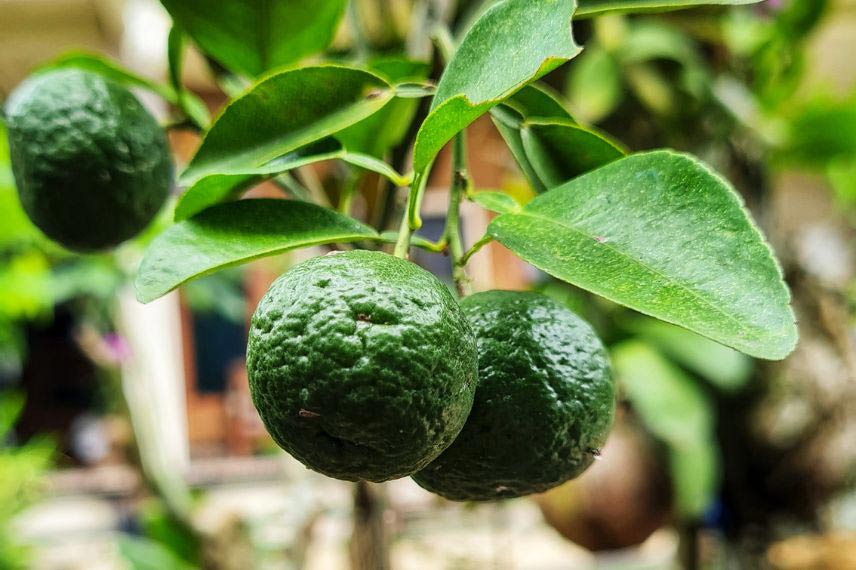
Very fruit-bearing, the Combawa or Citrus hystrix is a beautiful fruit bush to grow close to a home. A sunny balcony, a terrace, or a courtyard enjoying the sun’s rays, and this citrus tree is ready to offer you its wonderful qualities throughout the year! Its abundant spring flowering with small pale pink flowers sometimes continues into late summer, and it produces limes of 6 cm in diameter, with a bumpy bark, that reach ripeness between September and November. These highly fragrant fruits are used in perfumery as well as in cooking, but the evergreen, aromatic leaves, with a sharp, spicy flavour, also add a very subtle hint of lemongrass to the dishes they enhance.
Also known as Thorny Lime, Wild Lime, Makrut Lime, or Reunion Green Lime, the Combawa is a large bush that is more or less thorny with a rather upright bushy habit. Plant it in a lovely pot with a soil specially formulated to ensure it has good growth and abundant fruiting. Remember that, like other citrus trees, it needs regular water and fertilisation.

- Subscribe!
- Contents
![[plant category="citrus trees" location="pot or container"]Selection of citrus trees to plant in a pot or container[/plant]](https://en.promessedefleurs.eu/blogwp/wp-content/uploads/2023/02/7-agrumes-a-cultiver-en-pot.png "7 citrus trees to grow in pots")
Comments