





























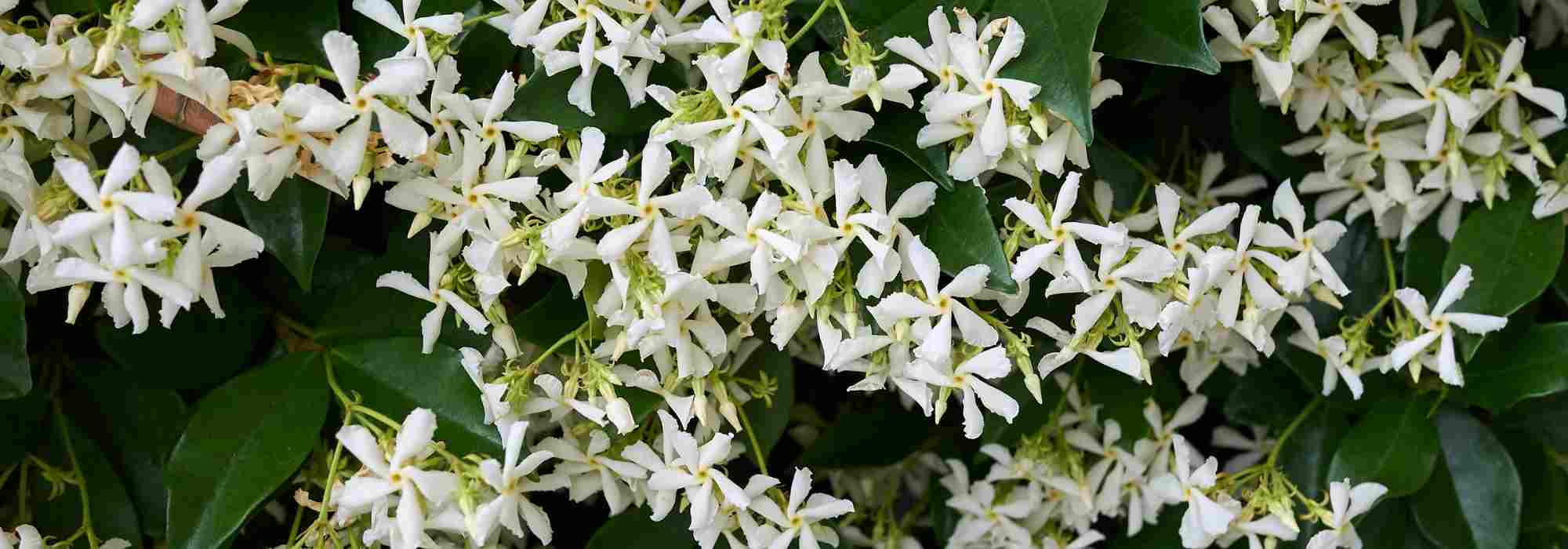
8 climbing plants with early summer flowering
Discover 8 voluble varieties for summer flowering
Contents
The climbing plants that flower in early summer delight the garden or balcony with their soft or vibrant flowers. They take over from perennials and spring bulbs, extending the flowering season without interruption. Moreover, climbing plants gracefully adorn a wall, pergola, fence, balcony, the facade of a house, or even a bare old tree. They can even sometimes beautifully cover the ground of a bank or the base of trees.
Discover our selection of 8 climbing plants that flower in early summer, to admire without moderation.
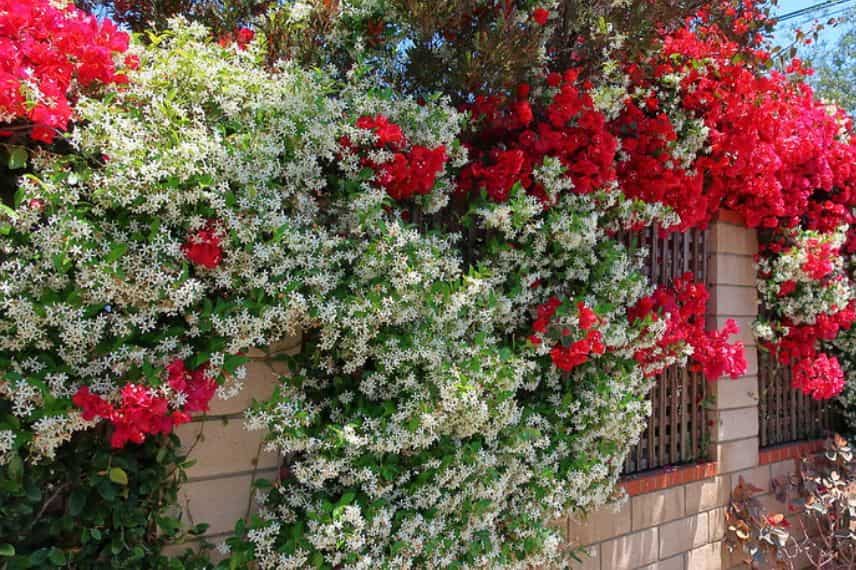
The white flowers of star jasmine pair wonderfully with the red flowering of a bougainvillea

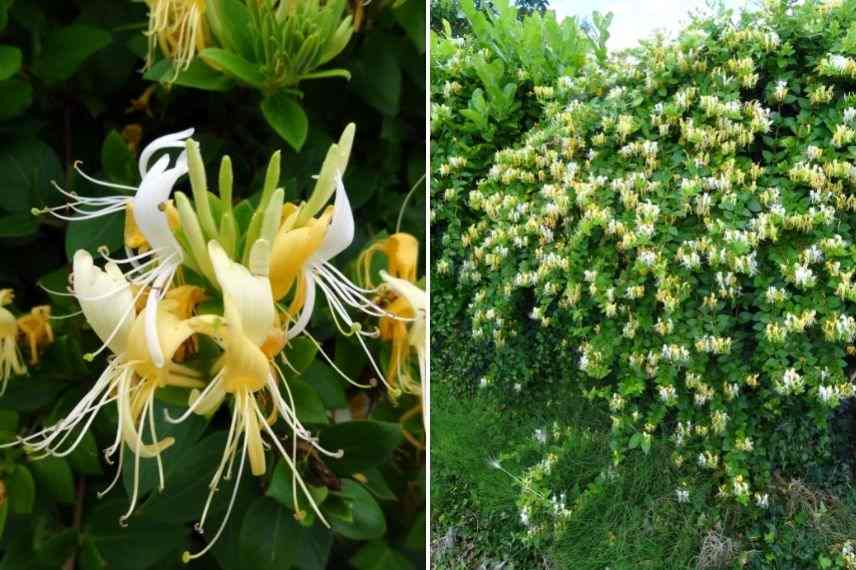
Japanese honeysuckle 'Halliana'
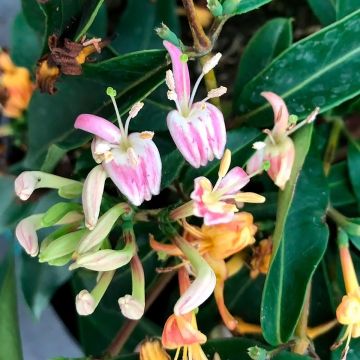
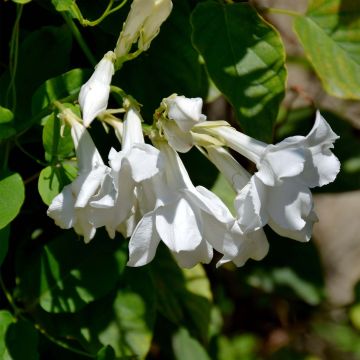
With its highly fragrant flowering, Lonicera japonica ‘Halliana’ fills the garden with scent from June onwards. Its delicate flowers open white, then turn a bright cream yellow, adding a touch of freshness to the garden. They continue to bloom until September, or even October depending on the region. Easy to grow, this vigorous honeysuckle enjoys both sun and partial shade. In regions with very hot summers, it will prefer a partially shaded position or at least have its base in the shade. Its climbing stems can reach lengths of 5 to 10 m depending on the richness of the soil. It is best reserved for large spaces, such as against a trellis on a house facade or a tall wall, but also on a slope as a natural groundcover.
It can be paired with other climbers, such as the variegated Virginia creeper ‘Star Shower’ to create a beautiful contrast between their different foliage. The cream-white flowers of this honeysuckle will also complement the yellow roses of the David Austin English rose ‘Malvern Hills’. In Mediterranean areas, the orange flowers of a bignonia (Campsis grandiflora) will also create a harmonious combination.
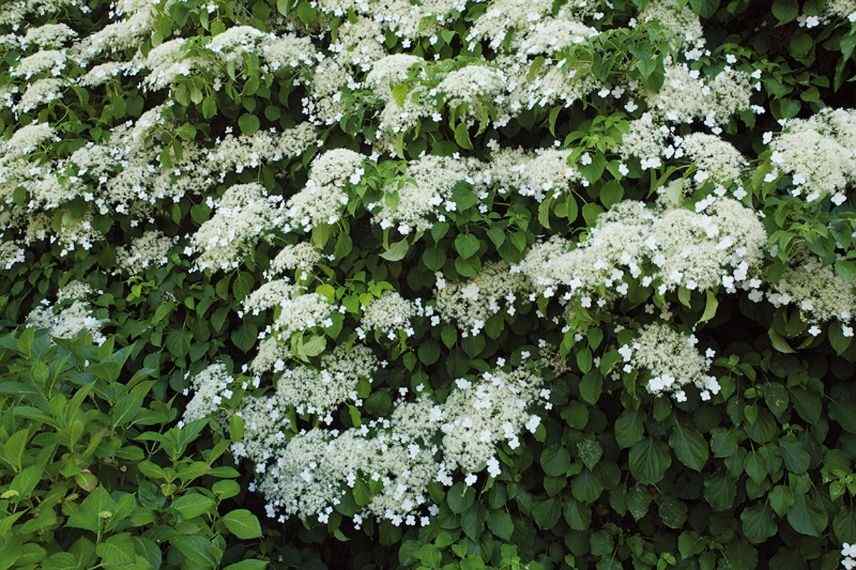
Hydrangea petiolaris
The Hydrangea petiolaris is a vigorous climbing hydrangea from Asia. Its airy flowering begins in early June and lasts until mid-summer. It then produces large, flat white umbels, measuring up to 20 cm in diameter, resembling small parasols. Its flowers exude a light yet sweet fragrance. This climbing bush enjoys a semi-shaded or shaded position. In fact, it is one of the few climbing plants that flowers when planted in the shade. Its stems are equipped with climbing roots that allow it to ascend a facade, a dead tree, or a wall on its own. Low-maintenance, it also makes a lovely groundcover, particularly on a mound or at the base of dense trees.
In partial shade, it can be paired with annual climbers such as sweet peas or ipomoeas. For a north-facing position, plant shade-loving perennials at its base, such as Lady’s mantle, a bushy fuchsia, hostas, or a Geranium macrorrhizum.
Discover other Summer flowering climbers
View all →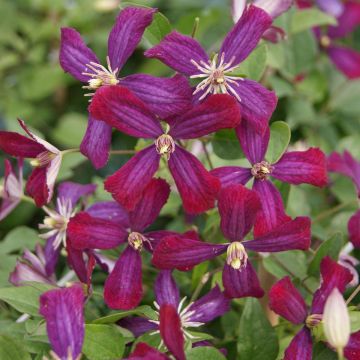
Available in 1 sizes
Available in 0 sizes
Available in 2 sizes
Available in 1 sizes

Available in 2 sizes
Available in 1 sizes
Available in 1 sizes
Available in 1 sizes
Available in 1 sizes
Available in 1 sizes
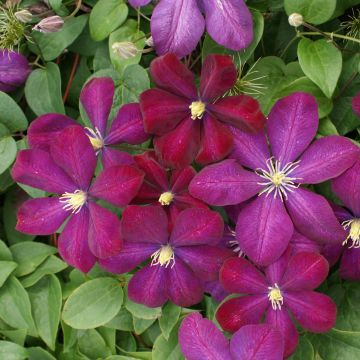
Clematis viticella 'Prince Charles'
The Clematis viticella ‘Prince Charles’ is a highly valued variety for its abundant flowering from June to September. Its flowers, satin blue mauve with yellow stamens, almost completely cover its dense foliage. Both vigorous and compact, this clematis can be grown in pots or in the ground, in full sun or light shade. However, like all clematis, it will need its roots in the shade and should be planted in well-drained soil.
Clematis pairs wonderfully with climbing roses or lianas, such as the David Austin rose ‘James Galway’ for its old rose fragrance. To bring a touch of freshness, combine them with the white flowers of a climbing rose ‘Iceberg’ or with a jasmine.
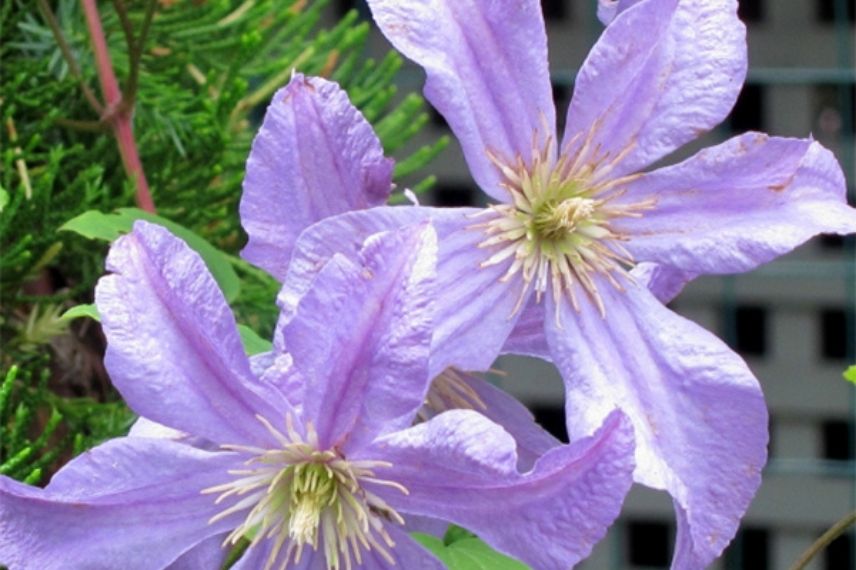
Star jasmine
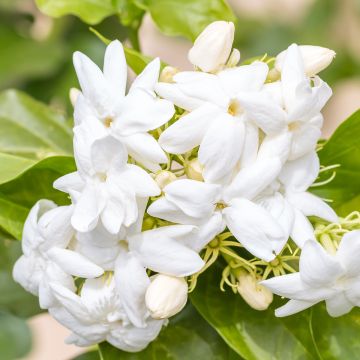
Trachelospermum jasminoides, commonly known as Star Jasmine or False Jasmine, is a climbing plant of Chinese origin and a relative of periwinkles. It is valued for its small, fragrant white flowers, which scent a corner of the garden from June to July. Its evergreen, glossy foliage is decorative even in winter. Vigorous, this voluble plant enjoys all exposures but will be more floriferous in full sun. Hardy down to -12 °C, the star jasmine can be grown in open ground, even north of the Loire, as long as it is sheltered from cold winds. In regions with harsh winters, it should be planted in a pot and brought indoors during winter. Its stems will climb any type of support, such as a pergola, fence, or trellis against a wall, and it can also be used as a groundcover.
The False Jasmine will appreciate the company of other climbing perennials, such as clematis for its large flowers, and honeysuckle for its intoxicating fragrance. In mild climates, it can be paired with a Solanum, a bougainvillea, or a trumpet vine.
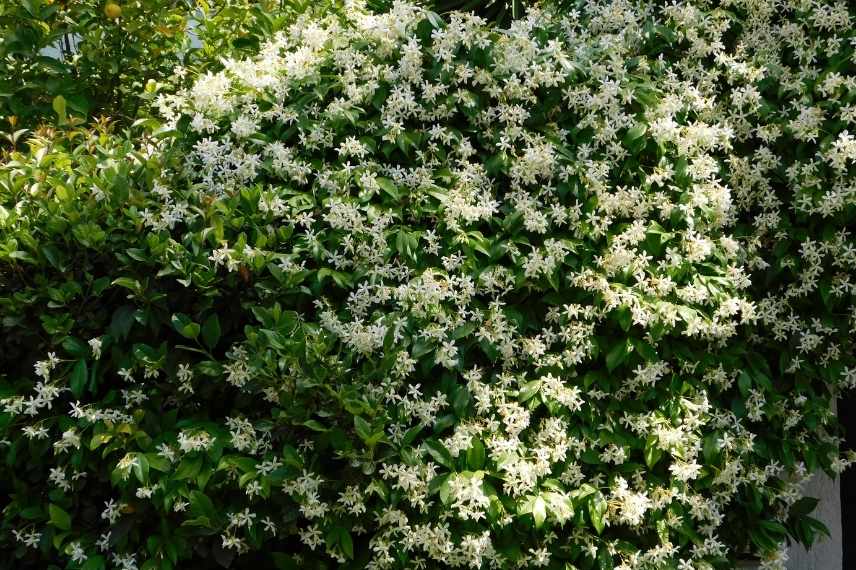
The star jasmine can thrive in partially shaded areas
Campsis 'Atropurpurea'
The Campsis radicans ‘Atropurpurea’ is a lovely variety of Trumpet Vine, with trumpet-shaped flowers in a deep red-purple colour. Its charming colourful flowering extends from June until the end of summer. It also features magnificent deciduous foliage, dark green, both dentate and lobed. Easy to grow, this Virginia Trumpet Vine has good resistance to diseases, heat, and drought once well established. It enjoys being grown in full sun in regions with mild or oceanic climates but prefers partial shade in the Mediterranean area. Elsewhere, it will thrive in a pot or container during winter. Provide it with a support against a wall, an old dead tree, a pergola, trellis, or fence that it can climb on its own.
The colourful flowers of the ‘Atropurpurea’ Trumpet Vine will pair beautifully with the original and exotic blooms of a Holboellia coriacea, an Akebia quinata ‘Silver Bells’, an Actinidia kolomikta, or a Clematis ‘Blue Angel’.
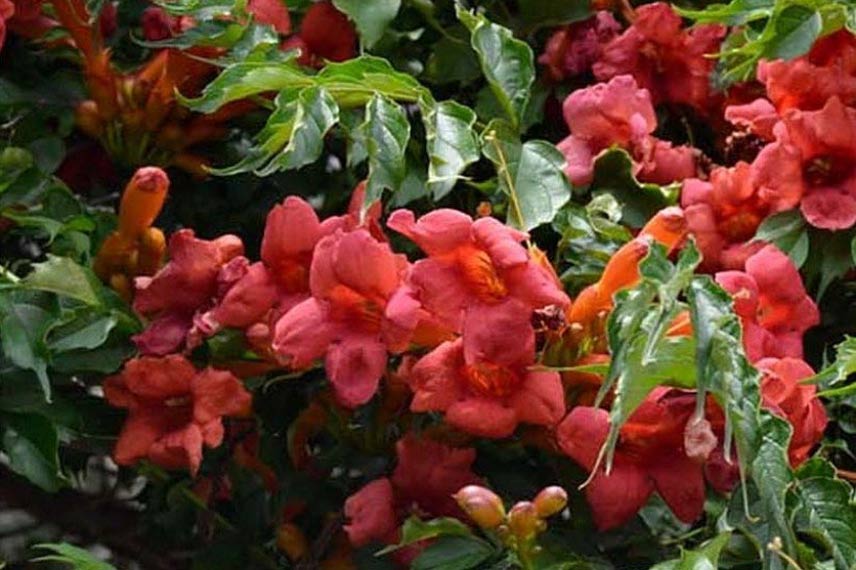
the Trumpet Vine – Campsis radicans ‘Atropurpurea’
Black-eyed Susan
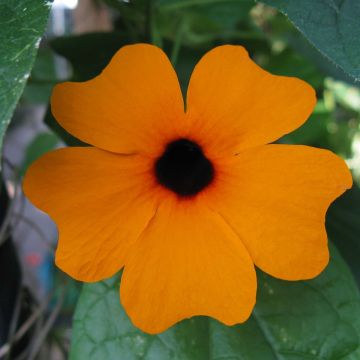
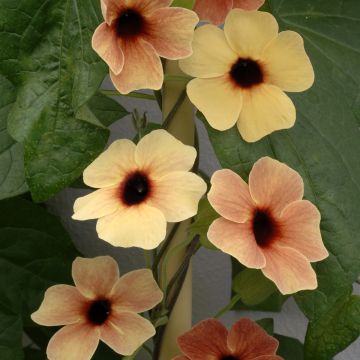
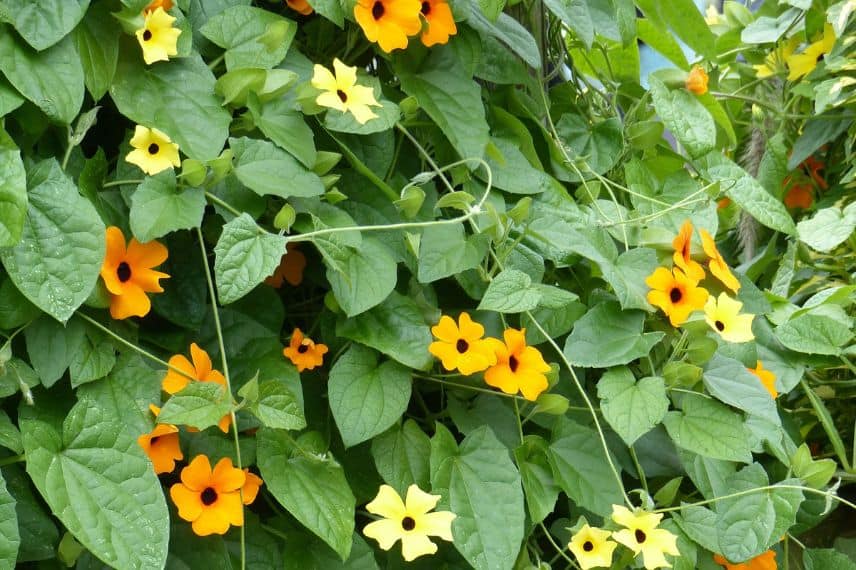
Thunbergia alata, commonly known as Black-eyed Susan, is an attractive climbing plant with summer flowering. Native to Africa, this beautiful perennial is grown here as an annual. Its yellow or orange flowers feature a deep black centre, creating a lovely contrast and relief! Its voluble growth allows it to climb quickly on its support, reaching heights of up to 2 m. It decorates the garden beautifully, as well as terraces and balconies when grown in pots. The Black-eyed Susan enjoys a sunny or semi-shaded position.
In the garden, it loves to twine around the stems of gladioli, Heleniums, or Echinaceas. Left free and on the ground, the Black-eyed Susan will form a lovely flowering carpet, which can be matched with nasturtiums.
Schizophragma hydrangeoides 'Rose Sensation'
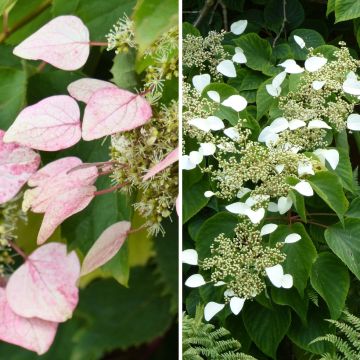
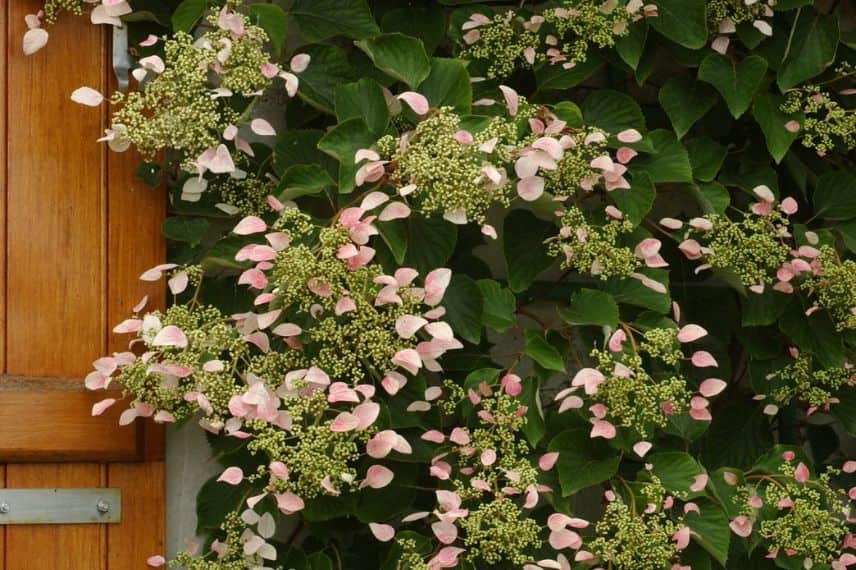
The Schizophragma hydrangeoides ‘Rose Sensation‘ is a climbing bush that offers a delightful flowering at the beginning of summer lasting 3 weeks. Its flowers, gathered in flat umbels, first bloom cream white, then turn a soft pink at the end of flowering. Their shapes resemble those of climbing hydrangeas, earning it the nickname Japanese Hydrangea. Like them, it can climb a wall on its own using its climbing roots or spread across the ground on a slope and at the base of trees. This Schizophragma ‘Roseum’ enjoys partial shade and shade, as well as rich, clayey, slightly moist but well-drained soil.
To create a beautiful harmony, plant hydrangeas at the base of the Schizophragma for their familiar inflorescences. It can also be paired with the beautiful foliage of ivy for a lovely contrast.
Passiflora caerulea
Passiflora caerulea is also known as the “blue passion flower” due to its stunning pale blue mauve flowers. Its beautiful, lightly scented flowering occurs in early summer, around June-July depending on the region. This passion flower is hardy down to -12 °C once well established, making it the most robust variety among passion flowers. Additionally, it tolerates summer drought very well once mature. Well acclimatised to southern regions, it will also adapt to the north of the Loire if planted sheltered from the winds and its stump is protected during winter. Its flexible, voluble stems can quickly reach 7 m in height, taking over any support. In the Midi, it can even become somewhat invasive.
In the garden, it can be paired with other flowering climbers, such as wisteria for its beautiful floral clusters or a Clematis terniflora to extend the flowering period.
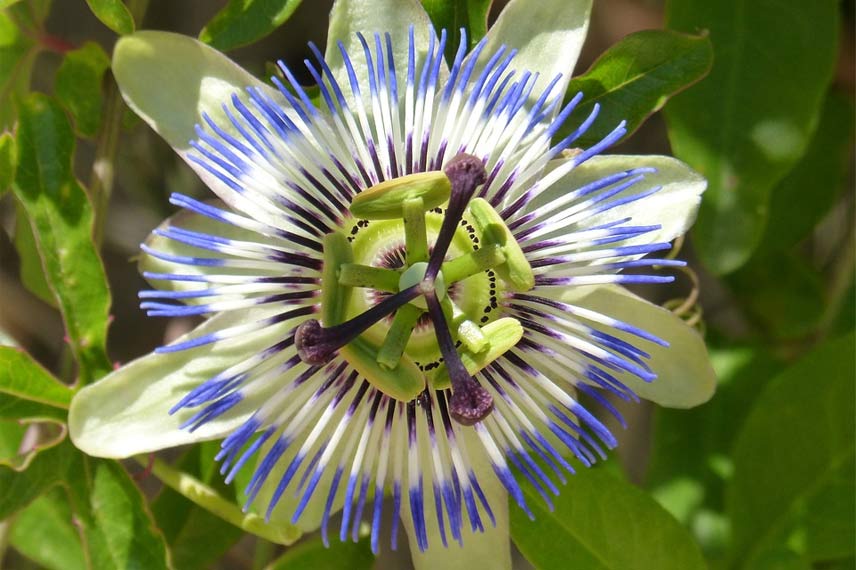
The flower of the Passiflora caerulea
- Subscribe!
- Contents

Comments