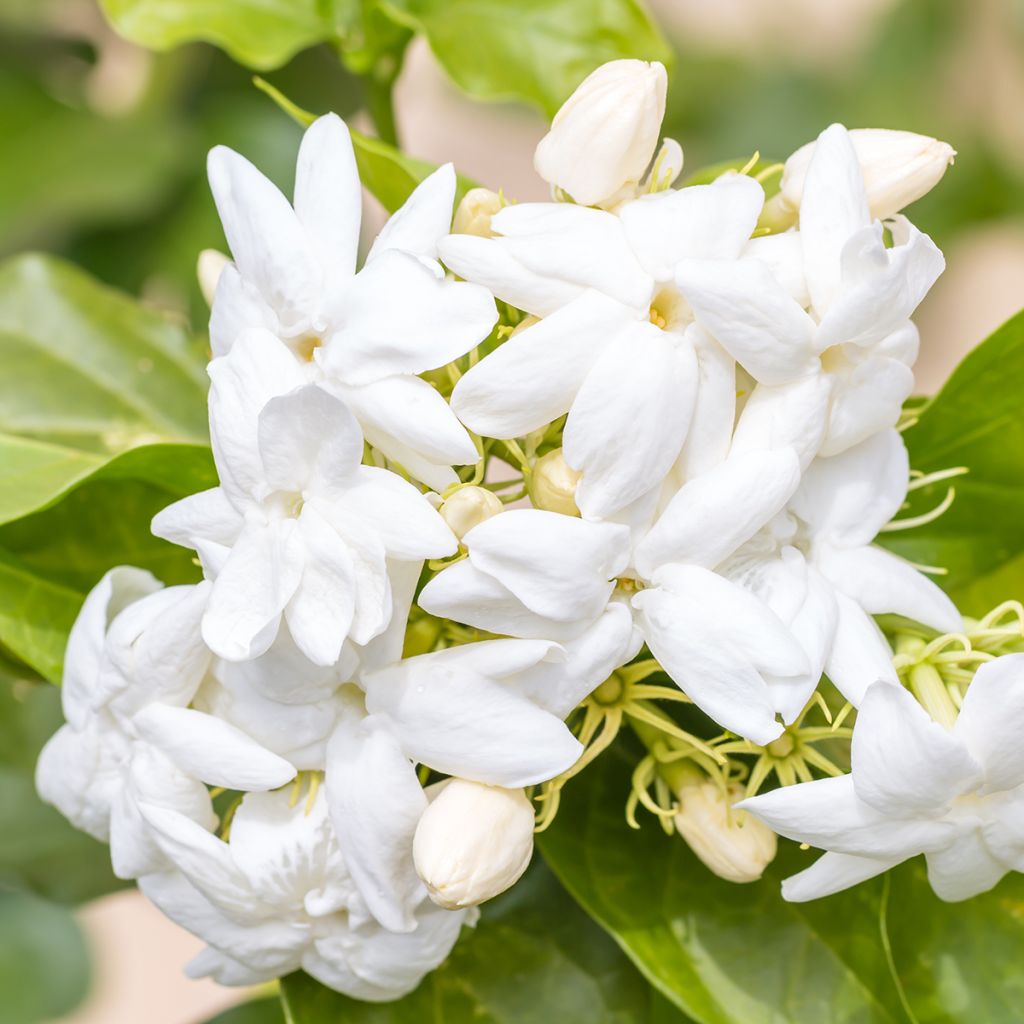
Jasminum sambac - Arabian Jasmine
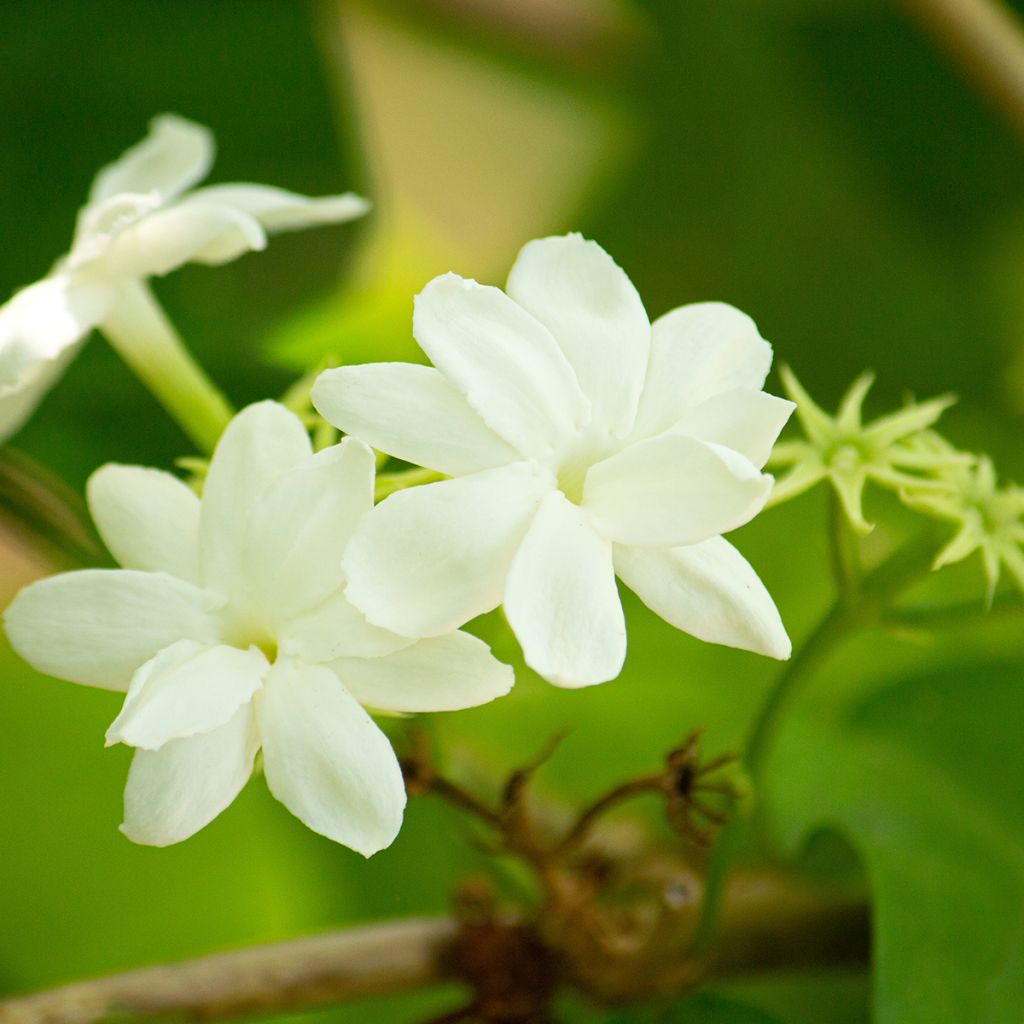
Jasminum sambac - Arabian Jasmine
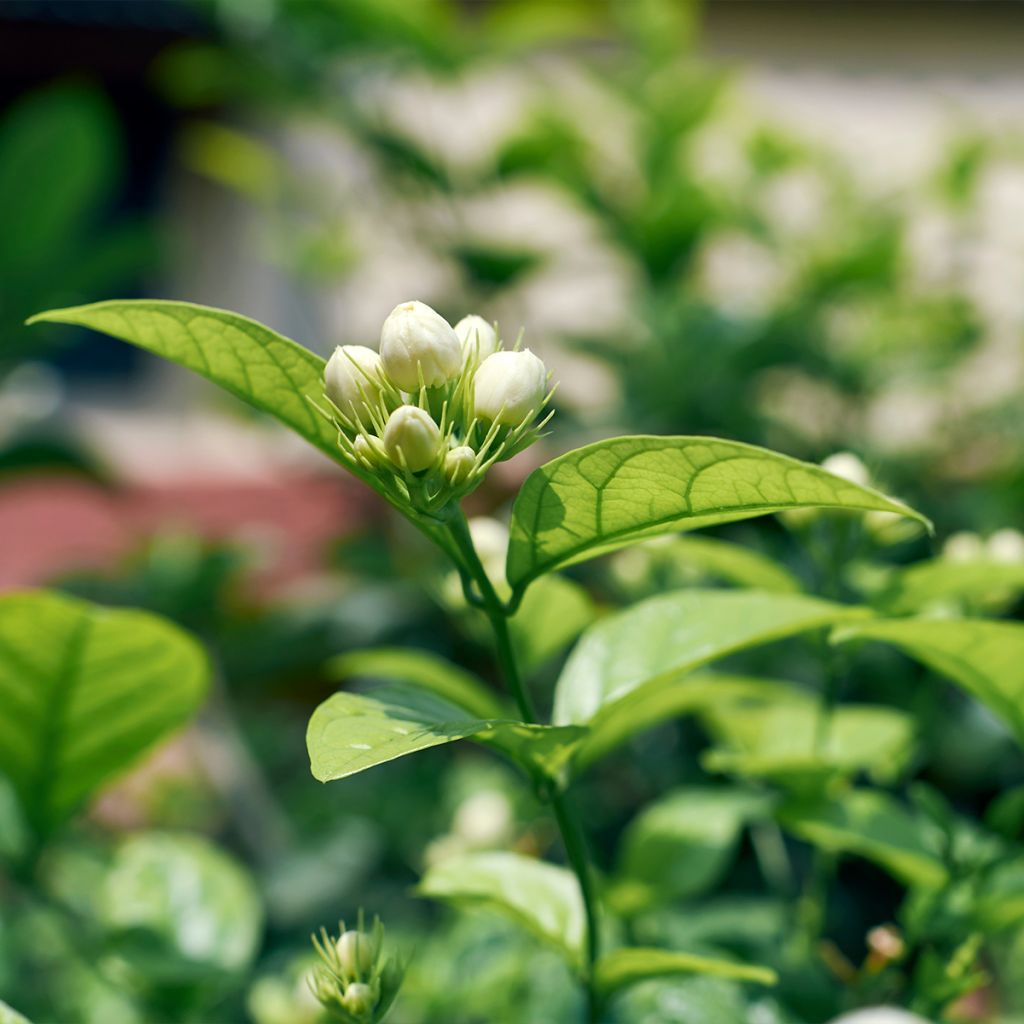
Jasminum sambac - Arabian Jasmine
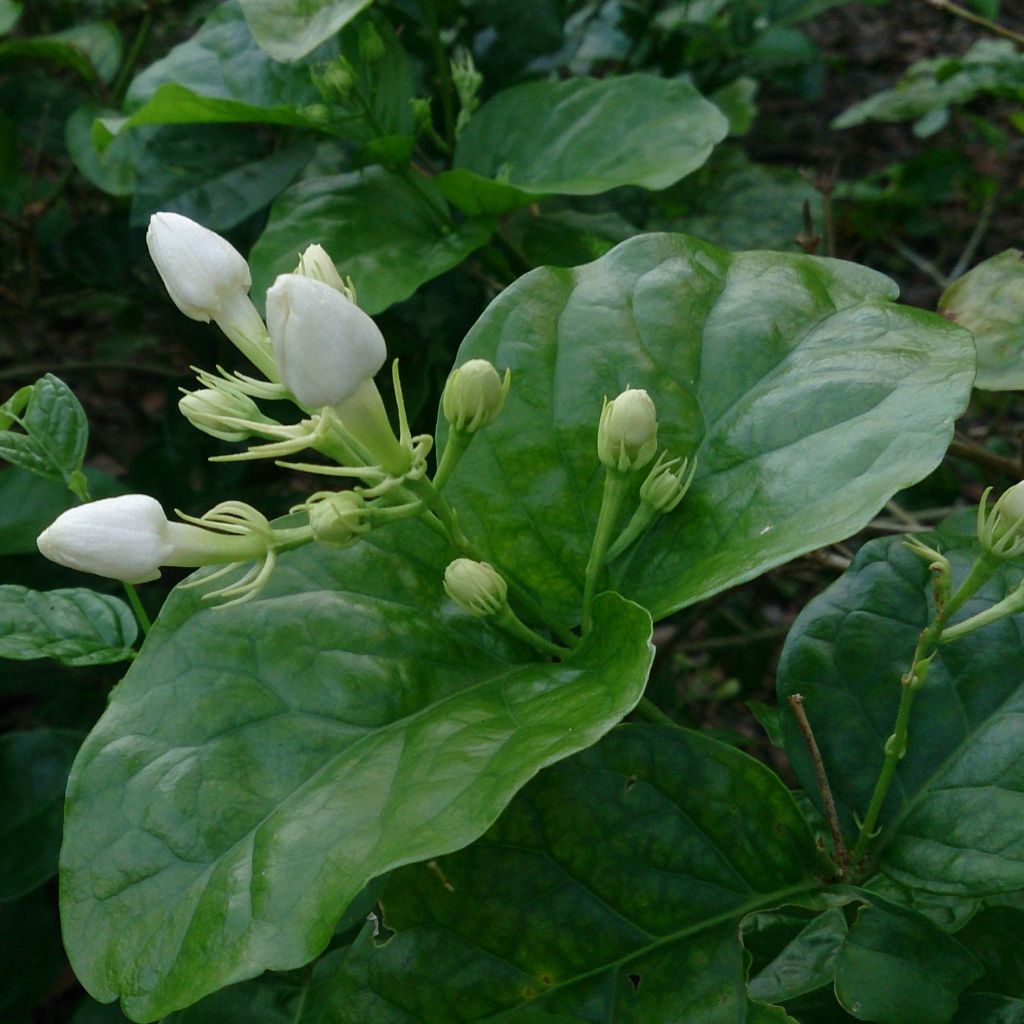
Jasminum sambac - Arabian Jasmine
Jasminum sambac - Arabian Jasmine
Jasminum sambac - Arabian Jasmine
Jasminum sambac - Arabian Jasmine
Jasminum sambac
Arabian Jasmine, Sambac Jasmine
Disappointed. Instead of a plant, I received a stake with a few stems without roots attached to it. This is not the gift I wanted to give.
Christophe , 16/10/2025
Back-to-school special offer!
Get €10 off for every €50 you spend! And get up to €40 off on a single order.
How does it work?
1. Shop your favourites
Add your favourite plants to your basket. For every €50 you spend (excluding delivery charges, store credit and the plastic-free option), you’ll receive a €10 voucher.
€50 spent = €10 voucher
€100 spent = €20 voucher
€150 spent = €30 voucher
€200 spent = €40 voucher
2. Place your order
Once your basket reaches one of the spending thresholds, place your order. You can even choose your delivery date!
3. Receive your voucher
As soon as your order has been shipped, you’ll receive an email containing your personal voucher code and its value.
4. Use it on your next order
Your voucher is valid for 90 days from the date you receive it. It can be used once only, on a new order worth at least the value of the voucher, excluding delivery charges.
Please note: Vouchers can be combined with other offers, but cannot be split or refunded.
Home or relay delivery (depending on size and destination)
Important: You may be charged customs duties by your country’s customs authorities upon delivery.
Schedule delivery date,
and select date in basket
This plant carries a 12 months recovery warranty
More information
We guarantee the quality of our plants for a full growing cycle, and will replace at our expense any plant that fails to recover under normal climatic and planting conditions.

Would this plant suit my garden?
Set up your Plantfit profile →
Description
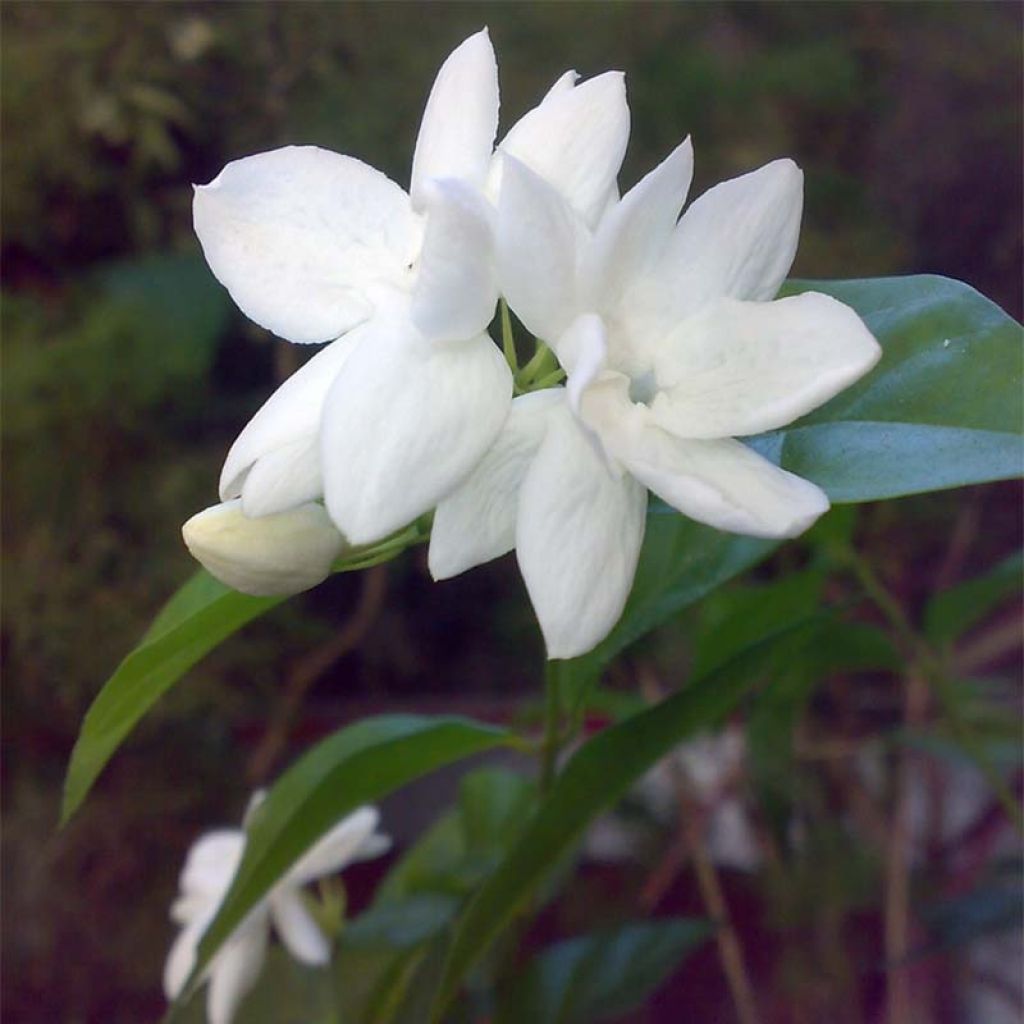
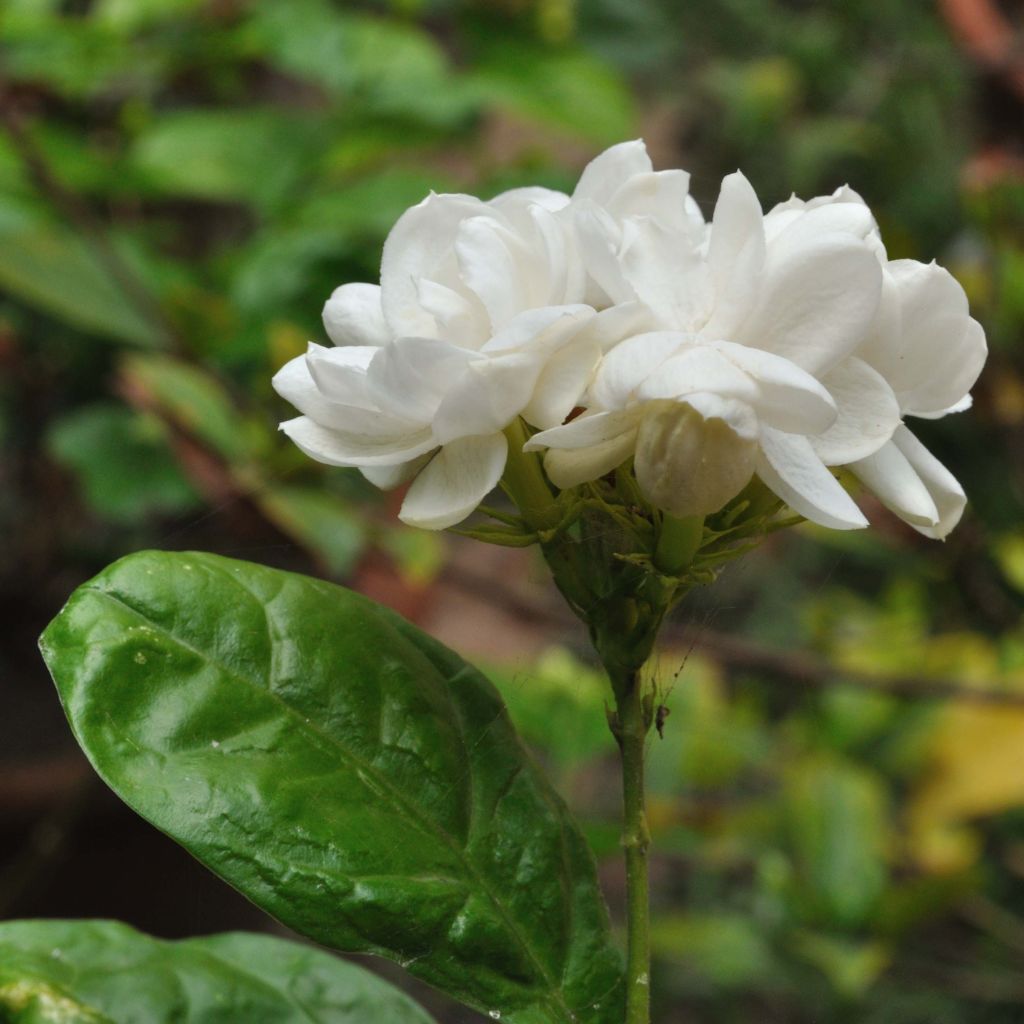
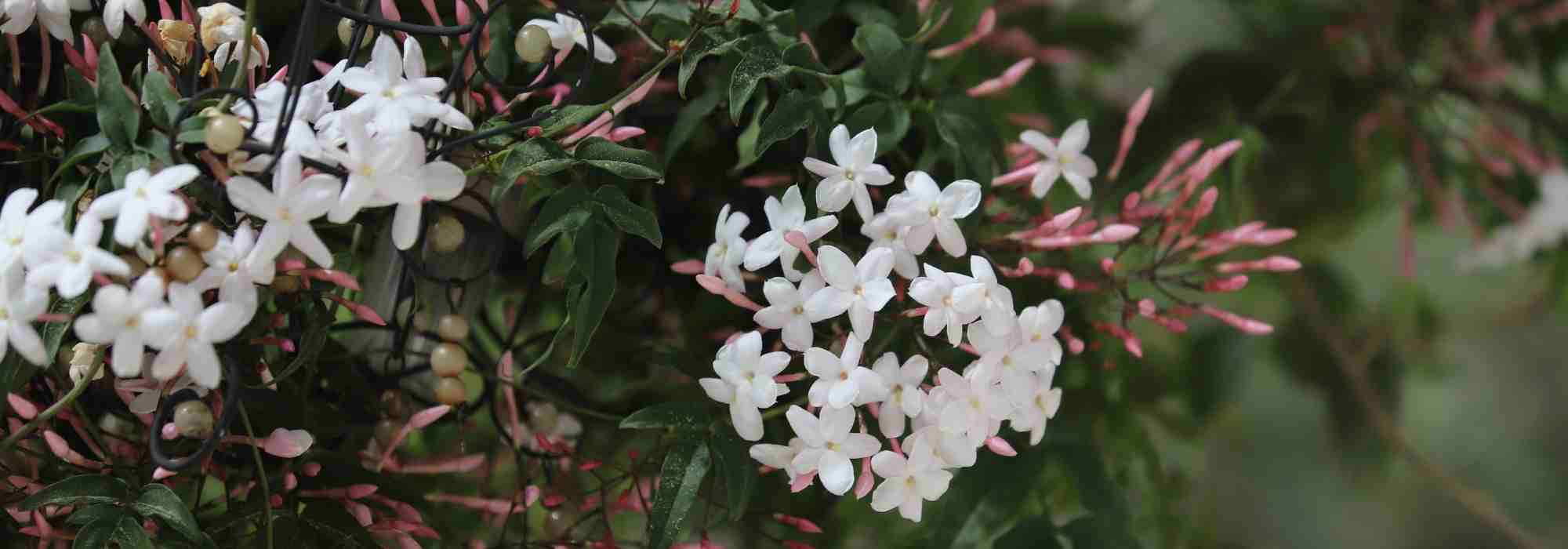
If the Jasminum sambac is better known as the Arabian Jasmine, it is undoubtedly due to the heady fragrance of its large white flowers, evoking all the warmth and sensuality of the Arabian Nights. Its origins are actually found in the Indian Himalayas, more precisely in Kashmir. And it is in China that its flowers are traditionally used to perfume the famous jasmine green tea with their extraordinary aroma. It is a tender bush, whose long climbing stems, unable to cling to a support on their own, must be trained. With its elegant dark green foliage, this mythical plant is capable of flowering almost all year round in a greenhouse or conservatory. In France, under favorable conditions, it retains its foliage in winter and blooms in open ground throughout the summer, perfuming a whole area of the garden or even a large terrace on summer evenings.
The Jasminum sambac belongs to the Oleaceae family. This botanical species is likely native to the valleys of Northeast India, which are governed by a subtropical climate. Not very hardy, perfectly adapted to the mildest Mediterranean climates, this jasmine is capable of regrowing from the stump after experiencing a brief frost of around -5°C (23°F), but at the expense of its appearance and flowering. It was probably introduced to Egypt in ancient times before spreading in cultivation to the hot regions of the Mediterranean basin.
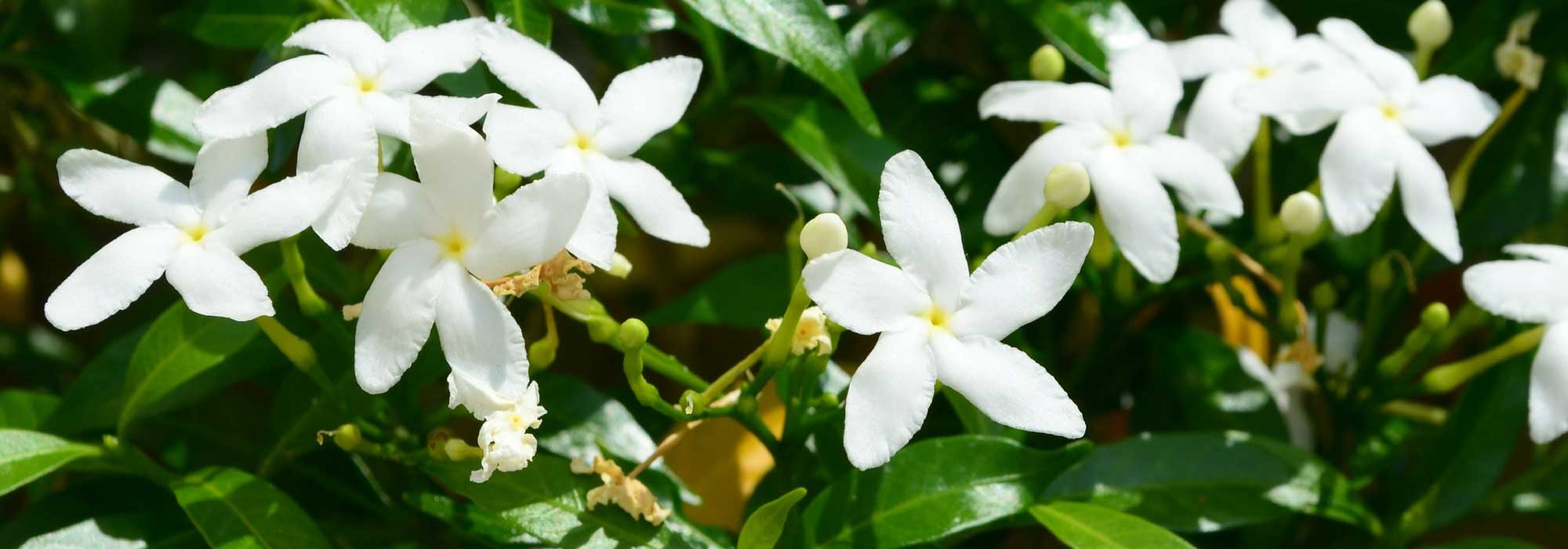
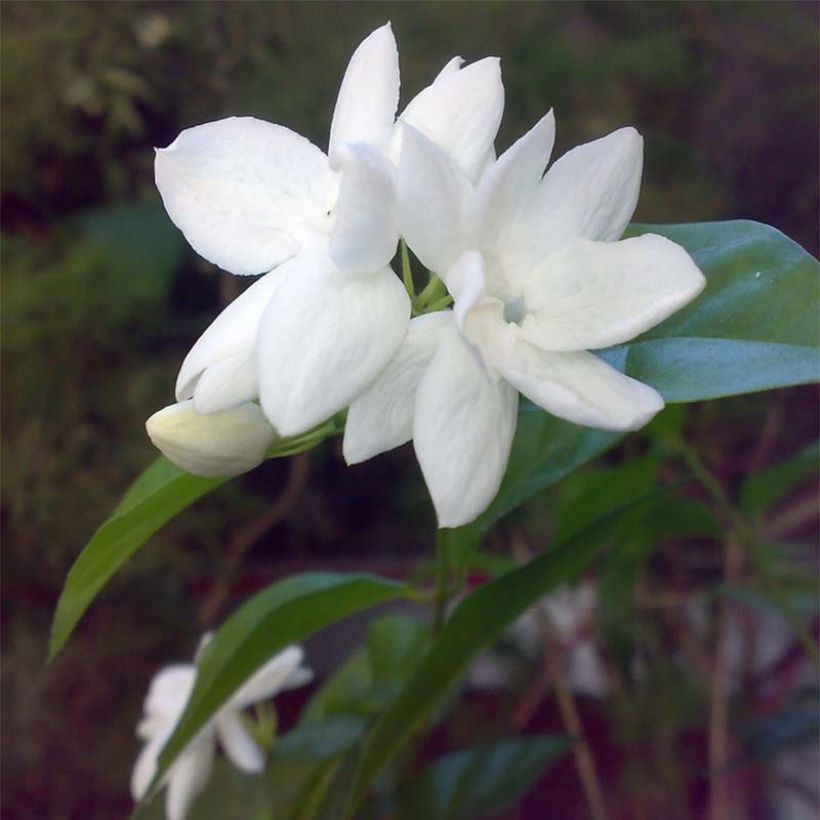
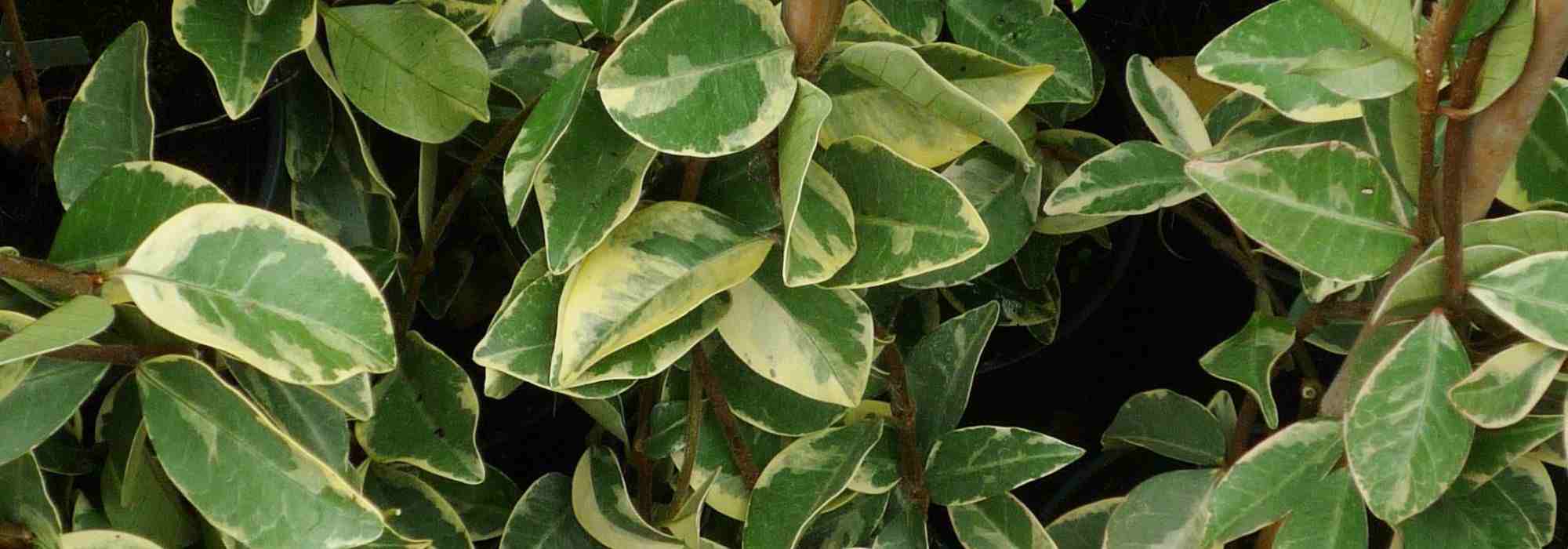
This climbing bush will reach a height of about 2.50 m (8ft) to 3 m (10ft) in open ground under favorable conditions and will spread over 1 to 2 m (3 to 7ft). Its growth is rapid. In a container, its dimensions will remain much more modest. The flowering is long in cool soil and hot climate, lasting for at least three months from June to September, and then more sporadically throughout the year. The plant produces many clusters of 3 to 12 flowers with a diameter of 3 cm (1in), mainly at the end of the stems. Each flower is composed of a tube opening into 5 to 9 lobes, giving them a more or less double appearance. Their fragrance, both powerful, subtle, and complex, is recognizable among all. The vegetation of this jasmine consists of long flexible and supple stems that weave their way between the branches of neighboring plants. They are not twining and have no attachment system. The foliage persists more or less in winter; it consists of large elliptical leaves of variable size (up to 9 cm (4in) long and 6 cm (2in) wide), shiny dark green, grouped in threes. The stems become woody and light brown with age, devoid of leaves. The fruit is a round berry, black when ripe, with a diameter of 6 mm (0in).
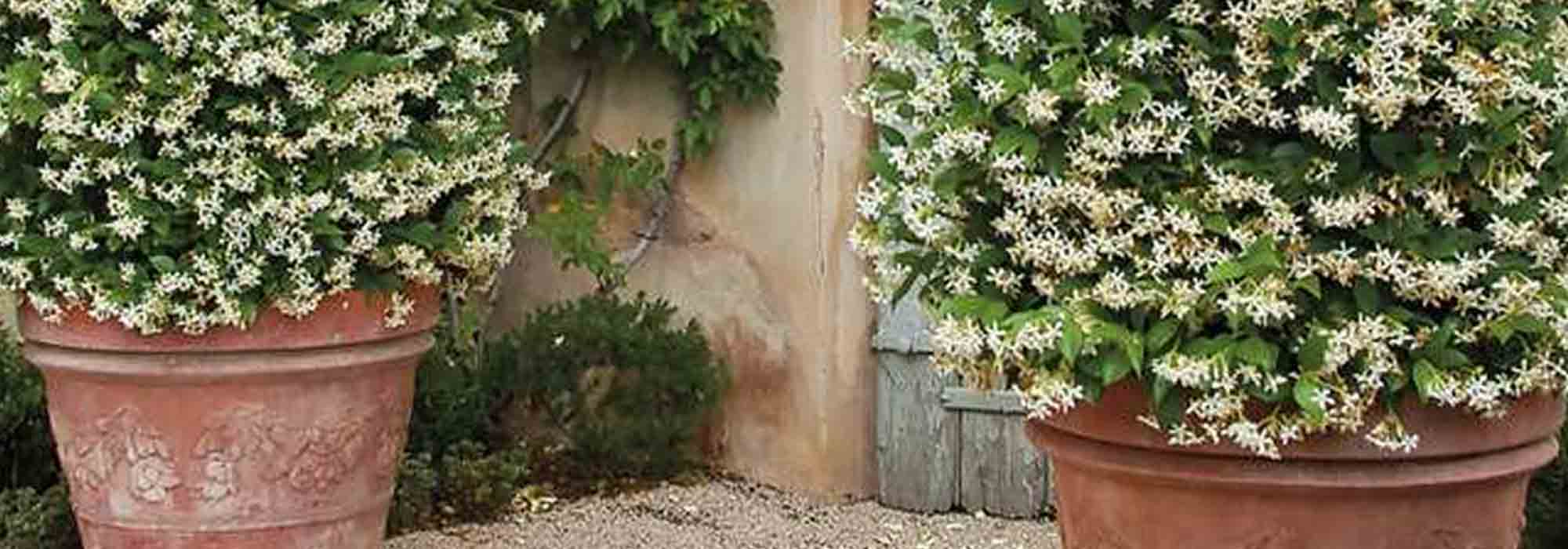
In suitable climates, the Jasmin Sambac will climb the surrounding bushes, creating a surprising hedge, or can be trained on trellises, arches, pergolas, stair railings, or balconies. In all our regions, plant it in a container on a terrace so that it can be stored indoors during winter and to fully enjoy its wonderful fragrance. However, avoid placing it near a bedroom with an open window; some claim that its scent disrupts sleep and can cause headaches. For example, it can be associated, in open ground or in a pot on the terrace, with another climbing plant with a different flowering time, such as Clematis cirrhosa, Jasminum nudiflorum, or Ampelaster carolinianus.
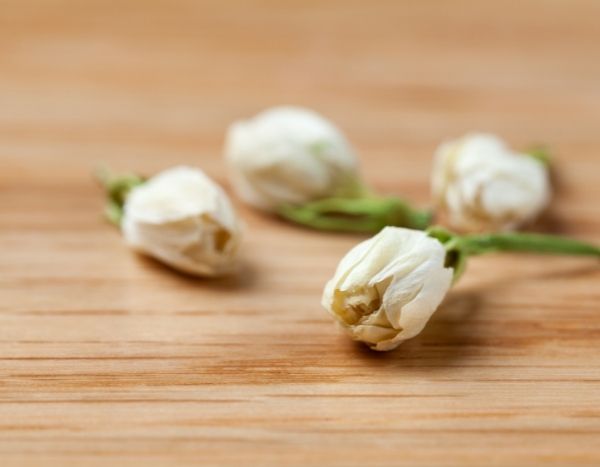
Its highly fragrant flowers are used in perfumery, to scent tea, and are included in traditional remedies in Asia. The essential oil extracted from them is used both in perfumery and in cooking. The Jasmin Sambac is the national flower of Indonesia and the Philippines.
Jasminum sambac - Arabian Jasmine in pictures
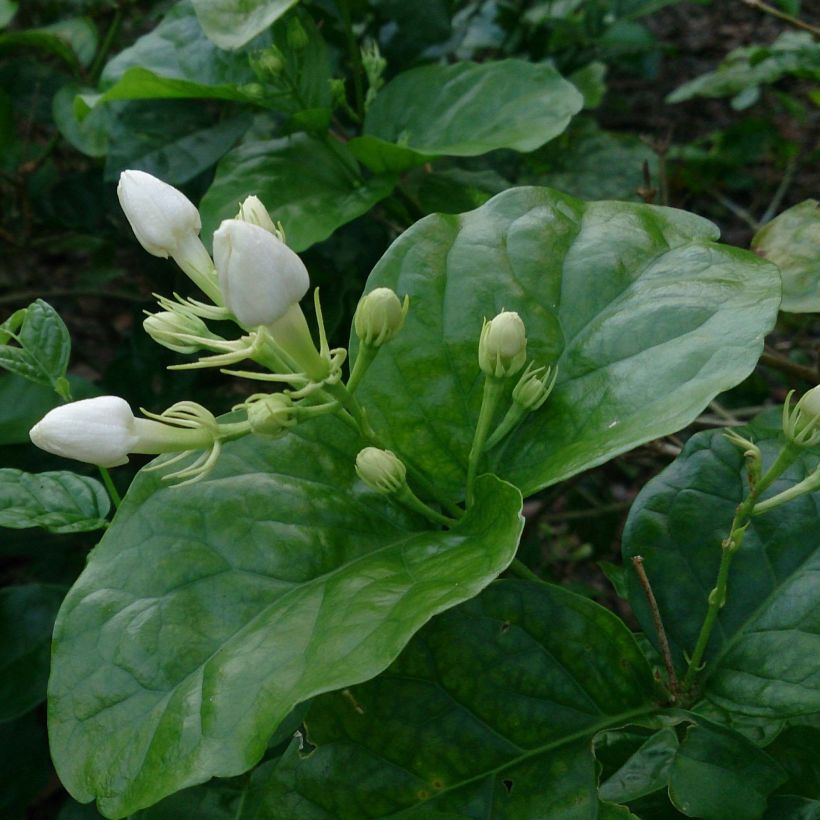
Plant habit
Flowering
Foliage
Botanical data
Jasminum
sambac
Oleaceae
Arabian Jasmine, Sambac Jasmine
Himalayas
Planting and care
In our very mild regions, Jasminum sambac is planted in open ground preferably in spring. It can be planted in pots all year round. Install it in a deep, fertile soil that is kept moist to help it establish. It requires well-drained soil and will thrive in a very sunny location sheltered from cold winds, or even in partial shade in hot climates. Arabian jasmine tolerates the presence of limestone in the soil quite well, but not in excess. Mulch the base and water generously as soon as the flowers appear. When the temperature drops below -5°C (23°F), the above-ground parts freeze and turn black. However, if the stump is well established and well protected, new shoots will emerge in spring. Pruning of the oldest stems (brown) is necessary in late winter, at the start of the growing season. Once established, this plant can tolerate short periods of drought, but will flower more abundantly if the soil remains slightly moist. However, be careful not to overwater, as it dislikes excessively wet soil. It can tolerate partial shade, but flowering is more abundant in full sun. Avoid exposing it to cold drafts to preserve its flowers. Outside the privileged areas of the Mediterranean region or the south of the Atlantic coast, plant jasmine against a south-facing wall that will provide it with some warmth.
For container cultivation: choose a container of 50 cm (20in), with a good, rich, fresh and light soil, specially designed for Mediterranean plants. From early spring until mid-September, enrich with liquid fertilizer every 15 days, always on moist soil. In summer, it needs abundant watering, but in winter, let the soil dry well between waterings. Jasmine is very vigorous even in a pot and can become bare at the base. In this case, prune the old branches to leave only 3 young shoots. In winter, place it in a heated veranda or greenhouse, around 16°C (60.8°F) and with plenty of light. Regularly spray the foliage with non-limestone water to prevent attacks from red spiders.
Planting period
Intended location
Care
Planting & care advice
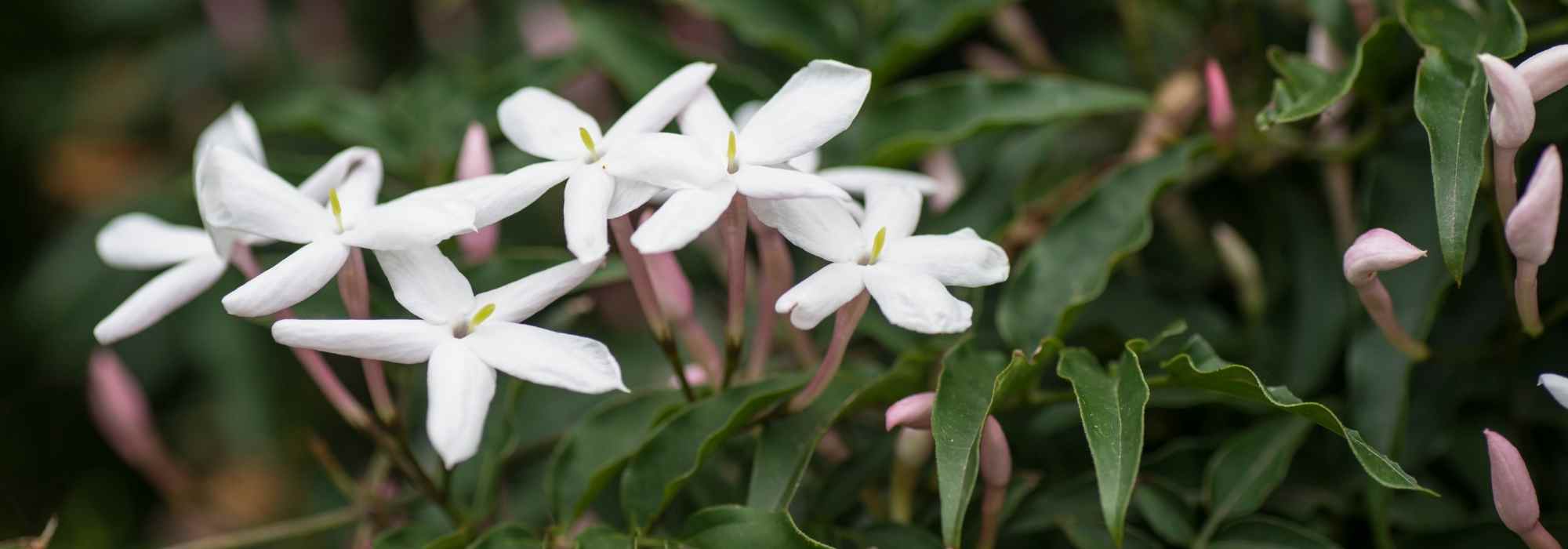
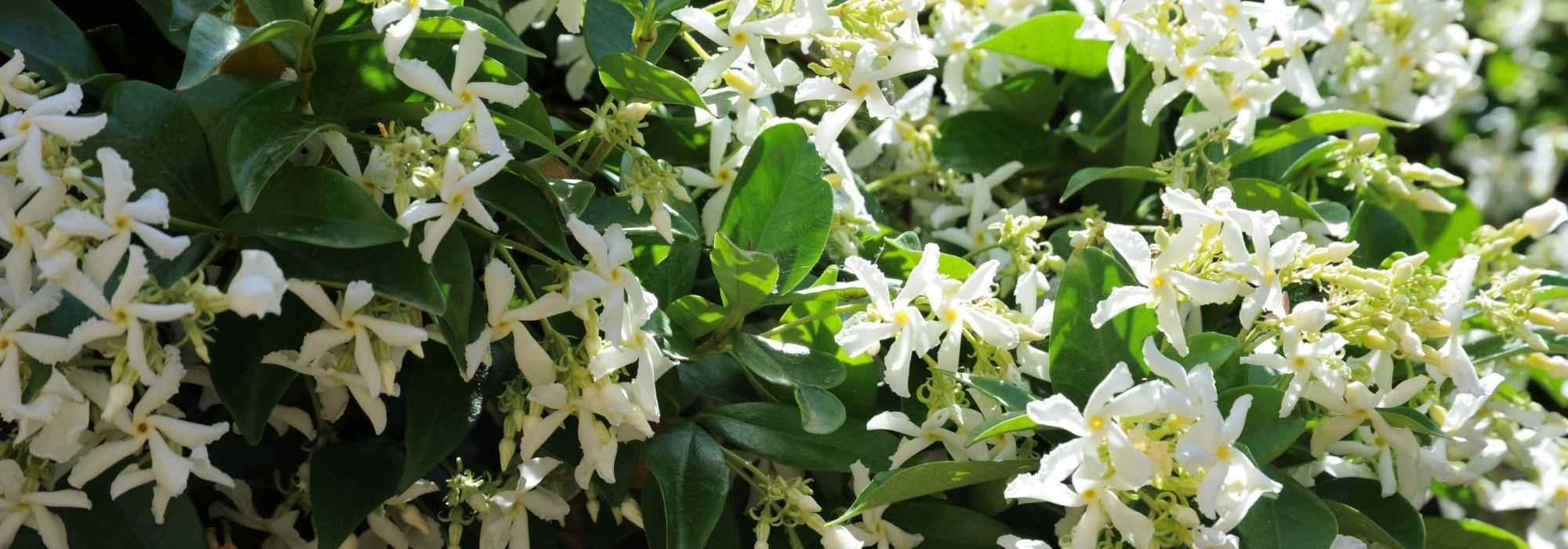
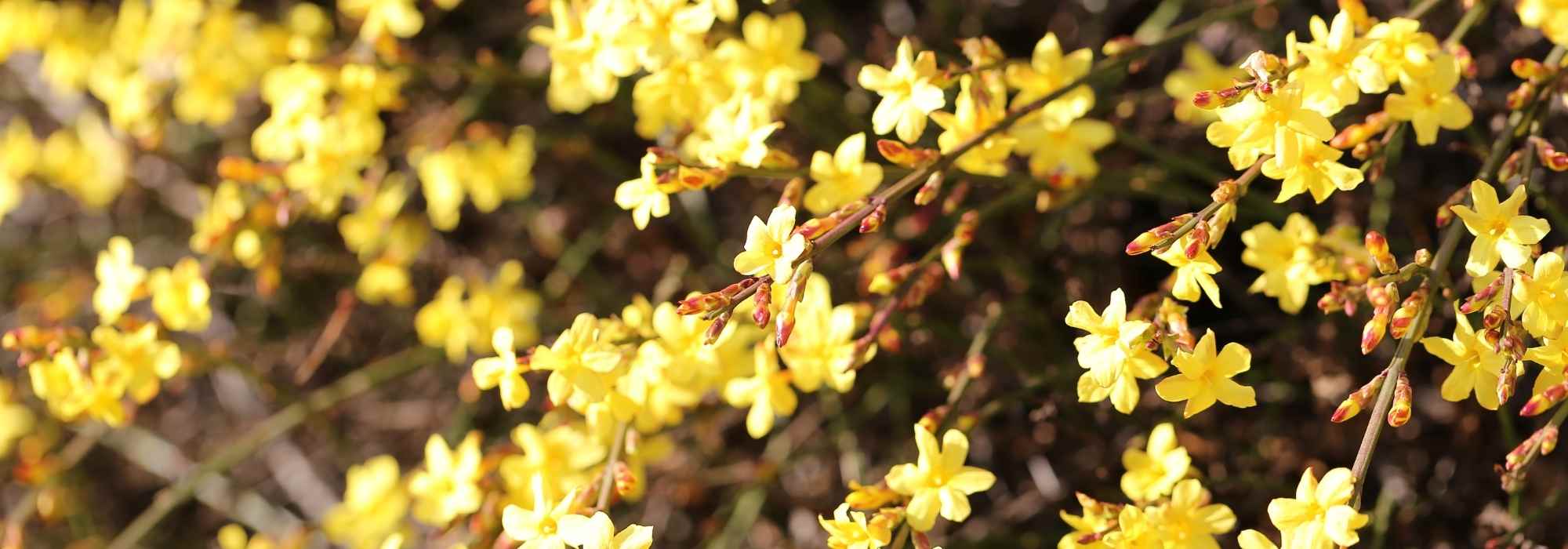

-
, onOrder confirmed
Reply from on Promesse de fleurs
Recently viewed products
Haven't found what you were looking for?
Hardiness is the lowest winter temperature a plant can endure without suffering serious damage or even dying. However, hardiness is affected by location (a sheltered area, such as a patio), protection (winter cover) and soil type (hardiness is improved by well-drained soil).

The flowering period indicated on our website applies to countries and regions located in USDA zone 8 (France, the United Kingdom, Ireland, the Netherlands, etc.)
It will vary according to where you live:- In zones 9 to 10 (Italy, Spain, Greece, etc.), flowering will occur about 2 to 4 weeks earlier.
- In zones 6 to 7 (Germany, Poland, Slovenia, and lower mountainous regions), flowering will be delayed by 2 to 3 weeks.
- In zone 5 (Central Europe, Scandinavia), blooming will be delayed by 3 to 5 weeks.
In temperate climates, pruning of spring-flowering shrubs (forsythia, spireas, etc.) should be done just after flowering.
Pruning of summer-flowering shrubs (Indian Lilac, Perovskia, etc.) can be done in winter or spring.
In cold regions as well as with frost-sensitive plants, avoid pruning too early when severe frosts may still occur.
The planting period indicated on our website applies to countries and regions located in USDA zone 8 (France, United Kingdom, Ireland, Netherlands).
It will vary according to where you live:
- In Mediterranean zones (Marseille, Madrid, Milan, etc.), autumn and winter are the best planting periods.
- In continental zones (Strasbourg, Munich, Vienna, etc.), delay planting by 2 to 3 weeks in spring and bring it forward by 2 to 4 weeks in autumn.
- In mountainous regions (the Alps, Pyrenees, Carpathians, etc.), it is best to plant in late spring (May-June) or late summer (August-September).
The harvesting period indicated on our website applies to countries and regions in USDA zone 8 (France, England, Ireland, the Netherlands).
In colder areas (Scandinavia, Poland, Austria...) fruit and vegetable harvests are likely to be delayed by 3-4 weeks.
In warmer areas (Italy, Spain, Greece, etc.), harvesting will probably take place earlier, depending on weather conditions.
The sowing periods indicated on our website apply to countries and regions within USDA Zone 8 (France, UK, Ireland, Netherlands).
In colder areas (Scandinavia, Poland, Austria...), delay any outdoor sowing by 3-4 weeks, or sow under glass.
In warmer climes (Italy, Spain, Greece, etc.), bring outdoor sowing forward by a few weeks.
Shipping country and language
Your country of residence may be:
Your country of residence is:
For a better user experience on our website, you can select:
Your shipping country:
-
 Austria
-
 Belgium
-
 Bosnia & Herzegovina
-
 Bulgaria
-
 Croatia
-
 Cyprus
-
 Czechia
-
 Denmark
-
 Estonia
-
 Finland
-
 France
-
 Germany
-
 Greece
-
 Hungary
-
 Iceland
-
 Ireland
-
 Italy
Italy
-
 Latvia
-
 Liechtenstein
-
 Lithuania
-
 Luxembourg
-
 Malta
Malta
-
 Netherlands
-
 Poland
-
 Portugal
-
 Romania
-
 Serbia
-
 Slovakia
-
 Slovenia
-
 Spain
Spain
-
 Sweden
-
 Switzerland
Language:
-
French
-
 English
-
Spanish
-
Italian
-
German
-
Portuguese
-
Dutch
-
Finnish
My Account
Hello
My wish lists
My cart
Log in / Register
Existing customer?
This form is protected by reCAPTCHA - the Google Privacy Policy and Terms of Service apply.
New customer?
Create an account to track your orders, access our customer service and, if you wish, make the most of our upcoming offers.