





























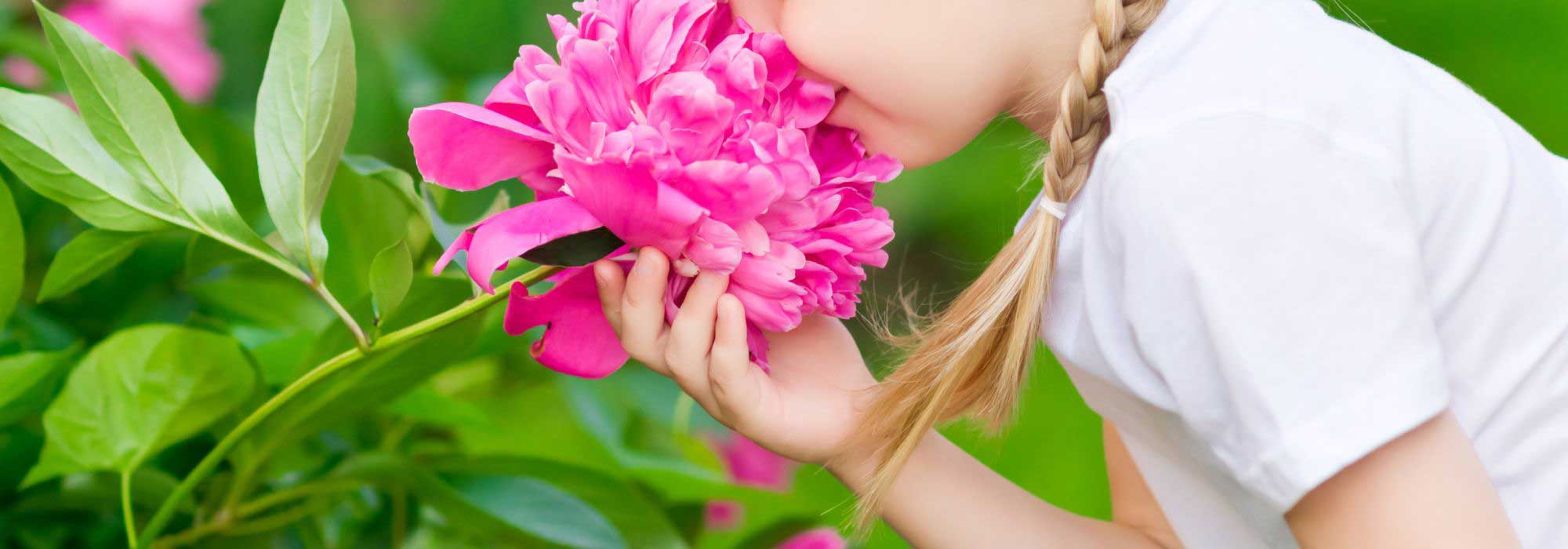
A scented garden all year round
For delightful scents throughout the seasons
Contents
When our eye is drawn to pretty flowers, we irresistibly lean in to smell their fragrance. For the collective unconscious, where there are flowers, there is fragrance, and what a disappointment when they emit no scent! Jasmine, rose, lily, lilac… we immediately associate the names of these flowers with the sometimes sweet, sometimes subtle perfume they exhale, the ideal being to create a garden sprinkled with these scents throughout the seasons.
Do you want to know which plants to install for a fragrant garden all year round? Discover our tips for creating a harmonious scented garden…

How to enjoy the scents of the garden?
Fragrances are the undeniable “little extra” of the garden: they immerse us in a fourth dimension, appealing to one of our most intimate senses, capable of evoking memories, suggesting escape, and deeply soothing us.
To make the most of it, it is advisable to avoid planting plants with strong scents next to each other, to prevent incompatible odours from mingling.
To scent the garden all year round, plant fragrant plants that bloom throughout the different seasons. Is there a particular scent you love? Place the plant that exudes it close to your home, by your entrance, in a high-traffic area, or on the pergola if it’s a climbing plant: you will enjoy it fully! Conversely, if certain scents are very strong, even overwhelming, keep the responsible plants away from your terrace or windows and position them a bit further back to moderate the diffusion of their fragrance in the air.
Take advantage of prevailing breezes so that the most pleasant aromas reach you easily, and keep in mind that the same plant can smell more or less strong depending on the time of day, temperature, and ambient humidity.
Read also
Roses: the most fragrantFragrant plants in spring
To create a fragrant garden, spring shrubs and plants will be your allies.
- Emblematic of a scented spring, the Lilacs will produce their well-recognised clusters of flowers in April-May, which are so delightfully fragrant. For example, plant the trio ‘Charles Jolly’, ‘Capitaine Baltet’, and Syringa microphylla ‘Superba’. You can also opt for Syringa vulgaris ‘Primrose’, particularly floriferous and fragrant, and the only lilac tinted pale yellow.
- With its beautifully rounded habit, the Fragrant Currant (Ribes odoratum) will delight you in the heart of spring with its numerous yellow tubular flowers, which exude a fragrance that is both delicate and powerful. It will thrive in a free-standing hedge or a shrub border, and will be more floriferous, hence more fragrant, in the sun.
- Other pleasantly fragrant shrubs include Viburnum burkwoodii, with its countless white flowers gathered in clusters, and the Mexican Orange Blossom or Choisya ternata. True to its name, it spreads a superb white flowering in April-May, whose fragrance resembles that of orange blossom. Its leaves are also aromatic when crushed. The variety ‘Sundance’, which offers beautiful golden and bright foliage, has the advantage of being repeat flowering, blooming again around September, for even more scents!
- Skimmias are small, easy-to-cultivate, evergreen and hardy shrubs that bear beautiful clusters of white or pink flowers in March-April, pleasantly fragrant.
- The genus Osmanthus includes about fifteen species of evergreen shrubs or small trees valued for their jasmine-scented flowers. Some bloom in spring, such as the Osmanthus x burkwoodii, or the Osmanthus delavayi.
When it comes to spring bulbs, some varieties of daffodils are incredibly fragrant: the poet’s daffodils Narcissus poeticus, Daffodil jonquilla ‘Martinette’, Daffodil ‘Rose of May’, or even Daffodil ‘Bella Estrella’ are among the most fragrant varieties.
Some climbing plants are also noteworthy in spring: the Clematis ‘Sugar Sweet’ offers a fragrant flowering with large lilac-blue stars, and the Clematis montana ‘Double Delight’ produces beautiful double white flowers that are well-scented in April-May, and again in August-September. The Spanish Jasmine (Jasminum grandiflorum), once cultivated in Grasse for perfumery, offers large, extraordinarily fragrant white flowers. And of course, don’t forget the essential Wisterias.
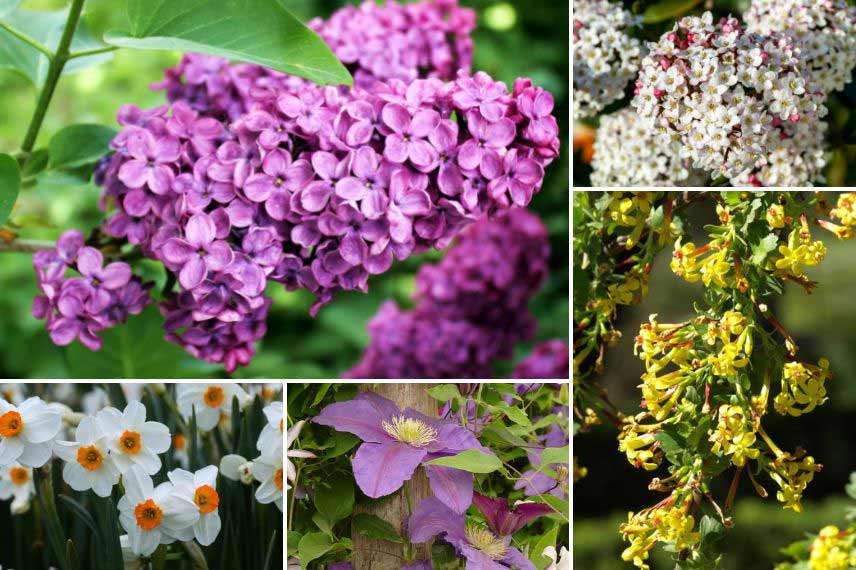
Lilacs, Viburnum burkwoodii, Narcissus poeticus, Clematis ‘Sugar Sweet’, and Ribes odoratum (Juan Carlos López Almansa – Flickr)
Discover other Fragrant flowering bulbs
View all →
Available in 1 sizes
Available in 0 sizes
Available in 2 sizes
Available in 1 sizes
Available in 1 sizes
Available in 1 sizes
Available in 1 sizes
Available in 1 sizes
Available in 1 sizes
Available in 1 sizes
Fragrant plants in summer
- In summer, sprinkle your garden with delightful scents thanks to roses: from the Old Rose Rosa gallica ‘Officinalis’ producing the Provins rose, to the May Rose carried by the Old Rose Rosa centifolia ‘Muscosa’, and the essential oil rose ‘Kazanlik’ cultivated in Bulgaria for its richness in essential oils, you will be spoilt for choice! English roses will also offer you intense and diverse fragrances, such as ‘The Pilgrim’ with its surprising spicy scent or ‘Boscobel’ which exudes a powerful fruity and floral fragrance.
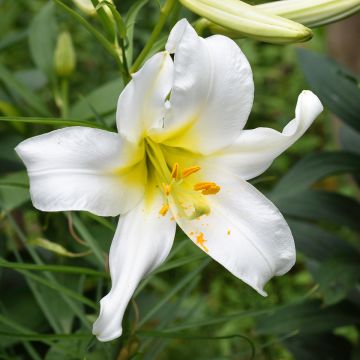
- A charming duo with roses, lilies will further enrich the aromas of your garden in summer; the Oriental Lily ‘Polar Star’ will bring a refined and elegant touch with its pure white flowers accented with lime green and its intense fragrance. The scent of the Trumpet Lily ‘Muscadet’ is also intoxicating and heady, emanating from magnificent pearly white flowers punctuated with bright pink.
- The more a plant is floriferous, the more you will enjoy its fragrance. Consider welcoming a variety of fragrant Hemerocallis into your borders: ‘Chicago Sunrise’ with its warm yellow colour or Hemerocallis citrina with its pronounced lily of the valley scent. Also consider lavenders and their incomparable southern scent!
- Gardenia is among the most fragrant shrubs. Rather tender, it offers elegant white flowers, either single or double depending on the variety. These release a very pleasant fragrance reminiscent of jasmine. In cooler regions, you can plant one in a large pot that you can bring indoors for the winter. Your terrace will be fragrant in the warmer days!
- Also renowned for their fragrance, the Butterfly Bushes offer long spikes attracting butterflies and delighting gardeners with their scents from June to October. Easy to care for and reaching heights of 2 to 4 m, they will happily integrate into your borders or hedges. The Buddleias ‘Lilac Chip’ and ‘Sophie’, compact varieties (between 60 and 70 cm in height) with uninterrupted fragrant flowering from April to September, are particularly well-suited for pot cultivation and small gardens.
- Also consider the Philadelphus ‘Belle Etoile’, the fragrant Abelia ‘Monia’, brooms, or summer-flowering Magnolias like Magnolia grandiflora ‘Galissonière’. Want to plant a colourful and fragrant hedge? Discover the plants in our Scented and Flowering Hedge Kit!
- Filling the air with their fragrance blending floral and fruity notes, the Honeysuckles, climbing on pergolas and trellises, will also delight you with an intense and pleasant scent with sweet fragrances.
- For more originality, plant the Bignonia capreolata ‘Atrosanguinea’ with its unique scent of chocolate and roasted coffee, or the highly fragrant Passion Flower Passiflora allardii.
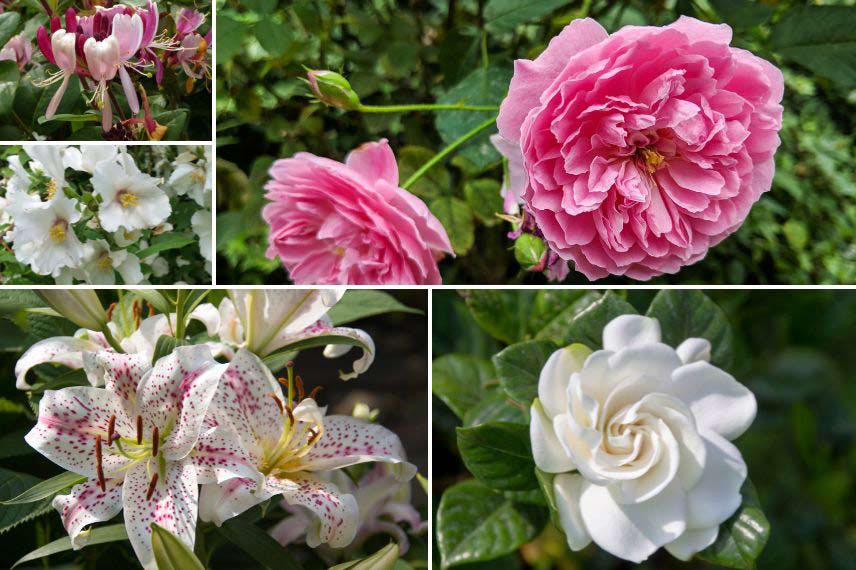
Lonicera periclymenum ‘Serotina’, Philadelphus ‘Belle Etoile’, Rosa centifolia, Lilium ‘Muscadet’ and Gardenia
Fragrant plants in autumn
- The Camellia sasanqua, also known as Autumn Camellias, begin their flowering in autumn and continue until the first frosts. There are varieties with a strong fragrance, such as ‘Frosted Star’ with subtle, heady notes, ‘Gay Border’ with a spicy scent, or ‘Sekiyo’. For even more fragrances, also plant Osmanthus, some varieties of which flower in autumn, such as Osmanthus fortunei or Osmanthus heterophyllus.
- TheElaeagnus ebbingei, also known as Chalef, offers a very discreet flowering between September and November, with small flowers hidden beneath the foliage, but these are intensely fragrant and spread their scents around.
- Clethra alnifolia is an understorey bush, valued for its late, fragrant flowering and its golden-yellow foliage in autumn.
- The Luma chequen, or Chilean Myrtle, a beautiful evergreen and bushy shrub, has small aromatic foliage that releases a chewing gum scent when crushed.
- Finally, the Olearia paniculata or Tree Aster bears white panicle flowers in late autumn, discreet but very fragrant.
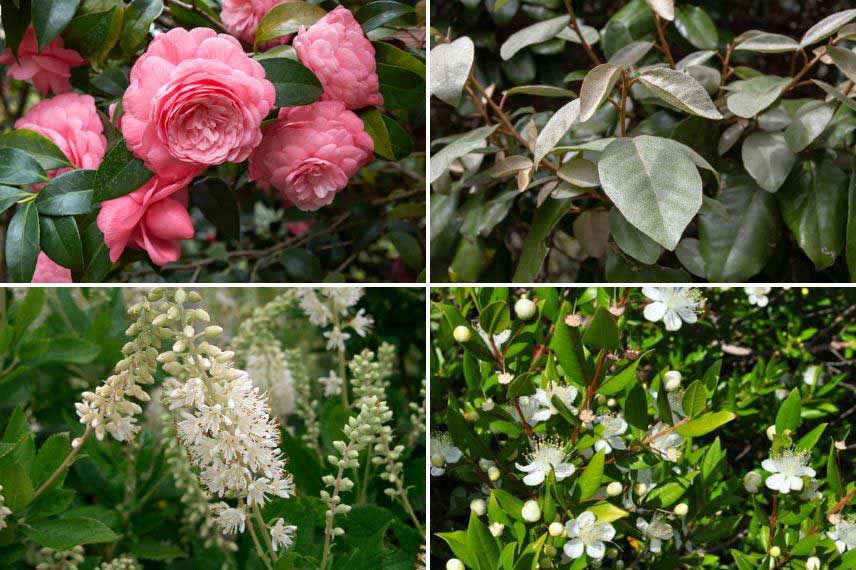
Camellia sasanqua, Elaeagnus ebbingei, Clethra alnifolia, and Luma chequen
Fragrant plants in winter
- Charming little bush ideal for small gardens, the Daphne odora offers a long flowering period in late winter (February-March), and produces very fragrant pink flowers. Opt for the Daphne odora ‘Aureomarginata’, with dark green leaves highlighted by a delicate cream-yellow border, or the Daphne ‘Perfume Princess’, which also offers an intoxicating fragrance.
- In the same range of compact subjects, the Sarcococca is also a charming little bush that flowers between January and March. It bears delicate white flowers with a pronounced fragrance.
- When it blooms on its naked wood between November and February, the Viburnum bodnantense brings a touch of cheer with its bright pink buds opening into clusters of pale pink flowers with a sweet and subtle fragrance.
- The Mahonia also offers a fragrant winter flowering, in bright yellow clusters.
- Symbolic of winter blooms, the wattle or Acacia dealbata produces a multitude of small yellow pompom flowers at the end of winter, releasing a pleasant honey fragrance. It is best reserved for regions with a very mild climate. You can also choose the Acacia retinodes, also known as the Four Seasons Mimosa, which flowers multiple times a year and is also highly fragrant.
- Deciduous bush with one of the most fragrant winter flowers, the Chimonanthus blooms from December to February on bare branches.
- The Helleborus multifidusssp. bocconei is a rare botanical hellebore in cultivation with a delicate elderflower fragrance.
- Finally, the Cyclamen pseudibericum or Turkish Cyclamen, flowers from January to March. Its pretty purple-pink flowers, large for a wild cyclamen, spread a pleasant violet fragrance.
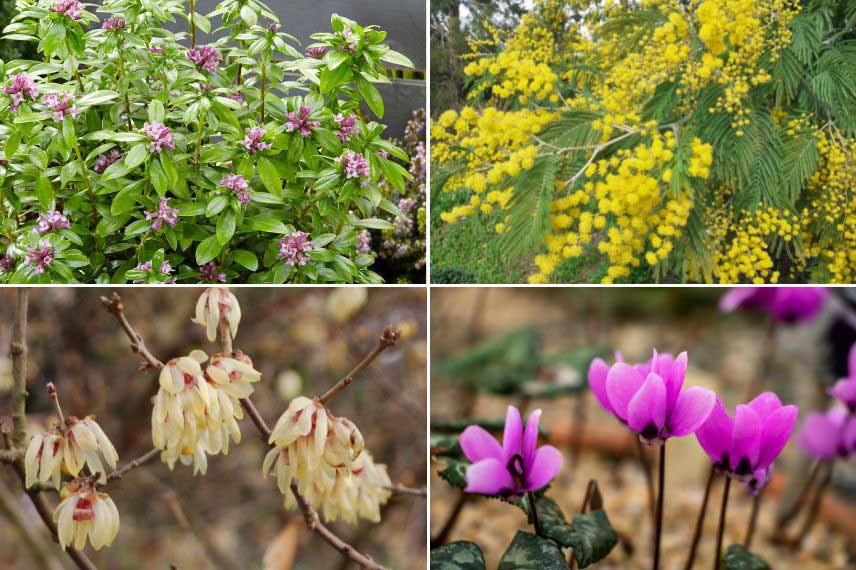
Daphne odora ‘Sweet Amethyst’, Acacia dealbata, Chimonanthus praecox and Cyclamen pseudibericum

- Subscribe!
- Contents
Comments