





























Pairing ideas with Cotinus
Ideas for pairing the Smoke Tree in the garden or in pots
Contents
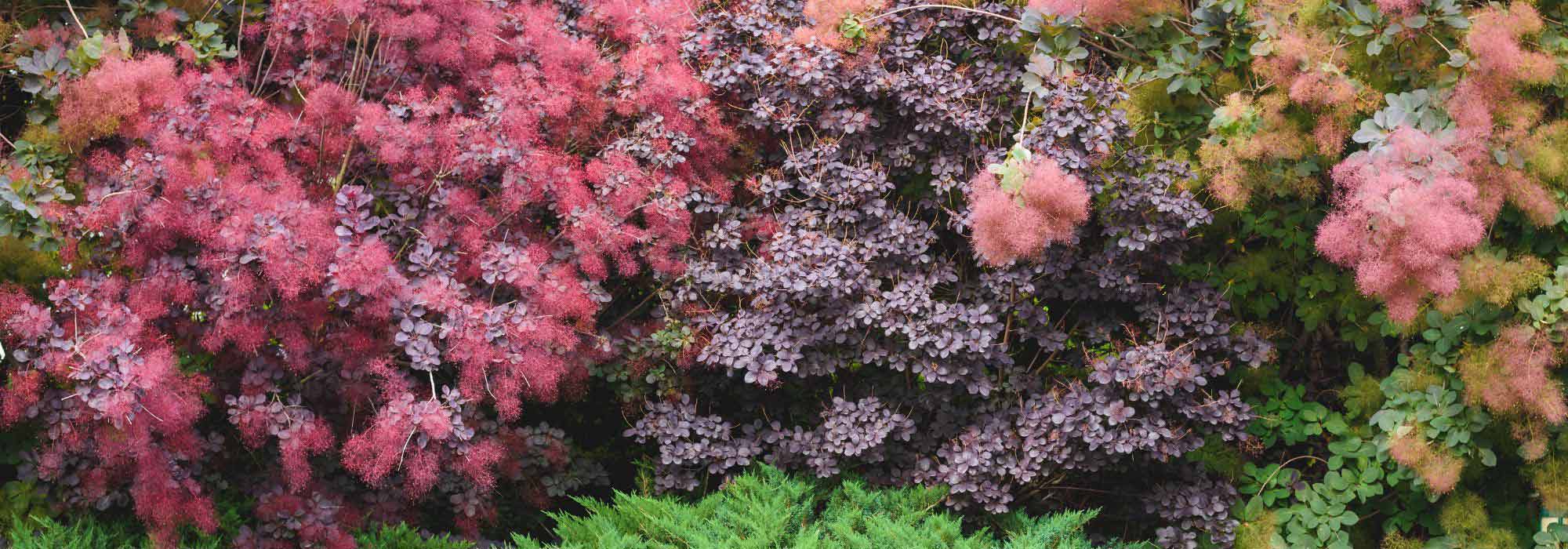
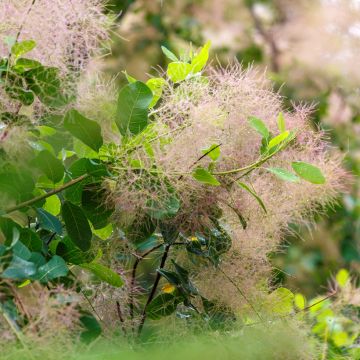
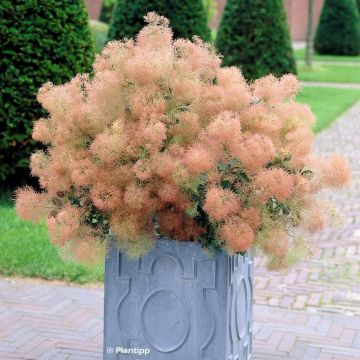
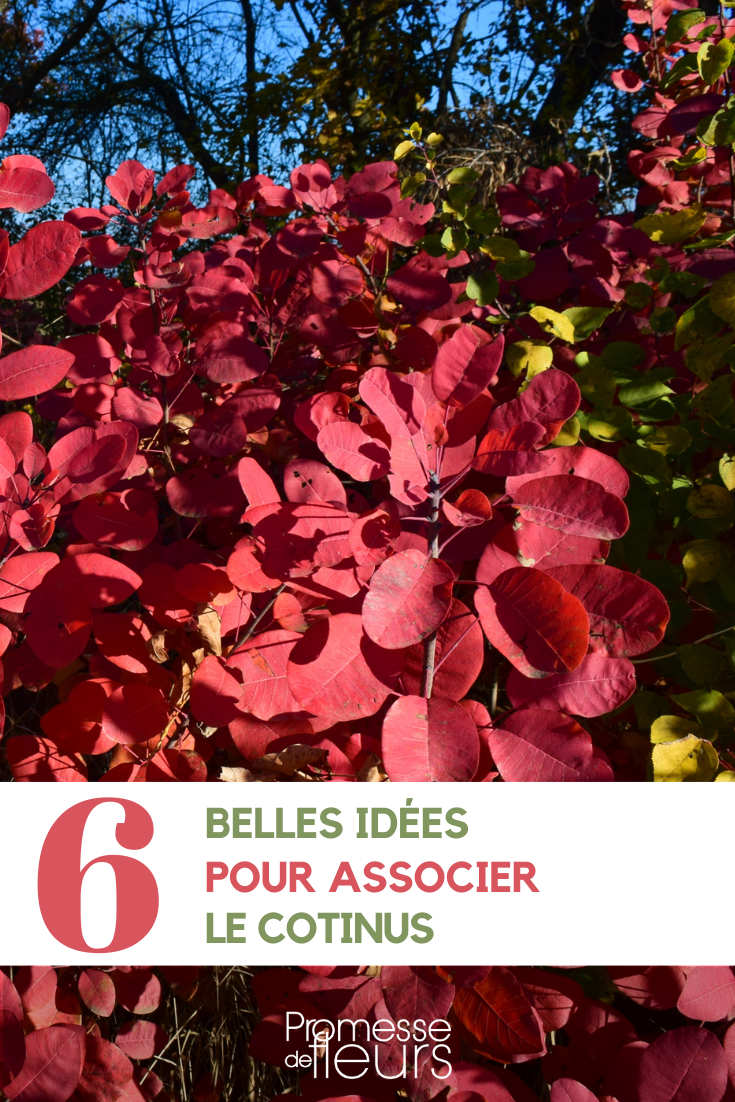
The Cotinus, also known as Smoke Tree, Fustet or Wig Tree, is a classic garden bush, robust and easy to care for. With a relatively fast growth rate, drought-resistant, and not fussy about soil type, these bushy shrubs are characterised by their beautiful ovate foliage that changes colour throughout the seasons. Intense purple, purplish green or even bright golden yellow in some varieties, it takes on stunning crimson to orange hues in autumn before falling. The original flowering, with large, fluffy plumes that gave it its name, occurs in summer and can be tinged with white, pink, or orange. Well-suited to pruning, most varieties do not exceed 6m, and some even remain dwarf, an advantage you can take advantage of in small gardens or in pots on a sunny terrace. Both beginner and more experienced gardeners will be charmed by Cotinus, which, like many plants, often look better when growing in good company. Here are some ideas and suggestions for harmoniously pairing your Smoke Tree in your borders, hedges, or even in containers.

A duo of gold and blue
Certain Cotinus, such as Cotinus ‘Golden Lady’ or ‘Golden Spirit’ boast a bright yellow foliage. Pair them with cooler shades, in tones of blue and mauve, to create a soft and pleasing combination. Among the possible candidates, consider blue-flowering Agapanthus, whose magnificent umbels stand out against the golden foliage of their neighbour. The icing on the cake is that even once faded, their large fluffy heads remain decorative for a long time. Growing effortlessly and self-seeding generously, the Buenos Aires Verbenas lean more towards purple, and their tiny yet numerous flowers, borne on tall stems that allow the eye to pass through, also play with the shapes of the inflorescences.
For a touch of originality, try the Eryngium ‘Neptune’s Gold’, which combines spiky golden foliage with metallic blue flowers. At the base of all these beauties, you can choose to echo the shades of your Cotinus by planting Carex ‘Everillo’ or enhance the blue effect by opting for varieties like Carex ‘Blue Zinger’. Another option is available with Fescues (Festuca ‘Elijah Blue’ or ‘Intense Blue’ are among the bluest of the genus). You are also free to mix these grasses. Install your display on a carpet of hardy geranium ‘Blue Sunrise’, whose blue-purple flowering stands out against an uncommon yellow foliage in the genus.
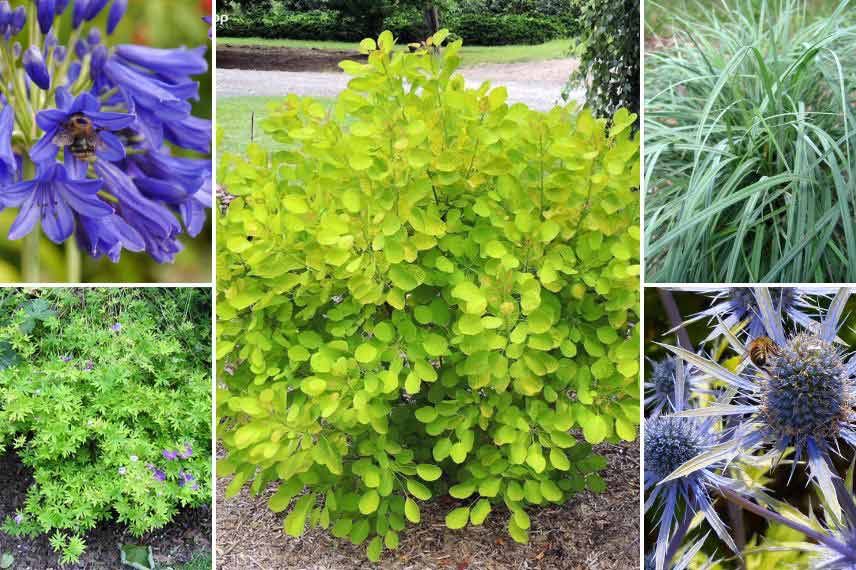
Agapanthus ‘Flower of Love’, hardy geranium ‘Blue Sunrise’, Cotinus coggygria ‘Golden Lady’, Carex flacca ‘Blue Zinger’ and Eryngium planum ‘Neptune’s Gold’
A summer bed for pollinators
Compose a border that both requires little maintenance and provides cover for pollinators like butterflies, while offering beautiful combinations of shapes and colours. Cotinus ‘Royal Purple’ features purple foliage highlighted by a pink edge, a hue you can echo by planting Achilleas ‘Lilac Beauty’ with their flat inflorescences and large, architectural Monardas ‘Beauty of Cobham’ with their fluffy heads and bergamot-scented foliage. Interspace a few clumps of the daring Echinops bannaticus ‘Taplow Blue’ whose azure blue globes reflect the colours of the sky.
Create beautiful verticals with Digitalis ferruginea ‘Gigantea’. The throat of their pale brown flowers is veined with a purplish brown that subtly echoes the foliage of the Cotinus. For grasses, a few Angel Hair enliven the foreground, while their cousins, the giant Stipes, dance at the back of the border. Not hardy, some Pennisetum deserve their place in the garden for the uncommon colour of their foliage, just like other annuals. Pennisetum setaceum ‘Fireworks’ is, as its name suggests, a firework of colours, blending green, red, and pink, and developing beautiful pinkish then blonde spikes. Pennisetum x advena ‘Rubrum’ is dark purplish red to black depending on exposure and also has a very decorative effect.
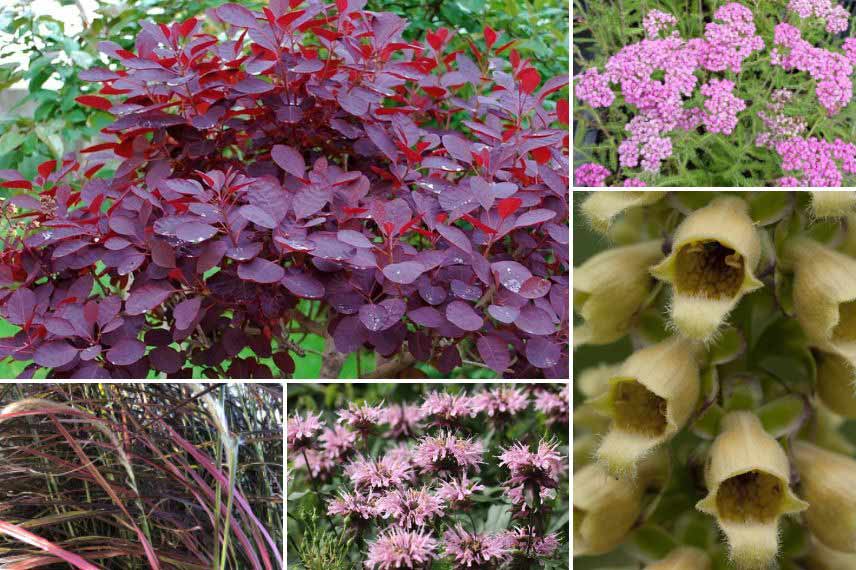
Cotinus coggygria ‘Royal Purple’, Achillea millefolium ‘Lilac Beauty’, Digitalis ferruginea ‘Gigantea’, Monarda Beauty of Cobham, and Pennisetum setaceum ‘Fireworks’
Discover other Cotinus - Smokebush
View all →
Available in 0 sizes
Available in 5 sizes
Available in 2 sizes
Available in 1 sizes
Available in 1 sizes

Available in 3 sizes
Available in 1 sizes
Available in 2 sizes
Available in 1 sizes
Available in 1 sizes
An autumn fireworks display
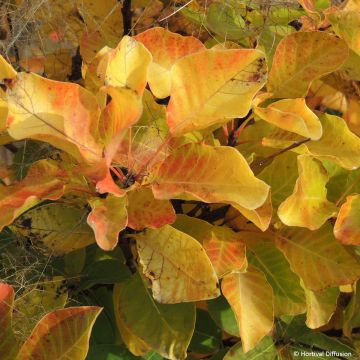
If Smoke Trees are appreciated for their young foliage and their ethereal flowering, they reveal breathtaking beauty when their silhouette ignites in late season, taking on colours that have greatly contributed to their fame. Cotinus ‘Old-Fashioned’ is one of the many varieties whose foliage adorns itself with incandescent red and orange hues, visible from afar. Pair it with other shrubs that boast beautiful autumn colours, such as Serviceberries, Deciduous Euonymus, or Oak-leaved Hydrangeas. Decorative Dogwoods are also a good option, as they extend the interest of the border with their brightly coloured stems throughout winter. For a lovely contrast, consider varieties like Cornus ‘Midwinter Fire’ with its foliage that turns to amber yellow.
To add lightness and movement, insert clumps of grasses such as Miscanthus ‘Ghana’ or Schizachyrium ‘Standing Ovation’, whose hues rival those of their neighbours. After offering a beautiful blue flowering in early summer, the light foliage of Amsonia hubrichtii lights up in a golden yellow that provides a lovely backdrop for its companions. Of course, it’s impossible to talk about autumn without mentioning late-flowering perennials that benefit the gardener, particularly through Asters, Japanese Anemones, or Chrysanthemums, some varieties of which provide cooler colour touches, welcome to energise the scene.
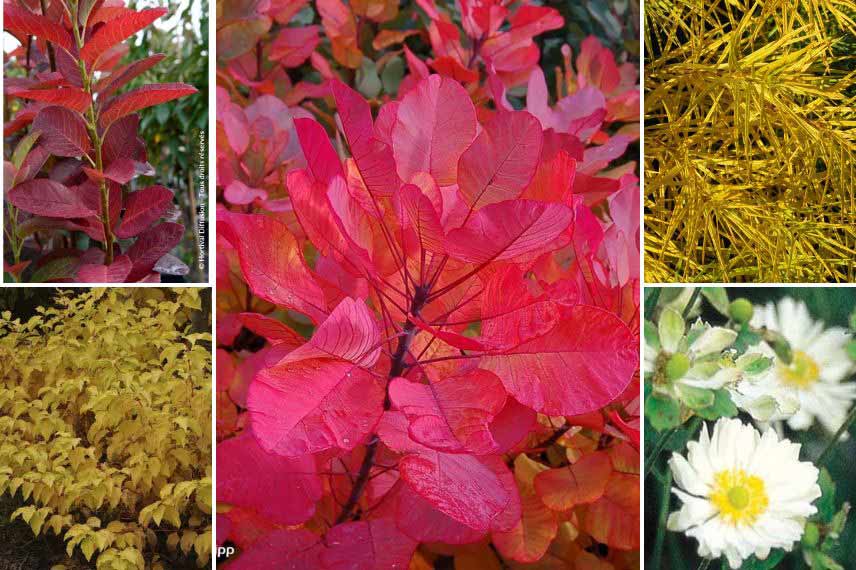
Amelanchier canadensis ‘October Flame’, Cornus sanguinea ‘Mid Winter Fire’, Cotinus ‘Old-Fashioned’, Amsonia hubrichtii, and Japanese Anemone ‘Whirlwind’
A large sunny border
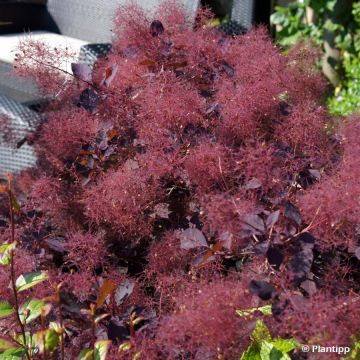
Cotinus ‘Dusky Maiden’ is a compact and well-branching variety, not exceeding 2 metres, making it easy to use, even in a small garden. Its foliage, a deep purple at the bud burst period, is enhanced by large, airy pink inflorescences in summer, before igniting in colour at the end of the season. Why not pair it with evergreen companions that maintain a beautiful structure in your display all year round? A Italian Cypress ‘Garda’ can grow up to 10 m, but takes up little ground space and forms a lovely vertical with its bright green foliage all year. Sterile, its branches do not droop under the weight of fruit. It’s best to plant it in odd numbers for a better effect. In regions too cold to accommodate it, you can replace it with Junipers such as Juniperus ‘Pyramidalis’ or ‘Blue Arrow’, the latter offering a distinctly bluer foliage. Smaller, they are, however, much hardier.
For a touch of exoticism that stands out, plant a variegated Yucca such as ‘Colour Guard’, whose large yellow leaves are marginate with green and which develops a well-erect floral spike topped with clusters of ivory-white flowers in summer. A Rhus ‘Tiger Eyes’, which does not have the invasive character of its neighbours, adds a golden touch before colouring autumn in a blaze of glory. Very resilient, Bupleurum fruticosum can form here and there beautiful rounded masses of glaucous foliage, and its long yellow summer flowering diffuses a surprising fragrance. In the open spaces at the front, a few clumps of blue-flowering hardy geraniums beautifully anchor the whole.
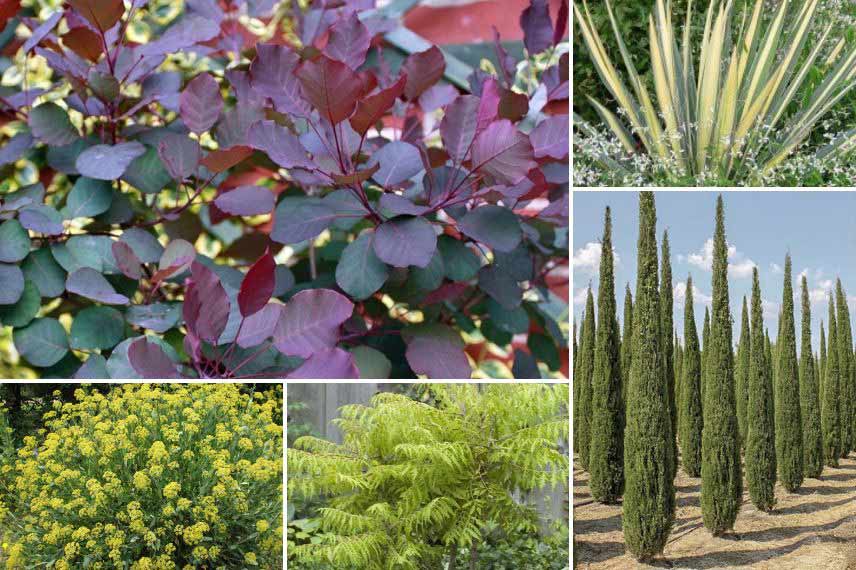
Cotinus coggygria ‘Dusky Maiden’, Cupressus sempervirens ‘Garda’, Yucca filamentosa ‘Colour Guard’, Virginia Sumac ‘Tiger Eyes’ and Bupleurum fruticosum
A beautiful hedge all year round
Smoke Trees are bushes well suited for composing a hedge. Cotinus ‘Smokey Joe’ is a variety that does not exceed 2m to 2.5m in height. Its bright green deciduous foliage highlights its distinctly pink inflorescences, and like its relatives, it beautifully colours in autumn. To accompany it, consider introducing about 1/3 of evergreen bushes, such as Eleagnus, Photinia, Abelia (more or less evergreen depending on the climate) or some Cotoneaster. The common hornbeam retains its dry leaves in winter and responds well to pruning to keep it within desired proportions.
Also consider the flowering of Lilacs, Deutzia, Viburnums, Ceanothus or some Flowering Currants. Some ornamental fruit bushes are both beautiful and useful for wildlife, such as Serviceberries, Callicarpa, Pyracantha, Symphoricarpos as well as some Euonymus and Viburnums. Add colour for winter with the decorative woods of Dogwoods, Strawberry Trees or non-running Bamboos. Do not select too many different species and mix those chosen in a more or less random manner. Interleave evergreen foliage, flowering, fruits, and decorative woods as naturally as possible.
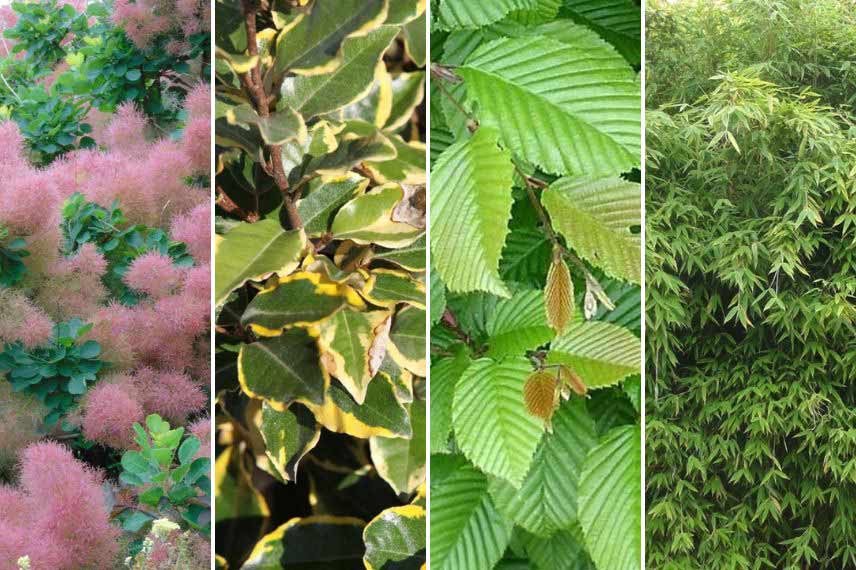
Cotinus ‘Smokey Joe’, Elaeagnus x ebbingei ‘Viveleg’, Carpinus betulus and Fargesia murielae ‘Dino’
A green terrace
Among the Fustets, some maintain small dimensions and adapt very well to pot cultivation, allowing you to enjoy their beauty on a terrace, patio, or balcony. The purple foliage of Cotinus ‘Lilla’ (1m) or ‘Winecraft Black’ (1.5m) benefits from being paired with yellow or golden foliage (Caryopteris ‘Hint of Gold’, Berberis ‘Tiny Gold’, Choisya ‘Aztec Gold’, Sambucus ‘Welsh Gold’ to name just a few) and grey to silver (Buddleia ‘Silver Anniversary’, Caryopteris ‘Sterling Silver’…).
The golden foliage of Cotinus ‘Golden Lady’ or ‘Golden Spirit’ is stunning when paired with blue and glaucous foliage. To achieve this, create a group of pots where you can place a dwarf Eucalyptus ‘Baby Blue’, an exotic Yucca rostrata, or a conifer such as Spruce ‘Glauca Globosa’, all three having the advantage of being evergreen. In terms of flowering, Agapanthus prefer to be a bit cramped in a pot, which usually encourages more blooms. The Cross Gentian or Geranium ‘Blue Sunrise’ echo the golden hues of Cotinus with their foliage and bring in that blue through their beautiful flowering.
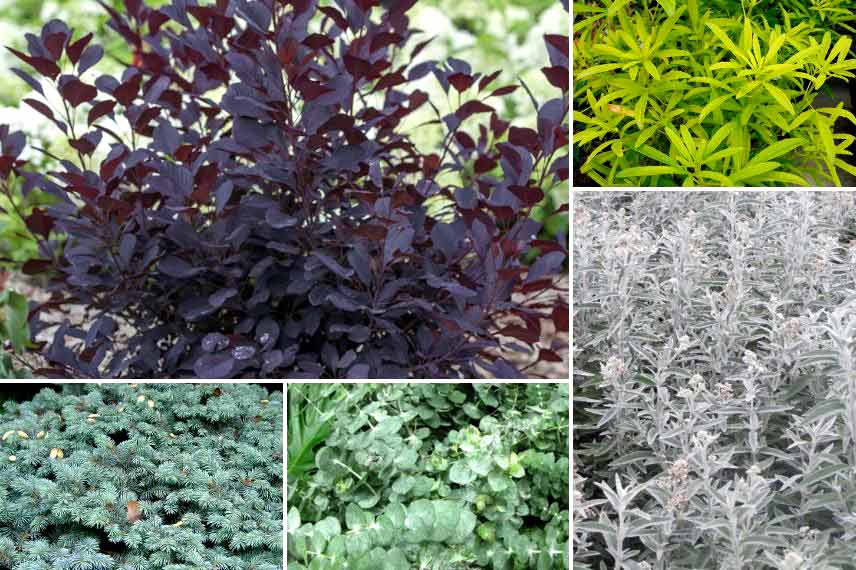
Cotinus coggygria ‘Winecraft Black’, Choisya ‘Aztec Gold’, Buddleia ‘Silver Anniversary’, Eucalyptus ‘Baby Blue’ and Picea pungens ‘Glauca Globosa’
- Subscribe!
- Contents
Comments