





























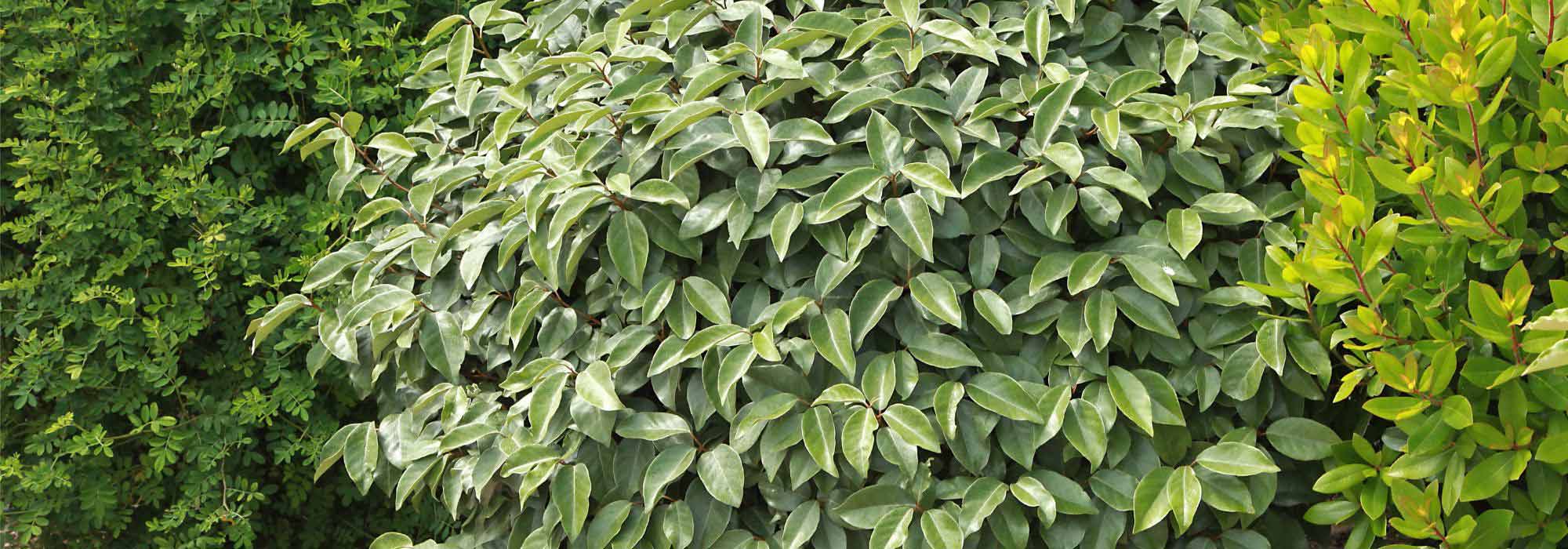
Pairing ideas with Eleagnus
7 ideas for pairing with Sea Buckthorn
Contents
The Elaeagnus, sometimes shortened to Eléagnus and more commonly known as Chalef or Japanese Goumi depending on the species, is a bush commonly used in gardens due to its many qualities. Its foliage, which can be evergreen or deciduous, offers grey-green, metallic grey, or variegated options depending on the varieties. Its flowering, whether in spring or autumn, is rather discreet visually, but the fragrance it emits is unforgettable! Its small edible berries are appreciated by birds, though somewhat mealy for the gardener, except for those produced by the Goumis. Easy, adaptable, and relatively to very hardy, some hesitate due to their vigorous growth, which allows for a quick effect. While it can be used in hedges, the Eléagnus benefits from being mixed with other plants to which it can provide an interesting neutral base or advantages they lack. Here, I propose 7 pairing ideas to find which other plants to combine with your Chalef to make the most of it and create beautiful flowerbeds.

In any type of hedge
The Elaeagnus is a bush particularly well-suited for creating hedges, regardless of garden styles and intended purposes.
- For an opaque hedge all year round, combine it with Photinia, Euonymus, Cotoneaster evergreens, Pittosporum, Phyllirea, or even Laurel-tin.
- As a defensive hedge, species equipped with thorns, such as Elaeagnus ebbingei, perform perfectly alongside Berberis, Mahonia, Rosa rugosa, or Pyracantha, deterring potential intruders.
- The Chalefs are among the champions for quickly achieving a functional hedge, just like Butterfly Bushes, Privets, Grevillea, or even Milky Cotoneaster that you can pair with them.
- Beginners are unlikely to fail when choosing Chalef to create a hedge, mixing it for example with other foolproof bushes like Cotoneaster, Photinia, Common Hornbeam, Dogwoods, or Hawthorns.
- Well-suited to pruning, the Elaeagnus is often used for creating regular hedges, as are Photinia, ‘Etna’ Cherry Laurel (a more compact version requiring less pruning), Pittosporum, and Privets.
Unless the intended purpose is deliberately different, consider mixing 2/3 deciduous bushes (Vitex, Hawthorn, Ceanothus ‘Gloire de Versailles’, Forsythia, Elder…) with 1/3 evergreens (Elaeagnus, Pittosporum, Photinia, Phyllirea, Camellia…).
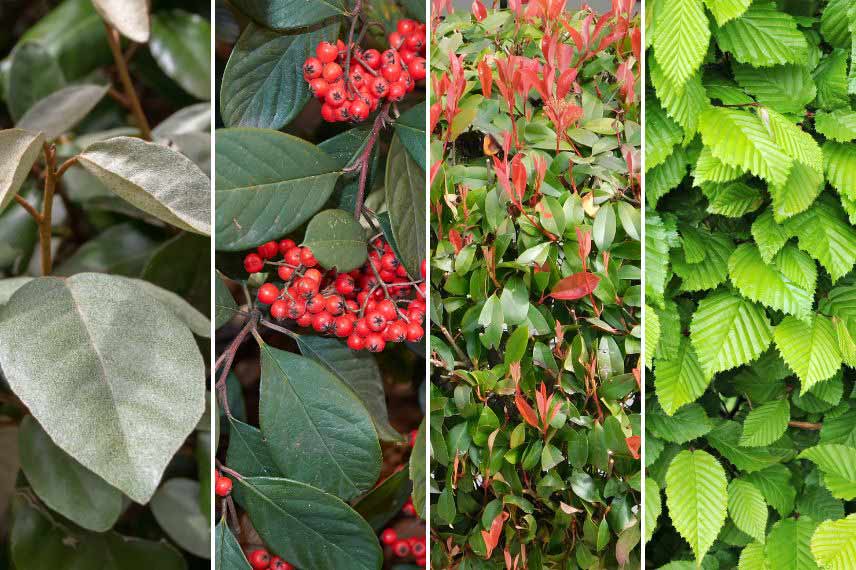
Elaeagnus ebbingei, Cotoneaster lacteus, Photinia, and Carpinus betulus
In a contemporary garden
Very malleable under shears, the Elaeagnus requires just regular interventions to maintain its shape, as its growth is vigorous. Trained into topiary, it allows for the quick integration of plants with a lovely round habit. Recreate these plump forms with other trimmed plants such as boxwood, bush honeysuckle (also having fun with the different colours of the foliage), privet, or hornbeam. Graphical perennials like Acanthus, Echinops, Fatsia (of which a variegated version is stunning!), tree ferns, or bamboos offer a beautiful diversity of foliage depending on the exposure, both understated and elegant. The conifers, some of which remain small, can be an interesting option due to their graphic silhouettes and the diversity of possible hues. Similarly, colour can be introduced discreetly yet elegantly through the use of trees with coloured bark. Mahogany red of a Tibetan Cherry, immaculate white of a Himalayan Birch, amber of a Manchurian Cherry, or beautifully striated green and white for a snake-bark maple, Acer cappilipes. Various heights of grasses can be placed here and there to create rhythm, bring movement, and enrich the evolution of the scene throughout the seasons.
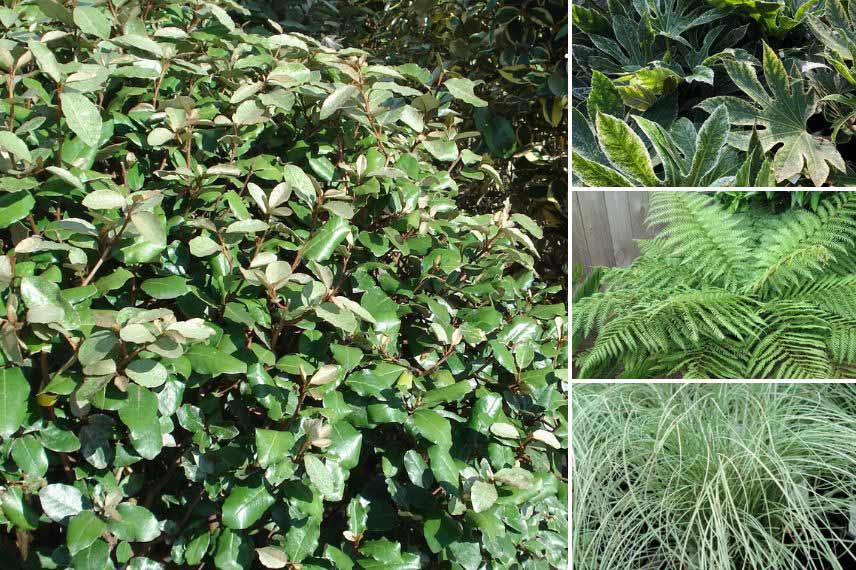
Elaeagnus ebbingei, Fatsia japonica ‘Spider’s Web’, Dicksonia squarrosa, and Carex comans ‘Frosted Curls’ grass
Discover other Elaeagnus - Oleaster
View all →
Available in 4 sizes
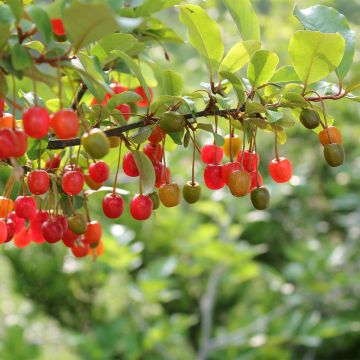
Available in 1 sizes
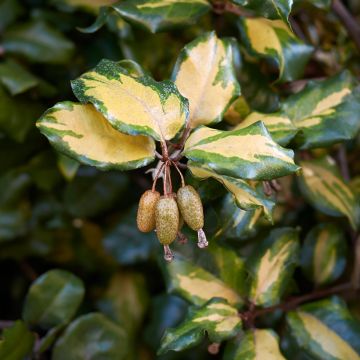
Available in 3 sizes
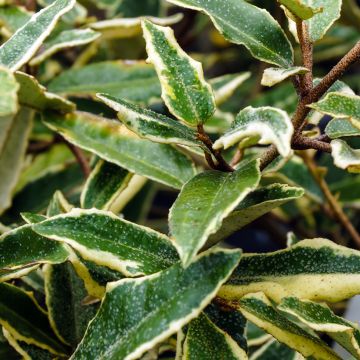
Available in 1 sizes
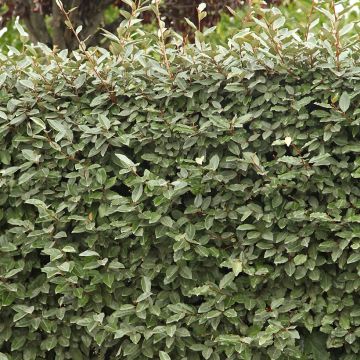
Available in 3 sizes
Available in 2 sizes
Available in 3 sizes
Available in 2 sizes
Available in 1 sizes
Available in 1 sizes
In a flower bed
Some people criticise Eleagnus for being too ‘pushy’ or rather mundane. However, gardeners need visually discreet plants to highlight and accentuate more eye-catching neighbours and soften transitions. Not to mention that the flowering of many species inevitably draws attention by pleasing the nose.
- Eleagnus with metallic grey-green foliage such as Elaeagnus ebbingei or the romantic Bohemian Olive and Silver Chalef can temper all scenes. Roses, particularly those with white flowers, pair very well with this foliage.
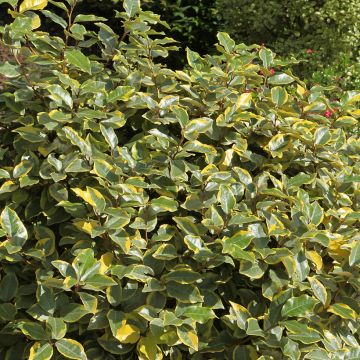
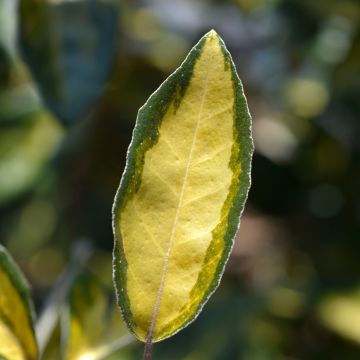
- Variegated Eleagnus, such as ‘Gilt Edge’, ‘Eleador’ or ‘Viveleg’, which contain yellow in their foliage, should be used with more caution. For example, play with a stronger yellow or orange to create a bed with warm tones, or rather oppose it with a complementary colour, such as purple, even mauve and blue, which can be linked with grey or white. Thus, between perennial geraniums with endless blue flowering like ‘Rozanne’, Perovskia with silver stems and lavender flowering, mauve Agapanthus, bristly Eryngiums or the metallic blue foliage of fescues like ‘Elijah Blue’, the contrast can be interesting. To soften the whole and add a touch of lightness, some white flowers are welcome. White Agapanthus create a subtle echo to their blue companions. Crambe cordifolia stands tall in white, fluffy clouds while Achilleas, Aquilegias, Asters, Bergenias, Campanulas and Gaura emerge here and there. Don’t forget a few clumps of grasses to let the wind express itself…
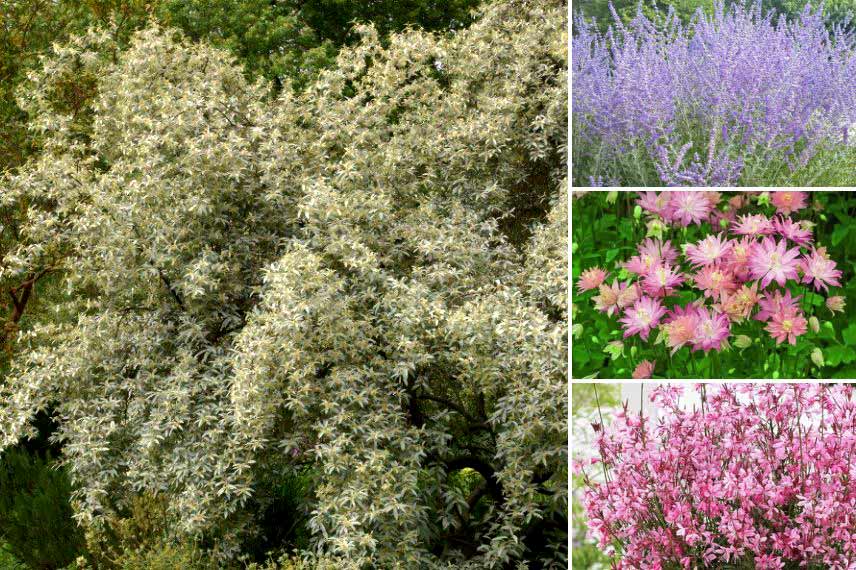
Elaeagnus commutata ‘Zempin’, Perovskia atriplicifolia ‘Blue Spire’, Aquilegia ‘Clementine Salmon Rose’ and Gaura lindheimeri ‘Baby Butterfly Dark Pink’
In a scented border
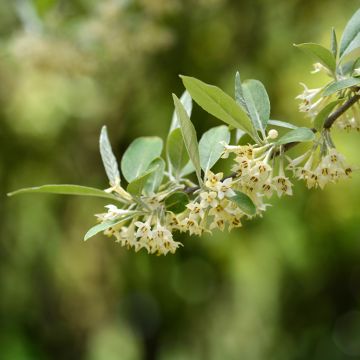
A garden should awaken all the senses, and the sense of smell is no exception. It is therefore very fitting that Elaeagnus are so fragrant. Pair them with other aromatic plants, either alongside your Russian Olive or at different times. Elaeagnus angustifolia, E. commutata ‘Zempin’, E. umbellata and E. multiflora bloom between April and June, while other species (Elaeagnus ebbingei and E. pungens) wait until late summer and autumn to spread their fragrance for metres around. Install one for each of the two seasons, and complete your selection for the two missing ones. For winter, consider a Winter Viburnum, a Sarcococca, a Styrax or a Daphne (with either plain or variegated foliage). Fill summer and part of autumn with Clerodendron, Butterfly Bush, Choisya (which blooms again around September), Heptacodium and Mock Orange. For perennials, focus on fragrant bulbs (Hyacinths, Daffodils, Lilies…) and both beautiful and fragrant perennials (Pinks, Sweet Rocket, Lily of the Valley, Phlox and Iris), not forgetting the fragrances of roses and peonies!
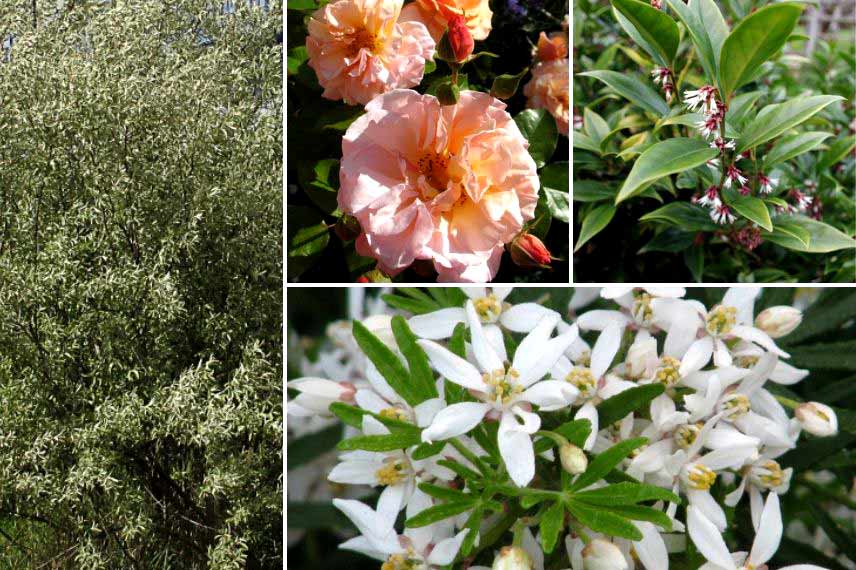
Elaeagnus angustifolia, Sarcococca orientalis, Choisya ‘White Dazzler’ and Rose ‘Martin des Senteurs’
A parade of berries
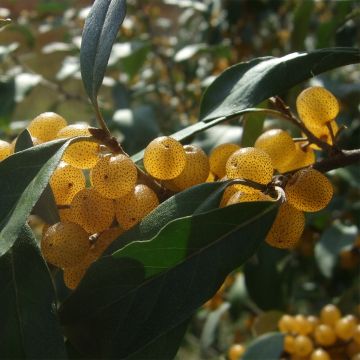
If Eleagnus are known for their foliage and fragrance, they also produce edible berries. In the majority of species, the fruit is astringent and has a mealy texture, but these berries are a boon for the flora and can also be made into jellies. Their decorative role should not be overlooked either, and the Oleaster can thus be included in the creation of a display alongside bushes renowned for their production of decorative fruits (and sometimes edible), such as ornamental apple trees (Malus ‘Golden Hornet’ with yellow apples, Malus ‘Evereste’ with orange-red fruits), a Clerodendrum with bright pink calyces that contain a turquoise blue berry, Aucuba, Beautyberry, Cotoneaster, Euonymus, Sea Buckthorn or Pyracantha to name just a few. Elaeagnus multiflora and Elaeagnus umbellata correspond to the Japanese Goumi and produce the best fruits of the genus. For a corner or a hungry hedge, select them alongside bushes whose fruits are relatively unknown such as Serviceberry, Strawberry Tree, Aronia and Cornus mas.
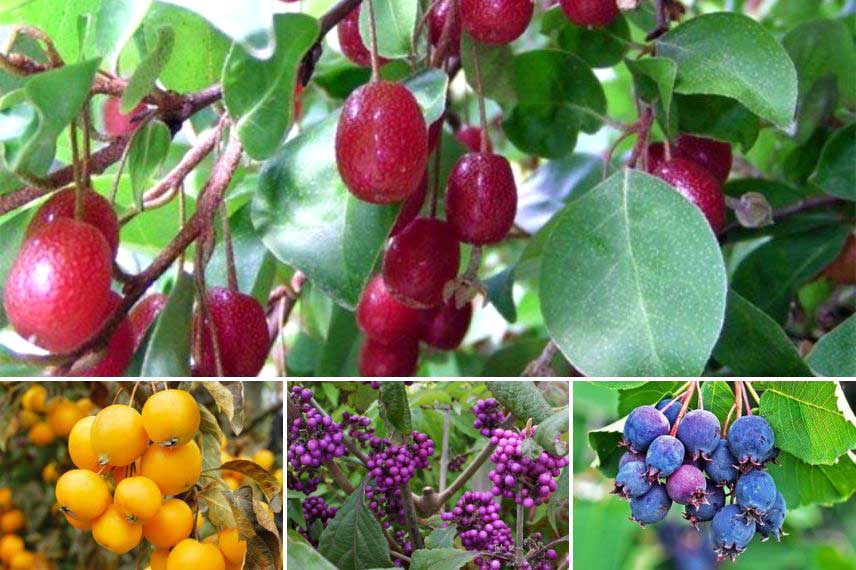
Elaeagnus multiflora, Malus ‘Golden Hornet’, Callicarpa bodinieri ‘Profusion’ and Amelanchier alnifolia ‘Saskatoon Berry’
In a seaside garden
Eleagnus are particularly well suited for coastal garden cultivation. Wind and salt pose no problem for them, and they even make excellent bushes for creating windbreak hedges. Their other qualities should not deter you from integrating them into a border, by choosing neighbours that can also withstand these particular conditions.
- For shrubs, consider a display alongside Holly, Portuguese Laurel, Tamarisk, Sea Buckthorn, Griselinia, Pittosporum tobira, Escallonia, Cistus or Olearia, all equally resistant to wind as the Oleaster.
- For perennials, the list could be very long, but consider plants that have proven themselves, such as Agapanthus with large (or smaller) heads of multiple trumpet flowers, Phormium (some of which display simply stunning colours), Statice (with its light and airy lavender-blue flowering), Pacific Chrysanthemum (a beautiful ground-covering perennial for its foliage and flowering). Also consider Sea Fennel with its lovely white umbel flowers, Italian Strawflower with its surprising curry-scented foliage, Trailing Bindweed with its intense blue flowers, or Erigeron with its record-breaking flowering.
- Grasses such as Fescue, Cortaderia, Andropogon, Schizachyrium, Carex or Stipa create flowing drifts, a foreground with relaxed lines or graceful punctuations that create a beautiful unity, regularly undulated by the wind without ever being disturbed.
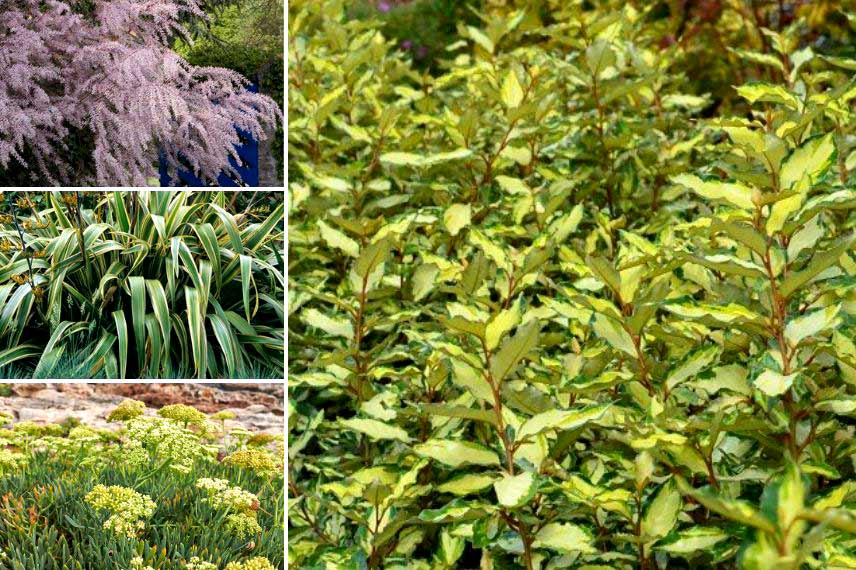 Tamarix tetrandra, Phormium tenax ‘Variegatum’, Crithmum maritimum and Elaeagnus ebbingei ‘Maryline’,
Foliage game
Don’t hesitate to make the most of Eleagnus by incorporating it into a foliage bed. The silver-grey underside of Chalefs such as Elaeagnus ebbingei and its less vigorous version ‘Compacta’ are stunning in spring, and can also be maintained in a regular ball shape through pruning. This neutral shade goes with everything, but I find it particularly interesting next to plants with dark purple foliage. Among shrubs, the Smoke Tree ‘Royal Purple’, whose young leaves are also edged in pink, a Loropetalum ‘Ever Red’ that additionally boasts a generous red flowering in spring, or a Japanese Maple ‘Garnet’ with lace-like leaves, are all excellent choices. Heucheras ‘Black Pearl’, a Persicaria ‘Red Dragon’, or a Geranium ‘Purple Ghost’ can echo these colours at the lower level. In cool soil, a carpet of Creeping Bugle can also serve as a link. To bring in light, shrubs with yellow or golden foliage can be placed here and there. Of course, variegated versions of Eleagnus like ‘Gilt Edge’, ‘Eleador’, or ‘Viveleg’ all contain yellow in their variegation, but one might prefer to go further and play with solid foliage in different shapes. An Physocarpus ‘Angel Gold’ displays a stunning yellow on decorative foliage, and also features beautiful flowering and interesting fruiting. Other options include a Cotinus ‘Golden Lady’, a Elder ‘Welsh Gold’, a Ligustrum ‘Lemon and Lime’ (which must be placed in full sun to achieve this colour!) or a small-growing conifer like Taxus baccata ‘Kupfergold’, a yew with golden hues.
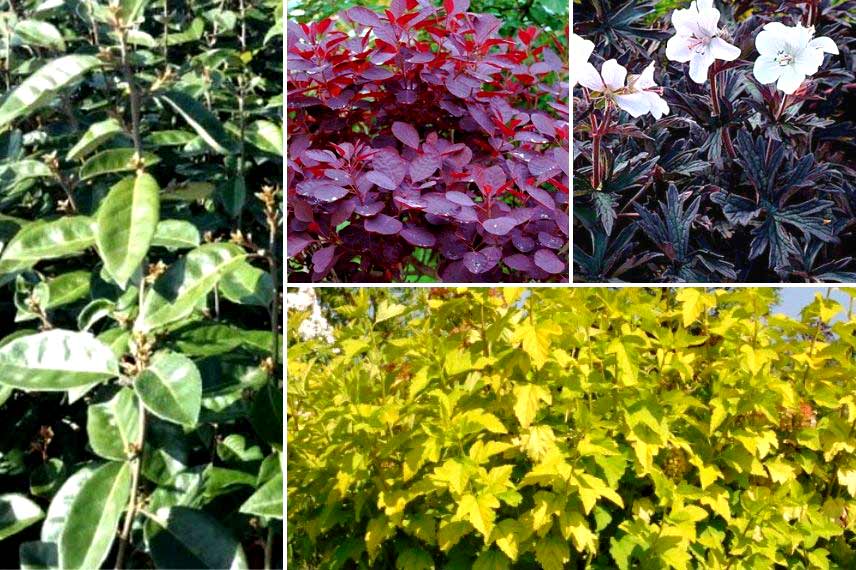
Elaeagnus ebbingei ‘Compacta’, Cotinus coggygria ‘Royal Purple’, Hardy Geranium pratense ‘Purple Ghost’ and Physocarpus opulifolius ‘Angel Gold’
- Subscribe!
- Contents
Comments