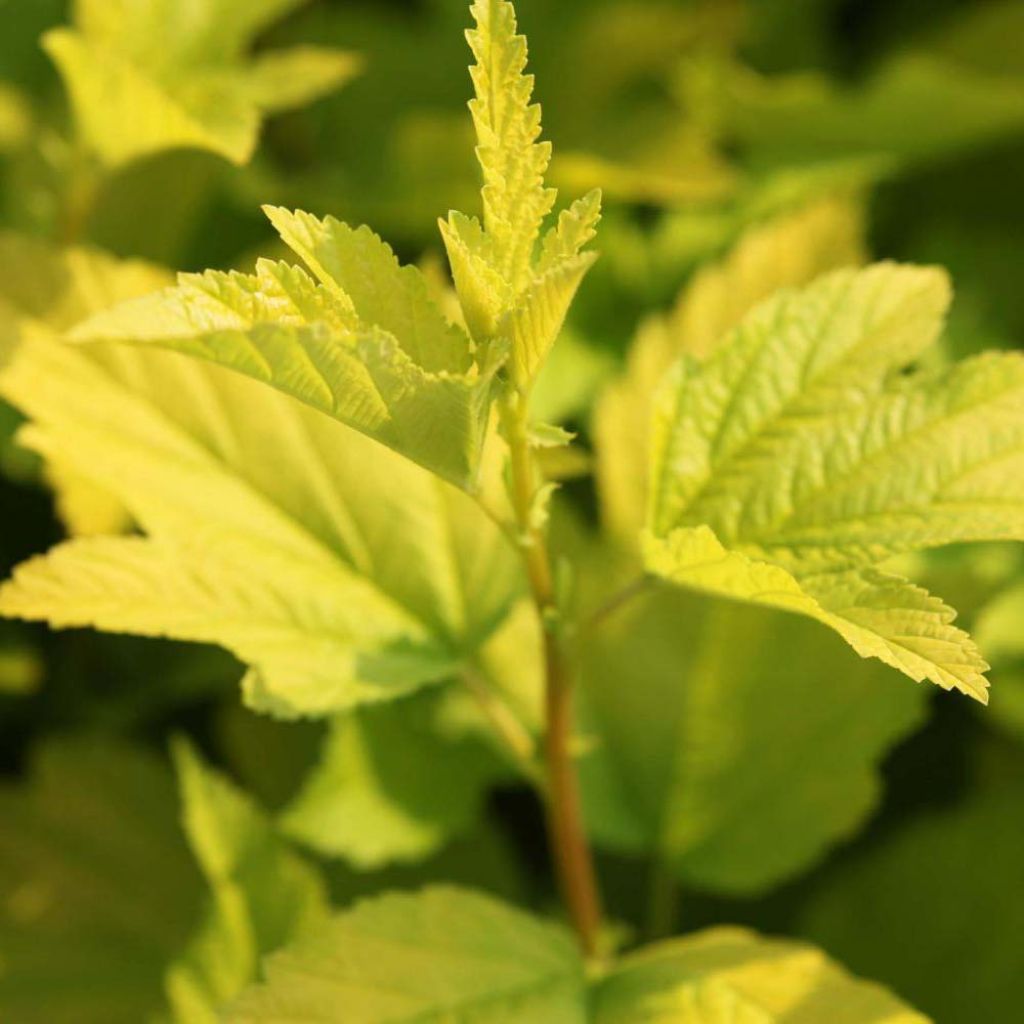
Physocarpus opulifolius Angel Gold
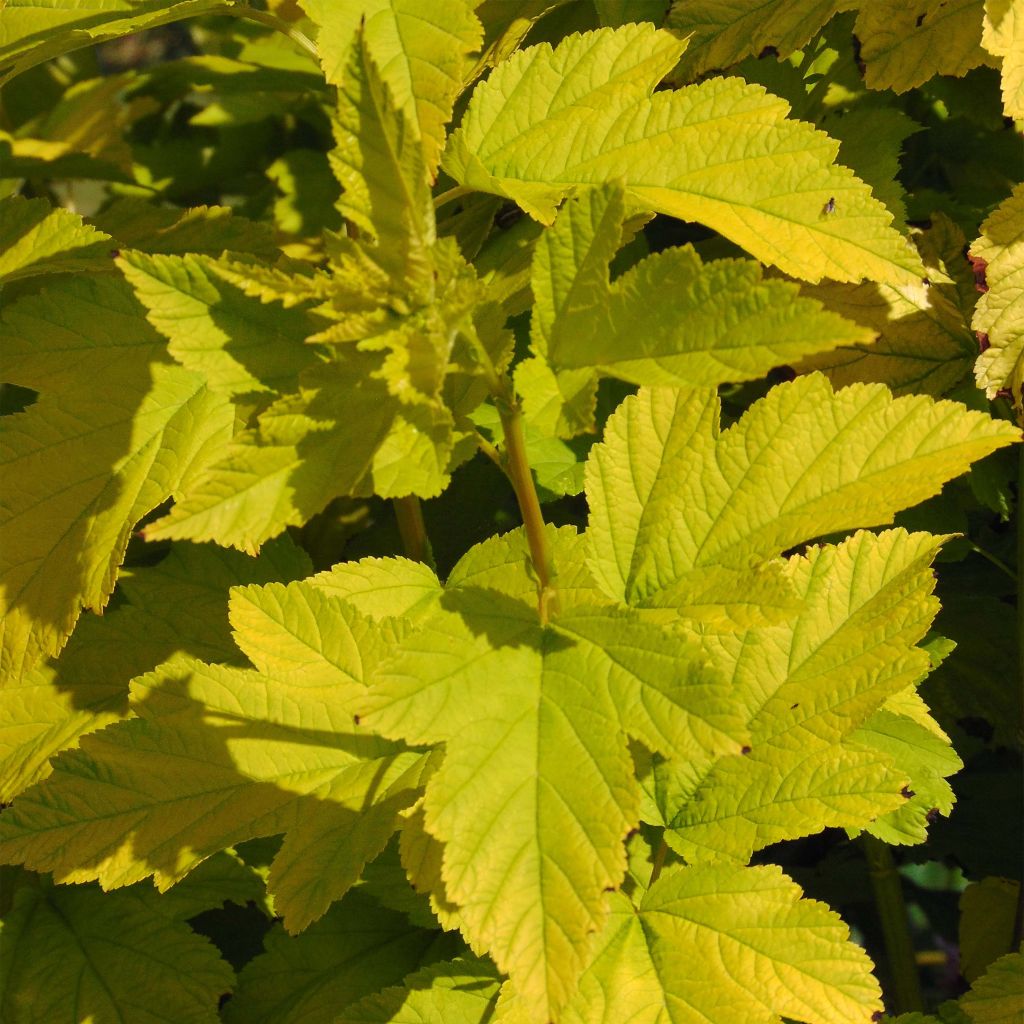
Physocarpus opulifolius Angel Gold
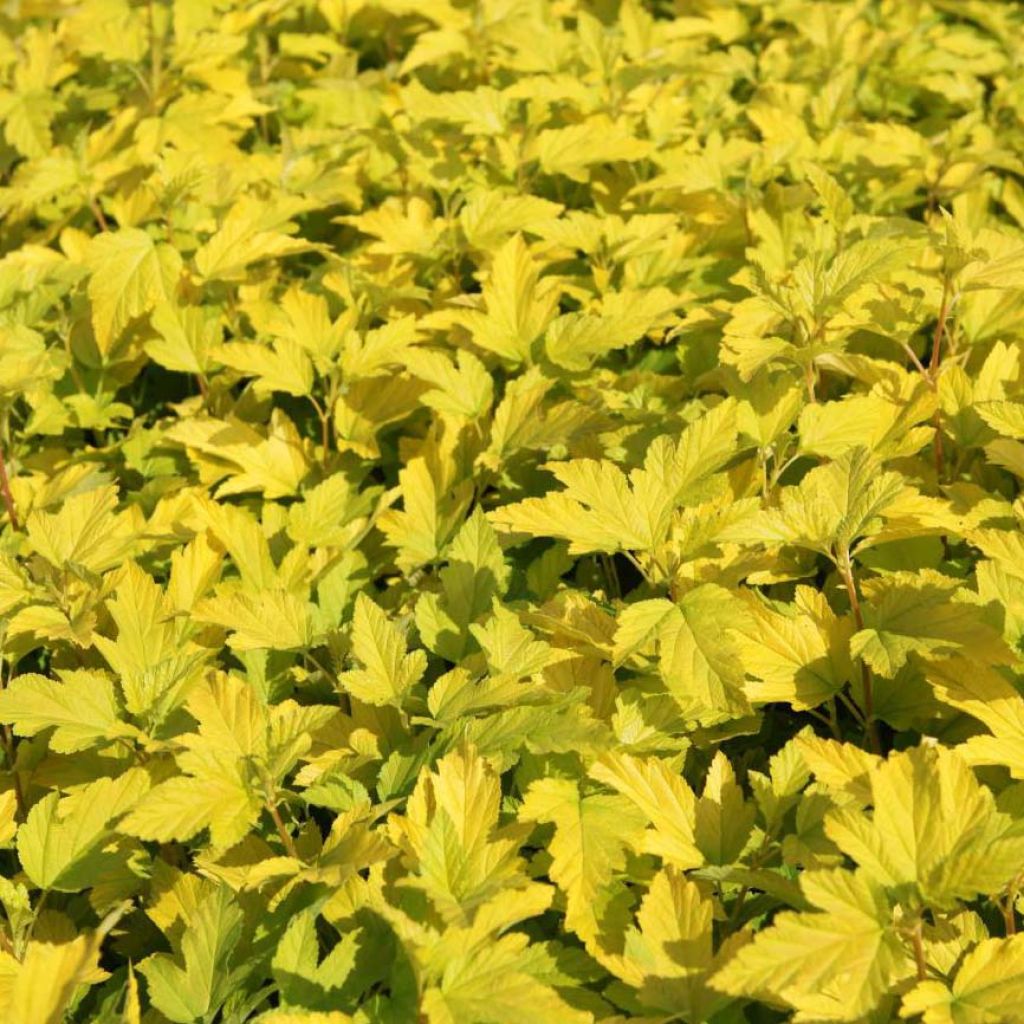
Physocarpus opulifolius Angel Gold
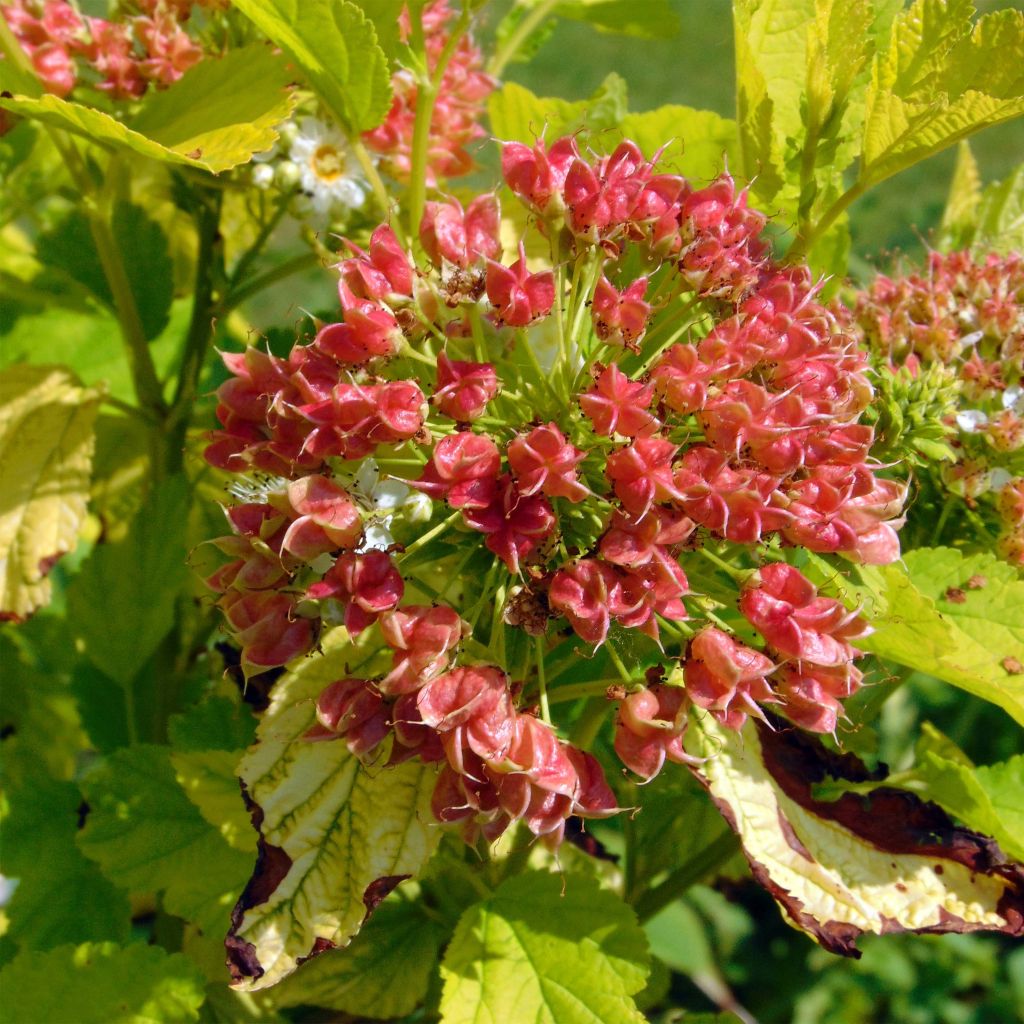
Physocarpus opulifolius Angel Gold
Physocarpus opulifolius Angel Gold
Physocarpus opulifolius Minange (ANGEL GOLD®)
Ninebark, Common Ninebark, Atlantic Ninebark, Eastern Ninebark
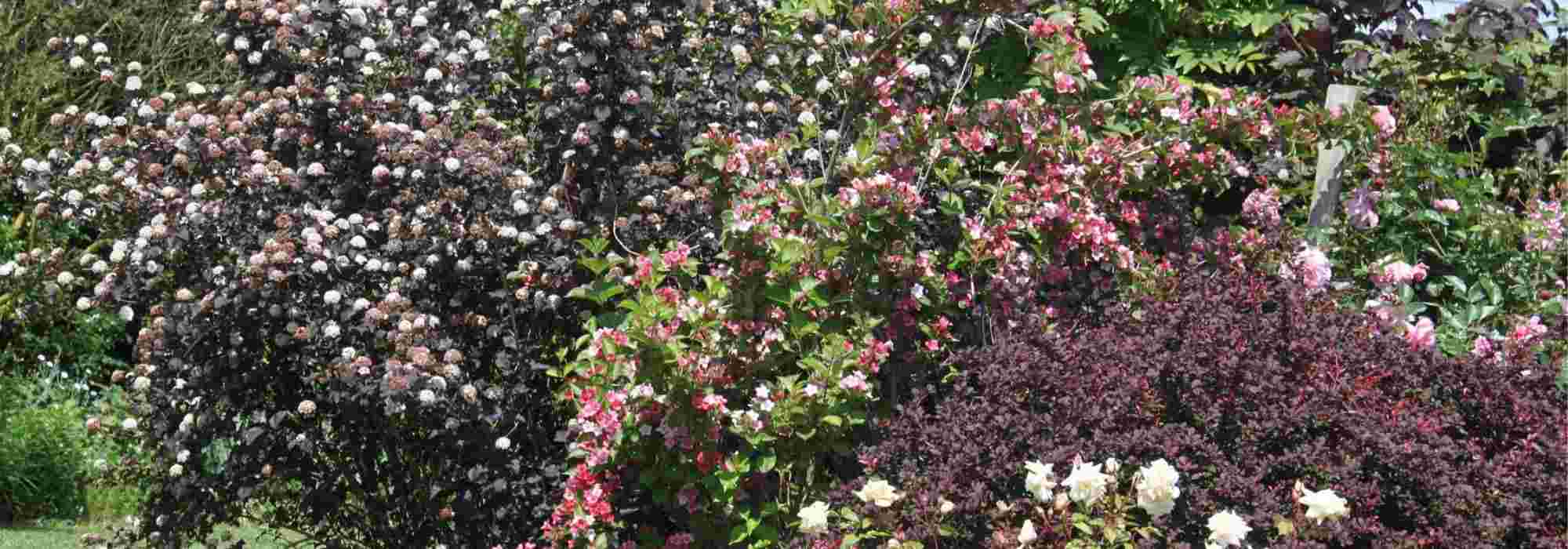
Looks a lot like my "Dart's Gold" bush, but this one should grow larger. In excellent health so far. I'm looking forward to admiring its beautiful bright foliage in spring. I've placed it in partial shade to prevent it from burning. Physocarpus bushes are still relatively unknown, but personally, I find these plants superb and very robust. Moreover, they grow quickly. To add some variety in colors, I also have 2 "Diabolo" (very dark, and magnificent with their white flowering pompoms, which contrast with the black foliage in spring... foliage that turns deep red in autumn... SUBLIME!!), 4 "Amber Jubilee" (sublime orangish foliage in spring, which turns salmon pink and then burgundy later on), 1 "Lady in Red" (very dark ruby red). These bushes are fairly drought-resistant (although they still require some watering during very dry summers, like the one in 2022). Mine are planted in full sun and partial shade (partial shade is necessary for the "Dart's Gold" and "Angel Gold" varieties, which also take on a beautiful orange hue in autumn, but the other varieties tolerate full sun well). Physocarpus bushes pair well with viburnums in my garden.
Rebecca, 04/12/2022
Back-to-school special offer!
Get €10 off for every €50 you spend! And get up to €40 off on a single order.
How does it work?
1. Shop your favourites
Add your favourite plants to your basket. For every €50 you spend (excluding delivery charges, store credit and the plastic-free option), you’ll receive a €10 voucher.
€50 spent = €10 voucher
€100 spent = €20 voucher
€150 spent = €30 voucher
€200 spent = €40 voucher
2. Place your order
Once your basket reaches one of the spending thresholds, place your order. You can even choose your delivery date!
3. Receive your voucher
As soon as your order has been shipped, you’ll receive an email containing your personal voucher code and its value.
4. Use it on your next order
Your voucher is valid for 90 days from the date you receive it. It can be used once only, on a new order worth at least the value of the voucher, excluding delivery charges.
Please note: Vouchers can be combined with other offers, but cannot be split or refunded.
Home or relay delivery (depending on size and destination)
Important: You may be charged customs duties by your country’s customs authorities upon delivery.
Schedule delivery date,
and select date in basket
This plant carries a 24 months recovery warranty
More information
We guarantee the quality of our plants for a full growing cycle, and will replace at our expense any plant that fails to recover under normal climatic and planting conditions.


Would this plant suit my garden?
Set up your Plantfit profile →
Description
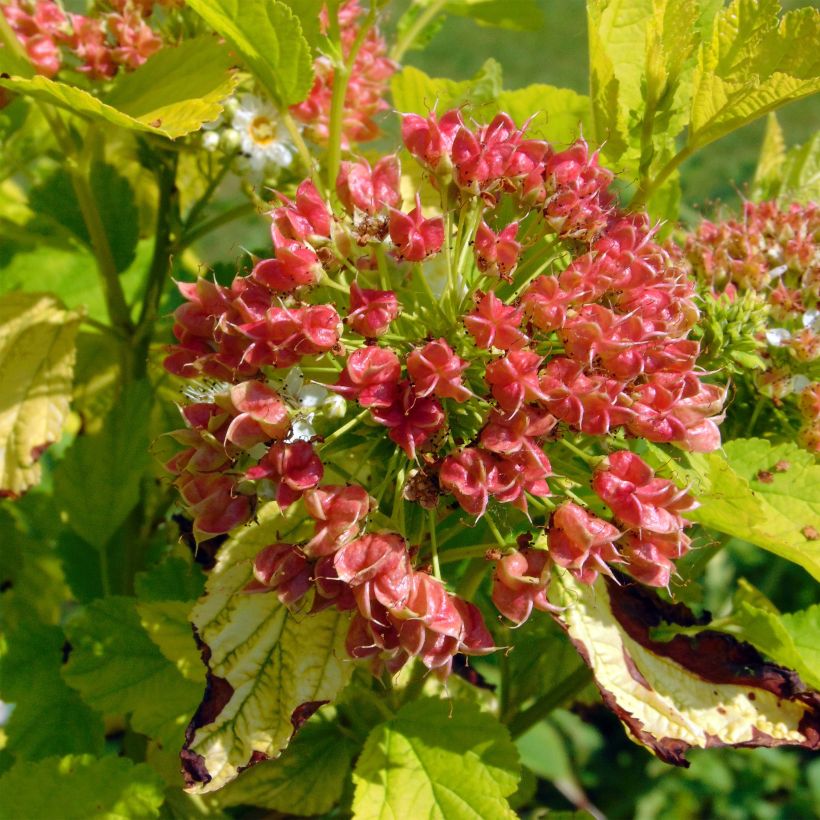
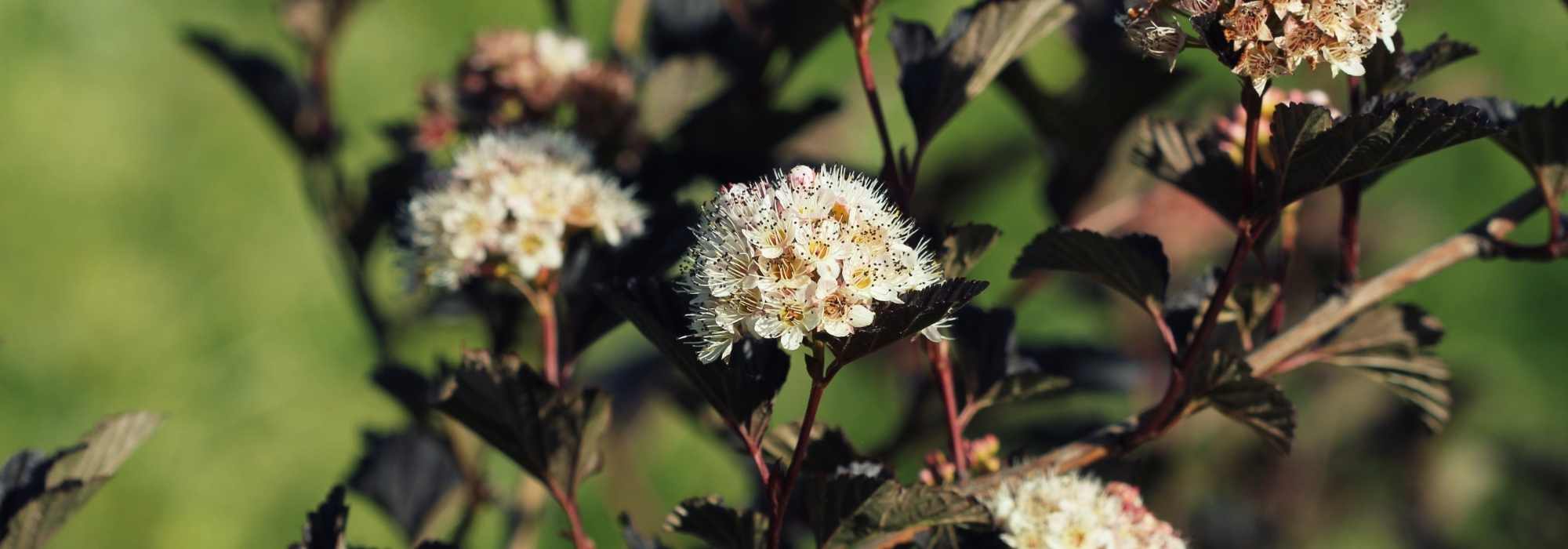
Physocarpus opulifolius 'Angel Gold' Minange is a new variety of Ninebark with a beautiful golden-yellow foliage, gradually turning golden-yellow at maturity, a very bright colour that is quite sun-resistant and will last until the end of the season. Like all Ninebarks, it also offers a lovely white flowering in June, followed by small decorative light red fruits until autumn. Perfectly hardy, it tolerates slightly dry and chalky soils, making it suitable for most regions. Add a touch of golden light to your flowerbeds or country hedges, associate it with red or dark foliage! Once well established, this variety requires little maintenance.
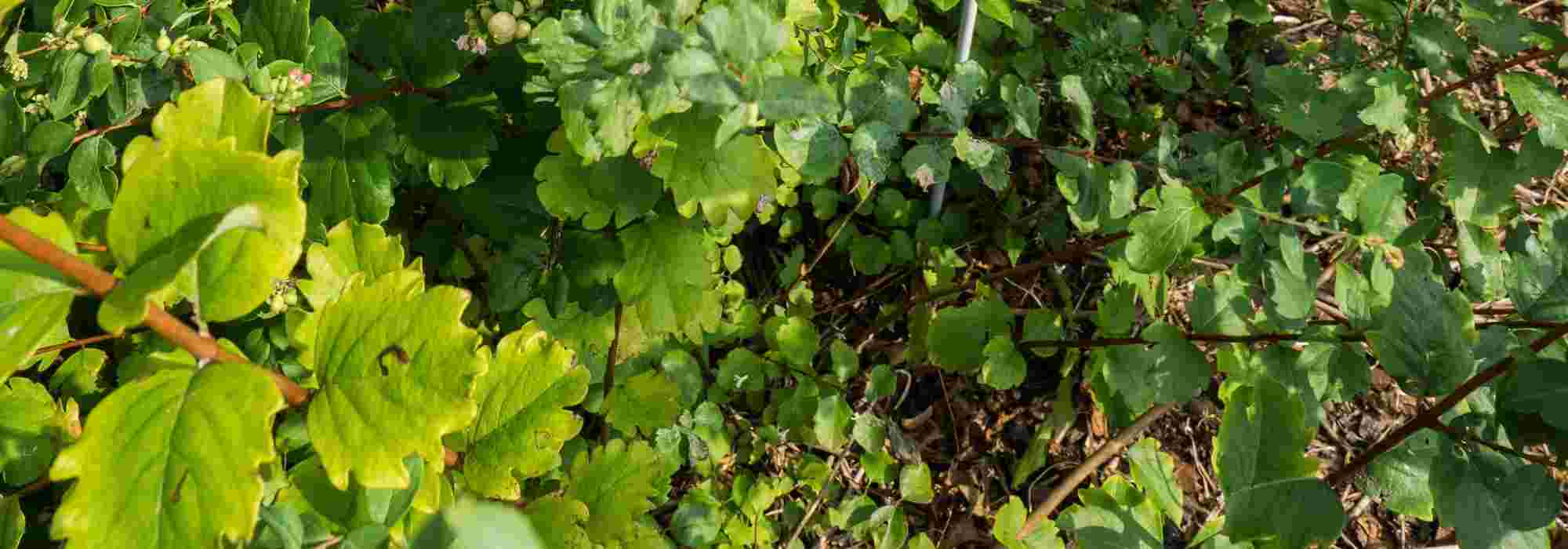
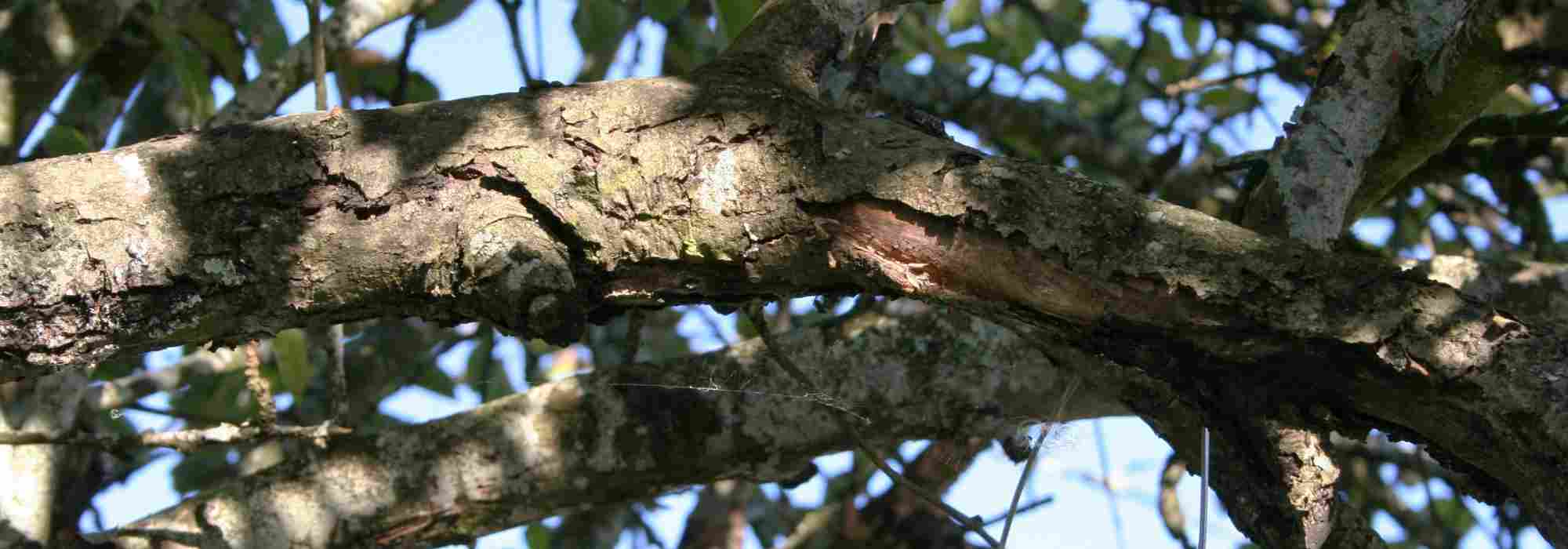
Physocarpus opulifolius belongs to the Rosaceae family, it is native to the eastern United States, up to Quebec and Manitoba. The 'Angel Gold' Ninebark from which it originates was introduced by Minier nurseries in 2008. It is a deciduous, ramified shrub, with an upright and bushy habit. Its growth is fast and its adult size can reach, under good growing conditions, 3m (9ft 10in) in height and 2m in width. It is remarkable for the coloration of its leaves which emerge in a yellow shade tinged with copper orange, then become copper yellow when they unfold, before turning golden yellow, transforming this Ninebark into a luminous mass that stands out in the garden. The leaves are lobed, deeply cut, serrated and measure from 3 to 8cm (1.2 to 3.1in). From spring to early summer, flattened corymbs appear with buds that open into small white flowers with pink stamens, nectar-rich. They are followed by light red fruits appreciated by birds in autumn. The shrub remains decorative in winter, with its bark exfoliating into beige to reddish-brown flakes.
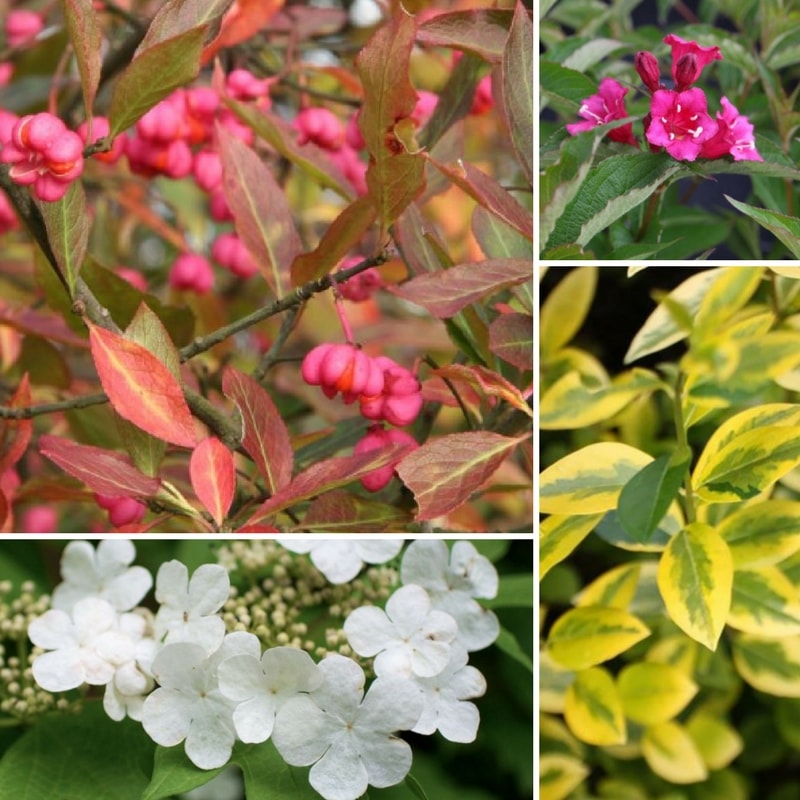
The 'Angel Gold' Ninebark will find its place in flowerbeds, in contrast with shrubs with red or dark foliage such as purple Barberries, 'Black Lace' Elderberry or 'Lady in Red' or 'All Black' Ninebarks. It will be charming in a mixed hedge, accompanied by Spireas (Spirea arguta, Spirea x billardii), viburnums (Viburnum carlesii 'Chesapeake', Viburnum x bodnantense), compact winged Euonymus (Euonymus alatus 'Compactus') or a Neillia (Neillia affinis) that it will illuminate. To accompany its luminous foliage, purple Heucheras or Heucherellas, for example, can be planted at its base. It will also make a great impact when planted in a container on a terrace or balcony.
The name Physocarpus opulifolius comes from the Greek 'phusa' which means air bubble or vesicle, and 'karpos' which refers to the fruit, in reference to the shape of the fruit. The resemblance of its foliage to that of the European Snowball Viburnum earned it its specific name "opulifolius". Introduced in Europe around 1687, the numerous vibrant cultivars that have been created in recent years have allowed it to make a strong comeback in gardens.
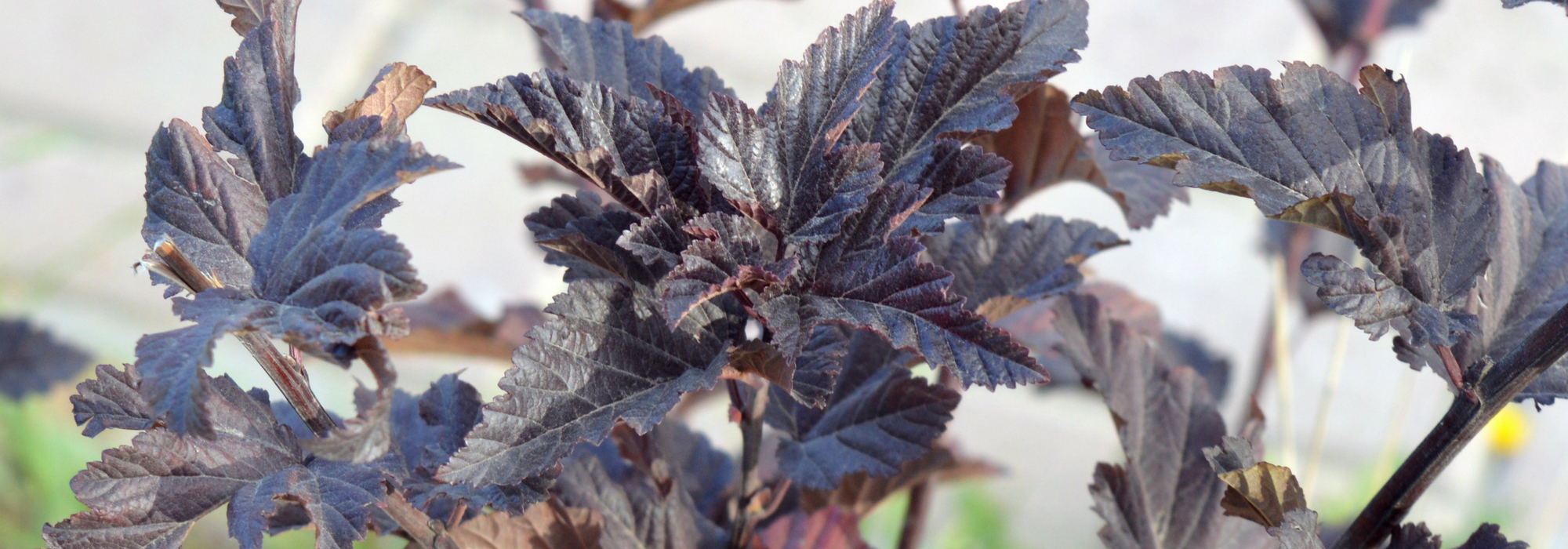
Physocarpus opulifolius Angel Gold in pictures
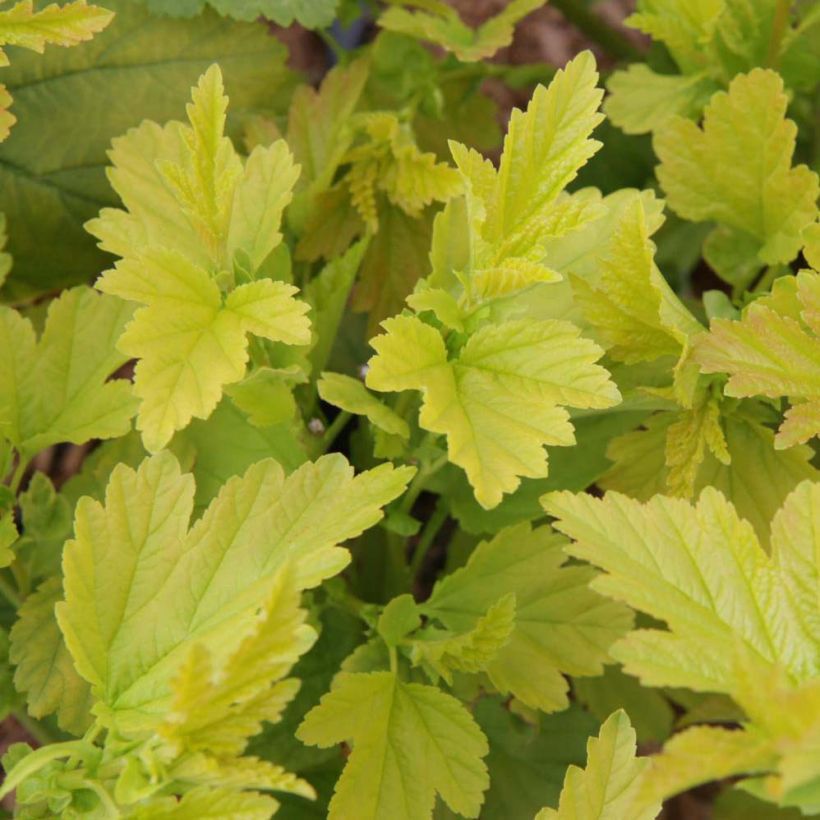
Plant habit
Flowering
Foliage
Botanical data
Physocarpus
opulifolius
Minange (ANGEL GOLD®)
Rosaceae
Ninebark, Common Ninebark, Atlantic Ninebark, Eastern Ninebark
Cultivar or hybrid
Planting and care
Plant Physocarpus opulifolius 'Angel Gold' in deep, humus-rich, fertile and moist, acidic, neutral or even slightly calcareous soil, which it nevertheless fears in excess. While it tolerates periodically dry soils better than other varieties, it is important to avoid letting the soil dry out excessively in summer and to shower the foliage during heatwaves, especially in hot regions. This bush will thrive in partial shade or full sun, but the golden foliage may be damaged in excessively hot exposure. Thin out dense plants by severely pruning some of the arching stems after flowering. This may encourage the development of new flower buds in late summer. Physocarpus tends to produce numerous suckers, to the detriment of the main plant; it may be useful to cut it back to give it a denser appearance.
Planting period
Intended location
Care
Planting & care advice
-
-
-

-
-
-

-
-
-
, onOrder confirmed
Reply from on Promesse de fleurs
Recently viewed products
Haven't found what you were looking for?
Hardiness is the lowest winter temperature a plant can endure without suffering serious damage or even dying. However, hardiness is affected by location (a sheltered area, such as a patio), protection (winter cover) and soil type (hardiness is improved by well-drained soil).

The flowering period indicated on our website applies to countries and regions located in USDA zone 8 (France, the United Kingdom, Ireland, the Netherlands, etc.)
It will vary according to where you live:- In zones 9 to 10 (Italy, Spain, Greece, etc.), flowering will occur about 2 to 4 weeks earlier.
- In zones 6 to 7 (Germany, Poland, Slovenia, and lower mountainous regions), flowering will be delayed by 2 to 3 weeks.
- In zone 5 (Central Europe, Scandinavia), blooming will be delayed by 3 to 5 weeks.
In temperate climates, pruning of spring-flowering shrubs (forsythia, spireas, etc.) should be done just after flowering.
Pruning of summer-flowering shrubs (Indian Lilac, Perovskia, etc.) can be done in winter or spring.
In cold regions as well as with frost-sensitive plants, avoid pruning too early when severe frosts may still occur.
The planting period indicated on our website applies to countries and regions located in USDA zone 8 (France, United Kingdom, Ireland, Netherlands).
It will vary according to where you live:
- In Mediterranean zones (Marseille, Madrid, Milan, etc.), autumn and winter are the best planting periods.
- In continental zones (Strasbourg, Munich, Vienna, etc.), delay planting by 2 to 3 weeks in spring and bring it forward by 2 to 4 weeks in autumn.
- In mountainous regions (the Alps, Pyrenees, Carpathians, etc.), it is best to plant in late spring (May-June) or late summer (August-September).
The harvesting period indicated on our website applies to countries and regions in USDA zone 8 (France, England, Ireland, the Netherlands).
In colder areas (Scandinavia, Poland, Austria...) fruit and vegetable harvests are likely to be delayed by 3-4 weeks.
In warmer areas (Italy, Spain, Greece, etc.), harvesting will probably take place earlier, depending on weather conditions.
The sowing periods indicated on our website apply to countries and regions within USDA Zone 8 (France, UK, Ireland, Netherlands).
In colder areas (Scandinavia, Poland, Austria...), delay any outdoor sowing by 3-4 weeks, or sow under glass.
In warmer climes (Italy, Spain, Greece, etc.), bring outdoor sowing forward by a few weeks.
Shipping country and language
Your country of residence may be:
Your country of residence is:
For a better user experience on our website, you can select:
Your shipping country:
-
 Austria
-
 Belgium
-
 Bosnia & Herzegovina
-
 Bulgaria
-
 Croatia
-
 Cyprus
-
 Czechia
-
 Denmark
-
 Estonia
-
 Finland
-
 France
-
 Germany
-
 Greece
-
 Hungary
-
 Iceland
-
 Ireland
-
 Italy
Italy
-
 Latvia
-
 Liechtenstein
-
 Lithuania
-
 Luxembourg
-
 Malta
Malta
-
 Netherlands
-
 Poland
-
 Portugal
-
 Romania
-
 Serbia
-
 Slovakia
-
 Slovenia
-
 Spain
Spain
-
 Sweden
-
 Switzerland
Language:
-
French
-
 English
-
Spanish
-
Italian
-
German
-
Portuguese
-
Dutch
-
Finnish
My Account
Hello
My wish lists
My cart
Log in / Register
Existing customer?
This form is protected by reCAPTCHA - the Google Privacy Policy and Terms of Service apply.
New customer?
Create an account to track your orders, access our customer service and, if you wish, make the most of our upcoming offers.