





























Pairing the Judas tree
Beautiful scenes in every season
Contents
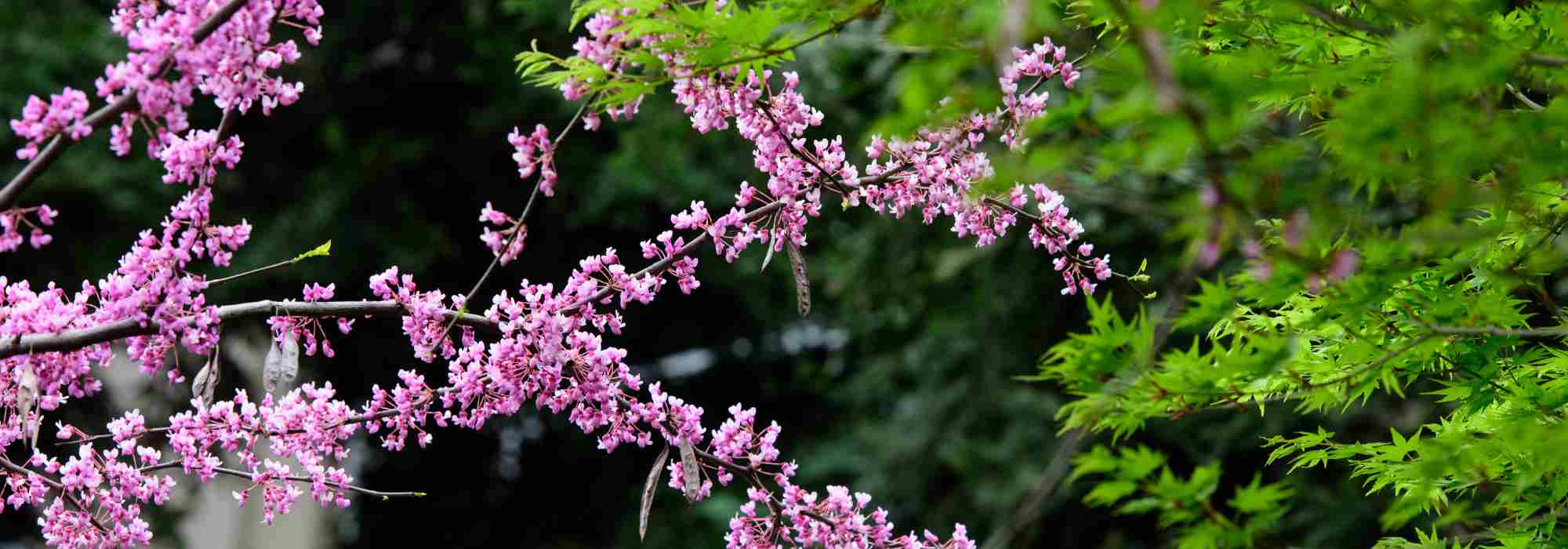
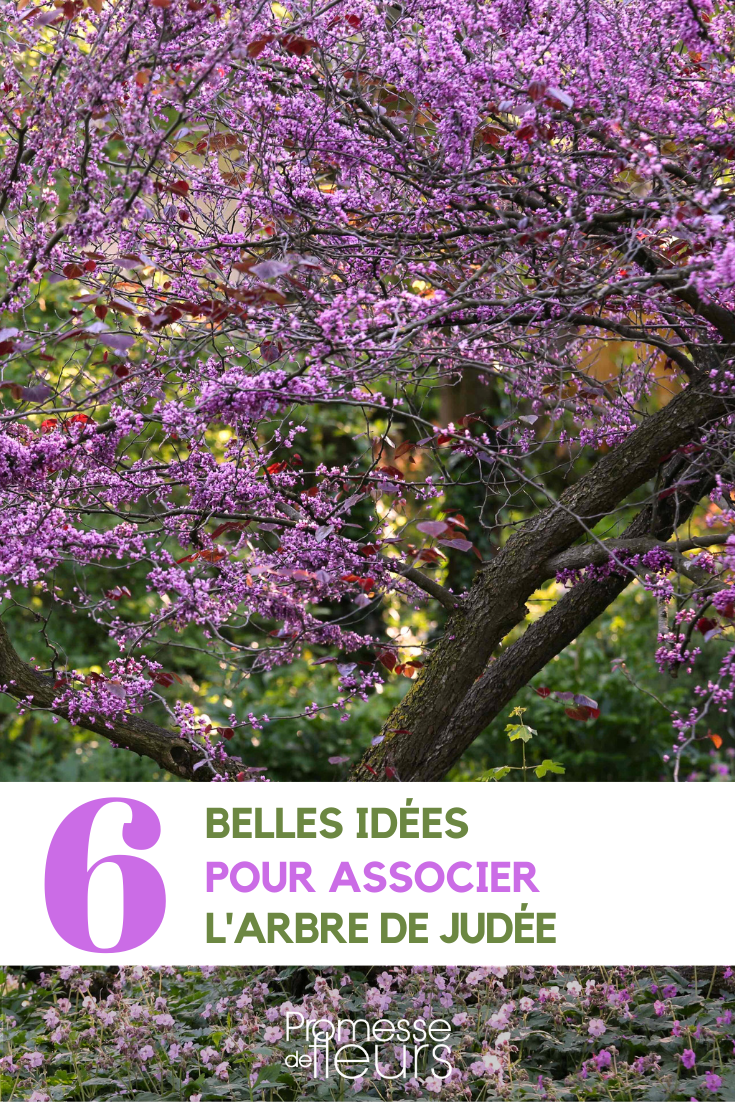
The Judas Tree or Cercis delights us with its delicate spring flowering in purplish-pink or white on the still naked branches. It bears lovely deciduous heart-shaped leaves that turn vibrant shades before falling in autumn. With its compact size, it easily fits into various garden styles: romantic garden, autumn garden, or even Japanese garden. It has rounded or even weeping habits. It is a very accommodating, hardy tree that thrives in any good garden soil, sheltered from the wind, in sunny or partially shaded positions. It withstands air pollution as well as drought once established. Discover our 6 ideas for successfully pairing the Judas Tree.

In a vibrant spring scene
You can create a beautiful spring scene by pairing your Cercis with other plants that bloom at the same time. Thus, from March onwards, the garden will awaken, offering a fresh and vibrant display as the first flowers appear. Eastern Redbuds integrate well into a natural garden. Plant a Cercis Canadensis ‘Pink Pom Pom’s’ amidst a bed of low-growing plants alongside a Flowering Cherry with which it will create a lovely harmony of shades. Together, they will contribute to a very floriferous spring scene. Form a carpet of bulbs at their feet by choosing, for example, early flowering bulbs, such as muscari, tulips, including the lovely botanical tulips ‘Lady Jane’ or Lily-flowering Tulips ‘Marylin’, daffodils (‘Barrett Browning’) or hyacinths. Among the perennials, try Hellebores and a few clumps of Darley Heath (Erica x darleyensis ‘Darley Dale), with its lovely pale pink to mauve bell-shaped flowers.
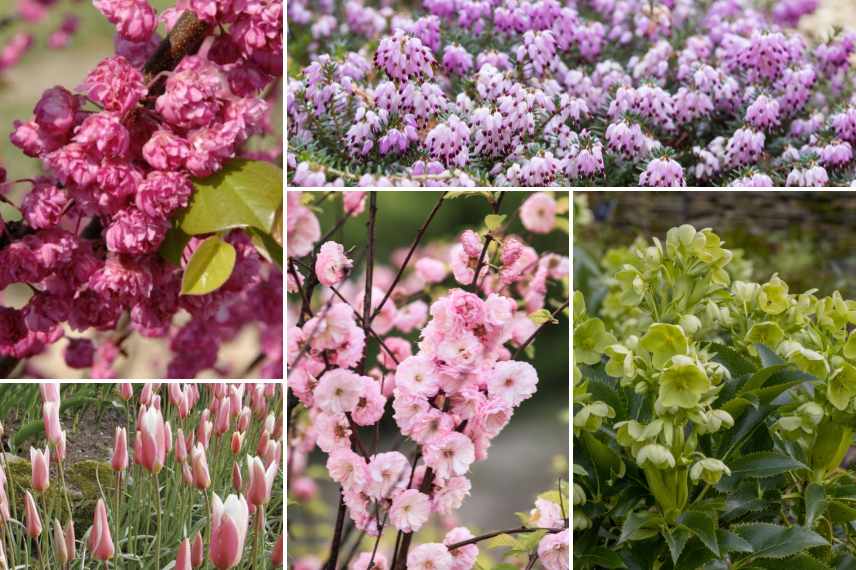
Cercis canadensis ‘Pom Pom’, Erica x darleyensis, Tulipa clusiana ‘Lady Jane’, Prunus triloba and Hellebore argutifolius
In a natural border
Judas trees create fresh, floriferous, and natural scenes. They can be placed in the middle of a bushy mass or at the back of a tableau to form a changing green screen. Generally modest in size, they pair well with all sizes of masses and all styles of gardens, whether romantic, Japanese-inspired, or simply naturalistic. The Cercis siliquastrum, for example, will create beautiful harmonies of shades in spring alongside a Prunus serrulata ‘Kiku-shidare-sakura’ with its fresh pink pompom flowers or a Japanese quince. Complete this spring scene with wonderful low perennials like bleeding hearts with heart-shaped flowers, or pulmonarias.
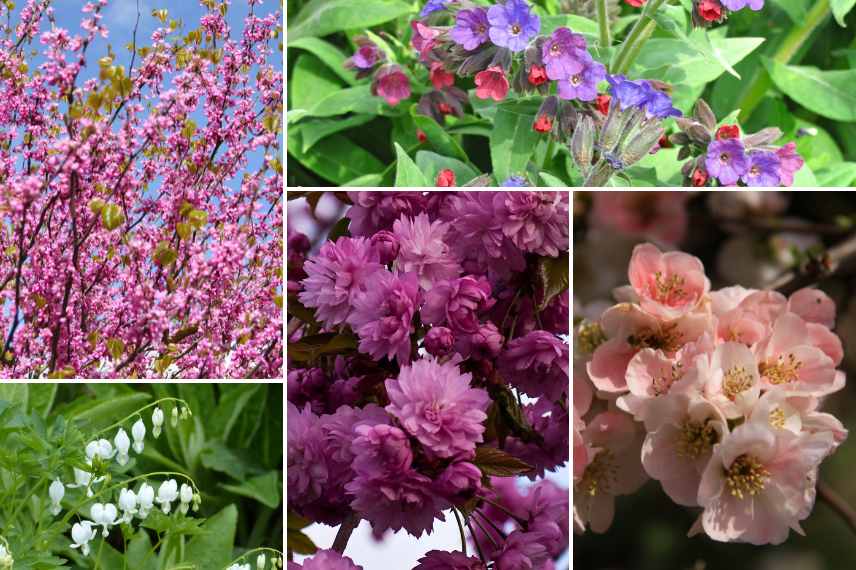
Cercis siliquastrum, pulmonarias, Dicentra spectabilis ‘Alba’, Prunus serrulata Kiku Shidare Sakura and Chaenomeles speciosa
Consider pairing it with other shrubs that flower at different times, such as lilacs, Kolkwitzias, mock oranges, or Staphyleas. Continue the enchantment by imagining a beautiful autumn scene with its foliage turning golden yellow in the fall. Plant it near a Cercidiphyllum japonicum ‘Pendulum’, a weeping caramel tree variety, which adorns itself with vibrant hues in autumn, or a Prunus subhirtella ‘Autumnalis Rosea’ with its late flowering and beautiful yellow and copper-coloured leaves in autumn. Autumn perennials like asters, chrysanthemums, and Japanese anemones ‘Queen Charlotte’ will accompany its flowering right up to the gates of winter. Smaller varieties like Cercis Canadensis ‘Cascading Hearts’ can be planted to shade a mass of heathers, camellias, and pieris in acidic soil.
Discover other Cercis
View all →
Available in 1 sizes
Available in 4 sizes
Available in 1 sizes
Available in 2 sizes

Available in 2 sizes
Available in 2 sizes
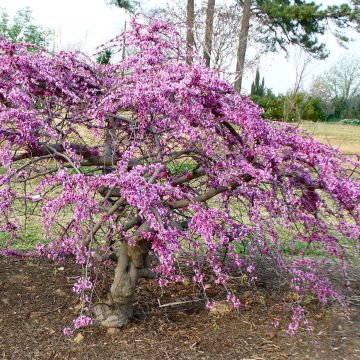
Available in 1 sizes
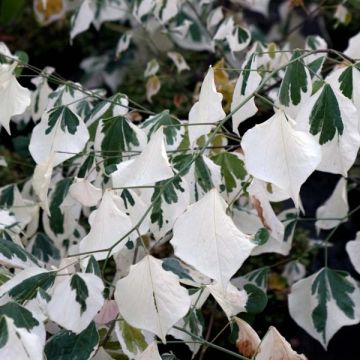
Available in 1 sizes
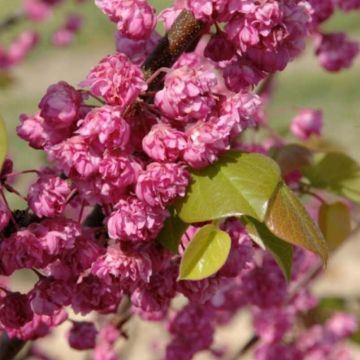
Available in 1 sizes
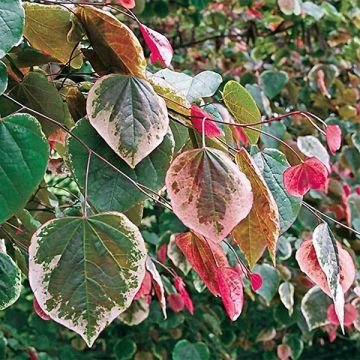
Available in 2 sizes
In a country hedge
Judæa Trees fit remarkably well into a free-flowing, flowering hedge when mixed with other species featuring decorative foliage or spring flowering. Choose upright varieties that form beautiful bushes, often slightly taller than wide, such as Cercis canadensis ‘Eternal Flame’, Cercis canadensis ‘Forest Pansy’, and Cercis canadensis ‘Heart of Gold’.
In neutral or calcareous soil, you can accompany them with the field maple ‘Carnival’, Cotinus, and winged spindle to create a vibrant and changing thicket from September to November. Also enjoy the fragrant flowering of Viburnum burkwoodii. In a wild hedge, consider integrating some evergreen bushes, such as laurel-tin (Viburnum tinus), for example. Within a wild hedge, they will blend well with yellow Forsythias or white (Abeliophyllum distichum), and the fragrant flowering of Viburnum burkwoodii to enjoy a polychrome scene throughout the seasons. Complete with Japanese quinces whose flowers also appear on the still naked wood.
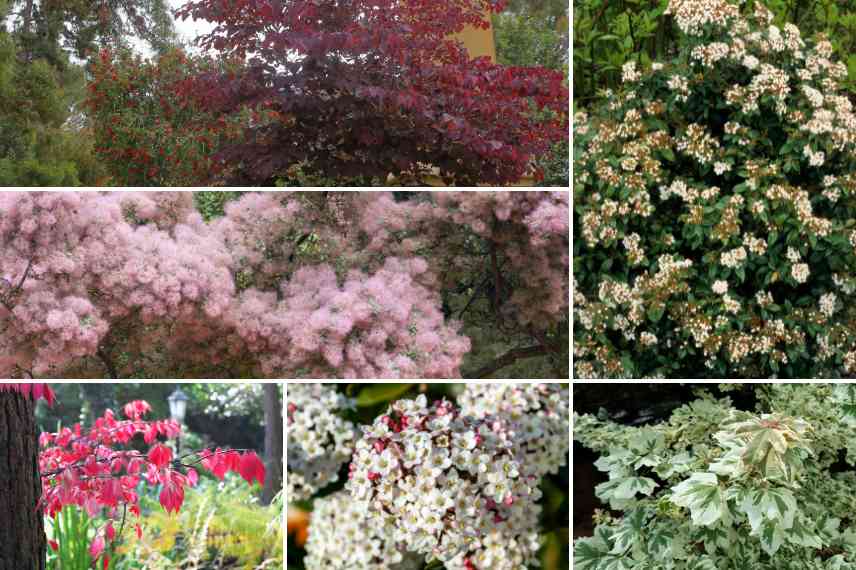
Cercis siliquastrum ‘Forest Pansy’ (autumn foliage), laurel-tin, Cotinus coggygria, Euonymus alatus (in autumn), Viburnum burkwoodii in spring, and Acer campestre ‘Carnival’
Read also
Choosing a Judas Tree: Buying GuideIn a colourful autumn scene
Most Cercis offer a changing and multicoloured display throughout the seasons, particularly in autumn. The Cercis canadensis ‘Eternal Flame’, in particular, is a delight with its foliage that blazes in the garden from spring to autumn. In a shrub border, take the opportunity to play with contrasts of shapes and colours. Consider, for example, the Elder ‘Plumosa Aurea’, the dwarf winged spindle Euonymus alatus ‘Compactus’, stunning at the end of the season, the Cotinus ‘Grace’, with its summer flowering in airy wigs and remarkable deciduous foliage for its intense red to purple colour. In a large border, don’t forget late-flowering perennials such as autumn asters, Helianthus, Echinacea, Buenos Aires Verbena, Helenium ‘Moerheim Beauty’, and Stonecrops (or Sedums) like ‘Autumn Joy’. Ornamental grasses can also provide significant decorative interest when their foliage takes on beautiful warm hues such as Panicum virgatum, Miscanthus sinensis ‘Silberfeder’, Stipa arundinacea, or Andropogon gerardii ‘Red October’, stunning in wildflower or meadow-inspired borders with its crimson robe.
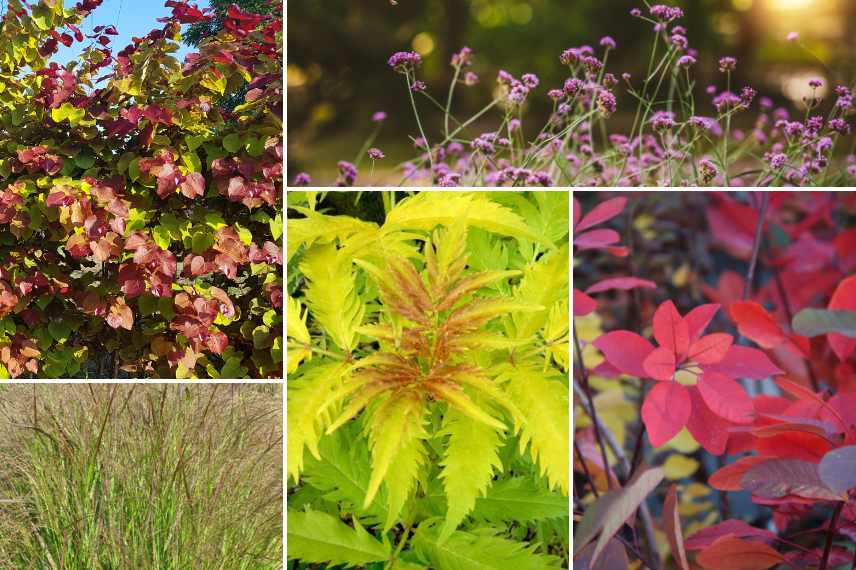
Cercis canadensis ‘Eternal Flame’, Verbena bonariensis, Panicum virgatum ‘Squaw’, Sambucus ‘Plumosa Aurea’, and Cotinus ‘Grace’
In a Japanese-inspired scene
In this type of display, the effect should be very zen, allowing the eye to move freely. Add a mineral touch with some rocks, gravel, or stepping stones, and an aquatic element (pond, fountain). With its weeping habit, particularly twisted branches, and abundant white spring flowering, the Cercis canadensis ‘Vanilla Twist’ will shine in a Japanese-style garden. Install groundcover plants to highlight its sinuous silhouette. Lay down a carpet of Mascarene lawn (Zoysia tenuifolia) at its base and integrate, for example, cloud-pruned pines (niwaki), trimmed boxwoods, and graphic grasses like Hakonechloa macra, and Ophiopogons. It can also be beautifully set off among Japanese maples with their stunningly cut and coloured foliage. In a Japanese garden, you can also punctuate the composition with some flowering plants using ericaceous plants if the soil is slightly acidic. Consider Japanese azaleas and a Camelia transnokoensis. Among flowering perennials, Japanese anemones are good companions. In this case, favour white anemone varieties, such as ‘Honorine Jobert’ to bring a pure and graphic note.
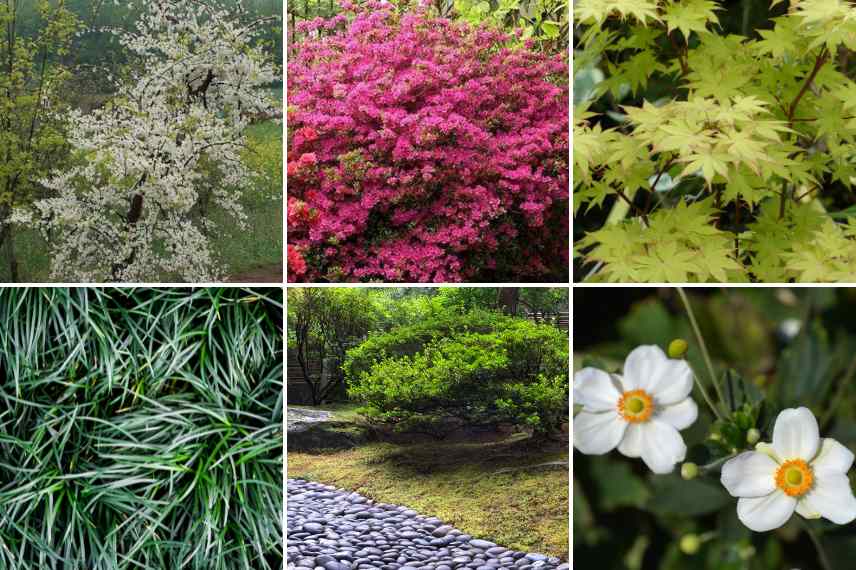
Cercis ‘Vanilla Twist’, Japanese azalea ‘Ameona’, Acer palmatum ‘Summer Gold’, Ophiopogon, pines, moss, and some stones to perfect the Japanese atmosphere, along with Japanese anemone ‘Honorine Jobert’
To enrich a summer border
With their bushy foliage and colourful display from spring to autumn, Cercis are interesting in natural gardens for contributing to lush compositions. Planted in the middle or back of a display, they add colour and a great deal of charm to shrub or perennial borders. Modest-statured Cercis (‘Melon Beauty’ with particularly bright foliage, ‘Merlot’, a variety with purple foliage) will make a striking impact when mixed with other shrubs with coloured foliage such as the ‘smoke tree’ Cotinus, the Japanese dogwood, the Cercidiphyllum, commonly known as the Caramel Tree, or Acer rubrum ‘Summer Red’. They will be stunning at the back of a summer border. You can surround them with a multitude of summer-flowering perennials as long as the soil is rich and retains some moisture in summer; Crocosmia, Veronicastrum virginicum, Papaver, Alchemilla mollis, spurge, daylilies, Anthemis tinctoria ‘Sauce Hollandaise’, hardy geraniums, and giant asters for a long-lasting colourful and flowering border.
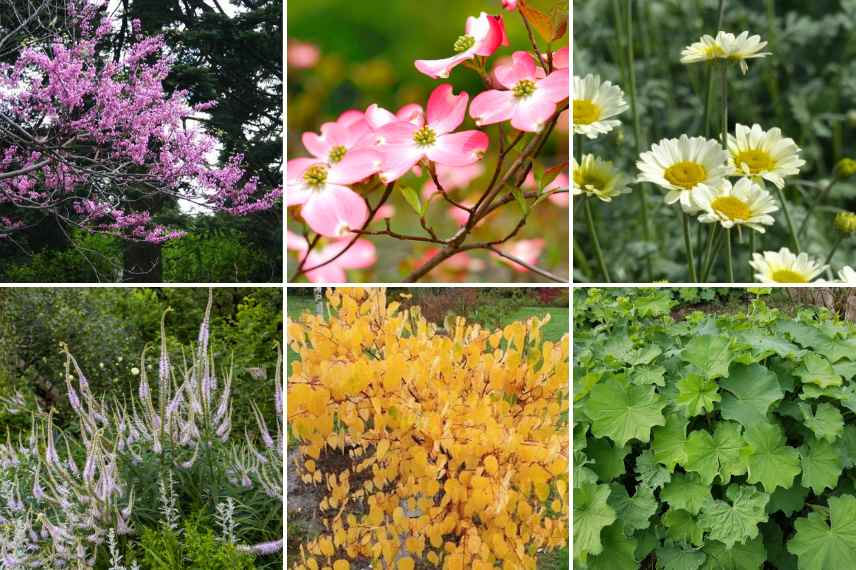
Cercis ‘Melon Beauty’, Japanese dogwood, Anthemis tinctoria ‘Sauce Hollandaise’, Veronicastrum virginicum, Cercidiphyllum, and Alchemilla mollis
- Subscribe!
- Contents
Comments